A custom plastic garment Bags Bulk Order usually becomes a priority after the first quote lands higher than expected. That is rarely a problem with “the market.” It is almost always a spec problem. Fit, film thickness, closure style, and print coverage decide the cost long before a logo is added.
A bag that fits cleanly pays for itself twice: it protects the garment better and avoids the hidden cost of wrinkling, snagged hems, and returns that could have been prevented.
For retail packaging and storage, the best buyers treat garment bags as a working part of the product experience, not an accessory. That mindset keeps the order useful instead of decorative. It also makes quotes easier to compare, because the numbers are tied to one clear specification instead of three different assumptions dressed up as one request.
Why Most Garment Bags Cost More Than They Should
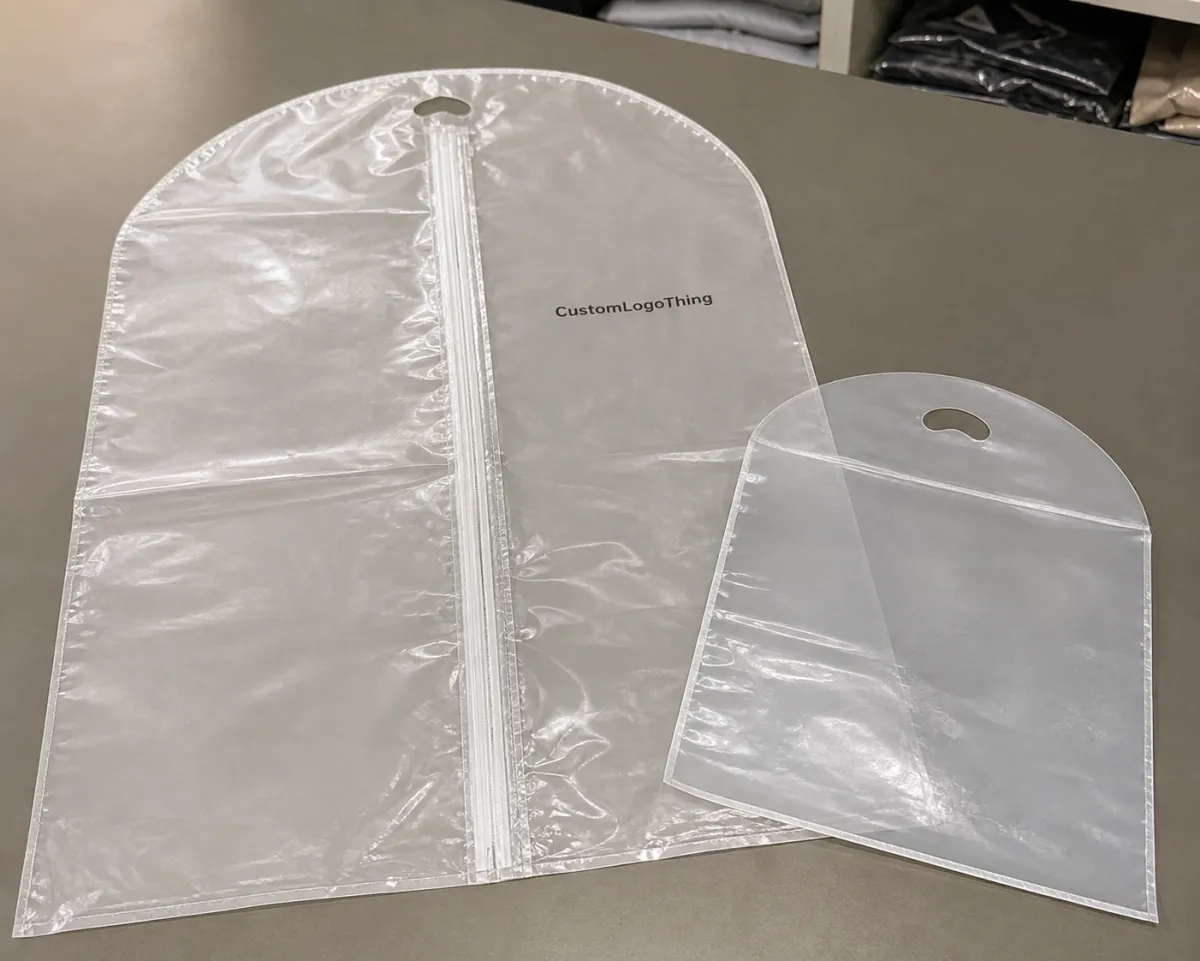
The most common cost creep starts with film that is heavier than the garment actually needs. Thicker material is not automatically better. For a shirt cover or a light suit bag, moving from 1.5 mil to 2.5 mil can raise the price without adding much practical protection. If the bag is only meant to keep dust off the garment, a clean fit and a sensible closure usually do more than extra plastic ever will.
Fit errors are even more expensive than overbuilt film. If the width is too tight, the hanger pulls against the opening and the garment wrinkles. If the bag is too short, hems bunch at the bottom and the closure becomes decorative rather than functional. If the bag is oversized, it looks sloppy on the rack and wastes freight cube. A cheap-looking spec can become an expensive order very quickly.
There is a simple rule that saves money: lock the garment size first, then choose the film and finish. The garment should define the shape. The storage or shipping environment should determine whether the bag needs extra tear resistance, anti-static treatment, moisture resistance, or a reinforced hanger opening. Print comes after that. Otherwise the order ends up paying for branding on a bag that does not hang correctly.
Most garment bags are made from LDPE, LLDPE, or blended polyethylene films because they seal predictably and fold without fighting the garment. That matters more than buyers expect. A film that looks fine on a sample sheet can behave differently once it is cut, sealed, and packed into cartons. The difference shows up in the warehouse, not in the artwork proof.
For buyers comparing retail packaging across categories, the same logic applies every time: start with function, then add brand detail. It sounds plain because it is plain. That is also why it works.
Product Details That Decide Fit, Finish, and Shelf Life
Clear, frosted, and recycled films each solve a different problem. Clear film keeps the garment visible, which helps retail sorting and display. Frosted film softens the look and hides scuffs better, but it also reduces visibility. Recycled film is useful when the material story matters, though the clarity, odor, and consistency can vary more than with virgin resin. If shelf presentation matters, ask for physical samples, not only a spec sheet.
Thickness deserves real attention. In this category, buyers commonly work in the 1.2 to 3 mil range, with lighter bags used for dust covers and heavier films reserved for coats, shipping, or repeated handling. The heavier option is not always the better one. It can create a stiffer bag that takes more space in carton packing and feels overbuilt on the rack.
Bag structure matters just as much as film. Flat bags are the simplest and cheapest. Gusseted bags give jackets, coats, and bulkier apparel the room they need without crushing the shoulders. Zippered styles are better for repeated use and long-term storage. Flap closures are common for quick packing. Hanger openings help the bag sit correctly on a rail or in a shipping carton.
Dust protection is the baseline. Moisture resistance matters when cartons sit in transit or in a warehouse with unstable humidity. For shipping, puncture resistance and tear control matter more than perfect clarity. That is why a garment bag built for showroom display is not automatically the right bag for distribution. Different use, different construction.
Print placement also needs discipline. Keep logos away from folds, zippers, and hanger slots. Put branding where it will be seen first, but not where a crease will crush the ink. A clean one-color logo on clear film often looks sharper than a crowded layout that competes with the garment underneath it. Good package branding supports the product; it does not fight it.
For transit expectations, it helps to think in test terms rather than hopeful guesses. The ISTA test family is a practical reference when you want to think about vibration, compression, and shipping abuse in a real way. It does not solve every packaging question, but it gives buyers a better frame than “it should probably be fine.”
Specifications Buyers Should Lock Before Asking for Samples
Samples are useful only after the specification is clean. If the request starts with a rough size and the expectation that the supplier will “understand the garment,” the process slows down immediately. A solid inquiry should include width, length, gusset depth, hanger hole placement, closure style, and any venting or perforation detail. For a custom plastic garment Bags Bulk Order, that difference often decides whether the first sample is usable or not.
Measurement method should be stated clearly. Buyers and suppliers do not always use the same reference point, especially on garments with structured shoulders or long hems. Say whether the bag size is finished size or flat size. Say where the hanger opening is measured from. If the garment has hardware, beads, or sharp edges, mention that too. Those details shape the film choice and the seal allowance.
Film thickness should be written in mil or micron, not as “about” anything. A vague spec is how buyers end up with inconsistent fit across a bulk run. If the garment is simple, there is no reason to overbuild the bag. If the garment carries weight, hardware, or frequent handling, a slightly heavier film may be justified. The point is to match the bag to the use case, not to guess.
Also define closure type, venting, anti-static treatment, perforation, and any reinforced features. Venting helps with trapped air on larger garments. Perforation can reduce bulk in packing lanes. Anti-static treatment helps in dry environments where cling becomes a real nuisance. Reinforced hanger openings are worth the extra cost when the bag will be handled repeatedly. These are not luxury touches. They are order decisions.
A clean spec sheet does three practical things:
- It reduces quote revisions.
- It prevents unusable samples.
- It shortens approval time before production starts.
If you want broader sourcing support, our Custom Packaging Products page shows how garment covers fit alongside other retail packaging formats, and the FAQ covers common ordering questions without the usual back-and-forth.
Pricing, MOQ, and Unit Cost Factors That Move the Quote
Prices change for a few predictable reasons. Resin grade changes cost. Film thickness changes cost. Print colors change cost. Special finishes change cost. None of that is mysterious. What trips people up is assuming the lowest-looking spec on paper will stay cheap after artwork, packing, and freight are added. It usually does not.
As a rough planning guide, plain unprinted bags in larger volumes often sit in the low cents per piece, while printed or heavier gusseted versions commonly move into the low double digits. Zippered styles, special closures, and higher-coverage print work can climb further. Those are planning ranges, not promises, because the final number depends on size, resin market movement, and shipping method.
For a Custom Plastic Garment Bags bulk order, MOQ often lands around 1,000 to 5,000 pieces for standard custom work, with higher minimums on unusual sizes, heavy print coverage, or specialty closures. Stock-based structures can start lower than fully custom builds. If the order needs a unique width, gusset, and double-sided print, expect the minimum to move up. That is setup math, not sales theater.
Sample cost and production cost are different. A proof or sample may be charged separately, especially if artwork needs rework or if tooling is involved for a special cut or closure detail. Ask early whether the sample cost is refundable or credited against production. One question here can save a round of frustration later.
| Option | Typical Use | Cost Pressure | Buyer Note |
|---|---|---|---|
| Clear flat bag | Light retail storage, simple display | Lowest | Best when fit is simple and print is minimal |
| Gusseted bag | Coats, jackets, bulkier apparel | Moderate | Extra material adds room without crushing the garment |
| Zippered or flap closure | Reusable storage, repeated handling | Moderate to higher | Closure hardware and assembly affect the quote |
| Printed custom bag | Branded packaging, retail presentation | Higher | Color count and coverage drive setup and unit price |
Freight often changes the landed cost more than buyers expect. Carton count, packing density, pallet pattern, and destination all matter. A bag that folds efficiently can ship cheaper than a bag that looks compact but wastes cube in the carton. If two quotes are close, ask for carton quantities, gross weight, and packing method instead of looking only at unit price.
Material claims deserve care too. Recycled content, for example, is useful only if the resin blend and clarity are stated plainly. If the bag has paper packaging around it or printed inserts, then broader sustainability claims may touch other materials as well. Plastic film itself still needs a direct material description, not vague language.
Production Steps, Lead Time, and What Slows Orders Down
The workflow is straightforward: quote approval, artwork proof, sample or spec sign-off, production, inspection, packing, and shipment. The part people skip is the one that prevents mistakes. Proof approval is not a formality. It is the last chance to catch the wrong bag size, a logo that sits too close to a fold, or a closure detail that does not match the garment hardware.
Standard production for a custom plastic garment bag order often runs about 12 to 18 business days after final approval, depending on complexity and factory load. Simpler specs can move faster. Rush work is possible on plain film or one-color print, but once special closures, extra colors, or an unusual gusset enter the picture, the timeline stretches. That is normal. Anyone promising fast turnaround on a complicated build is skipping something.
The usual delays are not dramatic. They are just annoying. Missing artwork files. Unclear measurements. Back-and-forth on proof marks. Late feedback on a sample. Buyers who send complete specs move faster because the quote does not need to be rebuilt several times before production can even start.
Inspection and packing deserve attention too. Ask how the order is counted, sealed, and carton-packed. If the bags are meant for repeated retail use, ask how they are stacked so scuffing stays low. If the order will ship to multiple stores, ask whether split carton labeling is available. That is not fluff. It is order control.
A few quality-control checks catch most problems before they leave the line: seal strength, hanger-hole tear resistance, print registration, overall dimensions, and carton count. A simple pull test at the hanger opening can expose weak film early. A check of the print position against the fold line can prevent a whole run of slightly off-center bags. None of that is fancy, but it prevents expensive mistakes.
How We Handle Bulk Orders Without Guesswork or Surprises
Bulk orders run better when the spec is controlled from the start. That means the quote is built from the actual dimensions, film, print, and packing method instead of a vague “same as last time” note that nobody can verify. Once the spec is pinned down, the price stays steadier and the replacement rate drops. Simple idea. Very effective.
The useful checks should work as one process, not three disconnected ones. If the bag needs a 1.5-inch gusset, that dimension should be confirmed before film is cut. If the hanger hole sits 2 inches from the top seal, that point should be checked on the proof and again during inspection. This is how custom plastic garment bags bulk order projects avoid drifting into rework.
Carton planning matters more than most teams realize. Mixed-SKU orders can be packed so stores receive the right assortments without sorting loose cartons on arrival. That is especially useful in seasonal retail packaging, where receiving labor is tight and timelines are short. It also makes repeat orders easier because the same carton logic can be used again.
Communication should stay direct. Buyers need clear answers on stock, revisions, and timing. They do not need a long chain of messages for a simple confirmation. A good supplier should say what can ship as-is, what needs adjustment, and what should be left alone because it is already balanced correctly. That keeps branded packaging orders manageable.
If a buying team works across apparel, inserts, and packaging labels, keeping garment covers in the same sourcing lane can reduce artwork errors and avoid conflicting timelines. It will not make the order perfect. It will make it far less chaotic, which is usually the real objective.
Common Mistakes That Inflate Plastic Garment Bag Costs
The first mistake is choosing the thickest film by default. If the garment only needs dust protection, extra thickness adds cost and stiffness without much benefit. The second mistake is sending vague artwork specs. A logo in the wrong format creates prepress work, slows approval, and can add charges if the file needs cleanup.
The third mistake is ignoring shipping cube. A bag that folds badly can cost more to move than to manufacture. Buyers often stare at unit price and miss freight. That is a bad habit on bulk orders, because carton efficiency is where landed cost lives.
The fourth mistake is picking the wrong closure for the use case. A zipper on a simple disposable cover can be overkill. A flap closure on a bag that gets handled constantly may feel flimsy. A hanger opening that is too tight creates frustration on the line. A wrong closure turns a functional bag into a small but expensive nuisance.
The fifth mistake is assuming recycled content automatically lowers cost. It often does not. Recycled resin can introduce more haze, a different feel, or a wider lot-to-lot variation. Those tradeoffs are acceptable in some orders and a poor fit in others. The only useful question is whether the material matches the actual purpose.
Here is the practical filter that keeps pricing honest:
- Decide whether the bag is for display, storage, or shipping.
- Match the size to the garment, not the other way around.
- Choose the lightest film that still protects the piece.
- Keep print simple unless the brand story truly needs more coverage.
That approach keeps product packaging grounded. It also keeps retail packaging from eating margin just because the line item looks more polished than it needs to be.
How to Request a Quote and Place the Right Order
If you want a useful quote, send the data a buyer actually needs: garment type, finished bag size, film thickness, closure type, quantity, print file, print colors, and deadline. If you can include a photo of the garment on hanger, even better. That one image often catches size problems that measurements alone miss. A supplier can price a quote more accurately when it does not have to guess at the fit.
Ask for two pricing paths if you want a clean comparison: one standard spec and one upgraded spec. For example, compare a 1.5 mil clear flat bag against a 2.5 mil gusseted bag with one-color print. Then decide whether the premium is actually buying you something. Sometimes it is. Sometimes it is just a more expensive way to store the same shirt.
Before deposit, confirm these four things:
- The approved spec sheet matches the garment.
- The artwork proof shows the right logo position and color count.
- The carton count and pack method are correct.
- The delivery window includes shipping time, not just factory time.
For stores buying at scale, that checklist matters more than a polished pitch. It keeps the order grounded in reality and avoids the last-minute scramble that usually happens when spec details are left open. If you need a starting point for a larger request, our Wholesale Programs page is a better fit than a generic inquiry form, especially if you are sourcing multiple lines at once.
In practice, the best garment bag order is the one that fits the garment cleanly, protects it through handling, and lands at a price that still makes sense after freight and packing are counted. That is the job. No extra drama is needed.
What do I need to get a custom plastic garment bags bulk order quote?
Send the finished garment measurements, bag dimensions, film thickness, closure type, and quantity. Include artwork files, print colors, and whether you need clear, frosted, or recycled film. Add your target delivery date so the quote reflects the right production schedule.
What MOQ is typical for custom plastic garment bags in bulk?
MOQ usually depends on size, film type, and whether the bag is printed or unprinted. Standard custom work often starts in the low thousands of pieces, while unusual dimensions or specialty closures can push the minimum higher. Ask for tiered pricing so you can see the cost break between smaller and larger runs.
How long does production usually take after approval?
Most timelines start after final proof approval, not after the first inquiry. Production commonly takes about two to three weeks for straightforward orders, with rush options sometimes available on simpler specs. Shipping time is separate, so confirm the delivery window before you approve the order.
Can custom plastic garment bags be printed on both sides?
Yes, if the film and artwork layout support it without making the bag hard to read. Double-sided print usually increases cost because it adds setup and production time. One-sided print is often enough when the bag is mainly for storage or retail protection.
What thickness should I choose for garment storage or shipping?
Lighter storage bags often work at lower thickness, while shipping needs more tear resistance. Heavier garments, frequent handling, or hanger shipping usually need a stronger film spec. If you're unsure, compare two thickness options and test them against the garment hardware.

