A private label Custom Plastic Garment Bags supplier does more than print a logo on a clear sleeve. The right partner helps turn a simple cover into packaging that protects the garment, supports the brand, and survives the realities of packing lines, warehouse handling, and retail presentation. The wrong one saves a little on paper and creates extra cost everywhere else.
The first quote is rarely the final cost. Film type, thickness, closure style, print coverage, order quantity, carton pack-out, and sampling all change the number. A good supplier will explain those tradeoffs plainly instead of hiding them behind a single unit price that looks attractive only until the freight and setup charges appear.
What a private label custom plastic garment bags supplier actually handles
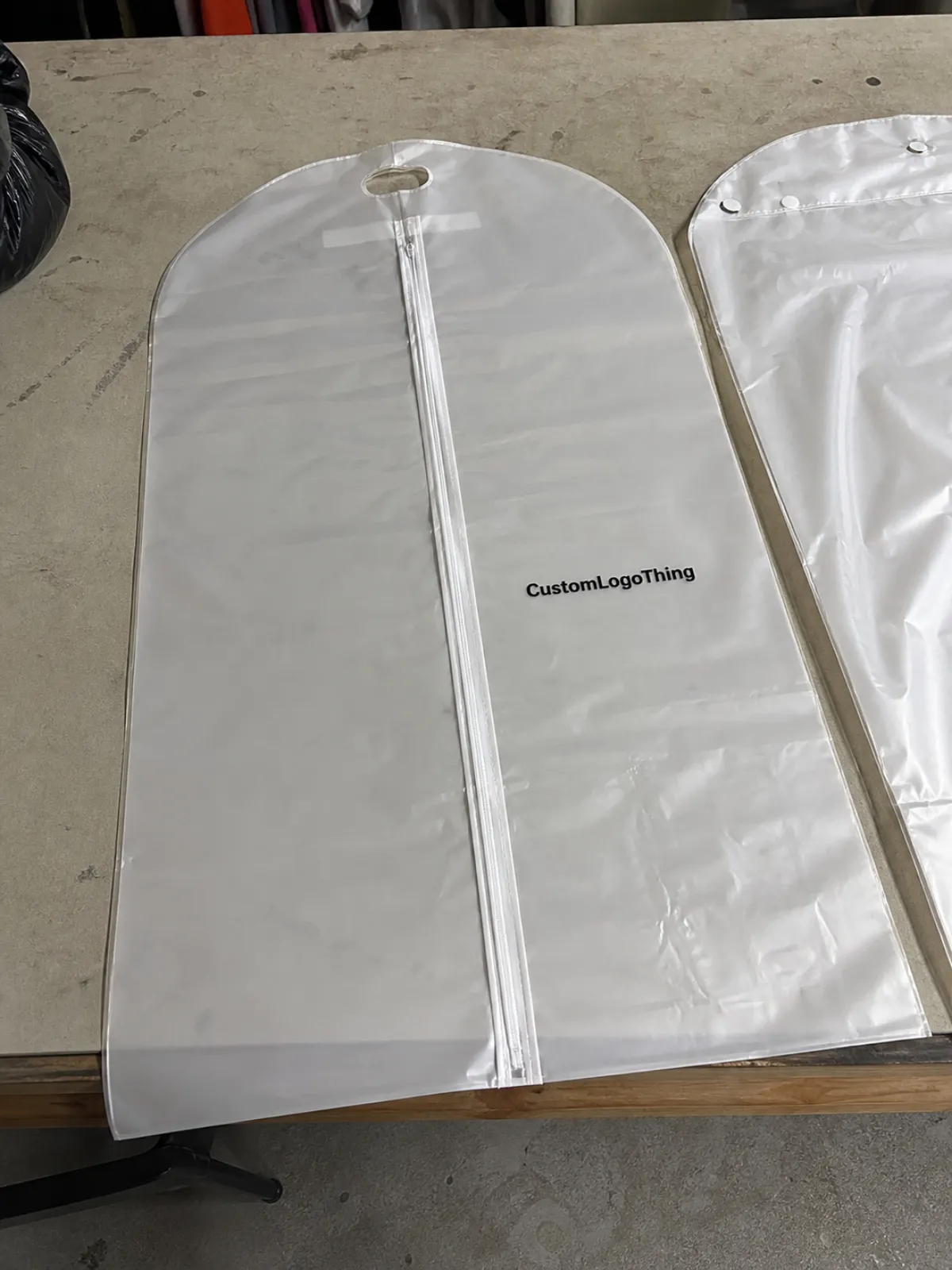
From a buyer’s point of view, a garment bag is part protection, part presentation, and part logistics. If it wrinkles badly, splits near a seam, or clouds the product inside, the bag stops doing its job. For apparel brands, that is more than a packaging issue; it affects returns, shelf appearance, and how premium the product feels before anyone touches the fabric.
A Private Label Custom plastic Garment Bags Supplier usually manages the full build: material selection, film thickness, dimensions, closure type, hanger features, print method, and the way the bags are packed for shipment. A simple open-top poly sleeve for folded shirts is a different project from a gusseted cover for coats or a reinforced bag for suits. The best suppliers know which details matter for each category and which upgrades are just noise.
Private label means the bag is made to carry your identity, not the factory’s. That can include logo placement, custom sizing, special finishes, or a repeated pattern that fits the rest of your packaging system. Stock with a label is faster and cheaper, but it gives up control over fit, look, and the overall impression. That shortcut works only when the garment and the brand are both forgiving.
Most buyers need help with practical limits as much as design. Some changes are straightforward, such as bag length, width, gusset depth, color, perforation, and carton count. Others, like unusual closures, complex multi-color artwork, or a very small order, can trigger tooling fees and slower production. That is normal manufacturing behavior, not a supplier being difficult.
If the bag is part of a broader packaging system, it should match the rest of the line. Pairing it with Custom Labels & Tags keeps the branding consistent, and a coordinated set of Custom Packaging Products helps the whole presentation feel planned rather than improvised.
How private label garment bag sourcing works from brief to sample
The cleanest orders begin with a complete brief. “We need a nice bag” is not enough. A useful brief includes the garment type, whether it will be folded or hung, exact dimensions, desired material, print artwork, target quantity, shipping destination, and any functional requirements such as anti-fog film or reinforced hang holes. The more precise the brief, the fewer costly revisions later.
Most projects move through the same sequence: spec review, artwork review, material recommendation, sample or mockup, revision, approval, production, inspection, and delivery. A strong supplier will pause when something is unclear. That can feel slower at the beginning, but it usually prevents a batch of bags that are technically finished and practically wrong.
There are three approval tools, and buyers should treat them differently. A digital mockup is useful for logo placement, text layout, and general composition. A physical sample shows the real film feel, clarity, seal strength, and actual fit around a garment or hanger. A pre-production sample confirms the final setup before the bulk run starts. If those stages get collapsed into one casual approval, the risk lands in production.
Internal alignment matters too. Sourcing may care about price, merchandising may care about the look, and operations may care about fit and handling. If those groups are not aligned before quoting starts, the supplier gets mixed signals and the order drifts into revision loops. That costs time and tends to create unnecessary compromises.
Good briefing saves money. One document with dimensions, artwork files, film preference, closure type, pack method, and delivery date is better than scattered emails. It gives the supplier something real to build from and makes the quote more useful on the first pass.
Production steps, lead times, and what slows orders down
Plastic garment bag production usually follows a predictable chain. Film is selected or extruded, artwork is printed if the bags are branded, the film is cut to size, seams are sealed, closures or hang features are added when needed, and the finished bags are packed for shipment. The process sounds simple because the sequence is simple. The delays come from rework, not from the core steps.
For straightforward runs with standard specs, sampling often takes around 5-10 business days after artwork is clean and dimensions are confirmed. Bulk production can land in the 12-20 business day range after final approval. More customized jobs, tighter color matching, or special closures can push the schedule toward 20-30 business days. Freight time sits outside that clock, and freight is often what puts a launch at risk.
Three issues slow orders most often: unclear artwork, late approvals, and custom construction that needs new tooling or more careful print setup. Color is a common trap. A logo that looks fine on screen can print too dark, too pale, or slightly off tone if the proofing stage is rushed. That kind of miss is small in isolation and hard to ignore once the bags are stacked in a warehouse.
Standard specs move faster than unusual ones. A common size, in a common film, with a one- or two-color print, is easier to quote and easier to run. Add oversized dimensions, matte film, zipper closure, and full-bleed art, and the work becomes more exacting. That is not a problem if the schedule allows for it. It is a problem when the buyer wants a custom build on a stock timeline.
For shipment integrity, buyers who care about handling should ask how the bags will be packed and tested. Compression in cartons, hang-hole strength, and seal durability matter once the product leaves the line. Standards from organizations like ISTA are useful when transit performance matters, and broader packaging guidance is available through the Institute of Packaging Professionals.
Cost, pricing, MOQ, and quote factors that move your unit cost
The best way to compare quotes is to understand what actually changes price. The main drivers are material thickness, bag size, print coverage, and order volume. After that come closures, special finishes, carton configuration, and freight. A low unit price is not useful if it leaves out setup, tooling, or shipping. That kind of quote looks efficient only until the missing pieces are added back in.
MOQ for a simple custom garment bag often starts around 1,000 to 3,000 pieces. Fully custom runs, special film requests, or print-heavy programs are frequently higher, sometimes in the 5,000 to 20,000 piece range. As the volume rises, unit cost usually falls because setup and print prep are spread across more bags. That part is predictable; the harder decision is how much flexibility the brand really needs.
Indicative pricing helps buyers frame expectations, though exact numbers depend on size and print coverage. A plain clear sleeve in lighter film might land at the low end of the market, while a heavier cover with printed branding, reinforced hanging features, or special closures can move the cost noticeably upward. For planning purposes, many buyers see simple custom bags in a modest range and premium builds climb from there, especially once freight and packaging are included.
| Spec choice | Typical unit impact | What it changes |
|---|---|---|
| 1.5-2 mil PE film | Lowest | Lightweight, lower cost, suitable for simple apparel protection |
| 2.5-3 mil PE or PP film | About 8%-20% higher | Better strength, cleaner presentation, less distortion |
| One- to two-color print | Moderate | Easier setup and color control, faster run |
| Full-coverage or multi-color print | About $0.02-$0.08 more per unit | Higher ink use, tighter registration, slower output |
| Zipper or adhesive closure | About $0.03-$0.10 more per unit | Better retail feel, more assembly labor |
Watch for items that are often missing from the first quote: tooling or plate charges, sample fees, overage allowances, master carton labeling, and freight. If one supplier includes them and another does not, the lower number may be incomplete rather than competitive. Ask for a landed-cost view whenever possible. That is the number that matters once the order reaches the warehouse.
Material, thickness, printing, and closure specs worth paying for
Most garment bags are made from PE or PP film. PE is softer and more forgiving, which helps when the garment needs a little drape and a less rigid feel. PP is usually clearer and crisper, which can look sharper at retail. Neither one is the universal answer. The right choice depends on the garment type, the brand’s visual tone, and how the bag will be handled.
Thickness is usually measured in mils or microns. A lightweight retail sleeve may sit around 1.5-2 mil, while a stronger garment cover often lands in the 2.5-3 mil range. Thicker film improves tear resistance and often gives the bag a better hand feel, but it can also add stiffness and cost. For expensive garments, that tradeoff is usually worth evaluating rather than avoiding.
Printing matters more than many buyers expect. Flexographic and gravure printing are common for larger runs because they handle speed and repeatability well. Digital printing can make sense for lower quantities or artwork that changes often. The real constraint is not whether the logo can be printed; it is whether it can be printed cleanly on the chosen film at the chosen quantity. White ink, full-coverage graphics, and dark artwork on transparent material require more control and usually more budget.
Closure choice changes both function and price. Open-top bags are the simplest. Hanging bags need hanger holes or reinforced tops. Gusseted bags fit bulkier garments better and reduce tension at the seams. Zippers and adhesive strips make sense if the bag is intended to be reopened by shoppers or reused in storage, but they add labor and can slow the line.
What usually deserves the extra spend
- Thicker film for heavy garments, sharp edges, or products that need a cleaner retail feel.
- Better print registration when the logo is part of the brand presentation, not just a label.
- Reinforced hang features if the bag will stay on display for a long time or travel through multiple handling points.
- Anti-fog or higher clarity film if product visibility matters on the rack or in transit.
Quality control should also include practical checks: gauge consistency, seal strength, print rub resistance, visual clarity, odor, and dimensional tolerance. A bag can pass a basic visual check and still fail when a warehouse team packs it by the thousand. Those small failures are what create reorders.
Step-by-step checklist for choosing the right supplier
Start with evidence. Ask for product photos, spec sheets, compliance notes, and examples of similar work. A capable Private Label Custom plastic garment bags supplier should be able to explain film options, closure choices, and the tradeoffs between speed, cost, and presentation. If the response is vague, expect the order to stay vague too.
- Verify fit: confirm the supplier has made bags for the same garment category, whether that is shirts, dresses, outerwear, or suits.
- Check materials: ask for film type, thickness, and whether the build uses virgin material, recycled content, or a blend.
- Review print capability: confirm they can hold the logo detail, color count, and placement you need.
- Request samples: judge clarity, seal strength, drape, and how the bag behaves around the actual garment.
- Compare communication: see how quickly they answer revision questions and whether they explain tradeoffs clearly.
If a supplier cannot explain why one thickness costs more or why a zipper closure slows the line, that is a warning sign. They do not need to know everything. They do need enough knowledge to keep you from ordering the wrong spec.
Ask for one detailed quote, not a vague price. The strongest suppliers break out bag cost, tooling, sample fees, packaging, and freight so you can compare like with like.
It also helps to think in terms of the full packaging set. A garment bag may be the outer shell, but it should fit with labels, inserts, cartons, and any retail packaging that ships with the product. When those parts are aligned, the brand feels intentional. When they are not, even a well-made bag can feel like an afterthought.
Common mistakes that create wrinkled bags, weak seams, and reorders
The most expensive mistakes are usually basic. Buyers estimate dimensions from a similar product instead of measuring the actual garment, hanger, and fold. Then the bag pinches at the shoulder, hangs too loosely, or drags on the floor. None of those outcomes looks premium, and all of them are avoidable.
Another common error is choosing film that is too thin for the garment. A sleeve for a lightweight shirt and a cover for a heavy coat are not interchangeable. If the film is underbuilt, the seams can split and the bag can wrinkle sharply, which makes even good branded packaging look rushed. A stronger film usually costs more, but the alternative is often a cheaper bag that performs badly in use.
Print mistakes are just as frustrating. Logos land too low, artwork is approved from a screen rather than a sample, or the graphics crowd the transparency so much that the garment disappears behind the branding. The bag should support the product, not fight it. A restrained mark on clean film often looks more polished than a crowded design with too much ink.
Skipping physical samples is the biggest avoidable risk. A digital proof cannot show whether the hanger hole tears, whether the zipper runs smoothly, or whether the bag clings to fabric in a way that causes wrinkles. A sample is not extra polish. It is the cheapest way to confirm that the specification actually works.
- Do not use guessed dimensions.
- Do not approve color from a phone screen alone.
- Do not ignore how the bag folds and packs into cartons.
- Do not assume one supplier’s standard spec matches yours.
For multi-item launches, keep the bag, labels, and cartons under the same planning discipline. Packaging drift is easy to miss when each item is ordered separately. By the time the whole set arrives, small mismatches can make a polished product line feel pieced together.
Expert tips for cleaner launches and next-step ordering
A clean launch starts with a short spec sheet. One page is enough if it includes dimensions, garment type, thickness, closure, print count, pack method, target quantity, and delivery date. A good private label custom plastic garment bags supplier can work from that faster than from scattered emails and half-labeled attachments.
Ask for two quotes on the exact same spec. If one comes in much lower, compare line by line: setup, sample, pack-out, freight, and tooling. If the lower quote still wins after everything is included, great. If not, the budget was being padded by optimism rather than data.
For new programs, a three-step order path works well: sample pack, pilot run, then full production. The pilot run catches fit issues, color drift, and carton pack mistakes while the quantities are still manageable. That is far less painful than discovering a problem after thousands of bags have already been printed and boxed.
Materials paperwork matters too. Depending on the market, ask for declarations on material composition, recycled content, and any testing references tied to transit or package performance. If paper components are part of the overall system, FSC documentation may matter. Not every order needs every document, but collecting them early avoids delays later.
The final rule is simple: do not release the order until the specs, artwork, sample approval, and delivery terms are in writing. That is how a private label custom plastic garment bags supplier earns trust, and it is how buyers avoid a warehouse full of almost-right product while the launch date keeps moving.
What should I send a private label custom plastic garment bags supplier first?
Send exact bag dimensions, garment type, closure preference, print artwork, and target quantity. Include your preferred material feel or thickness if you already know it. A sample or reference photo helps even more because it reduces guesswork at the quoting stage.
How do I compare quotes from garment bag suppliers without getting fooled?
Match the same size, thickness, print coverage, closure type, and shipping terms on every quote. Separate unit price from tooling, sample, freight, and packaging costs. A cheap quote that leaves out setup or freight is not a cheaper order; it is just incomplete.
What is a realistic MOQ for private label custom plastic garment bags?
MOQ depends on size, print method, and how custom the bag is. Simple stock-based custom runs are usually lower than fully custom film or tooling-heavy orders. Ask for multiple MOQ tiers so you can see the tradeoff between flexibility and unit cost.
How long do sampling and production usually take?
Sampling is often the fastest part if the specs are clear; artwork revisions are what stretch it out. Bulk production takes longer when the order needs special sizes, custom printing, or nonstandard closures. Add freight time separately, because that is where rushed launches usually go sideways.
Which bag specs matter most for retail apparel?
Size, thickness, clarity, seal strength, and closure style matter most for presentation and protection. Print quality matters when the bag is part of the brand story, not just a transport sleeve. If the garment wrinkles or slides around inside the bag, the spec needs to change no matter how good the logo looks.
Choose the private label custom plastic garment bags supplier that can show the spec, explain the tradeoffs, and put the full cost in writing. That is the difference between a bag that merely ships and a bag that supports the product from the first warehouse touch to the customer’s hands.

