What a custom small retail paper bags bulk order solves on the shelf
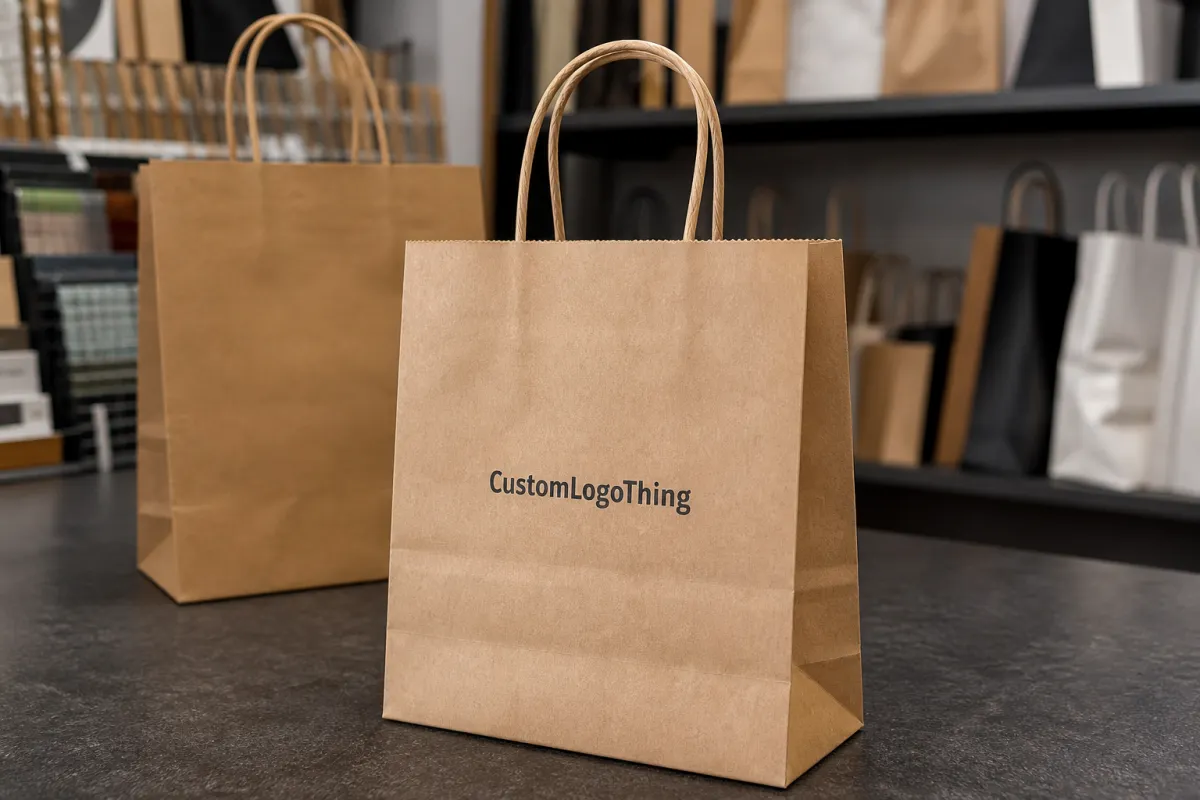
A custom Small Retail Paper Bags bulk order solves a practical store problem: how to hand over a purchase that looks finished, protects the product, and moves quickly at checkout. Small bags are seen up close, so defects in paper, printing, or handle strength show up fast. If the bag feels flimsy or inconsistent, it can make the whole purchase feel less considered.
For jewelry, cosmetics, candles, accessories, gift sets, and other compact goods, the bag is part of the customer experience. It carries the item, but it also supports the brand’s presentation. A consistent bag spec reduces mis-picks, makes back-of-house storage easier, and avoids substitutes that look close but do not work well in use.
That is especially useful when the rest of the packaging line is coordinated. If the store also uses Custom Packaging Products such as printed boxes or tissue, matching the tone and print style keeps the package set from feeling pieced together.
The smallest retail bag often gets the most scrutiny because it is handled in front of customers, carried in public, and photographed in transit. That makes material choice, structure, and finishing more important than many buyers expect.
Paper weight, size, and bag structure that hold up in daily use
Size should start with the actual packed product, not a catalog category. Measure the item with tissue, inserts, or any box it will travel in, then leave enough room for easy loading and a clean top fold. Common starting points for compact retail goods include 5 x 3 x 8 inches, 6 x 3.5 x 9 inches, and 8 x 4 x 10 inches, but the right size depends on the real packed dimensions.
Paper stock affects both appearance and durability. Natural kraft gives a warmer, more casual look and is often used for lighter goods. White kraft prints more cleanly and usually suits beauty, fashion, and gift retail. Coated paper can look more premium, but it adds cost and may feel too polished for a store that wants a simple, earthy look.
For most small retail bags, paper weight typically falls in the 120-200 gsm range. Lighter stocks work for soft goods and very small accessories. Heavier stocks are better for boxed products, glass jars, or anything that adds stress to the handle and bottom fold. If the bag will carry a boxed item, size it for the box plus the handling wear from checkout, bags-in-bags storage, and customer use.
Structure matters just as much as paper. Reinforced tops help the opening hold its shape. A well-glued bottom keeps the base from shifting under load. Handle attachment points need to match the true weight of the product, not the ideal sample loaded with nothing inside. A sample may look fine on the table and still fail once it is stuffed, stacked, and handed across the counter many times.
Here is a practical comparison for a custom small retail Paper Bags Bulk Order:
| Bag build | Best use | Typical MOQ | Indicative unit cost |
|---|---|---|---|
| Natural kraft, twisted paper handle, 1-color print | Jewelry, gift cards, light accessories | 3,000-5,000 pcs | $0.18-$0.30 |
| White kraft, flat paper handle, 1-2 colors | Cosmetics, candles, small boxed items | 5,000 pcs | $0.24-$0.40 |
| Premium coated stock, rope handle, spot finish | Boutiques, gifting, elevated retail packaging | 5,000-10,000 pcs | $0.38-$0.75 |
Those figures are directional, not a quote. They show how quickly paper grade, handle choice, and finish move the budget. In practice, the wrong size often costs more than a modest print upgrade because an oversized bag wastes material while an undersized one creates damage and returns.
Print coverage, handles, and finishing choices that change the look
Print coverage has a bigger effect on appearance than many buyers expect. A clean one-color logo on kraft can look strong if the spacing is disciplined. Full-panel artwork can also work, but only when the bag is meant to act like part of the display. If the bag mainly moves product from counter to door, a simpler layout usually looks better and costs less.
Color count matters because each extra ink color adds setup and can increase alignment risk on a small panel. That risk is minor on large-format packaging, but it shows up fast on a compact bag where the logo sits near a fold or gusset. Buyers should ask where the artwork will sit relative to the handle, fold lines, and seams before approving a proof.
Handle choice changes both cost and perceived quality. Twisted paper handles are the standard for everyday retail because they are durable and economical. Flat paper handles are neat and lightweight, which works well for smaller loads. Rope handles feel more premium, but they are not necessary for every store and they raise unit cost. If the bag rarely carries much weight, a higher-cost handle may add little practical value.
Finishing should match how the bag is actually used. Matte coating gives a softer look. Gloss makes color blocks stand out. Hot stamping works best on simple logos rather than crowded layouts. Soft-touch coating feels refined, but it belongs on programs where the bag is part of the brand experience, not a throwaway carrier. The right finish is the one that supports the product, the shelf, and the checkout moment without adding unnecessary cost.
When comparing options, keep the print area restrained for utility bags and reserve special finishes for programs where the packaging itself is doing real sales work. That keeps the order readable, repeatable, and easier to approve.
Pricing, MOQ, and the unit-cost factors buyers should compare
The first question in any custom small retail paper Bags Bulk Order is usually MOQ, because it affects price, storage, and reorder timing. A 3,000-piece run may fit a single location or a short campaign. Multi-store programs often need 5,000 to 20,000 pieces before the economics settle into a predictable range.
The real cost driver is the full spec. Size, paper weight, number of print colors, handle style, coating, and carton pack count all move the price. Simple kraft with one-color printing is cheaper than coated stock with rope handles and full-bleed artwork. That difference is normal, not a supplier tactic.
The main mistake is comparing quotes that are not equivalent. One quote may use heavier gsm paper, another may include fewer bags per carton, and another may use a different handle adhesive or reinforcer. Those differences are easy to miss until the shipment arrives. A proper quote should list dimensions, gsm, print colors, handle type, finish, and pack-out method side by side.
The spec sheet matters more than the mockup. Two bags can look similar online and still behave very differently once they are loaded, stacked, and passed across a register.
If the bag is part of a wider branded packaging setup, it helps to confirm whether the supplier supports Wholesale Programs for repeat replenishment. That reduces spec drift on future orders and makes reordering simpler.
Production steps and turnaround expectations from proof to packout
Production usually moves through a predictable sequence: artwork review, proofing, approval, die preparation, printing, converting, inspection, and carton packing. Delays are more often caused by unclear files, late copy changes, or a proof that does not match how the bag will actually be used than by the press run itself.
For planning, separate proof time from production time. A clean proof cycle may take a few business days, especially if the logo needs color correction or the size needs adjustment. Standard production often runs about 12-18 business days after approval. Special coatings, complex print layouts, or a crowded factory schedule can extend that window. Freight time is additional.
Color control deserves attention. If the brand uses a Pantone reference, send it. If the bag needs to match other product packaging in the line, ask for proofing against the exact spec rather than a loose screen preview. Small color shifts are easy to miss in a file and obvious in a stack of finished bags.
Quality control should be specific. Useful checks include glue-line consistency, handle pull resistance, print registration, bottom-square accuracy, and carton labeling. Buyers concerned about fiber sourcing can request FSC-certified paper. For long-distance freight, packaging that follows practical ISTA guidance helps reduce crushed corners and scuffed surfaces in transit.
Shipping, carton counts, and store-ready packing details
Shipping details affect more than freight cost. They shape how a warehouse receives the goods, how stores store them, and how fast the program can be replenished. In a custom small retail paper Bags Bulk Order, bags are often packed in bundles of 100 or 200, then grouped into cartons that are light enough to move without tearing or crushing the contents.
The carton format should match the network. A single boutique can work with smaller cartons. A central warehouse usually cares more about pallet pattern, outer labels, and whether cartons arrive cleanly separated by size. If a shipment includes multiple bag sizes, the carton labels should be obvious so staff can identify the right size without opening every box.
Paper packaging is sensitive to moisture and rough handling. Damp docks, unwrapped pallets, and poor stretch wrap can damage bags before they reach the store. Ask whether cartons are lined, whether pallet tops are protected, and how the load is stabilized before transit. Thin coatings scuff easily, and a crushed corner is the kind of defect that shows up immediately at checkout.
For sustainability reporting, ask how the paper is sourced and what the carton construction looks like. Retail teams also appreciate pack-outs that are ready to shelve instead of being repacked on arrival. Every extra touch point adds labor and increases the chance of damage.
What to confirm before choosing a packaging supplier
Before placing a custom small retail Paper Bags Bulk Order, confirm five basics: material options, print capability, proofing process, MOQ, and whether the factory can repeat the same spec on the next run. A polished quote is not enough. A supplier needs to hold the color, handle strength, and finish quality over time, not just for the first sample.
Consistency matters because packaging is judged in batches. If the first run looks clean and the reorder comes back with a different paper tone or weaker handle attachment, the program starts to look improvised. Stores notice that, and customers do too.
Communication quality is a strong signal. Clear dimensions, exact file requirements, realistic lead times, and direct answers to spec questions are more useful than broad promises. If the supplier can explain why one structure is better for a given item, that is a better sign than a glossy mockup with no technical backing.
It also helps to confirm whether the supplier can support repeat replenishment without drifting from the original spec. For teams that reorder several times a year, spec stability is often more valuable than a small discount on the first run. The FAQ can also reduce back-and-forth on files, proofs, and timing before the order is opened.
Next steps for placing a clean bulk order without delays
The fastest path to a clean bulk order is simple: lock the dimensions, choose the paper stock, select the handle style, and gather the logo files before requesting a quote. If the artwork is not final, send the best available file and a short note about what the bag will carry. That is enough for a serious supplier to narrow the right structure and price range.
Ask for a proof against exact specs, not just a visual concept. The proof should show size, print area, handle style, and carton count so the buyer can judge fit, handling, and storage together. That matters even more if the bag will sit beside Custom Printed Boxes or other coordinated product packaging in the same launch.
Then compare price, lead time, and pack-out together. The lowest unit price is not always the best value if the bags arrive in awkward carton counts or create extra warehouse handling. The right order balances presentation, durability, and replenishment without adding avoidable work for the store team.
Once those pieces line up, the bag stops being a generic supply item and starts doing the job it was hired for: carrying the sale cleanly and consistently.
Frequently Asked Questions
What size is best for a custom small retail paper bags bulk order?
Choose the smallest size that still fits the product comfortably, with room for tissue, inserts, or a box if needed. The best size usually comes from the packed dimensions, not the appearance of the item alone.
How does MOQ affect pricing on small retail paper bags?
Higher quantities usually reduce the per-bag cost because setup, printing, and converting costs are spread across more units. Compare unit price, freight, and storage together so the landed cost is clear.
Can I print on both sides of the bag?
Yes, many retail paper bag builds support front-and-back printing. The final price depends on artwork coverage, number of colors, and whether the back panel needs the same detail as the front.
What is a realistic turnaround for custom small retail paper bags bulk order production?
Standard production often runs about 12-18 business days after proof approval, but the exact timeline depends on paper availability, print complexity, and finish selection. Freight time is separate.
What files do I need before requesting a quote?
Send vector artwork when possible, plus the bag size, paper type, handle style, print colors, and estimated quantity. If the artwork is still in progress, a logo file and a short description of the product use are enough to start.
For retailers that want packaging to feel intentional without creating extra work, the best order is the one built from the real product, the actual handling conditions, and the warehouse realities behind the counter.

