Custom Wine Paper Bags Bulk Order for Retail Buyers
If you are sourcing a custom wine Paper Bags Bulk Order, the bag is part of the product experience, not just a carry item. It is the last piece of packaging a customer touches before the bottle leaves the counter, the tasting room, or the gift table. If the handle pulls, the base sags, or the print looks off, the whole purchase feels less finished than it should.
For buyers, the useful questions are practical: does the bag fit the bottle, hold up under real weight, print cleanly, and arrive on time? Those answers depend on four things: size, structure, finish, and production plan. If those are right, the bag works. If they are wrong, everything else becomes a rework.
Custom custom wine paper bags bulk order: Why the Right Bag Sells the Bottle
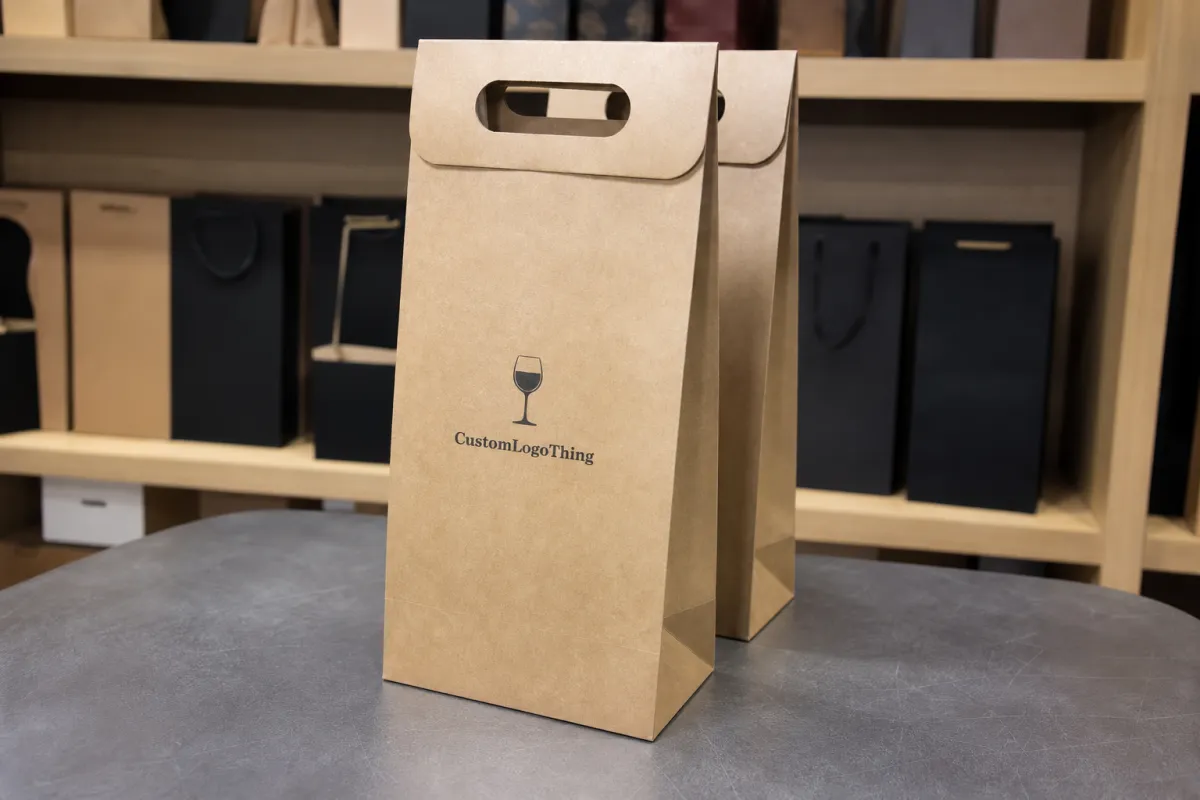
A wine bag changes how a bottle is perceived before anyone reads the label. That matters in retail, tasting rooms, corporate gifting, and seasonal promotions where packaging has to justify the price quickly.
The bag also affects the handoff. A stable base, enough gusset depth, and a handle that carries comfortably make the bottle feel deliberate and gift-ready. A poor build does the opposite. Common failures are easy to spot: handles pulling out, bottoms bowing, bottle shoulders rubbing the sides, or a logo landing too close to a fold.
Good wine packaging should be simple to carry and hard to damage. The bag has one job: protect the bottle and present it cleanly.
That is why buyers often compare wine bags with custom printed boxes or other branded packaging. The goal is the same: the package should support the product tier without adding unnecessary cost or confusion. If the bottle is for gifting, the bag should feel finished. If it is for everyday retail, the bag should feel sturdy and efficient.
For a bulk order, start with fit. Confirm whether the program is for single bottles, two-bottle sets, chilled bottles, or gift bundles. A bag that is too tight creates friction during packing; a bag that is too loose looks sloppy and wastes material.
Bag Styles, Handles, and Print Options That Affect the Final Look
Wine bags look simple until you price them. Handle type, paper grade, finish, and print coverage all affect appearance and unit cost.
| Style | Typical Use | Look and Feel | Cost Impact |
|---|---|---|---|
| Twisted handle | Single-bottle retail programs | Practical, familiar, easy to stack | Lower |
| Flat handle | High-volume value wine bags | Basic, lightweight, efficient | Lowest |
| Rope handle | Premium gifting and higher ticket bottles | More polished, better carry comfort | Higher |
| Die-cut | Minimalist retail packaging | Clean silhouette, modern shelf presence | Varies by reinforcement |
Flat handles work best when price is tight and the bottle weight is modest. Twisted handles are the standard middle ground. Rope handles cost more, but they improve hand feel and are better suited to premium programs. Die-cut bags can look sharp, but they need careful reinforcement if the bottle is heavy.
Construction matters just as much. Single-bottle bags are the baseline. Two-bottle bags need wider gussets, stronger side panels, and a bottom board that can hold shape. If the bags are for gift sets or heavy glass, ask for reinforcement at the handle anchors and bottom so the load does not shift during carry.
Print options should match the brand and the budget. A one-color logo on kraft paper is efficient and clean. Full-coverage artwork creates a more branded look, while foil and embossing add texture and shine. Those finishes only help if the layout is disciplined. A cluttered bag with expensive effects still looks cluttered.
Useful add-ons include bottom boards, tissue inserts, matte lamination, and window cutouts. Kraft gives a natural retail feel. Coated paper offers a smoother surface and sharper ink. If bottle shapes vary, test the bag with the actual bottle instead of relying on a flat mockup.
Specs Buyers Should Lock Before Sampling and Approval
Most delays start with missing measurements. If a buyer sends only a logo and quantity, the first sample often misses the mark. The fix is to lock the core specs before anyone approves artwork or tooling.
Measure the bottle height, shoulder width, and widest point. For a standard 750 ml bottle, the bag needs enough clearance for easy insertion and removal, plus enough gusset depth for the bottle to sit flat. If the bottle is chilled, add room for condensation or a sleeve. Tight bags and wet glass are a bad combination.
Paper weight matters more than many buyers expect. Lighter kraft can work for simple programs, while premium retail runs often need heavier stock or bottom reinforcement. The load path should move through the side panels and top fold, not through weak glue spots or thin paper.
Before sample approval, confirm these items:
- Usable handle drop so the bag carries without dragging.
- Gusset depth so the bottle sits squarely in the bag.
- Bottom construction so the base stays flat after filling.
- Artwork bleed and safe zone so logos do not run into folds.
- Print placement on both sides so the brand reads cleanly from every angle.
For color control, ask for PMS matching if brand accuracy matters. If the artwork includes gradients or small text, request a high-resolution proof and check line weights carefully. Tiny type on a narrow wine bag is easy to lose.
Real-world testing is more useful than renderings. Test the sample with an actual bottle, especially if the bottle is chilled or unusually heavy. If the order will ship or sit in distribution, review handling expectations through ISTA guidance. If sustainability claims are part of the package, verify them against FSC standards before anything goes to print.
Materials, Reinforcement, and Quality Control That Prevent Bad Surprises
Paper grade is where many bulk orders get under-specified. A bag can look premium in a PDF and still fail in use if the stock is too thin, the base is weak, or the handles are attached poorly. Buyers should ask the boring questions before approval.
Kraft paper is common because it is strong, printable, and predictable. White or coated stock gives a cleaner print surface and sharper color, but it can show scuffs faster if the finish is too glossy. Recycled content is acceptable if the fibers are strong enough to hold shape. Short-fiber stock may feel soft and load poorly.
Reinforcement details matter just as much as the main paper. Bottom boards should match the actual footprint, not float loosely inside the bag. Handle anchors need enough glue area and fold depth to resist pull-out. Side gussets should stay crisp so the bottle stands straight instead of leaning.
Quality-control checks worth requesting before shipment:
- Load test the handle with the intended bottle weight.
- Check the base flatness so the bag stands without rocking.
- Inspect fold memory so the bag opens cleanly after packing.
- Measure print registration to confirm both faces stay centered.
- Rub-test the ink or foil if the bags will be packed tightly in cartons.
Color consistency deserves attention too. A bag program can drift if one lot is warmer, cooler, or duller than the approved sample. The risk increases with dark kraft, metallic inks, and full-coverage art. If brand color matters, ask for tolerance ranges and document what is acceptable.
Storage also affects quality. Paper bags do not like damp warehouses or badly stacked pallets. Glue spots can soften, edges can curl, and cartons can compress the side panels. If the bags are being held for a seasonal launch, ask how they should be packed and stored before the first carton arrives.
Cost, MOQ, and Quote Drivers for Bulk Orders
Price usually moves in a few predictable directions: quantity, paper grade, handle type, print colors, finishing, inserts, and whether the bag needs a custom structure. Buyers often focus on unit price and ignore setup, freight, and sample cost, which is how a cheap quote becomes an expensive order.
For a custom wine paper Bags Bulk Order, rough pricing for standard single-bottle builds often lands in these bands, depending on spec and market conditions:
| Order Type | Typical MOQ | Rough Unit Price at 5,000 pcs | Notes |
|---|---|---|---|
| Plain stock with small logo | 1,000-2,000 | $0.18-$0.28 | Best for simple retail fills and conservative budgets |
| One-color custom kraft bag | 2,000-3,000 | $0.22-$0.38 | Good balance of branding and cost control |
| Premium rope-handle bag | 3,000-5,000 | $0.35-$0.65 | Higher feel, stronger shelf presence, better for gifting |
| Foil, emboss, or special finish | 5,000+ | $0.48-$0.90 | Requires more setup and tighter approval |
Those numbers are only a frame of reference. They move with size, paper weight, country of origin, carton count, freight method, and reinforcement details. If a quote comes in far below the expected range, ask what was removed. Usually it is handle quality, paper weight, or the bottom board.
MOQ follows complexity. Plain kraft with a simple one-color logo can often start lower. Full-coverage print, foil, and reinforced two-bottle builds usually need higher volume because setup is heavier and waste risk is higher. If the program is new, order one core SKU first and expand after sell-through is clear.
To compare suppliers properly, request the same line items every time:
- Unit price by quantity tier.
- Setup or plate fees.
- Sample cost and sample freight.
- Production lead time after proof approval.
- Freight terms, carton pack, and destination ZIP or port.
If you want to reduce spend without making the bag look compromised, simplify the art, reduce print colors, standardize bag sizes, and keep one construction across the range. Clear packaging is usually cheaper and easier to produce than decorative clutter.
Process, Proofing, and Turnaround: From Artwork to Delivery
A clean process saves money. A messy process eats it. The usual sequence is straightforward: spec sheet, dieline, digital proof, sample, final approval, production, and delivery. Skip one step and the rework usually shows up later.
The practical flow looks like this:
- Share bottle specs. Include height, diameter, shoulder width, and whether the bottle is standard, heavy, or chilled.
- Confirm the bag structure. Pick size, handle type, paper weight, and whether the order is single- or two-bottle.
- Review the dieline. Check logo placement, bleed, safe zones, and panel alignment before any tooling starts.
- Approve the sample. Test with an actual bottle and confirm carry feel, bottom stability, and print position.
- Release production. Lock quantities, carton count, ship-to details, and the freight method.
Delays usually come from the same places: artwork files in the wrong format, approximate bottle dimensions, logo changes after proof approval, or incomplete shipping details. None of that is surprising, but all of it costs time.
Timing depends on complexity. Sample prep often takes 5-10 business days. Production for standard printed wine bags often runs 12-20 business days after approval. Transit depends on the route and whether the shipment goes ocean or air. Flat-packed bags usually ship more efficiently than assembled formats, and multi-SKU orders need extra staging time.
The safest schedule leaves room for a correction. If the bags are tied to a launch, tasting event, or holiday rush, approve artwork early and keep the first sample honest. Rushed approvals are where expensive surprises start.
What to Send Next for a Fast, Accurate Bulk Order
If you want a useful quote, send usable information. “We need something nice” is not enough.
Send these five items first:
- Bottle dimensions with height, diameter, and shoulder width.
- Quantity target and any tier breaks you want priced.
- Artwork files in vector format if possible, plus PMS colors if they matter.
- Ship-to ZIP code or destination port so freight is real, not estimated in a vacuum.
- In-hand date so the schedule fits the promotion or gift season.
Ask for two quote versions if you can: a standard build that hits budget and a better-finish version with rope handles, heavier paper, or a cleaner print upgrade. That makes the tradeoff easier to judge.
For a custom wine paper bags bulk order, the order of decisions should be simple: confirm size, approve the proof, lock MOQ, review freight, then release production. If the first order is built on specs instead of assumptions, the bag can scale later with less risk.
What is the usual MOQ for custom wine paper bags in bulk?
MOQ depends on size, print complexity, and handle style. Simpler kraft runs usually start lower than fully custom structures, while foil, multi-color, or reinforced bags often need higher minimums. Ask for tiered pricing so you can see the jump between the starter quantity and the next break point.
How do I choose the right size for a 750 ml wine bottle?
Measure the bottle height, shoulder width, and widest point before picking the bag. Leave enough clearance for easy loading and enough gusset depth for the bottle to sit flat without rubbing the sides. If the bottle will be gift-wrapped or chilled, add room for inserts or condensation.
What affects custom wine bag pricing the most?
Quantity, paper grade, print coverage, handle type, and finishing are the biggest drivers of unit price. Setup fees, sample costs, and freight can change the real landed cost more than buyers expect. A cleaner design with fewer colors usually costs less without looking cheap.
How long does a custom wine paper bags bulk order take from proof to delivery?
Timing depends on proof approval, sample needs, production slot, and shipping method. Small changes in artwork or structure can add days, so send complete specs early. Rush jobs are possible sometimes, but they usually cost more and leave less room for revisions.
Can I order different wine labels or artwork in one bulk run?
Yes, if the supplier supports split SKUs or multiple print versions in one order. Expect some setup or price impact because every version adds production handling. Keeping the same bag size and construction across versions is the easiest way to control cost.
If you are ready to move, send the bottle specs, artwork, quantity, and delivery target for a custom wine paper bags bulk order. That gets you a quote based on the actual job, not on guesses and hopeful adjectives.

