Custom Plastic Garment Bags Unit Cost for Bakery Orders
When Bakery Packaging Needs Garment-Bag Thinking
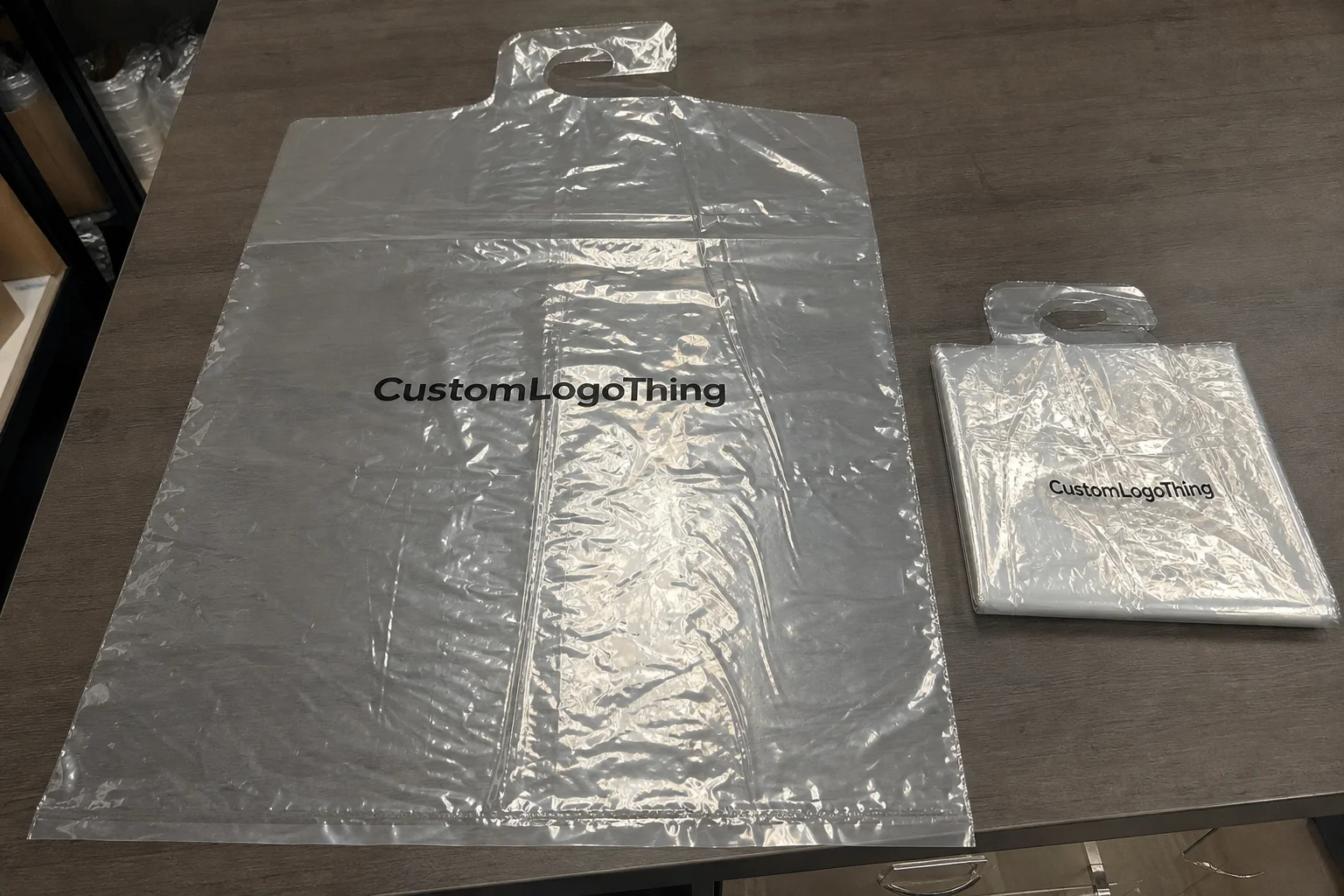
Bakery packaging is usually judged on appearance first, then on how it behaves once the order leaves the counter. That is where garment-bag construction becomes useful. A bakery may not need a literal apparel bag, but the same carry-bag logic applies when the product is boxed, stacked, decorated, and handed over in a hurry. The real question is not what the bag is called. It is whether it protects the order, presents the brand cleanly, and keeps the staff moving.
Custom Plastic Garment Bags unit cost for bakery orders is usually shaped by a small set of choices: handle style, film gauge, size, print coverage, and quantity. Those decisions matter more than decorative details. A clean, practical carry bag can prevent crushed box corners, smudged labels, and the awkward balancing act that happens when a pastry box is too large for a flimsy carrier.
Many bakeries need more than a plain pastry sleeve. Tall cookie boxes, macaron sets, bread bundles, catering trays, and gift assortments often fit better in die-cut handle, patch handle, or soft loop styles. Those formats are borrowed from retail packaging because they make sense for takeout and presentation. They give the customer a better carry experience without forcing the bakery into an overbuilt carton system.
There is also a cost angle that gets missed if the focus stays only on unit price. A bag that opens cleanly, carries well, and holds its shape saves time at the counter. A bag that collapses, tears, or feels too thin slows the line and creates small but constant friction. In bakery work, that operational cost shows up quickly.
For buyers comparing outer carry formats with other branded packaging options, the Custom Packaging Products catalog is a practical place to compare construction, print method, and finish against the bakery’s actual order mix.
A good carry bag is part of the handoff. It protects the order, carries the brand, and keeps the transaction moving without drawing attention to itself.
Bag Styles That Work for Bakery Retail and Catering
Bakery buyers usually end up choosing from a few construction families, and each one solves a different problem. Die-cut handle bags are the most straightforward choice for lighter boxed goods and everyday takeaway orders. They are simple to stack, generally economical, and easy for staff to load quickly during a rush. For a bakery that wants branded packaging without adding a lot of complexity, this is often the starting point.
Patch handle bags add reinforcement around the hand opening. That improves comfort and reduces stress at the grip point, which matters when the order has more weight or the bakery wants a more polished look for seasonal gifting. Soft loop handle bags feel more upscale and are often the best fit for pastry assortments, premium bread bundles, or corporate gift orders. They cost more than basic die-cut styles, but the carry experience is noticeably better.
Fold-over handle bags and gusseted styles are worth considering when the box footprint is wide or the order has height. A gusset gives staff more usable depth, which helps the bag load cleanly without forcing the sides open at the last second. That small change can reduce packing mistakes, especially when the order includes several pieces or a box with a tall dome lid.
Typical bakery use cases include macaron boxes, cookie trays, challah or panettone-style loaves, cupcake carriers, pastry assortments, and holiday gift sets. Some bakeries use the plastic bag as the outer layer while the product stays inside a paperboard box, tray, or wrap. Others need the bag to do more of the visual work because the outer package is what the customer sees first.
Film finish changes both the look and the price. Clear film shows the box or insert inside, which can be useful when the inner packaging is already branded. Frosted film hides scuffs and fingerprints better. White film gives the strongest contrast for logos and is often the easiest to read from a distance. A custom tint can work, but it should be chosen for brand fit rather than novelty.
| Bag style | Best use in a bakery | Typical spec range | Typical unit cost at 5,000 pcs |
|---|---|---|---|
| Die-cut handle | Light pastry boxes, cookie packs, simple takeaway orders | Clear or white LDPE, 1.5-2.5 mil, one-color logo | $0.12-$0.20 |
| Patch handle | Medium-weight bakery boxes, better hand feel, seasonal retail sets | Frosted or white LDPE, 2.0-3.0 mil, one to two colors | $0.18-$0.30 |
| Soft loop handle | Premium gift bundles, catering packs, higher-ticket retail packaging | LDPE, 2.5-3.5 mil, reinforced handle area | $0.24-$0.42 |
| Gusseted carry bag | Wide bakery boxes, stacked items, heavier delivery orders | Gusseted LDPE, 3.0-4.0 mil, larger print area | $0.22-$0.38 |
The table is a buying range, not a promise. Freight, artwork complexity, carton packing, and order quantity can move the final number in either direction. Even so, it gives buyers a practical baseline for comparing carry-bag options against the packaging they already use for boxed pastries and branded retail orders.
Custom Plastic Garment Bags Unit Cost for Bakery Buyers
Custom Plastic Garment Bags unit cost for bakery projects is driven by a short list of variables that are easy to overlook if the buyer is only comparing catalog photos. Material type, film thickness, bag size, handle reinforcement, gusset depth, print colors, ink coverage, setup work, carton count, and shipping weight all influence the quote. A bag can look simple and still cost more than expected if it uses a large blank panel, multiple colors, or a reinforced carry area.
Quantity has the biggest effect on unit price because the fixed production work gets spread over more pieces. That fixed work includes plate or screen preparation, layout checks, press setup, and material planning. At lower volumes, those costs sit on top of fewer units, so the per-bag price rises. At higher volumes, the production run becomes more efficient and the cost per piece usually drops in clear steps.
The lowest unit price is not always the best answer. If the film is too thin, the bag too small, or the handle uncomfortable, the apparent savings can disappear in day-to-day use. Staff notice poor handling first. Customers notice failure immediately. For bakery packaging, it is better to think in terms of landed cost and use value, not just the factory quote.
Material choice is a major factor. LDPE usually has a softer, more flexible feel and is common in premium presentation work. HDPE is crisper and lighter, which can help with a simpler takeaway package where the bag does not need a soft hand. The right choice depends on what the bakery is carrying, how far the customer will travel, and how polished the handoff needs to look.
Printing changes the economics as well. A one-color logo is easier and cheaper to run than a two- or three-color design with broad coverage. Printing on one side costs less than printing on both sides. A centered mark near the upper panel is usually the most economical layout, while large wraparound graphics require more press attention and can add time.
Different order sizes create noticeable pricing steps. A 1,000 to 2,000 piece run may cost 25% to 60% more per unit than a 5,000 piece run, depending on the style and artwork. That does not mean the larger run is automatically the right choice. If the bakery is testing a seasonal program, a smaller first order can be the safer move. The point is to compare quantity breaks instead of assuming the lowest listed price will stay the same at every volume.
A few common buying patterns show up repeatedly:
- Simple die-cut bag, one-color logo, standard clear film: lowest cost, best for basic branded takeaway.
- Patch handle or soft loop bag, heavier film, two-color print: mid-range cost, suited to premium bakery retail.
- Large gusseted carry bag, reinforced handle, more ink coverage: higher cost, useful for catering and boxed orders.
Shipping should stay in the conversation early. Plastic bags are light, but cartons still occupy pallet space, and large sizes reduce packing efficiency. Freight can change the landed price more than buyers expect, especially when a bakery is moving from a small test run to recurring monthly orders. Comparing factory price alone gives an incomplete picture.
For buyers who also manage transport testing for boxed goods, the ISTA test methods are useful for understanding how packaged orders behave under vibration, stacking, and drops. The bakery bag may not be the product under test, but it still contributes to how the full package survives the trip.
Material, Gauge, Size, and Print Specifications
Film gauge, or thickness, is one of the first details to define because it changes both the feel and the durability of the bag. A lighter gauge can work for a small cookie pack or a single pastry box. Heavier gauges are a better fit for cake boxes, stacked orders, and catering bundles where the corners are sharper and the weight is less forgiving. The wrong gauge does more than shift price; it changes whether the bag feels appropriate for the order value.
Size should be based on the actual packed item, not on a rough sketch. Width, height, and gusset have to match the bakery box with enough room for easy loading. If the bag is too tight, staff slow down and the corners snag. If it is too large, the order shifts inside and looks untidy. The cleanest packaging decisions usually come from plain measurement and a realistic view of how the bag will be used at the counter.
Gusset depth matters more in bakery work than many buyers expect. Boxes are often wider than they are tall, and a gusset adds usable volume without forcing the sides to stretch. That helps with multi-pack pastries, two-box catering orders, and gift packaging where presentation still matters after the item has been carried for a while. It also gives more printable surface area if the bag needs to support the brand beyond a small logo.
Print files should be supplied as vector art whenever possible. Vector files keep edges sharp and reduce the chance of distortion during layout or plate preparation. If color accuracy matters, use Pantone or other spot-color references so the supplier is not guessing at a match. Buyers should also confirm print placement, print area limits near seams and handles, and whether the logo needs to sit higher on the panel so it remains visible after the bag is filled.
Bakery use brings a few surface issues that are easy to miss. Grease, condensation, and cold handling can all affect how the bag looks in use. If a pastry box comes from a cooler, moisture can change the way the film opens or how it catches light. If the product carries a little oil, frosted or textured film can hide marks better than a fully clear finish. Those small choices influence the customer’s first impression more than a spec sheet suggests.
If paper components are part of the broader packaging set, such as labels, sleeves, or inserts, it can help to compare them against resources from Packaging.org. That is especially useful when the bakery wants the outer carry bag and the inner branded packaging to read as one system instead of unrelated parts.
MOQ, Pricing Breaks, and Quote Details to Prepare
MOQ is the minimum quantity that makes the production run efficient enough to quote at a realistic price. For custom bakery carry bags, that threshold changes with bag style, size, material, and print method. A simple standard die-cut bag may have a modest MOQ, while a large gusseted bag with reinforced handles and multi-color printing may need a higher minimum to justify setup and material planning.
The fastest way to get a clean quote is to provide complete information up front. The buyer should send bag style, outside dimensions, gusset size if needed, film color, film thickness, handle type, logo colors, print sides, estimated loaded weight, delivery ZIP code, and whether the bag will touch food directly. That last point matters because it changes the material and compliance discussion.
Quantity breaks are best used as a decision tool, not as a shopping list. A bakery might compare a smaller launch order for a seasonal menu against a larger standard run for daily use. That comparison makes the tradeoff visible: flexibility on one side, lower unit cost on the other. In many cases, the best answer is not the cheapest bag in isolation, but the one that fits stock rotation, storage space, and reorder timing without tying up cash unnecessarily.
Artwork complexity can shift the quote even when the bag size stays the same. Multiple colors, heavy ink coverage, close registration, and designs that run near handle stress points all require more care. A simple logo is generally easier to produce. A large decorative panel or a strong brand block usually takes more attention and more production control.
Freight deserves early attention. A bag order may be light by weight, but carton count and pallet space still affect the landed cost. Larger sizes reduce carton efficiency, and that can matter more than buyers expect. If the quote leaves freight out of the picture, the budget can look better on paper than it does in receiving.
Process and Timeline From Artwork to Delivery
The production path is straightforward, but every step affects the final result. It usually starts with consultation and quote, then moves to artwork review, layout or dieline confirmation, proof approval, material preparation, printing, bag converting, quality checks, carton packing, and shipping. When the buyer gives complete specifications at the start, the run moves more cleanly and there is less back-and-forth during proofing.
Proof approval is not a formality. It is the checkpoint that locks in logo position, print size, orientation, color notes, and any special instructions before production begins. If a bakery wants the logo visible above the fold or centered on the front panel of a gift set, the proof is where that gets fixed. A careful proof saves money because it prevents costly misunderstandings later.
Lead time depends on artwork readiness, material availability, production queue, print complexity, converting requirements, and shipping distance. A clean, uncomplicated order with ready-to-run art usually moves faster than a custom design with multiple approvals. For many buyers, a realistic planning window is 12 to 18 business days from proof approval, plus transit time. Reorders can be faster because the approved specifications already exist, but they still need confirmation before the new run begins.
Quality checks that matter in bakery packaging are practical. Handle strength, seal consistency, print clarity, film appearance, bag count, carton labeling, and final dimensions should all match the approved spec. If the bakery uses the bags daily for pickup service, even a small deviation becomes a recurring nuisance. The right time to catch that is before shipment, not after the first rush of customers.
For recurring orders, the process usually becomes simpler. The artwork is already approved, the size is known, and the most suitable material has already been tested in use. That makes planning easier for retail packaging, carry bags, and other branded components that need to stay consistent as the menu changes through the year.
Next Steps Before You Approve a Bakery Bag Order
Before approving a bakery bag order, start with the details that affect performance rather than the details that only affect appearance. Measure the best-selling box sizes, weigh a typical filled order, decide whether the bag will touch food directly or only carry boxed goods, and define the brand impression you want at pickup. That simple checklist narrows the specification faster than guessing from a product photo.
If the bag needs to carry heavier boxes, refrigerated items, or premium gift sets, request a sample or material recommendation before committing to a large run. A sample is often the quickest way to judge whether the gauge feels right, whether the handle style is comfortable, and whether the finish fits the brand. That matters most when the bakery wants the package to look polished without overspending on overbuilt materials.
Send artwork early, preferably in vector format, and identify required brand colors at the same time. That allows the quote to reflect the real printing requirement from the beginning instead of after the proof is already moving. Buyers who provide complete artwork information usually spend less time revising and more time deciding between useful options.
Compare more than one quantity break and look at total landed cost, not just the lowest quoted unit price. Freight, carton count, storage space, and reorder timing all affect the real budget. For a seasonal bakery program, a moderate first order is often the better move, followed by a more efficient run once the product has proven itself in daily use.
That is the practical way to manage Custom Plastic Garment Bags unit cost for bakery packaging: match the film, handle, size, print method, and order quantity to the actual product instead of the guess. When those inputs are set correctly, the budget stays easier to control and the packaging works harder for the brand.
If you are comparing carry bags alongside other branded packaging formats, the Custom Packaging Products page is a useful next stop for reviewing related packaging options and tightening the spec before requesting a quote.
What affects custom plastic garment bag pricing for bakery packaging the most?
The main cost drivers are bag size, film thickness, handle style, reinforcement, print colors, ink coverage, total quantity, and shipping destination. A simple one-color logo on a standard die-cut handle bag usually prices lower than a larger gusseted bag with reinforced handles and multi-color printing. For bakery use, the loaded weight of the box or bundle should be reviewed before choosing the lightest film.
What MOQ should I expect for custom plastic bakery carry bags?
MOQ depends on the bag style, material, size, and print method, so it should be confirmed during quoting rather than assumed from a generic catalog. Larger custom sizes, special films, or complex printing may require higher minimums because material setup and press time have to be justified. Ask for quantity breaks so you can compare a starter run with a more economical reorder volume.
Can custom plastic garment bags be used for direct food contact in a bakery?
They can be used to carry boxed, wrapped, or sleeved bakery products, but direct food-contact use should be specified clearly before quoting. If bread, pastry, cookies, or confectionery will touch the plastic directly, material suitability and food-contact requirements need to be reviewed. Many bakeries use these bags as branded outer carry bags while the food remains protected by an inner box, wrap, or liner.
How do I choose the right gauge for bakery garment-style bags?
Start with the actual filled weight, box corners, and carry distance rather than choosing gauge by appearance alone. Lighter gauges may work for small pastry boxes or cookie packs, while heavier gauges or reinforced handles are better for cake boxes, catering packs, and gift bundles. A sample or material recommendation can help prevent splitting, stretching, or a bag that feels too flimsy for the product value.
How long does production take after I approve a custom bakery bag proof?
Lead time depends on artwork readiness, material availability, production queue, print complexity, converting requirements, and shipping distance. The order moves more smoothly when dimensions, quantity, artwork, color targets, and delivery details are confirmed before proofing. Reorders are often simpler because the approved specifications and artwork are already established, though timing should still be confirmed before each run.


