Custom Custom Plastic Garment Bags for tea brands are a narrow request, but the need behind them is ordinary. Most tea companies use them for branded apparel, staff uniforms, aprons, event shirts, and seasonal outerwear that needs to arrive clean and presentable. The bag is not the hero. It is the part that keeps the garment from looking tired before anyone wears it.
That matters more than many buyers expect. A wrinkled polo, a dusty apron, or a jacket that arrives snagged on a carton edge can make a small order feel careless. A well-specified garment bag solves that quietly. It protects the piece, keeps the pack-out process tidy, and supports the broader visual language of the brand without adding unnecessary drama to the budget.
Tea brands usually think carefully about paper stocks, labels, and printed cartons. The garment bag should be held to the same standard. It sits between storage and presentation, so it needs to be practical first and visually controlled second. If the bag is part of a wider branded packaging system, it should match the tone of the rest of the order rather than fighting it.
That is especially true for merchandise sold at retail, used at trade events, or shipped between warehouses and stores. The wrong bag makes the whole shipment feel improvised. The right one disappears into the workflow and leaves the garment looking intentional.
The useful question is not whether a garment bag looks premium on its own. It is whether the bag protects the item, packs efficiently, and still fits the brand presentation.
Why custom custom plastic garment bags for tea brands matter
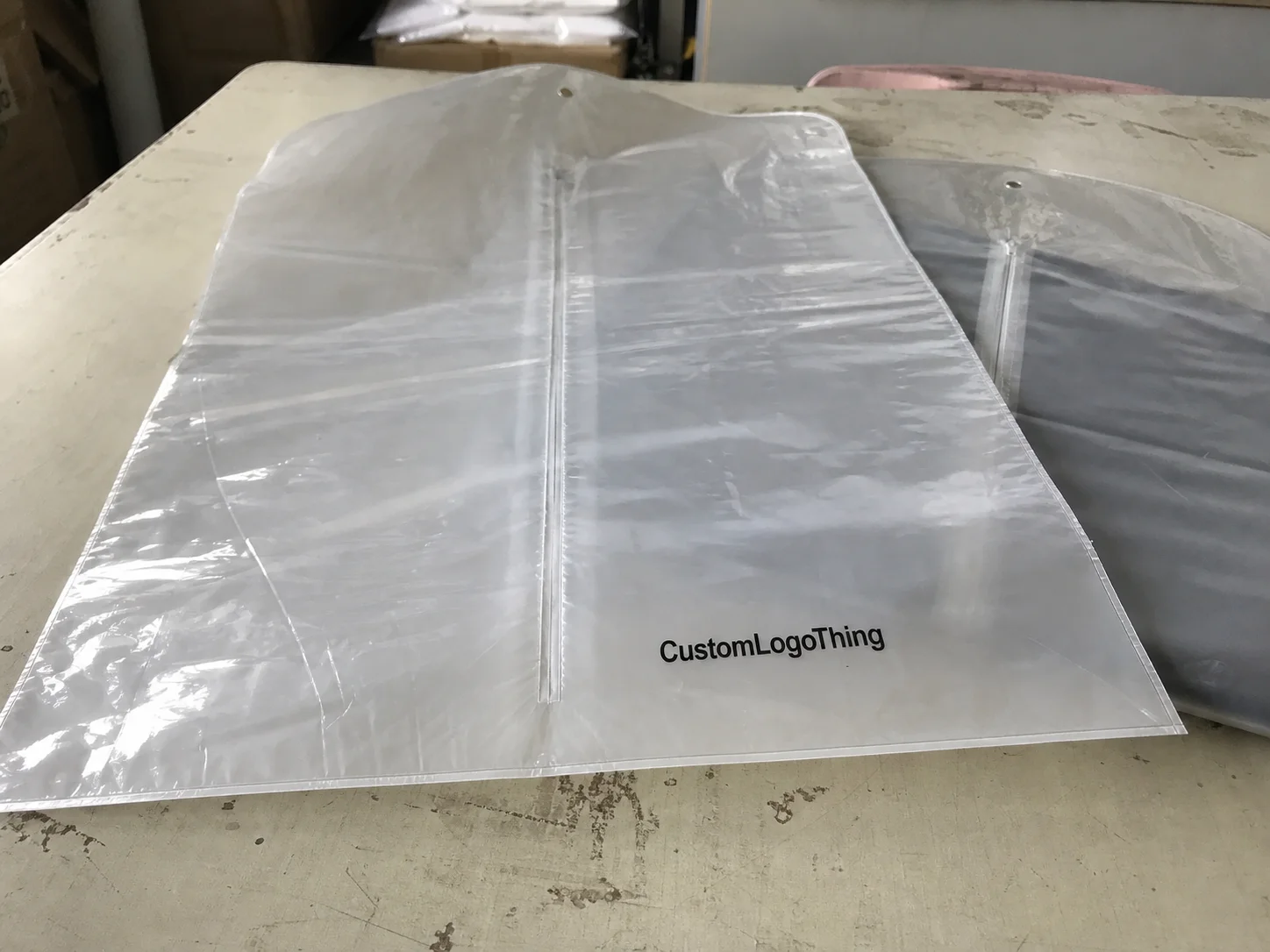
Tea brands rarely need garment bags for tea itself. They need them for the apparel and support pieces that travel with the brand identity. Think uniforms for tasting rooms, shirts for retail staff, aprons for event teams, or jackets that move between seasonal campaigns. That is why the spec should be built around the garment and the handling environment, not around the product category alone.
Garments are vulnerable in predictable ways. They collect dust, pick up scuffs, crease at the fold points, and snag on rough cardboard or sharp zippers. A thin sleeve may stop surface dirt, but it will not keep a heavier shirt from shifting around in transit. If the bag is too loose, the garment slides and wrinkles. If it is too tight, the package looks compressed and may tear at stress points.
For tea brands, presentation usually leans calm, clean, and restrained. A clear film bag can show color accurately. Frosted film can soften the look and hide minor handling marks. A printed panel can carry the logo without forcing a full custom box for every item. The point is to support the brand with the least amount of material and print needed to do the job well.
There is also a practical side that gets overlooked. Bags that fold consistently and stack predictably make packing faster. That matters in seasonal launches, event prep, and large store rollouts, where staff are handling dozens or hundreds of pieces. A bag that opens cleanly, stays shut, and fits the carton pattern saves labor every time the order is packed or received.
For a brand using apparel as part of a retail offer, the garment bag can act like a small piece of quality control. It tells the buyer that the team paid attention to the unglamorous details. That impression is easy to lose and hard to rebuild.
How structure affects protection and display
Garment bags seem straightforward until the spec gets serious. Film gauge, dimensions, closure style, hanger hole placement, venting, and gusset depth all affect performance. A bag can be visually identical from across a room and still behave very differently once it is filled, folded, and stacked.
Film thickness is usually the first decision. A lighter gauge may be enough for short-term storage or local transfers. It keeps cost and shipping weight down, but it can cling or split if the garment is bulky. Move into 2 mil or 3 mil film, and the bag gains structure and durability. The tradeoff is higher material cost and a slightly more rigid feel, which may or may not be desirable depending on the brand.
Length matters more than many buyers expect. Measure from the hanger hook to the hem, then add the room needed for shoulder shape and any inserts or folding boards. If the bag is short, the hem can ride up and expose the item. If it is too long, the extra film bunches at the bottom and makes the package look messy. Width deserves the same attention, especially for fleece, heavier knits, or folded aprons.
A gusset is worth considering when the garment has volume. It allows the bag to hold shape instead of pinching the item flat. That can reduce wrinkling and improve the way the bag stacks on a cart or in a carton. For items that are handled often, a zipper or other secure closure may be worth the added cost. For one-time storage or short transfers, a simpler flap can be enough.
Venting is not cosmetic. Small vent holes let trapped air escape, which helps the bag lie flatter and reduces ballooning inside cartons. Anti-static film can be useful for lightweight garments that cling or build static during handling. These are small adjustments, but they change how the bag feels in actual use, which is what matters.
Display follows the structure. Clear film shows the garment and works best when color and texture need to remain visible. Frosted film hides minor imperfections and often reads more refined. Printed areas can carry the logo or a short brand mark, but artwork has to respect fold lines, seams, and holes. Good packaging design accounts for the geometry of the bag. Flat art files rarely do.
If the order will travel through multiple distribution points, ask the supplier what testing they use for shipping behavior. Relevant references may include ISTA test standards for transit profiles or ASTM D882 for tensile properties. Not every project needs lab-level validation, but it helps to know whether claims are backed by actual measurement or just habit.
Pricing, MOQ, and unit cost
Pricing on custom Custom Plastic Garment Bags for tea brands moves with the same variables seen in most packaging work: size, film thickness, print coverage, closure style, and whether any tooling or special setup is required. Minimum order quantity follows the same logic. The more customized the bag, the more the supplier needs to spread setup costs across the run.
Simple clear sleeves generally allow lower quantities. Add a printed logo, custom sizing, gussets, or a zipper, and the minimum tends to rise. That is not a sales tactic. It is the cost structure of production. Buyers can still find small runs, but low quantities and high customization usually produce higher unit prices.
| Option | Typical Use | Estimated Unit Cost at 5,000 pcs | What Drives the Price |
|---|---|---|---|
| Clear PE sleeve, unprinted, light gauge | Basic storage and short-distance transfer | $0.12-$0.18 | Simple construction, low setup, minimal print work |
| Frosted film, custom size | Cleaner presentation for retail packaging | $0.16-$0.24 | Material finish, custom dimensions, slightly higher film cost |
| One-color logo print, 2 mil film | Branding for staff uniforms and promo wear | $0.22-$0.36 | Print setup, artwork prep, registration, and better visual impact |
| Heavy-duty, gusseted, zipper closure | Frequent handling or longer shipping routes | $0.38-$0.70 | More material, more assembly, and stronger presentation requirements |
Those ranges are only a working frame. A lower-volume order can come in higher. A repeat run can come in lower. Freight can also shift the landed cost more than expected, especially if the bags are bulky and packed in large cartons. Rush service, sample fees, and artwork revisions often add more to the final number than the bag itself.
Over-specifying the bag is a common way to waste budget. Buyers sometimes choose heavy film, a zipper, and full print coverage because they want the package to feel premium. That can be correct for customer-facing retail pieces. It is unnecessary for warehouse storage or internal transfers. Good purchasing usually removes features that do not support the use case.
Compare quotes with discipline. Keep the dimensions, film, finish, print, and closure consistent across suppliers before judging price. A lightweight sleeve should not be measured against a heavy-duty presentation bag and treated as equivalent. That mistake is common, and it creates false savings on paper.
For broader packaging reference, the Packaging School and industry resources at packaging.org are more useful than generic supplier language. They will not choose the spec for you, but they help frame the tradeoffs between material, presentation, and performance.
Production steps, lead time, and sample approval
The production sequence is usually familiar: request a quote, confirm the dimensions, choose the material and closure, approve artwork, review a sample or proof, then move into production and packing. The process is not complicated. Delays usually come from vague inputs, late revisions, or a missing decision on one small detail that affects the whole run.
Lead time depends on the level of customization. A plain clear bag with standard sizing can move faster than a printed or gusseted version. Once artwork and proofing enter the schedule, the clock changes. For straightforward runs, a realistic window is often 12 to 15 business days after proof approval. More involved work can stretch to 18 to 25 business days before shipping. Transit time sits on top of that.
Samples matter because the physical bag can reveal problems that a mockup will hide. A logo that looks centered on screen may sit too low once the bag is folded. A hanger hole can interfere with the print area. A closure that seemed fine in a PDF can become awkward in real handling. If the bag will be visible to customers or retail buyers, a pre-production sample is worth the time. If it is only for internal storage, a proof may be enough.
Most production delays come from the same set of issues:
- Incomplete size specifications.
- Artwork without print-safe margins or fold allowances.
- Unclear closure choice, especially on flap or zipper designs.
- Changes requested after sample approval.
The simplest way to keep the project moving is to define the garment, the purpose, and the priority order before asking for pricing. If cost matters most, say so and keep the spec modest. If the bag will be visible in a retail setting, lock the presentation first and accept the cost that follows. Trying to protect every variable usually leaves all of them underdeveloped.
Common mistakes that make garment bags more expensive
The most expensive mistake is guessing the size. Buyers often round up because it feels safe, then end up with excess film, a bag that stacks poorly, and a higher freight bill than necessary. A measured garment length, shoulder width, and hanger clearance will always produce a better result than a rough estimate.
Overengineering is the next problem. Not every garment needs heavy film, a zipper, and full-area print. Those features are useful in the right context, but they should be tied to handling conditions, not to a vague idea of quality. If the bag will only be used once or twice before the item reaches a shelf or storage rack, simpler construction is usually enough.
Artwork mistakes are common too. Logos placed too close to a fold line can disappear once the bag is packed. A design that looks balanced on a flat proof may shift when the bag hangs on a hanger. Clear film also changes contrast, so artwork needs to be checked against the actual material rather than the screen preview alone.
Logistics errors can cost as much as material errors. Buyers forget to confirm carton pack counts, folding orientation, storage space, or the way the bag will be inserted during fulfillment. If the pack-out process is awkward, labor costs rise on every run. A packaging piece that saves two cents but adds ten seconds to packing is not a saving.
The cleanest way to avoid these problems is to build the spec around the garment first, then check whether the bag fits the rest of the packaging system. A modest sleeve that works reliably is more valuable than a flashy one that slows operations or distorts the presentation.
If the bag is visible to customers, it should look intentional. If it stays behind the scenes, function should lead and decoration should stay limited.
Expert tips for storage, shipping, and retail presentation
Anti-static film is worth asking about when the garment is lightweight or prone to clinging. Vent holes help the bag sit flatter and reduce trapped air. A slightly longer bag protects hems without burying the garment in excess plastic. Small choices like these usually improve day-to-day handling more than decorative upgrades do.
For shipping, the lightest film that still protects the garment is often the best choice. Heavier film adds cube, weight, and freight cost, and it can make carton packing less efficient. If the bags are being shipped in volume, the fold pattern matters too. Consistent folding helps the cartons stack better and reduces wasted space.
Retail presentation needs more restraint than many buyers think. Keep the print minimal. Match the bag tone to the rest of the packaging system, including hang tags and any Custom Printed Boxes nearby. A matte, warm-toned brand may look awkward next to a glossy sleeve. A modern, clean brand often looks better with clear film and a single mark rather than a busy full-coverage print.
Material choice also carries an environmental question. Not every plastic bag is the same, and not every paper substitute is automatically better. Ask how much material is used, whether the bag can be reduced without affecting performance, and whether any recycled content is available for the intended application. For broader material and waste context, the EPA’s packaging guidance can help, and FSC is useful when plastic sleeves are paired with certified paper components in the same retail packaging system.
A useful rule: if the garment is customer-facing, the bag should stay visually quiet and do its job. If the bag is part of the storefront experience, it should still behave like a support item rather than a headline. Loud packaging does not equal good packaging. Usually it only means the spec was not edited enough.
What to prepare before requesting a quote or sample
Good quotes start with good inputs. For custom Custom Plastic Garment Bags for tea brands, the essential details are usually the garment type, finished dimensions, quantity, print area, closure style, and the intended use. A bag for storage does not need the same structure as a bag for retail display. The brief should say which one you are buying.
- One real garment or a measured sample.
- One logo file in vector format.
- One note about priority, price, appearance, or durability.
- One reference photo showing the intended use.
That set of inputs saves time because it reduces guesswork. It also forces a decision order. If price matters most, simplify the material and print. If appearance matters most, lock the look first and accept the cost that comes with it. Trying to optimize both extremes usually delays the order and weakens the final result.
Keep the spec concise, but not vague. A measured garment is better than a written estimate. A photo of the actual handling environment is better than a style description. A precise quantity is better than a range without a decision behind it. That level of discipline makes the quote usable and reduces the chance of revisions after production has already been scheduled.
For tea brands assembling a wider packaging program, review the garment bag alongside the other branded pieces. If the apparel, insert cards, and Custom Printed Boxes all feel related, the system reads as intentional. If each item was chosen in isolation, the result usually looks fragmented, even if each piece is technically good on its own.
Frequently Asked Questions
What are custom plastic garment bags for tea brands used for?
They are usually used for branded apparel, staff uniforms, aprons, and promotional garments connected to the tea brand. The bag keeps items clean, reduces wrinkles, and helps the shipment look organized when it reaches a store, office, or event site.
How thick should custom plastic garment bags for tea brands be?
A lighter film works for short-term storage and simple transfers. A thicker film makes sense for heavier garments, longer transport, or frequent handling. The right thickness depends more on use and risk than on the item’s retail value.
What is the usual MOQ for custom plastic garment bags for tea brands?
MOQ varies by supplier, but custom sizing and printed artwork usually raise it. Simple clear bags typically allow lower quantities than printed, gusseted, or zipper-closed versions. Smaller runs are possible if the spec stays simple.
How long do custom plastic garment bags for tea brands take to produce?
Simple builds move faster than printed or highly customized ones. Once artwork approval, sample review, and any tooling are included, the timeline extends. A common planning window is 12 to 15 business days after proof approval for straightforward orders.
Can custom plastic garment bags for tea brands be printed with a logo?
Yes. Logo printing is one of the most common ways to make the bag look intentional. A simple design is usually cheaper, faster, and cleaner than a full-coverage graphic. Placement should be checked on the folded bag, not just on the flat artwork file.
The shortest route to a clean order is simple: one real garment, one measured spec, and one sample approval. That usually reveals the right size, structure, and finish before custom Custom Plastic Garment Bags for tea brands move into production.


