custom Custom Plastic Garment Bags for coffee brands sound awkward on first read, but the need behind them is plain enough: a coffee brand spends real money on hoodies, tees, aprons, and staff uniforms, then sends them out in plain plastic that looks like leftover warehouse stock. That misses the point of branded packaging. Apparel packaging should do more than hold fabric together. It should protect the garment, support packing speed, and make the product feel intentional before a customer ever unfolds it.
For coffee businesses, these bags are not for beans. They are for merch and apparel tied to the brand: subscription add-ons, retail drops, barista uniforms, event kits, and wholesale packs. The right bag keeps items clean, reduces handling mess, and makes the operation easier to run. The wrong bag adds clutter, slows the line, and tends to look cheaper than the clothing inside.
If you are comparing apparel packaging against your other formats, it helps to look at the broader system too. A lot of the same packaging decisions show up across Custom Packaging Products, and the lessons carry over into retail merch and branded fulfillment. For a sense of how other brands organize their apparel and product packaging, the Case Studies section is useful as a reference point.
What custom custom plastic garment bags for coffee brands actually solve
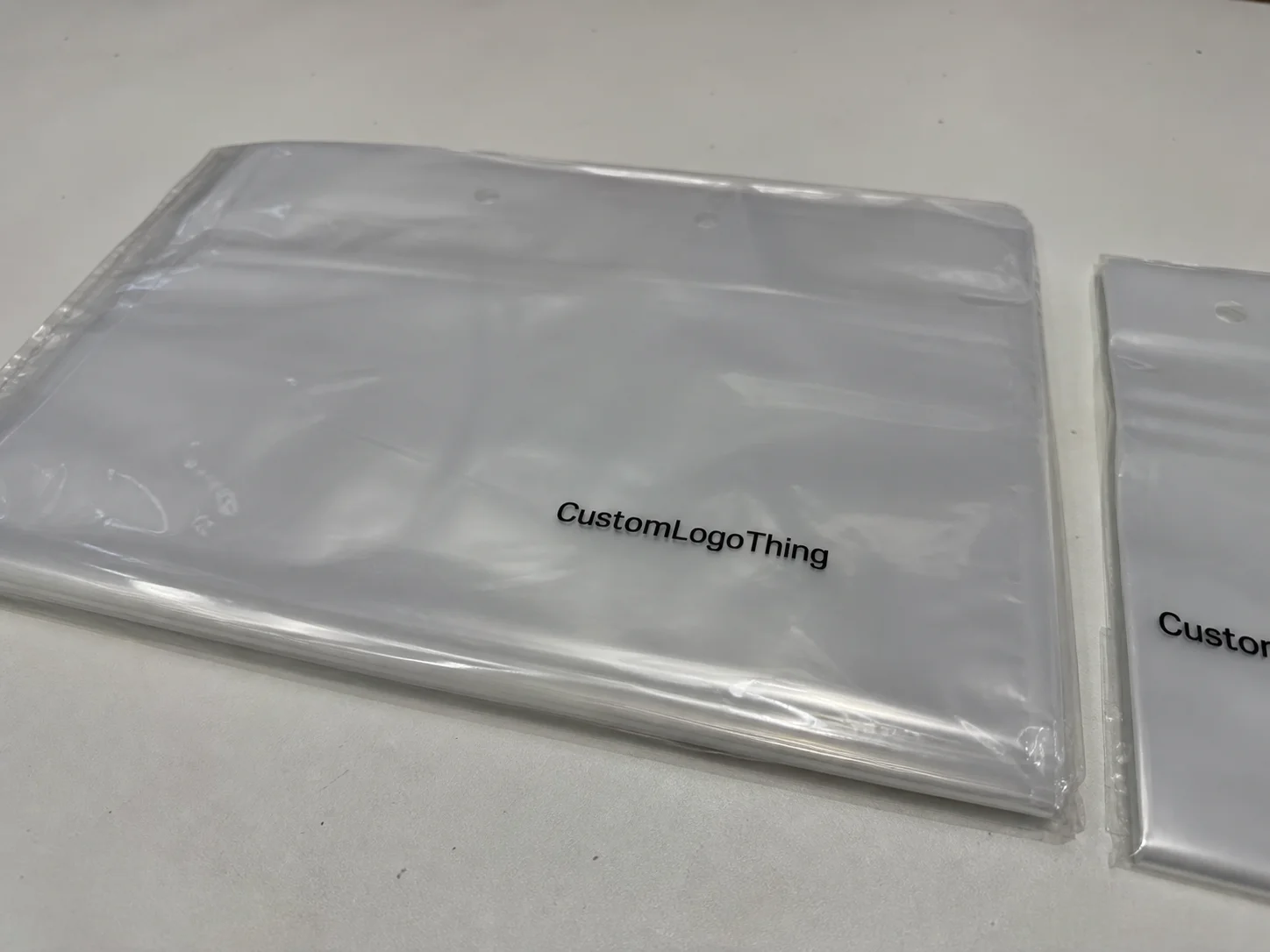
The basic job is simple. A garment bag keeps a folded shirt, hoodie, or apron clean. It blocks dust, resists light moisture, and prevents scuffing during storage and shipping. For a coffee brand, that matters because merch is usually sold as an extension of the brand, not as anonymous apparel. Customers notice whether the bag feels retail-ready or like something pulled from the back room and sealed in a hurry.
These bags also solve an operations problem. Clear or lightly frosted bags let packers see the size and color without opening anything. Printed bags can carry a logo, size panel, barcode, QR code, or care note, which helps reduce mistakes and keeps merch easier to sort. In a cafe, back room, or fulfillment setup, that is not decoration. It is practical labor control.
Common formats include clear poly apparel sleeves, frosted retail sleeves, resealable adhesive flap bags, zipper garment bags, and hang-hole bags for display. Some brands want a simple one-color logo. Others want a softer, more premium feel with frosted film and restrained artwork. The right choice depends on garment size, print coverage, closure style, and whether the product is shipped in a box, handed over at a pop-up, or displayed on a retail fixture.
A good apparel bag should disappear into the workflow. If it slows packing, fogs up the product, or turns a simple merch drop into a folding exercise, it is not helping the brand. It is just plastic with a logo on it.
From a buyer’s point of view, garment bags are often cheaper and more practical than rigid packaging or heavy custom boxes for apparel. They use less material, weigh almost nothing, and ship flat in bulk. That makes them a sensible choice for coffee merch that needs to stay clean without creating a storage problem.
For coffee brands building package branding across merch, cafe retail, and ecommerce, the real decision is not whether to use a garment bag. It is which version fits the product and the workflow Without Wasting Money or time.
How printed plastic garment bags work for coffee merch
Most apparel bags are made from flexible film such as LDPE, HDPE, or CPP. The film is extruded, cut to size, sealed on the sides or bottom, and then printed before or after converting depending on the production method. The result is a flat sleeve or bag that can hold folded clothing with minimal bulk.
For coffee merch, the use cases are predictable. A folded tee usually fits a slim adhesive flap sleeve. An apron often needs a wider bag with a little more depth. A hoodie needs enough room so the corners do not fight the seal. Seasonal merch bundles and employee uniform kits often work better with a bag that has a clear front and a printed back panel for sorting or labeling.
Closure style changes the experience more than most buyers expect. Adhesive flaps are common because they are fast, tidy, and easy to train on. Zippers feel reusable and more premium, but they add cost and slow the line a bit. Open-end bags are the lowest-cost option, but they depend on how the apparel is packed or sealed afterward. If the bag will hang in a store, hang holes need to be part of the spec from the start.
Print method matters too. Flexographic printing is often the workhorse for larger runs because it is efficient on repeat jobs and handles simple logos well. Digital printing can make sense for smaller quantities or variable artwork if the supplier supports it. Screen printing still appears in some limited setups or bold one-color branding. None of these methods is automatic magic. Each one has limits on line thickness, color match, and registration.
Good garment bag design usually keeps the logo visible, then leaves room for practical details such as size marks, barcode space, a QR code, or a care note. That is where packaging design earns its keep. You are not trying to cover every inch of film. You are trying to make the bag useful and recognizable without making it busy.
One point gets missed often: a bag that photographs well but slows packing is bad packaging. Pretty does not compensate for a closure that sticks, a logo that prints crooked, or a film that wrinkles badly enough to make the whole order look cheap.
Key specs: film thickness, size, closure, and print coverage
Start with size, not the logo. Measure the garment after it is folded the way your team will actually ship it. A medium tee, a heavyweight hoodie, and a barista apron are different shapes once folded. If you size from the flat garment instead of the folded piece, the bag will be wrong. That mistake shows up constantly and is easy to avoid.
Thickness is usually stated in mils. Light-duty apparel sleeves often land around 1.5 to 2 mil. Everyday merch bags are commonly 2 to 3 mil. Heavier or more premium reusable styles can run 3 to 4 mil or higher. Thicker is not automatically better. It costs more, takes more storage space, and can make a small garment bag feel stiff instead of clean.
Material finish changes the perception quickly. Clear LDPE is soft and flexible. HDPE feels crisper and a little louder in hand. Frosted film gives a more boutique look and can hide folds better, which helps if the garment is dark or the fold is uneven. Recycled-content and biodegradable options exist, but they should be judged on actual performance, not shelf talk. They can behave differently in sealing, print quality, and lead time.
Closure choice should match the packing method. Adhesive flaps are the easiest for ecommerce and retail folding. Zipper styles are more reusable and more premium, but they cost more. Open-end sleeves are efficient for high-volume packing if your operation has another way to close or secure the item. If the bag will hang in a store, hang holes should be built into the spec, not added later.
Print coverage also changes cost and appearance. One-color logo print is the cleanest and usually the most economical. Two-color work adds a little polish. Full-coverage printing can look strong on the shelf, but it raises setup complexity and proofing risk. Tiny text, thin rules, and low-contrast gradients are where the print surprises start.
| Bag style | Best for | Relative cost | Packing speed | Notes |
|---|---|---|---|---|
| Clear open-end sleeve | Basic tees, staff kits | Low | Fast | Simple and economical, but less secure. |
| Adhesive flap bag | Ecommerce apparel, retail merch | Low to medium | Fast | Best balance of speed and presentation. |
| Frosted printed sleeve | Premium merch, cafe retail | Medium | Moderate | Looks cleaner on shelf and hides wrinkles better. |
| Zipper garment bag | Reusable kits, higher-end merch | Medium to high | Slower | Better perceived value, more expensive to spec. |
If you care about freight, remember that plastic bags are light but bulky. Carriers still bill for the carton they ship in, and storage space quietly eats margin. A quote that looks cheap per thousand can become less attractive once cartons start stacking in a small back room or a cafe basement.
Cost, pricing, MOQ, and what changes your unit cost
Pricing depends on a stack of variables: bag size, material, film thickness, closure style, print colors, print coverage, quantity, setup, and freight. There is no honest shortcut around that. The same bag can price very differently if you change just one spec.
As a rough working range, simple clear apparel sleeves can land in the low cents per piece at volume, while custom printed frosted bags or zipper styles move higher quickly. First orders usually carry more setup cost than reorders. That is normal. Buyers who expect a complex custom item to price like a plain stock sleeve usually get frustrated for no good reason.
For practical buying, small custom runs usually cost more per unit because setup is spread over fewer pieces. Larger runs lower unit cost, but they also tie up cash and storage. That is the tradeoff. If a coffee brand is testing merch demand, it rarely makes sense to chase the lowest unit price with a giant order nobody can move.
MOQs vary by supplier and construction. Many Custom Plastic Garment bag orders start in the low thousands. More specialized materials, full-color print, or custom sizes can push minimums higher. Reorders are usually easier because the tooling and artwork are already in place.
Setup charges matter more than many buyers expect. Plate fees, artwork cleanup, sample runs, and special sealing requirements can make the first order look expensive even if the unit price is fair. Two quotes can look similar on paper and still total very differently once setup, freight, and carton counts are included.
Here is a simple way to compare tradeoffs:
| Option | Typical setup burden | Unit cost tendency | Good fit |
|---|---|---|---|
| One-color adhesive flap | Low | Lowest | First merch program, basic ecommerce needs |
| Two-color frosted sleeve | Medium | Medium | Retail presentation, stronger shelf presence |
| Zipper bag with custom print | Higher | Highest | Premium kits, reusable feel, limited drops |
For most brands, the smartest starting point is a versatile size and one-color print. Once the merch program proves itself, you can add a hoodie size, a premium finish, or a second version for retail display. That is a more disciplined path than ordering every possible variation because the mockup looked polished.
For reference on broader packaging and logistics standards, apparel brands often borrow testing and distribution thinking from groups like ISTA. If your team is making material claims, verify them against source documentation instead of trusting a sales sheet. Packaging buyers get burned when claims run ahead of proof.
Process and timeline from artwork to packed apparel
The process is not complicated, but it punishes sloppy input. First, define the garment types and folded dimensions. Then choose the film, thickness, closure, and print layout. After that comes artwork prep, proof review, sample approval if needed, production, inspection, and shipping. If you skip steps, you usually pay for it later in corrected inventory or delayed launches.
Artwork should be vector-based whenever possible. Give the supplier the logo files, Pantone or brand color references, and any required copy such as size labels, QR code destination, recycling note, or care message. If the bag needs a barcode area or a front-facing logo zone, mark that clearly. Loose instructions are how print errors happen.
Timelines vary by supplier and material. Repeat orders can move faster because the specs are already approved. New custom bags take longer, especially if the artwork needs cleanup, a physical sample is required, or the material is special. Rush orders usually narrow your options and raise the price. Speed is rarely free, even when the order is small.
Sampling is worth doing if the bag is part of a visible merch drop or a retail rollout. A digital proof checks layout. A pre-production sample checks material feel and print behavior. A production sample checks the actual run before bulk shipment. Each step catches a different kind of problem. Skipping all of them because the launch date feels close is how teams create avoidable chaos.
Approval delays are often internal, not factory-related. Brand teams change artwork late. Sustainability language gets rewritten. Someone decides the bag should be 15 mm wider after the proof is already in motion. None of that is mysterious. It is usually a project discipline issue.
If you are planning a merch drop, do not wait until the cafe manager has already promised customers that the hoodies will ship next Friday. That is how simple packaging turns into a fire drill. Build the packaging schedule first, then announce the product.
Common mistakes coffee brands make when ordering apparel bags
First mistake: choosing the bag size from the garment size label instead of the folded garment measurement. A medium hoodie can occupy far more space than a medium tee. The label is not a dimension. It is only a label.
Second mistake: overprinting the bag. Coffee brands often already have strong identity work. The bag does not need to shout on top of the shirt. A restrained logo, a size mark, and maybe a QR code is usually enough. If the bag starts to read like a billboard, the design has probably gone too far.
Third mistake: ignoring packing speed. A beautiful adhesive flap that sticks inconsistently will waste time. A zipper that takes both hands can slow fulfillment during a merch launch. Packaging should support the operation, not make the operation babysit it.
Fourth mistake: going too thin on film. Thin plastic saves pennies until it tears on a hoodie seam or splits at the edge of a folded apron. Then the brand looks careless, and the customer remembers the torn bag more than the product. That is a bad place to lose trust.
Fifth mistake: forgetting retail display needs. If the bags hang in-store, you need hang holes, readable logo placement, and maybe a barcode or SKU panel. If they ship only in cartons, those same details may be unnecessary. The use case should drive the spec.
Sixth mistake: sloppy sustainability claims. Recyclable, recycled-content, compostable, and biodegradable are not interchangeable terms. They describe different materials and disposal realities. If your artwork includes one of those claims, the supplier should back it with documentation. The EPA recycling guidance is a better reference than marketing language.
Seventh mistake: ordering too many sizes too early. Three bag sizes and five print versions might feel flexible, but it can leave you with inventory that does not move before the merch program has even proven demand. One universal size plus one larger option is usually a better start.
For coffee brands, custom Custom Plastic Garment Bags for coffee brands work best when the spec is boring in the right ways: correct fit, stable print, efficient closure, and no nonsense at packing time. Fancy is optional. Functional is not.
Next steps before you request a garment bag quote
Before you ask for pricing, get the basics in order. List every garment type. Measure the folded dimensions. Estimate monthly or launch quantity. Decide whether the bag is for ecommerce shipping, cafe retail, staff uniforms, or wholesale merch kits. Those four use cases do not need the same packaging.
Then decide whether you want one universal bag or a small packing matrix. A tee bag, hoodie bag, and apron bag may be cleaner than trying to force everything into one size. On the other hand, if your merch catalog is small, one flexible size can reduce SKUs and simplify reorders. The right answer depends on the product mix, not on what the mockup looked like.
Gather artwork before you shop. That means vector logo files, brand color references, any required compliance marks, QR code destination, and notes on logo placement. If you already know the bag needs a recycled-content claim, confirm the documentation first. Do not print a claim now and hope the paperwork catches up later.
Ask the supplier the unglamorous questions: MOQ, lead time, sample options, print limitations, film thickness, closure specs, carton count, freight estimate, and reorder process. Also ask for a value option and a premium option. A useful quote should show tradeoffs clearly. If everything is presented as “best,” you are not getting a decision tool. You are getting a sales sheet.
- Lowest unit cost: usually simpler specs, larger quantities, and one-color print.
- Fastest turnaround: usually fewer custom details and fewer approval loops.
- Best retail feel: often frosted film, cleaner artwork, and a tighter closure.
- Best ecommerce fit: usually adhesive flap bags with enough room for folded garments.
For custom Custom Plastic Garment Bags for coffee brands, the strongest order is the one that fits the merch, the packing workflow, and the brand promise without creating a storage problem. That sounds obvious because it is. The work is in making the spec honest before the quote arrives, not after.
FAQ
What are custom plastic apparel bags for coffee brands used for?
They are used to package branded tees, hoodies, aprons, uniforms, event merch, and ecommerce apparel add-ons. They protect garments from dust, moisture, and handling marks during storage or shipping. They also help keep sizes and SKUs organized for cafe teams and fulfillment staff.
What size custom garment bags should a coffee brand order?
Measure the garment after it is folded, not while it is flat and unfolded. Add enough room for easy insertion without leaving the bag loose and sloppy. Many brands start with one versatile tee size and one larger hoodie or apron size if their merch mix requires it.
How much do custom custom plastic garment bags for coffee brands cost?
Cost depends on size, film thickness, closure type, material, print colors, print coverage, MOQ, setup fees, and shipping. One-color adhesive flap bags are usually more economical than zipper bags or multi-color full-coverage designs. Larger quantities usually reduce unit cost, but only make sense if the brand has storage space and proven merch demand.
What is the typical lead time for printed plastic garment bags?
Simple repeat orders usually move faster than first-time custom orders. New orders take longer when they require artwork cleanup, sampling, special materials, multiple print colors, or imported production. Brands should build in approval time because late artwork changes are one of the easiest ways to delay production.
Are recyclable or recycled plastic garment bags a good choice for coffee merch?
They can be a good choice if the material fits the packing method, print needs, and customer disposal reality. Recyclable, recycled-content, compostable, and biodegradable are different claims and should not be used casually. Ask suppliers for material documentation before printing sustainability language on the bag.


