What Custom Poly Bags Are Really Doing in Your Packaging Line
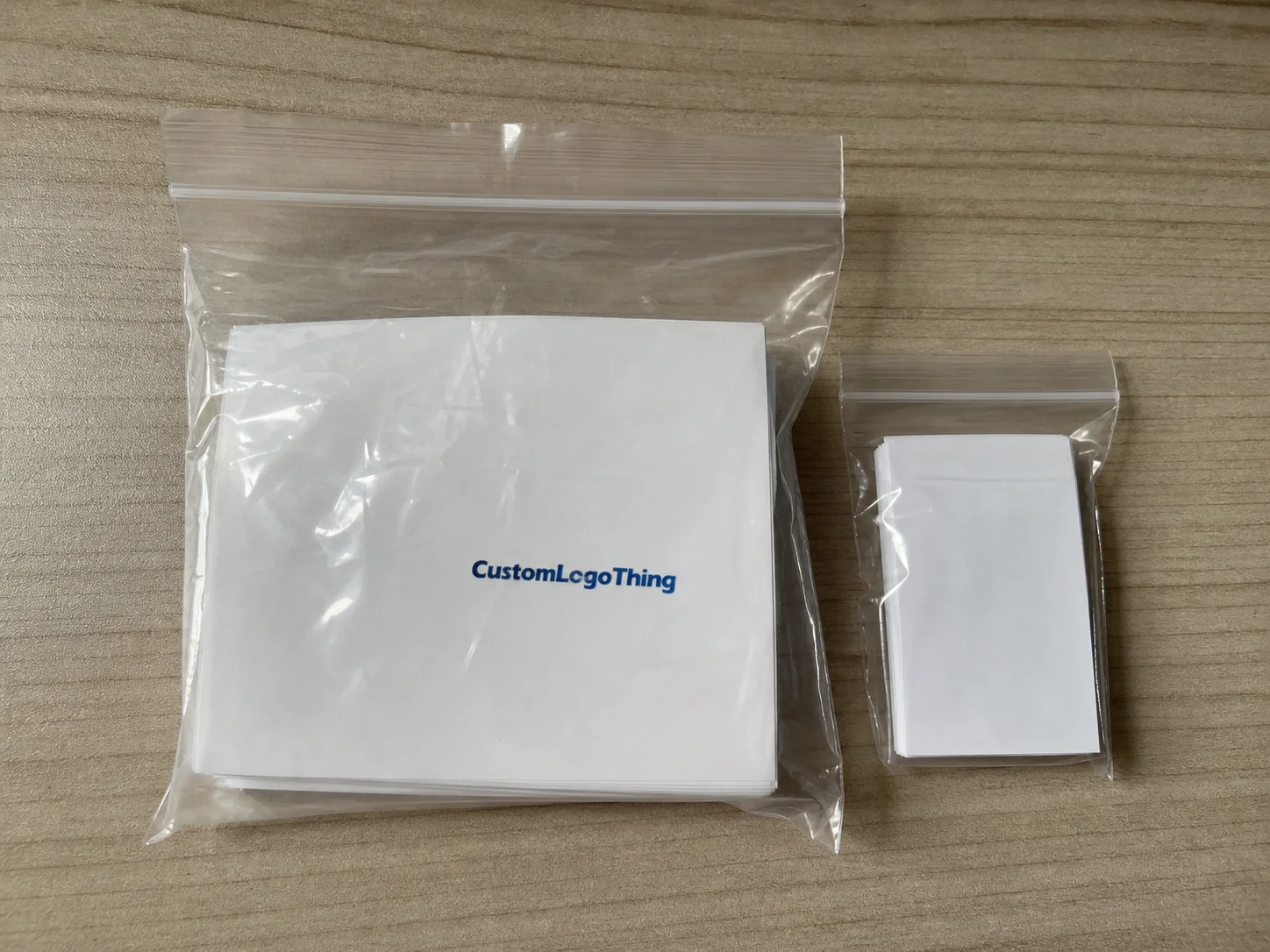
A $12 apparel item may be protected, branded, barcoded, sorted, and shipped inside a bag that costs a few cents. Tiny cost center. Big operational consequences. Custom Poly Bags are flexible plastic bags made to a buyer’s required size, Film, Closure, Print, and packing format instead of pulled from a stock shelf and forced to “work.”
That definition sounds simple. It is not. A folded T-shirt bag has a different job than a zinc-plated hardware bag, a food-safe inner pouch, a kitting bag for assembly parts, or a mailer expected to survive carrier handling. Poly bags show up in retail packaging, ecommerce fulfillment, apparel packing, warehouse organization, parts packaging, inner carton protection, and branded programs where the bag carries a logo, warning, barcode, size label, or all of the above.
The operational link is easy to miss until it breaks. If the bag is the right width, the seal holds, and the print lands away from wrinkles, packers move faster. If it is too tight, too thin, or printed in the wrong place, the cost moves somewhere else: repacking labor, scuffed goods, unreadable barcodes, failed retailer checks, chargebacks, or returns that never mention the bag by name.
“Poly” usually means polyethylene film. LDPE, LLDPE, HDPE, and blended structures all behave differently. One feels soft and clear. Another feels crisp and noisy. One stretches under stress. Another helps reduce material weight. Recycling claims also shift with additives, inks, closures, labels, and local collection access, which is why the EPA’s recycling guidance is useful background before printing broad environmental claims.
The better buyer question is blunt: what must the bag do before it is discarded, recycled, stored, shipped, displayed, or returned? That answer drives material, thickness, print, quantity, and price.
How Poly Bag Materials, Gauge, Seals, and Printing Work
Polyethylene films can look almost identical on a quote sheet. They do not act the same on a packing bench.
LDPE is soft, flexible, and common for clear retail and apparel packaging. HDPE feels thinner, stiffer, and crinklier at the same visual size. LLDPE adds toughness and stretch, which helps when products have edges, corners, or inconsistent shapes. Many commercial bags use blends because buyers usually want three things at once: decent clarity, reliable strength, and a unit cost that does not make finance start circling the spreadsheet.
Gauge is film thickness, often discussed in mils in the U.S. One mil equals 0.001 inch. A lightweight garment bag may use a thin, clear film because the product is soft and low-risk. A kit with screws, brackets, or stamped metal may need a tougher structure, even if the bag dimensions are nearly identical. Two bags can both measure 8 by 10 inches and still behave like different packaging systems.
Format matters just as much as material. Buyers can specify flat bags, bottom-seal bags, side-seal bags, wicketed bags for faster loading, resealable bags, die-Cut Handle Bags, suffocation warning bags, vented bags, and poly mailers. If mailing is the primary use, Custom Poly Mailers usually need a different film, opacity level, adhesive strip, and tear resistance than a clear inner retail bag.
Printing is usually flexographic for this category. A simple one-color logo or suffocation warning keeps setup manageable. Multi-color work can improve retail presentation, but it adds plates, registration risk, and approval time. Small reversed text, fine rules, screens, and low-contrast barcode areas are common failure points. Clear film is not white paper. Obvious, yes. Still ignored often enough to keep causing reprints.
- Hang holes: useful for peg display, but placement must account for product weight and seal strength.
- Vents: help trapped air escape during packing, carton compression, or automated loading.
- Adhesive strips: common for apparel and ecommerce returns, but closure strength and release liners vary.
- Perforations and tear notches: improve opening, though they can weaken the wrong area if placed badly.
- Opacity: protects privacy for shipping and can hide mixed-color products, scuffs, or inserts.
The cheapest film is not always the cheapest package. If a thinner bag creates blown seals, repacking, freight inefficiency, or a small return spike, the savings just moved from purchasing to operations.
Key Specs Buyers Should Decide Before Requesting a Quote
“Clear poly with logo” is not a quote request. It is a guessing exercise. Suppliers need enough detail to price the bag, choose the production path, and avoid padding the estimate for unknowns.
Start with finished bag width and length. Width is typically measured across the opening. Length is measured from the opening to the bottom seal, not around the product. If the item has depth, folded bulk, or an irregular shape, a gusset or extra tolerance may be needed. A bag that barely fits can look efficient on paper and still slow every packer who touches it.
That gap between product fit and production fit matters. A folded hoodie might physically fit in a 10 by 13 inch bag, yet pack cleanly in an 11 by 14 inch bag with less twisting, fewer wrinkles, and faster sealing. If labor costs $18 to $24 per hour, saving half a cent on film while adding six seconds per pack is not a win. It is accounting cosplay.
Before requesting pricing for custom poly bags, collect these inputs:
- Finished bag width, length, lip, flap, or gusset dimensions
- Film type, target gauge, clarity, opacity, and recycled content goals
- Closure style, such as open top, adhesive strip, zipper, heat seal, or perforated flap
- Print colors, print area, Pantone or spot color references, and vector logo files
- Pack count per carton, carton labeling needs, pallet needs, and annual usage estimate
- Compliance language, warning copy, barcode requirements, and retailer routing guide rules
Artwork deserves early attention. Vector files are preferred because they scale cleanly. Barcodes need quiet zones and enough contrast to scan after the bag is filled. Legal marks, suffocation warnings, recycling marks, and retailer-specific language should be approved before proofing, not after plates are made.
Compliance can change the bag. Food-contact packaging may require material documentation. Child safety warnings may affect copy size. Proposition 65 questions may need review depending on materials and product exposure. Recycled content claims should be checked against actual resin content and claim wording, not assumed because the film “looks recyclable.” That phrase has caused plenty of trouble.
If the bag supports a retailer program, ask for the routing guide before design starts. Retailers can specify warning text, barcode size, label placement, carton counts, and even bag opening direction. These details are boring until they trigger a hold at receiving.
Pricing, MOQ, and Unit Cost: What Actually Moves the Number
Poly bag pricing is driven by resin cost, film weight, bag dimensions, gauge, print coverage, number of colors, setup plates, order quantity, packing method, and freight. Resin is the obvious variable. Setup is the quieter one. A short custom printed run may look expensive because plate charges, press setup, and converting time are spread across fewer bags.
Minimum order quantity exists for a practical reason. Film extrusion, printing presses, and bag converting equipment are built for volume. A press does not become efficient because a buyer needs 800 bags for a launch. Custom printed runs often start in the thousands, and the actual MOQ depends on size, material, supplier equipment, and print complexity.
Typical price ranges vary widely, but a simple one-color printed apparel bag might land around $0.06 to $0.18 per unit at moderate quantities. Larger printed mailer-style bags may run $0.18 to $0.45 or more depending on gauge, opacity, adhesive, print coverage, and volume. Very small runs can cost more per unit because setup dominates the math. Freight can also distort comparisons, especially with bulky cartons of lightweight packaging.
| Specification Choice | Cost Effect | Buyer Tradeoff |
|---|---|---|
| Thicker film | Raises resin use and unit cost | Can reduce punctures, splits, and damage claims |
| One-color flexo print | Lower setup than multi-color printing | Less shelf impact for retail packaging |
| Higher order quantity | Spreads plates and setup over more units | Requires storage space and stronger demand forecasting |
| Better size optimization | Can reduce film area per bag | Needs accurate product measurements and packing tests |
| Resealable closure | Adds material and converting steps | Improves returns handling, presentation, or end-user convenience |
Do not compare quotes by unit price alone. Compare gauge tolerance, resin type, print method, lead time, freight terms, pack count, carton quantity, and whether plates are included. One supplier may quote $0.095 per bag with plates billed separately; another may quote $0.112 with plates included. The better deal depends on repeat volume, not just the first purchase order.
Also check what happens on reorders. Are plates stored? For how long? Are there reorder minimums? Can the same bag be produced in a different quantity tier? If demand is uncertain, ask for pricing at two or three volumes. A 5,000-bag launch order and an 80,000-bag annual program should not be treated like the same project.
For buyers comparing poly bags with printed boxes or other Custom Packaging Products, the rule is the same: a low unit price can be a high total cost if the spec is vague. A useful quote explains what is included, what can change, and what triggers extra charges.
Process and Timeline: From Sample Bag to Production Run
A clean buying process starts with the product, not the bag. Define what is being packed, confirm the required fit, choose film and features, submit artwork, approve the proof, review a sample or specification sheet, then release production. Skip one step and the risk usually returns as a delay.
Time is spent in places buyers do not always see: artwork cleanup, plate making, material scheduling, extrusion or film sourcing, printing, converting, quality checks, carton packing, and shipping. A simple clear bag may move quickly if the size and film are standard. A multi-color printed bag with a special adhesive strip and retailer warning language needs more review.
For many custom poly bags, a realistic first-order timeline is about 15 to 30 business days after proof approval, depending on material availability, production queue, print complexity, and shipping distance. Repeat orders often move faster because artwork, plates, and dimensions are already approved. First-time orders need more discipline because every unknown becomes a question.
Sampling has two jobs. Physical samples confirm fit, hand feel, stiffness, clarity, and closure behavior. Digital proofs confirm print placement, scale, color references, warning copy, and barcode position. Neither is perfect alone. A digital proof will not tell you whether a bulky fleece traps air. A blank sample will not show whether the barcode lands over a wrinkle after filling.
- Measure the product and define the packing method.
- Select film type, gauge, closure, and any vents, holes, or perforations.
- Send vector artwork, warning copy, color references, and barcode files.
- Review the proof for size, placement, spelling, compliance copy, and scan zones.
- Approve the sample or written production spec before the run starts.
- Plan freight, receiving, storage, and pack counts before cartons ship.
Quality control should be part of the conversation, not a mystery box. Common checks include finished width and length, gauge tolerance, seal strength, print position, color match, barcode readability, carton count, and visible contamination or blocking. For adhesive closures, test the strip after the bag is filled, not just flat on a desk. A closure can behave nicely in a conference room and fail after the product pushes against it for a week.
The usual bottlenecks are not exotic: missing logo files, undecided dimensions, late warning copy, retailer compliance review, and internal signoff between marketing and operations. Plan backward from the launch date, fulfillment date, trade show, or retailer ship window. Add buffer for proof revisions and freight delays. Packaging is small until it is late.
Common Mistakes That Turn Simple Bag Orders Into Costly Rework
The most common mistake is ordering by product dimensions alone. Products need tolerance for packing speed, movement, closures, gussets, trapped air, and the human hand. If a product is 9.75 inches wide, a 10 inch bag may be technically possible and practically miserable.
Under-specifying gauge is the next trap. Soft goods forgive thin film. Sharp corners do not. Folded fabric stacks, metal parts, boxed accessories, and long parcel routes create abrasion. A bag may survive packing and fail during shipping because it rubs against carton walls through multiple transfer points.
Artwork can turn a simple order into rework fast. Low-resolution logos print poorly. Small reversed text fills in. Barcodes near seals or folds may fail scans. Colors chosen from a screen can disappoint if nobody discusses spot color limits, ink opacity, or print on clear film. Warnings added after proof approval may require new plates. Fun surprise. Expensive one.
Another mistake: ignoring the floor. A bag used for hand packing can be different from one used on automated bagging equipment. Heat sealing needs the right film and enough open area. Hanging retail display needs serious thought around hole placement and product weight. Mail insertion needs opacity, adhesive reliability, tear resistance, and sometimes a return strip. Packaging is not only a design decision. It is a handling decision.
Compliance oversights are expensive because they often appear late. Suffocation warnings may be required by size or retailer rule. Recycling marks should match the actual material structure and claim. Food-contact claims need documentation. Retailer-specific labels, warning size, and barcode rules should be checked before the first proof. ISTA procedures, available through the International Safe Transit Association, are also useful when package testing and distribution risk are part of the decision.
Storage gets overlooked too. Poly bags are lightweight, but cartons can take more space than expected. Adhesives, inks, and films should be stored away from heat, moisture, dust, and direct sunlight. If a program uses multiple sizes that look similar, carton labels and inner pack counts matter. Otherwise, someone on the packing line will grab the wrong bag and discover the problem halfway through a shift.
A bag failure rarely stays inside the packaging budget. It can become overtime, returns, inventory holds, chargebacks, replacement shipments, and bad reviews. That is why the cheapest line on the quote sheet deserves a second look.
Build a Spec Sheet Before You Order
Start with a product sample. Measure length, width, and depth. Photograph how the item should sit in the bag, especially if fold, orientation, warning placement, or label position matters. Then write down the job the bag must perform: hang, seal, mail, protect, display, sort, or keep parts together.
Next, choose the target feel. Compare existing bags you like and record what you can: thickness, clarity, stiffness, opacity, closure type, and print style. Even a rough benchmark helps. “Similar to our current 2 mil clear apparel bag, but 1 inch wider and with a resealable flap” is far more useful than “premium poly.” Premium means everything and nothing. Mostly nothing.
Prepare artwork before pricing if possible. Send a vector logo, print dimensions, number of colors, required warnings, barcode needs, and acceptable print location tolerance. If marketing wants package branding and operations wants fast scanning, put both requirements on the same page before the proof stage.
Estimate usage in three tiers: first order quantity, expected monthly usage, and annual volume. A supplier may quote a starter run for launch and a lower unit cost reorder path for steady demand. That matters if the first order is 5,000 bags but the annual need is closer to 80,000.
Ask direct questions:
- What is the MOQ for this size, material, and print method?
- What drives the unit cost most: gauge, print, order quantity, closure, or freight?
- What is the current lead time after proof approval?
- Are plates, proofs, and setup included or billed separately?
- What sample, drawing, or production spec is provided before the run starts?
- What tolerances apply to gauge, dimensions, color, print placement, and quantity overrun or underrun?
The best buyers treat poly bags like a small engineered component, not a disposable afterthought. Build a one-page spec sheet before requesting a quote for custom poly bags. Pricing gets faster, comparisons get cleaner, and the final bag is more likely to work on the packing bench, in the carton, and in the customer’s hands.
FAQ
What information do I need to quote custom plastic poly bags accurately?
Provide finished bag width, length, gusset if needed, film type, thickness, closure style, print colors, artwork files, order quantity, pack count, and the product being packaged. Include compliance needs such as suffocation warnings, food-contact requirements, recycled content targets, retailer rules, or barcode readability.
How thick should printed poly bags be for apparel, parts, or retail products?
Light apparel often uses thinner flexible film because the product is soft and low-risk. Hardware, sharp components, heavier goods, or long shipping routes usually need thicker or tougher film. Choose thickness based on puncture risk, product weight, handling method, distribution route, and the retail feel you need.
What is the typical MOQ for custom printed poly bags?
MOQ varies by bag size, material, print method, and supplier equipment, but custom printed runs usually require volume because setup, plates, and converting time must be spread across the order. If the first order is small, ask whether stock-size Bags with Custom printing or a simplified one-color design can reduce the starting quantity.
How long does it take to produce custom polyethylene bags?
Lead time depends on artwork approval, plate making, film availability, print complexity, converting schedule, quality checks, and shipping distance. Many first orders take about 15 to 30 business days after proof approval. Repeat orders are usually faster because specs and artwork are already approved.
Can custom poly packaging bags be recyclable or made with recycled content?
Many polyethylene bags can be designed for store-drop-off recycling streams, but recyclability depends on film type, additives, labels, inks, closures, and local recycling access. Post-consumer or post-industrial recycled content may be possible, but buyers should confirm appearance, strength, compliance requirements, and claim language before ordering.