Buyer Fit Snapshot
| Best fit | Custom Poly Mailers for Hoodies projects where brand print, material claims, artwork control, MOQ, and repeat-order consistency need to be specified before quoting. |
|---|---|
| Quote inputs | Share finished size, material target, print colors, finish, packing count, annual reorder estimate, ship-to region, and any compliance wording. |
| Proofing check | Approve dieline scale, logo placement, barcode or warning zones, color tolerance, closure strength, and carton packing before bulk production. |
| Main risk | Vague material claims, crowded artwork, missing packing details, or unclear freight terms can make a low unit price expensive after revisions. |
Fast answer: Custom Poly Mailers for Hoodies: Sizing, Cost, and Design should be specified like a repeatable production item. The safest quote records material, print method, finish, artwork proof, packing count, and reorder notes in one written spec.
Production checks before approval
Compare the actual filled-product size with the drawing, then confirm tolerance on folds, seals, hang holes, label areas, and retail display edges. Reserve space for logos, QR codes, warning copy, and material claims before decorative graphics fill the panel.
Quote comparison points
Review material grade, print process, finish, sampling route, tooling charges, carton quantity, and freight assumptions side by side. A quote is only useful when the supplier can repeat the same color, closure quality, and packing count on the next order.
Custom Poly Mailers for hoodies solve a problem that usually stays hidden until the shipping bill lands on someone's desk: a soft garment can still become an expensive parcel if the outer package is oversized, underbuilt, or visually forgettable. Hoodies carry more bulk than tees, but they rarely need the structure of a box. That middle zone is where packaging gets interesting. A few inches of empty space can bump dimensional weight higher, while thin film can tear before the order reaches the customer.
That is why Custom Poly Mailers for hoodies do more than carry a logo. They protect a garment, help control postage, and turn the outer layer into a brand signal. For a DTC label, a wholesale seller, or a seasonal capsule drop, the right mailer helps a hoodie arrive dry, clean, compact, and clearly tied to the brand that sold it. I have seen brands lose more money to bad packaging fit than to print costs, which is kinda backwards when you think about it.
Choosing a mailer is part logistics, part merchandising. Folded size matters. Film thickness matters. Print coverage matters. So does the carrier route, because a package that glides through one network may get knocked around in another. The smartest choice is rarely the biggest one or the loudest one. It is the mailer that fits the hoodie, holds up in transit, and keeps fulfillment moving without making the warehouse crew slow down.
Custom Poly Mailers for Hoodies: Why They Matter
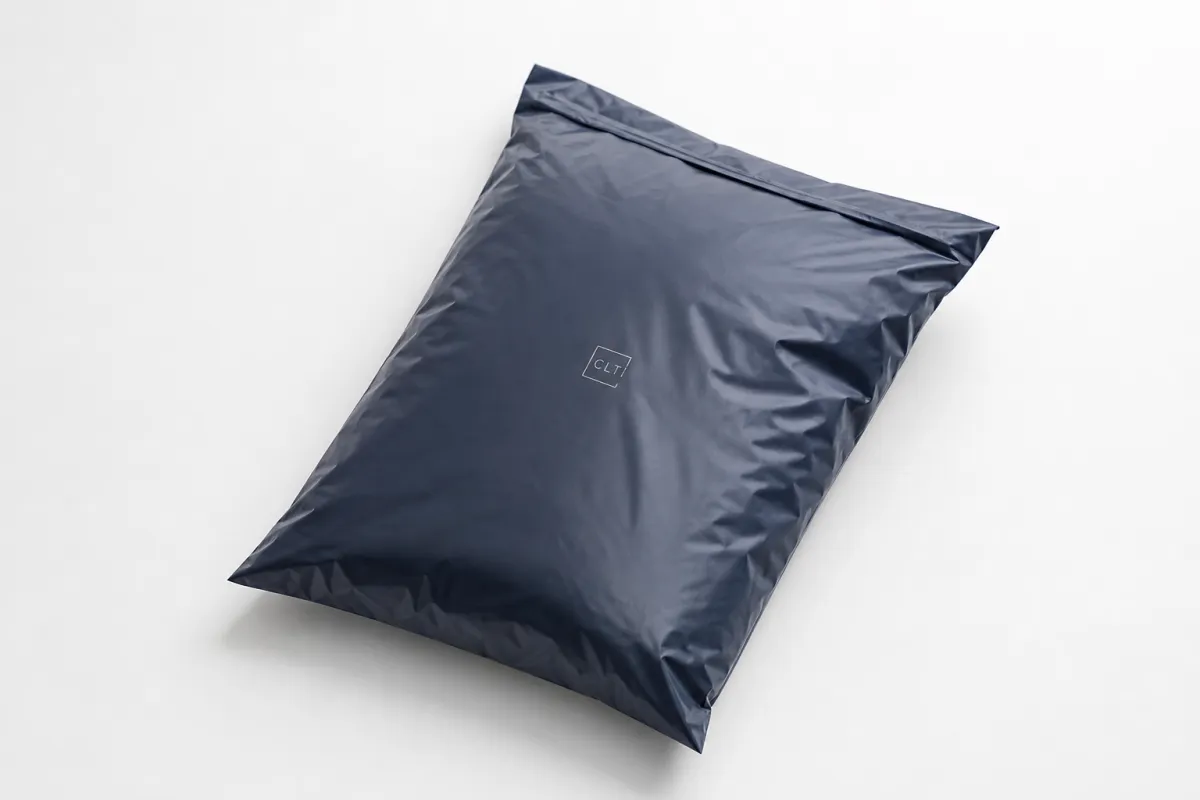
Hoodies create shipping waste in a way many apparel buyers underestimate. They fold into a thicker stack than most shirts, but they are still soft goods, so a rigid carton is often more than the order needs. That is the sweet spot for Custom Poly Mailers for hoodies. The parcel stays light. The footprint stays compact. The shipping rate stays closer to the real size of the item instead of the empty air around it.
A few inches can change the economics more than expected. A mailer that runs too large can move a parcel into a higher dimensional-weight bracket on some services, especially after the garment settles and puffs the bag outward. A mailer that is too thin can split at the seam or puncture on a conveyor. The reshipment costs more than the packaging error, and the customer remembers the failure longer than the refund.
Custom Poly Mailers for hoodies also carry a brand story into the delivery moment. A bold logo, a deliberate color field, a social handle, or a short line of copy can make the package feel planned rather than generic. That matters because the outer package is often the first physical touchpoint after checkout. The order may have been bought on a screen, but the packaging is what makes it feel real.
From a packaging buyer’s point of view, the mailer usually does three jobs at once:
- Protection - keep the hoodie dry, clean, and intact through transit.
- Efficiency - reduce weight and dimensional waste compared with a carton.
- Presentation - turn the outside of the shipment into a branded surface.
That mix explains why custom poly mailers for hoodies show up so often in apparel shipping. They sit between plain shipping bags and more rigid formats like custom printed boxes. For a single hoodie, a light accessory, or a folded promo item, the mailer usually handles the job with fewer packing steps and less material than corrugated board.
Consistency is another quiet benefit. A brand can ship hoodies in plain mailers and still get the order there safely, yet the experience feels different from batch to batch. Custom poly mailers for hoodies standardize the appearance of the shipment. Repeated orders feel familiar. Seasonal drops feel connected. That sort of recognition is part logistics and part memory.
For soft goods like hoodies, packaging is rarely just packaging. It is the shipping shell, the first unboxing layer, and the visual shorthand for how careful the brand is with details.
Many brands treat custom poly mailers for hoodies as core packaging rather than a disposable supply. The mailer becomes part of the perceived value, especially when the garment sits above entry-level pricing. A $60 hoodie in a thin blank envelope can feel oddly detached from the product story. The same hoodie in a well-designed branded mailer feels more deliberate, more finished, more in line with the price.
If you are building a wider packaging program, compare apparel mailers with the other formats in your mix. Some items belong in custom printed boxes. Some need tissue and inserts. Some only need a protective sleeve. Hoodies usually come down to fit, transit risk, and how much of the customer experience should be carried by the outer shipper versus the garment presentation inside. For a broader assortment, see the Custom Packaging Products page and the Custom Poly Mailers category for a closer look at available packaging formats.
How Custom Poly Mailers for Hoodies Work
The workflow is simple enough to explain in one breath. The hoodie gets folded into a compact rectangle, the hood is tucked inward to cut down on bulk, then the garment slides into the mailer and the adhesive strip seals the top. The aim is not to crush the fabric. The aim is to compress it enough to ship efficiently while keeping the package neat and presentable. Custom poly mailers for hoodies are built around that balance.
Most mailers use polyethylene film because it is light, flexible, and water resistant. Many are co-extruded, with one layer chosen for strength and another tuned for opacity or print quality. Thickness is usually measured in mils, and that number matters more than a lot of first-time buyers expect. A 2.5 mil mailer can work for lighter apparel, but a heavier fleece hoodie, a multi-item bundle, or a rough transit lane often calls for 3 to 4 mil film.
Printed branding sits on the outer surface. That sounds straightforward. The real decisions are in placement and composition. A centered logo can feel direct and unmistakable. A smaller mark with a subtle pattern can look premium without shouting. Social handles, web addresses, and short taglines can help, but only if they remain legible at a glance and do not crowd the design. Strong packaging usually gives one idea room to breathe.
From a fulfillment angle, custom poly mailers for hoodies are efficient because they are easy to store, quick to seal, and simple to stack. No tape gun. No void fill. No large corrugated inventory taking up rack space. That matters for Brands That Ship in waves: a drop opens, orders spike, and the team needs packaging that will not slow the line. Faster packing keeps throughput steady.
Plain mailers and custom versions also shape the customer experience differently. Plain bags protect the garment, but they leave the shipment anonymous. Custom poly mailers for hoodies create a repeatable look, which helps customer service, social sharing, and post-purchase recognition. A shopper who orders again two months later sees a package that already feels familiar. That familiarity is a real part of retail packaging psychology.
Mailers can also work inside a broader presentation system. Tissue, stickers, and inserts may sit inside the bag. They do not belong in every order, and they should not be added just because they look good in a mockup. Still, there are cases where custom poly mailers for hoodies serve as the outer layer of a packaging strategy that also includes custom printed boxes for premium tiers and lower-cost mailers for everyday orders. The right mix depends on SKU price, order size, and shipping method.
For sustainability-minded buyers, the material story deserves a close read. Check whether the film can be recycled in local flexible-film streams, whether PCR content is available, and whether the supplier can support any paper-component claims with documentation. The mailer itself is still plastic in most cases, so vague green language helps nobody. Packaging buyers are usually safer with a clear claim they can defend than a polished line that breaks under scrutiny.
Industry groups like the ISTA outline testing methods that show how packages behave in transit, while organizations such as the EPA offer general guidance on recycling behavior that can shape packaging communication. Neither replaces supplier testing. Both help anchor decisions in how packages actually perform instead of how they look in a mockup.
Key Factors That Shape Custom Poly Mailers for Hoodies
Size comes first, and it deserves more attention than it usually gets. A hoodie can look compact on a hanger and still become surprisingly bulky once folded. The right way to think about custom poly mailers for hoodies is to measure the actual folded garment, not the flat dimensions on a spec sheet. Add a small allowance for loft, seams, and the pressure needed to close the adhesive strip without forcing the film to stretch.
Thickness is the next decision. Thin film costs less, but not every shipment behaves politely. Heavy fleece, double-layer hoodies, and zip-front styles can be harder on the package. If the brand ships long distances or uses carriers with rough handling, a slightly heavier gauge can cut tear risk. That extra fraction of a mil adds cost, yet it can also reduce replacements and customer complaints.
Printing matters more than many buyers expect. Custom poly mailers for hoodies often use one to four colors, depending on the print process and supplier setup. A full-coverage design can create a strong branded impression, but it also raises the risk of color mismatch if the artwork uses delicate gradients or hairline text. A bold logo on a clean background often reads better than a crowded design that tries to say too much.
Security and weather resistance are nonnegotiable. Poly mailers naturally resist moisture, which is one reason they are common for apparel shipping. Still, seam quality, adhesive strength, and puncture resistance all matter. A package that survives a short trip across town may behave differently after sorting, stacking, and a few hub transfers. The difference between “good enough” and “reliable” tends to show up in these small physical details.
Sustainability and customer perception overlap more than people admit. Some buyers judge packaging quality by opacity and texture long before they think about disposal. Others care first about whether the package feels premium and whether the material can be handled responsibly after delivery. That is why custom poly mailers for hoodies should be chosen with both appearance and end-of-life communication in view. If recycled content can be supported, say so. If the claim cannot be backed up, say less and stay accurate.
The hoodie itself changes the equation. A streetwear fleece with large prints can carry a more expressive package. A minimalist premium hoodie may call for restrained branding and cleaner color choices. A promotional hoodie shipped in large volume may need an economical mailer with readable graphics and little decoration. Custom poly mailers for hoodies should mirror the product line instead of fighting it.
The table below offers a practical comparison of common options. The numbers are directional because pricing shifts with artwork, quantity, and region, but they help during early planning.
| Option | Typical Thickness | Best Use | Approx. Unit Cost at Scale | Notes |
|---|---|---|---|---|
| Plain poly mailer | 2.5-3 mil | Basic hoodie shipping | $0.08-$0.16 | Lowest cost, no branding, good for high-volume commodity orders |
| Custom printed poly mailer | 2.5-4 mil | Branded DTC hoodie orders | $0.18-$0.40 | Balanced choice for most custom poly mailers for hoodies |
| Heavy-duty custom mailer | 4 mil+ | Premium hoodies or rough transit | $0.30-$0.60 | Better puncture resistance, higher material cost |
| Rigid box | Corrugated board | Gift sets or premium retail packaging | $0.55-$1.50+ | Better structure, more shipping weight, stronger unboxing impact |
Those ranges are planning numbers, not promises. They help a buyer avoid sticker shock before asking for a real quote. The actual price of custom poly mailers for hoodies depends on order volume, film type, print coverage, finish, and whether the job needs extras like matte film, metallic ink, or a wider seal. A quote that looks unusually low should trigger a closer look at what is missing from the spec.
There is a second comparison worth making. A custom mailer can add a few cents per order, but that increase may be offset by lower shipping weight, less tape, fewer carton purchases, and stronger brand recall. That does not happen in every case, yet it happens often enough that the math deserves a proper look before defaulting to the cheapest blank bag available.
Process and Timeline for Ordering Custom Poly Mailers for Hoodies
The ordering process is usually simpler than people expect, but the details still matter. It starts with specifications: finished mailer size, quantity, film thickness, print coverage, and destination. Once those are in place, the supplier can quote unit price and lead time. Custom poly mailers for hoodies move faster when the buyer sends clear folded dimensions and clean artwork from the start.
Artwork and proofing come next. That stage often creates the first delay. A logo file may be too low-resolution, a color palette may not translate well to film, or the designer may have missed bleed and safe area. A proper proof should show print placement, dimensions, and any registration notes. Small text deserves extra scrutiny because what reads cleanly on a screen can disappear on a glossy or tinted bag.
Samples help, especially for first orders or new hoodie lines. A sample is more than a color test. It is a test of fold fit, seal strength, opacity, and how the mailer feels when handled. For custom poly mailers for hoodies, one sample with a heavyweight garment can tell you whether the seal strip is strong enough and whether the chosen size leaves enough room for easy insertion.
Lead time varies by supplier and by complexity, but a practical planning range is often 12-18 business days after proof approval for standard custom orders, with extra time for transit. Complex artwork, large quantities, or special finishing can stretch that timeline. Hoodie drops, seasonal restocks, and marketing pushes should be scheduled with packaging lead time built in from the beginning.
A useful project timeline looks like this:
- Planning stage - measure the hoodie, choose the target quantity, and define the look.
- Proofing stage - review artwork, print placement, and any sample or mockup.
- Production stage - print, cure, inspect, and package the mailers for shipment.
- Buffer stage - allow time for delivery before inventory is released or promoted.
That buffer keeps a common fulfillment problem from turning into a mess: hoodie inventory is ready, orders start arriving, and the mailers are still in transit. The result is a bottleneck that makes the business look less organized than it really is. Custom poly mailers for hoodies work best when packaging and product are planned as one system rather than two separate purchases.
A packaging master file saves time on repeat orders. Record the approved size, print file, supplier contact, reorder quantity, and notes from the first production run. On a later order, that record can prevent accidental spec drift. It also makes it easier to compare custom poly mailers for hoodies across campaigns, which helps if the brand uses one design for standard drops and another for limited-edition launches.
For brands that care about sourcing, this is a good point to ask about recycled content, film composition, and whether any paper components or inserts can be tied to responsible forestry standards such as FSC. If you want a neutral reference point, FSC is a clear place to see how certified fiber claims are framed and what those claims mean in practice.
Cost, Pricing, MOQ, and Quote Basics
Pricing for custom poly mailers for hoodies usually looks simple on the surface and complicated underneath. Unit cost depends on quantity, size, thickness, print coverage, number of colors, finish, and shipping destination. MOQ, or minimum order quantity, matters because smaller brands often want the branding benefits of a custom mailer without tying up too much cash or storage space.
Most buyers are not chasing the lowest possible price. They are looking for the point where unit cost stays reasonable enough to protect margin while still improving the customer experience. A hoodie brand that ships 500 units a month does not have the same packaging math as one that ships 10,000. Custom poly mailers for hoodies should be priced against order frequency, not just against the line item itself.
Here is a practical quote checklist that helps suppliers return cleaner numbers:
- Finished folded hoodie dimensions or garment size range.
- Target quantity and reorder expectation.
- Mailer thickness target, if known.
- Artwork file and color preferences.
- Preferred finish, such as matte or gloss.
- Shipping destination and timing requirement.
If you send all of that at once, the quote is usually more useful. If you send only a logo and ask for a price, the answer may be so broad that it misses the real decision points. That is especially true for custom poly mailers for hoodies, where small dimensional differences can change both shipping costs and production pricing.
For early budgeting, apparel brands often work within these rough planning bands:
- Small runs - often higher per-unit pricing because setup is spread across fewer pieces, sometimes around $0.28-$0.60 depending on complexity.
- Mid-volume runs - a more efficient band, often around $0.18-$0.35 per unit for straightforward custom printed mailers.
- High-volume runs - the best unit economics, but usually with a higher upfront spend and more storage needed.
Those ranges are not universal, and they should not replace an actual supplier quote. They are useful because they show the tradeoff clearly: lower per-unit cost usually requires higher commitment. That works well if hoodie demand is stable, and it works less well if the business launches in small drops or restocks unevenly.
One of the most common mistakes is comparing mailer cost in isolation. A custom mailer may cost more than a plain one, but it can reduce the need for branded tape, extra inserts, or a secondary outer label system. It can also reduce damage-related losses, which stay invisible until returns start to rise. Custom poly mailers for hoodies are best judged as part of the full packaging system, not as a single line item.
There is a brand return-on-investment angle too. A stronger outer package can lift perceived value, which matters in apparel where competitors may sell similar silhouettes at similar prices. If the customer is choosing between several hoodie brands that all promise comfort, then packaging becomes one of the few physical differentiators before the garment is even worn. That is why the packaging conversation belongs next to merchandising and margin planning.
For buyers who want a broader sense of packaging standards and industry terminology, the Association for Packaging and Processing Technologies and similar industry resources can be useful references for material types, testing language, and packaging education. The point is not to treat packaging as a generic commodity. It is a functional part of the sale.
If you are ordering custom poly mailers for hoodies for the first time, one question cuts through a lot of noise: what does this mailer need to do beyond holding the hoodie? If the answer includes branding, moisture resistance, faster packing, and lower postage waste, the quote should reflect all of that. If a quote focuses only on the cheapest unit price, it may be missing the point.
Common Mistakes When Ordering Hoodie Mailers
Size is the easiest mistake to make and the hardest to ignore later. If the mailer is too tight, the adhesive strip may not close properly and the seam can split under pressure. If it is too large, the hoodie shifts around, the package looks sloppy, and dimensional weight can climb for no useful reason. Custom poly mailers for hoodies should fit the folded garment, not the idea of the garment.
Artwork is the second trap. A design that looks crisp on a screen may not print cleanly on film if the linework is too fine or the colors lack contrast. Small type can disappear. Gradients can band. Dark ink on a dark bag can flatten the whole composition. A good rule is to keep custom poly mailers for hoodies bold enough to read from arm’s length, because that is how most customers first see them.
Fulfillment teams also underestimate workflow realities. A mailer that looks beautiful in mockup but takes extra seconds to orient, fill, and seal slows the shipping table. That may not matter for ten orders. It matters a great deal when a hoodie launch creates hundreds of daily shipments. Packaging design should support the operation, not create friction inside it.
Another mistake is obsessing over the outside and forgetting the full customer journey. The outer layer matters, but a package can still feel generic if the insert strategy, folding method, and sizing discipline are sloppy. The best custom poly mailers for hoodies do not exist in isolation. They sit inside a larger product packaging system built on presentation, protection, and clear fulfillment habits.
Skipping sample checks is one of the costliest mistakes because the problem often stays invisible until the full batch arrives. A sample can reveal weak opacity, poor seal strength, an off-center print, or a finish that does not match the brand’s tone. If you are ordering custom poly mailers for hoodies for a higher-end line, a sample is not a luxury. It is basic risk control.
Assuming every hoodie is the same creates another problem. Lightweight fashion fleece, heavyweight brushed cotton, zip hoodies, and oversized streetwear cuts can each require a different mailer size. A generic one-size approach sounds efficient until the packaging starts failing in one product tier. Experienced buyers usually test at least two sizes before locking the spec.
MOQ pressure causes mistakes too. A supplier may offer a better unit price at a larger run, but if the business cannot store the inventory or will not reorder for many months, the low price turns into carrying cost. Custom poly mailers for hoodies should fit the business’s cash cycle as well as its garment dimensions. The lowest quote is not always the best procurement decision.
If the goal is a stronger brand experience, keep the mailer tied to the hoodie line itself. The package should match the tone of the product. A rugged workwear hoodie, a premium fleece hoodie, and a youth streetwear drop do not ask for the same packaging language. Package branding and product positioning either reinforce each other or collide. There is rarely an in-between.
Expert Tips and Next Steps for Better Hoodie Shipping
Start with the hoodie category, not the mailer catalog. A premium fleece line may justify a heavier, cleaner-looking mailer with restrained graphics. A promotional run may only need an economical but polished outer shell. A streetwear drop may benefit from stronger color contrast and a sharper visual edge. Custom poly mailers for hoodies work best when the design language fits the product’s price point and audience.
Test real garments before placing a large order. That sounds basic, and it is, but basic checks prevent expensive mistakes better than polished mockups ever will. Fold two or three hoodie styles the way your team will actually pack them, then insert them into sample mailers if possible. The fit, the fold, and the final package shape will tell you more than a render ever can.
Build a checklist and keep it in the order file. A short, practical version works best:
- Measured folded hoodie dimensions.
- Approved mailer size and thickness.
- Print-ready artwork files.
- Proof approved by one decision maker.
- Lead time and reorder buffer.
- Storage plan for received inventory.
That checklist turns custom poly mailers for hoodies into a repeatable system instead of a one-off purchase. It also protects against drift, which is common after a brand grows and packaging gets reordered by someone different months later. A packaging system only stays efficient if the spec is written clearly enough to survive turnover.
Use packaging as a brand signal, not just a shipping shell. If the hoodie line uses earth tones, the mailer should probably not feel loud and synthetic. If the brand is bold, urban, and graphic, the package can carry more visual energy. If the business wants to look premium, simplicity often wins over clutter. That is true for retail packaging, and it is true for custom poly mailers for hoodies.
The full packaging ladder matters too. Some brands use mailers for everyday hoodie orders and reserve custom printed boxes for higher-ticket bundles, gifts, or press shipments. Others keep all orders in mailers because speed and shipping cost matter more than a rigid box. There is no universal answer. The right setup depends on margin structure, product type, and customer expectation.
One final point deserves a direct answer: do not let packaging become an afterthought in launch planning. Hoodie inventory arriving before the mailers creates storage clutter and delays. Mailers arriving too early create warehouse clutter and tie up cash. The order should be timed so packaging and product meet at the same point in the calendar. That is the simplest way to keep fulfillment calm.
If you are ready to move forward, the next steps are straightforward: measure the hoodie, gather print-ready artwork, decide on finish and thickness, request a quote, and compare the real packaging value against unit cost alone. Then approve the sample or proof with the same care you would give the hoodie itself. Custom poly mailers for hoodies only work well when the size, print, and timing are all right at the same time.
For brands that want a packaging system rather than a single SKU, custom poly mailers for hoodies can anchor a wider branded packaging strategy without forcing the business into heavier, more expensive boxes. That is the attraction. The mailer protects the garment, supports shipping efficiency, and makes the delivery feel intentional. If you need a simple rule to follow, use this one: measure the folded hoodie, test one sample, and do not approve artwork until the package still reads clearly at arm’s length. Get those three pieces right, and custom poly mailers for hoodies will usually pay their way.
FAQ
What size custom poly mailers for hoodies should I choose?
Measure the hoodie after folding it the way it will actually ship, then add a small allowance for loft and sealing room. The safest choice is usually the smallest mailer that closes comfortably without forcing the garment so tightly that the seam or adhesive strip is stressed. If your catalog includes both lightweight and heavyweight hoodies, test at least one sample from each end of the range before locking the size for custom poly mailers for hoodies.
Are custom poly mailers for hoodies better than boxes?
For most single-hoodie orders, yes. Poly mailers are lighter, cheaper to ship, and faster to pack, which makes them efficient for soft goods. Boxes make more sense if the hoodie includes extras, needs rigid protection, or sits in a premium unboxing tier. For a lot of brands, custom poly mailers for hoodies are the better everyday choice, while custom printed boxes are reserved for gift sets or higher-value bundles.
How much do custom poly mailers for hoodies cost?
Pricing depends on quantity, size, thickness, and print complexity, so the unit cost can vary widely. As a planning range, simple custom printed mailers may land around $0.18-$0.40 per unit at larger volumes, while smaller runs can cost more per piece. The most useful quote balances print quality, durability, and shipping efficiency rather than chasing the lowest sticker price for custom poly mailers for hoodies.
How long does production usually take for custom poly mailers for hoodies?
Lead time depends on artwork approval, proofing, quantity, and the supplier’s production queue. A practical range for many standard orders is often 12-18 business days after proof approval, plus transit time. Simple orders move faster when files are print-ready and the size is already confirmed. If you have a hoodie launch or restock date, build in extra time so packaging does not arrive after the inventory is ready.
What should I send when requesting a quote for custom poly mailers for hoodies?
Send your target quantity, folded hoodie dimensions, preferred material thickness, shipping destination, and any artwork files you already have. It also helps to note whether you want full-coverage printing, a simple logo layout, or a more restrained package branding style. If you want to check color, placement, or seal performance, ask about proof or sample options before full production of custom poly mailers for hoodies.

