Buyer Fit Snapshot
| Best fit | Custom Poly Mailers with Recycled Film projects where brand print, material claims, artwork control, MOQ, and repeat-order consistency need to be specified before quoting. |
|---|---|
| Quote inputs | Share finished size, material target, print colors, finish, packing count, annual reorder estimate, ship-to region, and any compliance wording. |
| Proofing check | Approve dieline scale, logo placement, barcode or warning zones, color tolerance, closure strength, and carton packing before bulk production. |
| Main risk | Vague material claims, crowded artwork, missing packing details, or unclear freight terms can make a low unit price expensive after revisions. |
Fast answer: Custom Poly Mailers with Recycled Film: Film, Print, MOQ, and Carton Packing should be specified like a repeatable production item. The safest quote records material, print method, finish, artwork proof, packing count, and reorder notes in one written spec.
Production checks before approval
Compare the actual filled-product size with the drawing, then confirm tolerance on folds, seals, hang holes, label areas, and retail display edges. Reserve space for logos, QR codes, warning copy, and material claims before decorative graphics fill the panel.
Quote comparison points
Review material grade, print process, finish, sampling route, tooling charges, carton quantity, and freight assumptions side by side. A quote is only useful when the supplier can repeat the same color, closure quality, and packing count on the next order.
Custom Poly Mailers with recycled film can look like a small procurement decision. They are not. A shipping bag is often the first physical object a customer touches, and that first touch says a lot: how tightly the package is sealed, whether the artwork sits cleanly on the surface, whether the material feels thin or deliberate, whether the brand thinks through details instead of tossing out a generic envelope and hoping for the best.
That is one reason Custom Poly Mailers with recycled film keep surfacing in conversations among e-commerce brands, subscription businesses, and retailers that ship direct to consumer. The bag has a job beyond transportation. It carries the product, yes, but it also carries a visual message. If the print looks sharp and the seal holds, the package feels considered. If the film tears at the corner or arrives scuffed, the story changes fast.
There is another reason buyers are paying attention. Shipping materials are handled by warehouse teams, carriers, and customers before the product is even opened. Few other brand touchpoints get squeezed, stacked, dropped, and sorted so many times in such a short span. Custom Poly Mailers with recycled film sit in that strange space between utility and branding, where freight weight, print quality, material choice, and customer perception all collide. The catch is that recycled film is not a single formula. Performance shifts with resin blend, film gauge, seal quality, and the print method used for the run.
That variation matters more than the sales copy usually admits. Two suppliers can both offer custom poly mailers with recycled film and deliver very different results. One mailer may print beautifully but feel soft enough to raise doubts about transit durability. Another may survive handling well and still mute the brand colors just enough to make the design look flat. Buyers who ask pointed questions usually end up with better packaging than buyers who chase the broadest sustainability claim.
I have seen teams get excited about a recycled-content headline and then discover the mailer tears the minute a zipper pull or box corner hits it. That is not a design failure so much as a spec failure. The material has to do the actual work, not just sound good in a deck.
What custom poly mailers with recycled film are and why they matter
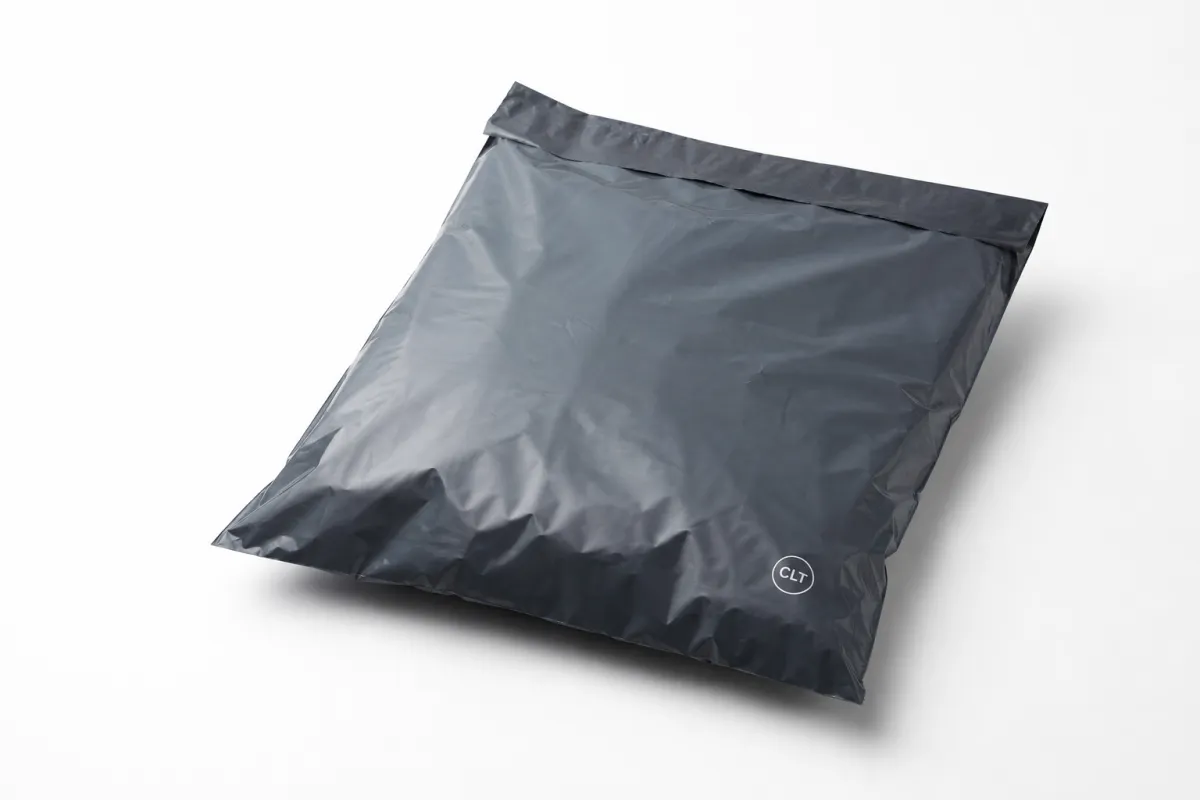
At the simplest level, custom poly mailers with recycled film are flexible shipping bags made from plastic film that includes recycled content, then printed or finished to carry a brand's logo, message, or color system. They are built for everyday shipping: apparel, accessories, soft goods, printed materials, small retail items, and products that do not need the crush protection of corrugated cartons. For many businesses, they sit in the middle ground between plain utility and retail-ready presentation.
The buying decision usually comes down to three questions. Does the mailer protect the product? Does it support the brand clearly? Does the material use make sense for the shipment and the business model? In practice, custom poly mailers with recycled film are attractive because they stay light, help control shipping weight, and still allow for a strong branded surface. That balance is useful for brands trying to keep fulfillment efficient without making the package feel disposable.
Packaging teams also like the way custom poly mailers with recycled film fit different warehouse setups. They do not require folding-carton machinery. They take up little storage space. They can be stacked efficiently, and they can make a small order feel more intentional than a plain mailer. In categories where package branding affects perceived value, that detail is not cosmetic. It affects how premium the product feels before the customer sees the item itself.
Recycled content does not erase the need for engineering. A higher recycled percentage is not automatically better if the bag tears too easily or the seal opens under pressure. The material has to survive sorting belts, truck movement, packing-line handling, and the occasional drop. Buyers who focus only on the sustainability headline often miss the practical question: will the parcel still be intact when it reaches the customer? That is the difference between a material story and a shipping system.
Comparison helps here. A mailer can contain recycled material and still perform very differently depending on how it was made. One supplier may build a stronger seam. Another may use a print process that keeps color crisp on a recycled surface. A third may source more consistently and reduce supply surprises. Custom poly mailers with recycled film reward brands that compare the full specification, not just the recycled-content percentage.
For teams building a broader packaging strategy, it makes sense to compare mailers with other branded formats such as Custom Packaging Products and Custom Poly Mailers. The right decision depends on how the mailer fits the rest of the system: labels, inserts, cartons, and the overall package branding approach. If the brand wants a unified look across shipping and retail, the mailer should be evaluated alongside those other elements rather than in isolation.
Public guidance can help frame the conversation too. The U.S. EPA recycling guidance is a practical place to start for general material context, while the Forest Stewardship Council offers a useful reference point for broader material responsibility. That said, FSC is a fiber-focused standard, so it is a comparison point for procurement discipline, not a claim that applies directly to film. Claims should match the material. Packaging copy still drifts into vague territory more often than it should.
Custom poly mailers with recycled film work best when buyers treat them as a performance spec, not a slogan.
How custom poly mailers with recycled film work
Understanding custom poly mailers with recycled film starts with the structure. A typical mailer includes an outer film layer, recycled content blended into that film, and a sealed seam that keeps the parcel closed under normal shipping stress. The construction looks simple. The material behavior is where things get interesting. Film formulation, seam integrity, and print compatibility all shape the final result.
Recycled content usually enters the film in one of two ways. It may come from post-consumer material, post-industrial scrap, or a blend of both. Sometimes the recycled component is mixed before extrusion. Sometimes the finished film is built to meet a target recycled-content specification. Either way, the blend can alter softness, opacity, clarity, and the way the mailer folds or stretches at the edges.
That matters because custom poly mailers with recycled film are not judged only by their material story. They are judged by how they hold shape, whether the seams stay intact, and whether the bag resists punctures from zipper pulls, rigid tags, corners, or product edges. A recycled-content upgrade does nothing if the gauge is too light for the shipment. A weak seal wipes out every other good decision. The warehouse notices first; the customer notices later.
Printing adds another layer. Most custom poly mailers with recycled film use flexographic printing or a comparable process suited to film. Logos, copy, social handles, and simple graphics can look excellent when the ink system matches the surface. Recycled film, though, does not always behave like virgin film. Ink adhesion can change. Saturation can shift. Dark fields, fine lines, and gradients can expose problems that looked invisible on screen.
Sample approval is the place where those issues stop being theoretical. A proof shows whether a logo stays sharp at the chosen size, whether the ink lays evenly, and whether scuffing appears during handling. A comparison with Custom Printed Boxes makes the difference obvious: paperboard and film behave very differently, so artwork decisions have to respect the substrate. A design that looks polished on a box can feel crowded or dull on a flexible mailer.
Three performance factors deserve close attention:
- Puncture resistance - Can the mailer survive the edges and corners of the product it is carrying?
- Tear behavior - If the mailer is stressed, does it fail in a controlled way or rip too easily?
- Seal strength - Will the closure hold through sorting, stacking, and rough handling?
A useful comparison is a work glove. The glove is light, flexible, and easy to move in, but it still has to resist stress in the right places. Custom poly mailers with recycled film operate the same way. Buyers often start by asking about recycled percentage. The sharper question comes earlier in the chain: how well does the seam hold, and what does the damage history look like in transit? Recycled content matters. So does the ability to arrive intact.
Testing frameworks help anchor that discussion. ISTA standards are often used as a reference point for package handling and transit performance, and the organization's general testing framework is available at the ISTA website. Not every mailer needs formal certification, but every mailer benefits from a conversation grounded in real handling conditions rather than optimistic packaging copy.
Viewed properly, custom poly mailers with recycled film have three jobs: hold the product, protect the product, and present the brand. When one of those jobs fails, the package feels off even if the recycled-content claim is technically accurate. That mismatch is what buyers should look for before they place an order.
And yes, a recycled-film mailer can be tuned well enough that customers never think about the film at all. That is kinda the point. The bag should disappear into the shipping experience unless it has a problem worth noticing.
Custom poly mailers with recycled film: cost, pricing, and MOQ
Pricing for custom poly mailers with recycled film usually follows a familiar pattern: material thickness, bag size, recycled-content percentage, print coverage, color count, and order volume all move the number. The mistake buyers make most often is assuming the recycled claim drives cost more than everything else. In reality, film gauge, artwork complexity, and how setup costs are spread across the run tend to have a bigger effect.
Short-run pricing often lands in a noticeably higher band than larger runs. That is not a warning sign by itself. Setup work, print plates, press time, and finishing all become easier to absorb as volume rises. A smaller order can still make sense for a brand testing a design or piloting a new product line, but the unit cost usually reflects the fact that those fixed costs have fewer bags to ride on.
Here is a practical comparison buyers can use as a starting point. The figures below are illustrative, not universal, because supplier capability, freight distance, and material sourcing all change the math.
| Option | Typical MOQ | Approx. Unit Cost | Best For | Main Tradeoff |
|---|---|---|---|---|
| Stock mailer with no print | 500-1,000 | $0.10-$0.18 | Fast replenishment, basic shipping | Little brand presence |
| Custom poly mailers with recycled film, simple one-color print | 2,000-5,000 | $0.18-$0.32 | Startups, launches, steady e-commerce | Higher setup cost than stock |
| Custom poly mailers with recycled film, full coverage print | 5,000-10,000+ | $0.24-$0.45 | Retail packaging programs, strong brand visuals | Artwork and proofing take longer |
| Premium recycled-film mailer with specialty finish | 10,000+ | $0.30-$0.55 | High-volume branded packaging | More sensitive to material and ink variables |
Those ranges shift quickly with size and volume. Larger bags use more film. Thicker gauge raises cost. More colors increase plate and setup complexity. A mailer with a simple recycled-content statement and minimal graphics may be much cheaper than a fully wrapped design that covers every visible surface. The difference can be surprising, especially when the artwork looks similar at first glance.
MOQ, or minimum order quantity, is where the economics become more revealing. Smaller runs push unit cost higher because proofing, sourcing, and press setup are spread across fewer bags. If the order is 2,000 pieces, the supplier has less room to absorb those fixed costs than if the order is 20,000. That is why custom poly mailers with recycled film can look affordable at scale and unexpectedly expensive in a pilot order.
Freight, overages, and rework are the hidden parts of the quote. If freight is billed separately, a low unit price can lose its appeal quickly. If overages are allowed, ask how many extra units may arrive and whether they are charged. If artwork revisions happen after approval, ask whether setup fees change. These are not edge cases. They show up in ordinary purchase orders all the time.
Use this checklist to separate a strong quote from a shallow one:
- What recycled-content claim is being made, and how is it documented?
- Is freight included or billed separately?
- Are plates, setup, and proofing included in the quote?
- What tolerance exists for overages or shortages?
- What happens if the bag color or print alignment misses approval?
Price should be treated as a package, not a single number. A slightly higher quote for custom poly mailers with recycled film can still be the better value if the seal is stronger, the print is cleaner, and the supplier communicates clearly on timing. That becomes even more true when the mailer is part of a broader package branding system that includes inserts, labels, or coordinated custom printed boxes.
Compare total landed cost, not just the ex-factory price. One of the reasons brands choose custom poly mailers with recycled film is that they can reduce freight weight and lower shipping spend. If the landed total is higher than expected, the spec may be oversized, overprinted, or simply too heavy for the product inside. A better quote is not always the cheaper one on paper.
Process and timeline: from quote to production
The sourcing process for custom poly mailers with recycled film is usually simpler than sourcing rigid cartons, but it still has a sequence. A request for quote comes first. Sample review follows. Artwork approval comes next. Then production scheduling. The projects that move quickly are the ones where those steps happen in a straight line rather than looping back because a spec was incomplete or a proof was unclear.
A clean spec sheet should include size, product weight, closure type, print coverage, recycled-content target, and monthly or quarterly volume. If the brand ships apparel, the mailer may need enough room for folded garments plus a return insert. If the product includes rigid accessories, the gauge may need to increase. If the shipment carries multiple SKUs, the print area may need space for a variable label or batch code. Small details in the request can prevent large delays later.
Projects usually lose time in the same places: missing dielines, unclear artwork placement, late sample feedback, or revisions that arrive after the production slot has already been discussed. With custom poly mailers with recycled film, those delays matter because the material spec and the print setup often need to be aligned before the press run begins. If the supplier is sourcing a specific recycled blend, the schedule can stretch another step.
Here is a realistic timeline pattern many buyers see:
- Quote and spec alignment: 1-3 business days if the request is complete.
- Artwork prep and proofing: 2-5 business days, longer if revisions are needed.
- Sample approval or physical proof review: 3-7 business days, depending on shipping distance.
- Production: often 12-15 business days from proof approval for straightforward jobs, longer for larger or more complex runs.
- Transit: varies widely by freight mode and destination.
That is the practical reality behind custom poly mailers with recycled film. They are not slow, but they are not immediate either. Buyers who work backward from a campaign date usually have a much easier time than buyers who start with the launch date and assume packaging will catch up. A two-week delay in approvals can erase a bargain unit price very quickly.
Treat the mailer like a production component, not a decorative extra. Ask for the exact print stage, the final film spec, and the approval path. If the supplier answers with a generic estimate and no detail on those points, slow the process and press for clarity. It is cheaper to catch a mismatch before the press run than after thousands of bags are already in motion.
A sample line test is especially useful for quality-minded teams. Put the product in the mailer. Seal it. Shake it. Stack it. Fold it. Compare it with the actual packing flow your team uses. A mailer can photograph well and still feel awkward on the line. Custom poly mailers with recycled film should be judged in the real pack-out environment, not just in a mockup folder or a sales deck.
Key factors to compare before you order
Before placing an order, compare custom poly mailers with recycled film on the factors that affect performance instead of the ones that merely sound impressive in a listing. Film gauge comes first. Thinner does not automatically mean weaker, but the right thickness should match the product, the shipping route, and the handling risk. A soft garment moving a short distance is a different case from a boxed accessory with sharp corners traveling across the country.
Recycled-content verification comes next. Ask whether the film uses post-consumer recycled material, post-industrial recycled material, or a blend of the two. If a sustainability report or internal ESG tracker depends on the number, request documentation. A reliable recycled-content claim is far more useful than a flashy one, especially if the buyer needs consistent reporting across multiple purchase orders.
Closure and seam design deserve the same attention. Peel-and-seal closures are common because they speed up packing and reduce error rates. Tamper-evident features can add reassurance for certain categories. A weak seam, though, can ruin the effect of a better-looking print. If the seam opens too soon, the rest of the specification hardly matters.
Print behavior matters too. Custom poly mailers with recycled film can print well, but the artwork should be chosen with the substrate in mind. Bold logos, large type, and high-contrast marks usually perform better than very fine lines. Dark backgrounds often need extra testing. Gradient-heavy artwork may need a proof to show whether the recycled film accepts ink evenly enough for the design. This is the point where packaging design and package branding become practical decisions rather than abstract ideals.
For brands with a broader packaging program, coordination matters more than isolation. Should the mailer echo labels, thank-you cards, or custom printed boxes? Should all package branding feel cohesive, or should the mailer stay minimal and let inserts carry the tone? Those choices change cost and lead time. They also change how customers read the shipment before they open it.
Use this comparison matrix as a quick filter:
| Factor | What to Ask | Why It Matters |
|---|---|---|
| Film gauge | What thickness suits the product weight and edge profile? | Affects puncture resistance and feel |
| Recycled-content claim | Post-consumer, post-industrial, or blended? | Impacts reporting and credibility |
| Seal strength | How is the seam tested? | Protects against transit failures |
| Print method | What is the process and proof standard? | Determines color accuracy and sharpness |
| MOQ and freight | What is included in the total cost? | Shapes landed price and budgeting |
Local recycling rules complicate the end-of-life story. A mailer can contain recycled film and still not be accepted everywhere in curbside systems. That does not make it a poor choice, but it does mean the claim should stay precise. If your team plans to discuss disposal or recycling behavior, the wording should match the actual material and the real collection conditions in your market. EPA guidance is useful for general framing, but it does not replace supplier documentation or municipal rules.
In practice, custom poly mailers with recycled film should always answer the same three questions: Does it protect the product? Does it represent the brand well? Does the material claim stand up under documentation and real use? If the answer is yes to all three, the order is probably headed in the right direction.
Common mistakes buyers make with recycled-film mailers
The first mistake is assuming every recycled-film mailer is automatically sustainable in the same way. Packaging systems are messier than that. Recycled content, recyclability, inks, closures, and local collection options all affect the final story. Custom poly mailers with recycled film can be a better choice than a standard virgin-film bag, but the buyer still needs to understand what the material actually does and does not do.
The second mistake is picking the cheapest quote without asking what is missing. A low number can hide weaker film quality, thinner gauge, higher freight, or a closure system that only looks adequate on paper. Sometimes the cheapest bid becomes the most expensive option once damage claims, replacements, and customer complaints show up. That is not a rare outcome. It is a common one, and it usually starts with a quote that looked too good to be true.
The third mistake is skipping a physical sample test. A proof sheet is useful, but it will not show how the mailer handles stretch, seam pressure, scuffing, or packing-line speed. Custom poly mailers with recycled film deserve at least one real sample review and, ideally, a test under actual fulfillment conditions. If the bag scuffs too easily, stretches oddly, or changes appearance under load, better to find out before the order scales.
The fourth mistake is handling artwork on the wrong timetable. Too early, and colors, copy, or product details may still change. Too late, and rush charges begin to appear because the schedule has already tightened. That gets even riskier when custom poly mailers with recycled film are one piece of a launch, seasonal push, or packaging redesign that also affects labels, inserts, or other branded packaging materials.
There is also a quieter mistake: treating the mailer as an afterthought. The outer package is usually the first object a customer touches. If the bag feels cheap, dull, or poorly sealed, the product inside has to work harder to recover the first impression. A well-specified mailer can do the opposite. It can raise the perceived value of the shipment without forcing the business into a box-heavy, freight-heavy system.
One more practical point deserves space: not every product belongs in a poly mailer. Fragile, rigid, or easily crushed items may need more protection than custom poly mailers with recycled film can provide on their own. Packaging should follow the product, not the other way around. That sounds obvious, yet teams still make the mistake of choosing the packaging first and then trying to make the product fit the decision.
Expert tips and next steps for a smarter order
Start with a short spec sheet. Keep it simple, but make it complete. Include bag dimensions, product weight, shipping method, recycled-content target, number of print colors, monthly volume, and whether the mailer needs to coordinate with other product packaging. If the brand uses retail packaging in stores and direct-to-consumer shipping online, note both use cases. That difference affects how much visual polish the mailer needs and how much tolerance the team has for a minimal design.
Ask for at least two samples or material options if possible. Comparing custom poly mailers with recycled film side by side makes it easier to judge softness, seal feel, print sharpness, and overall durability. A single sample can look fine on its own and still lose once a second option seals better or prints more cleanly. Direct comparison is much more honest than memory.
Build a quote checklist that includes:
- MOQ
- Unit price by volume tier
- Freight or delivery terms
- Setup and plate charges
- Artwork fees
- Expected production timeline
- Overage and shortage policy
That checklist sounds basic, and that is exactly why it works. Without it, buyers often compare one supplier's unit price to another supplier's landed cost and assume they are comparing the same thing. They are not. Custom poly mailers with recycled film can look nearly identical across quotes while hiding very different assumptions underneath. The details sit in the margins, which is exactly where budgets get derailed.
Test the mailer on a real pack-out line before you place a large order. Have the warehouse team seal it, stack it, scan it, and move it through the full shipping flow. Ask whether the tear notch is easy to find, whether the closure slows anyone down, and whether the finished package still looks clean after handling. The best packaging decisions usually work for both the warehouse and the customer. If one side struggles, the system is not really working.
If you are building a broader packaging program, map the mailer against the rest of the brand system. The bag may need to echo custom printed boxes used for premium orders. It may need to stay minimal and let inserts carry the story. Either way, custom poly mailers with recycled film can fit into a larger branded packaging strategy without forcing the whole system to become heavier or more expensive.
Keep the documentation. If the recycled-content claim matters to procurement, marketing, or sustainability reporting, save the spec sheet, proof approval, and supplier correspondence. Good records make reorder decisions faster and reduce confusion later. They also help when a retailer, auditor, or internal stakeholder asks for something more specific than a sales pitch.
A practical next step is simple: place one pilot order of custom poly mailers with recycled film, measure the real-world results, then refine the size, thickness, and print layout before you scale. That is usually smarter than trying to solve every variable in one shot. If the pilot survives warehouse handling, prints cleanly, and matches your documentation needs, you have a spec worth repeating.
Final take
Custom poly mailers with recycled film are not a trend piece or a decorative upgrade. They are a useful shipping format for brands that want a lighter package, a more deliberate visual identity, and a material story they can explain without hand-waving. The strongest results come from treating the mailer as a real packaging component: one that has to protect the product, fit the fulfillment process, and support the brand without creating avoidable waste or friction.
If you compare custom poly mailers with recycled film on performance, documentation, print quality, and total landed cost, you are much more likely to land on a package that works for the business and the customer. That is the real test. Not whether the mailer sounds sustainable in a quote, but whether it ships well, prints cleanly, and holds up across the order cycle. Used that way, custom poly mailers with recycled film can strengthen branded packaging, product packaging, and the broader package branding system your team is building.
The simplest way forward is also the most reliable one: ask for the material spec, run a real pack-out test, confirm the recycled-content documentation, and approve the design only after the sample survives the same handling your orders will face every day. If it passes those checks, you are not guessing anymore. You are buying with your eyes open.
FAQ
Are custom poly mailers with recycled film recyclable?
It depends on the exact film blend and local recycling access, so do not assume every recycled-content mailer is accepted curbside. Some custom poly mailers with recycled film are designed for film recycling streams, while others are better treated as low-weight shipping packaging with recycled content rather than a curbside-recycling claim. Ask how the bag is intended to be handled after use, and confirm whether the closures, inks, or layered construction affect acceptance.
How much recycled content should I ask for in custom poly mailers with recycled film?
Ask for the highest percentage that still meets your durability, print, and supply requirements. The best target is the one you can document consistently across orders, not just the biggest number on a quote. For many buyers, the right answer is a balanced spec that keeps custom poly mailers with recycled film reliable in transit and repeatable on reorder.
What affects the price of custom poly mailers with recycled film the most?
Size, film thickness, print coverage, color count, recycled-content spec, and order volume usually drive pricing most. Freight, setup fees, and rush timing can move the final cost just as much as the bag itself. When comparing custom poly mailers with recycled film, make sure you are looking at the same bag size, the same print method, and the same delivery terms before calling one quote better than another.
How long does production usually take for custom poly mailers with recycled film?
Lead time varies by supplier, order size, and whether the film or artwork needs extra approval steps. Expect a longer timeline than stock mailers because custom sizing, print setup, and recycled material sourcing can add steps. For straightforward orders, custom poly mailers with recycled film often move through proof approval and production in a couple of weeks, but larger runs or more complex artwork can extend that window.
Do recycled-film mailers print as sharply as virgin-film mailers?
Often yes, but the result depends on the specific recycled film formulation and the print method used. Request a physical proof or sample run so you can judge logo sharpness, color consistency, and scuff resistance before production. With custom poly mailers with recycled film, a good proof is the quickest way to see whether the artwork and substrate are truly aligned.

