Buyer Fit Snapshot
| Best fit | Custom Poly Mailers with Reinforced Seams projects where brand print, material claims, artwork control, MOQ, and repeat-order consistency need to be specified before quoting. |
|---|---|
| Quote inputs | Share finished size, material target, print colors, finish, packing count, annual reorder estimate, ship-to region, and any compliance wording. |
| Proofing check | Approve dieline scale, logo placement, barcode or warning zones, color tolerance, closure strength, and carton packing before bulk production. |
| Main risk | Vague material claims, crowded artwork, missing packing details, or unclear freight terms can make a low unit price expensive after revisions. |
Fast answer: Custom Poly Mailers with Reinforced Seams: What Matters should be specified like a repeatable production item. The safest quote records material, print method, finish, artwork proof, packing count, and reorder notes in one written spec.
Production checks before approval
Compare the actual filled-product size with the drawing, then confirm tolerance on folds, seals, hang holes, label areas, and retail display edges. Reserve space for logos, QR codes, warning copy, and material claims before decorative graphics fill the panel.
Quote comparison points
Review material grade, print process, finish, sampling route, tooling charges, carton quantity, and freight assumptions side by side. A quote is only useful when the supplier can repeat the same color, closure quality, and packing count on the next order.
Custom Poly Mailers with reinforced seams look ordinary right up until a shipment gets crushed in a tote, clipped on a conveyor, or tossed into the back of a truck. That is usually when the weak point shows itself. A folded sweatshirt, a soft apparel bundle, or a small accessory kit can pass the packing table with no drama, then split at the edge once the load shifts from the body of the bag to the seam. For brands that care about product packaging and package branding, that tiny structural detail can shape the customer experience more than the artwork on the front.
I keep coming back to this because the buying process is often backwards. Teams compare gloss against matte, debate print coverage, and ask about color matching, then treat the seam like a footnote. It is not a footnote. Custom Poly Mailers with reinforced seams are a structural choice first and a visual choice second, which puts them in the same conversation as Custom Poly Mailers whenever packaging actually has to survive transit.
The cost of a split mailer is never just the replacement bag. It shows up again in support tickets, reships, refunds, and the tone of the next review. A brand that already pays attention to Custom Packaging Products, custom printed boxes, or retail packaging should apply the same discipline here. The mailer is part of the promise, not just the wrapper. Ignore that, and you are kinda asking the cheapest part of the package to carry the most risk.
Custom poly mailers with reinforced seams: why seams fail first
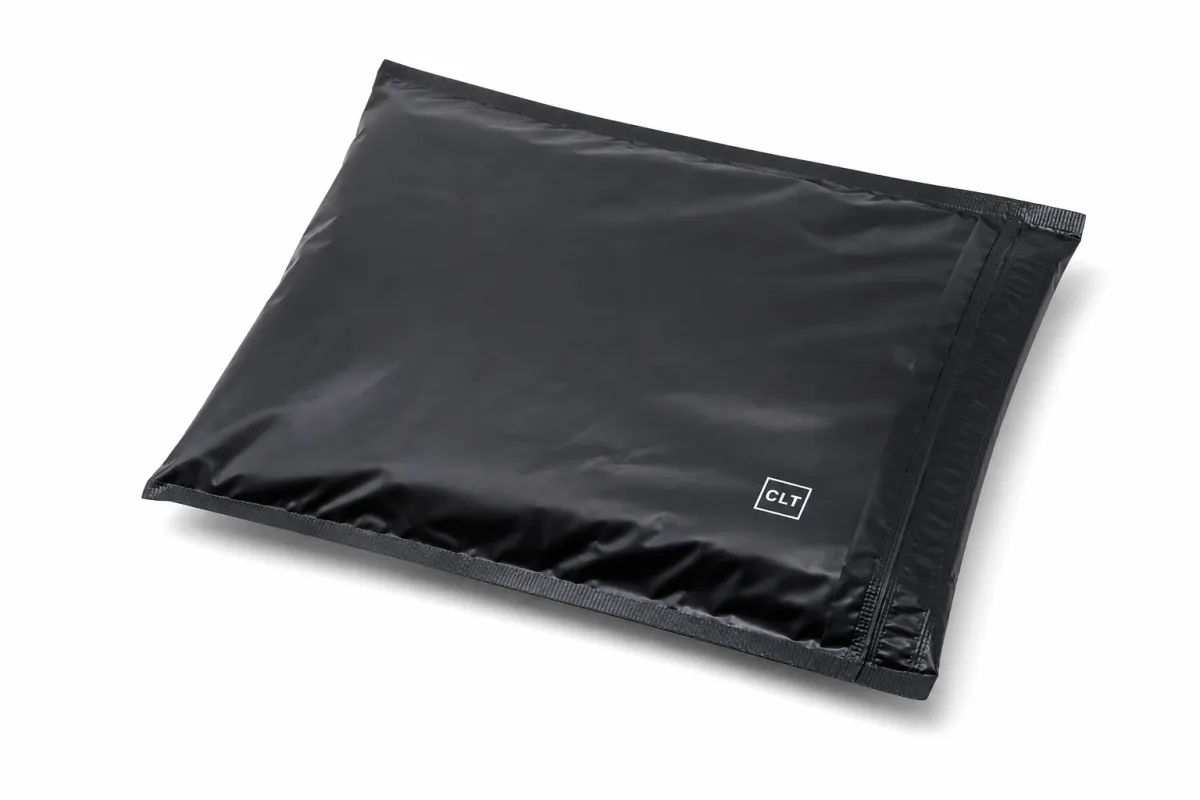
Picture a parcel moving through a network that does not care what is inside it. It is lifted, set down, stacked, pressed, and dragged across belts. The outer film may still look fine at the end of the trip, but the seam has taken every small shock along the way. That is why Custom Poly Mailers with reinforced seams can outperform standard bags even when the film gauge looks nearly identical on paper.
Failure usually starts quietly. A corner inside the bag pushes outward, the seal line stretches, and the edge begins to separate by a fraction of an inch. It rarely looks dramatic at first. Sometimes the bag only opens enough to create a small split, then the split grows as the package shifts again during delivery. By the time the customer sees it, the damage has already happened in stages.
In practical terms, a reinforced seam is a mailer with extra strength in the side, bottom, or closure area so the load spreads out instead of concentrating along a thin seal line. That reinforcement can come from a wider heat seal, a folded seam, a bonded strip, or a stronger film structure at the edge. For custom poly mailers with reinforced seams, the aim is not bulk for its own sake. The aim is to keep the bag from failing where shipping stress is most likely to land.
Thickness alone does not solve seam failure. A 2.5 mil film with a poor seal can fail sooner than a thinner film with a clean reinforced seam. Buyers often focus on gauge because it is easy to compare, yet the seam design is the part that decides whether the mailer survives real handling in the warehouse and on the route.
A good mailer is invisible in the best way. It arrives, stays closed, and never becomes part of the complaint queue.
That is why custom poly mailers with reinforced seams deserve to be treated as a packaging design decision, not a print-only spec. The better question is not, "How thin can this be?" The better question is, "What kind of stress will this bag actually face before it reaches the customer?"
How custom poly mailers with reinforced seams are built
Most mailers start with low-density polyethylene, usually in a mono-layer or co-extruded film. Co-extrusion gives the supplier room to tune the outer layer for print quality and the inner layer for seal strength or toughness. That matters because the bag has to look sharp, print cleanly, and still hold together when a product edge presses against the seam.
For custom poly mailers with reinforced seams, the added strength can sit in several places. A stronger side seal helps the bag resist splitting as it flexes. A reinforced bottom seam helps when the contents settle or shift. A stronger closure zone helps when the bag is overfilled or the adhesive strip gets pulled hard during packing. Some builds use a wider seal band, while others rely on a second layer or bonded strip to distribute the load.
Think of the difference this way: a standard seam is like a narrow bridge, and a reinforced seam is like a bridge with wider support. The load has not changed, but the stress is spread out. That distinction sounds small in a spec sheet and becomes obvious in a warehouse.
The best custom poly mailers with reinforced seams are matched to the product shape before anything else. Flat apparel behaves one way. A boxed accessory, a hard-edged part, or a mixed bundle behaves another. Irregular contents push harder on the edge, which means the seam needs more help. Longer routes and rougher sortation increase the need again. Split corners, open seams, and damaged-arrival emails are often the result of that mismatch between product and package.
Many buyers ask whether a reinforced seam is just a thicker film by another name. It is not. Film thickness improves the body of the bag, while seam design protects the failure line. Both matter. The film guards against puncture; the seam guards against separation. For custom poly mailers with reinforced seams, the strongest setup usually pairs a gauge chosen for the product with a seam spec chosen for the shipping lane.
Brands comparing broader packaging formats should think the same way across the whole line. A company that uses Custom Printed Boxes for heavier products and mailers for soft goods should keep the protection logic aligned. The package should fit the item, not force the item to fit the package.
Key factors that change performance and durability
If one point matters most, it is this: custom poly mailers with reinforced seams are not all built to the same standard, even when the printed surface looks identical. A handful of variables change performance far more than most buyers realize, and they are usually the reason one mailer holds while another splits.
Film thickness comes first. A common range for ecommerce mailers sits around 2.5 mil to 3.5 mil, with heavier builds used for denser or sharper products. Thicker film can help, but it also changes the feel, the fold, and the total shipping footprint. The right gauge depends on weight, shape, and how much empty space is left inside the bag.
Seam width matters next. A narrow seam is cheaper and lighter, while a wider seam can distribute load and reduce edge failure. Seal quality matters just as much. An uneven or sloppy seal can create weak spots even when the nominal spec looks acceptable. With custom poly mailers with reinforced seams, the seal has to repeat consistently across the full run, not only in a sample photo.
Bag shape changes behavior more than many teams expect. A gusset can help a thicker product settle naturally in the bag, but it can also create stress if the contents push against the seam line. Flat apparel behaves differently from hard goods, and a product with corners behaves differently from a soft folded garment. Buyers shipping accessories, spare parts, or bundled kits should test the exact load, not just the category name.
Print coverage can affect the final result too. Heavy ink coverage, especially on some film constructions, can alter flexibility around the seal area or reveal process issues if the sealing setup is not tuned correctly. That does not mean branding is a problem. It means package branding has to be planned together with the structure. The best custom poly mailers with reinforced seams still need room for artwork without crowding the working zones.
Adhesive and closure performance belong in the durability conversation. If the closure strip peels too early, the entire system weakens even when the seam itself is sound. A closure that resists dust, humidity, and repeated handling will save more trouble than a flashy finish ever will.
Weather exposure matters as well. Heat inside a truck, cold in a warehouse, and humidity during storage can all change how a mailer feels and seals. I have seen a bag that passed a desk check start to behave differently after sitting in a hot staging area for a few hours. That is one reason shipment testing matters. Standards such as ISTA shipment testing guidance and related ASTM procedures help buyers test packaging under conditions that resemble real transit, not just a clean desktop sample.
There is also a strategy question behind the specs. A DTC apparel brand usually wants a mailer that feels polished, prints clearly, and fits the tone of its branded packaging. A seller of hardware parts or small accessories may care more about puncture resistance and closure integrity. Same category, different priorities. That is why custom poly mailers with reinforced seams should be chosen by use case, not by product label alone.
Cost and pricing: what drives the quote for reinforced mailers
Pricing for custom poly mailers with reinforced seams usually comes down to five inputs: material gauge, reinforcement method, print complexity, bag size, and order quantity. Those factors move the quote more than many buyers expect, especially when the design includes full-bleed printing, specialty finishes, or multiple sizes in one order.
At a practical level, a standard printed mailer at higher volumes might land around $0.08-$0.18 per unit depending on size and artwork coverage. A reinforced build can move into a higher band, often around $0.12-$0.28 per unit or more for smaller runs, especially if the reinforcement is custom or the print uses multiple colors. Those are not fixed prices; they are useful ranges for asking sharper questions. A quote that sits far outside those bands is not automatically wrong, but it should trigger a closer look at what is actually included.
MOQ changes the unit cost quickly. At 5,000 pieces, setup and press time weigh heavily. At 20,000 pieces, those costs spread out, which usually lowers the per-bag price. Multiple SKUs, multiple colorways, or a special seam configuration can shift the quote because the factory has to set up, test, and calibrate more than once.
Here is a useful way to compare options:
| Option | Best fit | Typical structure | Relative cost | Buyer note |
|---|---|---|---|---|
| Standard poly mailer | Light apparel, low-risk transit | Basic film and seal | Lowest | Good for simple shipments, weaker against edge stress |
| Custom poly mailers with reinforced seams | Apparel, soft goods, mixed items | Stronger side or bottom seal | Moderate | Often the best balance of cost and damage reduction |
| Heavy-duty reinforced mailer | Dense, sharp, or overfilled shipments | Thicker film plus broader reinforcement | Higher | Useful when transit stress is high or product shape is unforgiving |
| Mailer with specialty closure | Premium unboxing or repeat handling | Reinforced seam plus upgraded adhesive | Higher | Useful when both structure and customer perception matter |
The real comparison is not only price per bag. It is price per successful delivery. If a reinforced seam prevents even a small number of reships, it can pay back fast. That is especially true for brands with sensitive customer service metrics or products that cannot be replaced cheaply. A slightly higher unit cost is easier to defend than a constant stream of avoidable support tickets.
When you request a quote, ask what is included. Does the price cover artwork setup, plates or cylinders, sampling, and freight? Is the seam reinforcement standard or an added upgrade? Are there charges for reproofing after file changes? Those questions keep the discussion centered on packaging design instead of a single headline number.
If the order includes paper inserts or a mixed packaging program, check whether the supplier can align the wider product packaging line with recyclable or certified materials. For example, FSC certification guidance can matter when the brand uses paper-based secondary packaging alongside mailers. Different material, same level of control.
Process and timeline for custom poly mailers with reinforced seams
Most delays start before the factory ever touches a roll of film. A brief arrives incomplete, artwork keeps changing, or the team waits too long to approve the sample. For custom poly mailers with reinforced seams, a clean process matters because the seam spec may need its own proof, its own test, and its own sign-off.
- Brief - Share dimensions, product weight, edge profile, target quantity, print area, and the type of reinforcement you want.
- Proof - Review artwork placement, seam zones, and closure zones so the design does not interfere with structural areas.
- Sample - Test a physical or pre-production sample with actual packed products, not only a flat sheet.
- Approval - Confirm color, seam feel, closure strength, and fit before production starts.
- Production - The factory runs the order, checks seal consistency, and packs to the agreed spec.
- Shipment - Freight method and destination determine how quickly the finished bags arrive.
Typical lead time after proof approval is often 12-15 business days for standard production, though smaller rush orders or heavily customized builds can take longer. New plates, multiple mockups, or special reinforcement zones add time. Transit time is a separate line item. Air freight moves faster and costs more; ocean freight takes longer and can help larger orders.
The delays buyers run into most often are predictable. Artwork files may be the wrong resolution. Brand colors may need one more correction. A sample may reveal a seam that feels too stiff, or a closure adhesive that slows down fulfillment. Each issue is fixable, but only if it appears before the production run starts.
With custom poly mailers with reinforced seams, sampling carries extra weight because the bag often feels different from the spec sheet. A seam can be technically strong and still awkward to load. A closure can seal well and still slow the packing line. The best sample is the one packed, handled, and tested by the people who will use it every day. That is the part teams skip, then act surprised when the warehouse has opinions.
One practical note: if the brand is also updating custom printed boxes or other branded packaging at the same time, align the timelines early. A box redesign can be ready while the mailer proof is still waiting for approval. That kind of mismatch is common in packaging programs with more than one SKU.
For inventory planning, a realistic timeline matters more than an optimistic one. If a supplier gives you a window, ask what has to happen for the order to stay inside it. Is artwork final? Is material already in stock? Is the seam reinforcement part of the standard line or a special run? Those details tell you whether the quote is practical.
Common mistakes when ordering reinforced seam mailers
Choosing by price alone is the easiest way to buy the wrong mailer. A low quote can hide weak seals, under-specified film, or a size that does not fit the product well. Custom poly mailers with reinforced seams are meant to reduce damage, so the cheapest option often becomes the most expensive once reships and complaints enter the picture.
Oversizing the bag is another common problem. Too much empty space lets the contents move, which increases seam stress during transit. The opposite problem causes trouble as well. If the mailer is too tight, the closure and edge area get stretched from the start. Either way, the seam works harder than it should. Fit matters more than many buyers want to admit.
Skipping sample tests is risky, especially for products with corners, zippers, boxy accessories, or mixed bundles. Those items behave differently than a folded T-shirt. A sample test reveals whether the seam starts to separate when the bag is dropped, compressed, or dragged. For custom poly mailers with reinforced seams, a half-hour test can save a month of returns.
Branding can create its own trouble too. A design that crowds the seal area can interfere with the appearance of the bag and sometimes with its function. If the reinforcement changes the visual line of the mailer, the artwork should account for that instead of fighting it. Good branding should work with the structure, not hide it. That is true in retail packaging, and it is true here.
Another supply chain mistake appears late: buying a mailer spec that works in one lane and fails in another. A domestic shipment with short transit and gentle handling is not the same as a longer route with more touchpoints. If the order moves through more aggressive sortation, custom poly mailers with reinforced seams need to be tested under those conditions, not only under the easiest case.
One more caution: a stronger seam does not replace careful product prep. Sharp corners may still need internal padding, a sleeve, or a different package format altogether. Packaging should be matched to the object, not forced around it. That is where many preventable failures begin.
Expert tips and next steps for custom poly mailers with reinforced seams
If you want a better quote and a better final result, start with a clean spec checklist. Include product dimensions, weight, edge profile, shipping zone, branding needs, and target price point. For custom poly mailers with reinforced seams, the more complete the brief, the less guesswork the build requires.
Ask for samples of at least two construction options. One can be a standard seam reference, the other a reinforced version. That side-by-side comparison tells you far more than a line item price ever will. Pay attention to seam feel, how the bag loads, how the closure behaves, and whether the print area still looks clean once the bag is filled.
Then test the bag the way your warehouse will use it. Drop it. Overfill it slightly. Load the actual product, not a placeholder. Run a short transit test if you can. Standards such as ISTA 3A or similar shipment methods are useful because they mimic the handling that exposes weak points before customers do. The goal is not laboratory perfection. The goal is confidence.
Here is a simple buying lens that helps:
- Protect the product - match film gauge and seam design to weight, shape, and edge profile.
- Protect the brand - keep artwork aligned with the seam zones and closure placement.
- Protect the budget - compare unit cost against damage rate, reships, and support time.
- Protect the timeline - approve samples early and lock files before production starts.
If your team is still comparing packaging formats, think in systems. A brand may use custom printed boxes for premium shipments, paper-based inserts for messaging, and custom poly mailers with reinforced seams for lightweight ecommerce orders. That mix is normal. The question is whether each format has been specified with the same discipline.
My advice is direct: confirm the final build, compare at least two quotes, place a pilot order, and scale once the mailer passes real-world checks. That is the safest way to buy custom poly mailers with reinforced seams without paying for guesswork later. Done well, custom poly mailers with reinforced seams reduce split edges, cut reships, and support package branding without asking the bag to do more than it was built for.
FAQ
Are custom poly mailers with reinforced seams better for heavy apparel shipments?
Yes, especially when folded garments create pressure at the edges or closure area during sorting and delivery. Custom poly mailers with reinforced seams are most useful when the order sees repeated handling, longer transit paths, or higher compression. The better approach is to choose the seam spec by weight and shape, not just by category.
How much more do custom poly mailers with reinforced seams usually cost?
The premium depends on film thickness, print coverage, reinforcement method, and order quantity. At higher volumes, the unit cost difference can shrink; at smaller runs, setup can weigh more heavily on the quote. Ask for a breakdown that separates material, printing, and setup so you can compare custom poly mailers with reinforced seams against standard options cleanly.
What thickness should I choose for custom poly mailers with reinforced seams?
Match thickness to product weight, sharp edges, and how much empty space sits inside the bag. A stronger seam does not replace enough film strength; both need to be specified together. If possible, request samples in more than one gauge so you can compare handling and failure points before placing a larger order.
How can I test custom poly mailers with reinforced seams before ordering?
Run a simple drop test with a packed sample, then check whether the seam, corners, or closure show stress. Load the bag to the expected shipping weight and simulate sorting pressure or a short transit run. If the product has sharp edges, test that version separately because it often fails differently from soft goods.
What do I need ready before requesting a quote for custom poly mailers with reinforced seams?
Have product dimensions, weight, artwork files, target order quantity, and shipping destination ready. Note any special needs like tear notches, matte or glossy finish, or a specific reinforcement zone. The clearer the brief, the faster a supplier can quote custom poly mailers with reinforced seams and give you a realistic timeline.
Actionable takeaway: build your spec around the product first, then ask suppliers to prove the seam with a real packed sample, not a flat sheet. If the mailer survives your warehouse test, fits the product without excess space, and keeps the artwork clear of the working zones, you are probably looking at the right custom poly mailers with reinforced seams for that shipping lane.

