Buyer Fit Snapshot
| Best fit | Custom Poly Mailers for Print on Demand projects where brand print, material claims, artwork control, MOQ, and repeat-order consistency need to be specified before quoting. |
|---|---|
| Quote inputs | Share finished size, material target, print colors, finish, packing count, annual reorder estimate, ship-to region, and any compliance wording. |
| Proofing check | Approve dieline scale, logo placement, barcode or warning zones, color tolerance, closure strength, and carton packing before bulk production. |
| Main risk | Vague material claims, crowded artwork, missing packing details, or unclear freight terms can make a low unit price expensive after revisions. |
Fast answer: Custom Poly Mailers for Print on Demand: Film, Print, MOQ, and Carton Packing should be specified like a repeatable production item. The safest quote records material, print method, finish, artwork proof, packing count, and reorder notes in one written spec.
Production checks before approval
Compare the actual filled-product size with the drawing, then confirm tolerance on folds, seals, hang holes, label areas, and retail display edges. Reserve space for logos, QR codes, warning copy, and material claims before decorative graphics fill the panel.
Quote comparison points
Review material grade, print process, finish, sampling route, tooling charges, carton quantity, and freight assumptions side by side. A quote is only useful when the supplier can repeat the same color, closure quality, and packing count on the next order.
Most buyers start with the product itself, but Custom Poly Mailers for print on demand often become the first branded surface a customer actually touches. That moment carries more weight than people expect. A shirt, accessory, or folded textile may be the item someone paid for, yet the mailer frames the unboxing, sets the tone, and quietly tells the buyer whether the brand feels deliberate or a little thrown together.
That is why Custom Poly Mailers for print on demand have become such a practical option for apparel sellers, accessory labels, and other e-commerce businesses shipping lightweight goods. The choice influences product packaging, brand perception, fulfillment speed, and postage all at once. Get the spec right, and the parcel feels intentional. Get it wrong, and the shipment blends into the same dull stream of unmarked envelopes rolling through the carrier network.
Comparing options works better if decoration is not the only thing on the table. Strong branded packaging should look good, fit correctly, print cleanly, survive transit, and still protect margin. That is the lens used here, along with practical details on cost, timing, specifications, and supplier selection. For a broader view of product formats, start with Custom Packaging Products or move straight to Custom Poly Mailers if the format is already fixed.
Custom Poly Mailers for Print on Demand: Why They Matter
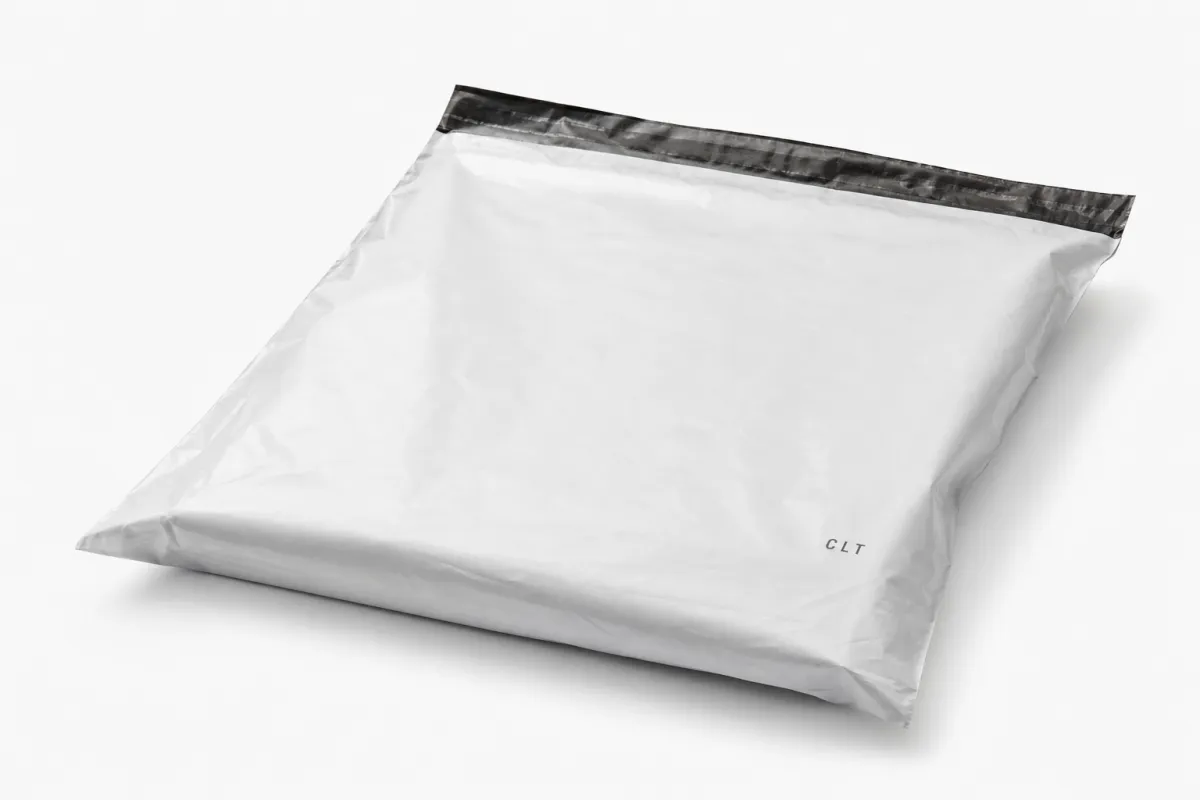
The part many sellers miss is simple: Custom Poly Mailers for print on demand often do more branding work than the product page, paid ad, or email sequence ever will. A customer may forget the SKU, but they will remember whether the parcel arrived in a flat gray bag or in packaging that looked made for the brand. That first touchpoint can build trust fast, especially for newer shops that do not yet have years of name recognition behind them.
For print on demand sellers, Custom Poly Mailers for print on demand are lightweight shipping envelopes made to order, usually from LDPE or co-extruded film, then printed with a logo, pattern, or full-coverage design. They fit apparel, socks, swimwear, activewear, accessories, and other flat goods where the packout is predictable and shipping weight matters. They also suit sellers who want better package branding without moving into rigid box formats.
The economics help explain the appeal. A standard mailer can move product for pennies, while a branded version can raise perceived value much faster than a complicated insert system. From a packaging buyer's standpoint, custom poly mailers for print on demand are one of the few line items that can influence both margin and customer experience without adding much handling time. That combination is hard to ignore.
Plain mailers tend to flatten a brand. A customer sees the same unmarked pouch from different sellers, and the whole thing starts to feel interchangeable. By contrast, custom poly mailers for print on demand can make a small shop look established in the same way custom printed boxes elevate retail packaging. The format is different, but the message is similar: someone paid attention.
That becomes even more valuable in crowded categories. Clothing, beauty accessories, hobby goods, and seasonal drops all compete on visual memory. Strong packaging design can leave a lasting impression long after the social ad disappears. In practice, custom poly mailers for print on demand give a brand a chance to look coordinated before the customer ever opens the bag. That matters more than most marketing dashboards admit.
There is also a fulfillment angle. A business using custom poly mailers for print on demand can standardize packout for individual orders, reduce the chance of a mismatched carton size, and keep shipping weight close to the actual product weight. That helps with postage control, especially on carrier networks where dimensional weight or oversize rules can punish sloppy packaging choices. If the operation is moving fast, that kind of control is not a nice extra; it is part of keeping the margin where it should be.
A mailer is not just a wrapper. For many e-commerce brands, it is the first proof that the order was handled deliberately.
Used well, custom poly mailers for print on demand act like a compact branding system: low material cost, fast packing, clear identity, and a professional finish. Used poorly, they become another expense that looks nice in photos but does very little in real fulfillment. The difference usually comes down to size discipline, artwork quality, and whether the supplier understands production constraints instead of just mockup aesthetics.
How Custom Poly Mailers for Print on Demand Work
The workflow behind custom poly mailers for print on demand is simpler than many sellers expect, though a few decisions matter a great deal. A typical order starts with artwork upload, then proof approval, then printing, curing or drying, slitting, bag conversion, quality inspection, and final packing for shipment. The sequence is straightforward; the details inside each step shape the outcome.
Suppliers usually want a specific set of inputs before quoting custom poly mailers for print on demand: finished dimensions, film thickness, closure style, print coverage, quantity, delivery destination, and whether the design uses one color, multiple colors, or full-bleed graphics. If the mailer needs a peel-and-seal strip, the adhesive type matters too. If the film is opaque, the base color matters. If the artwork includes gradients or photos, the print method matters a lot. Those details do not just change appearance; they affect how the bag runs on the line and how it behaves in transit.
Digital printing often appeals to smaller brands because the setup burden is lighter and artwork changes are easier. That makes it useful for smaller runs, seasonal launches, or brands that rotate designs often. Flexographic printing is usually more efficient once volume rises, especially for repeatable artwork with fewer color changes. Offset printing is not the normal route for flexible film mailers; it fits paper-based retail packaging and custom printed boxes much better.
| Print method | Best for | Typical setup profile | What it does well | Tradeoffs |
|---|---|---|---|---|
| Digital printing | Shorter runs, variable artwork, fast launches | Lower setup, quicker proof cycle | Flexible design changes, strong for detailed graphics | Unit cost can stay higher at large volumes |
| Flexographic printing | Higher-volume custom poly mailers for print on demand | Plate or tooling setup, more prep time | Efficient pricing at scale, consistent repeat runs | Less convenient for frequent artwork changes |
| Spot-color / limited-color production | Simple logos, bold branding, cleaner cost control | Moderate setup, fewer color stations | Clean appearance, strong brand recognition | Not ideal for photo-heavy or highly detailed designs |
That table leaves out one important point: custom poly mailers for print on demand are not only about design complexity. They are also about order frequency. A brand shipping daily individual orders has different needs than a wholesale program shipping cartons of the same item. POD mailers sit in the middle, which is why they are so useful. They support individualized fulfillment without losing the feeling of a branded run.
Picture two scenarios. In the first, a brand uses a one-color logo on a white mailer, keeps the art centered, and ships fold-flat apparel. In the second, the same brand uses a full-wrap design, darker film, white ink, and a pattern that continues around the side seams. Both can work. The first is cheaper and easier to approve. The second creates more visual impact, but it depends more heavily on registration, ink opacity, and how the artwork flows after conversion. That is the kind of tradeoff that should be discussed early, not after the proof has already been approved.
For custom poly mailers for print on demand, the supplier's job is not just to print a pretty image. It is to convert a flat sheet or roll of film into a mailer that seals properly, opens cleanly, and survives transit without splitting at the edges. That is why the quote stage should include practical questions: Where is the seal placed? Is the adhesive pressure-sensitive? Is the bag gusseted? What is the overfill tolerance? These details shape the final user experience more than people expect.
Once the order moves through a POD operation, the workflow becomes even more sensitive. Orders may be packed one by one instead of in batches, which means the mailer must perform consistently across different packers, different shifts, and different destination zones. In that environment, custom poly mailers for print on demand are not a cosmetic extra. They become part of the operating system.
Material, Size, and Branding Factors
Material choice is where custom poly mailers for print on demand either feel reassuring in the hand or fall short in real shipping. The key variables are thickness, seal strength, opacity, tear resistance, and how the film behaves under abrasion. Many apparel mailers land in the 2.5 to 3.0 mil range, while heavier bundles or longer routes may call for 3.0 to 3.5 mil. That is not a universal rule, but it is a sensible starting point for durability checks.
If a supplier talks about film performance, ask how it is tested. Standards such as ASTM D882 for tensile properties can help clarify whether the film has enough mechanical strength for the intended use, while transit testing programs based on ISTA methods can show how the package behaves after vibration and drop exposure. For reference material on transit testing, see the ISTA site. Context like that matters because a mailer that looks sharp in a mockup can still fail when it is pulled, stacked, or dropped during shipping.
Size is the other common trap. Many buyers choose custom poly mailers for print on demand from product page dimensions rather than the actual packed bundle. A folded hoodie, for instance, does not occupy the same space as a flat hoodie listing. Add a tissue insert, a thank-you card, or a barcode sticker, and the final thickness changes again. The safest approach is to measure the real packed unit, then leave enough room for easy insertion without creating a bag that looks oversized.
An oversized gap is more than a visual problem. It can make the parcel feel wasteful, reduce the sense of fit, and sometimes trigger extra postage if the carrier charges on dimensional weight. In other words, custom poly mailers for print on demand need to fit the product tightly enough to look intentional, but not so tightly that the seal is stressed or the film distorts.
Branding choices affect the final appearance just as much as the material itself. Logo placement, background color, finish, and whether the design needs white ink all influence how the mailer reads on a porch, a sorting belt, or a social media unboxing video. A matte finish often feels more premium and photographs well. A glossy finish can look vivid, though it may show scuffs sooner. Full-coverage designs create stronger brand recall, while simpler layouts can keep cost under control and still feel polished.
There is also a sustainability angle, and it needs to be handled carefully. Poly mailers are not all the same, and disposal guidance can vary by region and collection system. Some are recyclable through store drop-off programs, while many curbside systems do not accept flexible plastics. The U.S. EPA's recycling guidance at EPA is a useful starting point, but suppliers should still explain the exact film structure, because customer trust depends on honest claims. If eco-friendly positioning matters to your audience, ask whether the material contains recycled content, whether the film can be source-separated, and what messaging is accurate. A vague green claim is worse than no claim at all.
For some brands, custom poly mailers for print on demand sit alongside other packaging elements, such as tissue paper, printed inserts, or retail packaging for in-store channels. That is where package branding becomes a system instead of a one-off item. If the mailer is bold but the insert is generic, the experience can feel unfinished. If the mailer, insert, and product label all carry the same tone, the customer reads the whole shipment as intentional.
The simplest rule holds up well here. A mailer that looks good still fails if it is too large, too thin, or inconsistent with the brand experience. Custom poly mailers for print on demand should be chosen the same way any serious packaging format is chosen: with real product dimensions, actual transit conditions, and a clear view of how the customer experiences the parcel in hand.
Production Process and Timeline
Most suppliers handle custom poly mailers for print on demand through a predictable sequence: request a quote, submit artwork, review a proof, approve the proof, produce a sample or strike-off if needed, run the order, inspect the output, and ship. That sounds orderly because it is. What slows things down is not the presence of the steps; it is the number of small decisions hidden inside them.
Artwork preparation is usually the first bottleneck. Clean vector files in AI, EPS, or print-ready PDF format make custom poly mailers for print on demand much easier to approve. Raster images can work, but they need enough resolution and the right color profile. If the design includes gradients, small text, or fine lines, the proof should be checked closely, because film printing can make weak artwork look even weaker. A file that looks fine on a laptop can turn muddy on film, and that is a headache nobody wants on a production schedule.
From a timing standpoint, first orders usually take longer than repeat orders. A standard custom run can often move from proof approval to production in about 12 to 15 business days, though that depends on print method, quantity, color complexity, and current factory load. Small digital runs may move faster. Larger flexographic runs may need more prepress time. Ocean freight, if used, adds a much longer shipping window than air or domestic freight.
One rule matters more than most launch calendars: approve artwork quickly, but do not rush a bad file. The fastest order is the one with the cleanest art file. That is especially true for custom poly mailers for print on demand, where repeated proof revisions can add days that nobody budgeted for. I have seen teams save themselves a full week simply by sending in one accurate packed sample and a clean print file before the quote was even finalized.
Repeat orders follow a different rhythm. Once a mailer specification has been approved, the next run is usually easier because dimensions, art placement, and material choices are already locked in. That makes custom poly mailers for print on demand valuable for ongoing programs: the process becomes repeatable, and repeatability is a quiet operational advantage. It reduces surprise, which is one reason bigger brands care so much about packaging consistency.
A practical way to think about the schedule is to plan backward from the ship date, not forward from the quote date. If a seasonal drop begins in late October, the proof may need to be approved by early September, and sample testing may need to begin even earlier. Custom poly mailers for print on demand are not usually the longest item in the supply chain, but they can still become the thing that stalls a launch if the artwork sits in revision too long.
For sellers comparing this format with other product packaging options, the timeline is usually shorter than rigid custom printed boxes and easier to manage than any program involving multiple inserts, structural dies, or special coatings. That is one reason POD brands keep returning to custom poly mailers for print on demand when they need a balance of speed and identity.
Cost, Pricing, MOQ, and Quote Basics
Pricing for custom poly mailers for print on demand comes down to a few predictable drivers: size, thickness, print coverage, quantity, setup, and freight. The cheapest-looking quote often leaves out one of those items. That is why a quote should be treated as a package of variables, not just a headline unit price.
Minimum order quantity, or MOQ, changes the whole equation. With lower quantities, setup and production overhead weigh more heavily on each unit. With higher quantities, the per-mailer cost drops, sometimes sharply. For example, a simple one-color run might land around $0.32 to $0.55 per unit at 1,000 to 2,000 pieces, while a 5,000-piece order may fall closer to $0.18 to $0.28 per unit, and larger runs can go lower still depending on size and print coverage. Those are directional ranges, not promises, but they are realistic enough to help buyers compare custom poly mailers for print on demand with clear eyes.
Shipping changes the math too. A vendor quote that looks inexpensive on the unit price can become expensive once freight is added. If the supplier is overseas, ask whether the freight estimate includes customs handling, destination charges, or final-mile delivery. If the supplier is domestic, ask whether the price includes residential delivery and pallet breakdown. Hidden freight charges can erase the savings from a lower print cost very quickly.
| Order band | Typical unit cost range | What usually drives the price | Good fit for |
|---|---|---|---|
| 1,000-2,000 units | $0.32-$0.55 | Setup burden, proofing, smaller run economics | New launches, design testing, seasonal trials |
| 5,000 units | $0.18-$0.28 | Better scale efficiency, more stable production | Established POD stores, repeatable SKU programs |
| 10,000+ units | $0.12-$0.22 | Volume efficiency, lower setup cost per mailer | Higher-volume custom poly mailers for print on demand |
That table also explains why MOQ is not just a procurement issue. It is a cash-flow decision. A brand shipping 800 orders a month may not want 10,000 mailers sitting in storage, even if the unit cost is better. The right custom poly mailers for print on demand order size is the one that balances inventory carrying cost, artwork stability, and actual monthly shipping volume. A lower MOQ can be the smarter call if the design is still being tested or the product line is likely to change.
Comparing quotes apples-to-apples takes discipline. Make sure each vendor is quoting the same size, same film thickness, same print coverage, same closure style, same destination, and same proof terms. If one supplier includes a second proof round and another charges for it, the quotes are not equivalent. If one supplier quotes a 2.5 mil film and another quotes 3.0 mil, you are not comparing the same mailer. That sounds obvious, but it is where many buyers get tripped up with custom poly mailers for print on demand.
There are also hidden costs that do not show up until later. Oversized mailers can add postage. Poor artwork files can trigger extra prepress work. Color corrections can add revisions. If a design needs unusual white ink coverage or a full-wrap print with edge bleed, the cost may rise even if the base unit price looks fine. In other words, the lowest quote on paper is not always the lowest total cost per shipped order.
The practical rule is simple: think in packaging economics, not just procurement pricing. Custom poly mailers for print on demand should be evaluated by full landed cost and full customer impression, because the cheapest mailer can become expensive if it causes returns, delays, or brand inconsistency. If you are also buying inserts, labels, or other branded materials, compare the spend against your broader package branding plan, not in isolation.
Common Mistakes and Expert Tips
The most common mistake with custom poly mailers for print on demand is also the easiest to avoid: ordering the wrong size. Buyers often look at garment dimensions on a product page and assume the mailer should match those numbers. That is not how packout works. The folded product, plus any insert, plus the seal margin, usually needs more room than expected. A quick real-world pack test beats a spreadsheet every time.
Another frequent issue is ignoring bleed and seam placement. If the art runs too close to the edge, the design can shift awkwardly after conversion. If the logo lands over a seam or seal area, the brand mark may look distorted. That is why custom poly mailers for print on demand should be approved as production files, not just as screen mockups. What looks centered on a flat proof may not stay centered after the film is folded and sealed.
Color mismatch causes more trouble than many sellers expect. Brand color is not just decorative; it is part of recognition. A warm cream on one run and a cool cream on the next can make custom poly mailers for print on demand feel inconsistent, even if the logo is technically correct. If color matters, ask for Pantone targets, printed samples, or at least a reference proof under controlled light. Small differences become obvious when a customer sees the same parcel twice.
Finish matters too. Gloss can make colors pop, but it can also highlight scuffs and handling marks. Matte or soft-touch surfaces often feel more premium, though they are not necessary for every brand. The right finish depends on the look of the product and the tone of the business. For a minimal streetwear label, a matte custom mailer may feel right. For a vivid pop-art brand, a glossy finish may match the visual energy better.
Here is a simple quality checklist for custom poly mailers for print on demand:
- Test with the real packed product, not an empty bag.
- Check seal strength by packing multiple units and handling them as a picker would.
- Inspect color against a physical reference in daylight.
- Confirm the adhesive strip closes cleanly after one pass.
- Verify that the mailer still looks acceptable after a rough transit simulation.
That last point matters because transit is rarely gentle. A package can be compressed, dragged, stacked, and dropped before it reaches the customer. If you want a more formal transit framework, ISTA methods can help guide the conversation with suppliers. It is not always necessary to run a full laboratory program, but even a rough check is better than guessing. For brands selling delicate items, that kind of validation can save returns and complaints later.
There is also a human-factor lesson here. The best packaging systems are repeatable, not just visually impressive. A designer may create a striking mailer that looks amazing in a render. A fulfillment team needs a mailer that works on Monday morning, under time pressure, with different operators and different order mixes. That is where custom poly mailers for print on demand either prove their value or expose their weaknesses.
Many sellers focus on the artwork and under-focus on the process. The art matters. So does the spec sheet. The winning mailer is the one that performs the same way on the 50th shipment as it did on the sample table. That is the practical standard for custom poly mailers for print on demand, and it is a better test than aesthetics alone. If a supplier cannot explain the edge conditions clearly, that is usually a sign to slow down.
Next Steps to Order Custom Poly Mailers for Print on Demand
If you are ready to move forward, start with the inventory, not the art. Audit your top SKUs, measure the packed dimensions, and estimate your monthly shipping volume. Once those numbers are clear, custom poly mailers for print on demand become much easier to spec because the format, quantity, and timeline stop being guesses.
Next, request two or three quotes with identical specs. Match the size, thickness, print coverage, color count, closure type, and destination so the numbers can be compared fairly. If you are unsure about the finish or the film grade, ask for sample swatches or a printed proof. That small step can prevent a large mismatch later. It also helps you spot whether the supplier is pricing real production or just throwing out a low number to start the conversation.
Then order a sample run, even if the first full run is already planned. Send real orders in the sample mailer and watch what happens. Does it seal easily? Does it show scuffs after handling? Does the customer reaction justify the spend? Those answers are more useful than a mockup deck, because custom poly mailers for print on demand need to work in the hands of actual customers, not just in a presentation.
For brands planning a launch or seasonal refresh, build in a buffer. A delayed proof or an artwork revision can push the schedule back by days, sometimes more. If the packaging must arrive before a drop date, do not treat production time as a single number. Treat it as a range with room for review, freight, and last-minute corrections. That is especially true if the design includes strong color matching, full-coverage graphics, or a new material spec.
It also helps to track what happens after launch. Return rates, damage reports, and unboxing feedback will tell you whether the mailer is doing its job. If buyers comment that the parcel feels premium, or if your team notices fewer crushed corners and fewer wasted shipments, the format is paying back its cost. If customers are confused by the size, if the adhesive fails, or if the color looks off, that is data too. Packaging decisions get easier once that feedback loop is in place.
For sellers who want a practical packaging upgrade without moving to a heavier structure, custom poly mailers for print on demand remain one of the most useful options in modern e-commerce. They can improve brand recall, control postage, and keep fulfillment efficient when the spec is chosen carefully. The real takeaway is straightforward: measure the packed product, test the mailer with a real shipment, and compare only identical quotes before you place the order. That sequence is not fancy, but it keeps the packaging honest.
What size custom poly mailers for print on demand should I choose for apparel?
Base the size on the folded, bagged product rather than the flat garment dimensions. Leave room for inserts, tissue, or a card, but avoid excess empty space that makes the parcel look inflated. The safest approach is to test the top two or three sizes with a real packout before placing a larger order for custom poly mailers for print on demand.
How much do custom poly mailers for print on demand cost per unit?
Unit cost depends on size, thickness, print coverage, quantity, and shipping distance. Smaller MOQs usually cost more per mailer, while larger runs reduce the unit price. Ask for a quote that separates printing, setup, and freight so you can compare vendors accurately and judge the true landed cost of custom poly mailers for print on demand.
What is the typical lead time for custom poly mailers for print on demand?
First orders usually take longer because artwork proofing and sample approval add steps. Production speed depends on print method, order volume, and how quickly you approve files. For seasonal launches, build in extra time so a delay does not interrupt fulfillment. That buffer is especially helpful when custom poly mailers for print on demand are tied to a product drop date.
Are custom poly mailers for print on demand recyclable or sustainable?
Some poly mailers can be recycled through specific store drop-off programs, but not all curbside systems accept flexible plastics. Material choice, thickness, and print coverage affect both environmental profile and customer perception. If sustainability matters to your audience, ask suppliers for clear material details and disposal guidance before you commit to custom poly mailers for print on demand.
Can I use custom poly mailers for print on demand for inserts and branded extras?
Yes, as long as the mailer size leaves room for cards, tissue, or other lightweight extras. Extra inserts can change packed thickness, so test the final bundle before ordering. Keep the packout consistent so the customer experience stays the same across every shipment of custom poly mailers for print on demand.
For most brands, the best result comes from a practical balance: a mailer that fits the product, prints cleanly, protects the shipment, and reinforces the brand without inflating cost. That is the real promise of custom poly mailers for print on demand, and the clearest next step is to build a real pack sample, lock the size from that sample, and quote only from that spec.


