Buyer Fit Snapshot
| Best fit | Custom Poly Mailers with Extra Thick Film projects where brand print, material claims, artwork control, MOQ, and repeat-order consistency need to be specified before quoting. |
|---|---|
| Quote inputs | Share finished size, material target, print colors, finish, packing count, annual reorder estimate, ship-to region, and any compliance wording. |
| Proofing check | Approve dieline scale, logo placement, barcode or warning zones, color tolerance, closure strength, and carton packing before bulk production. |
| Main risk | Vague material claims, crowded artwork, missing packing details, or unclear freight terms can make a low unit price expensive after revisions. |
Fast answer: Custom Poly Mailers with Extra Thick Film: Film, Print, MOQ, and Carton Packing should be specified like a repeatable production item. The safest quote records material, print method, finish, artwork proof, packing count, and reorder notes in one written spec.
Production checks before approval
Compare the actual filled-product size with the drawing, then confirm tolerance on folds, seals, hang holes, label areas, and retail display edges. Reserve space for logos, QR codes, warning copy, and material claims before decorative graphics fill the panel.
Quote comparison points
Review material grade, print process, finish, sampling route, tooling charges, carton quantity, and freight assumptions side by side. A quote is only useful when the supplier can repeat the same color, closure quality, and packing count on the next order.
A single split along a carton edge can turn a routine shipment into a return, a refund, and a customer who remembers the damage more than the product. That is the business case for Custom Poly Mailers with extra thick film. They do not merely feel stronger in the hand; they can change how a parcel survives sorting belts, stack pressure, and the last drop onto a porch.
For a packaging buyer, the real test is not whether a heavier film sounds reassuring. It is whether Custom Poly Mailers with extra thick film fit the product, the shipping route, and the brand promise well enough to earn their higher material cost. I have seen plenty of teams pay for thicker film and still lose packages, usually because the bag size or closure spec was off by just enough to matter.
A thin mailer can look fine on a sample table and still fail on a crowded fulfillment floor. A thicker version holds shape more confidently, hides contents more cleanly, and gives printed graphics a steadier base. That is why Custom Poly Mailers with extra thick film often outperform standard bags for apparel, accessories, cosmetics, supplements, and other soft goods that do not need a box. They are not magic. They are just better matched to a certain kind of parcel.
Broader packout still matters. A mailer is one piece of branded packaging, not the whole system. The strongest decision usually comes from matching the bag spec with the product flow, the shipping profile, and the rest of your Custom Packaging Products mix.
What Custom Poly Mailers With Extra Thick Film Really Change
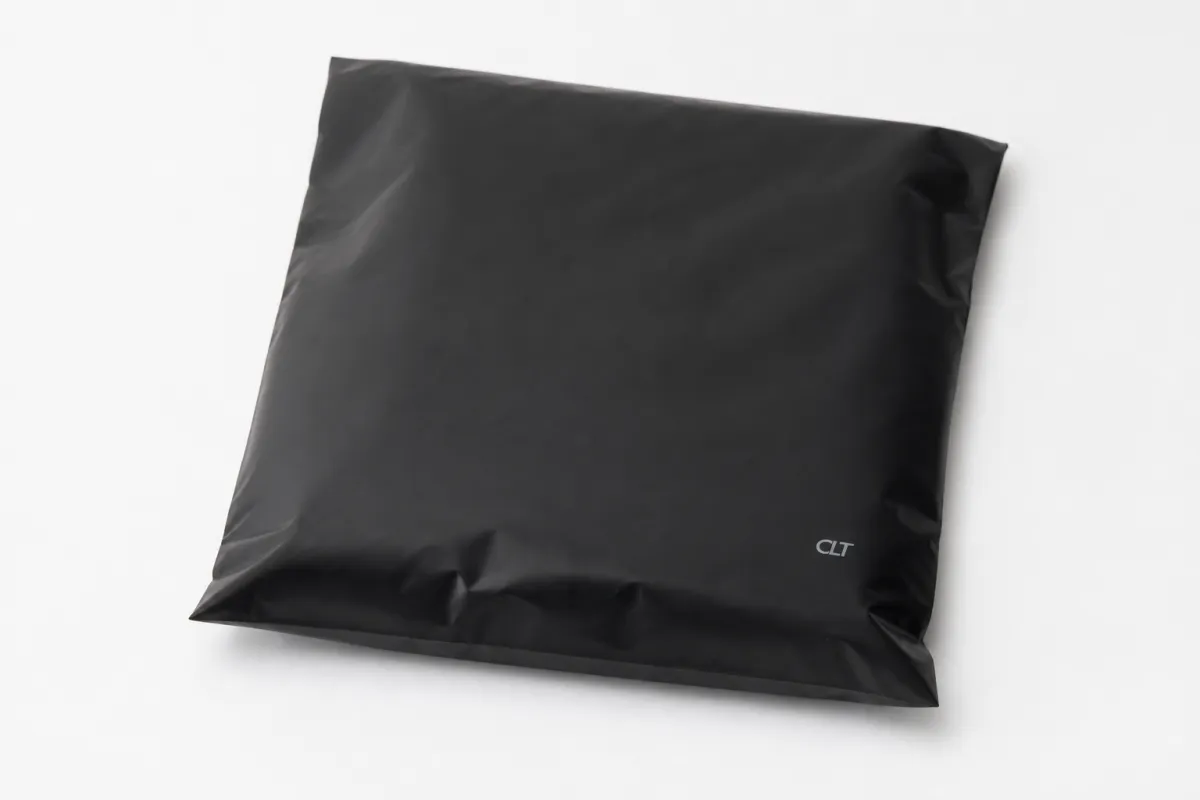
Custom Poly Mailers with extra thick film sound straightforward, yet the difference is more precise than a simple "thicker is better" claim. In practical terms, extra thick film means the plastic layer carries more material, usually measured in mils and sometimes in microns. A standard mailer might sit near 2.5 mil. Extra thick options often move into the 3.5 to 4.5 mil range, and some suppliers go higher. Ask for the actual measurement. "Heavy duty" is a sales phrase, not a specification.
That extra material changes the hand feel immediately. The bag stands with more confidence, resists flutter, and stretches less when corners press against it. It also makes custom poly mailers with extra thick film look more substantial, which matters because packaging is often the first physical contact a customer has with a brand. One job is protection. The other is presentation. Those two jobs overlap more than most buyers expect.
Thickness affects print behavior too. Ink on a thin film can appear washed out or slightly uneven if the substrate flexes too much, especially under dense color blocks or dark brand hues. A thicker substrate tends to lie flatter during printing, so logos and text can look sharper. That does not make the bag premium on its own, yet it supports a more polished retail packaging impression when the parcel reaches the customer.
A useful rule has held up well in sourcing conversations: custom poly mailers with extra thick film make the most sense when the goods are soft, the package is not overfilled, and the unboxing should feel neat rather than padded. Folded apparel, soft accessories, beauty kits, and multiple light items in one bag often benefit from the thicker film because it reduces tearing without adding the weight of a box.
Boxed formats still win in some categories. Custom printed boxes are often the better choice for rigid or fragile products that need structure. Custom poly mailers with extra thick film suit flexible goods that do not need full carton protection. That is a packaging design call, not only a material call.
"The failure usually does not begin with the film. It starts with a bad fit, a weak seal, or a packout that asks too much of the bag."
A sample review should include the bag in hand, not just a spec sheet. Compare the range of Custom Poly Mailers side by side, then test the exact product, insert, and closure method you plan to ship. If the bag looks perfect on paper but crumples once your team packs three units into it, the spec is not good enough yet.
How Custom Poly Mailers With Extra Thick Film Perform in Shipping
Transit performance is where custom poly mailers with extra thick film either prove themselves or reveal their limits. The mechanics are easy to understand. Thicker film resists puncture better, flexes less under load, and gives the seam area more support when the parcel is pinched, dragged, or stacked in a chute. That matters in actual shipping lanes, where parcels rarely travel gently and almost never travel alone.
The thicker film does not eliminate every risk. It improves tear resistance and general body strength, but it is not cushioning. A mailer can stop a corner from punching through and still fail to protect a brittle object from impact. Buyers tend to separate three functions: resistance to tearing, resistance to moisture, and resistance to visibility or creep-through. Custom poly mailers with extra thick film are strong on the first two and usually better on the third because the heavier substrate blocks the outline of contents more effectively.
A useful benchmark comes from basic transit testing logic used by groups such as ISTA. Packaging programs often look at compression, vibration, drop, and handling sequences because those are the stress points that damage mailers most often. A thicker film can improve survivability, but only if the closure and size are also right. I have watched a 4 mil bag fail in the same lane where a 3 mil bag survived simply because the thicker one was overpacked and the seal line took the stress first.
Compared with standard poly mailers, custom poly mailers with extra thick film offer more margin for error when an item has a sharp edge, a zipper pull, a hanger hook, or a hard insert. Compared with bubble mailers, they usually ship lighter and flatter, which helps dimensional weight and storage. Bubble mailers still win when the item needs real impact cushioning. That split gets overlooked more often than it should.
Here is a simple comparison that helps teams decide faster:
| Mailer Type | Typical Strength Profile | Best Use Cases | Main Limitation |
|---|---|---|---|
| Standard poly mailer | Lightweight, flexible, lower film mass | Very light apparel, low-risk soft goods, internal transfers | More prone to seam stress and corner wear |
| Custom poly mailers with extra thick film | Higher puncture resistance, stiffer hand feel, better opacity | Apparel, cosmetics, supplements, accessories, multi-item ecommerce orders | Not a cushioning solution for fragile products |
| Bubble mailer | Better impact absorption, more structure | Small rigid items, electronics accessories, products that need padding | Bulkier, heavier, usually more expensive to ship |
Apparel is where the argument is strongest. Folded tees, leggings, swimwear, socks, and sample packs tend to travel well in custom poly mailers with extra thick film. Cosmetics and supplements can also fit well, especially if the product already has a protective primary package and the mailer is mainly defending against tears, moisture, and visual exposure.
Thickness is only one variable. A 10 x 13 mailer overfilled with a heavy bundle can still split if the closure is weak or the product shifts too much inside. Good shipping performance comes from matching thickness, size, and packout discipline rather than treating thickness as a cure-all.
Key Factors That Determine Strength, Fit, and Branding
Custom poly mailers with extra thick film work best as a system. Film thickness matters, but so do size, closure, seal strength, and how much empty space remains inside the bag. A bag that is too large lets the product slide and build corner pressure. A bag that is too small stretches at the seam until the film becomes the weak point. Fit is structural, not decorative.
Size selection deserves more attention than it usually gets. A folded hoodie needs enough width to avoid over-compression and enough height to keep the top seal in a safe zone. A skinny accessory kit often benefits from a narrower bag that reduces movement and improves the first impression. In both cases, custom poly mailers with extra thick film help, but they cannot fully rescue a poor dimensional choice.
Print quality shifts with film thickness as well. The substrate can accept bold artwork more cleanly, especially when a brand uses saturated colors, strong typography, or a matte finish. That matters for package branding because the mailer is not merely a shipping shell; it is a visible brand surface. Clean minimal identities tend to look steadier on thicker film. Expressive identities gain some breathing room too, because dense graphics feel less flimsy on a material that holds shape better.
Many teams compare custom mailers against custom printed boxes and assume the box automatically wins on brand value. The picture is less tidy than that. For soft goods, custom poly mailers with extra thick film can deliver a sharper arrival moment at a lower freight cost while still fitting the broader product packaging strategy. Ecommerce brands often prefer that balance when they want a retail packaging look without the carton footprint.
Finish choice changes the result too. Glossy films make color pop and can hide small scuffs. Matte films feel quieter and more modern. Thicker material tends to make both finishes look more deliberate because the bag keeps its shape better during packing. A premium feel can come from that alone, even before a customer opens the parcel.
Sustainability needs a straight answer. More film means more material, so custom poly mailers with extra thick film are not the lowest-material option. A stronger bag can still reduce damage, replacements, and secondary shipments, which also consume material and fuel. If you are building a responsible packaging program, compare the whole system rather than the bag weight alone. For paper-based components, recycled content claims, or chain-of-custody questions, FSC guidance at fsc.org can help frame the discussion.
One practical checklist for branding and fit:
- Match the flat product size to the bag dimensions before choosing thickness.
- Ask whether the closure adhesive stays secure on cold or humid routes.
- Check whether the print remains readable after folding, stacking, and handling.
- Confirm that custom poly mailers with extra thick film still fit your pack station speed.
Cost, Pricing, MOQ, and Quote Variables
Pricing is where many buyers get tripped up, because quotes for custom poly mailers with extra thick film can look similar while hiding different assumptions. Thickness, size, print coverage, number of colors, closure style, and volume all move the price. Freight can change the total even more if the bags travel long distances or move by expedited service.
As a practical range, simple custom poly mailers with modest print coverage can sometimes land around $0.18-$0.28 per unit at 5,000 pieces, depending on size and thickness. Heavier film, larger dimensions, full-coverage graphics, or special finishes can push that toward $0.26-$0.42 or higher. Lower quantities often cost materially more per unit because setup work gets spread over fewer bags. That is normal, not a warning sign.
Custom poly mailers with extra thick film often produce a lower damage rate than thin alternatives, and that can offset the premium. If a damaged parcel triggers a replacement shipment, customer support time, or a negative review, the real cost is far above the printed unit price. If the product already sits in a rigid inner box and the outer mailer only needs to keep dust off, the extra film may be unnecessary. The mistake is not paying more; the mistake is paying more without a measurable gain.
To compare quotes fairly, insist on identical specs. Use the same length and width, the same film thickness, the same adhesive type, the same print method, and the same delivery terms. A quote that looks cheaper may simply be using a thinner film or excluding freight. Disciplined buyers save money by looking at landed cost instead of the line item that looks best in isolation.
Here is a straightforward quote comparison framework:
| Quote Variable | What to Confirm | Why It Changes Price |
|---|---|---|
| Film thickness | Exact mil or micron spec | More material increases raw cost and often improves durability |
| Size | Flat dimensions and usable seal area | Larger bags require more film and may change shipping efficiency |
| Print coverage | Single color, multi-color, or full bleed | More ink coverage and more setup increase production cost |
| MOQ | Minimum order quantity and price breaks | Lower quantities raise per-unit cost because setup is spread over fewer pieces |
| Freight terms | EXW, FOB, delivered, or other terms | Shipping and handling can change the final landed price by a wide margin |
MOQ deserves special attention. Some suppliers can quote small runs for test launches, but the per-unit price may be much higher than a production order. For custom poly mailers with extra thick film, I usually advise comparing at least two scenarios: a pilot quantity for validation and a replenishment quantity that reflects steady demand. That makes the cost curve easier to read.
If you are building a launch budget, the right question is not "What is the cheapest mailer?" It is "What is the least expensive package that still survives transit and protects the brand?" For some categories, custom poly mailers with extra thick film are the answer. For others, a lighter bag or a different format will be more efficient.
Process, Timeline, and Production Steps
The production path for custom poly mailers with extra thick film is fairly predictable, yet delays usually come from decisions rather than machinery. A typical order moves through spec selection, artwork submission, proofing, printing, production, packing, and delivery. Clean artwork and settled specs keep the job on schedule. Late changes to thickness or file layout stretch the timeline fast.
Many simple custom orders take about 12-15 business days from proof approval to completion, though larger runs or more complex print setups can take longer. Freight time adds another layer. If you need custom poly mailers with extra thick film for a seasonal shipment, treat manufacturing time and transit time as separate numbers. That distinction looks small until a deadline gets close.
Sampling is where smart buying happens. A physical sample or strike-off lets you see whether the adhesive closes cleanly, whether the film feels stiff enough, and whether the logo prints at the level you expected. If the brand relies on a specific shade, check color on the actual substrate. A screen can flatter a design that the film will not.
Here is a clean order flow that most teams can use:
- Confirm product size, weight, and sharp-edge risk points.
- Choose the film thickness and bag dimensions for custom poly mailers with extra thick film.
- Send artwork in the supplier's preferred file format.
- Review the proof carefully for color, placement, and bleed.
- Approve sample or digital proof before production starts.
- Track production, packing, and freight separately so dates stay realistic.
Rush orders can work in some programs, but they work best when the artwork is already final and the spec is settled. A rush order with a revised logo file and a new thickness decision is not really a rush order anymore; it is simply a more complicated project. That is why custom poly mailers with extra thick film should be specified early if the shipment is tied to a launch, a promotion, or a retail reset.
"The cleanest orders are the ones where the buyer has already tested the item in a sample bag before asking for a quote."
That sounds simple because it is. The more uncertainty in the spec, the more likely the order will need revisions, and revisions cost time. A careful first order saves a great deal of back-and-forth later.
Common Mistakes to Avoid When Specifying Thick Film
The most common mistake is choosing thickness in isolation. Custom poly mailers with extra thick film can still fail if the seal is weak, the bag is undersized, or the product is too heavy for the closure area. Buyers sometimes ask for "the thickest bag you have" and skip the fit test. That sounds decisive, but it usually creates a new problem instead of solving the old one.
A second mistake is ignoring actual packout behavior. A product that sits neatly in a sample bag on a desk may move very differently once it is folded, compressed, taped, or inserted with a label. If your fulfillment team uses a standard tuck pattern, or if the product has a hard accessory that shifts during sealing, test the real process rather than the ideal version. That matters even more with custom poly mailers with extra thick film, because the added stiffness changes how the bag wraps around the contents.
Artwork is another place where good mailers get wasted. Weak contrast, fuzzy logos, or too much ink coverage in the wrong places can make a finished bag look muddy even if the substrate is excellent. Good packaging design is part creative work and part production discipline. The substrate cannot rescue a file that was never prepared for print.
Shipping conditions matter too. Sharp corners, warehouse temperature swings, and rough handling all stress the material. Cold environments can alter film behavior, and humid environments can affect adhesive performance. None of that is unique to custom poly mailers with extra thick film, but the thicker film only gives you a better baseline if the rest of the system holds up.
Here are the errors I see most often:
- Ordering by appearance instead of testing with the real product.
- Choosing a size that allows too much movement inside the bag.
- Assuming thicker film will compensate for a weak adhesive seal.
- Overloading the mailer beyond what the closure area can tolerate.
- Sending low-resolution artwork and expecting premium print results.
There is a quiet sustainability mistake too: over-specifying material because "more must be better." Not always. If the item ships safely in a lighter bag, the cleaner answer is usually to use the lighter bag. If damage drops sharply with the thicker option, then custom poly mailers with extra thick film may still be the greener choice across the full shipment lifecycle. The right answer depends on the real failure rate, not a slogan.
Expert Tips and Next Steps for a Better First Order
If this is your first order of custom poly mailers with extra thick film, start with samples in at least two thicknesses. That gives you a real comparison instead of a guess. Put the exact product in the bag, seal it the way your team will seal it, and test for tear resistance, corner wear, opacity, and how the package feels in hand. The best spec is the one that survives the actual workflow.
Build a short evaluation sheet and keep it practical. Ask whether the bag fits well, whether the seal stays shut, whether the print reads clearly, and whether the package still looks clean after handling. A simple checklist beats a vague impression every time. For ecommerce teams, those details matter because the mailer is part of the customer-facing retail packaging experience, even if the product itself is soft goods rather than rigid goods.
I also recommend asking for a written quote that lists the exact thickness, dimensions, print method, MOQ, lead time, and any policy around reprints or artwork adjustments. That makes vendor comparison much easier. If you are building out a broader sourcing plan, see how the mailer spec fits alongside other Custom Packaging Products and whether the brand should reserve more expensive formats for special SKUs only.
One more practical point: do not decide based on price alone. A slightly higher quote for custom poly mailers with extra thick film can be the better deal if it reduces claims, replacement shipments, and customer service time. That matters especially in recurring ecommerce programs, where even a small drop in damage can pay back across hundreds or thousands of orders. Sometimes the cheap option is cheap because it is asking your team to absorb the risk instead.
So the next steps are clear: measure the product, test sample mailers, compare two thicknesses, confirm the MOQ, and ask for a quote that lists every variable in plain language. If the bag proves its value in a real packing test, then custom poly mailers with extra thick film are not a guess. They are a controlled packaging choice that supports the brand, the budget, and the shipping lane.
What does extra thick film mean in custom poly mailers?
It usually means the mailer uses a heavier plastic film that resists punctures, stretching, and corner wear better than a standard bag. Suppliers may describe thickness in mils, gauge, or microns, so ask for the exact measurement instead of relying on a marketing label. In practice, custom poly mailers with extra thick film feel stiffer, look more opaque, and hold up better in transit.
Are custom poly mailers with extra thick film better than bubble mailers?
They are often better for soft goods like apparel, because they provide strong tear resistance and moisture protection without the bulk of padding. Bubble mailers are better when the product needs impact cushioning, not just a stronger outer shell. If the item can move around or break, custom poly mailers with extra thick film may still need internal cushioning or a different package format.
What thickness should I choose for custom poly mailers with extra thick film?
Start with the product's weight, shape, and risk points rather than choosing the thickest option by default. A sample test will tell you more than a spec sheet can, especially if the item has corners, zippers, closures, or other pressure points. For many apparel and accessory programs, custom poly mailers with extra thick film in the mid-3 mil to low-4 mil range are a sensible starting point, but the right answer depends on the exact packout.
How long do custom poly mailers with extra thick film take to produce?
Lead time depends on artwork approval, print complexity, order size, and whether a sample is needed before production. Simple orders often move in about 12-15 business days after proof approval, while more complex jobs can take longer. Always ask for both production time and freight time so the total timeline for custom poly mailers with extra thick film is clear.
How do I compare pricing for custom poly mailers with extra thick film?
Compare the same size, thickness, print method, quantity, closure style, and shipping terms across suppliers. A lower unit price can be misleading if the quote excludes setup, freight, or artwork changes. The best value for custom poly mailers with extra thick film is the one that protects the shipment, fits the product, and avoids replacement costs later.

