Custom Pom Pom Beanies for Boutique Gift Sets That Sell
Custom Pom Pom Beanies for boutique gift sets do one specific job well: they make the bundle feel considered before a shopper even lifts the lid. A hat with the right knit, a balanced pom, and a clean finish can lift the entire set. If the beanie looks thin, lopsided, or over-decorated, the rest of the package has to work much harder to justify the price.
That is why these products fit boutique gifting so naturally. They read seasonal without feeling like throwaway holiday merch. They photograph cleanly. They carry more perceived value than a plain knit cap, yet they do not require a giant print area or heavy embellishment to feel special. For buyers trying to protect margin while still offering something giftable, that balance matters more than chasing novelty.
There is also a practical reason they work. A beanie inside a gift set is not only a garment order; it is part of a small retail system. The knit, the decoration method, the box size, the insert card, and the carton all affect the final presentation. If one of those pieces is off, the set can look cheaper than the numbers suggested on paper.
What custom pom pom beanies for boutique gift sets need to do
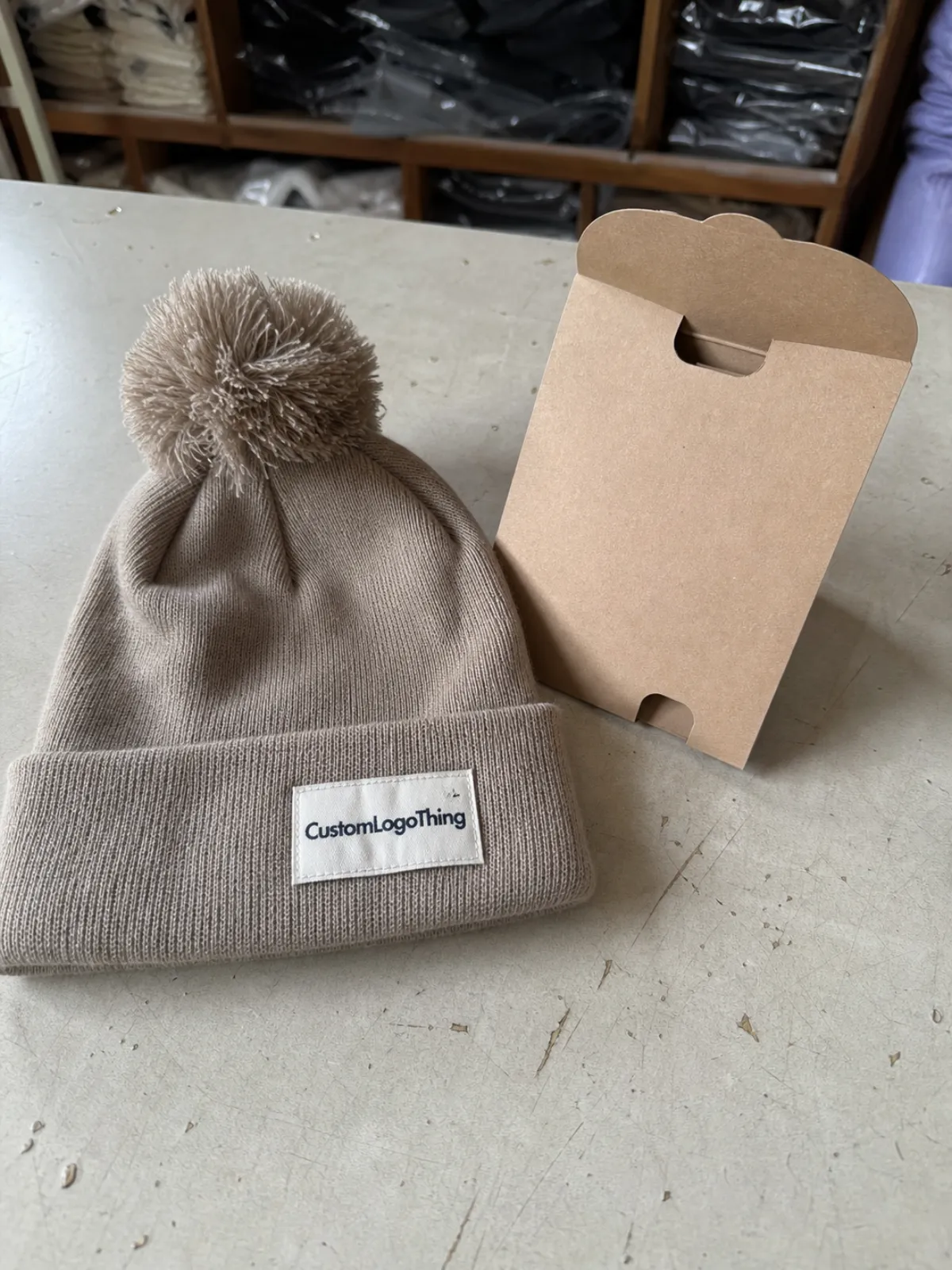
A gift-set item has to read quickly. A shopper should understand the value in a few seconds, and the beanie usually carries that first impression because it is soft, visible, and easy to compare on shelf or in photos. In that sense, the hat becomes the hero piece whether the merchandising plan intended it or not.
Pom pom beanies are stronger than standard knit Caps for Boutique work because they feel a little more finished. The pom adds movement, the shape feels winter-ready, and the price can stay in a usable range while still looking thoughtful. That is useful for spa kits, resort shops, holiday counters, and seasonal pop-ups where the product has to look curated without becoming expensive to source.
The best orders are the ones that feel coordinated instead of crowded. A calm color palette, a label that sits flat, and a box that frames the hat usually perform better than bold graphics or too many add-ons. Buyers often focus on the logo and overlook knit texture, but texture is what a customer feels first when they pick the item up. A loose rib, fuzzy yarn, or uneven cuff changes the perceived quality immediately.
Packaging choices matter just as much as the knit. A beanie that photographs well in a flat lay can still disappoint if the box is too tight, the pom gets crushed in transit, or the insert shifts during packing. For that reason, branded packaging and product packaging should be developed together, not treated as separate decisions.
If the beanie looks polished on a table but arrives flattened in the carton, the set is not really premium.
When a boutique gift set works, the packaging does not compete with the hat. It supports it, protects it, and gives it a clearer story. That usually means restrained decoration, clean materials, and a box that fits the product instead of forcing the product to fit the box.
How decoration and packing actually work
The base beanie should match the sales channel first. Acrylic is a sensible starting point because it is easy to knit, keeps shape well, and usually holds cost in check. Wool blends feel warmer and can look richer, but they raise the price and sometimes introduce care concerns that retailers need to explain. Cuffed knits give you a cleaner branding zone; slouchy styles feel softer and more casual, which can work for lifestyle sets but not for every retail display. The right base depends on how the set will be sold, not only how it looks in a mockup.
Decoration should stay in the same lane as the product. Woven labels, side seam tags, leather patches, and restrained embroidery all work better than oversized graphics on boutique bundles. A woven label keeps the knit soft and minimal. A leather patch adds contrast and often pairs well with rigid or printed boxes. Embroidery can look excellent on simple logos, but dense thread coverage can make the front feel heavy. If the hat is already visually active because of the knit pattern or pom color, decoration should be quieter.
The pom itself deserves attention. Its size changes the silhouette more than most buyers expect, and its attachment affects both appearance and durability. A centered pom with even tension looks intentional. A loose mount, uneven density, or slight color mismatch can make the entire beanie feel lower quality, especially under bright retail lighting or in close-up phone photos. Ask how the pom is secured, whether the yarn is matched to the body shade, and how symmetry is checked before packing.
Packing usually falls into one of four formats: hat only, hat plus card, hat plus gift box, or a full multi-item bundle. Each layer adds labor and risk. A box that is a few millimeters too tight can flatten the pom. A box that is too loose wastes space and increases freight. In small retail programs, that space math matters. The final packout is part of the product experience, not an afterthought.
Sampling is where bad assumptions get corrected. A digital proof confirms artwork placement, but it does not tell you whether the knit feels soft enough, whether the label sits flat, or whether the lid rubs the pom. A physical sample should be opened, handled, and repacked the way a customer would interact with it. That simple check usually reveals the issues that later show up as returns, damage claims, or unhappy buyers.
What drives cost, MOQ, and unit price
Pricing for gift-set beanies breaks into four parts: the blank hat, decoration, packaging, and freight. Buyers tend to focus on the first two and then get surprised when the box and shipping add more than expected. For custom Pom Pom Beanies for boutique gift sets, landed cost matters more than factory cost because the item has to support retail markup after packaging, handling, and shrink are all accounted for.
Minimum order quantity usually follows setup labor and material complexity. Very small runs carry the highest unit cost because artwork, knitting setup, and packing time have less volume to absorb them. Around 100 to 250 pieces, pricing often starts to normalize. By 500 pieces and up, sourcing and packing efficiency usually improve. That said, color changes, mixed pom styles, or multiple decoration methods can push MOQ higher because the line has to change over more often.
A practical pricing target depends on channel, but boutique gift sets generally need enough margin to cover retail overhead and promotional discounting. If a finished set is meant to retail around $34 to $48, the landed unit cost cannot be allowed to creep too high. A common working range is to leave room for roughly a 2.5x to 4x retail spread, depending on the brand position and the level of packaging included. If the math only works when nothing goes wrong, the project is too tight.
| Bundle Type | Typical Landed Cost at 100-250 Units | Typical Landed Cost at 500+ Units | Best Use |
|---|---|---|---|
| Blank beanie + hangtag | $2.20-$4.00 | $1.60-$3.20 | Simple boutique add-on or seasonal counter item |
| Woven label + polybag + gift box | $3.40-$5.80 | $2.60-$4.60 | Clean retail presentation with moderate margin |
| Embroidery + tissue + printed insert | $4.60-$7.20 | $3.60-$6.00 | Gift sets with stronger brand storytelling |
| Leather patch + rigid box + filler | $6.50-$9.50 | $5.10-$8.20 | Premium boutique sets that need a higher shelf price |
Two hidden costs show up often. First, heavier yarn or a tighter knit can raise the base price before decoration begins. Second, rigid boxes, tissue wrap, inserts, and polybags add both labor and carton weight. If a buyer wants a cleaner, more elevated packout, the quote should separate the beanie, the finish, and the shipping carton. That makes tradeoffs easier to compare and reduces the chance of choosing a pretty spec that quietly breaks the budget.
For packaging materials, FSC-certified board is worth requesting when sustainability is part of the brand story or a retailer asks for it in vendor paperwork. For transit checks, many packaging teams refer to ISTA methods when they need to confirm the set can handle drops, vibration, and compressive stress. Those tests are not glamorous, but they prevent a lot of late-stage disappointment.
Production steps, lead time, and checkpoints
The order flow should be predictable: quote, artwork review, sample approval, bulk production, quality check, packout, and shipment. That sequence sounds obvious, yet most timing problems come from vague specs or slow approvals. For custom pom pom beanies for boutique gift sets, even a small change in packaging size can affect the whole schedule because box production, insert printing, and packing all have to stay in sync.
Sampling usually takes about 5 to 10 business days, depending on yarn availability, decoration method, and whether the packaging is stock or custom. Bulk production commonly runs 2 to 4 weeks after sample approval. Custom boxes, sleeves, or inserts add their own setup time. Rush work is possible in some cases, but it costs more and leaves less room for correction. That tradeoff is real, so it helps to decide early whether speed or precision matters more.
Most delays come from familiar places: missing logo files, late color revisions, box size changes after proofing, or a long approval chain. One decision maker is better than four. A locked spec sheet is better than a thread of back-and-forth messages that changes the insert copy after production has started. In this category, indecision is expensive.
Seasonal programs need extra buffer. Holiday sets rarely get easier to produce once the calendar fills up. Freight gets tighter, production slots disappear faster, and air costs tend to rise. If the beanies need to arrive before a launch date, work backward from that date and add cushion for revisions, packing, and transit. Treat the ship date as the start of the risk window, not the finish line.
Transit validation should reflect actual handling, not just warehouse handling. A carton that sits neatly on a pallet may still fail after a few drops or a rough transfer. The point is not to over-engineer the packaging. It is to make sure the set arrives looking like the sample that got approved.
Specs that change fit, handfeel, and gift value
Knit gauge, yarn blend, and cuff structure decide whether the hat feels plush, scratchy, stretchy, or stiff. A tighter gauge usually gives a cleaner look and helps the beanie hold shape in a box. Acrylic can feel perfectly fine if the yarn quality is decent and the knit is even. Wool blends add warmth and texture, but they also raise care expectations and can narrow the audience. For boutique gift sets, the handfeel has to match the selling price or the customer notices the mismatch quickly.
Poms deserve a separate spec line instead of being treated like decoration after the fact. Size changes the silhouette, and density changes the way the pom moves and photographs. A full pom looks intentional; an underfilled one looks cheap. Color matching matters too, especially in neutrals. Beige, oatmeal, taupe, and cream can drift slightly off-shade from batch to batch, and those differences show up fast under store lighting or on a phone camera.
Brand placement changes the tone of the set. A front-center logo reads bolder. A side label feels more boutique. A back-neck tag keeps the front cleaner for photography. There is no single correct answer. The right call depends on whether the bundle needs to feel fashion-led, cozy, or gift-forward. If the box already carries a strong printed message, the hat can stay quieter.
Color strategy is another place where buyers sometimes solve the wrong problem. Matching the beanie to the box can look tidy on a sample board, but contrast often photographs better and gives the set more depth. A cream beanie in a matte black box, or a heather gray beanie in a warm kraft set-up, usually feels more designed than a perfectly monochrome bundle. A little contrast helps the product read faster.
Packaging add-ons can raise perceived value without driving the program into the wrong price tier. A belly band gives room for seasonal copy. A simple hangtag can explain the set theme. Tissue insert paper softens the reveal and keeps the beanie from moving. Matte board usually feels calmer than glossy stock. If the line needs a more premium paperboard choice, specify it early so sourcing does not become a last-minute correction.
- Good upgrade: woven label, matte gift box, and one-color insert card.
- Better upgrade: leather patch, tissue wrap, and fitted carton insert.
- Best-fit premium: rigid box, custom sleeve, and color-matched packout.
Common mistakes that make boutique bundles look cheap
Overbranding is the fastest way to flatten the value of the set. Too many logos, too many tags, and too many inserts make the bundle feel promotional instead of retail-ready. If the beanie already has texture, shape, and a pom, the packaging should support that visual rhythm instead of trying to outshout it.
Color mismatch is the second common failure. Off-shade neutrals and poorly matched poms look sloppy under store lighting and even worse in photos. If the hat, pom, and packaging are all technically neutral, that does not mean they belong together. They still need to be checked side by side, preferably under the same light the customer will see in-store or online.
Skipping a physical sample is a mistake that usually costs more than the sample itself. A digital proof cannot tell you whether the label twists, whether the box lid bows, or whether the beanie loses its shape once packed. Boutique gift sets depend on those physical details. Once the unit arrives damaged or unfinished-looking, the margin problem becomes a customer problem.
Choosing the lowest unit price without checking handfeel, shrink behavior, or damage rates is another familiar trap. Cheap yarn can pill too early. Weak boxes can crush in transit. A slightly higher unit cost can save a program if it reduces returns and repacks. That is not an abstract quality argument. It is just the math that shows up after the first sell-through cycle.
Carton dimensions matter early, not at the end. A set that ships in the wrong master carton becomes a warehouse nuisance quickly. If the carton is oversized, freight climbs. If it is undersized, the pom gets flattened. Product packaging and logistics are linked whether the order feels big or small.
Most failed gift sets do not fail because the idea was weak. They fail because the proportions, packing, and approvals were not locked early enough.
Practical tips before you place the order
Start with one hero SKU. Choose one core colorway, one pom style, and one packaging format. That makes the first run easier to approve and easier to sell through. Once the base version performs well, expand only if the demand justifies it. Extra colorways are appealing on paper and expensive in practice.
Ask for a pre-production sample and compare it to the actual retail box, not just the artwork proof. The full set is the product. If it looks strong in the box, on the shelf, and in a photo, you are close to a reliable spec. If it only works in one of those settings, the order is still unfinished.
Set the target retail price first, then work backward to the landed cost the program can support. That keeps decoration upgrades honest and helps avoid the common drift toward expensive details that do not improve sell-through. A clean, profitable bundle is better than a beautiful margin problem.
For custom pom pom beanies for boutique gift sets, the box should fit the hat, not the other way around. The beanie has to fit the story, the packaging has to fit the beanie, and the freight has to fit the budget. That is the real sequence. When those three pieces line up, the set feels deliberate instead of assembled.
Before placing the order, lock these five items:
- Quantity by colorway and packout format.
- Final logo file, placement, and decoration method.
- Hat material, pom style, and packaging material.
- Target ship date with room for revisions and transit.
- A revised quote that includes packaging and freight.
For buyers comparing pack options, the branded packaging choice should match the sales channel first and the aesthetic second. That order keeps the project grounded and avoids the expensive mistake of building a box that looks impressive but sells too slowly.
If those basics are handled well, custom pom pom beanies stop reading like generic winter stock and start acting like a curated gift. That is the point of the format: a practical item with enough warmth, shape, and finish to earn its place in a boutique set.
FAQs
What quantity makes custom pom pom beanie gift sets worth ordering?
Small runs are possible, but pricing usually improves once the order moves past the lowest setup tier. A practical buy covers expected retail demand plus a buffer for damage, replacements, or sizing misses. Seasonal items are especially sensitive to late reorders, so it is usually cheaper to plan the quantity carefully up front than to rush a second run later.
Which decoration works best on a custom pom pom beanie for a boutique set?
Woven labels and leather patches usually look the most polished because they keep the knit soft and premium. Simple embroidery works well for minimal logos, but oversized art can make the hat feel busy. The better choice depends on how the bundle will be photographed, displayed, and opened.
How long does production usually take for boutique pom pom beanies?
Sampling often takes about 5 to 10 business days, depending on artwork and material changes. Bulk production commonly runs 2 to 4 weeks after sample approval, with custom packaging adding time for print setup and insert production. Freight and holiday demand can stretch the schedule, so a buffer is wise.
What drives the MOQ for custom pom pom beanies in gift sets?
MOQ is usually tied to color count, decoration method, and whether the packaging is custom. One-color orders are easier to place; multiple yarn colors or mixed pom styles can raise the minimum. The more custom the bundle becomes, the more setup the factory has to absorb.
How should I price a boutique gift set with custom pom pom beanies?
Start with landed unit cost, then add enough margin to cover overhead, freight losses, and the box itself. Retail gift sets often need a stronger markup than single apparel items because packaging is part of the product story. For most buyers, custom pom pom beanies for boutique gift sets only work when decoration, packaging, and freight are all aligned with the target retail price from the start.

