Custom Five Panel Caps for boutique menswear drops work because they feel like part of the collection rather than a separate accessory line. The flatter front, lower crown, and cleaner side profile give the cap enough structure for photography and retail display, but not so much personality that it fights with overshirts, tailoring, denim, or outerwear. For small releases, that balance matters. The cap has to support the brand story, hold its shape on the shelf, and still feel easy to wear.
A small cap can carry a lot of brand language if the panel shape, fabric, and finish are treated with the same care as the garments.
What custom five panel caps for boutique menswear drops actually are
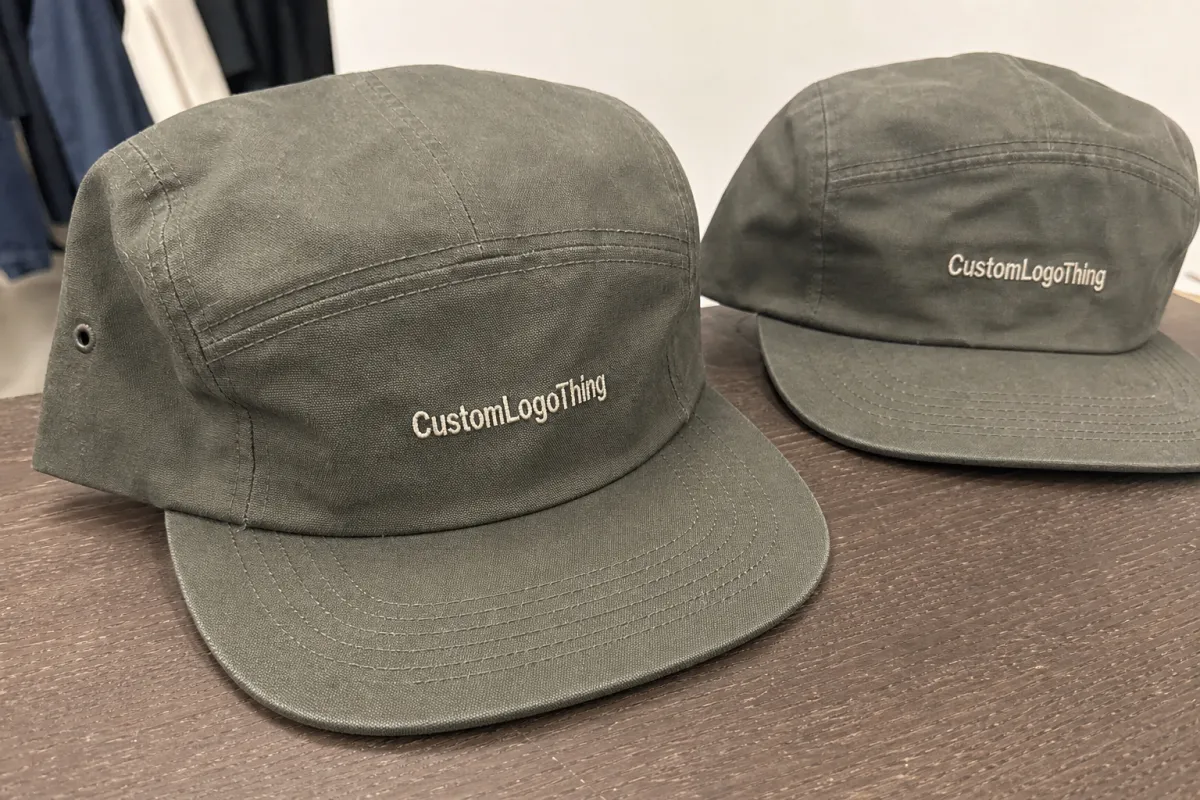
A five panel cap uses five joined sections instead of the more common six-panel build, and that change affects the whole silhouette. The front panel is flatter, the crown usually sits lower, and the cap reads more editorial than promotional. That is part of the appeal for boutique menswear buyers: the shape gives room for a clean logo or label, but it does not dominate the outfit. In a lookbook, it looks intentional. On a retail table, it looks considered rather than generic.
The construction is simple on paper: one front panel, two side panels, and two rear panels, usually finished with a curved brim or a slightly more relaxed shape. In practice, that geometry creates a better canvas for a small logo, a tonal embroidery hit, or a woven label than a more segmented front. Seams are fewer across the main branding area, so the decoration usually sits cleaner and stitches are less likely to drift over a panel break. That is one reason Custom Five Panel Caps for boutique menswear drops have become a steady choice for fashion-led runs instead of souvenir-style headwear.
From a merchandising perspective, the cap solves a useful problem. A limited menswear drop often needs one item that can sit beside workwear trousers, relaxed shirting, knitwear, or tailoring without pulling the whole lineup toward novelty. The five panel format does that well because it can hold a brand mark and still stay quiet. It works with sneakers, loafers, boots, or a softer tailoring story. The best versions feel like they were designed alongside the clothes, not added after the main assortment was fixed.
There is also a practical retail side to the shape. A six-panel cap can be excellent, but it often reads more conventional. A five panel cap has a slightly sharper profile that can feel right for smaller fashion drops, especially where the buyer wants the product mix to look edited. That is useful in-store and online, because the cap can reinforce the collection's tone without turning into the loudest object in the set.
The strongest results usually come from a restrained design brief. One clear color story, one or two finishes that repeat across the range, and decoration that supports the collection instead of competing with it. If the garments are calm and tailored, the cap should be calm too. If the line leans relaxed and utility-driven, the cap can be a little more rugged. The point is consistency, not decoration for its own sake.
Process and timeline: what happens after you approve the design
For Custom Five Panel Caps for boutique menswear drops, the cleanest schedules begin when the brief is already complete before the first proof is sent. A typical workflow runs through artwork review, mockup or sample approval, material confirmation, decoration setup, production, packing, and shipping. If the design is straightforward and the artwork is ready, a simple cap project may move in roughly 12-15 business days after approval. Washed fabrics, custom trims, or multiple decoration points can stretch that to 18-28 business days or more.
- Brief and artwork review: confirm the logo file, placement, color targets, cap color, and any trim requirements.
- Mockup or sample: check proportion, stitch density, front panel width, and how the design reads at real size.
- Material confirmation: lock fabric, sweatband, closure, thread, and labels before production starts.
- Decoration setup: approve the embroidery program, patch spec, or print placement so the run stays consistent.
- Production and QC: verify panel stitching, brim shape, finish quality, and count accuracy during the run.
- Packing and shipping: choose folding, tissue, inserts, cartons, and the shipping method that fits the launch date.
The delays usually show up in the same places. A logo file arrives in the wrong format. Pantone targets are described too loosely. A buyer wants to move the logo placement by a few millimeters after the stitch file is already set. Those details sound minor until the machine setup has to be reopened. For small runs, midstream changes cost more than they do on a larger order because the setup work is spread across fewer pieces.
Decoration type also changes the calendar. Flat embroidery is generally faster than multi-layer appliques or patch combinations. Woven labels can be efficient, but they still need correct size, color matching, and placement. A custom closure, contrast underbrim, or special wash may add another sourcing or finishing step. In practice, the most reliable boutique launches lock the spec early and keep the approval chain short.
It helps to think of the cap as part of the full product system instead of a loose accessory order. If the collection also needs hang tags, tissue, mailers, or Custom Packaging Products, the cap spec should be reviewed beside those pieces so the delivery feels unified. The cap, the packaging, and the garments should all point in the same direction.
Cost, MOQ, and unit price drivers for a small fashion run
For Custom Five Panel Caps for boutique menswear drops, the unit price is shaped less by the shell itself than by the setup around it. Fabric choice, decoration method, color changes, closure type, and whether the build uses stock components or custom-made details all affect the final number. In smaller quantities, setup labor is spread across fewer caps, so the price per piece moves up faster than many buyers expect.
A realistic small-run wholesale range for a clean fashion-led cap might land around $4.50-$7.50 per unit for a simple build at 300-500 pieces. Add washed fabric, a woven label, specialty closures, or more complex decoration, and the range can move to roughly $8-$12+ per unit. Those are broad reference points, not promises. The real number depends on the spec, the component base, and whether the order is ex-factory or landed with freight, duties, and packing included.
| Build type | Typical MOQ | Price pressure | Best use |
|---|---|---|---|
| Stock body + flat embroidery | 100-300 | Lowest setup cost, best for lean drops | Clean capsule release with one strong logo point |
| Washed cotton + woven label + embroidery | 200-500 | Moderate, with more control over texture and finish | Refined streetwear or workwear-adjacent collections |
| Custom closure + patch + specialty trim | 300-500+ | Higher due to sourcing, setup, and finish steps | Premium boutique release with stronger package branding |
| Fully custom fabric or dyed component set | 500+ | Highest, because fabric and color matching drive the run | Seasonal statement piece with precise merchandising goals |
MOQ is where the conversation usually becomes real. Smaller orders are possible, but they often carry a higher unit cost because the factory still has to set up the machine, source the components, and pack the goods the same way. For a boutique menswear drop, that does not mean chasing the biggest order possible. It means choosing the lowest quantity that still protects margin and keeps the cap looking special on the retail floor.
The tradeoff is straightforward: more detail usually means more money, and more money does not automatically mean more impact. One strong decoration point usually beats three competing embellishments. A restrained embroidered monogram can feel more premium than a cap covered in graphics, especially if the rest of the collection is already quiet and tailored. That same discipline helps on the packaging side too, where clarity usually ages better than noise.
Fabric, fit, and decoration choices that shape the final look
Fabric is where custom Five Panel Caps for boutique menswear drops can move from ordinary to carefully built. Cotton twill is the safest all-purpose choice because it takes embroidery well, holds shape, and looks clean on camera. Washed cotton softens the silhouette and gives the cap a more broken-in feel, which works well with relaxed tailoring or denim-heavy assortments. Canvas adds weight and body, while nylon blends bring a sharper, more technical edge. Brushed materials can feel rich, but they need the right handling so they do not look too bulky or casual.
| Fabric | Hand feel | Visual effect | Best note |
|---|---|---|---|
| Cotton twill | Structured and familiar | Clean, versatile, easy to style | Best starting point for most boutique runs |
| Washed cotton | Soft with a broken-in touch | More relaxed and editorial | Works well with relaxed tailoring and denim |
| Canvas | Heavier and firmer | Sturdy, utilitarian, strong shape retention | Good for workwear-led collections |
| Nylon blend | Smoother and lighter | Sharper, sportier, sometimes more technical | Useful for utility or outerwear stories |
| Brushed fabric | Warm and soft | Less crisp, more tactile | Needs careful balancing so it still feels premium |
Fit matters just as much as fabric. An unstructured crown gives the cap a softer, more casual drape. A lightly structured crown keeps the front panel clean enough for logo work without making the cap feel stiff. Closure style also changes the read: metal buckle, snap, self-fabric strap, or slide adjuster each suggest a different price point and a different fashion language. A premium boutique cap usually benefits from a closure that looks intentional rather than purely utilitarian.
Decoration is where many buyers make the wrong call. Flat embroidery is the most reliable option for a sharp, refined look because it handles text and simple marks well. Raised embroidery can add depth, but it needs space and restraint. Woven labels create a crisp, tactile finish and can work well on a small front panel or side placement. Patches are strongest when they are proportionate; oversized patches can overpower the cap quickly. Printed elements can be useful, but they need to stay controlled so the cap does not drift into souvenir territory.
Color is part of the design, not a last-minute selection. A tonal logo on a charcoal cap can feel understated and expensive. A high-contrast mark on a cream body can create a stronger fashion statement. Thread color, brim edge, sweatband, and closure hardware all affect the final read. The cap is not just one object; it is a stack of small decisions that either support each other or pull in different directions.
For custom five panel caps for boutique menswear drops, the safest path is usually the one that starts with proportion, then texture, then color. That order keeps the design grounded and prevents the cap from looking like it was built to impress in isolation instead of fitting into a full collection.
Step-by-step ordering plan for a clean boutique launch
A clear ordering plan keeps the project from slipping into last-minute compromise. Start with a one-page brief that states the audience, target retail price, delivery date, cap color, logo size, and which details cannot change. The brief should also say whether the cap needs to feel tailored, streetwear-led, or workwear-adjacent, because that mood affects fabric and decoration choices immediately.
- Write the brief: define the story, the margin target, and the non-negotiable details.
- Build the artwork pack: send vector files, placement notes, Pantone references, and any size limits tied to the front panel.
- Review the proof against garments: place the cap next to shirts, trousers, and outerwear so the proportion feels right.
- Confirm packaging and labeling: decide on tissue, fold style, hang tags, size stickers, and retail packaging before the run starts.
- Freeze the spec: once the cap, trim, and decoration are approved, avoid changes unless they protect quality.
- Plan the ship date backward: leave margin for transit, customs, and any sample corrections before launch week.
Packaging deserves more attention than it usually gets. A cap packed carelessly can lose shape, arrive crushed, or feel less valuable the moment it is opened. Good package branding does not need to be elaborate, but it should feel consistent with the clothes. Tissue, a clean belly band, a hang tag, or a simple carton insert can make the delivery feel far more considered. If the drop ships to wholesale partners or direct-to-consumer customers, the outer carton should be chosen with the same care as the cap itself.
Shipping should be planned the same way. If cartons are moving through multiple hands, build for rough handling rather than perfect conditions. That is where drop resistance, compression, and vibration become relevant even on small orders. A boutique release does not need industrial overengineering, but it does need enough protection that the first customer sees the cap the way the designer intended.
If the cap sample does not sit correctly next to the shirts, the collection starts to feel like two separate ideas instead of one release.
If the cap is part of a broader launch, it helps to coordinate it with Custom Packaging Products early rather than after production is already moving. The same logic applies to custom printed boxes and other retail packaging pieces, because a tidy unboxing sequence can support the perceived value of the garments and the cap at the same time.
Common mistakes and expert tips
Common mistakes
One of the easiest ways to weaken custom five panel caps for boutique menswear drops is to overload them. Too many logos, too many contrasting thread colors, or too many patches can flatten the menswear angle and push the piece toward souvenir territory. A boutique customer usually notices restraint before they notice decoration count, so simplicity is often the better luxury signal.
- Poor artwork prep: low-resolution files, unclear stitch targets, and missing placement notes lead to avoidable revisions.
- Ignoring panel geometry: a logo that looks fine on paper can sit awkwardly across seams if it was not planned for the five-panel front.
- Using the cheapest spec blindly: a low-cost cap can still be the wrong fit if the fabric, crown, and finish do not match the line.
- Forgetting the rest of the collection: a cap that works alone may still clash with the garments, photography style, or price point.
Another mistake is treating the cap as a separate buying decision instead of part of the collection. If the clothes have a quiet palette, a loud cap can break the line. If the garments are already textured, a cap with even more texture may feel cluttered. The same is true for packaging design: a cap that is thoughtful on its own can still feel disconnected if the packaging, hang tags, and display materials tell a different story.
Practical next steps
The strongest releases usually follow a simple rule: narrow the idea, then refine the details. Pick one visual direction and test it against the clothes, the photography style, and the retail price before anything goes to production. If the cap needs to match a broader apparel story, order a physical swatch or finish sample so the hand feel and color tone can be checked under real light. Small texture differences matter more than people think.
It also helps to build a launch checklist that includes artwork approval, run size, decoration method, packing spec, ship date, and a small reserve for press or reorder demand. A few finished units held back from the main allocation can save a launch if a retailer asks for extra stock or a lookbook shoot needs replacements. For boutique menswear, that kind of planning is what keeps the project looking calm even when the calendar is tight.
Handled with that level of care, custom five panel caps for boutique menswear drops feel like they belong to the clothes, the packaging, and the release plan rather than sitting beside them as an add-on. That is the difference between a cap that fills space and a cap that quietly completes the collection.
What makes custom five panel caps different from standard fashion caps?
The front panel is flatter, so branding reads cleaner and more controlled. The lower crown gives the cap a more editorial profile, which tends to suit boutique menswear better than a bulkier promotional cap. In practice, that shape sits well with tailoring, workwear, and streetwear without looking out of place.
What is a realistic MOQ for custom five panel caps?
MOQ depends on construction, decoration, and whether the body uses stock or custom components. Smaller orders usually carry a higher unit cost because the setup work is spread across fewer pieces. For a boutique drop, ask for the lowest quantity that still protects margin and keeps the spec intact.
How long does the process usually take for a boutique menswear cap run?
Timing depends on artwork approval, sample revisions, decoration method, and shipping distance. Clean projects move fastest when the spec is locked early and the artwork file is ready in vector format. Special trims, washed finishes, or closure changes can extend the schedule, so leave buffer time before launch.
Which decoration methods work best on five panel caps for menswear drops?
Flat embroidery often gives the crispest premium look, especially for minimal branding. Woven labels and patches can add texture, but they should stay proportionate so the cap still feels refined. Heavy layered decoration can overwhelm the front panel quickly, which is why restraint usually wins.
How should I prepare artwork for custom five panel caps?
Send vector artwork whenever possible so the logo stays clean at embroidery size. Include Pantone or color notes, exact placement guidance, and any size limits tied to the front panel. It also helps to show the cap against the apparel line so the decoration reads as part of the full drop, not a separate object.

