Buyer Fit Snapshot
| Best fit | Custom Presentation Boxes with Inserts projects where brand print, material claims, artwork control, MOQ, and repeat-order consistency need to be specified before quoting. |
|---|---|
| Quote inputs | Share finished size, material target, print colors, finish, packing count, annual reorder estimate, ship-to region, and any compliance wording. |
| Proofing check | Approve dieline scale, logo placement, barcode or warning zones, color tolerance, closure strength, and carton packing before bulk production. |
| Main risk | Vague material claims, crowded artwork, missing packing details, or unclear freight terms can make a low unit price expensive after revisions. |
Fast answer: Custom Presentation Boxes with Inserts: Board, Finish, Dieline, and Unit Cost should be specified like a repeatable production item. The safest quote records material, print method, finish, artwork proof, packing count, and reorder notes in one written spec.
Production checks before approval
Compare the actual filled-product size with the drawing, then confirm tolerance on folds, seals, hang holes, label areas, and retail display edges. Reserve space for logos, QR codes, warning copy, and material claims before decorative graphics fill the panel.
Quote comparison points
Review material grade, print process, finish, sampling route, tooling charges, carton quantity, and freight assumptions side by side. A quote is only useful when the supplier can repeat the same color, closure quality, and packing count on the next order.
Custom Presentation Boxes with Inserts: Smart Guide
Custom presentation boxes with inserts solve a problem that hides in plain sight. A product can look finished on a packing table and still move around once the carton starts taking hits in transit. That shift changes the whole impression. A premium bottle that rattles inside a box feels less like a gift and more like a damaged shipment waiting to happen. If you are comparing Custom Packaging Products or preparing a launch kit, the insert is not decoration. It is the part that keeps the package honest.
I have watched a beautiful product line lose its shine because the box did not control movement. The product itself was fine. The packaging was the weak link. That is the kind of thing brands only learn once, because the second lesson usually comes in the form of returns, complaints, or a very awkward sales meeting.
From a buyer’s point of view, custom presentation boxes with inserts do three jobs at once. They secure the item, shape the reveal, and make the pack feel deliberate instead of improvised. That matters for branded packaging, retail packaging, and any product packaging where the first impression has to carry weight. A good outer box creates interest. A good insert makes sure the product arrives looking like the sample.
There is also a plain financial reason these boxes keep showing up in premium programs. A 2 percent damage rate on a 50,000-unit run means 1,000 units need attention. That is not abstract math; that is labor, replacement stock, freight, and customer frustration. A well-designed insert can reduce that risk without turning the pack into a brick.
"A box can look beautiful, but if the insert fights the product, the buyer feels the friction before they notice the finish."
For buyers comparing options, the real question is not whether custom presentation boxes with inserts look good. They usually do. The question is where the format pays for itself. If the product is fragile, giftable, photographed often, or bundled into a set, the case is usually strong. If the item is already stable and low-value, the insert does not need to be elaborate. It still needs to fit. It just does not need to be overbuilt.
There is a shelf effect too. In retail packaging, a tidy insert keeps the face of the product aligned. In direct-to-consumer shipments, it improves the unboxing experience. In sales kits, it stops the story from collapsing into one cluttered compartment. That is one reason custom presentation boxes with inserts keep appearing in higher-end packaging discussions. The format turns a pile of components into something that feels like a set.
What Custom Presentation Boxes with Inserts Actually Solve
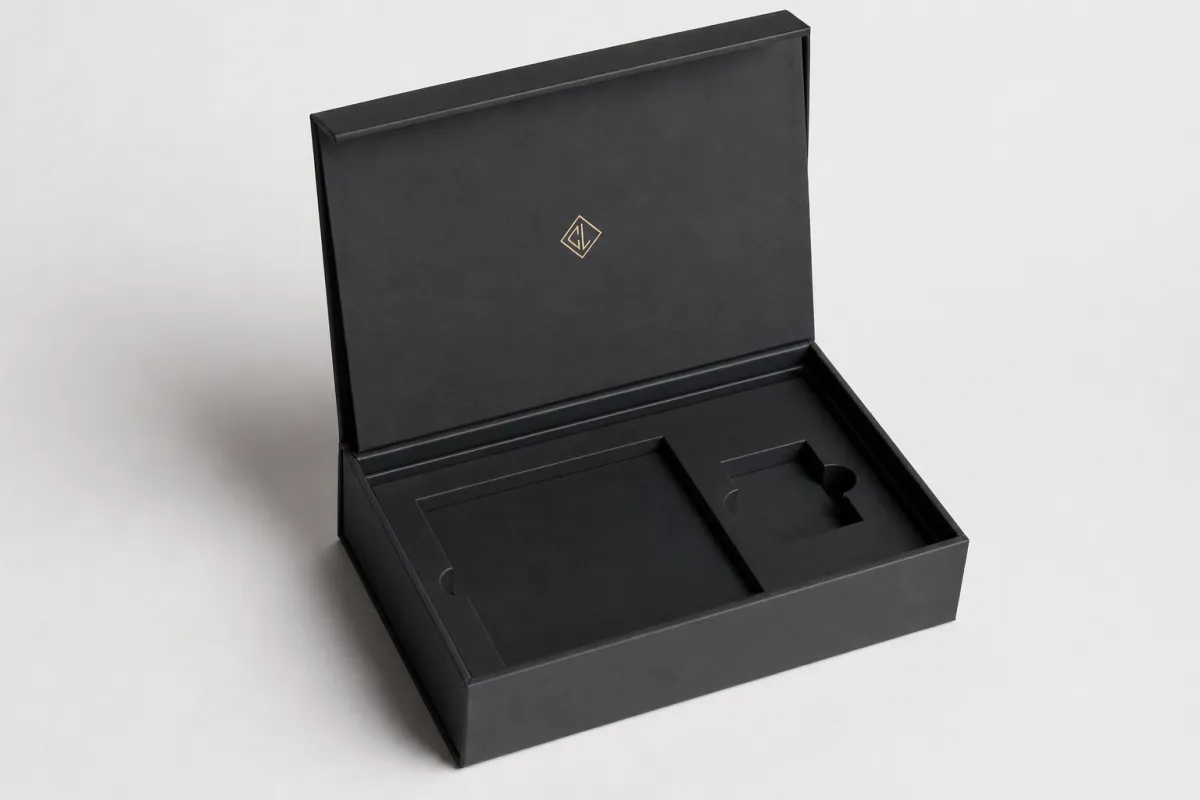
Picture the basic scenario. A bottle, a device, a cosmetic set, or a PR kit sits inside a carton with extra room on all sides. The product shifts. The corners bruise. The label rubs. Custom presentation boxes with inserts stop that movement and give the item a fixed position. That sounds simple because it is simple, yet the difference between a loose pack and a fitted one becomes obvious the moment a box arrives with a dent, a scuff, or a broken component.
That is why custom presentation boxes with inserts show up so often in gifts, launch sets, sales samples, subscription drops, and press mailers. The format brings order to products that need a planned layout. A rigid box with a shaped cavity, or even a folding carton with a fitted tray, signals that the contents were considered from the beginning. Buyers read that signal fast. They might not say it out loud, but they react to it immediately.
There is a practical side to the presentation as well. A product held in place prints better in photos, stacks more cleanly on a shelf, and gives the packing team fewer chances to make a mistake. I once saw a small electronics launch lose half a day because the team had to re-seat accessories by hand after every box shook loose during a road shipment. The fix was not fancy. The fix was a better insert.
That is also why the format often beats a standard carton with loose void fill. Paper crinkle, air pillows, and loose filler can protect a shipment, but they rarely present it with any discipline. Custom presentation boxes with inserts do both jobs at once. They make the shipping story and the brand story line up, which is kinda the whole point.
A box that protects and presents at the same time is doing real work. A plain carton can ship a product. Custom presentation boxes with inserts can make the product feel curated. For premium product packaging, that gap is not subtle.
For fragile goods, the difference can be even more direct. Glass bottles, ceramic components, polished metals, and multi-piece kits all create their own failure points. A loose-fit carton invites abrasion and impact at those points. A fitted insert supports the vulnerable areas instead of letting the item punch into the wall of the box.
Buyers also use the insert to guide how the product should be removed. That sounds small, but the unboxing motion matters. If the user has to dig for an item or tug too hard on a tight cavity, the pack already feels less premium. Good custom presentation boxes with inserts let the product come out cleanly, without the user feeling like they are prying open a stubborn lunch container.
How Custom Presentation Boxes with Inserts Work
The structure is straightforward, even if the details are not. Custom presentation boxes with inserts usually begin with an outer box, then a shaped insert inside that controls the footprint, depth, and reveal sequence. The outer shell might be a rigid setup box, a folding carton, a magnetic closure style, or a lid-and-base format. The insert may hold one product or a full kit with separate pockets for each component.
The reveal is part of the design. A lift-off lid exposes the top face of the product. A hinged magnetic box creates a slower opening moment. A pull-tab or finger notch gives the user something to grip without wrestling the cavity itself. Small detail, big impact. Custom presentation boxes with inserts feel better when the product can be removed with a clean motion.
The insert material is where the tradeoffs become visible. Paperboard inserts are common because they are economical and easy to print, score, and die-cut. Molded pulp brings a more natural look and a stronger sustainability story. EVA foam holds delicate or heavy items securely and keeps the geometry crisp. EPE foam is lighter and protective, but it usually looks more functional than refined. Specialty trays, fabric-lined boards, and layered chipboard structures sit somewhere in the middle depending on the effect you need.
| Insert Material | Best For | Protection | Presentation | Relative Cost |
|---|---|---|---|---|
| Die-cut paperboard | Lightweight kits, cosmetics, accessories | Medium | Clean and precise | Low to medium |
| Molded pulp | Eco-minded sets, moderate protection needs | Medium to high | Natural, understated | Medium |
| EVA foam | Fragile, premium, or weighted products | High | Sleek, exact-fit | Medium to high |
| EPE foam | Shipping protection, technical products | High | Functional rather than decorative | Low to medium |
| Specialty tray or lined insert | Luxury kits, display-focused packs | Varies | Most premium-looking | High |
Fit is not guesswork. Strong custom presentation boxes with inserts start with exact product measurements, then account for clearance, corner radius, wall thickness, and any closures or accessories that change the real footprint. A bottle that measures 65 mm across on paper may need more room once the cap, label, and shoulder profile are included. That is why a packaging spec sheet matters more than a loose sketch pulled from a phone photo.
Engineered fit also means deciding how tightly the product should sit. Too loose, and the item moves. Too tight, and removal becomes annoying or unsafe. A well-made insert usually allows a small amount of tolerance, enough for real-world variation but not so much that the contents wander inside the cavity. This is the point where custom presentation boxes with inserts either feel natural or feel like the brief was never translated into structure.
Branding sits on top of the structure. Custom Printed Boxes can include offset print, foil, embossing, debossing, spot UV, soft-touch coating, matte lamination, or textured wraps. Inside the box, a printed tray, a branded liner, or color-coded compartments can guide the unboxing sequence. That is package branding at its best: making the product experience feel designed, not assembled from leftovers.
For design references and packaging basics, the Packaging School and industry resources at packaging.org are useful starting points. They will not choose the cavity dimensions for you, but they do show why packaging design is a technical discipline rather than a mood board exercise.
Key Factors That Change the Result
Product shape and weight drive almost everything. A light cosmetic compact does not need the same structure as a heavy glass bottle, a ceramic object, or a multi-piece electronics kit. Custom presentation boxes with inserts need to reflect the product’s center of gravity, break points, and handling pattern. If the product has a narrow neck, a sharp edge, or a fragile surface, the insert has to support those areas instead of pinching them.
The balance between display and protection changes the outcome just as much. A dramatic reveal is nice, but not if the item is difficult to remove without bending a flap or scraping a finish. Some custom presentation boxes with inserts look impressive in renderings and awkward in the hand because the cavity is too deep, the grip points are too small, or the lid gets in the way. That is the classic packaging mistake: making the mockup prettier than the actual user experience.
Material choice also changes the result in obvious ways. Paperboard inserts are usually the right move for lighter items and cleaner presentation. Foam is the safer pick when protection matters most. Molded fiber works well when sustainability is part of the buying story and the product does not need a glossy luxury finish. If the insert will be seen for more than a second, the finish matters. If it will mostly stay hidden, structure matters more than decoration. That holds true for custom presentation boxes with inserts more often than people admit.
Sustainability is not a side note. Buyers ask about recyclability, fiber content, and whether the packaging supports the company’s environmental claims. FSC-certified board can support that message, and molded fiber can help when the goal is less plastic and more recoverable material. For a deeper look at responsible fiber sourcing, the FSC site at fsc.org is a sensible reference. Keep the claims accurate. Green packaging loses credibility fast when the material story does not match the build.
Assembly matters more than many teams expect. Some custom presentation boxes with inserts arrive as flat-packed components that need folding, gluing, or hand assembly. Others require the insert to be seated in a rigid shell before packing starts. If the run includes 5,000 units and each one needs a fiddly manual step, labor cost quietly becomes a real line item. There is nothing elegant about a beautiful box that slows the line to a crawl.
Shipping conditions matter too. A box that looks perfect on a retail shelf may still fail in transit if the route includes parcel sorting, vibration, compression, or multiple drops. That is where testing earns its place. Ask whether the package was evaluated against an ISTA profile or a comparable internal distribution test. The package should survive actual handling, not only a studio table. Standards such as ISTA and ASTM do not exist to decorate a spec sheet; they exist because parcels get tossed around as if nobody has to pay for the damage.
One more thing that gets missed: the retail environment itself. If the box is going to sit under bright lights, the insert color can affect how premium the product feels. A stark white cavity can make dark products pop, while a black insert can make gold or glass details feel richer. A bad color choice will not ruin the pack, but it can flatten the whole thing.
In short, the result depends on the product, the transport path, the target budget, and the desired reveal. That is why custom presentation boxes with inserts should be designed as a system, not as a box plus a spare piece of foam.
Custom Presentation Boxes with Inserts: Cost, Pricing, and MOQ
Cost starts with construction. A simple folding carton with a die-cut paperboard insert is usually the lowest-cost route. A rigid box with a wrapped exterior, custom insert, and premium finish moves up quickly. Add foil, embossing, a magnetic closure, fabric lining, or complex multi-cavity layouts, and the price climbs again. Custom presentation boxes with inserts are not expensive because printers are dramatic. They cost more because extra structure needs more materials, setup, and labor.
The main cost drivers are easy to list and easy to miss at the same time: box style, insert material, print coverage, finish level, cavity complexity, and hand assembly time. A one-color printed box with a simple insert is one thing. A rigid box with full wrap, foil logo, soft-touch coating, and a six-part insert is another. Same category. Very different invoice.
MOQ matters because setup costs do not shrink just because the order is small. If a Custom Die Cut or special insert tool is needed, that fixed cost gets spread across fewer units in a low-volume run. That is why small quantities often carry a much higher unit price. Custom presentation boxes with inserts can absolutely be ordered in smaller runs, but buyers should expect the math to be less forgiving.
For realistic planning, these ranges are common enough to be useful:
- Folding carton with paperboard insert: often about $0.65-$1.40 per unit at 3,000-5,000 pieces, depending on print coverage and finishing.
- Rigid box with custom insert: often about $2.20-$6.50 per unit at 1,000-3,000 pieces, depending on board thickness, wrap material, and closure style.
- Molded pulp insert programs: tooling can add a meaningful upfront cost, then per-unit pricing may land around $0.30-$0.90 at volume, depending on design and quantity.
- EVA or EPE foam inserts: pricing varies widely with thickness, density, and die complexity, but they usually rise faster when the design has multiple cutouts or layered cavities.
Those numbers are not promises. They are working ranges. Custom presentation boxes with inserts vary by region, order size, artwork complexity, and whether the quote includes freight. A quote that looks cheap can become expensive after sample charges, plate fees, tooling, and shipping are added. That is why you should ask for itemized pricing instead of one vague lump sum. The parts of the quote matter more than the total on line one.
Comparing quotes properly is half the battle. Make sure the suppliers are quoting the same board grade, the same print process, the same finish, the same insert material, and the same packing method. One vendor may quote a box with a simple tray, while another quotes a thicker insert with tighter tolerances and more hand work. Those are not equivalent. They only appear comparable if the details are ignored, which is a fast way to buy the wrong thing and call it a win.
There are also places to save without hurting the pack. Standardize the outer size where possible. Reduce the number of insert components. Avoid a finish effect that only one person in the room cares about. If the product is what gets handled, spend money there. If the insert is mostly hidden, make it clean and functional instead of ornate. Custom presentation boxes with inserts should support the product, not compete with it.
For buyers who want to see how a packaging supplier structures different options, our Custom Packaging Products page is a practical place to start. It helps to compare the build level before you commit to a specification that is either overbuilt or undercooked.
In a pricing review, I like to separate “must-have” from “nice to have” with a pen and paper. It sounds old-fashioned, but it works. Foil may matter for a luxury launch. A magnetic flap may not. A molded pulp tray might save enough to fund better print. That kind of trade-off is where the real margin sits.
Production Process, Timeline, and Lead Time
The production flow usually begins with measurements and a spec review. That sounds boring because it is, and it is still the step that prevents expensive mistakes. For custom presentation boxes with inserts, the supplier needs the product dimensions, the weight, the finish goals, the quantity target, and any special handling notes. If the product includes accessories or multiple SKUs in one kit, that needs to be clear from the start. Confusion here turns into wasted samples later.
Next comes the dieline or structural layout. This is where the box shape, flap structure, insert cavities, and closure style are mapped out. A simple structure may move through this stage quickly. A rigid box with a magnetic closure and a layered insert will take more back-and-forth. Then artwork proofing begins. If the print layout, coating, or foil placement is unclear, the schedule stretches. Custom presentation boxes with inserts are exacting about placement because a shifted line can ruin the reveal.
Sample approval is the gate that saves you from headaches. A physical prototype or blank sample tells you whether the product fits, whether the insert is too tight, and whether the removal motion feels awkward. A render does not answer those questions. It mostly flatters everyone involved. A sample, by contrast, shows reality, which is why the sample stage should never be rushed.
Realistic timing ranges help keep planning sane:
- Simple folding cartons: often 10-15 business days after proof approval, assuming artwork is ready and no structural revisions are needed.
- Rigid presentation boxes: often 15-25 business days, with extra time if the order uses foil, embossing, or a magnetic closure.
- Custom inserts with die cutting or layered assembly: may add several days to two weeks, depending on complexity and tooling.
- First-time molded pulp tooling: can stretch the front end because mold creation and sample correction take time.
What slows the schedule? Unclear measurements, late artwork changes, revised cavity dimensions, and waiting too long to approve samples. The list is not mysterious. It is just annoyingly common. Custom presentation boxes with inserts are not delayed by fate; they are delayed by decisions that arrived too late. That is the unglamorous part nobody wants to own.
A practical rule: work backward from the launch date and add buffer time. If the product ships separately, coordinate the packaging timeline with the product timeline so one does not sit in a warehouse while the other gets delayed in production. Custom presentation boxes with inserts are often the last piece people think about, which is exactly why they become the thing that threatens the launch date.
If you are handling retail packaging, seasonal gifting, or a coordinated sales rollout, leave room for a sample round. One revision can be harmless. Two revisions can be annoying. Three revisions usually mean somebody skipped a measurement or tried to force a structure that never fit the product in the first place.
There is another schedule trap that deserves mention: freight. A box program can be finished on time and still miss its release window because the shipping window was never pinned down. If you are sourcing internationally, build in customs and port delays. If you are sourcing locally, still plan for warehouse receiving time. Packaging does not exist in a vacuum, and the calendar never cared about a clean dieline.
Common Mistakes When Ordering Inserts
The biggest mistake is designing the outer box first and treating the insert like filler. That is backwards. Custom presentation boxes with inserts work best when the insert and the shell are designed together. If the box is too shallow, the cavity gets compromised. If the lid height is off, the product presses into the top panel. If the insert is added late, the whole structure starts making compromises it should never have made.
Another classic error is over-tight cavities. People love the idea of a snug fit because it sounds premium. Then the product arrives and the user has to pry it out with two fingers and mild regret. A cavity that looks secure on paper can be annoying, unsafe, or bad for the finish in real life. Custom presentation boxes with inserts should cradle the product, not trap it.
Skipping shipping tests is another expensive habit. A box that survives a desk test is not necessarily ready for parcel handling. If the product is fragile, coated, glass, or weighted unevenly, test the pack against realistic handling conditions. That is where drop resistance, compression, and vibration matter. Standard guidance from groups such as ISTA exists because shipping does not care how polished the artwork looks.
Too many layers can also make the pack worse. Some designs pile on windows, sleeves, nested trays, ribbons, foam, and printed cards until the box feels busy and labor-heavy. That may look fancy in a concept deck. It usually feels slow, expensive, and awkward on the production floor. Custom presentation boxes with inserts should feel elegant in the hand, not complicated in the warehouse.
Here are the mistakes I see most often:
- Ignoring actual product tolerances and relying on nominal dimensions only.
- Choosing the wrong material for weight, finish, or shipping conditions.
- Forgetting user removal and making the product hard to lift out.
- Overcomplicating the insert with extra cutouts or unnecessary layers.
- Approving visuals too early and skipping the physical sample check.
None of those errors are dramatic. That is the problem. They look small, then they show up as dents, returns, assembly delays, or a customer who opens the box and feels mildly let down. In packaging, mild disappointment is just delayed failure with better branding.
When teams order custom presentation boxes with inserts, they sometimes assume the insert is easy to change later. Sometimes it is. Often it is not. Once the cavity dimensions, board thickness, and print layout are set, changes can affect everything downstream. That is why good packaging design starts with the product and ends with the product, not with the render.
One more mistake that crops up in real projects: not checking the lid-to-product gap. If the lid compresses a surface, you may not notice in an empty sample. You will notice after the first shipment. A few millimeters can make the difference between a clean reveal and a crushed corner.
Expert Tips and Next Steps for Better Orders
Start with a blank or sample prototype. Not a fantasy version. A real one. A plain mockup lets you check fit, clearance, removal, and perceived quality before you spend money on full print. For custom presentation boxes with inserts, this step usually saves more money than it costs, which is rare enough in packaging to deserve a small celebration.
Build a proper spec sheet. Include product dimensions, weight, finish goals, target quantity, insert material preference, and any must-have branding details. If the order includes multiple items, list each one separately. If the product has fragile points or a particular orientation, say so. Good custom presentation boxes with inserts are built on clear information, not on optimistic guessing.
Request more than one quote version. Ask for a premium build, a mid-range build, and a stripped-down version. That comparison makes the tradeoffs obvious. Maybe the foil logo is worth it. Maybe the foam insert is overkill. Maybe the molded pulp version hits the same goal for less. If you only ask for one version, you are not comparing options. You are just accepting the first price that sounds plausible.
A clean working process usually looks like this:
- Measure the product accurately, including any cap, lid, accessory, or display stand.
- Decide whether protection or display comes first.
- Choose the insert material based on weight, finish, and sustainability goals.
- Approve a physical sample before full production.
- Confirm the timeline in writing, including proofing and shipping windows.
That process is not glamorous. It works. The buyer who wants the best version of custom presentation boxes with inserts usually ends up caring about the hard details: tolerances, board thickness, hand assembly, and how fast the insert can be packed without slowing the team down. That is real packaging buying. The glossy part is the easy part.
If you are still choosing between structures, look at the product’s actual life cycle. Does it ship once and stay on a desk? Does it get opened and closed again? Does it need to survive parcel delivery, or is it mainly for shelf presentation? The answers point to different structures. A rigid box, a folding carton, and a foam-tray setup all solve slightly different problems. Custom presentation boxes with inserts only make sense when they match the use case.
Our Custom Packaging Products catalog can help you compare constructions before you lock the spec. That is usually the fastest way to avoid paying luxury money for a box that only needed medium-duty packaging.
For shipping-sensitive projects, check distribution testing expectations early. If the product is fragile, ask about an ISTA-style drop profile or a similar internal test plan before production starts. If sustainability is part of the brief, check material availability early as well. FSC options, molded fiber, and board grades are easiest to plan when they are discussed before artwork is finalized, not after.
My practical advice is simple: measure carefully, choose the insert material with your hands and not just your eyes, and ask for a sample before you approve anything that gets printed in volume. That is how custom presentation boxes with inserts stop being a guessing game and start behaving like a proper packaging solution. If the product matters, these boxes are usually worth the extra thought, because a package that protects, presents, and ships well is doing real work instead of pretending to.
If you want one takeaway to use on the next project, use this: design the box and the insert together, test the fit in hand, and do not approve a print run until the sample survives real handling. That one habit prevents most of the expensive surprises.
FAQ
What products are best for custom presentation boxes with inserts?
Fragile items, premium gifts, product kits, cosmetics, glass bottles, tech accessories, and multi-piece sets are the best fit. If the product moves around in transit, custom presentation boxes with inserts usually solve the problem. If the item is already stable, the insert may be more about presentation than protection, but that still has value in branded packaging and retail packaging.
Which insert material is best for custom presentation boxes with inserts?
Paperboard is usually the cleanest and most cost-friendly option for lightweight items and polished presentation. Foam gives stronger hold for fragile or heavier products, while molded pulp is better when sustainability matters. The right choice depends on product weight, finish goals, protection needs, and how premium you want the final unboxing to feel.
How much do custom presentation boxes with inserts usually cost?
Cost depends on box construction, insert material, print coverage, finish level, and how much hand assembly the design requires. Higher quantities usually lower unit cost, while small runs with custom tooling or specialty finishes stay more expensive. Ask for itemized quotes so you can see what is driving the price instead of staring at one large number and hoping for the best.
What is the typical lead time for custom presentation boxes with inserts?
Lead time usually has two parts: proof or sample approval, then production and finishing. Simple structures can move in 10-15 business days after approval, while rigid boxes, custom inserts, and premium finishes often take longer. Build in extra time for artwork revisions, sample changes, and shipping so the packaging does not become the reason a launch slips.
Can I order custom presentation boxes with inserts in small quantities?
Yes, but small runs usually carry a higher unit price because setup, tooling, and labor get spread across fewer boxes. To keep small orders practical, choose simpler structures, standard materials, and fewer finishing effects. If you are testing a new product, start lean first and upgrade the structure once the packaging proves itself.

