Two identical shirts leave two online stores. One arrives in a crisp branded poly mailer with clean artwork, a scannable return label, and an adhesive strip that actually closes. The other shows up in a thin gray bag with a wrinkled warning label and a seal fighting for its life.
The shirt did not change. The buyer’s judgment did.
That is why Custom Printed Poly Bags private label packaging is not just decoration. It controls the first physical moment between a customer and a brand. Done well, it makes the product feel organized, intentional, and ready to sell. Done poorly, it makes even a decent product feel like it came from the clearance bin. Harsh, but packaging has never been known for its mercy.
What Custom Printed Poly Bags Private Label Really Means
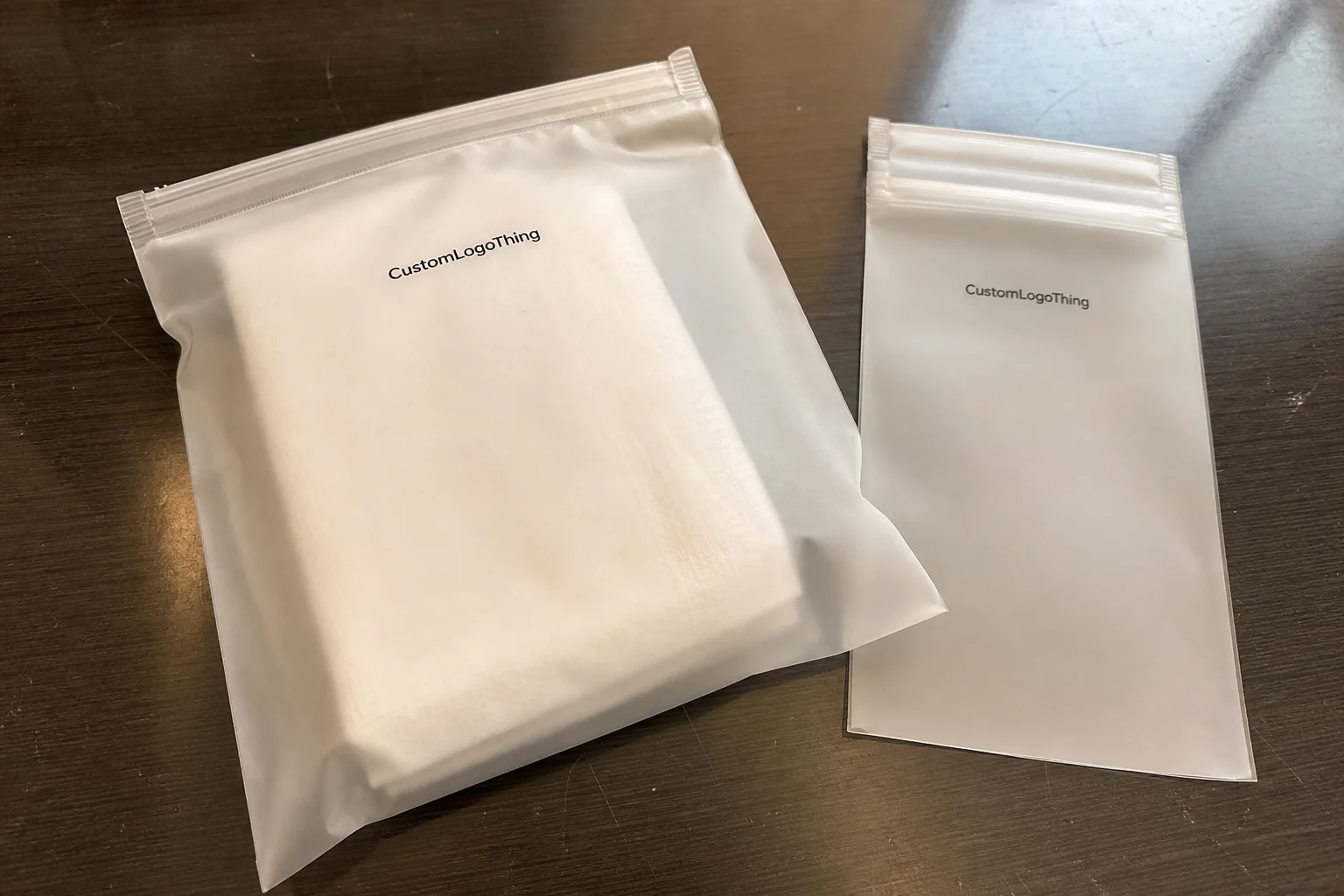
A poly bag is a flexible package made from plastic film, usually polyethylene or polypropylene. A private label version carries brand-owned information: logo, product name, size mark, barcode, QR code, care instructions, country-of-origin statement, recycling symbol, suffocation warning, or retail-ready artwork.
Simple on paper. Less simple once film, ink, sealing, packing speed, and compliance get involved.
Most private label poly bag projects fall into a few familiar formats. Flat poly bags protect folded apparel. Wicketed bags speed up manual or semi-automatic packing. Zipper bags suit accessories, sample kits, beauty products, and reusable retail packaging. Handle bags work for boutique-style handoff. Poly mailers ship directly to customers. Suffocation-warning apparel bags sit somewhere between brand surface and compliance tool.
The bag also proves ownership. The product may be manufactured by a third-party factory, packed by a co-packer, stored by a 3PL, and shipped from a warehouse the brand owner never visits. The bag is often the branded element that follows the product through that entire chain.
Packaging can also move faster than product reformulation. Changing fabric, fragrance, hardware, or formulation may take months. Updating a printed bag might take one proof cycle, one plate set, and a reorder. That does not make packaging magic. It makes it visible.
Practical callout: A printed poly bag will not rescue a weak product, but weak packaging can make a perfectly good product look careless before the customer opens it.
The useful questions start before pricing. What film is being used? How is it printed? What gauge is realistic? Will the ink hold up? Is the seal strong enough? Are the warnings and barcodes placed where they will work, not just where they look tidy?
That is the difference between buying a bag and building a packaging spec.
How Branded Poly Bag Printing Works Behind the Scenes
The production path changes by supplier, but the basic flow is predictable: resin selection or film sourcing, film extrusion or roll purchase, converting, cutting, sealing, printing, curing, packing, and quality checks. Some manufacturers extrude film in-house. Others buy film rolls and convert them. That difference affects lead time, color control, minimum order quantity, and how quickly a supplier can respond when a launch date suddenly becomes “urgent.” Funny how that happens.
Flexographic printing is common for larger runs and repeat private label programs. It uses printing plates, cylinders, and fast press speeds. Setup costs can be higher, but the unit cost often drops at volume. Flexo makes sense when artwork is stable and quantities are high enough to spread the setup expense.
Digital printing can work for shorter runs, test launches, or variable artwork. It is not automatically better or worse. It depends on the film, ink system, durability needs, and supplier capability. Spot printing, such as a one-color logo on a clear apparel bag, is usually the lowest-risk option for simple branded packaging.
Plastic film is not paper. It stretches. It holds static. It can be glossy, hazy, slippery, soft, crisp, opaque, or treated. Ink adhesion depends on surface energy, which is why corona treatment matters. Corona treatment changes the film surface so ink can bond more reliably. Without proper treatment, a logo can look sharp on press and then scuff during packing, shipping, or retail handling.
A strong print brief includes the boring details. Boring is good here. Pantone references, logo dimensions, safe print zones, barcode size, quiet zones, warning copy, bag orientation, and packing direction all belong in the file or spec sheet.
Send vector artwork when possible: AI, EPS, or editable PDF. A 72 dpi PNG pulled from a website is not artwork. It is a cry for help with a transparent background.
Proofing has two jobs. A digital proof checks layout, spelling, proportions, barcode placement, and warning text. A physical sample or strike-off checks color, ink rub, film feel, seal strength, and how the bag behaves around the real product. For reorders, a digital proof may be enough. For a first run, especially with a new supplier or high-volume order, a physical sample is safer.
The expensive mistakes usually happen before production begins. Once the press is running and film is being converted, every correction gets slower, louder, and more expensive.
Material, Size, Gauge, and Closure Specs That Change Performance
A poly bag is a small engineering decision. The logo is only one part of it.
LDPE is soft, flexible, and common for apparel, ecommerce, and general product packaging. It has a familiar hand feel and works well for many printed bags. HDPE feels crisper and can be thinner while still offering useful strength, though some buyers find it less premium because of the sound and texture. CPP or PP can deliver higher clarity for retail packaging where the product needs to show through. Recycled-content films may be available, but they depend on the supplier, film structure, performance requirements, and local recycling realities.
Gauge is the film thickness. In U.S. buying conversations, people often use mils, where 1 mil equals 0.001 inch. Lightweight apparel bags often sit around 1.5 to 2 mil. Stronger mailers, parts bags, or heavier product bags may run 2.5 to 4 mil or more. Thicker film can improve puncture resistance and hand feel, but it also increases material cost and shipping weight.
Do not over-spec just because thicker sounds safer. A 4 mil bag for a soft T-shirt may be wasteful. A 1.5 mil bag for sharp hardware is asking for punctures. Match the film to the product, the packing process, and the distribution path.
Size creates more problems than buyers expect. The bag should allow easy insertion without excess air, wrinkling, or stress on the seal. Too large looks sloppy. Too small slows packing and causes tearing. A folded T-shirt may only need a clear adhesive flap bag. A cosmetics bundle, cable set, or metal component may need stronger film, better clearance, and a more secure closure.
| Spec choice | Typical use | Buyer risk to check |
|---|---|---|
| LDPE, 1.5-2 mil | Soft goods, apparel bags, inserts | May puncture if used for sharp or heavy products |
| HDPE, thinner gauge | Lightweight protective bags, fast packing | Can feel crinkly or less premium |
| CPP or PP clear film | Retail display packaging and accessories | Needs fit testing to avoid cracking or weak seams |
| Opaque white or black film | Privacy, stronger package branding, ecommerce | Barcode contrast and ink coverage must be checked |
Closure style changes both user experience and labor. Open-ended bags are fast for certain packing lines. Adhesive flap bags work well for ecommerce apparel and other lightweight goods. Zipper closures make sense for reusable retail packs. Heat-sealed bags improve tamper control but require equipment, setup discipline, and consistent operator handling.
Compliance belongs in the brief, not in a panic email after proof approval. Suffocation warnings, food-contact suitability, recycling claims, and child-safety concerns should be discussed before quoting. For broader packaging education, groups such as the International Safe Transit Association publish transit-testing resources that help buyers think beyond the print surface.
Pricing, MOQ, and Unit Cost: What Actually Drives the Quote
The bag itself is rarely the only cost. Setup, plate charges, ink coverage, film choice, closure style, packing method, freight, duties, storage, and order quantity can all move the final number. A one-color logo on a standard clear bag is a different purchase than edge-to-edge artwork on a custom-size opaque mailer.
Minimum order quantities exist because setup time costs money even when the run is short. A press still needs calibration. Film still needs handling. Artwork still needs review. For some suppliers, simple printed bags may start around 1,000 to 5,000 pieces. More complex flexographic runs may require 10,000, 25,000, or more, especially with custom film, multiple colors, heavy ink coverage, or special closures.
Realistic unit pricing depends heavily on specs. A basic one-color printed apparel bag might land around $0.08-$0.18 per piece at moderate quantities. A heavier printed poly mailer with adhesive closure could run $0.18-$0.40 or more, depending on size, film, ink coverage, and freight. Small runs can be much higher because setup is spread across fewer bags.
Full-coverage designs need closer review. More ink can mean higher cost, tighter registration control, longer curing considerations, and a greater chance that scuffing or color variation becomes visible. Plate fees for flexographic printing may sting on the first invoice, but they can make sense for repeat programs because the same artwork can often be reused.
Total landed cost matters more than the neat per-piece number on a quote. A cheaper bag from a distant supplier can lose its advantage after freight, duties, delays, storage, and rejects. Weak seals or wrong dimensions can create returns and repacking work that cost far more than the bag.
| Cost driver | Why it changes price | Cost-control move |
|---|---|---|
| Bag size | More film per unit increases material cost | Right-size around the packed product, not the flat product only |
| Print colors | Each color may add setup, plates, and registration control | Use one or two strong brand colors when possible |
| Film gauge | Thicker material costs more and may weigh more | Test puncture resistance before over-specifying |
| MOQ | Setup is spread across the order quantity | Consolidate SKUs or forecast repeat needs |
| Freight | Carton count and distance affect landed cost | Compare delivered cost, not factory price alone |
If the bag is part of a wider launch, compare it against other branded components such as Custom Labels & Tags, inserts, or Custom Packaging Products. Sometimes a simpler bag plus a well-made label beats an overprinted bag that strains the budget. Not glamorous. Often correct.
Process and Timeline From Artwork Brief to Delivered Bags
After a quote request, a good supplier should slow down before speeding up. Discovery comes first: product type, use case, quantity, dimensions, thickness target, material preference, print colors, closure, delivery location, and deadline. A vague request for “branded bags” invites assumptions. Assumptions are expensive.
Artwork review follows. The printer checks vector quality, color separations, safe print zones, barcode readability, and warning-copy placement. If the bag needs a suffocation warning, that text cannot be treated as leftover copy. If the barcode will be scanned in a warehouse, the quiet zone and contrast matter more than whether it looks elegant.
For a first-time custom printed poly Bags Private Label order, a physical sample or pre-production proof is usually worth the delay. That sample should confirm more than artwork. Check the film feel, openability, closure strength, seal alignment, print rub, carton packing, and whether bags arrive in a format that fits the fulfillment workflow.
Lead times vary. A straightforward reorder with approved art can move faster, sometimes in a couple of weeks depending on supplier workload and shipping distance. A new program with sampling, custom film color, multiple SKUs, high ink coverage, or special closures can stretch much longer. Peak production seasons add friction.
Approvals create the bottleneck buyers underestimate most. Production cannot move cleanly while the logo size is still being debated, the Pantone color is unresolved, or legal warning language is waiting on review. Treat the first order as a system build. Future runs become faster once specs, plates, artwork, and packing instructions are locked.
Build a buffer for launches. Finished inventory can sit hostage because the product is ready but the packaging is not. That is a preventable storage bill, and a very annoying one.
Common Mistakes That Make Private Label Poly Bags Look Cheap
Most bad poly bags do not fail loudly. They whisper. Off-center logos. Cloudy film. A seal that curls. Ink that rubs off on a packer’s hand. A barcode placed over a wrinkle. Small clues, fast judgment.
The first mistake is measuring the product flat and ignoring depth, folds, compression, and packing speed. A sweatshirt, cable bundle, or cosmetics set is not a rectangle in real life. Add realistic clearance and test insertion with the person or process that will actually pack it.
The second mistake is using raster artwork when vector files are needed. Low-resolution logos produce fuzzy edges, especially on fine type, thin lines, and small icons. Packaging design that looks polished on a website can fall apart on flexible plastic if it was not prepared for print.
Color creates another trap. A screen color is light; ink on film is material. White ink underlays, film opacity, gloss, and ink density can all shift the result. Pantone references and physical samples reduce surprise, though perfect color matching on plastic is not always guaranteed.
Overprinting deserves caution. Heavy ink coverage can look bold, but it can also increase cost and introduce curing, rub, blocking, and registration challenges. The bag still needs to move through packing tables, cartons, trailers, shelves, and hands. Pretty artwork that cannot survive handling is not premium. It is fragile.
Compliance misses are less glamorous and more dangerous. Suffocation warnings for certain apparel-style bags, unsupported recycling claims, and food-contact assumptions can create real risk. The U.S. Environmental Protection Agency offers useful background on recycling systems and claims through resources at epa.gov/recycle, but buyers should still ask suppliers for material documentation before printing environmental language.
Fulfillment labor gets ignored until the bill arrives. A beautiful adhesive flap bag that takes six extra seconds to load can become expensive at 20,000 orders. A zipper that customers love may slow a packing bench. A tight bag may look neat in a sample room and cause profanity in a warehouse. Private label packaging has to match the brand promise and the operating reality.
Actionable Next Steps Before You Request Samples or Place an Order
Before asking for samples or a quote, build a short spec sheet. It does not need to be fancy. It needs to be clear.
- Product dimensions in packed form, plus product weight
- Preferred bag style: flat, zipper, adhesive flap, wicketed, handle bag, or mailer
- Material preference, such as LDPE, HDPE, PP, CPP, opaque film, or recycled-content option
- Thickness target or performance goal, such as puncture resistance or premium hand feel
- Print colors, logo files, Pantone references, barcode position, and warning copy
- Order quantity, ship-to location, required delivery window, and packing method
Review samples that match the intended use case, not just attractive bags from a supplier’s portfolio. A glossy retail pouch tells you little about how a poly mailer will survive courier handling. If you are shipping apparel directly to consumers, compare your options with Custom Poly Mailers rather than judging only by showroom samples.
Test like a warehouse would. Insert the product quickly. Seal it. Rub the print with a thumb. Scan the barcode. Stack the bags. Drop a packed unit from waist height. Leave a sample under mild pressure overnight and check whether ink transfers or the closure creeps open. Not every product needs ISTA-level transit testing, but the mindset is useful: the package has to survive the path, not just the photo shoot.
Ask suppliers pointed questions. What material is this? What gauge? What print method? Are there plate or setup charges? What is the MOQ? Can the same artwork be reused for reorders? What tolerance should I expect on bag size, color, and print placement? If the supplier cannot answer basic specification questions, that is data.
Separate launch needs from long-term needs. A short first run may validate the look, fit, and workflow. A larger repeat order can reduce unit cost after the design proves itself. Honestly, this is where many buyers overspend: they try to solve a permanent packaging system with a rushed first purchase, then pay to fix the same decision twice.
Custom Printed Poly Bags private label projects work best when buyers treat the bag as a measurable packaging component, not a last-minute branding accessory. Define the use case, test the film, verify the print, and keep the spec sheet. The bag may be lightweight, but the decision is not.
FAQ
What are custom printed poly bags for private label products used for?
They package, protect, identify, and brand products sold under a retailer’s or ecommerce brand’s own label. Common uses include apparel bags, accessory bags, Subscription Box Inserts, retail display packaging, poly mailers, and product protection during fulfillment. They can carry logos, barcodes, care instructions, warnings, QR codes, sizing marks, and other private label details.
What information do I need before requesting a quote for printed poly bags?
Prepare the bag size, product type, quantity, thickness or durability target, material preference, print colors, closure style, and delivery location. Send vector artwork when possible, usually AI, EPS, or editable PDF files, so the printer can check line quality and color separations. Include required warning text, barcode placement, recycling symbols, or retailer compliance requirements.
How much do private label printed poly bags cost?
Cost depends on size, material, gauge, order volume, number of print colors, ink coverage, closure type, setup charges, and shipping. Higher quantities usually reduce unit cost because setup time and print preparation are spread across more bags. The cheapest quote is not always the lowest-risk option if film strength, seal quality, print adhesion, or delivery reliability are weak.
What is the typical lead time for custom printed poly bags?
Lead time varies by supplier, order complexity, sampling needs, print method, material availability, and shipping distance. A simple reorder with approved artwork is usually faster than a first-time private label project that needs proofing and specification decisions. Build in extra time for artwork approvals, physical samples, compliance review, and freight if the bags are tied to a product launch.
Can custom printed poly bags be made with recycled or eco-conscious materials?
Some poly bags can include recycled content or be designed for recyclability, depending on material, film structure, ink, labels, and local recycling rules. Buyers should avoid vague environmental claims and ask for material documentation before printing sustainability statements on the bag. A right-sized bag with appropriate thickness can also reduce waste by avoiding unnecessary plastic while still protecting the product.


