If you are pricing a Custom Printed Poly Bags bulk order, the cheapest quote is usually the one with the most assumptions hiding behind it. That is how people end up with bags that are too thin, too big, or printed in a way that looks decent on a screen and sloppy in a warehouse. The real savings come from matching the film, print method, and order size to the product instead of treating every bag like a generic sack with a logo slapped on it.
Poly bags are simple packaging, but simple does not mean forgiving. A small spec mistake can turn into torn seams, wasted inventory, slow packing, or a reprint nobody wanted. Bulk ordering only works in your favor if the bag is actually right for the job.
That means thinking about use, not just unit price. Shipping teams care about protection. Retail teams care about presentation. Fulfillment teams care about speed and consistency. The best bag balances all three without getting fancy for no reason. Fancy packaging is fun until it starts causing problems.
Why bulk poly bags save money when the packaging has to work
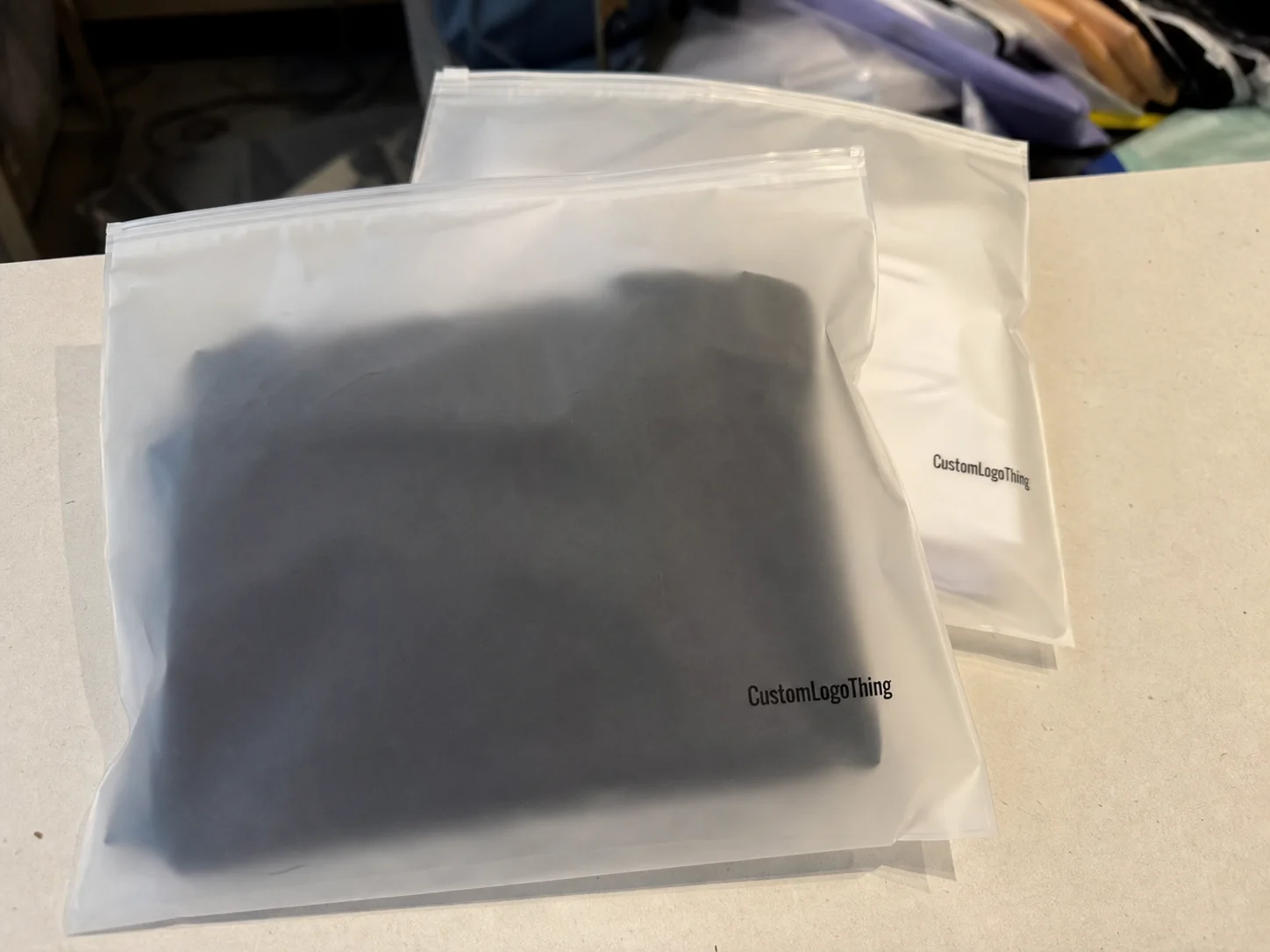
Bulk purchasing lowers cost because setup expenses are spread across more pieces. A plate charge, color setup, or film configuration costs about the same whether you buy a few thousand bags or a few tens of thousands. Once volume rises, the per-unit price drops. That part is straightforward.
The catch is that poly bags are only economical when the spec is disciplined. Oversized bags use more film than needed and take up more freight space. Thin bags can split at the seal or tear during pack-out. Artwork that is unclear or overly detailed can force a reprint. None of that is dramatic. It is just expensive.
Most buyers use poly bags for one of three jobs: shipping, retail packaging, or warehouse packing. Shipping applications need protection and decent puncture resistance. Retail packaging needs clean branding and predictable sizing. Warehouse packing needs bags that open consistently, stack flat, and do not slow the line.
Bulk ordering also helps with inventory control. Fewer reorders means fewer interruptions. A stable spec makes planning easier, especially if the same bag is used month after month for apparel, parts, accessories, or other repeat SKUs. The unit cost matters, but so does not having to scramble for a replacement run when inventory gets tight.
“If the bag is too big, too flimsy, or printed like an afterthought, you are paying for mistakes twice: once in the quote and again in the warehouse.”
Before requesting quotes, get the basic use case clear. Product weight matters. So does puncture risk. Heat, humidity, and handling conditions matter too. A bag that works fine in a clean fulfillment center can perform poorly in a dusty stockroom or during rough transit. The environment is part of the spec, whether people write it down or not.
Poly bag formats, materials, and print options that actually matter
Not every poly bag serves the same purpose. Flat poly bags are the simplest option. They are good for lightweight products, dust protection, and inner packing. Ziplock and resealable bags work better when the package needs to be opened and closed repeatedly. Wicketed bags are common in faster hand-pack or semi-automated workflows. Gusseted bags give extra room for bulkier items, and layflat sleeves are useful for wrapping or overbagging.
Material choice matters more than most quote sheets make it seem. LDPE is softer and more flexible, which usually makes it the better fit when you want a bag that resists cracking and feels less brittle. HDPE is crisper and lighter, which can work for certain warehouse uses. Co-extruded film is chosen when extra toughness or a cleaner presentation is needed without jumping to a much thicker gauge.
Print method is the other big decision. Flexographic printing is usually the practical choice for larger runs because setup costs are spread across more bags. Digital printing makes more sense for smaller quantities, seasonal designs, or jobs with frequent artwork changes. It avoids the plate cost, but the unit price is usually higher. There is no mystery there.
The real tradeoff is volume versus flexibility. If your branding stays stable and you are ordering a meaningful quantity, flexo is often the cleaner cost move. If the artwork changes often or the quantity is modest, digital can be easier to justify. A simple logo and text layout is also much easier to reproduce cleanly than a design packed with gradients and hairline detail.
Common customization options include:
- one-color or multi-color printing
- clear window panels
- hang holes
- vent holes
- tear notches
- warning text or handling instructions
Can every design be printed perfectly on film? No. Tiny text, thin lines, and overly intricate graphics can blur or break up, especially on thin material or dark backgrounds. Some artwork looks great on a monitor and mediocre on plastic. That is not a supplier conspiracy. It is a format limitation. Simpler layouts usually print cleaner and cost less.
Specifications to confirm before you place an order
Before you approve any quote, lock the actual spec set. Width, length, gusset depth, thickness, seal style, and closure type should all be written down. “Medium size” is not a specification. It is a guess pretending to be a plan.
Thickness should match product risk and handling conditions. A light apparel item may only need a thin film. A product with edges, pressure points, or higher abrasion risk may need more material. There is no universal gauge that fits every use. A 1 mil bag can be perfectly serviceable for some items and a bad idea for others. For heavier or sharper products, 2–4 mil may be more appropriate, but the right number depends on handling, not just weight.
Print details need the same level of care. Confirm artwork file type, number of ink colors, print coverage area, and whether the design is on one side or both. A lot of quote confusion starts when the buyer assumes dual-sided print and the supplier priced one side. That difference can be enough to distort the whole comparison.
Function and compliance also need checking. If the bag will contact food, the material must be suitable for that use. If it hangs in a retail display, the hole location and size matter. If the product is sensitive to static, moisture, or contamination, that changes the film choice. For applications that require formal validation, packaging teams may need reference to ASTM testing, ISTA distribution standards, or other product-specific requirements. General standards references are available through ISTA and the Packaging Machinery Manufacturers Institute.
Tolerances are normal. Bag dimensions, seal placement, and print registration always have some variation. A good supplier should state those tolerances clearly instead of pretending every bag will land at machine precision. Ask for a spec sheet, dieline, or approved sample before production starts so there is no confusion later.
| Bag choice | Typical use | Common thickness range | Best for |
|---|---|---|---|
| Flat poly bag | Simple overwrap, inner pack, dust protection | 0.5–2 mil | Lightweight retail packaging |
| Ziplock / resealable bag | Repeat opening, small parts, samples | 2–4 mil | Reusable product packaging |
| Gusseted bag | Bulkier items, wider footprints | 1.5–4 mil | Higher-capacity packing |
| Wicketed bag | Fast hand packing or semi-automated use | 0.75–2 mil | High-throughput operations |
Custom printed poly bags bulk order: cost, MOQ, and quote factors
Now the part everyone asks about first: price.
For a Custom Printed Poly Bags bulk order, the biggest pricing drivers are bag size, material type, film thickness, number of print colors, number of printed sides, bag style, and total quantity. Those factors account for most of the quote. If one of them changes, the price shifts. Sometimes a little. Sometimes enough to turn a “good deal” into a false comparison.
As a rough buying range, simple Printed Poly Bags may land around $0.06–$0.18 per unit at higher volumes. Heavier specs, larger sizes, or more complex print requirements can move into $0.18–$0.40+ per unit. Smaller quantities often cost materially more because setup costs are spread across fewer bags. That is why a 2,000-piece order can look expensive next to a 20,000-piece order with the same artwork.
Minimum order quantity depends on the print process. Flexographic runs usually carry higher minimums because the press setup and plates need to be justified. Digital printing can reduce MOQ pressure, but the unit price is typically higher. If you only need a small test run, digital may be the better fit. If the bag is for a repeat SKU, flexo often wins on total cost.
Budget overruns usually come from a few predictable places:
- artwork revisions after proofing has started
- rush production charges
- specialty films or unusual blends
- printing both sides when one side would do
- overspecifying thickness because thicker sounds safer
That last one happens constantly. Thicker is not automatically better. It is just more material. If the product is soft, light, and not being abused in transit, extra gauge may add cost without adding real protection.
Compare quotes only when the spec sheet is identical. Same dimensions. Same film. Same thickness. Same print colors. Same closure. Same side count. Otherwise you are comparing one supplier’s plain bag to another supplier’s heavier branded version and pretending the numbers mean the same thing. They do not.
If your packaging plan also includes formats like Custom Poly Mailers or broader Custom Packaging Products, keep the same discipline across all of them. Teams that compare bags, mailers, and boxes using different assumptions usually spend more time redoing approvals than ordering packaging.
Process and lead time from artwork approval to shipment
The order sequence should be predictable: inquiry, spec confirmation, artwork review, proof approval, production, packing, shipping. That is the order that makes sense. If a supplier cannot explain that flow clearly, pause before you send a purchase order.
Lead time depends on quantity and complexity. Simple stock-style poly bags can move faster than fully custom runs. Standard production windows are often around 10–20 business days after proof approval, but larger quantities, thicker film, or more complex printing can push that longer. Freight is separate. That matters more than people admit. A job can finish on time and still arrive late if shipping was not planned properly.
What slows the process most is usually not the press. It is the paperwork. Missing artwork files. Unclear dimensions. Late proof changes. Waiting on compliance decisions. None of this is mysterious. It is just delay, and it is usually avoidable.
For a first order, build in extra buffer. Repeat orders are faster because the artwork and spec are already approved. New runs usually need more back-and-forth, even when the supplier is efficient. The goal is not to rush. The goal is to avoid a bad approval that creates a warehouse full of unusable bags.
Internal approvals matter too. Packaging, operations, and finance all need enough time to review the same details. If people wait until the final proof to start caring about dimensions or print placement, everything slows down. That is not a production problem. It is a decision-making problem.
Quality checks, sample approval, and supplier control you should expect
A physical sample or pre-production proof is worth it when the bag has to fit a real product. A flat proof may look perfect on screen and still fail once the product goes in. That happens often with apparel, awkward-shaped parts, and retail items that sit close to the edge of the bag.
The basic inspection points are simple:
- print registration
- seal strength
- dimensions
- film clarity
- bag opening consistency
- color tolerance
A good supplier should also pack bulk bags so they arrive flat, clean, and usable. Stained film, crushed cartons, or sloppy stacking create work on the receiving end. Nobody wants to open a carton full of packaging that already looks damaged.
Quality control is cheapest before the run starts. Catching a spacing error on a proof costs very little. Catching it after production means reprint costs, freight, and delay. If the bags are tied to a promotion or seasonal launch, the damage can go beyond packaging and into sales timing.
Ask the supplier to keep a record of final specs, approvals, and production notes. That makes reorders easier and reduces the chance of “almost the same” bags showing up later. Good recordkeeping is not glamorous, but it does prevent a lot of future irritation.
If you want to check how a supplier handles broader ordering and support workflows, the FAQ page is a useful place to review common policy questions before submitting a PO.
Next steps for ordering custom poly bags without wasting time
Start with the minimum useful inputs: bag size, material preference, thickness, quantity, artwork, and closure style. If you do not know one of those yet, say so. Guessing usually costs more later.
Then request quotes using one shared spec sheet across every vendor. Same specs. Same assumptions. Same print details. That is the only way the pricing will mean anything. A lower quote is not useful if it quietly assumes thinner film or less print coverage.
If the fit or branding matters, ask for a sample or digital proof before production. That is especially smart for a Custom Printed Poly Bags bulk order tied to retail packaging, a launch date, or warehouse efficiency targets. A few days spent on proofing can save a lot of cleanup later.
Also confirm lead time, shipping method, and reorder policy before approval. Reorders should be easier if the final spec sheet is stored cleanly. If the supplier cannot explain how repeat orders are handled, that is at least a sign to ask better questions before moving ahead.
For buyers managing broader sourcing, Wholesale Programs can help organize higher-volume purchasing, and the broader Custom Packaging Products catalog is useful if you are coordinating bags with mailers or other branded formats.
The best order is the one that fits the product, the budget, and the production schedule the first time. That is the point of a custom printed poly Bags Bulk Order: lower unit cost, fewer surprises, cleaner branding, and packaging that actually holds up in real use.
FAQs
What should I know before ordering custom printed poly bags bulk order quantities?
Confirm exact bag dimensions, film thickness, print colors, and closure type before asking for pricing. Ask whether the quote assumes the same spec across all units or includes setup changes. Check if the supplier offers samples or proofs before production.
How does MOQ affect custom printed poly bag pricing?
Higher MOQ usually lowers unit cost because setup fees are spread across more bags. Smaller runs often cost more per bag, especially with flexographic printing. Digital printing can reduce MOQ pressure, but the unit price is often higher.
Which thickness is best for a custom printed poly bag bulk order?
Light retail items can use thinner film, while sharp, heavy, or high-friction products need thicker material. The right thickness depends on product weight, handling, and storage conditions. Overbuying thickness raises cost without adding much value.
How long does production usually take for custom printed poly bags?
Production time depends on quantity, print complexity, and whether artwork is ready. First orders usually take longer because proofs and specs need approval. Shipping time is separate from manufacturing time, so buyers should plan for both.
Can I reorder the same custom printed poly bag design later?
Yes, repeat orders are usually faster if specs and artwork are already approved. Keep the final approved files and spec sheet on hand to avoid delays. Ask the supplier whether reorder pricing stays consistent or changes with quantity.