Buyer Fit Snapshot
| Best fit | Custom Recycled Cardboard Sleeve Boxes projects where brand print, material claims, artwork control, MOQ, and repeat-order consistency need to be specified before quoting. |
|---|---|
| Quote inputs | Share finished size, material target, print colors, finish, packing count, annual reorder estimate, ship-to region, and any compliance wording. |
| Proofing check | Approve dieline scale, logo placement, barcode or warning zones, color tolerance, closure strength, and carton packing before bulk production. |
| Main risk | Vague material claims, crowded artwork, missing packing details, or unclear freight terms can make a low unit price expensive after revisions. |
Fast answer: Custom Recycled Cardboard Sleeve Boxes: Material, Print, Proofing, and Reorder Risk should be specified like a repeatable production item. The safest quote records material, print method, finish, artwork proof, packing count, and reorder notes in one written spec.
Production checks before approval
Compare the actual filled-product size with the drawing, then confirm tolerance on folds, seals, hang holes, label areas, and retail display edges. Reserve space for logos, QR codes, warning copy, and material claims before decorative graphics fill the panel.
Quote comparison points
Review material grade, print process, finish, sampling route, tooling charges, carton quantity, and freight assumptions side by side. A quote is only useful when the supplier can repeat the same color, closure quality, and packing count on the next order.
Custom Recycled Cardboard Sleeve Boxes: A Practical Guide
Custom recycled cardboard sleeve boxes look restrained at first glance, then quietly do a surprising amount of work. The sleeve carries the first visual impression, while the carton or tray inside handles protection, stacking, and the rougher realities of shipping and handling. That division of labor matters more than it sounds. A well-made sleeve can change how a product reads on shelf, in a shipper, or inside a subscription kit without forcing the brand into a full structural redesign.
For brands trying to balance branded packaging, sustainability, and cost, custom recycled cardboard sleeve boxes often land in a useful middle ground. They use less material than many fully custom cartons, yet still leave room for color, messaging, legal copy, and the small design choices that shape package branding. Cosmetics, wellness, food, gifts, and ecommerce inserts all use the format for the same reason: it creates a stronger presentation without overbuilding the box. That is a pretty practical tradeoff, and it is one more teams can explain clearly to finance and marketing alike.
Recycled board has become much more capable than many buyers expected a decade ago. With the right grade, coating, and print setup, custom recycled cardboard sleeve boxes can feel premium, hold their shape, and support a sustainability story that sounds measured instead of vague. That story should be specific. If the sleeve uses FSC-certified fiber, a verified recycled-content board, or another documented material source, say so plainly and keep the wording tight enough to stand up to scrutiny. Broad claims tend to wobble once someone asks for proof.
If you are comparing packaging formats, the broader selection of Custom Packaging Products is a useful starting point for seeing where sleeves sit alongside cartons, inserts, and display-ready formats.
What Are Custom Recycled Cardboard Sleeve Boxes?
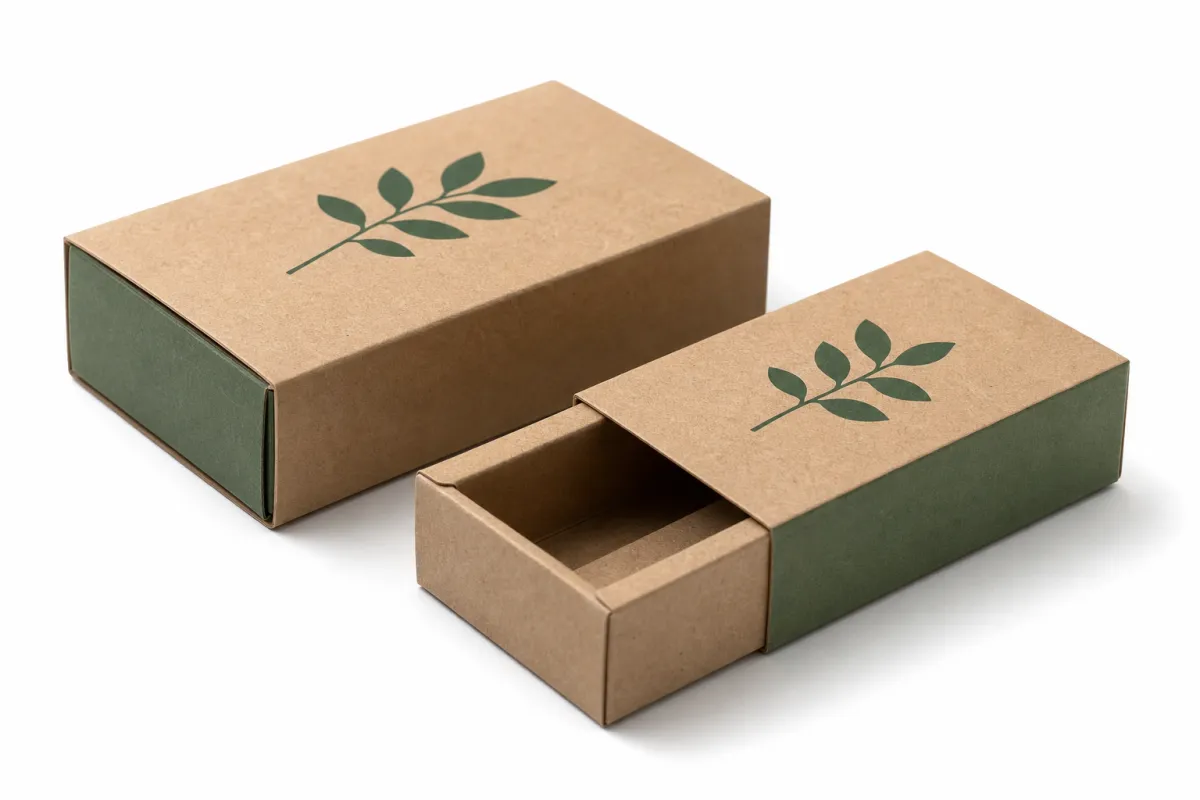
At the simplest level, custom recycled cardboard sleeve boxes are printed wraps that slide over another package component. The sleeve is the visible layer. The tray, tuck box, rigid shell, or inner carton is the structural layer. That distinction is the whole point. A sleeve can shift the look, frame the message, and organize information, yet it is rarely carrying the full protective job by itself. That makes custom recycled cardboard sleeve boxes a strong choice for brands that want a sharper retail presence without paying for a fully redesigned structure.
The format works especially well for product packaging that already has a dependable inner container. A food brand might use a plain folding carton with a printed sleeve that rotates for seasonal messaging. A wellness brand might keep the same insert tray and swap sleeves for different scents or formulations. A cosmetics company can turn one base package into multiple SKUs with a relatively small artwork change. That is where custom recycled cardboard sleeve boxes become more than decoration. They become a practical system for managing product lines, and they keep the production story easier to control.
There is a real shelf advantage too. A sleeve can create contrast, frame a window, highlight a logo, or anchor a clean claim block without changing the entire pack. For retail packaging, that matters because shoppers usually give a product only a second or two of attention. A sleeve can make that second count. In many categories, custom recycled cardboard sleeve boxes also create a more premium read than a plain label, especially when the board feels sturdy and the print discipline stays sharp.
From a sustainability angle, the appeal is easy to understand. Recycled board can reduce virgin fiber use, and a sleeve can sometimes achieve the branding and information goals that would otherwise require a heavier carton. That does not mean every recycled option performs the same way. A board with high recycled content can still scuff easily, warp under humidity, or print poorly if the substrate is wrong for the job. Still, when engineered properly, custom recycled cardboard sleeve boxes can support a leaner material strategy while preserving the visual polish buyers expect from custom printed boxes.
For brands that want a quick benchmark, think of custom recycled cardboard sleeve boxes as the packaging equivalent of a tailored jacket over a dependable base layer. The jacket does not need to do everything. It needs to fit, communicate, and hold up. That is why this format shows up across gifts, wellness sets, supplements, apparel accessories, and ecommerce presentation kits. I have seen plenty of launches where the sleeve did most of the visual heavy lifting while the inner carton stayed simple and inexpensive, and that arrangement worked just fine.
How Custom Recycled Cardboard Sleeve Boxes Work
The structure is straightforward, and that is part of the appeal. A printed sleeve is die-cut and scored so it can fold into a clean wrap. It then slides over a tray, carton, or inner box with enough friction to stay in place, but not so much tension that the board crushes or the print scuffs during assembly. Custom recycled cardboard sleeve boxes depend on that balance. Too loose, and the package feels cheap. Too tight, and the sleeve becomes hard to assemble or tears at the edges.
From the customer’s point of view, the sleeve can guide the eye before the package is even opened. It can carry the product name, SKU, fragrance, flavor, usage instructions, or a short brand message. Once the outer wrap comes off or the lid opens, the inner package reveals the product itself. That reveal is a big part of modern packaging design. Good custom recycled cardboard sleeve boxes create a sequence: first the logo, then the message, then the product. The order matters because people remember what they see first and what they have to work a little to uncover.
Production usually includes a familiar set of steps: die-cutting, scoring, folding, gluing, and finishing. Each one affects both appearance and durability. A clean score prevents cracking on a heavy board. Precise die-cutting keeps edges square and windows neat. A controlled glue pattern keeps the sleeve from popping open at the seam. If the job uses aqueous coating, matte varnish, or lamination, that choice changes how the package resists fingerprints and abrasion. These details sound small until a shipment arrives with scuffed corners or rough seams. Then they are the only details anyone wants to talk about. They determine whether custom recycled cardboard sleeve boxes look assembled with care or improvised under pressure.
There is also a practical comparison worth making. A fully custom carton often offers more built-in strength and more structural room, but it usually costs more and takes more work to develop. A sleeve can be the leaner option if the product already has a functional container. For many brands, that is the smarter move because it preserves budget for print quality, inserts, or transit protection. If the outer box is mainly there for branding, custom recycled cardboard sleeve boxes are often the better fit than a full redesign.
“Most sleeve projects fail because the fit was guessed, not because the print was weak.”
That line comes up often in packaging reviews, and it is true more often than people expect. A sleeve is unforgiving. Even a 1-2 mm sizing miss can change the feel dramatically. For that reason, custom recycled cardboard sleeve boxes should be tested against the actual product, not just a flat mockup. A sample that feels right in hand tells you more than a specification sheet ever will.
Key Factors That Shape the Final Result
The first variable is board grade. Recycled cardboard is a broad category, not a single material. One stock may run well for a lightweight cosmetic sleeve and still fail a humidity test for food or bathroom storage. Another may print beautifully but crush at the corners during assembly. Custom recycled cardboard sleeve boxes usually perform best on board selected for the actual environment, not just the lowest quoted price. If the package will sit in a retail display, ride through ecommerce fulfillment, or live in a damp bathroom, the substrate has to reflect that reality.
Thickness matters too. Many sleeve jobs sit in the 18pt to 24pt range, while heavier builds may move into folded paperboard with added stiffness. For smaller items, 300gsm to 400gsm recycled paperboard can be enough. For premium products, a thicker stock or a laminated structure may feel better in the hand. The point is not to maximize weight. The point is to tune the board to the product. That is where custom recycled cardboard sleeve boxes either feel considered or feel generic.
Sizing is where many buyers get surprised. A sleeve that is even slightly too loose can shift in transit, exposing edges or creating a sloppy reveal. A sleeve that is too tight can scratch the printed surface or slow down hand assembly. Die-line accuracy matters because the sleeve must match the inner carton dimensions, the board thickness, and the amount of board spring-back after scoring. In custom recycled cardboard sleeve boxes, fit is not a secondary detail. It is part of the brand experience and part of the manufacturing equation.
Printing and finishing shape the customer’s first impression, but they also affect unit economics. A heavy ink coverage layout with multiple spot colors will cost more than a restrained one-color design. Soft-touch lamination can give a premium feel, yet it can also introduce scuff concerns if the package is handled a lot. Aqueous coating is often a better balance for some brands because it adds protection without the same tactile softness. White ink on kraft-like recycled stock can look striking, while a highly saturated design might need a smoother board to avoid mottling. Custom recycled cardboard sleeve boxes reward disciplined print planning, not last-minute decoration.
Layout decisions are another hidden lever. Window cutouts can show the product, but they add tooling complexity and may weaken the sleeve. Barcodes, ingredients, legal copy, and recycling marks all need room. Too much copy and the sleeve becomes noisy. Too little and the package fails its practical job. The best custom recycled cardboard sleeve boxes usually make one message unmistakably clear: what the product is, why it matters, and what the buyer should do next.
For claims and certification language, use sources that can stand up to scrutiny. The FSC site is a useful reference point for chain-of-custody and sourcing language, while the U.S. Environmental Protection Agency’s materials guidance on sustainable materials management is a practical reminder that material reduction, reuse, and recovery all matter in the larger picture.
Custom Recycled Cardboard Sleeve Boxes: Cost and Pricing Factors
Pricing is where most conversations get more serious. Custom recycled cardboard sleeve boxes can look simple, but simple does not always mean cheap. Quantity is usually the biggest lever. A short run of 500 units often carries a much higher unit price than 5,000 or 10,000 because setup, cutting, and press time are spread across fewer pieces. In practical terms, a basic sleeve on recycled board might sit around $0.18-$0.35 per unit at higher volumes, while more complex print and finish choices can move it higher. Low quantities can easily double that number, especially if the job needs extra sampling or a custom die.
Board specification is the second driver. A plain recycled paperboard sleeve with limited print coverage is very different from a thick, coated, specialty-finish package. Ink coverage, die complexity, scoring depth, and seam style all affect the quote. If the sleeve uses a custom window, foil, embossing, or soft-touch lamination, each of those decisions adds setup and production cost. Custom recycled cardboard sleeve boxes are a good example of how packaging Design and Cost are linked. Every added detail has a price tag, even when it looks minor on a render.
Hidden costs matter as much as the headline unit price. Artwork revisions can add days. New dielines can add engineering work. Proof rounds can extend the schedule. Freight can make a seemingly low quote less attractive, especially if the packaging ships in multiple pallets or needs careful warehousing. Special inserts, sticker labeling, and private-label changes can also add cost. A buyer comparing custom recycled cardboard sleeve boxes should ask not only about the unit price, but about tooling, plate charges, sample charges, and whether the quote includes packing and delivery.
A simple comparison helps keep the discussion grounded:
| Format | Typical Use | Approximate Unit Cost at 5,000 Units | What It Usually Offers |
|---|---|---|---|
| Stock carton + custom sleeve | Cosmetics, gifts, wellness, ecommerce presentation | $0.18-$0.42 | Lower material use, strong branding flexibility, faster design changes |
| Fully custom folding carton | Retail packaging, food, supplements, accessories | $0.22-$0.55 | More structural control, more printed surface area, more tooling work |
| Rigid setup box with wrap | Premium gifting, luxury product packaging | $1.20-$3.50 | Heavy presentation value, strong shelf presence, higher material and labor cost |
The table is not a universal price list. It is a framing tool. A good quote for custom recycled cardboard sleeve boxes should be read like a spec sheet, not a menu. If one supplier quotes a lower number, check whether the board is thinner, the print is simpler, or the tolerances are looser. A cheaper sleeve that arrives with scuffed seams or sizing drift is not cheap at all. It simply moves the cost somewhere else.
That is why buyers should compare value, not only numbers. Ask what board is being used, whether the recycled content is documented, which finish is included, and whether the supplier has built in a sample round. If you need to compare multiple package types, including sleeves, cartons, and transit packs, a well-organized quote request can save real time. The same logic applies if you are evaluating Custom Shipping Boxes alongside sleeve-based presentation packaging.
Production Process and Timeline for Custom Recycled Cardboard Sleeve Boxes
The production path usually starts with a brief. A buyer shares product dimensions, target quantity, print goals, finish preferences, and any sustainability requirements. From there, the supplier creates or adapts a dieline. That dieline is the blueprint for the sleeve. It defines the panel widths, glue flap, scores, and any windows or perforations. Custom recycled cardboard sleeve boxes move faster when the brief is specific, because the engineering questions are answered early instead of halfway through the job.
Once the dieline is set, artwork enters layout and proofing. This is where delays often appear. If the logo is too large, the legal copy is too small, or the barcode lands near a seam, the file needs revision. Even a good design can require a few cycles of refinement before it is production-ready. For custom recycled cardboard sleeve boxes, late changes are costly because they can affect both the print layout and the cutting layout. The best schedule is the one that locks dimensions before design is finalized.
Sampling is the next checkpoint. A flat proof can tell you color intent, but a physical sample tells you fit, board feel, seam behavior, and handling. That matters. In many runs, the sample is where a buyer notices that the sleeve grabs too hard, a window is too close to the edge, or the color reads darker on recycled stock than it did on screen. If the package will be subject to shipping stress, some brands also request transit testing aligned to ISTA methods. That is especially useful for ecommerce and subscription programs.
Lead time depends on quantity and complexity, but a practical planning window for custom recycled cardboard sleeve boxes is often 12-15 business days after proof approval for simple orders, with more time needed for complex finishes, large volumes, or multiple approval rounds. If the job needs custom tooling, spot colors, or multiple inserts, the schedule stretches. Seasonal programs need a buffer. If a launch date is fixed, the safest move is to freeze specs early, approve samples quickly, and build at least one week of cushion before product release.
Turnaround also depends on how the supplier handles finishing and packing. A sleeve may be printed fast and still ship late if the folding, gluing, or quality control step is backed up. For that reason, custom recycled cardboard sleeve boxes should be planned as a full process, not as a print order alone. Buyers who map the whole chain from brief to delivery usually avoid the kind of last-minute panic that turns a neat packaging decision into a rushed one.
Common Mistakes to Avoid With Custom Recycled Cardboard Sleeve Boxes
The most common mistake is treating recycled board like a branding decision only. It is also a material decision. A buyer may like the sustainability message, but if the board is too thin, too rough, or too sensitive to moisture, the package will disappoint in the hand. Custom recycled cardboard sleeve boxes need a substrate that fits the product, the environment, and the print plan. Otherwise, the sleeve may signal care on the outside and compromise on the inside.
Another common issue is overcrowded design. A sleeve has limited real estate, so every square inch matters. If the typography is too small, the claims are stacked too tightly, or the graphics compete for attention, the package starts to feel loud rather than premium. Good package branding often looks simpler than the first draft. The strongest custom recycled cardboard sleeve boxes usually create a clean hierarchy: product name first, supporting claim second, compliance text third. That order is easy to read and easier to manufacture.
Skipping samples is a mistake that keeps costing brands money. The risk is not theoretical. A sample can expose fit problems, color drift, edge cracking, barcode placement issues, and seam visibility. It can also show how the finish behaves under light and handling. Without a sample, custom recycled cardboard sleeve boxes are being approved on assumption. That is a bad habit in packaging because assumptions are expensive once hundreds or thousands of pieces are already on the line.
Procurement mistakes are just as common. Some teams order too few units to absorb spoilage or demand growth. Others compare quotes that are not actually equivalent, because one vendor used a heavier board, another left out finishing, and a third assumed no proof round. A good buying process checks spec by spec. For custom recycled cardboard sleeve boxes, the questions should include board grade, recycled-content documentation, print process, coating, carton count per case, freight terms, and whether spare units are included for setup waste.
There is one more trap worth calling out: sustainability claims that overreach the facts. If the sleeve includes recycled content, say how much if the supplier can document it. If the board is FSC-certified, confirm the certification path. If the package is recyclable in some regions but not all, do not flatten that nuance into a blanket statement. Honest claims build trust. Inflated claims create compliance risk. Custom recycled cardboard sleeve boxes should support the story, not stretch it beyond the evidence.
Expert Tips for Better Custom Recycled Cardboard Sleeve Boxes
Start with one job. That sounds obvious, but many packaging projects fail because the sleeve is expected to do everything: sell the product, explain the ingredients, deliver the sustainability story, differentiate the line, and protect the contents. Better to decide what matters most. If shelf impact is the priority, push harder on contrast and typography. If sustainability storytelling matters more, make the recycled-content message clear and verifiable. If line extension matters most, design custom recycled cardboard sleeve boxes around modular artwork so one structure can serve many SKUs.
Accuracy matters more than drama. In a lot of custom printed boxes projects, buyers chase one striking visual effect and then discover that the real problem was poor fit or weak text hierarchy. A sleeve is a precision object. Test it against the real product, not a placeholder. Measure the inserted carton after finishing, because coatings and board caliper can add enough thickness to change the result. Custom recycled cardboard sleeve boxes usually improve when the team measures twice and prints once.
Use recycled-content language carefully. If your supplier provides documentation, keep it on file. If you are making a claim on packaging, make sure marketing, procurement, and compliance are looking at the same wording. That is especially important in food, personal care, and supplements, where product packaging often carries more regulatory text than buyers expect. A claim that sounds sustainable but cannot be backed up is not a brand asset. It is a liability.
Finish with restraint. A sleeve can look premium without looking overloaded. One foil line, one embossed logo, or one well-placed matte contrast may do more than three competing effects. The best custom recycled cardboard sleeve boxes tend to feel engineered rather than decorated. They show that the brand understands material limits, print behavior, and shopper psychology. That balance is difficult, and it is also what makes the format so useful.
That is why the sleeve format keeps winning projects that might otherwise go to heavier, more expensive structures. It gives the buyer enough room for story, enough surface for design, and enough control over cost to stay practical. In a market where retail packaging and ecommerce packaging are often judged in the same breath, custom recycled cardboard sleeve boxes are a disciplined option rather than a flashy one. Disciplined is not boring. It is often the difference between packaging that looks nice and packaging that works. And if the fit is right, the print is clean, and the claim language is honest, the package does its job without calling too much attention to itself.
Custom Recycled Cardboard Sleeve Boxes: Next Steps
If you are ready to request quotes, start with the basics: product dimensions, target quantity, print coverage, finish preferences, and the sustainability requirements that matter most to your team. That single page of information will make custom recycled cardboard sleeve boxes easier to spec and easier to price. A supplier can usually tell you very quickly whether the project needs a simple sleeve, a heavier board, or a different structural approach.
Then gather one sample, one competitor reference, and one budget range. Those three inputs speed up the conversation more than a long email thread ever will. If you already have a dieline, send it. If not, send an actual product or a precise measurement sheet. Custom recycled cardboard sleeve boxes are easiest to develop when the supplier can see the object the sleeve is meant to support. A good reference cuts down on guesswork and reduces the number of revisions.
Before you place the order, confirm timeline checkpoints. Ask when artwork is due, when the sample will arrive, when the pre-production proof is expected, and what happens if a revision is needed. Those milestones protect launch dates. They also make it easier to compare quotes fairly. A quote that looks faster may simply be skipping sample control. With custom recycled cardboard sleeve boxes, speed only matters if the result still fits, prints cleanly, and survives handling.
Final takeaway: custom recycled cardboard sleeve boxes work best when branding, Cost, and Production realities are planned together from the start. A sleeve is not a shortcut. It is a strategy. Lock the board spec early, verify the fit with a physical sample, and write the recycled-content claim before artwork begins. That is the path that keeps the package honest, printable, and ready for real use.
Are custom recycled cardboard sleeve boxes strong enough for shipping?
Yes, if the sleeve is paired with the right inner carton or tray and the board thickness matches the product weight. For shipping-heavy applications, custom recycled cardboard sleeve boxes should usually support presentation, labeling, and brand impact rather than carry the full protective load. If the shipment is rough or long-haul, pair the sleeve with a tested shipper and consider performance checks aligned to ISTA methods.
What affects the price of custom recycled cardboard sleeve boxes most?
Quantity, board type, print coverage, finish, and tooling are usually the biggest cost drivers. Tighter tolerances, specialty coatings, and multiple proof rounds can also raise both setup cost and unit cost. In many cases, custom recycled cardboard sleeve boxes get materially cheaper as volumes rise because press and cutting setup are spread over more pieces.
How long does it take to produce custom recycled cardboard sleeve boxes?
Timeline depends on artwork approval, sample changes, order size, and whether custom tooling is required. Simple jobs move faster, while complex sleeves with special finishes or structural changes need more lead time. For planning, many buyers allow 12-15 business days after proof approval for straightforward custom recycled cardboard sleeve boxes, then add buffer time for launches or seasonal peaks.
What information should I send for an accurate quote on custom recycled cardboard sleeve boxes?
Share product dimensions, target quantity, print coverage, finish preferences, and whether you need samples first. If possible, include a dieline, a reference photo, or an existing packaging sample to reduce back-and-forth. The more concrete the input, the more accurate the quote for custom recycled cardboard sleeve boxes will be.
Can custom recycled cardboard sleeve boxes support sustainability claims?
They can, but only when the recycled content, material sourcing, and claim language are documented correctly. Keep claims specific and verifiable so the packaging supports trust instead of creating compliance risk. If you are using recycled fiber, FSC-certified board, or another documented material pathway, make sure the wording on custom recycled cardboard sleeve boxes matches the records on file.

