Buyer Fit Snapshot
| Best fit | Eco Friendly Subscription Mailer Boxes projects where brand print, material claims, artwork control, MOQ, and repeat-order consistency need to be specified before quoting. |
|---|---|
| Quote inputs | Share finished size, material target, print colors, finish, packing count, annual reorder estimate, ship-to region, and any compliance wording. |
| Proofing check | Approve dieline scale, logo placement, barcode or warning zones, color tolerance, closure strength, and carton packing before bulk production. |
| Main risk | Vague material claims, crowded artwork, missing packing details, or unclear freight terms can make a low unit price expensive after revisions. |
Fast answer: Eco Friendly Subscription Mailer Boxes: Film, Print, MOQ, and Carton Packing should be specified like a repeatable production item. The safest quote records material, print method, finish, artwork proof, packing count, and reorder notes in one written spec.
Production checks before approval
Compare the actual filled-product size with the drawing, then confirm tolerance on folds, seals, hang holes, label areas, and retail display edges. Reserve space for logos, QR codes, warning copy, and material claims before decorative graphics fill the panel.
Quote comparison points
Review material grade, print process, finish, sampling route, tooling charges, carton quantity, and freight assumptions side by side. A quote is only useful when the supplier can repeat the same color, closure quality, and packing count on the next order.
Eco Friendly Subscription Mailer Boxes: A Practical Guide
Eco friendly Subscription Mailer Boxes are not just a sustainability checkbox. They can cut damage rates, trim dimensional weight, and make a brand feel more considered the moment the parcel lands on a doorstep. The smartest box is rarely the most decorated one; it is the one that fits the product, survives the route, and still looks intentional after a rough trip through parcel networks.
Eco Friendly Subscription Mailer Boxes: What They Are and Why They Matter
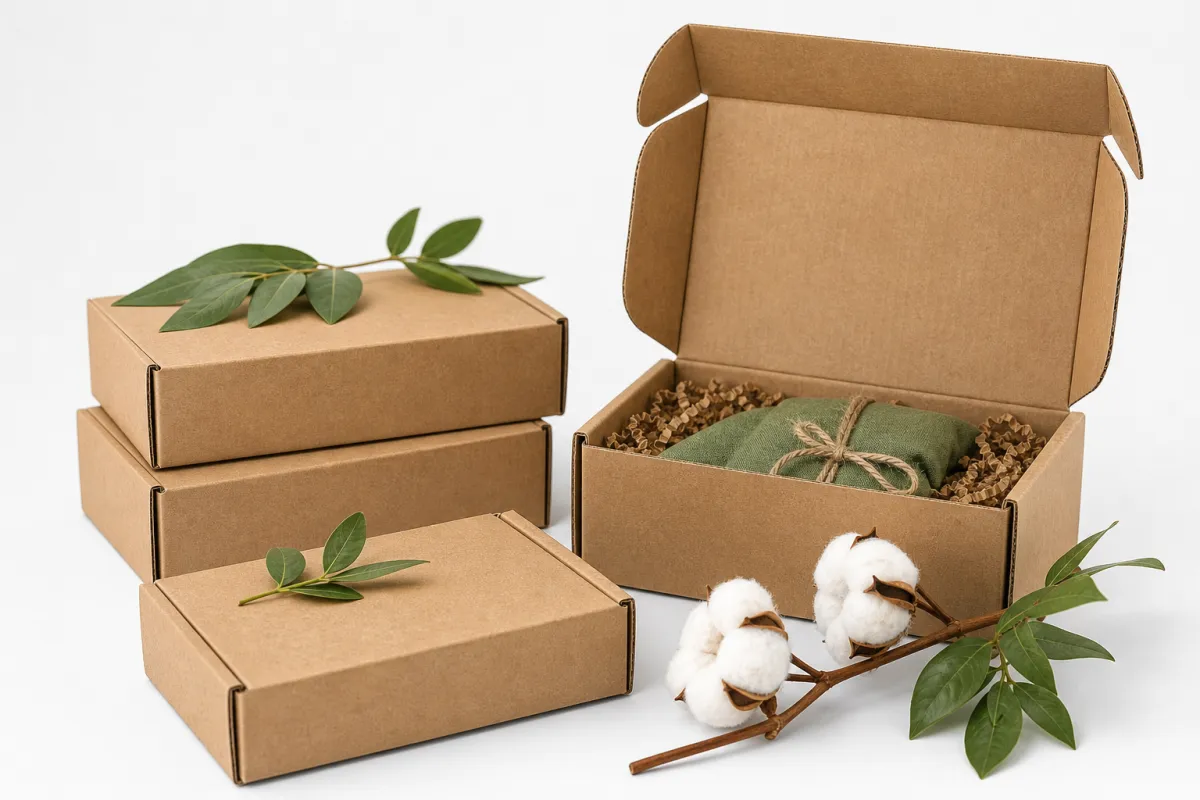
Eco friendly subscription mailer boxes are built for repeat shipments, which changes the design brief in a pretty big way. A one-off retail carton can sometimes get away with extra material or a loose fit. A recurring subscription box cannot. If a brand sends 10,000 parcels a month, even a small inefficiency multiplies fast: one extra ounce of packaging becomes more freight, more filler, more warehouse handling, and more waste by the end of the year.
That is why the biggest packaging problem is often not the material itself. It is oversizing. A box that is 15% larger than the packed product may trigger higher dimensional weight charges, demand more void fill, and increase the chance that the contents shift in transit. Eco friendly subscription mailer boxes solve that by aiming for right-sized dimensions first, then selecting fiber-based construction that can be recycled or reused where local systems allow.
From a packaging buyer's point of view, eco friendly subscription mailer boxes sit at the intersection of three goals: protection, cost control, and brand perception. If one of those fails, the others get harder to defend. A box made from recycled corrugated board can still look premium. A kraft mailer can still feel polished. The structure has to hold up in the warehouse, on a conveyor, and at the doorstep, because a sustainability claim loses credibility the second a product arrives crushed.
Subscription brands feel this pressure faster than many other sellers. A DTC candle company might ship a box every month. A beauty brand may send a refill kit every six weeks. A snack brand could be shipping thousands of light parcels that each need to look consistent. Eco friendly subscription mailer boxes are not just about reducing the amount of material in the package; they are about making every shipment more predictable.
That is also why the category keeps growing. Buyers now ask about recycled content, FSC-certified fiber, and recyclable finishes, but they also care about what happens inside the 3PL. The most elegant sustainability story still has to survive real operations. The difference between marketing language and packaging strategy shows up in the first damaged order, the first rejected pallet, or the first customer complaint about a box that arrived bent and tired.
Practical rule: if the box saves paper but adds damage, it is not a better box. It is a more expensive problem.
For brands that are building a packaging program from scratch, a good starting point is to compare Custom Packaging Products with the actual shipment profile rather than with a competitor's glossy unboxing video. And if your assortment includes soft goods or lightweight accessories, Custom Poly Mailers may be a useful complement for part of the catalog while heavier products move in eco friendly subscription mailer boxes.
How Eco Friendly Subscription Mailer Boxes Work in the Real Shipping Flow
Eco friendly subscription mailer boxes start with a dieline, but the real test begins later. A structural file may look perfect on screen and still fail if the product list changes, the inserts are too tight, or the warehouse fills it at speed. The path is straightforward on paper: approve the dieline, print and convert the box, pack the product, seal the carton, hand it to the carrier, and wait for the customer's first touchpoint. In the actual world, each of those steps adds a possible point of failure.
Good subscription packaging is designed around motion. The packer needs to open the flat carton, insert the item, add tissue or a protective insert if needed, close the flaps, and move to the next order without wrestling the structure. Locking tabs, crash-lock bottoms, and well-placed tuck flaps can shave seconds off each packout. Multiply that by 2,000 orders, and the labor savings become very real.
Board strength matters just as much. A lighter board may seem like the greener choice, but if it collapses under stack pressure or dents when a parcel gets sorted, the replacement shipment erases the environmental win. Eco friendly subscription mailer boxes usually rely on recycled corrugated or kraft-lined paperboard with the right edge crush test (ECT) rating for the product weight. The box should be strong enough to protect the item without being overbuilt just to feel sturdy.
There is also a hidden freight story here. Parcel carriers commonly price based on dimensions and weight, so a box that is slightly too large can cost more than a denser but better-fitting one. That is one reason eco friendly subscription mailer boxes often outperform generic packaging financially: they reduce void space, which reduces dimensional weight, which can lower the bill that shows up after the shipment has already gone out.
End-of-life is the final step, but it starts earlier than most teams think. If the box contains mixed materials, heavy lamination, or a plastic-coated insert, recycling gets messier. If the structure uses fiber-based materials and minimal coatings, the customer can usually dispose of it with far less confusion. The easier the disposal path, the more believable the sustainability message becomes.
For brands that want to sanity-check the route, it helps to look at testing and disposal guidance from the EPA's recycling resources and transit performance expectations from ISTA. Those references do not design the box for you, but they help anchor the discussion in actual shipping conditions rather than optimistic assumptions.
In practice, eco friendly subscription mailer boxes work best when they are planned as a system: box, insert, packout method, carrier profile, and customer disposal behavior. Remove one of those variables from the conversation and the whole program gets less reliable.
I've sat through enough packaging reviews to know the gap between a clean sample table and a busy fulfillment floor can be kinda brutal. A structure that feels elegant in hand can still slow a line worker down if the closure is fussy or the insert takes too much attention.
Key Factors That Shape Eco Friendly Subscription Mailer Boxes
Materials are the first decision, but they are never the only one. Recycled corrugated board is the default for many eco friendly subscription mailer boxes because it balances strength, printability, and recyclability. Kraft liners create a more natural look and can support a brand story that feels less processed. Specialty fibers can be appealing too, especially for brands that want a softer visual texture or a higher recycled-content narrative.
The right substrate depends on the product weight and the transit environment. A lightweight skincare kit might do well in a 32 ECT corrugated mailer with a simple insert. A heavier candle subscription may need stronger board, tighter locking features, and possibly a structure that distributes pressure more evenly. The wrong board choice usually shows up in one of two ways: crushed corners or overbuilt packaging that adds cost without adding much protection.
Print and finish choices matter more than many teams expect. Water-based inks, soy-based inks, and minimal coatings often support recycling better than heavy plastic films. Embossing and debossing can give a premium cue without compromising fiber recovery. Aqueous coating can improve scuff resistance while staying lighter than full lamination. That does not mean every box should be bare and brown. It means the design should earn every layer it uses.
There is also a credibility layer. If a brand says the box is recyclable, the rest of the structure should not quietly undermine that claim. Mixed-material windows, glued-on plastic components, and excessive metallic finishes can make the message harder to defend. Eco friendly subscription mailer boxes should be easy to explain in one sentence. If the explanation takes three disclaimers, the packaging probably needs simplification.
Certifications and sourcing help, but only if they are accurate. FSC-certified fiber can support responsible sourcing claims, and recycled content percentages can be useful in marketing copy when they are documented. The best teams keep their sustainability language aligned with the actual bill of materials, not with a mood board. That is where trust is built.
For teams comparing options, these are the main variables that usually shape the final recommendation:
- Board grade: recycled corrugated, kraft-lined corrugated, or paperboard depending on weight and crush risk.
- Structure: tuck-top, mailer-style lock, or crash-lock based on packout speed and protection.
- Print method: flexo, digital, or litho-lamination depending on volume and image requirements.
- Finish: no coating, aqueous coating, or selective finishing if scuff resistance is needed.
- Insert strategy: none, paperboard insert, or molded fiber where movement control matters.
Here is the honest version: eco friendly subscription mailer boxes are not automatically better just because they use less ink or look more natural. They are better when the material choice is matched to the shipping risk. That sounds simple. It rarely is.
For some brands, the cleanest solution is a plain recycled mailer with strong graphics and no insert at all. For others, a slightly more engineered structure is the smarter environmental move because it prevents replacements. Either way, the design should be guided by product fragility, route length, and fulfillment speed, not just by the desire to look sustainable.
Choosing Eco Friendly Subscription Mailer Boxes: Cost, MOQ, and Unit Cost
Price is where many packaging conversations go sideways. A buyer sees one quote and assumes the whole story is there. It is not. Eco friendly subscription mailer boxes are priced by a cluster of variables: board grade, print coverage, finish, inserts, tooling, and order volume. Two boxes with the same outer dimensions can differ by a surprising amount if one uses a high-coverage print, a specialty insert, and a premium coating.
Minimum order quantity, or MOQ, shapes the economics just as much as the unit price. Smaller runs reduce storage risk and let new brands test designs without sitting on pallets of inventory. Larger runs often reduce per-unit cost, but they also tie up cash and increase the chance that packaging becomes obsolete after a brand refresh. For subscription brands with changing seasonal kits, that tradeoff matters a lot.
As a rough planning range, simple Recycled Corrugated Mailers at moderate quantities may land around $0.35-$0.75 per unit, while more branded or structurally complex eco friendly subscription mailer boxes can sit higher depending on print and inserts. At 5,000 pieces, a box with strong artwork and an aqueous finish may land differently than a plain kraft box with one-color print. That range is not a quote; it is a useful planning bracket. Actual pricing depends on board spec, factory location, conversion method, and freight.
The better lens is total landed cost. A box that costs $0.08 more may still save money if it reduces damage, cuts filler usage, or lowers dimensional weight charges. That comparison becomes even more important in subscription shipping, where the same design repeats month after month. A tiny change in carton dimensions can save more than a discount on the box itself.
Ask suppliers to separate the numbers cleanly. You want to see the box price, tooling or plate charges, sampling fees, freight, and any setup costs. If those pieces are blended together, it becomes difficult to compare apples to apples. Eco friendly subscription mailer boxes are easier to buy well when the quote tells you exactly what is included and what is not.
| Option | Typical Unit Cost | Best For | Tradeoffs |
|---|---|---|---|
| Plain recycled corrugated mailer | $0.35-$0.55 | Light products, simple branding, high volume | Lower visual impact, fewer finish options |
| Printed kraft mailer with aqueous coating | $0.50-$0.85 | Mid-range subscriptions, premium natural look | Slightly higher cost, requires careful print planning |
| Specialty fiber or heavily branded structure | $0.80-$1.40 | Gift sets, beauty, seasonal kits | Higher MOQ pressure, more setup complexity |
| Mailers with custom inserts | + $0.10-$0.45 | Fragile products, multi-item kits | More parts to source, more assembly time |
That table is only useful if the spec is consistent across suppliers. A low quote may hide thinner board, looser tolerances, or freight that gets added later. Good packaging buyers ask one more question: what happens if the box is tested under load, dropped from conveyor height, or stacked in a humid warehouse? That answer often matters more than a cent or two on the invoice.
There is another hidden saving most teams underestimate: fewer returns. If a subscription product arrives damaged once a month, customer support starts absorbing costs that never show up in the packaging line item. Eco friendly subscription mailer boxes often pay for themselves by keeping the shipment intact. The math is not glamorous, but it is real.
Eco Friendly Subscription Mailer Boxes Process and Timeline
The production timeline usually starts with measurements and ends with delivery, but the middle contains most of the risk. Eco friendly subscription mailer boxes move through a chain of steps: brief, dieline development, artwork placement, sample creation, proof approval, manufacturing, finishing, packing, and freight. If one step is rushed, the rest feel it.
A clean brief saves time. The supplier needs product dimensions, packed weight, ship method, monthly volume, and any special branding requirements. If the box has to fit multiple SKUs, that should be clear from the start. Otherwise, you end up approving a carton that works for one item and fails for the rest of the line.
Sampling and production are not the same thing, and this distinction matters. A sample may be ready in a few business days for a simple structure, while full production often takes 12 to 15 business days after proof approval for straightforward jobs. Custom structures, specialty materials, or structural testing can extend that timeline. Freight can add another week or more depending on route and capacity.
There is also a difference between a visual proof and a fit sample. A proof tells you the artwork is placed correctly. A fit sample tells you the product actually closes, sits, and ships the way you want. For eco friendly subscription mailer boxes, both matter. A beautiful proof that arrives too tight is still a failure.
A practical approval flow usually looks like this:
- Confirm product dimensions, weight, and insert needs.
- Review the dieline and structural spec.
- Check print layout, barcode placement, and copy.
- Approve a sample for fit and appearance.
- Run a short pilot packout before full release.
- Lock the production order only after the pilot is stable.
That last step is where many brands save themselves a headache. A packout test can reveal issues that do not show up on a screen: tabs that slow down labor, graphics that rub off in transit, or an insert that looks elegant but adds 20 seconds per carton. Those are not small problems in a subscription business. They scale quickly.
Eco friendly subscription mailer boxes should also be tested against realistic shipping conditions. If the product will move through parcel networks, ask for drop testing, vibration testing, or compression testing where appropriate. The point is not to overengineer every package. The point is to find the weak spot before your customers do.
For teams planning a launch, one of the smartest moves is to build in a cushion of at least one sample revision cycle and some freight buffer. The best packaging programs I see are not the ones that rush fastest; they are the ones that leave enough room to catch a problem before it becomes a recurring monthly cost.
Step-by-Step Guide to Building the Right Subscription Mailer Box
Start with the product, not the artwork. Eco friendly subscription mailer boxes work best when the packaging brief begins with real measurements, product fragility, and shipping method. Measure the item after any tissue, pouch, or accessory is added. Measure the packed weight. Then measure again with the insert included, because that is the number the box actually has to hold.
Once the product profile is clear, build a sizing matrix. This is especially useful for subscription brands with multiple SKUs. A single well-designed carton may cover two or three items if the internal space is planned carefully. That can reduce SKU complexity in the warehouse, which is a bigger win than most teams expect. Fewer box sizes usually means fewer packing errors and less idle stock.
Next, choose the material based on the protection requirement. Recycled corrugated is a strong default. Kraft-liner board makes sense when you want a natural look with good printability. Molded fiber inserts can be smart for fragile kits because they hold product in place without introducing plastic foam. Eco friendly subscription mailer boxes should be designed to protect the item with the least material that still works in transit.
Then decide how the box will be printed. For high-volume runs, flexographic printing can be efficient. For lower volumes or artwork that changes often, digital print may be the better fit. If the brand needs a premium look without heavy finishing, you can use controlled ink coverage, a restrained palette, and a texture-forward board selection. It is often the simplest box that feels the most deliberate.
Now test the sample on a real packing line. Put actual staff on the task. Time the packout. Check whether the box closes without force. Make sure the product does not shift. If it takes two extra motions to seal the carton, that is a labor cost. If the insert slows the line, that is a labor cost too. Packaging decisions live or die in that kind of detail.
A useful rollout checklist looks like this:
- Confirm the carton fits every target SKU.
- Check that the lid closes without compression on the product.
- Verify barcode visibility and label placement.
- Inspect print alignment under warehouse lighting.
- Run a short parcel pilot and review damage reports.
- Update the packout SOP before full launch.
Then revise before scaling. That is where eco friendly subscription mailer boxes become a business asset instead of a design exercise. A tiny change in a flap, insert, or liner can eliminate a recurring issue that would otherwise appear in every monthly shipment. The shipping line is not the place to discover that a clever design is awkward to assemble.
If you are balancing sustainability with other packaging needs, think in systems. Maybe the subscription box is fiber-based and recyclable, while a companion mailing format elsewhere in the catalog uses Custom Poly Mailers for garments or soft goods. A mature packaging program often uses more than one format. The key is matching the format to the product instead of forcing one solution everywhere.
Common Mistakes and Expert Tips for Eco Friendly Subscription Mailer Boxes
The most common mistake is choosing the most eco-sounding material without checking whether it actually works. Eco friendly subscription mailer boxes need to survive stacking, sorting, and customer handling. A box made from beautiful fiber can still fail if the board is too thin or the structure is too loose. Sustainability is not a substitute for performance.
The second mistake is approving artwork before the dimensions are locked. If the dieline changes after design approval, logos can shift, barcode placement can become awkward, and a carefully balanced front panel may end up stretched. That mistake is expensive because it usually appears late, after the design has already been emotionally approved by the team.
Another issue is overcomplication. Too many finishes, too many inserts, and too many material changes can make the box harder to recycle and harder to assemble. Expert tip: simplify where you can. Fewer inks, fewer components, and fewer special treatments often improve both cost and sustainability. It also makes the box easier to source consistently when volume rises.
Expert teams also ask for evidence, not just claims. They want to know whether a finish has been tested for scuff resistance, whether the material is FSC-certified, and whether the box has been line-tested under normal packout conditions. That is a healthy habit. Eco friendly subscription mailer boxes should come with documentation that supports the choices, not just copy that sounds responsible.
A good supplier should be able to explain what is verified and what is marketing language. If the box is recyclable under widely available curbside systems, say so carefully. If the claim depends on local infrastructure, say that too. Trust is built faster when the brand is precise.
Here are a few field-Tested Tips That usually pay off:
- Use the smallest box that still protects the contents. Oversizing defeats both cost control and sustainability.
- Test with real product weight. A sample filled with empty space tells you very little.
- Keep the closure intuitive. A faster packout usually means fewer labor issues.
- Request transit-minded samples. Drop, vibration, and compression tests catch problems early.
- Align marketing and operations. The box should look like the brand and function like a shipping tool.
One more point that gets overlooked: the customer does not see your supplier list, but they do see the packaging. That means the box has to perform two jobs at once. It has to protect the product, and it has to signal that the brand made thoughtful choices. Eco friendly subscription mailer boxes succeed when those two jobs are both handled well.
And yes, a plain kraft shipper can still feel premium if the proportion, print, and closure are right. Fancy materials are not carrying all the weight here.
What to Do Next With Eco Friendly Subscription Mailer Boxes
The next move is simple: put your requirements on one page. Eco friendly subscription mailer boxes become much easier to quote when the supplier gets the same brief every time. Include product dimensions, ship weight, monthly volume, branding goals, sustainability requirements, and any insert or finish preferences. If the box has to support more than one SKU, say that upfront.
Then request two or three apples-to-apples quotes. The specs should match exactly so you can compare unit cost, MOQ, tooling, freight, and lead time without guesswork. If one supplier is quoting a different board grade or a different closure style, the numbers are not comparable. That sounds obvious. It is one of the most common causes of bad buying decisions.
After that, order samples and run a pilot shipment. Do not skip this step if the box is going into a recurring subscription program. A short pilot can reveal whether the box holds up in transit, whether the packout flow is efficient, and whether customers perceive the packaging the way you intended. Eco friendly subscription mailer boxes earn their keep when they perform in the real lane, not just in approval meetings.
My honest advice: do not chase a perfect packaging theory. Chase a repeatable system. The best subscription boxes are the ones that reduce waste, protect product, and fit the business model without creating new headaches for the warehouse or the finance team. That is what makes eco friendly subscription mailer boxes worth the attention.
If you are ready to compare structures, materials, and print options, start with a compact spec sheet and a realistic budget range. Then build from there. The strongest programs are usually the ones that look simple from the outside because the hard thinking happened earlier.
Eco friendly subscription mailer boxes work when the box is right-sized, the materials are honest, and the shipping flow is tested before scale. Get those three pieces aligned, and the packaging stops being a recurring problem and starts becoming part of the brand's value proposition.
The clearest next step is to measure the packed product, confirm the carrier limits, and test one sample on a real packing line before you place volume. That one loop catches most of the expensive surprises.
Frequently Asked Questions
What materials work best for eco friendly subscription mailer boxes?
Recycled corrugated board is usually the safest starting point because it balances strength, printability, and recyclability. Kraft liners and fiber-forward constructions can support a more natural look, but the right choice still depends on product weight and transit distance. If end-of-life recycling matters most, avoid unnecessary mixed-material finishes that complicate processing.
Are eco friendly subscription mailer boxes more expensive than standard boxes?
The unit price can be higher, especially at low quantities or with specialty printing and inserts. That cost often gets offset by lower damage rates, less void fill, smaller parcel dimensions, and fewer replacement shipments. The better comparison is total landed cost, not just the line item for the box itself.
How long do eco friendly subscription mailer boxes usually take to produce?
Simple jobs may move quickly once the dieline is approved, while custom structures, special materials, or complex print finishes take longer. Sampling, revisions, and freight planning often add more time than brands expect. Ask for a separate sample timeline and production timeline so your launch plan does not slip.
Can eco friendly subscription mailer boxes be custom printed without plastic lamination?
Yes, many brands use water-based or soy-based inks with minimal or no lamination. Matte aqueous coatings or careful print design can improve scuff resistance without adding heavy plastic layers. If the box is going through rough transit, test the finish on actual samples before approving the full run.
How do I choose the right size for eco friendly subscription mailer boxes?
Measure the packed product, not just the product alone, and include any inserts, tissue, or protective void fill. Aim for the smallest box that still protects the contents and meets your fulfillment speed requirements. Check postal and carrier dimensional weight rules so a slightly larger box does not quietly drive up shipping costs.