Buyer Fit Snapshot
| Best fit | Custom Recycled Paper Bags projects where brand print, material claims, artwork control, MOQ, and repeat-order consistency need to be specified before quoting. |
|---|---|
| Quote inputs | Share finished size, material target, print colors, finish, packing count, annual reorder estimate, ship-to region, and any compliance wording. |
| Proofing check | Approve dieline scale, logo placement, barcode or warning zones, color tolerance, closure strength, and carton packing before bulk production. |
| Main risk | Vague material claims, crowded artwork, missing packing details, or unclear freight terms can make a low unit price expensive after revisions. |
Fast answer: Custom Recycled Paper Bags: Film, Print, MOQ, and Carton Packing should be specified like a repeatable production item. The safest quote records material, print method, finish, artwork proof, packing count, and reorder notes in one written spec.
Production checks before approval
Compare the actual filled-product size with the drawing, then confirm tolerance on folds, seals, hang holes, label areas, and retail display edges. Reserve space for logos, QR codes, warning copy, and material claims before decorative graphics fill the panel.
Quote comparison points
Review material grade, print process, finish, sampling route, tooling charges, carton quantity, and freight assumptions side by side. A quote is only useful when the supplier can repeat the same color, closure quality, and packing count on the next order.
Custom Recycled Paper Bags do more than move a product from the counter to the car. They stay in circulation longer than most packaging because customers reuse them, pass them along, or leave them in plain sight where the branding keeps doing quiet work. That gives Custom Recycled Paper Bags three jobs at once: they carry merchandise, they communicate a brand, and they signal how seriously a company treats material choices. The hard part is not simply picking recycled stock. It is choosing the right paper weight, handle style, print method, and bag structure so the finished piece feels intentional rather than thin or rushed.
That distinction matters more than a lot of teams expect. A paper bag can suggest restraint, premium positioning, or environmental seriousness, but only when the material and construction back up the message. I have watched perfectly good artwork fall flat because the bag felt flimsy in hand, and I have also seen a simple one-color recycled kraft bag look unexpectedly elevated because the paper, fold lines, and handles were matched well. Custom Recycled Paper bags work best when a brand treats them like packaging, not an afterthought. The same care that goes into custom printed boxes should guide the bag spec too: define the structure, test the load, and see how the artwork behaves on the chosen substrate.
For packaging teams, the clearest way to think about custom recycled paper bags is this: they are not a generic green checkbox. They are a branded packaging tool that has to perform in the real world, survive handling, and still look good after a second or third use. That sounds demanding because it is. It is also why the format has become so valuable across retail packaging, events, hospitality, and e-commerce inserts. If the bag is going to be seen, carried, and remembered, it has to earn that attention.
What Custom Recycled Paper Bags Actually Are
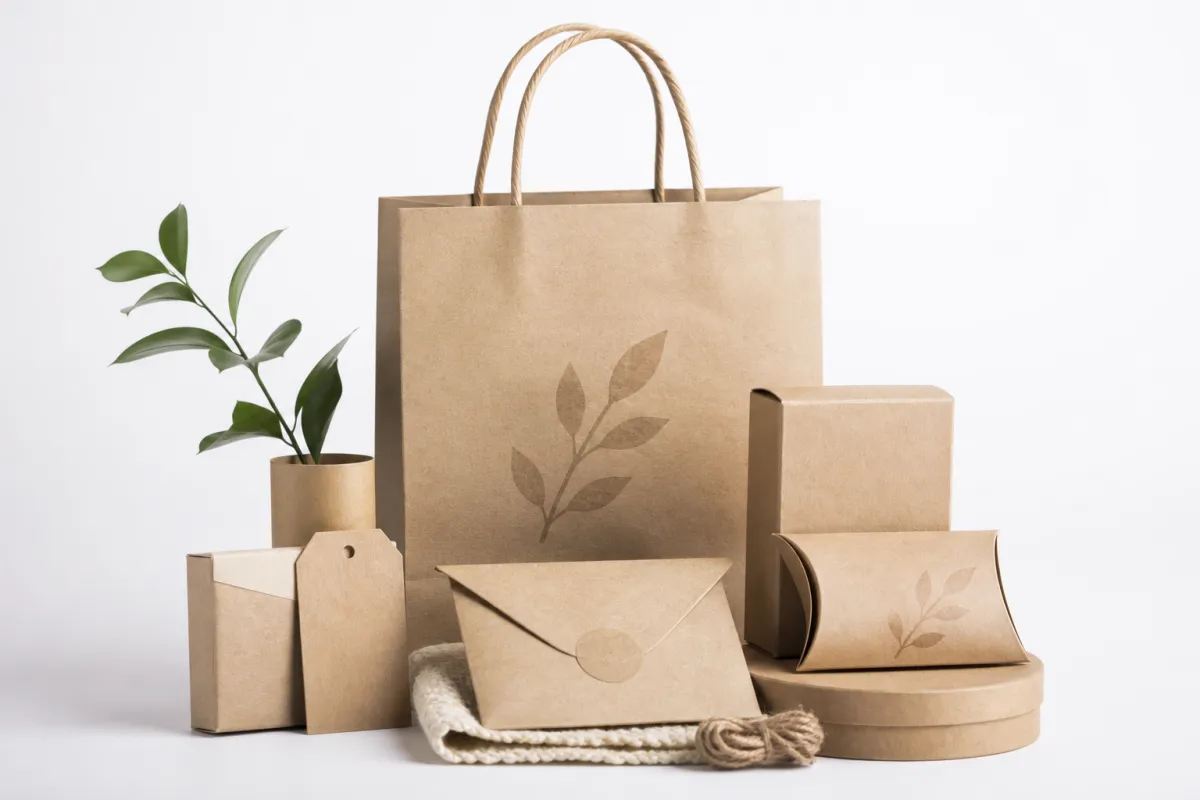
Custom recycled paper bags are bags made from paper fiber that has already been recovered, repulped, and formed into sheet material before becoming a finished bag. The wording sounds simple enough, yet paper terminology gets tangled quickly. A bag may contain recycled content, post-consumer recycled content, or paper that is recyclable after use. Those are different claims, and buyers should keep them separate.
Recycled content means the paper includes recovered fiber from earlier paper products or manufacturing scrap. Post-consumer recycled content is narrower; it refers to fiber that was used by consumers, collected, and processed again. Paper that is recyclable may still contain virgin fiber and still be accepted in paper recovery streams after disposal, but that does not make it recycled content. For brands comparing custom recycled paper bags, that distinction affects the sustainability story, the documentation, and sometimes the price. It also matters to procurement teams that need to avoid fuzzy language.
The visual character changes too. Recycled paper often has a softer tone, a little more texture, and less brightness than a virgin-fiber sheet. Some brands try to hide that difference. Better brands use it with intent. The muted look can support honesty, modern simplicity, or premium sustainability, especially for labels that want package branding to feel grounded rather than glossy. Many buyers assume a paper bag should be bright white and perfectly smooth. That is not always the strongest choice for custom recycled paper bags, and honestly, it is not always the most believable one either.
Use case matters just as much as appearance. Retail bags for apparel, gift bags for beauty products, food-service takeout bags, and e-commerce insert bags all live in the same category, yet they ask different things from the material. A bakery bag needs grease tolerance and an easy opening. An apparel bag wants clean print and a sturdy handle. Event packaging needs visual impact as much as carry strength. The real question is not whether the bag is recycled. It is which mix of recycled content, structure, and print delivers the best result for this job.
A bag that saves a few cents but tears at the door usually costs more in the end. Replacement, frustration, and brand damage show up in ways procurement spreadsheets rarely capture.
That is where stronger suppliers earn their place. They do not just sell custom recycled paper bags. They help translate a brand goal into a specification that can survive real use, real ink coverage, and real customer behavior. If your team is reviewing broader Custom Packaging Products as well, the bag deserves the same level of scrutiny as cartons, inserts, and presentation sleeves. A rushed spec can undermine the whole package family, and once that happens, the bag starts fighting the rest of the brand system instead of supporting it.
How Custom Recycled Paper Bags Are Made
Understanding why custom recycled paper bags behave the way they do starts with the fiber. Recovered paper is collected, sorted, pulped, cleaned, and de-inked. The slurry is then formed into a new sheet, pressed, dried, and wound into rolls or cut sheets. Each step affects the finished material. The more often the fiber is reused, the shorter it tends to become, and that changes stiffness, tear resistance, and the way the paper accepts print.
Once the sheet exists, the bag maker turns it into the final format. That usually means cutting, scoring, folding, gluing, and attaching handles or reinforcement patches. For custom recycled paper bags, the small production choices matter a great deal: glue line placement affects sidewall strength; handle attachment affects comfort; base construction affects how much weight the bag can hold without bowing or splitting. I have seen a polished proof look excellent on a desk and then fail a carry test because the base glue was too narrow by a few millimeters. That is the kind of thing that does not show up until you actually load the bag.
Print method matters just as much. Flexographic printing can work well for simpler graphics and larger runs. Offset printing often gives finer detail and stronger consistency for premium retail packaging. Digital printing fits shorter runs, variable designs, and faster prototype work. Recycled substrates absorb ink differently than highly calendared virgin stock, so color can land a little softer, darker, or less saturated. Good packaging design plans for that instead of fighting it.
Finishing decisions can help or hurt performance. A light coating may improve scuff resistance. A liner can protect the interior if the bag carries food or products with sharp edges. Reinforcement at the mouth or base can make a midweight bag feel much sturdier. Every added layer, though, can complicate recyclability, so brands should ask how each component affects end-of-life handling before they approve the build. That conversation is a little less glamorous than the design review, but it is the one that keeps the package story honest.
Recycled paper is not one uniform material. Fiber length, recovered-fiber mix, and finishing treatment can make one sheet feel premium and another feel economical. A 150gsm recycled kraft sheet with good reinforcement can outperform a poorly built 180gsm bag with weak gusset glue or flimsy handles. Custom recycled paper bags need to be judged as a system, not as a single material choice. That is where experience pays off, because the bag that looks thick on paper is not always the one that holds up best in use.
Key Factors That Change Performance and Print
If you are comparing custom recycled paper bags, start with the spec sheet, not the mockup. GSM, caliper, recycled content percentage, sheet grade, and fiber mix reveal far more about performance than a polished render. GSM is not the whole story, but it is a practical starting point. A 120gsm recycled kraft bag may work well for lightweight apparel or literature. Step up toward 150gsm or 170gsm, and the bag usually handles heavier product packaging, rougher carry conditions, and better shape retention.
Structure matters almost as much as paper weight. Gusset depth controls volume. Base width affects stability. Handle style changes both the feel and the load path. Flat paper handles are economical and common in food service. Twisted handles offer a better grip and often a more retail-forward appearance. Rope handles, if the brand wants a more elevated feel, usually move the bag into a higher price band but can lift the perceived value of the entire package. For some labels, that matters just as much as the product inside.
Print tradeoffs are where many brands get surprised. Heavy flood coverage, tiny text, and exact PMS matching can be harder on recycled substrates than on coated virgin sheets. The paper may absorb ink a little faster, which reduces sharpness and can flatten bright colors. Designers often need to adjust contrast, simplify line weights, and avoid ultra-fine details. That does not mean the bag has to look plain. It means the artwork needs to respect the material. If the design depends on hairline type and very tight registration, it is probably a bad fit for this substrate, full stop.
Third-party documentation is worth asking for. FSC certification can support responsible sourcing claims, and clear recycling guidance can keep marketing copy from overstating the end-of-life path. For general recycling context, the EPA's resources are a useful reference point: EPA recycling guidance. For fiber sourcing and chain-of-custody questions, FSC's standards page is another useful benchmark: FSC standards and certification. Those links do not replace supplier paperwork, but they help buyers ask better questions.
Use case still drives the final choice. A bakery bag, an apparel bag, and a gift bag can all be custom recycled paper bags, yet each one needs a different balance of stiffness, breathability, and finish. Food-service buyers often care most about grease resistance and handle strength. Apparel brands usually care about presentation and print consistency. Event teams need a bag that photographs well and survives a long day of handling. That is retail packaging logic, not one-size-fits-all thinking.
| Common Build | Best For | Typical Feel | Approx. Unit Price at 5,000 pcs |
|---|---|---|---|
| 120gsm recycled kraft, flat handle, one-color print | Food service, lightweight inserts | Practical, lighter, economical | $0.18-$0.28 |
| 150gsm recycled kraft, twisted handle, two-color print | Retail packaging, apparel, events | Balanced, sturdier, more branded | $0.26-$0.42 |
| 170gsm premium recycled sheet, reinforced top, full-color print | Luxury retail, gift packaging | Substantial, higher perceived value | $0.40-$0.75 |
| Specialty build with rope handles or added inserts | Premium launches, display-heavy campaigns | Elevated, polished, heavier | $0.55-$1.10 |
Those numbers are planning ranges, not promises. Final pricing shifts with quantity, artwork coverage, country of origin, freight, and whether the order needs special tooling. Even so, the comparison shows why custom recycled paper bags are not priced like commodity grocery sacks. Once the design gets more branded, the economics move closer to package branding and promotional print than to simple paper supply.
Custom Recycled Paper Bags Cost and Pricing Drivers
Custom recycled paper bags are usually priced through a combination of paper weight, recycled content level, size, handle style, print complexity, finishing, and order quantity. Quotes vary because each variable changes labor, material yield, and machine setup. A basic one-color bag in a standard size is straightforward. A large bag with multiple print passes, reinforced handles, and a nonstandard format sits in a different production class.
Order quantity changes the math a lot. Small runs carry higher per-unit cost because setup gets spread across fewer bags. That is not unique to custom recycled paper bags; it also applies to custom printed boxes, labels, and other branded packaging. With paper bags, the effect is especially visible. A 500-piece order can look expensive on paper, while a 5,000-piece order may create a cleaner per-unit case, assuming the brand can store and use the inventory without waste.
One of the most practical ways to save money is to simplify the artwork rather than downgrade the stock. Fewer ink colors, less heavy flood coverage, and standard bag dimensions often preserve the recycled story while reducing production headaches. A smarter spec can look better than a fancier one. Plenty of brands spend more to make a recycled bag resemble a coated luxury bag, only to end up with something that feels off-brand and costs too much. That is a frustrating place to land, and it is usually avoidable.
Hidden costs matter too. Freight can be significant because bags are bulky relative to their value. Proof rounds add time and sometimes cost. Carton configuration affects storage and warehouse labor. If the order is rushed, the rush premium can be real. Buyers who only compare the quoted bag price can miss the landed cost entirely, and that is where budget overruns begin.
Packaging teams should also think about cost in relation to brand impact. A stronger bag can reduce replacement costs. Better handle reinforcement can lower breakage. Better print quality can improve the presentation of the product on the sales floor. That is not soft value. It is measurable retail packaging performance. If a bag is part of the launch experience, its value belongs in the same conversation as the product packaging itself.
Here is a practical rule of thumb: if the bag is purely functional, keep the spec disciplined and standard. If the bag is carrying a launch, a premium assortment, or a visible brand story, leave room in the budget for a better sheet, more refined print, and sturdier handles. Custom recycled paper bags can be economical, but economical should never mean disposable in the negative sense. A bag that fails early is not a bargain, no matter how the unit price reads.
Process and Timeline: From Spec Sheet to Shipment
A good custom recycled paper bags project usually moves through the same stages: discovery, sizing, material selection, artwork prep, sampling, approval, production, quality checks, and delivery. Each stage exists for a reason. Skip one and the project tends to remind you later. The biggest misconception is that the bag is simple, so the timeline should be short. Simple-looking packaging can still require several rounds of validation if the brand wants it to feel right.
Sampling often sets the pace. A bag can look perfect on screen and still behave differently once it is printed on recycled stock. Color may shift. Handles may feel thinner or heavier than expected. The base may open wider or narrower than the brand imagined. A prototype catches those differences before a full run does. For custom recycled paper bags, one sample is sometimes enough, but for more complex work it is wise to expect a second proof or a small revision cycle. That extra round is usually cheaper than discovering the issue after production.
Production timing depends on more than the factory schedule. Artwork revisions can add days. Certification checks can add more. Peak seasonal demand can tighten capacity. Shipping mode changes everything. An inland delivery window may be manageable, while ocean freight or a tight import schedule can stretch the timeline. From a buyer's point of view, the safest planning window for custom recycled paper bags is often longer than the sales team first wants. That is normal, and it is cheaper than rushing.
For many orders, a practical lead time falls somewhere around 12 to 20 business days after final approval, though that can extend if the bag uses special handles, custom sizing, or detailed print coverage. Faster timelines are possible, especially for repeat builds or simpler specifications. The point is not to assume speed. The point is to leave enough schedule margin so the packaging does not become the bottleneck.
Use the same discipline you would use for any branded packaging rollout. Lock artwork before the final proof. Confirm carton counts and palletization. Align the inbound delivery date with the launch calendar, retail reset, or event setup. That matters because even the best custom recycled paper bags are only useful if they arrive before the products do.
One more detail deserves attention: run a final functional check in the real environment. Fill the bag with actual products. Carry it. Stack it. Watch how the handles feel after a full journey. If the project includes other formats, such as custom printed boxes or inserts, compare how the bag fits into the broader package branding system. A bag that works in isolation but clashes with the rest of the packaging set can weaken the customer experience, and that kind of mismatch is avoidable if someone takes five extra minutes to look at the full system.
Common Mistakes Brands Make With Recycled Paper Bags
The first mistake is treating recycled content as a marketing label instead of a specification. A green claim without paper weight, fiber percentage, or construction details is not much help when the bags arrive weak or inconsistent. Custom recycled paper bags need the same technical discipline as any other production order. If the supplier cannot explain the material, the print method, and the handle build, that is a warning sign.
The second mistake is choosing the wrong size. Too many buyers size a bag to the product box and forget about real packing behavior. An item needs room to slide in without stress, but too much excess space lets the load tip around. A shallow gusset can make the bag feel cramped, while a narrow base can cause awkward bulging. On approval, the bag may look fine. In use, it may fail the customer experience test. That is why custom recycled paper bags should be trialed with actual product samples, not just dimensions in a spreadsheet.
Print mistakes are just as common. Busy artwork, low-contrast type, or thin linework can disappear on recycled paper. Designers sometimes assume a certain shade will reproduce the same way it does on coated stock. It usually does not. A better approach is to design with the substrate in mind: strong contrast, sensible ink coverage, and graphics that respect the paper's texture. Good packaging design reads cleanly from three feet away, not only under studio lighting. If it only works in a render, it does not really work.
The fourth mistake is overbuilding. Extra coatings, mixed materials, laminated inserts, and decorative parts can make the bag look expensive while making the recycling story harder to defend. A brand may think it is improving the bag, but the result can be a package that works against its own sustainability claim. Sometimes the smarter move is restraint. That is especially true for custom recycled paper bags, where the material itself is already part of the message.
Lead time gets underestimated too often. Teams approve the bag too late, assume the supplier can compress the schedule, and then accept substitutions when the deadline tightens. That is how pricing gets distorted and quality slips. If the bag matters, treat the timeline as part of the spec. Better planning means fewer compromises and fewer awkward conversations before launch.
Common signs a spec needs review:
- The bag tears at the handle during a simple load test.
- The print looks softer or darker than the brand expected.
- The bag tips over when filled with the intended product mix.
- The sustainability claim is broader than the supplier documentation supports.
- The inventory arrives after the launch date or retail reset.
Expert Tips and Practical Next Steps
The best way to buy custom recycled paper bags is to begin with use, not with color. Ask four questions first: What will the bag carry? Where will it be used? How long does it need to survive? What part of the brand story does it need to express? Those answers narrow the spec quickly. Once the job is clear, the right sheet weight, handle type, and print approach become easier to choose.
Side-by-side samples are worth the effort. Two paper weights can tell you more than a hundred words of sales copy. A 120gsm sheet may look fine on a mockup, but a 150gsm or 170gsm version can feel dramatically better in the hand and resist crushing during transport. That comparison is especially useful for custom recycled paper bags intended for premium retail packaging, because touch is part of the brand signal. People notice the difference even if they cannot name it, which is kinda the whole point.
Ask suppliers for the full material story. Not just recycled. Ask for recycled content percentage, whether that content is post-consumer or mixed, how the bag is printed, what handles are used, and what end-of-life guidance the supplier is prepared to stand behind. If the order includes a sustainability claim on the front panel, the back-end documentation should be equally clear. Brands lose trust when the claim sounds larger than the evidence.
Test the bag in the real environment. That means loading it with actual products, carrying it across a realistic journey, and checking for rubbing, tearing, handle discomfort, and print wear. If the bag is part of a larger package system, test it alongside the rest of the brand set. A bag, a carton, and a sleeve should feel like one family, not three separate ideas. That is where package branding becomes more than decoration; it becomes consistency.
Three questions worth asking before you approve custom recycled paper bags:
- Does this spec support the heaviest realistic load, not just the average one?
- Will the print still look on-brand on recycled stock after handling and shipping?
- Can the supplier document the material story clearly enough for sales and compliance teams?
Then build the rollout plan. Lock artwork, confirm quantities, schedule production, and define a reorder trigger so the next batch arrives before you run low. If the bags support an event or launch, leave enough margin for shipping and inspection. Custom recycled paper bags are not hard to execute well, but they reward teams that plan ahead and resist the urge to finalize too late.
For brands expanding their packaging mix, this is also a good moment to review adjacent formats. If the bag is the visible front end of the customer experience, the rest of the system should reinforce it. That may mean matching tissue, labels, carriers, or Custom Packaging Products that carry the same visual language. Consistency is often what separates decent packaging from packaging that feels deliberate.
In practice, custom recycled paper bags work best when they are treated as a designed object, not a commodity. That sounds obvious, yet the market still rewards brands that get the details right. Paper weight, handle style, print method, and structure all shape the result. Get those right, and custom recycled paper bags become one of the simplest ways to make branded packaging feel credible, modern, and useful at the same time.
The most reliable path is simple: choose the recycled content claim carefully, test the bag with the actual product, and approve the final spec only after the print, handles, and base all hold up in hand. Do that, and custom recycled paper bags stop being a generic carryout item and start doing real brand work.
How strong are custom recycled paper bags compared with virgin paper bags?
Strength depends more on paper weight, fiber blend, handle attachment, and bag construction than on recycled content alone. A well-built recycled bag can perform just as well as a virgin-fiber bag for many retail and food-service uses. Ask for load testing or a real-product trial before final approval, because the best proof is how the bag behaves with your actual item mix.
Can custom recycled paper bags still be recyclable after printing?
Yes, though print coverage, coatings, adhesives, and handles all affect how easy the bag is to recycle. Water-based inks and simpler finishes usually make end-of-life handling easier. Do not assume every printed recycled bag is automatically recyclable; confirm the full build with the supplier and check whether the components fit standard paper recovery streams. If the bag uses mixed materials, the answer can change quickly.
What is the minimum order quantity for custom recycled paper bags?
Minimums vary by bag size, print method, and whether the order needs custom tooling or specialty handles. Smaller runs tend to cost more per unit because setup is spread across fewer bags. If volume is limited, standard sizes and simpler artwork can keep custom recycled paper bags more practical without sacrificing the core sustainability message. A straightforward spec is usually the easiest way to make a small run pencil out.
How do I choose the right size for custom recycled paper bags?
Start with the product dimensions, then add enough room for easy packing and safe removal. Check gusset depth and handle placement, not just height and width, because those details change stability and comfort. The most reliable approach is to test the bag with the actual product or product mix you plan to pack, carry, or hand out. Paper on a spec sheet does not tell you how a load will sit once it is moving.
Are custom recycled paper bags more expensive than standard paper bags?
They can be, especially if the order includes custom sizing, heavier paper, specialty handles, or detailed print finishes. The price gap often narrows with larger quantities or simpler artwork. The better question is total value: how the bag supports brand perception, product protection, and sustainability messaging over time, not just what it costs per unit. That framing is usually more honest and more useful for planning.

