Buyer Fit Snapshot
| Best fit | Custom Recycled Paper Bags with Handles projects where brand print, material claims, artwork control, MOQ, and repeat-order consistency need to be specified before quoting. |
|---|---|
| Quote inputs | Share finished size, material target, print colors, finish, packing count, annual reorder estimate, ship-to region, and any compliance wording. |
| Proofing check | Approve dieline scale, logo placement, barcode or warning zones, color tolerance, closure strength, and carton packing before bulk production. |
| Main risk | Vague material claims, crowded artwork, missing packing details, or unclear freight terms can make a low unit price expensive after revisions. |
Fast answer: Custom Recycled Paper Bags with Handles: Film, Print, MOQ, and Carton Packing should be specified like a repeatable production item. The safest quote records material, print method, finish, artwork proof, packing count, and reorder notes in one written spec.
Production checks before approval
Compare the actual filled-product size with the drawing, then confirm tolerance on folds, seals, hang holes, label areas, and retail display edges. Reserve space for logos, QR codes, warning copy, and material claims before decorative graphics fill the panel.
Quote comparison points
Review material grade, print process, finish, sampling route, tooling charges, carton quantity, and freight assumptions side by side. A quote is only useful when the supplier can repeat the same color, closure quality, and packing count on the next order.
Custom Recycled Paper Bags with Handles: Smart Guide
A paper bag can look polished on a boutique counter and still be made from recycled fiber. That is the appeal of custom Recycled Paper Bags with handles: they carry the product, carry the logo, and usually carry more weight than people expect. The better versions do three jobs at once. They support retail packaging, reinforce package branding, and last long enough to be reused instead of tossed after one block.
That is why buyers compare Custom Recycled Paper bags with handles against other branded packaging options. A folded shirt, a bakery box, and a gift set all behave differently once they leave the shelf. A bag changes the handoff. It adds movement, height, and visibility. It also puts pressure on the details that first-time buyers often miss until a sample splits or the handles start to pull loose. Annoying? Yes. Predictable? Also yes.
From a packaging buyer’s point of view, the real question is rarely whether recycled paper is a decent idea. The real question is which spec gives the right mix of carry strength, print quality, and cost control. That is where Custom Recycled Paper bags with handles get interesting. The right build can feel premium, hold weight, and still support sustainability goals without making claims nobody can back up. Clean enough to trust. Strong enough to use.
Custom recycled paper bags with handles: what they are and why brands use them
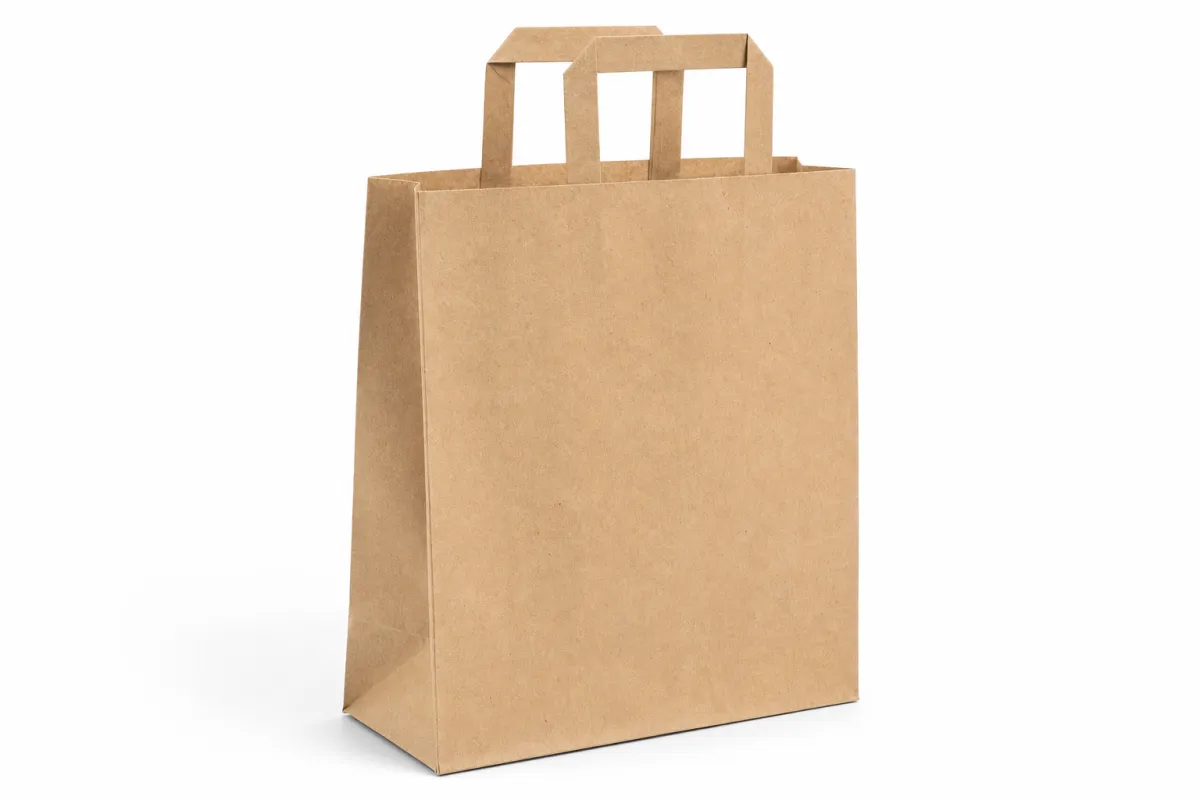
Custom recycled paper bags with handles are Paper Shopping Bags made with recycled fiber content and built for hand-carry use, usually with twisted paper, flat paper, rope, or cord handles. The bag can stay natural kraft, carry a full print program, or include coatings and specialty finishes. What separates it from a basic paper bag is not just recycled content. It is the full spec: paper grade, basis weight, handle style, print method, seams, gussets, and finish.
That combination matters because each choice changes how the bag feels in use. A bag with a 120 gsm recycled kraft body and twisted paper handles feels very different from a 170 gsm bag with reinforced patches and cotton rope handles. One fits a boutique apparel order. Another works better for a heavier gift set or takeaway meal. Both count as custom recycled paper bags with handles, but they do not behave the same in the hand.
Brands use this format for three practical reasons. First, the bag becomes visible branded packaging the moment it leaves the counter. Second, the handle makes carrying easier, which extends the life of the bag. Third, the structure gives the buyer more room for color, logo placement, and messaging than a tiny label or sticker ever will. For many businesses, especially those balancing product packaging with presentation, that extra surface area earns its keep.
The sustainability side needs a clean explanation. Recycled paper is often chosen to reduce demand for virgin fiber, but recycled content alone does not make a package lower impact. Sourcing, fiber quality, print coverage, transport weight, and reuse all matter. A well-made recycled bag that gets used five times can outperform a lighter bag that fails on the first carry. No slogan needed. That is just material performance doing its job.
There is also a brand perception issue that gets ignored too often. A plain kraft bag can look intentional. A recycled bag with weak handles, muddy printing, or awkward proportions can look budget. The gap is not the recycled content. The gap is whether the spec was built with real use in mind. Custom recycled paper bags with handles work best when the packaging design looks deliberate, not like an eco label stapled onto a weak product.
If your team already uses custom printed boxes for shipped orders, the bag should still feel tied to the same visual system. Typography, logo placement, and color discipline matter. A shopper might never see the box, but they will see the bag. That makes the bag part of the same package branding system, not a side project. I’ve seen otherwise solid brands lose consistency because the bag was treated like an afterthought. It shows.
One useful way to think about it: the bag is a walking billboard, but it is also a mechanical object. It has to hold weight, resist tearing, and stay comfortable. Good custom recycled paper bags with handles do not force a tradeoff between appearance and performance. They make both possible.
A bag that tears once costs more than a better one costs upfront. That is why many packaging teams judge paper bags by failure rate, not just unit price.
For teams comparing material choices, the EPA’s packaging and waste guidance is a useful starting point for understanding why source reduction and reuse matter in packaging decisions: EPA packaging and recycling guidance. For fiber sourcing questions, FSC provides a clear framework for responsible forest management and chain-of-custody verification: FSC.
How custom recycled paper bags with handles are made
The production path for custom recycled paper bags with handles starts with fiber selection and ends with a finished converting job that has passed quality checks. Between those points sit a few steps that decide strength, feel, and price. Buyers tend to focus on artwork first. Fair enough. The paper structure usually decides whether the bag performs or embarrasses everyone involved.
Recycled fiber gets pulped, cleaned, and formed into sheets. Depending on the target strength, the paper may use a high recycled content kraft base or a blended grade that improves tear resistance. From there, the sheet is calendered or left with more texture, then moved into converting. Converting shapes the tube, folds the gussets, sets the bottom, and prepares the bag for handle insertion.
Handle style changes the production flow. Twisted paper handles are common because they are cost-effective, recyclable in many setups, and sturdy enough for routine retail use. Flat paper handles are often chosen for lighter loads, food service, and lower-profile branding. Rope or cord handles feel more premium and are easier on the hand, but they usually raise cost and introduce different material considerations. For a lot of projects, handle style is the first real fork in the road for custom recycled paper bags with handles.
Strength does not come from recycled content alone. It comes from how the bag is built. Seam reinforcement matters. Handle patching matters. Gusset width matters. The bottom construction matters too. A broader gusset spreads load more evenly, which helps prevent bowing under weight. A weak handle attachment can fail long before the paper body does.
Printing is usually applied before final converting or during a related conversion stage, depending on the supplier. Flexographic printing is often used for simpler runs and works well on kraft-style surfaces. Offset can deliver sharper detail for complex graphics, though it usually needs a more controlled surface. Digital printing helps with shorter runs or faster proof cycles, but unit pricing can climb fast on higher volumes. The more ink coverage and color complexity you add, the more likely you are to see longer lead times and higher costs.
Finishes matter just as much as print. A natural matte kraft look feels honest and material-driven. A coated surface can sharpen graphics. Water-resistant treatments help in food service or rainy retail environments, but they can change how easily the bag fits into recycling streams. That means buyers need direct answers, not vague marketing copy. The right finish depends on the use case, the destination, and the claim strategy.
Take a boutique retailer that wants a restrained, upscale look. It may choose a 140 gsm recycled kraft with black print and twisted handles. A restaurant group may pick a lighter flat-handle build with grease resistance for takeout packaging. A gift brand may move toward thicker paper, rope handles, and more open space. Each one still qualifies as custom recycled paper bags with handles, but the production route and cost profile are very different.
The quality control step gets overlooked far too often. Good suppliers check handle pull strength, seam alignment, print registration, bottom glue consistency, and dimensional accuracy. For a bag used in retail packaging or event distribution, a few millimeters of drift can change how neatly it folds, stands, or stacks. Those small details shape the customer impression more than most brands expect.
| Handle style | Typical feel | Relative cost | Best fit | Common tradeoff |
|---|---|---|---|---|
| Twisted paper | Solid, practical, familiar | Lower | Retail, grocery, bakery, general use | Less premium feel than rope |
| Flat paper | Simpler, lightweight | Lowest | Takeout, lighter product loads | Less comfortable on heavier carries |
| Rope or cord | Premium, softer in hand | Higher | Gift sets, fashion, event kits | Higher unit cost and more material complexity |
That table is not a universal price sheet. No two jobs are identical. Still, the pattern holds. Better handles cost more, and they can also save the customer experience. If a bag gets carried for ten minutes across a trade show floor, comfort may matter more than the unit price difference. A cheap handle that bites into the hand feels like a mistake every single time.
Key factors that affect cost and pricing
Pricing for custom recycled paper bags with handles comes down to a handful of variables buyers can actually control. Size, paper thickness, recycled-content target, handle type, print count, surface finish, and order quantity all move the number. Shipping and packaging configuration matter too. Quote two suppliers without standardizing those details and you are comparing noise, not pricing. The numbers may look tidy. The comparison is still junk.
Size is usually the first driver. A bag for folded apparel may use less material than a bag built for boxed cosmetics or takeaway containers. The difference is not only width and height. Gusset depth changes material use too. Wider gussets increase paper consumption, which pushes cost up before printing enters the picture.
Paper thickness is another major variable. A 120 gsm paper bag and a 170 gsm paper bag may look close on a spec sheet, but they are not the same thing. The heavier build tends to improve tear resistance and feel, yet it also raises cost and freight weight. For buyers of custom recycled paper bags with handles, this is often the best place to spend carefully. Going too light can save pennies and create failures. Going too heavy can overspec the job. A lot of teams learn that the expensive way, which is not a fun lesson.
Recycled content can influence cost, but not in a clean straight line. Higher recycled content may be economical on some jobs, while specialty grades or documented chains of custody can add expense. If your brand wants to make an environmental claim, ask for the paperwork before the quote gets turned into a marketing message. FSC chain-of-custody documentation, mill certificates, and recycled-content declarations all help build trust. They also help legal and brand teams stay aligned.
Print complexity is where many budgets drift. A one-color kraft bag with a clean logo can be economical at scale. A four-color, full-coverage design with edge-to-edge background, spot elements, and varnish changes the job completely. More plates, more setup, and more inspection time add cost. That is one reason packaging teams often ask for a version with restrained graphics. Strong package branding does not need dense ink coverage.
Here is a practical comparison for common quote scenarios. The ranges are directional, not universal, and they assume a mid-size retail bag in moderate volumes.
| Example build | Estimated unit price at 5,000 pcs | What drives the price | Notes |
|---|---|---|---|
| Natural kraft, 1-color print, twisted handles | $0.18-$0.28 | Simple setup, moderate material use | Often a strong value for retail packaging |
| Thicker recycled kraft, 2-color print, twisted handles | $0.24-$0.38 | Heavier paper and more print work | Good balance of appearance and strength |
| Premium recycled bag, full-coverage print, rope handles | $0.45-$0.85 | Material, ink coverage, handle cost, finishing | Often used for premium branding or events |
Economies of scale matter a lot. Setup costs spread across more units as volume rises, so a 1,000-piece run usually carries a higher unit price than a 10,000-piece run with the same spec. That does not mean bigger is always better. If the product or campaign changes often, excess inventory can become its own headache. Still, if your bag design is stable, volume is one of the fastest ways to improve price efficiency on custom recycled paper bags with handles.
Hidden costs are easy to miss. Sample charges, dieline revisions, plate fees, freight weight, carton configuration, and extra QC steps all show up in real projects. If a supplier quotes a bag but leaves out shipping or proofing, the final number can move more than expected. Ask for a landed estimate if the project has a firm budget. That is especially useful for businesses comparing custom recycled paper bags with handles to other Custom Packaging Products for a seasonal launch or retail reset.
A final pricing note: unit cost should never be the only lens. A cheaper bag that tears during a customer’s walk home can damage the brand more than it saves. I see that mistake more often than I should. The bag that looks expensive on paper sometimes turns out cheaper in use because it avoids replacements, complaints, and wasted inventory.
Step-by-step timeline for ordering custom recycled paper bags with handles
The ordering process for custom recycled paper bags with handles usually follows a predictable path, but the timeline can stretch if decisions drag. A well-run project starts with a clear brief. A messy one starts with a logo file and a pile of guesses. The difference can be several weeks. Sometimes more, if a team keeps changing the handle style after the artwork is already locked. That happens. It shouldn’t, but it does.
Start by defining the use case. Is the bag for apparel, food service, events, or gifts? What is the heaviest item it needs to carry? How long should it stay in circulation? Those answers shape the structure. A bag made for folded T-shirts does not need the same build as one designed for jars or bottled products. That sounds obvious. It still gets missed, and mismatched specs are one of the main reasons packaging jobs fail.
Next comes sizing and material targets. Suppliers need width, height, gusset, paper type, and a realistic weight target. If you can provide the product weight and the way items are packed, even better. A supplier can then suggest a bag that fits the load instead of guessing. For custom recycled paper bags with handles, that early technical discussion usually saves more time than it costs.
Artwork and dieline review comes after that. This is where many projects slow down. Logo placement, barcode sizing, color matching, bleeds, and handle clearances all need attention. If the design uses a full background or fine detail, a proof may be essential. Low-resolution files or files built for a screen, not for print, can create surprise shifts in the final bag.
Sampling or prototype approval is the next checkpoint. For some jobs, a flat proof is enough. For others, a physical sample matters because it lets the team test handle comfort, color, and load performance. A prototype reveals things no PDF can show: whether the bag stands properly, whether the handles dig into the hand, and whether the print feels right against the kraft texture. That matters even more for premium custom recycled paper bags with handles used in retail packaging or events.
Production scheduling comes after approval. Once the proof is signed off, the job enters the queue. Typical timelines vary, but a straightforward order often takes 12-15 business days from proof approval to production completion, with freight added on top. Complex print, specialty finishes, and heavy volumes can stretch that longer. Rush orders are possible in some cases, but they usually narrow material choices and reduce flexibility on finishing.
Shipping and delivery planning closes the loop. Freight method matters more than many buyers expect. Air shipment is faster but expensive. Ocean freight lowers transport cost on large runs but adds lead time and planning. Domestic truck freight can be a middle ground for certain regions and quantities. If the bags support a store opening, event, or seasonal promotion, build in margin. The best schedule is the one that still works if one approval gets delayed by a day or two. Nice in theory, but that margin is what keeps the whole thing from turning into a fire drill.
Keep one milestone for every stage, not just one final ship date. Ask for dates on proof return, sample approval, production start, QC completion, and freight handoff. That makes the project easier to manage internally. It also creates a cleaner trail if a spec changes midstream. For custom recycled paper bags with handles, schedule clarity is almost as valuable as artwork quality.
If your team is comparing bag projects with other printed packaging programs, the same discipline applies to custom printed boxes, sleeves, and inserts. Keep approvals visible. Lock the specs. Cut down last-minute creative drift. In packaging, delays usually come from indecision, not machinery.
Common mistakes buyers make with recycled paper bags
The most expensive mistake is choosing paper that is too light. Buyers do that to save a few cents, then discover the bag tears at the handle fold, the bottom seam splits, or the gusset buckles under load. Once that happens, the sustainability story gets messy fast. A failed bag creates waste, replacement labor, and a customer memory that sticks. With custom recycled paper bags with handles, underbuilding is a false bargain.
Another common mistake is specifying the bag for the average load instead of the worst realistic load. That matters in both retail and food service. If your average purchase is a single item but your heaviest purchase is a multi-item set, the bag needs to be built for the heavier case. Real-world use does not follow clean averages. It follows the heaviest day of the month. That is the day your packaging gets judged.
Size mismatches cause trouble too. A bag sized for folded apparel may be too shallow for boxed products. A tall narrow bag can tip or wrinkle if the load is too wide. A takeaway bag that fits one container perfectly may fail the moment a second container or drink carrier gets added. Good custom recycled paper bags with handles are built around the product profile, not just the logo.
Artwork gets underestimated all the time. Low-resolution images, weak contrast, too many typefaces, and poor white space can make even a well-made bag feel noisy. The irony is brutal: sustainable-looking packaging can end up looking less premium than a simpler design. Clean graphics usually work better. A crisp logo, one or two ink colors, and a balanced layout often beat an overworked composition. That is true for custom recycled paper bags with handles and it is true for custom printed boxes and labels too.
Another trap is assuming all recycled paper is interchangeable. It is not. Recycled content percentages vary. Fiber quality varies. Surface texture varies. Some grades feel softer and print beautifully; others look more rustic and absorb ink more aggressively. Certification claims vary by supplier too. If the environmental angle matters to your brand, ask for documentation and keep the language tight. Broad claims are cheap. Proof is not.
Handle comfort gets ignored more often than it should. A bag can be structurally strong and still miserable to carry if the handle edge cuts into the hand. That matters for events, retail, and gifting alike. A customer who has to walk ten blocks or stand in a line with several items will notice. Comfort is not cosmetic. It affects use. I’ve watched otherwise good packaging get remembered for the wrong reason because the handles were just kinda awful.
Finally, many buyers treat the bag as a standalone item instead of part of a broader branded packaging system. If the bag sits next to custom printed boxes, tissue, stickers, and inserts, the visual language should match. Without that connection, package branding feels fragmented. A bag is not just a transport tool. It is part of the customer’s memory of the purchase.
The cleanest-looking bag is not always the smartest one. The smartest bag is the one that fits the product, supports the brand, and survives the walk out the door.
Expert tips for better performance, branding, and sustainability claims
Start with the heaviest realistic load, not the average. That one choice gives custom recycled paper bags with handles a much better shot at surviving real use instead of a best-case scenario. If a shopper can load the bag with the heaviest SKU, a second purchase, or a bundled set, the spec should still hold. That is the simplest way to cut failures and keep the bag from becoming a disposable mood.
Print with discipline. A strong logo, good contrast, and controlled color usage often look more premium than a crowded full-bleed design. The bag is not a poster. It is a functional object that moves through space, gets handled, and may be seen for only a few seconds at a time. In many cases, less ink coverage creates a result that looks more expensive. The same idea often applies to custom printed boxes: clarity beats clutter.
Ask for recycled-content documentation before you make any environmental claim. If the bag is FSC certified, confirm the scope. If the supplier references recycled fiber, ask for the percentage and whether the number applies to the paper itself or the final product. A lot of brands blur those details. Buyers should not. A modest, accurate claim is better than an ambitious one that cannot survive scrutiny. For teams writing sustainability language around custom recycled paper bags with handles, precision protects trust.
Balance finish with recyclability. A matte kraft bag with simple inks may be easier to position as responsibly sourced than a heavily coated glossy bag with a complex laminate. That does not make coated bags wrong. It means the functional tradeoffs and sustainability tradeoffs should be explicit. The most effective custom recycled paper bags with handles are the ones whose material choices match the message the brand wants to send.
Ask the supplier how they test seams, handle attachment, and burst resistance. If they mention pull tests, weight tests, drop checks, or distribution simulation, that is a good sign. For transport packaging and heavier-use retail programs, I like hearing suppliers talk about failure points in concrete terms rather than generic quality language. If a supplier understands concepts from ISTA-style distribution testing and can explain what they are watching for, that usually means the production team has thought through the bag’s life cycle seriously.
There is also a useful brand comparison angle. If your program already includes custom printed boxes, recyclable mailers, or tissue wrap, the bag should use the same color logic and tone. A small mismatch can make the whole set feel less intentional. A consistent system improves recognition quickly. That is package branding at work: not just one item, but a family of items that all sound like the same company.
One more operational tip: request a cost-optimized version and an ideal version. The first shows where you can save. The second shows the best possible result within your intended spec. Side by side, the difference is usually revealing. Sometimes the lower-cost build barely changes performance. Sometimes it cuts too deep. Either way, you make a better decision on custom recycled paper bags with handles when you compare options inside the same framework.
If you need a starting point for related formats, review the broader Custom Packaging Products catalog and map the bag against your other retail packaging pieces. That can surface shared print colors, standard sizes, or finishing choices that reduce total program complexity.
What to do next before you place an order
Before placing an order for custom recycled paper bags with handles, build a one-page spec sheet. Include bag dimensions, product weight, recycled-content target, handle preference, print count, finish, and quantity. Add the use case too: apparel, gifts, food service, or event kits. That one page becomes the anchor for supplier quotes and internal approvals.
Request a sample or prototype. Even if the bag seems straightforward, there is no substitute for holding it. Check the feel of the paper. Check handle comfort. Put in the actual product. If the bag will be used repeatedly, test it more than once. A bag that works in a conference room may fail under a real load or on a longer carry. Custom recycled paper bags with handles deserve that extra check because they sit between branding and utility.
Ask for two quotes: one for the exact build you want, and one for a cost-optimized version. Then compare what changes in strength, appearance, and lead time. That exercise usually shows where the budget is going. Sometimes the premium option is the right one. Sometimes it is not. You will know because the tradeoffs are visible.
Build in a schedule buffer. Confirm the production slot, freight method, and a backup approval deadline in case artwork or dielines change. If the bags support a store opening or event, a day or two of margin can be worth more than a discount. Delay is expensive because it shows up in labor, launch planning, and customer perception. That is especially true for custom recycled paper bags with handles tied to seasonal retail packaging campaigns.
Finally, remember the best ordering process is deliberate. Gather the measurements. Review the samples. Clarify the claim language. Compare prices on equal terms. That approach turns custom recycled paper bags with handles from a vague purchasing line into a controlled packaging decision. When the spec is deliberate, the bag does its job better, the brand looks more credible, and the customer carries it with less friction.
Frequently Asked Questions
How much do custom recycled paper bags with handles usually cost?
Pricing depends on size, paper thickness, handle type, print complexity, and order volume. Small runs usually cost more per bag because setup charges get spread across fewer units. For many projects, a simple recycled kraft bag with one-color print sits in a lower range than a premium version with rope handles and full coverage printing. The cleanest way to compare quotes is to keep the spec identical across suppliers for custom recycled paper bags with handles.
What recycled content should I ask for in custom recycled paper bags with handles?
Choose a recycled-content level that matches your brand promise and the bag’s performance needs. Higher recycled content can support a stronger sustainability story, but fiber quality and strength still matter. Ask for documentation so you can verify any environmental claim you plan to make. With custom recycled paper bags with handles, the right number is the one you can support and the one that still performs in use.
Which handle style is best for custom recycled paper bags with handles?
Twisted paper handles are common for retail because they balance cost, strength, and appearance. Flat paper handles are a smart choice for lighter loads and simpler branding. Rope or cord handles usually make sense when comfort and premium presentation matter more than unit cost. The best handle depends on the load, carry time, and brand tone. There is no single answer for every set of custom recycled paper bags with handles.
How long does the process take for custom recycled paper bags with handles?
Timeline depends on sampling, artwork approval, production capacity, and shipping method. Simple jobs move faster when dimensions and artwork are finalized early. A realistic production window often runs around 12-15 business days after proof approval, with freight added separately. Rush orders can limit material choices and raise the price. Good planning matters because custom recycled paper bags with handles are usually part of a wider launch or packaging schedule.
Are custom recycled paper bags with handles strong enough for retail or takeout?
Yes, if the paper grade, handle attachment, and seam reinforcement are matched to the load. Ask for weight guidance and testing details before approving the final spec. A well-built recycled paper bag can perform reliably while still supporting sustainability goals. The key is matching construction to use. In practice, custom recycled paper bags with handles are strongest when the supplier designs around the heaviest real-world carry, not the easiest one.
For brands that want packaging to do more than hold an item, custom recycled paper bags with handles are a smart place to invest. They can support retail packaging, reinforce package branding, and communicate material intent without sacrificing daily function. The bags work best when the spec is deliberate, the claims are accurate, and the design is built around the actual load. Start with measurements, ask for samples, and compare quotes on the same terms. That is the difference between a bag that merely exists and one that actually earns its place in the line.

