Reflective Logo Beanies Lead Time and MOQ: What Buyers Should Confirm
Reflective logo beanies Lead Time and MOQ are often the two details that determine whether a winter order lands on schedule or slips past the season. That matters for uniform programs, outdoor crews, school groups, and event teams that need headwear to do more than look branded. It has to stay warm, stay readable, and stay within budget.
The fastest orders are usually the simplest: a clear base style, a logo that fits the knit, and a reflective detail that works with the fabric instead of fighting it. Buyers who understand the difference between reflective yarn, a sewn-on stripe, and a patch can usually get cleaner quotes and fewer proof revisions. That saves time before production starts, where most delays begin.
A reflective accent changes more than the look of a beanie. It changes the buying decision because the item now has to satisfy branding, comfort, visibility, and cost at once.
Why reflective beanies move quickly in winter programs
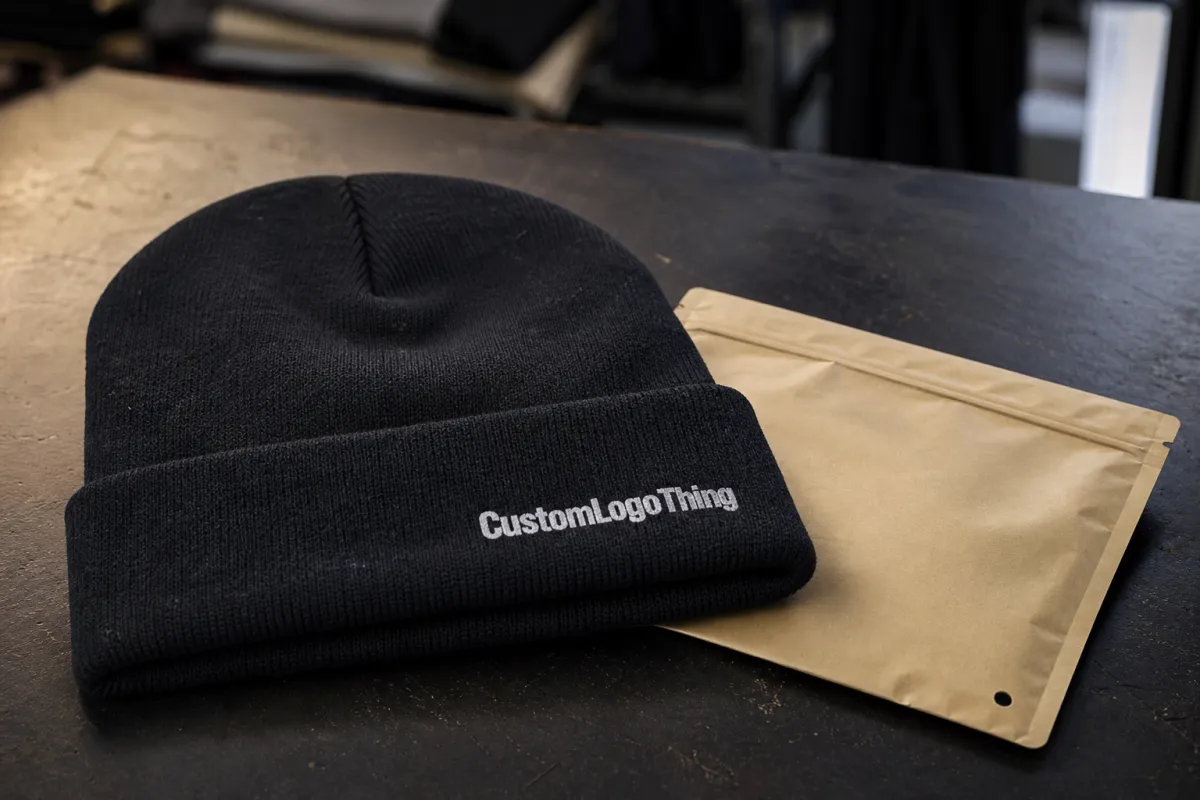
Plain acrylic beanies are easy to source, but they are also easy to overlook. Add a reflective element and the product suddenly has a practical purpose beyond decoration. That is why these orders often get approved faster than fashion-only headwear. Buyers can position them as working gear with a brand on it, not just merchandise.
Warehouse staff, night-shift crews, maintenance teams, crossing guards, and volunteers all value headwear that looks normal in daylight and stands out more after dark. A reflective stripe, cuff, or logo panel improves visibility without turning the beanie into full hi-vis PPE. That distinction matters, but the function is still obvious to most buyers.
There is also a branding advantage. Reflective detail catches the eye first, then the logo is read second. That sequence makes the item feel intentional instead of crowded. In practice, a small mark on a reflective cuff often looks cleaner than a large logo squeezed into every available inch.
Materials, logo placement, and reflectivity rules
Acrylic is still the most common base because it is consistent, affordable, and easy to color-match. Wool blends feel warmer and often look richer, but they can raise cost and make the knit less forgiving around decoration. Recycled yarns are useful for many programs too, though they may narrow the color range or extend sourcing time.
Gauge affects both hand feel and decoration. A thicker knit gives more structure, while a finer knit can sit flatter under embroidery or a label. If the logo is large, a loose or soft knit can distort it. If the cuff is too soft, embroidery may pull the fabric and make the mark look uneven.
Reflectivity can be built in several ways. Reflective yarn is subtle and integrated into the knit. A reflective stripe or tape is brighter and easier to notice from a distance. A reflective patch separates the brand mark from the knit and can work well when the reflective area needs to stay visible. Each option changes cost, texture, and wash behavior.
Logo placement is often the simplest place to make the wrong choice. The front cuff is usually the safest location because it is stable and easy to read. Embroidery is durable and still a standard option for repeat orders. Woven labels work well for smaller, cleaner marks. Patches help when the artwork has too much detail for stitching or needs more visual weight. Print can be efficient, but on stretch knit it needs testing so the art does not crack or blur.
One important caveat: reflective accents improve visibility, but they do not automatically make a beanie certified high-visibility PPE. If a buyer needs compliance with a standard such as ANSI/ISEA or EN ISO 20471, that should be checked before the order is released. That is a different issue from adding reflective branding to a winter cap.
| Decoration option | Typical cost impact | Best use case | Notes |
|---|---|---|---|
| Embroidery | Low to moderate setup charges | Small front logo, durable branding | Strong for repeat orders; fine detail has limits |
| Woven label | Moderate tooling fees | Clean, retail-style finish | Good for smaller logos and a tidy appearance |
| Patch | Moderate to higher unit cost | Bolder logo with texture | Useful when the reflective area should stay open |
| Lower setup on simple art | Flat graphics and short runs | Needs testing on stretch knit for legibility |
Specs to lock before you request pricing
Fast quotes come from specific requests. A buyer who sends "custom reflective beanies" usually gets a slow reply and a fuzzy price. A buyer who sends quantity, style, yarn preference, reflective placement, logo method, packaging, and delivery target gets a useful answer.
At minimum, the supplier needs the beanie body style, cuff height, material, decoration method, and whether the reflective feature is knit-in, sewn-on, or applied as a panel. Those details drive labor and setup. A reflective cuff and a reflective logo patch may look similar in a mockup, but they are not priced the same and they do not move through production the same way.
Packaging belongs in the brief too. Individual polybags, branded inserts, barcode stickers, carton labels, and direct-to-warehouse delivery all affect cost and timing. A bulk carton order can move faster than a retail-ready pack, but many buyers only learn that after the quote is already in review.
- Beanie style: cuffed, slouch, rib knit, double-layer, or thermal knit
- Logo method: embroidery, woven label, patch, or print
- Reflective element: yarn, tape, stripe, or panel
- Packaging: bulk carton, polybag, or retail pack
- Delivery needs: in-hand date, ship-to locations, receiving hours
That list looks basic because it is. The catch is that many delays come from one missing line item. A logo file with no size guidance can trigger a proof revision. A ship-to address with no receiving window can stall freight booking. A color name with no Pantone reference can start an avoidable approval loop.
Reflective logo beanies lead time and MOQ basics
Sample time and bulk time are not the same number. For a first order, sampling or strike-off approval often takes 5 to 10 business days, depending on decoration and whether the factory needs a physical reference. Bulk production for straightforward custom beanies usually lands around 12 to 20 business days after proof approval. Freight adds more time, so the delivery date should always include shipping separately.
MOQ is not a marketing trick. It is the point where setup, waste, and machine time become efficient enough for the supplier to run the order without pricing it like a one-off. Lead Time and MOQ move together because lower quantities usually carry a higher unit price, while more complex branding can push the minimum upward.
For many custom winter headwear programs, MOQ often sits around 100 to 300 pieces per style or per color. That range can move lower for stock beanies with simple embroidery, and it can move higher if the order includes custom trim, special labeling, or multiple colorways. Buyers should ask whether the minimum applies per design, per color, or per logo version.
Rush service is possible, but only when the spec is settled. A stock beanie with final art and fast approval can compress well. A custom knit with Pantone matching, multiple revisions, and packaging changes will not. Production usually moves as quickly as the slowest approval, and that is often the artwork or packaging, not the knitting line.
Cost drivers, unit price, and quote structure
The cleanest quotes separate four buckets: blank product, decoration, packaging, and freight. If those items are mixed together, comparison gets messy. A low headline price can hide a large setup fee or a freight charge that shows up later. Buyers who only look at unit price often learn the real number too late.
Quantity breaks matter because fixed costs get spread across more pieces. If 150 units are priced at $5.20 each and 300 units drop to $4.15, the reason is usually not magic. It is the same setup cost divided across a larger run, plus better material purchasing or more efficient decoration time.
For custom reflective logo beanies, a practical price range often starts around $3.50 to $6.50 per piece at 300 to 500 units, depending on yarn, logo method, and packaging. Smaller runs can cost more per piece. Premium yarns, stitched reflective trim, or retail-ready packaging can lift the number quickly, and that is normal.
Embroidery is often the best balance of durability and price. Woven labels keep the finish neat. Patches add texture and can hide the limits of a small logo. Print may lower setup on simple art, but it is less forgiving on stretch knit and can look flat after repeated wear. The cheapest decoration line is not always the best value if the logo has to survive regular use.
Packaging can be a hidden cost driver too. A beanie in a plain bulk carton is one thing. A beanie in an individual bag with barcodes, inserts, and warehouse-ready labels is another. For buyers who care about shipping durability, ISTA standards are useful for thinking about transit abuse, not just product appearance. If the packaging uses recycled or certified materials, FSC-certified materials may matter as well.
Ask for this in writing: unit price, setup charges, sample cost, freight estimate, and the lead time tied to proof approval. If the quote does not break those items out, it is harder to compare suppliers and easier to miss a cost that belongs in the landed number.
Production steps that change turnaround speed
Most delays happen before bulk production starts. The path usually runs through inquiry, quote, artwork proof, sample or strike-off approval, bulk manufacture, packing, and shipment. Buyers who understand that sequence usually control the schedule better because they can see where the bottleneck is likely to appear.
Artwork is a frequent slowdown. A JPG from a website is not the same thing as a clean vector file. Missing outlines, low-resolution logos, or mixed instructions from multiple stakeholders usually force another proof cycle. Pantone mismatches can do the same thing if the brand guide says one shade and the artwork shows another.
Packaging approvals can be just as disruptive. One label change, one shift from bulk carton to individual polybag, or one revised barcode can reset the packing schedule. The beanies may already be knitted, but if the carton marks are wrong, freight still waits.
Quality control should happen at more than one point. A good factory will check yarn consistency, stitch tension, logo placement, trim accuracy, and carton count before shipment. Those checks matter because stretch knit can hide small faults until the order is packed.
Speed also depends on response time. A proof approved the same day keeps the job moving. A proof left unanswered for three days generally adds three days. In custom apparel, the factory can only run what the buyer has already approved.
Common buyer mistakes that raise cost or delay launch
The first mistake is weak artwork. Poor files slow every step, especially embroidery and patch production. The second is changing the brief after pricing is already in motion. Moving the logo, changing the yarn, or adding new packaging after the quote almost always adds time and often adds cost.
Another common issue is ordering too tightly. Teams often buy the exact number they think they need, then discover the program works better than expected. A winter campaign that lands well can run through stock faster than planned, so a modest buffer is usually safer than a perfect spreadsheet total.
Shipping details create another class of avoidable problems. A correct product sent to the wrong receiving window is still a failure. Missing dock hours, unlabeled cartons, or a bad ship-to address can delay arrival even if the factory finished on time.
There is also the cost of too many voices. If one person wants a larger logo, another wants the reflective stripe moved, and a third wants a different closure spec, the proof cycle turns into a traffic jam. The cleanest orders usually have one decision-maker and one final file.
How to request a quote and place the order cleanly
Send one request with the essentials: quantity, target in-hand date, logo file, preferred beanie style, reflective preference, and packaging requirements. If you need a sample first, say so plainly. If the order has to ship to more than one location, list that at the same time.
Ask for a written quote that separates cost per piece, setup charges, sample cost, freight, and production timing. If there are multiple style options, request them in the same format so the comparison is fair. A one-page side-by-side is often more useful than a long email chain.
A short checklist helps keep the order from drifting:
- Confirm MOQ per color, per logo, or per style.
- Confirm proof timing and sample timing.
- Confirm whether packaging and shipping are included.
- Confirm who approves final art and by what deadline.
- Confirm whether the delivery date is based on proof approval or deposit receipt.
That last point is easy to miss and it changes everything. A fast quote is not useful if the production clock does not start where the buyer thinks it starts. The cleanest orders are the ones that define lead time in writing and tie it to a single approval event.
For reflective headwear, the goal is not just to buy a beanie. It is to Buy the Right mix of price, minimum order, and turnaround for the season in front of you. If the spec is clear, the order is usually manageable instead of surprising.
What is the usual lead time for a first order?
First orders usually need more time for proofing and sample approval than repeat runs. A simple spec can move from approval to bulk production faster than a custom knit with special packaging. Shipping time should be listed separately from factory time so the date is easier to trust.
What MOQ should I expect?
Many custom programs fall between 100 and 300 pieces per style or color, but the number changes with decoration and material choice. Lower MOQ is possible for stock beanies with simple branding, while more custom trims or multiple colorways can push the minimum higher. Always ask what the MOQ applies to.
Can I approve a sample before bulk production starts?
Yes, and that is the safest way to check logo scale, reflective placement, and overall hand feel. Sample timing should be confirmed before the bulk schedule is released. It is also sensible to ask whether the sample cost is credited on the production order.
What affects unit price the most?
Quantity, decoration method, and packaging are the main drivers. Reflective material choices and custom trim can raise the price more than a basic logo does. Freight and rush timing can change the landed cost as well, especially on small runs.
How do I speed up a quote request?
Send final artwork, quantity, target delivery date, and ship-to details in one message. Specify the decoration method and whether you need a sample, individual packaging, or split delivery. A complete brief is the fastest route to a usable quote.


