Buyer Fit Snapshot
| Best fit | Custom Retail Bags with Cmyk projects where brand print, material claims, artwork control, MOQ, and repeat-order consistency need to be specified before quoting. |
|---|---|
| Quote inputs | Share finished size, material target, print colors, finish, packing count, annual reorder estimate, ship-to region, and any compliance wording. |
| Proofing check | Approve dieline scale, logo placement, barcode or warning zones, color tolerance, closure strength, and carton packing before bulk production. |
| Main risk | Vague material claims, crowded artwork, missing packing details, or unclear freight terms can make a low unit price expensive after revisions. |
Fast answer: Custom Retail Bags with Cmyk: Film, Print, MOQ, and Carton Packing should be specified like a repeatable production item. The safest quote records material, print method, finish, artwork proof, packing count, and reorder notes in one written spec.
Production checks before approval
Compare the actual filled-product size with the drawing, then confirm tolerance on folds, seals, hang holes, label areas, and retail display edges. Reserve space for logos, QR codes, warning copy, and material claims before decorative graphics fill the panel.
Quote comparison points
Review material grade, print process, finish, sampling route, tooling charges, carton quantity, and freight assumptions side by side. A quote is only useful when the supplier can repeat the same color, closure quality, and packing count on the next order.
Custom Retail Bags with CMYK: Costs, Process & Tips
A navy bag that looks rich and controlled on a designer's monitor can reach the press and come back softer, flatter, or slightly warmer than anyone expected. That gap is the real story behind custom retail bags with CMYK. I have seen perfectly good artwork lose authority in the space between screen and substrate, and I have also seen a modest paper stock make a brand look more refined than a costly finish ever could. Packaging is full of those reversals. They are not accidents so much as reminders that print has rules.
CMYK is a process-color model built from cyan, magenta, yellow, and black. It is efficient, flexible, and well suited to full-color graphics, but it does not behave like a screen. Designers can prepare a polished file and still end up with custom retail bags with CMYK that shift because of stock, coating, ink density, press calibration, or the print method itself. Buyers usually meet that lesson at the proof stage. Packaging teams meet it much earlier, usually after too many samples and a few uncomfortable emails.
Anyone ordering custom retail bags with CMYK needs a clear read on what the process does well, where it strains, and what really drives the quote. That understanding protects budget and cuts down on rework. It also matters when the same campaign includes Custom Printed Boxes, tissue, or inserts, because a color system that behaves across one surface should not suddenly fall apart on the next.
Custom retail bags with CMYK: why the color math matters
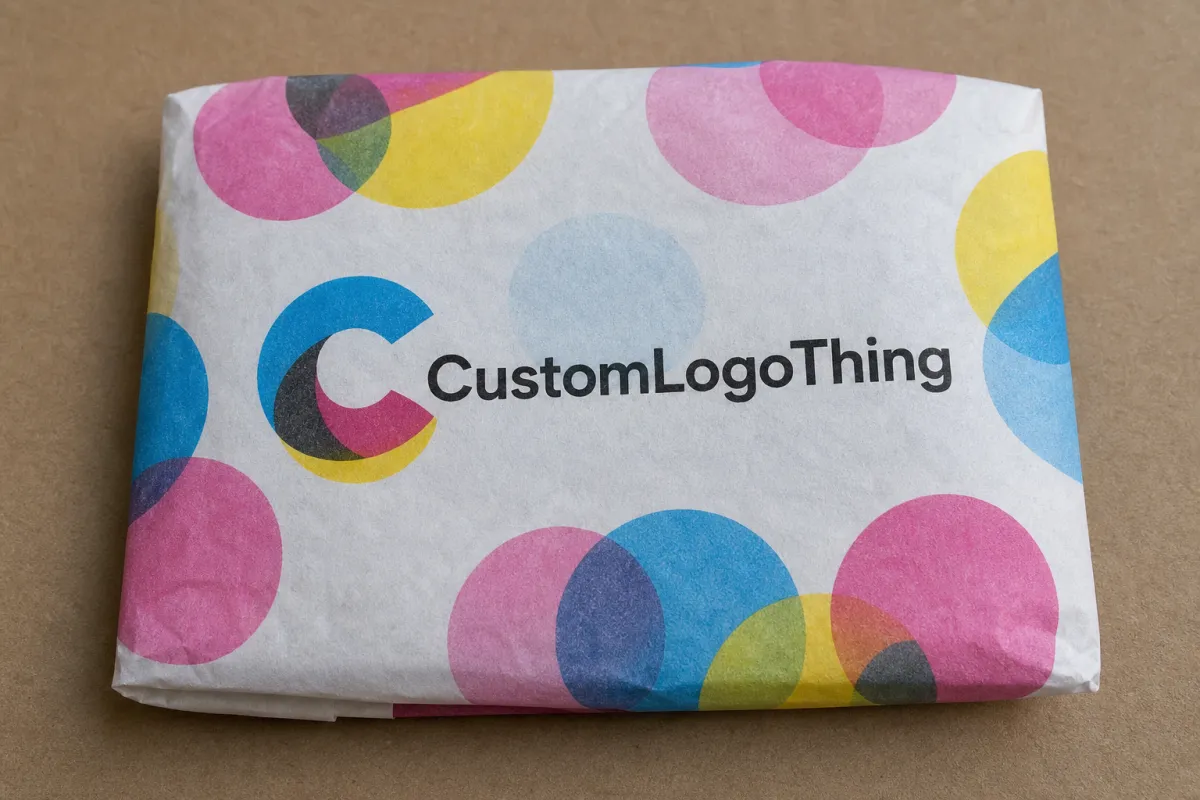
Picture a bag that was supposed to land as a deep navy but arrived with the softness of denim that's been washed too many times. That does not automatically mean the printer missed the mark. More often, the issue sits inside the math behind custom retail bags with CMYK. Process color builds tiny dots of four inks into a wide range of tones, and the result depends on how the substrate accepts those dots. Coated paper, recycled kraft, and laminated stock all reflect and absorb ink differently.
Custom retail bags with CMYK are Retail Carry Bags printed with process color, usually on paper-based bags, coated stocks, or laminated materials. The artwork is separated into four channels, then rebuilt on press through a controlled dot pattern. That makes the format a strong fit for logos, gradients, photos, repeating patterns, and seasonal graphics. It also explains why a bright coral or a specific corporate blue can drift if the production setup is not locked down.
One file can behave differently across digital printing, offset printing, and flexographic printing. The artwork did not change. The press environment did. Ink laydown changed. Drying changed. Paper tone changed. On custom retail bags with CMYK, those small details matter more than most teams expect until the first proof lands on the desk.
That is why custom retail bags with CMYK work best for designs that need visual range rather than absolute pigment precision. They fit promotional bag runs, limited-edition drops, store events, trade show handouts, and retail packaging that leans on imagery or pattern instead of a sacred brand color. A brand that depends on an exact Pantone-style tone can still use CMYK, but the decision should be deliberate, not automatic.
In practice, the smartest buyer mindset starts before artwork is finalized. Choose custom retail bags with CMYK because the method suits the job, then build the design around that choice. Do the reverse and the project turns into a color negotiation with no clean winner. That is how teams end up saying the same weary sentence: the bags are close, but not quite right.
Practical takeaway: choose custom retail bags with CMYK when the priority is visual flexibility, predictable production economics, and a print process that can support many graphics without requiring a separate ink mix for every color.
How custom retail bags with CMYK printing actually works
The workflow behind custom retail bags with CMYK is not mysterious, although the small decisions can create expensive trouble. Artwork separates into four color channels: cyan, magenta, yellow, and black. During printing, those inks are applied in tiny dot patterns, and the eye blends them into a finished image. A smooth gradient on screen becomes a precisely arranged cluster of dots. Printing has a way of turning elegance into mechanics.
Problems often begin before the job ever reaches the press. RGB files are built for screens, not print, so a file that looks electric on a monitor can flatten when converted to CMYK. Low-resolution images can blur. Thin type can fill in. Small logos can break apart. On custom retail bags with CMYK, those issues show up quickly because bags are folded, stacked, handled, and shipped. A file that survives on a brochure may fail on a carrier bag that gets inspected from arm's length.
Buyers should prepare a proper print file package: vector logos where possible, high-resolution images at 300 dpi for raster elements, a correct dieline, at least 0.125 inch bleed, and safe zones that keep text away from folds and handles. Add notes for print sides, finish, and brand color priorities. That sounds basic, yet plenty of custom retail bags with CMYK jobs go sideways because nobody wanted to be the person who checked the file twice.
Digital printing is usually the quickest route for shorter runs and versioned artwork. It works well when speed matters or when you need multiple graphics across a smaller quantity of custom retail bags with CMYK. Offset printing tends to deliver very crisp detail and stable color on larger runs, especially when the artwork uses fine type or layered graphics. Flexographic printing appears often in higher-volume packaging work and can be cost-efficient once the setup makes sense.
Proofing is where careful buyers separate themselves from hopeful buyers. A screen proof shows layout and an approximate color direction. A physical sample or press proof shows what the custom retail bags with CMYK will actually look like on the real substrate. If the order supports a store opening or a premium launch, a sample or press-approved reference is worth asking for every time. That is not caution for its own sake. It is risk control.
CMYK also has a color gamut limit. Very bright neons, metallics, and some saturated reds and blues sit outside that range. A brand that wants a neon green with highlighter intensity will not always get there through process color. Spot inks, foil, or a different finish can do the job better. Custom retail bags with CMYK give you range, not miracles.
For buyers who also need printed folders, sleeves, or Custom Packaging Products, the safest move is to keep the same color logic across the whole package family. Otherwise the bag, the insert, and the box start drifting in slightly different directions. That is how branded packaging ends up looking like three separate teams argued over the same logo and none of them gave ground.
Authority check: if the bags will ship with heavier inserts or premium goods, think about transport stress, not just ink. Packaging performance and distribution testing principles used by ISTA are useful reminders that the bag has to survive handling, not just a photo shoot.
Custom retail bags with CMYK pricing, MOQ, and quote drivers
Pricing for custom retail bags with CMYK comes down to familiar levers: bag size, paper weight, handle type, print coverage, number of printed sides, finish, and quantity. Quantity carries the most weight. Setup costs do not disappear just because the run is small, so unit price climbs quickly when the order is short. MOQ is not merely a factory preference; it is part of the economics.
The part people try to soften is simple: full-bleed artwork costs more than a one-color logo, especially when the bag has multiple panels or tricky registration. If the design covers the entire surface of the bag, custom retail bags with CMYK require tighter press control, more prepress attention, and often a little extra waste allowance. That is not a trick. That is production math.
Concrete ranges help, but only as planning figures. A small digital run of custom retail bags with CMYK can land around $0.75-$1.80 per unit for a few hundred pieces, depending on size and finishing. Mid-volume paper bags often move into the $0.28-$0.65 range once the quantity climbs and the design stays straightforward. Larger runs can dip lower, often $0.18-$0.45 per unit, though that assumes the structure, paper, and print coverage are not doing anything elaborate. Fancy handles, lamination, foil, or embossing push the number up. Packaging rarely lets anyone save money twice.
| Print method | Best for | Typical MOQ | Rough unit price range | Notes |
|---|---|---|---|---|
| Digital printing | Short runs, fast turnarounds, multi-version artwork | 250-1,000 pieces | $0.75-$1.80 | Good for pilot launches and lower-risk custom retail bags with CMYK |
| Offset printing | Sharp detail, stable color, mid-to-large paper bag runs | 1,000-5,000 pieces | $0.28-$0.65 | Strong choice for premium retail packaging and clean branding |
| Flexographic printing | Higher-volume packaging, repeat production, simpler graphics | 5,000+ pieces | $0.18-$0.45 | Efficient at scale, though artwork and plates need tighter planning |
MOQ changes with structure too. A flat paper bag is usually easier to quote than a gusseted version with reinforced handles and a laminated surface. The same goes for coated versus uncoated stock. A 300gsm art paper bag with rope handles and soft-touch lamination is not the same job as a basic kraft carrier. The price difference reflects paper, labor, finish, and waste. No mystery there, just a stack of decisions adding weight to the order.
Hidden cost traps show up often. Rushed timelines add freight and overtime. Last-minute art changes can trigger fresh proofing. Handle upgrades are rarely free. If the brand color changes after the first proof, expect another approval round. On custom retail bags with CMYK, every correction finds a way to become a small invoice.
A clean RFQ should include dimensions, quantity, stock preference, handle style, print sides, finish, artwork files, shipping destination, and target delivery date. Leave those out and the quote comes back fuzzy, then compares badly against other suppliers. That wastes everyone's time, especially when the same campaign also includes product packaging or custom printed boxes that need matching artwork.
Quick buyer note: ask for two quote scenarios whenever possible. One should be cost-focused, with a straightforward stock and finish. The second should be the upgraded version with better handles or coating. That gives the team a real tradeoff instead of a vague promise that everything will be fine.
For buyers who care about material sourcing, FSC-certified paper is worth asking about. If sustainability is part of the package story, check the supplier's paper chain and request documentation through FSC. That does not answer every sourcing question, but it does make the conversation concrete.
Production steps and timeline for custom retail bags with CMYK
The usual path for custom retail bags with CMYK starts with inquiry and file review. Then come quotation, proofing, sample approval, production, finishing, packing, and shipping. Straightforward on paper. The delays tend to appear between those steps rather than inside them. Missing dielines, unclear approvals, or artwork that needs to be rebuilt can sit in inboxes for days while everyone assumes someone else replied.
Realistic turnaround depends on method and complexity. A simple digital order of custom retail bags with CMYK may move in a short window if the artwork is clean and the stock is standard. Once the job needs custom sizes, reinforced handles, lamination, foil, or a larger quantity, the schedule stretches. The point is not to promise a fantasy date. The point is to give the job enough breathing room that it does not turn into a fire drill.
In practice, simple runs might take 12-15 business days from proof approval, while more complex or higher-volume orders often need 18-30 business days, not including shipping. That range shifts with seasonality, factory queue, and approval speed. Betting a store launch on the shortest possible quote is how people learn about stress in a very expensive way.
Lead time changes by production method because each method has its own steps. Offset printing may need plate setup and more controlled press time. Flexographic work often requires plate prep and careful line-up. Digital printing can skip some of that, which is why it helps with urgent custom retail bags with CMYK. Urgent still does not mean unconstrained. Even digital jobs need checking, drying, folding, and packing.
Buyers should build an internal approval schedule before the order goes out. One person approves structure. One person approves color. One person signs the final purchase order. If all three roles sit with the same person, that person needs a calendar block and some uninterrupted time. Otherwise the job waits while somebody digs through an inbox for an email they already buried.
If the bags support a holiday drop, store opening, or influencer event, work backward from the fixed date and add buffer. Shipping delays do not care that the campaign already sits on the content calendar. Production queues do not care either. The safer plan is to finish artwork first, approve the sample quickly, and keep a backup option for freight. Custom retail bags with CMYK are easy to order badly and annoying to fix late.
“The fastest way to burn money is to approve a proof that was never meant to be a color promise.”
Common mistakes with custom retail bags with CMYK
The most common mistake is also the plainest one: sending RGB artwork and hoping the conversion to CMYK will behave. It usually does not. Screens glow. Paper reflects. Those are different animals. If the artwork for custom retail bags with CMYK is not converted and checked properly, color drift shows up early, and sometimes the designer only notices after the proof is already in motion.
Overcomplicated art is another frequent problem. Dense shadows, tiny gradients, and hairline text can print muddy. That is especially true on uncoated or textured stock. A design that looks polished on a laptop may turn noisy on actual retail packaging. Buyers often blame the printer for a file that was always going to struggle. It is a familiar packaging design faceplant.
Substrate mismatch causes another expensive mess. The same ink build on white kraft, coated paper, and laminated stock will not behave the same way. That matters a lot for custom retail bags with CMYK because the substrate is not neutral; it changes the final image. If the brand needs consistent bag color across multiple product packaging lines, the stock choice has to be decided before the file is finalized.
People also get burned by treating a screen proof like a guarantee. A screen proof helps with layout and content review, but it is not a calibrated color contract. A physical sample or press proof is the safer benchmark. For a premium project, that extra round is usually cheaper than a pallet of bags that feels slightly off. Not dramatic. Just expensive.
Size and placement errors happen more than they should. A logo centered on a flat mockup can land higher or lower once the bag is folded, gusseted, or assembled. Handles can hide artwork. Bottom folds can crop a border. On custom retail bags with CMYK, the final geometry matters as much as the render. The fix is a proper dieline and strict safe zones.
The reprint trap hurts the most. If artwork changes after approval, the project can reset. That means more proofing, more time, and sometimes more cost. If the team keeps finding one more thing after sign-off, the schedule slides and the invoice follows. A clean approval process is not bureaucracy. It is damage control.
- Convert files to CMYK before proofing.
- Use the correct dieline for the exact bag size.
- Request a physical sample when color matters.
- Keep text and logos inside safe zones.
- Lock approvals before production starts.
Expert tips for better custom retail bags with CMYK
If the bag needs a premium look, simplify the art instead of piling on more elements. Strong contrast, clean typography, and limited gradients usually print better than highly complex visuals. That is especially true for custom retail bags with CMYK, where the point is not to show off every capability of the press. The point is to make the retail packaging look deliberate and on-brand.
Ask for a printed sample or press-approved reference before a larger run, especially if the bag supports premium retail or gift packaging. A sample is where buyers discover whether the paper stock skews too yellow, whether the logo sits too low, or whether the black is really a cool charcoal. Better to learn that once than in a warehouse panic. I have watched otherwise careful teams approve a proof under office lighting and then regret it under store lighting, which is a useful reminder that color lives in context.
Finish choice changes how color reads. Matte can soften contrast. Gloss can deepen saturation. Soft-touch can create a rich tactile feel while also changing the visual personality of the print. Laminated surfaces often help protect custom retail bags with CMYK during handling and can improve perceived quality, though they add cost and another production step. The finish should support the design, not compete with it.
Standardize artwork files if you order often. Use one master dieline, one naming format, and one approval contact. That sounds dull because it is, but dull systems prevent silly mistakes. For repeat custom retail bags with CMYK orders, consistency matters more than cleverness. The same file discipline helps with custom printed boxes and other branded packaging too, which keeps the whole line looking related rather than assembled by committee.
Know when spot colors should take over. If the brand color is sacred and needs to match across stores, seasons, and print runs, use a spot color instead of gambling on process color. CMYK fits many retail bags, but it should not be forced into a job that demands absolute color control. That is not flexibility. It is trouble wearing a cleaner shirt.
Ask the supplier which stock and press profile they use most often. Then design around that setup instead of fighting it. A beautiful file can still look wrong if the production environment is wrong. The smartest custom retail bags with CMYK buyers do not only ask, “What can you print?” They ask, “What will print well without drama?” That question saves time, protects budget, and usually makes the final retail packaging look better.
There is a sustainability angle here too. If the client wants a greener story, choose paper carefully, avoid unnecessary coatings, and confirm whether the supplier can document recycled content or FSC sourcing. Do not pretend that a glossy finish is automatically bad or that kraft is automatically virtuous. Real sourcing is more specific than that.
Practical quality check: if the bag will be handed to customers in a store, tested by staff, and carried around all day, it has to look good after handling, not just right out of the box. That is where custom retail bags with CMYK earn their keep.
Next steps for ordering custom retail bags with CMYK
Start with the basics: define the bag size, quantity, budget band, and delivery date before you touch artwork. That keeps the rest of the quote cleaner and stops the team from designing a $4 bag around a $0.60 budget. Custom retail bags with CMYK are much easier to buy when the target is clear.
Then build a proper RFQ package. Include dimensions, material preference, handle type, print coverage, finish, and shipping destination. If the order is going out to a store network, add carton packing requirements too. That is the difference between a usable quote and a vendor guessing session. Nobody needs another guessing session.
Ask for two versions if possible: a value version and an upgraded version. The lower quote may be perfectly fine for a pop-up or seasonal promotion, while the upgraded version may be worth it for premium retail packaging or a launch that needs stronger shelf presence. The comparison gives the buying team something real to decide on, not just good versus better in a vacuum.
Confirm the approval path before files are sent. Who approves color? Who approves structure? Who has final sign-off on the purchase order? If those answers are fuzzy, the job will stall somewhere between the proof and the production queue. For custom retail bags with CMYK, clarity upfront is worth more than heroic cleanup later.
Finally, request a proof, sample, or press reference and build buffer into the schedule. That is the easiest way to keep custom retail bags with CMYK from turning into an avoidable mess. Order them with a plan, not with optimism, and the bags will do their job: carry the product, support the brand, and look good doing it.
If you are comparing custom retail bags with CMYK against other branded packaging options, keep the same standards across the job: consistent files, realistic lead times, and a sample you can trust. The most reliable takeaway is simple: lock the stock, finish, and approval path before artwork is finalized, because that is what keeps the color honest from proof to delivery.
Are custom retail bags with CMYK good for brand colors?
Yes, for many brand colors they work well. For exact spot-color matching, especially with highly saturated shades, CMYK is less reliable. If the color is critical, ask for a printed sample and consider a spot ink instead of relying on custom retail bags with CMYK alone.
What affects the price of custom retail bags with CMYK the most?
Quantity, bag size, stock, handle style, print coverage, and finishing have the biggest impact. Heavy ink coverage and extra finishing steps usually push the unit cost up. Setup and proofing matter more on smaller runs, which is why MOQ changes the economics of custom retail bags with CMYK so much.
How long do custom retail bags with CMYK usually take to produce?
Simple digital orders can move quickly, while larger or more complex jobs need more time for setup and finishing. Artwork approval, sample review, and shipping all affect the real turnaround. If the bags support a store opening or launch, build buffer into the schedule for custom retail bags with CMYK.
What files should I send for custom retail bags with CMYK?
Send vector logos when possible, high-resolution images, and the correct dieline for the bag size. Use CMYK artwork, not RGB, and keep key elements inside safe zones. Include notes for print sides, finishes, and any must-match colors so the supplier can build custom retail bags with CMYK correctly the first time.
Can I order a small run of custom retail bags with CMYK?
Usually yes, but the unit price is often higher because setup costs are spread across fewer bags. Digital printing is often the better fit for small runs than traditional high-setup methods. Ask for quotes at two quantities so you can see whether scaling up makes custom retail bags with CMYK meaningfully cheaper.

