Buyer Fit Snapshot
| Best fit | Custom Retail Cartons with Inserts projects where brand print, material claims, artwork control, MOQ, and repeat-order consistency need to be specified before quoting. |
|---|---|
| Quote inputs | Share finished size, material target, print colors, finish, packing count, annual reorder estimate, ship-to region, and any compliance wording. |
| Proofing check | Approve dieline scale, logo placement, barcode or warning zones, color tolerance, closure strength, and carton packing before bulk production. |
| Main risk | Vague material claims, crowded artwork, missing packing details, or unclear freight terms can make a low unit price expensive after revisions. |
Fast answer: Custom Retail Cartons with Inserts: Design, Cost, Fit should be specified like a repeatable production item. The safest quote records material, print method, finish, artwork proof, packing count, and reorder notes in one written spec.
Production checks before approval
Compare the actual filled-product size with the drawing, then confirm tolerance on folds, seals, hang holes, label areas, and retail display edges. Reserve space for logos, QR codes, warning copy, and material claims before decorative graphics fill the panel.
Quote comparison points
Review material grade, print process, finish, sampling route, tooling charges, carton quantity, and freight assumptions side by side. A quote is only useful when the supplier can repeat the same color, closure quality, and packing count on the next order.
Custom Retail Cartons with Inserts: Design, Cost, Fit
Learn how custom retail cartons with inserts improve product protection, presentation, and packing efficiency, plus what drives cost, fit, and turnaround.
Custom retail cartons with inserts do more than sit there and hold a product. They shape the first impression, keep the item from rattling around in transit, and make packing faster when a human being is actually on the line doing the work. If you're comparing retail packaging options, the insert is usually the piece that decides whether the box feels finished or half-baked. The right Custom Packaging Products can also cut down on assembly time and reduce damage that turns into returns. Nice little bonus.
That is the practical side of custom retail cartons with inserts. The structure sounds simple until you start dealing with the real details: board grade, insert geometry, locking style, print coverage, score depth, and how much space the product actually needs once it is loaded. Those choices affect the customer experience and the production cost at the same time, so the carton and insert need to be designed together. Treat them like separate purchases and you usually get a mess.
I have watched a gorgeous sample get rejected because the insert needed two extra folds and a thumb press just to seat the product. The packaging looked clean on the render, sure, but the line operator was gonna hate it. That is the kind of mistake that only shows up when the real product is in real hands.
What Custom Retail Cartons with Inserts Actually Do
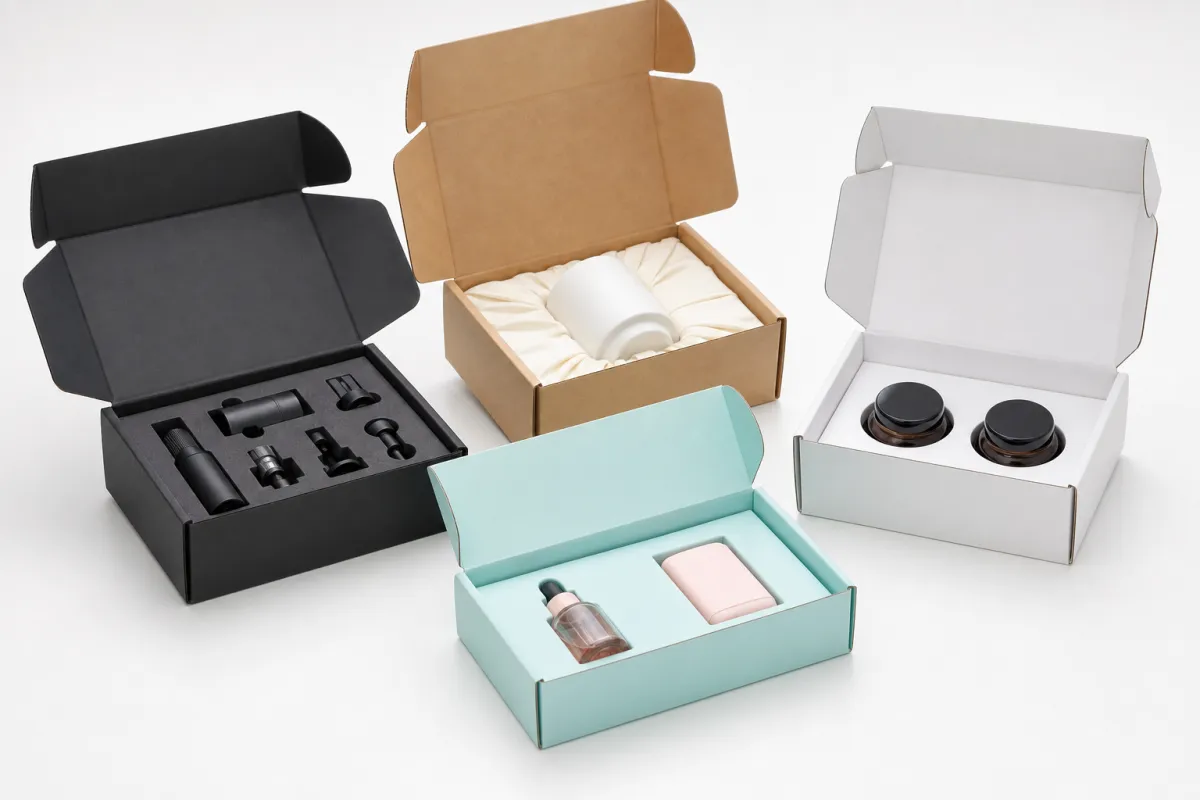
At the simplest level, custom retail cartons with inserts keep a product centered and protected inside a branded outer carton. The carton carries the graphics and shelf presence. The insert handles restraint, spacing, and orientation. Basic idea. Big impact. A snug product is far less likely to rub, rattle, or smash into the walls of the pack.
From a packaging buyer's point of view, custom retail cartons with inserts solve three jobs at once. They improve presentation, reduce transit damage, and make pack-out more repeatable for the operator loading the product. In real life, that means less time wrestling with tissue, void fill, or weird manual adjustments, and more time building a package that looks deliberate the second the customer opens it.
These packs show up in cosmetics, specialty food, beverage kits, electronics accessories, subscription kits, premium candles, and gift sets where the product needs both structure and display value. A lip serum in a paperboard tray has a different problem set than a glass bottle set in a corrugated cradle, but both benefit from the same core idea: custom retail cartons with inserts keep the contents organized and presentation-ready without loose filler that shifts around or looks sloppy.
The business value is easy to miss if you only stare at unit price. A cleaner unboxing experience can support package branding, while a better-fit insert can cut damage claims and keep the pack from arriving crushed or scuffed. That is why a carton that looks a little pricier on paper can still be the smarter option once you factor in product loss, repacking labor, and freight waste.
I still see teams treating the insert like a spare part. Bad habit. In a well-designed system, the insert is part of the packaging story, part of the protection strategy, and part of the retail experience all at once. That matters even more for custom retail cartons with inserts, where the structure often has to do more than one job without turning the package into a brick.
For teams trying to match branded packaging with operations, the carton is also a process tool. A good insert gives the loader a clear place for each component, which cuts errors on multi-item kits and keeps the final pack uniform from unit to unit. That consistency matters whether the pack is headed to a store shelf, a distributor, or direct to a customer.
How Custom Retail Cartons with Inserts Are Built
Custom retail cartons with inserts are built as a system, not as two separate purchases. The outer carton sets the visual and structural envelope, and the insert controls where the product sits, how much it can move, and how the item comes out. A strong design starts with the product itself: weight, fragile points, accessories, and whether the customer should see it through a window or a lift-open front.
The outer carton can be a tuck-end, auto-lock bottom, sleeve, rigid setup box, or another style based on the product's price point and handling needs. The insert may be die-cut paperboard, corrugated partitions, molded pulp, or foam if the item truly needs more shock absorption. For many retail programs, custom retail cartons with inserts use paperboard or corrugated because those materials balance print quality, cost, and recyclability better than a foam-heavy build.
Insert style has its own logic. Die-cut paperboard trays are clean and economical for lighter products, especially when the package is mostly there for shelf appeal. Corrugated cradles and partitions handle heavier or taller items better because they add structure and help spread pressure out. Molded pulp fits nicely when the brand wants a lower-plastic profile and the product geometry works with a nest-like form. Foam still has a place, but I would keep it for items with sharp fragility, high vibration sensitivity, or odd protection requirements.
Product geometry drives the structure more than most teams expect. A narrow bottle, a glass jar with a tall neck, a device with exposed controls, or a kit with several accessories each creates different fit risks. If the product needs to stay visible, the insert should not hide the selling points. If the product has decorative surfaces, the insert should stay off those areas, especially under compression during palletizing or courier handling. That is where custom retail cartons with inserts earn their keep: the protection follows the product instead of forcing the product into a generic box.
Assembly method matters just as much as material choice. Auto-lock cartons speed line work, but they need precise die-cutting and glue control. Fold-and-place inserts are simple, yet if they depend on too many folds, the labor savings vanish. Ship-flat designs help freight efficiency and storage, while glued sleeves or pre-formed nests can improve consistency when pack-out speed matters. A line that loads 500 units in a shift will feel those differences immediately, especially when custom retail cartons with inserts are running across multiple SKUs.
For teams wanting a technical reference point, organizations such as ISTA publish package testing methods that help validate how a pack behaves under drop, vibration, and compression. That matters because a carton that looks right on a screen can still fall apart once the product starts moving in the real world. Good custom retail cartons with inserts are built with testing in mind, not just artwork approval.
One more thing from the production floor: fit is not just a design issue, it is a tolerance issue. A half-millimeter on the sketch can become a very annoying fit problem once board caliper, humidity, and adhesive set-up are in the mix. That is why I like to see sample approval tied to actual product measurements instead of a clean mockup and a hopeful shrug.
Sizing, Materials, and Cost Factors for Custom Retail Cartons with Inserts
Pricing for custom retail cartons with inserts usually starts with board grade, insert complexity, print coverage, and quantity, but size has a bigger effect than many buyers realize. A larger carton uses more substrate, takes up more freight space, and often needs a more involved insert to stop the product from wandering inside the cavity. Even a few extra millimeters can increase material consumption across a run, so dimension control matters from the first drawing onward.
Material choice sets the performance ceiling. Paperboard works well for light to medium retail items and gives strong print results, especially when the package needs a polished shelf image. Corrugated board steps in when the product needs more crush resistance or better stacking strength. Molded pulp can be attractive for sustainability goals because it is often recyclable and shape-friendly, while rigid premium substrates can support a luxury position. Each of those choices changes the cost profile for custom retail cartons with inserts, and none of them is automatically right for every product.
There is also a difference between unit cost and total landed cost. A simpler structure may look cheaper at first glance, but if it needs void fill, extra labor, or frequent rework, the savings disappear fast. A smarter insert can raise the piece price a bit while lowering damage, reducing pack time, and eliminating fillers that make the box feel less refined. That tradeoff comes up constantly in custom retail cartons with inserts, especially for gift sets and fragile consumer goods.
Precision has a price. Tight fit usually means more sampling, more careful die development, and closer converting tolerances, but it can also cut movement inside the pack and improve presentation. Too loose, and the product shifts. Too tight, and operators fight the load or customers damage the contents while opening the box. For that reason, I usually recommend defining the product's actual tolerance range before asking for quotes on custom retail cartons with inserts.
The table below gives a practical way to compare common material paths for custom retail cartons with inserts. Real pricing depends on order volume, print style, and finishing, but these ranges are a useful starting point for budget planning.
| Material / Build | Best Use | Relative Unit Cost | Practical Notes |
|---|---|---|---|
| Paperboard carton with die-cut insert | Lighter cosmetics, accessories, gift sets | $0.18-$0.45 | Good print quality, efficient ship-flat storage, strong for presentation-focused custom retail cartons with inserts. |
| Corrugated carton with fitted insert | Heavier items, multi-piece kits, shipping-heavy programs | $0.32-$0.85 | Better stacking and cushioning; useful where transit abuse matters more than shelf display. |
| Molded pulp insert in printed outer carton | Eco-positioned consumer goods and fragile shaped items | $0.28-$0.70 | Strong sustainability story, though tooling and geometry may take longer to finalize. |
| Premium rigid carton with formed insert | Luxury sets, high-value electronics, presentation packs | $1.20-$3.50+ | Strong brand impact, but labor and material cost rise fast; best reserved for the right product tier. |
Print and finishing are another cost lever. Full-coverage ink, soft-touch coatings, foil, embossing, and spot UV can raise the perceived value of the package, but they also add expense and sometimes slow production. In custom retail cartons with inserts, decorative work should support the product story instead of hiding a weak structure. A clean, well-proportioned carton usually does more for shelf appeal than overworked graphics printed on the wrong substrate.
A carton can look perfect on a flat drawing and still fail in the hand. If the insert does not load quickly, hold the product securely, and protect the fragile point that actually breaks, the design is not finished yet.
If you are comparing specs, ask for a quote only after you have the product dimensions, target ship method, insert preference, print plan, and annual volume. That gives suppliers enough information to price custom retail cartons with inserts with fewer assumptions, and it lowers the odds of a surprise later when the structure is being converted. For buyers also reviewing broader custom packaging product options, this is the point where one size truly does not fit all.
And yes, a slightly more expensive board can still be the cheaper move overall. If the pack is easy to load, protects the neck or corner that keeps failing, and cuts a return, the math gets better fast. That is not marketing fluff. It is basic operations.
Step-by-Step Process and Timeline for Custom Retail Cartons with Inserts
The process starts with discovery, and that stage is where good custom retail cartons with inserts are usually won or lost. Gather the product dimensions, weight, fragile points, accessory count, preferred opening style, and any retail display goals before anyone starts drawing a dieline. A good spec sheet should also note whether the product ships to stores, distributors, or consumers, because the shipping environment changes the structure more than most teams expect.
Once the basics are clear, structural design comes next. At this stage, the carton and insert should be developed together so the product loads cleanly and opens the way the brand wants. The designer should confirm board caliper, glue points, closures, and how much room the insert needs to hold the item without creating pinch points. That is the point where custom retail cartons with inserts move from an idea to a working build.
Sampling is the next checkpoint, and it deserves real attention. A physical sample tells you more than a rendering ever can: how fast the item loads, whether the insert springs back, whether the closure pops open, and whether the print lands where the eye expects it. If the product has a cap, screen, handle, or fragile edge, test that area first. I have seen many custom retail cartons with inserts look perfect in CAD and then need one more tweak once a hand starts folding the tray.
A realistic timeline depends on complexity. Straightforward paperboard cartons can move quickly once the art is approved, but new tooling, custom inserts, special finishes, and multiple rounds of sample review all stretch the schedule. A simple project often needs about 12-15 business days from proof approval to production, while more involved programs take longer because the sample sign-off alone eats time. The cleaner the specification, the easier it is to keep custom retail cartons with inserts on schedule.
Production planning should lock the final quantities, carton pack counts, freight expectations, and pallet configuration before the first run begins. That sounds administrative, but it is part of the packaging design. If a pack is awkward to case pack or unstable on a pallet, the whole supply chain feels it. With custom retail cartons with inserts, the final approval should include pack-out speed, closure quality, and whether the product stays put when the carton is shaken, tilted, or dropped from a practical handling height.
Quality checks are the last gate before release. Verify dimensions, glue performance, insert retention, fold accuracy, and whether the graphics still align after the box is assembled. If the carton is part of a retail launch, make sure the final packed unit matches the approved sample in both appearance and function. The goal is not just to ship a box. It is to deliver repeatable Product Packaging That behaves the same way every time. That is the real value of custom retail cartons with inserts.
For brands focused on sustainability, the current guidance from the EPA's sustainable materials management resources is worth reviewing alongside your spec work. Material choice, recovery stream compatibility, and component count all affect whether the pack is easy to recycle or annoying to separate. That matters as much as appearance in many modern custom retail cartons with inserts programs.
Common Mistakes That Hurt Custom Retail Cartons with Inserts
The first mistake is designing the outer carton first and leaving the insert for later. That usually leads to a box that looks fine on screen but does not actually support the product where it needs support. When custom retail cartons with inserts are engineered together, the insert can follow the product profile and the carton can provide the right amount of clearance and compression resistance. Split them apart and the package often ends up with wasted space or annoying loading steps.
Another common miss is vague measurement data. Product dimensions without tolerances, weight distribution, accessory counts, and fragile-point notes make it hard to build a reliable fit. A glass bottle set, for example, needs different support than a solid plastic device of the same size because the mass and break points are different. If the spec sheet is too loose, custom retail cartons with inserts can come back with inserts that are either too forgiving or so tight that operators slow down trying to load them.
Overpacking causes its own problems. Extra board, extra folds, and extra components can make the pack look bulky rather than refined, and they add freight cost and handling time. Sometimes the package feels less premium because it looks overbuilt. The smarter move is usually to remove unnecessary structure until the remaining custom retail cartons with inserts do the job cleanly with less waste.
Under-testing is another expensive habit. A structure that survives a desk drop or a quick shake in the office is not automatically ready for warehouse handling, parcel carrier vibration, or pallet stacking. Real test methods, including guidance aligned with ISTA and ASTM D4169, help reveal where the package fails before the failures turn into claims. That is why sample review matters so much in custom retail cartons with inserts programs.
Finishing mistakes can hurt performance too. Heavy coatings on flex points may crack, weak adhesives can slow the line, and decorative elements placed across a fold line can split after a few handling cycles. I have also seen glossy finishes make it harder for operators to grip a carton during assembly, which sounds minor until the slowdown shows up at volume. Good custom retail cartons with inserts should support the process, not make every step harder.
Sustainability mistakes happen when the build mixes too many materials or picks a substrate that does not match the recycling goal. A paperboard carton paired with a foam block may be fine for protection, but it may not fit the brand's stated environmental position. If recovery is part of the message, think about material separation early. That applies to custom retail cartons with inserts as much as any other form of branded packaging.
One more trap: approving a sample that only looks right. If the carton opens well in one neat motion but drifts during shake testing, that is not a pass. Pretty is nice. Functional is what keeps the SKU alive.
Expert Tips for Better Fit, Faster Packing, and Lower Waste
Start with the fragile point, not the widest dimension. Sounds obvious. It isn't always how teams spec a pack. If the product breaks at the neck, corner, screen, or cap, the insert should protect that area first, even if the outer carton gets a little more breathing room elsewhere. In custom retail cartons with inserts, that one decision can cut breakage without making the whole pack oversized.
Ask for a pack-out sample before you commit to full production. If the team can load the product quickly, consistently, and without forcing the insert into shape, the structure is usually on the right track. This is also the best time to check whether the customer can open the carton cleanly and whether the product sits at the right angle for presentation. For custom retail cartons with inserts, speed and fit should be tested together, because a pack that protects well but slows the line may still be the wrong design.
Simplify wherever the product allows it. One well-made insert is usually better than multiple small pieces that each need handling, alignment, and inspection. Fewer components mean fewer chances for error and often less labor per finished unit. That is a real advantage in custom retail cartons with inserts, especially when the same pack has to run at scale across repeated orders.
Think about the shelf and the ship lane at the same time. A carton that presents beautifully in a store but crushes too easily in transit is not finished, and a carton that survives abuse but looks crude on the shelf can still miss the mark. The best custom retail cartons with inserts solve both problems at once, which is why the outer structure, graphics, and insert geometry should be reviewed together from the start.
Keep the graphics clear. Simple orientation marks, restrained copy, and clean opening cues often improve the customer experience more than busy artwork does. That is especially true for custom retail cartons with inserts that need to carry a lot of information without crowding the front panel. When the brand message is focused, the package feels easier to trust and easier to use.
Plan for repeat orders. If the product will be reordered, lock the specification tightly enough that future runs match color, fit, and closure behavior without guesswork. Save the approved sample, note the board grade and caliper, record the insert dimensions, and document any finishing details. That kind of discipline pays off because custom retail cartons with inserts are only as repeatable as the records behind them.
My favorite shortcut is boring: make the specification annoying to ignore. Put the critical dimensions, fragile points, opening direction, insert material, and acceptable tolerance in one place. That way, nobody has to guess later. Guessing is how packaging gets expensive.
Next Steps for Ordering Custom Retail Cartons with Inserts
The best next step is to create a simple spec sheet that covers product dimensions, weight, fragility concerns, accessory count, insert preference, print goals, and estimated annual volume. That sheet does not need to be fancy. It just needs to give the converter enough detail to build a structure that fits the product and the production line. For custom retail cartons with inserts, clarity up front saves time later in sampling and approval.
After that, request a structural sample and compare it against the actual product, the speed of loading, and the real shipping method you use. If the sample feels tight, loose, awkward, or unstable, adjust it before full production. A strong packaging design is one that behaves the same way in the hand, on the shelf, and in transit. That is the practical test for custom retail cartons with inserts.
Review cost against total value rather than unit price alone. Look at damage reduction, labor savings, freight impact, shelf appeal, and the efficiency of the pack-out process. A slightly higher quote can be the better deal if it cuts returns and keeps the line moving. For brands that want to compare options across formats, the broader Custom Packaging Products range can help narrow the right build before you place an order.
Approve the final dieline only after checking closure, fit, and whether the insert keeps the product stable during shake and tilt testing. If the pack passes those checks, document the approved build so the next run starts from the right baseline. That kind of recordkeeping keeps custom retail cartons with inserts consistent and avoids the common problem of a reorder drifting away from the original sample.
In the end, custom retail cartons with inserts are not just about keeping a product in place. They protect the item, support the brand, and make the packing process easier to run with less waste. If you get the structure, material, and fit right, the carton does a lot of quiet work for you every time it ships.
The most practical takeaway is simple: start with a measured product sample, define the fragile point, and approve the insert with the real loading motion in front of you. Do that before you get attached to finishes or graphics, and you will avoid most of the expensive nonsense later.
FAQs
What are custom retail cartons with inserts used for?
They hold a product securely inside a branded outer carton while improving presentation at retail or during unboxing. They are especially useful for fragile, multi-part, or premium items that need both protection and a tidy layout, which is why custom retail cartons with inserts are so common in cosmetics, electronics accessories, and gift sets.
Which insert material is best for custom retail cartons with inserts?
Paperboard works well for lighter products and clean presentation. Corrugated, molded pulp, or foam may be better when the item is heavier, more fragile, or requires more shock control. The best choice depends on how custom retail cartons with inserts will be handled, shipped, and displayed.
How do custom retail cartons with inserts affect pricing?
Price depends on size, board grade, insert complexity, print coverage, finishes, and order quantity. A better insert can raise unit cost slightly but lower damage, labor, and total packaging expense, which is often the real reason teams choose custom retail cartons with inserts.
How long does the custom retail cartons with inserts process usually take?
Timeline depends on design complexity, sampling, artwork approval, tooling, and production volume. A clear spec sheet and fast sample review usually shorten the schedule the most, especially when custom retail cartons with inserts need new dies or special finishing.
What should I test before approving custom retail cartons with inserts?
Check fit, loading speed, product stability, closure strength, and how the carton behaves during drop or shake tests. Also confirm print placement, fold accuracy, and whether the insert protects the product's fragile points, because those details determine whether custom retail cartons with inserts will hold up in the real world.

