Custom Retail Merch Caps bulk order decisions are rarely about caps alone. They are about margin, shelf speed, and whether a style keeps working after it leaves the display. A hat is one of the few retail items that continues to advertise the brand every time it is worn, which is why store buyers, stadium shops, pop-ups, and brand teams keep returning to it instead of locking cash into slower-moving display pieces.
The buying logic is simple. Caps are easier to size than apparel, easier to stack than larger accessories, and easier for a customer to justify as an impulse add-on or entry-price item. That makes them a practical fit for seasonal tables, checkout displays, and replenishment programs that need volume without excess risk. For a retailer, a strong cap program is part product strategy and part packaging discipline. It has to look right, ship right, and sell quickly.
If the assortment is right, a cap can function like a small-format billboard with a healthy margin. If it is wrong, it sits. The difference usually comes down to style choice, decoration method, packing method, and whether the supplier understands how retail receiving works after the truck leaves the dock.
Why Retail Caps Outsell Static Merch Displays
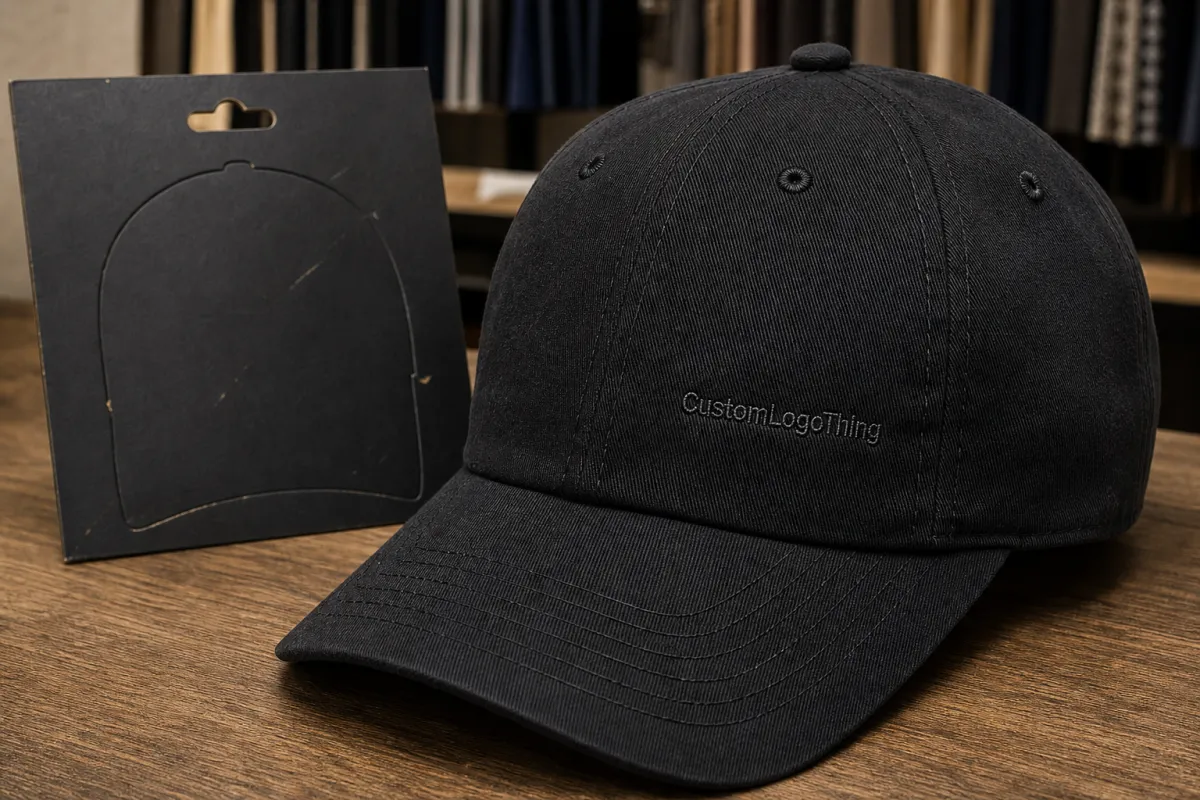
Most merch displays stay where they are placed. Caps do not. Once a customer buys one, the logo keeps working on the street, at the game, in the gym, and during travel. That matters because the item is not just inventory; it is paid media with a usable life.
A store buyer also gets more flexibility from caps than from many other branded goods. A hoodie can be a strong seller, but it brings size complexity, higher ticket price, and more risk in stock balancing. A display fixture may look impressive, yet it does nothing after the sale. A cap sits in a more forgiving category. It is one size, one shape, and usually one decision at the register.
That is why retail teams often compare caps to other small accessories instead of apparel. The cap typically wins on speed and storage. It occupies little shelf depth, can be faced forward in a tight space, and does not require the same size curve management as shirts or outerwear. In stores where every inch counts, that matters more than polished brand language.
Here is the practical comparison most buyers make:
- Caps are easy to merchandise in small spaces and move well as impulse buys.
- Shirts depend on size runs and broader sell-through planning.
- Display-only pieces create visual value, but no post-sale exposure.
That is why a custom Retail merch caps bulk order can outperform a larger merch rollout if the target is quick recovery and clean cash flow. A seasonal endcap, a game-day table, or a checkout rack with one strong cap style can beat a more ambitious apparel plan, especially if the retailer wants to avoid dead stock. I see this pattern most often in sports retail, lifestyle stores, and short-term pop-up programs where shelf space is tight and the product has to justify its slot quickly.
One more point gets missed often: cap buyers are not only buying style. They are buying repeatability. If the cap works once, it can often be reordered with minor changes in colorway or trim. That makes it a stronger core item than a one-off promotional piece.
Cap Styles, Decoration Methods, and Retail-Ready Finishes
There is no universal cap body that fits every retail channel. The best-selling styles are usually the ones that match the customer profile and the price point, not the ones with the most features.
Structured truckers work well for athletic shops, outdoor brands, and casual retail because the front panel holds shape and gives the logo a strong surface. Dad hats sell well in lifestyle retail because they feel easygoing and familiar, and that lower-pressure look often supports a wider audience. Five-panel caps tend to work for streetwear and trend-driven drops. Snapbacks hold a classic retail position with a flat brim and more visible front panel real estate. Performance caps are practical for golf, run clubs, and activewear programs because moisture management matters as much as appearance.
Decoration choice changes the customer's perception almost as much as the cap body itself. Embroidered logos usually signal higher perceived value because they add texture and depth. Woven patches create a more premium or heritage feel, and they work well when the logo has fine details. Screen print is efficient for simple graphics and flatter branding. Label details such as woven side tabs, sweatband prints, or interior branding can push the item from generic merch into a more deliberate retail piece.
The finish should match the audience. Flat brims feel sharper and more fashion-forward. Curved brims feel familiar and easier to wear immediately. Low-profile crowns tend to read casual. High-crown styles have stronger shelf presence and can carry a bolder logo. Closure choice matters too: snapbacks are flexible, buckle straps feel more premium, and hook-and-loop closures can work for active use but are not always the best fit for lifestyle retail.
A buyer planning a cap program should think about the item as a retail object, not a blank canvas. That means selecting the body, the closure, the logo application, and the finish as one decision. A strong logo on the wrong cap body still underperforms.
For a broader merchandising program, the same logic applies to branded packaging and package branding. A cap with a well-made hangtag or insert card feels more intentional. If you are pairing the order with Custom Packaging Products, the cap and packaging should tell the same story on the shelf.
"A retail cap has to earn its shelf space twice: once in the store, and again after the customer wears it."
Specs That Keep Bulk Cap Orders Retail-Ready
Specs prevent surprises. That sounds obvious, yet it is where a lot of cap programs get expensive. Buyers often approve a look before they lock the underlying construction, then discover too late that the fit, crown height, or packing method does not match the store standard.
Before you place a bulk cap order, confirm these details in writing:
- Fabric content such as cotton twill, brushed cotton, polyester mesh, or performance blends.
- Panel count and whether the cap is five-panel or six-panel.
- Crown structure including structured or unstructured.
- Brim style whether flat or pre-curved.
- Closure hardware such as plastic snap, metal buckle, strap, or hook-and-loop.
- Sweatband quality because comfort affects repeat wear.
- Stitch density around the logo and seams.
The small stuff causes the expensive problems. A logo placed a few millimeters too high can look off on a retail peg. A color that is close but not matched can break a brand standard. A carton that allows brim crush during transit can turn sellable stock into a markdown problem. For multi-store rollouts, I recommend treating the cap carton like any other product packaging component: define the box size, the packing count, the label format, and the handling expectation before production starts.
That is also where transit testing matters. For store-bound shipments, many buyers reference ISTA methods as a baseline for package durability. It is not about overengineering a cap order. It is about protecting shape, presentation, and margin.
Packaging details can help or hurt retail presentation. Individual polybags, size stickers, insert cards, and master carton labels all affect how fast a store team can receive and merchandise the goods. If the receiving team has to sort a mixed carton by hand, you pay for it in labor. If the cartons are labeled clearly, the product lands faster.
One more point on quality control: ask for a pre-production proof, confirm PMS or digital color targets, and decide whether mixed colors or mixed sizes need separate carton counts. Those three choices reduce the kind of errors that create rework and delay.
If your program includes paper inserts, FSC-certified materials from FSC sources can support cleaner claims around paper-based branded packaging and retail packaging materials. That does not change the cap, but it can strengthen the full presentation.
Practical buyers also inspect a sample for the things that do not show in a mockup: stitch tension, seam puckering, front panel stiffness, sweatband softness, and how the brim sits after a few hours in a carton. Those details matter because a cap is handled more like a fashion accessory than a printed flyer. If it arrives warped, the first impression is already gone.
There is also a difference between retail-ready and display-ready. A display-ready cap may look fine on a fixture even if the inside finish is rough. Retail-ready stock has to survive handling, receive cleanly, and still feel worth the ticket price once a customer picks it up. That usually means cleaner stitching, better thread control, and packaging that protects shape without making receiving painfully slow.
Pricing, MOQ, and Unit Cost Drivers in a Custom Retail Merch Caps Bulk Order
Pricing is where buyers either save money or misunderstand it. The headline unit cost can look attractive, yet the real landed price may be higher once setup, freight, decoration, and packing are added. A cap order needs to be compared on total program cost, not just the cap body price.
These are the main cost drivers:
- Decoration method because embroidery, patch construction, and print each carry different labor and setup costs.
- Stitch count because a dense logo takes longer to sew and can slow the line.
- Color count because more thread or print colors usually increase complexity.
- Packaging because individual polybags, insert cards, and retail labeling add handling.
- SKU count because one style in one color is easier than a matrix of colors and logos.
MOQ should be read in context. A 300-piece test run is useful if you are testing a new brand story or a seasonal drop. A 1,000-piece order makes more sense for a proven retail program. At higher quantities, unit price usually falls, but only if the program stays simple. Split it across too many styles and the savings disappear quickly.
Here is a practical comparison buyers can use to sanity-check quotes:
| Cap option | Typical retail use | Common MOQ range | Approx. bulk unit range | Cost pressure points |
|---|---|---|---|---|
| Embroidered trucker | Sports shops, outdoor retail, resort merch | 100-300 pcs | $4.20-$7.50 | Stitch count, mesh quality, patch or embroidery size |
| Dad hat with front embroidery | Lifestyle retail, pop-ups, museum shops | 100-250 pcs | $4.80-$8.20 | Cap fabric, wash effect, logo placement consistency |
| Five-panel patch cap | Streetwear, brand drops, boutique resale | 120-300 pcs | $4.00-$7.00 | Patch build, crown shape, panel seam control |
| Performance cap | Golf, activewear, corporate retail | 150-500 pcs | $5.20-$9.00 | Technical fabric, sweatband spec, color matching |
A useful rule of thumb: the cheapest cap is not always the best retail buy. If it crushes in transit, prints poorly, or loses its shape after display, the bargain disappears fast. Retailers care about sell-through and presentation, and those two things can outweigh a small difference in unit price.
Buyers often get better value by simplifying the order rather than chasing a lower quote. One body, one logo method, one carton spec. That is usually where the true savings begin.
Another quiet cost factor is revision time. A supplier may quote a low unit price and then spend two extra proof cycles cleaning up artwork that was never optimized for embroidery or patch production. A clean vector file, clear placement instructions, and a final color target often matter more than a small difference in base price. The order is cheaper when the front end is disciplined.
Process and Turnaround: From Artwork to Delivery
A clean workflow saves time. Most delays happen before production starts, not during production. If the artwork is unclear, the size run is not locked, or the proof keeps changing, the schedule slips quickly.
For a standard cap program, the process usually looks like this:
- Intake - confirm style, quantity, target delivery date, and decoration method.
- Artwork review - clean up vector files and check logo placement.
- Proof approval - sign off on mockup, colors, and packaging details.
- Material confirmation - lock fabric, thread, patch, and closure choices.
- Production - run decoration, assemble, and trim.
- Inspection - check stitching, alignment, and carton count.
- Packing and shipping - prepare retail-ready cartons and dispatch by the chosen method.
Timing depends on where the order sits in that workflow. Sample approval and production are different clocks. A buyer who needs caps for a trade show or a seasonal floor reset should separate those timelines early. A typical straightforward order might spend several days in proofing, then another 10 to 15 business days in production after approval, with transit added on top. Rush timelines are possible, but only when the art is ready, the quantity is locked, and the packaging is simple.
That is why clean vector art matters so much. It reduces revision cycles. It also helps maintain logo sharpness across embroidery, patches, and print. In practice, a simple artwork handoff can save more time than any paid rush fee.
If the order includes multiple delivery points, ask for carton labeling that mirrors store SKUs. That is basic retail packaging discipline, but it prevents confusion at receiving. It also supports smoother replenishment later because the same labels can be used for reorders.
For programs that need product packaging extras like sleeve cards or display-ready inserts, pairing the cap run with Custom Packaging Products can keep the full presentation consistent. The cap should arrive ready to sell, not just ready to unwrap.
Standard orders are best when the schedule has buffer. Rush orders are best when the buyer has no flexibility and the supplier can keep the order simple. Anything in between needs realistic planning, not optimism.
One hidden advantage of a disciplined process is that it improves the second order. Once the cap body, artwork position, carton counts, and packing method are documented, reorder approvals move faster. That matters for retail because the best-performing cap is usually the one that gets replenished before it disappears from the floor.
How Custom Logo Things Handles Reorders and Multi-SKU Runs
Retail buyers care about consistency more than sales language. If a cap becomes a best seller, the second order has to look like the first one. Color drift, inconsistent stitch placement, or different carton packing can cause avoidable problems at the store level.
That is where a supplier like Custom Logo Things should earn trust. The value is not only in making the first order. It is in keeping repeat orders aligned across colorways, logo versions, and replenishment cycles. A good bulk program should support a single style in multiple colors, or multiple cap styles under the same brand standard, without turning the inventory into a mess.
What matters most in a reorder-friendly setup?
- Consistent color matching from run to run.
- Spec sheets that survive handoffs between buyers and production.
- Clear SKU labeling for mixed retail distributions.
- Proof archives that reduce revision time on repeat orders.
- Packing methods that keep shape and counts intact through transit.
Buyers sometimes focus on the first sample and forget the repeat order. That is a mistake. A strong merchandising program depends on replenishment, and replenishment depends on documentation. If the cap is strong enough to reorder, the supplier should be able to find the same standard again without guesswork.
"We need the same hat, not a close cousin" is the kind of line retail teams say after the first sell-through is already proving the concept. The real benefit of a controlled cap program is that the second and third orders move faster because the decision tree is shorter.
For larger assortments, the most useful supplier behavior is quiet precision. Fewer errors. Faster proof cycles. Better carton discipline. More attention to the details that affect store receiving and margin protection. That is the difference between a vendor and a production partner.
If you are comparing support levels across vendors, the Wholesale Programs page is a practical place to look at quantity tiers and repeat-order structure. And if you need quick answers on file prep or ordering basics, the FAQ can shorten the back-and-forth.
Multi-SKU runs raise the risk of confusion, which is why the best systems use plain labeling and rigid proof control. If one colorway has an embroidered front and another uses a patch, the differences should be obvious on the spec sheet and on the carton label. Otherwise the savings from consolidation disappear into receiving mistakes.
Next Steps to Lock Your Cap Order Before Sell-Through
The best next move is not to keep browsing every cap body in the catalog. It is to narrow the field to two or three options that can survive the real test: margin, display space, and reorder potential.
Before you request a quote, gather these inputs:
- Cap style and color target.
- Decoration method and logo file.
- Quantity by SKU.
- Target delivery date.
- Packaging requirements for retail or ship-to-store use.
Then follow a simple order of operations. Pick the cap body first. Confirm the branding method second. Compare quote tiers by quantity third. That sequence keeps the buying conversation grounded in production reality instead of aesthetics alone. It also helps you see where the savings start to matter, which is usually around the middle tier of the order, not the smallest one.
If the program needs a premium feel, invest in the details customers can see and touch: structured crowns, tighter embroidery, better patch build, and clean package branding. If the goal is fast turn and broad appeal, keep the construction cleaner and the color story tighter. There is no prize for complexity.
Retail buyers make better decisions when they think in terms of sell-through, not just acquisition cost. A cap that moves quickly at a healthy margin is more useful than a cheaper cap that sits in a carton. That is why a custom Retail Merch Caps bulk order should be treated like a merchandising decision with production consequences, not the other way around.
For stores, stadium shops, pop-ups, and brand programs that need volume without excess risk, the next step is to lock the spec, confirm the packing standard, and move before the season window closes. The cleanest programs are the ones where quote, proof, and carton plan are defined up front. That is usually what separates a tidy reorder from a pile of avoidable exceptions.
One final observation: the most successful cap programs rarely try to do everything. They do one shape well, one decoration method cleanly, and one packing standard consistently. That discipline is not glamorous, but it is what keeps the merchandise moving.
FAQ
What affects the price of a custom retail merch caps bulk order?
Decoration method, stitch count, packaging, and the number of colors usually drive cost more than the cap body alone. Higher quantities usually lower the unit price, but freight, setup fees, and carton configuration still need to be included when comparing quotes.
What is the minimum order for custom retail caps in bulk?
MOQ depends on the cap style and branding method. A structured embroidered cap may have a different threshold than a printed or patched version. If you need mixed colors or mixed styles, ask whether each variation counts separately toward the minimum.
How long does a custom merch cap bulk order usually take?
Timing depends on artwork approval, material availability, production queue, and shipping method. A clean proof process usually shortens the schedule, while revisions, special trims, or complex packaging can add time.
Which cap style is best for retail resale?
Dad hats and trucker caps are common retail winners because they fit a wide audience and keep price points approachable. Structured or premium styles work well when the brand wants a higher perceived value on the shelf.
Can I order multiple cap colors or logos in one bulk run?
Yes, but each colorway or logo version may affect setup, packing, and MOQ requirements. Keep artwork and SKU labeling organized so stores can receive, display, and reOrder the Right versions quickly.
What should I check in a pre-production sample?
Check logo placement, thread tension, crown shape, brim curvature, closure quality, and how the cap holds up after being packed and unpacked. A sample that looks fine from a distance can still fail at the shelf if the fit or finish feels off in hand.

