Buyer Fit Snapshot
| Best fit | Custom Retail Shopping Bags Supplier projects where brand print, material claims, artwork control, MOQ, and repeat-order consistency need to be specified before quoting. |
|---|---|
| Quote inputs | Share finished size, material target, print colors, finish, packing count, annual reorder estimate, ship-to region, and any compliance wording. |
| Proofing check | Approve dieline scale, logo placement, barcode or warning zones, color tolerance, closure strength, and carton packing before bulk production. |
| Main risk | Vague material claims, crowded artwork, missing packing details, or unclear freight terms can make a low unit price expensive after revisions. |
Fast answer: Custom Retail Shopping Bags Supplier: Film, Print, MOQ, and Carton Packing should be specified like a repeatable production item. The safest quote records material, print method, finish, artwork proof, packing count, and reorder notes in one written spec.
Production checks before approval
Compare the actual filled-product size with the drawing, then confirm tolerance on folds, seals, hang holes, label areas, and retail display edges. Reserve space for logos, QR codes, warning copy, and material claims before decorative graphics fill the panel.
Quote comparison points
Review material grade, print process, finish, sampling route, tooling charges, carton quantity, and freight assumptions side by side. A quote is only useful when the supplier can repeat the same color, closure quality, and packing count on the next order.
Custom Retail Shopping Bags Supplier: What to Know
The right custom retail shopping bags supplier does more than stamp a logo on paper and call it branding. The bag is usually the last thing a shopper leaves with, which means it acts like a moving ad, a protection layer, and a quick verdict on the purchase all at once. If the bag feels flimsy, the brand feels flimsy. If it feels considered, the whole transaction feels more expensive. That is not subtle. It is packaging doing exactly what packaging is supposed to do.
From a buyer’s point of view, a good custom retail shopping bags supplier turns a vague idea into something that can actually survive store traffic: the right paper or board stock, the right handle, the right print method, the right dimensions, and a delivery plan that lines up with a store opening or campaign launch. That is the real value. Not just making bags. Making decisions that hold up in the wild.
If your brand already uses Custom Packaging Products across boxes, inserts, or tissue, the shopping bag should feel like part of the same family. Good branded packaging does not send three different messages in three different directions. It repeats color, tone, and tactile cues until the customer recognizes the brand before reading a single word. That kind of consistency is quiet, but it works.
What a custom retail shopping bags supplier really does
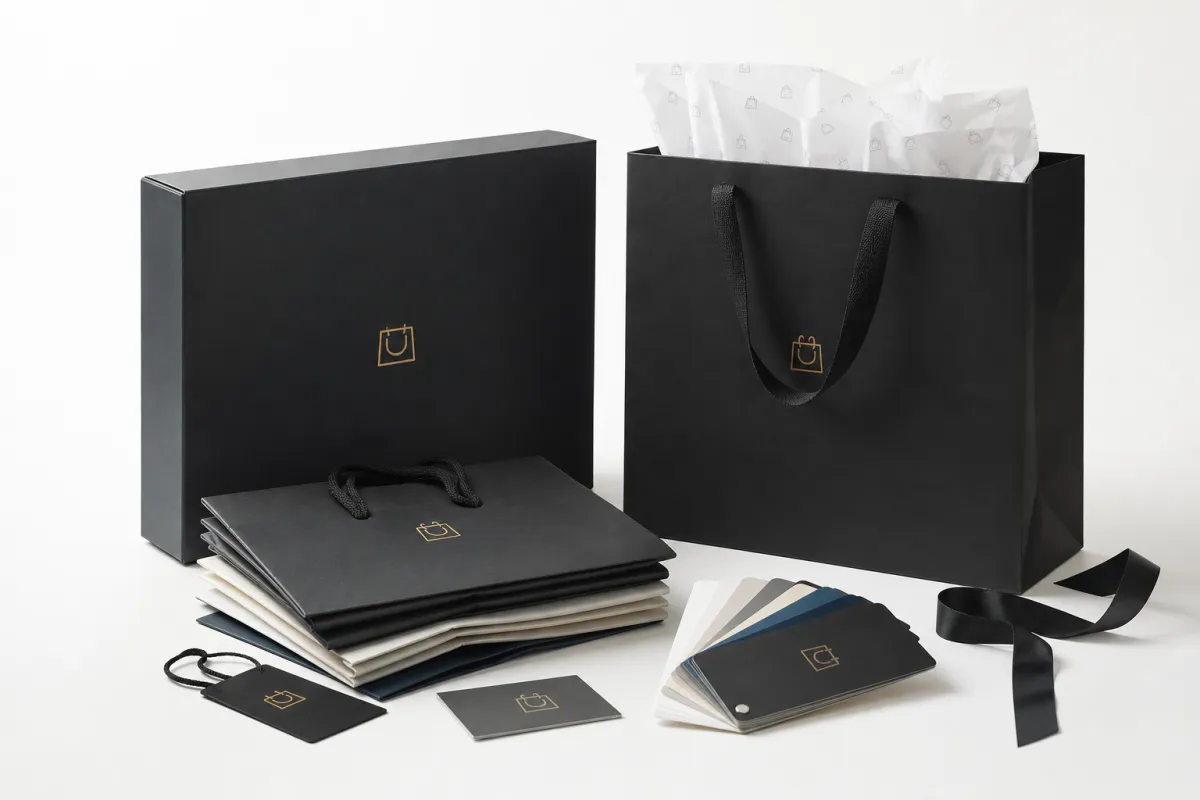
A custom retail shopping bags supplier is not just a vendor with a press and a pallet jack. The better ones act like a packaging consultant, a materials guide, and a production planner rolled into one. They help decide whether the bag should be kraft, coated paper, specialty stock, reusable nonwoven, or recycled-content paper, then pair that material with a structure that can handle real store use. That means looking at weight, handle style, fold pattern, print coverage, and the kind of retail experience you want customers to remember.
The commodity bag seller mostly asks for size and quantity. A strategic custom retail shopping bags supplier asks what goes inside the bag, how customers carry it, how long it should stay in circulation, and whether it needs to match other package branding elements like tissue, stickers, or Custom Printed Boxes. Those questions matter because bags fail in different ways. Sometimes they tear. Sometimes the colors turn muddy under store lighting. Sometimes they feel cheap in the hand even when the print itself is technically correct.
There is a small but important twist here: the bag often outlives the purchase. A shopper may toss the receipt and keep the bag for reuse, gifting, storage, or just because the thing is too decent to throw out. That makes the bag a second impression, not a finishing touch. In practice, a smart custom retail shopping bags supplier is helping you buy more time with the customer. The longer the bag stays in a home, office, or car, the longer the brand stays visible.
Packaging buyers often underestimate how much a bag changes perceived value. A few cents added to unit cost can make a $40 purchase feel more considered, while a poor bag can drag the whole retail experience down fast.
There is also a real difference between a print shop and a custom retail shopping bags supplier. A printer may be excellent at color, but retail bags have their own failure points: handle reinforcement, gusset strength, bottom construction, and stackability in the back room. A supplier who understands retail packaging will care about store operations as much as artwork. That matters even more for multi-location brands that need consistent sizing, consistent color, and repeatable reorder performance.
For retailers managing several formats, consistency is the prize. A strong custom retail shopping bags supplier can keep the same look across boutiques, kiosks, and flagship stores, even if the size changes a little. Shoppers read consistency as professionalism. They may not know why the experience feels better, but they notice when the bag, the box, and the counter display look like they were designed by the same brain.
How a custom retail shopping bags supplier turns ideas into production
The production path starts with the brief. A good custom retail shopping bags supplier will ask about the store environment, product weight, budget range, launch date, expected monthly volume, and any sustainability requirement. A bag for lightweight accessories is a different animal from a bag carrying shoes, glassware, or stacked apparel. If the supplier does not ask about load, the quote may look fine while the bag performs badly.
That intake stage should also cover how the bag will be used after purchase. Will it be handed out once and discarded, or reused as part of the customer’s daily carry? Will it sit in a high-end boutique, or get handled in a fast-moving gift shop? A thoughtful custom retail shopping bags supplier uses those answers to narrow down the material, finish, and handle style before the job even reaches proofing.
Artwork is where many projects get sloppy. The supplier should provide a dieline, confirm bleed, check logo placement, and make sure screen colors have a realistic print target. That is one reason I usually push retailers to approve a physical sample or at least a detailed mockup before the full run. A screen preview helps. A sample tells the truth. It shows whether the print still looks clean after folding, gluing, handle insertion, and carton packing.
A capable custom retail shopping bags supplier usually moves through the same manufacturing sequence: print, cut, fold, glue, reinforce, attach handles, and inspect. The order may shift depending on the construction, but the idea stays the same. The shop is not just printing a sheet; it is building a finished retail package that has to stand up, open cleanly, carry weight, and still look right when a customer walks out the door.
Quality control matters more than people expect. A bag can be beautifully printed and still fail if the gusset is weak or the handle attachment is inconsistent. An experienced custom retail shopping bags supplier will check for glue bleed, crooked handles, mismatched seams, and registration drift across the run. For brands that care about product packaging, those tiny defects are not tiny. They are the first thing people notice.
Once production is complete, the handoff matters almost as much as the manufacturing. Carton labeling, pallet count, freight method, and delivery timing all need to match the retail rollout. A strong custom retail shopping bags supplier keeps the order aligned with store opening dates, seasonal campaigns, and replenishment windows. In other words, they do not just make bags. They make sure the bags arrive where they belong, in the quantity and sequence the operation actually needs.
If the supplier is coordinating with other packaging items, the logistics become even more important. A launch may include tissue, stickers, inserts, and custom packaging products that need to hit the same distribution window. When that happens, the custom retail shopping bags supplier should be able to talk about pack counts, master cartons, and freight sequencing with the same confidence they bring to print specs. If they can only talk about ink and paper, you are not talking to the right partner.
Custom retail shopping bags supplier materials: what matters most
Material selection is where a custom retail shopping bags supplier earns trust. Kraft paper is common because it is relatively economical, recyclable, and visually honest. Coated paper gives a smoother print surface and sharper image reproduction. Premium specialty stocks can add texture, weight, or a distinct feel. Reusable nonwoven options may fit retailers that want a longer-life carry bag. Recycled-content papers are increasingly common, but the exact look and performance still depend on fiber mix and finish.
The right material is not only about aesthetics. It affects strength, print sharpness, and how the bag feels in the customer’s hand. A thicker board or heavier paper stock can improve stiffness and presentation, but it also changes folding behavior and shipping cost. A seasoned custom retail shopping bags supplier will balance those tradeoffs instead of chasing the heaviest material on the sheet. More weight is not automatically better. Sometimes a lighter stock with good reinforcement performs better for the actual load. I’ve seen brands spend money on paper weight they never needed. That’s a nice way to burn budget.
Surface finish deserves real attention too. Uncoated kraft has a natural, earthy look that works well for artisanal stores and some sustainability-led brands. A coated or laminated finish can intensify color and protect the print, which helps if the bag needs a more elevated retail packaging look. Spot UV, foil stamping, embossing, and debossing can add tactile depth, but every finish should be justified by the brand and the budget, not by habit.
The handle choice is almost as important as the paper. Rope handles usually feel more premium. Twisted paper handles work well in food, apparel, and gift retail. Die-cut handles create a cleaner silhouette for lighter items. Reinforced patch handles or board inserts improve grip and reduce pull-out risk. A good custom retail shopping bags supplier will match the handle to the product weight and customer behavior instead of offering one default option for every order. No one needs the same handle on a jewelry bag and a shoe bag. That would be kinda silly.
For heavier purchases, reinforcement is not optional. A bottom insert, side gusset adjustment, or stronger fold construction can make the difference between a bag that survives and a bag that fails in front of the shopper. I have seen brands spend more on premium print than on structural support, which is backwards. A custom retail shopping bags supplier should be able to explain load-bearing choices in plain language, not just in spec jargon.
The best bag material often depends on the retail segment:
- Boutiques: premium paper, refined finish, clean color work, and a handle that feels intentional.
- Apparel stores: medium-weight kraft or coated paper with a carry solution that holds folded garments without sagging.
- Gift shops: versatile paper stocks that balance cost and presentation, especially for varied item weights.
- Cosmetics: smoother surfaces and tighter print control so small logos and gradients stay crisp.
- Books and heavier items: stronger kraft, reinforcements, and a supplier that understands real load conditions.
For sustainability claims, ask for documentation instead of assuming the label tells the full story. If a custom retail shopping bags supplier mentions FSC-certified paper, chain-of-custody support matters. If they mention recycled content, ask how it was measured and whether the material still meets the look and strength requirements. For broader context on forest certification, the FSC overview at fsc.org is a good starting point. For packaging performance and transport considerations, the guidance available through ista.org is useful as well.
Custom retail shopping bags supplier pricing: what drives cost
Pricing is where buyers get tempted to oversimplify things. A custom retail shopping bags supplier usually prices a project based on size, material, quantity, number of print colors, finish, handle type, packaging format, and shipping distance. A larger bag uses more material. More print coverage uses more ink and setup time. Special finishes raise labor and tooling requirements. Freight can swing the final landed cost more than people expect, especially if the order is split across multiple locations.
Unit price normally falls as volume rises, but that does not mean the largest run is the smartest move. Lower minimums can be the right answer for a retailer testing a new concept, a seasonal look, or a fresh logo treatment. A wise custom retail shopping bags supplier will show tiered pricing so the buyer can see how cost changes at 1,000, 3,000, 5,000, and 10,000 pieces. That makes it easier to match inventory to demand instead of overcommitting to one look.
Here is a simple comparison that shows how material choice often affects cost and presentation. These are illustrative ranges, not fixed quotes, because bag size, print coverage, and shipping can move the number in either direction.
| Material / Build | Best For | Typical Unit Range | What Drives the Price |
|---|---|---|---|
| Standard kraft paper bag | Apparel, gift shops, everyday retail | $0.18-$0.35 | Size, print colors, handle type, and volume |
| Coated or premium paper bag | Boutiques, cosmetics, elevated retail packaging | $0.28-$0.60 | Surface finish, ink coverage, lamination, and board weight |
| Reinforced kraft bag | Heavier purchases, books, shoes | $0.32-$0.75 | Extra inserts, stronger handles, and reinforcement labor |
| Reusable nonwoven bag | Membership programs, gift-with-purchase campaigns | $0.45-$1.20 | Fabric weight, stitching, print method, and handle construction |
That table also points to a mistake many buyers make: comparing quote totals without comparing the spec. One custom retail shopping bags supplier may quote a bag with 200gsm stock, rope handles, and a gloss laminate, while another quotes a lighter stock with twisted paper handles and no finish. Those are not equivalent products. A fair comparison starts with the same dimensions, the same construction, the same print count, and the same freight assumptions.
There are also hidden cost traps. Rush production is obvious. Artwork revisions can quietly add fees. Special coatings can require more lead time and setup. Split shipments to different stores can multiply freight charges. A good custom retail shopping bags supplier should spell out setup versus unit cost, then clarify whether proofing, packing, and delivery are included. If they cannot, the quote is not ready for a real decision.
For some retailers, the smarter move is to choose a slightly simpler bag and put the savings into better brand consistency across the full package set. The bag does not need to carry every premium detail. If you already have strong custom printed boxes, tissue, and inserts, a cleaner bag can still look excellent as long as the colors and proportions line up. A thoughtful custom retail shopping bags supplier understands that total package branding matters more than any single item in isolation.
Timeline and approvals with a custom retail shopping bags supplier
Timelines start with the brief and end with the truck arrival, and every step in between can move the schedule. A typical custom retail shopping bags supplier workflow looks like this: quote request, estimate, artwork review, proof approval, sample signoff if needed, production, packing, freight, and delivery. The exact span depends on bag complexity, order size, and where the bags are made, but the biggest delays usually come from slow feedback rather than slow machinery.
Artwork approval is the most common bottleneck. Missing bleed, low-resolution files, unoutlined fonts, and vague color expectations can add days. A supplier can only move as fast as the client’s response cycle. That is why a reliable custom retail shopping bags supplier will ask for source files early and push for written approval on the proof before the run starts. A phone call helps; a written approval protects both sides.
Simple domestic orders often move faster than complex overseas runs, but speed and cost are not the same thing. The cheapest option is not always the safest choice for a launch. If the bags need to hit stores by a fixed date, a domestic custom retail shopping bags supplier may offer a better risk profile even if the unit cost is a bit higher. That tradeoff is easier to justify when the launch date has actual revenue attached to it.
Buffer time is the quiet hero of packaging planning. A wise buyer does not schedule bag arrival for the same day as the launch. That is asking for trouble. Build in room for proof edits, transit delays, and last-minute quantity adjustments. A seasoned custom retail shopping bags supplier will appreciate a timeline with slack because it leaves space for quality control instead of panic.
Reorders deserve their own plan. The first order may be a launch quantity, but the second order should be easier, faster, and less risky. Keep a backup spec on file with dimensions, paper stock, handle type, and print references. That way, the next custom retail shopping bags supplier conversation is about replenishment, not rediscovery. Good retail packaging programs are built that way: one solid setup, then repeatable execution.
If you are managing multiple product categories, it helps to think of the bag as one part of the broader packaging product lineup. The launch may include cartons, inserts, and tissue, but the bag still has to fit the same calendar. A strong custom retail shopping bags supplier will coordinate well with the rest of the program rather than treating the bag as a standalone purchase.
Common mistakes when hiring a custom retail shopping bags supplier
The most common mistake is choosing on price alone. A cheap custom retail shopping bags supplier can still produce a bag that fails under load, prints unevenly, or looks off-brand next to the rest of the store experience. Once that bag reaches the customer, the low quote stops looking cheap. It starts looking expensive in a different way, because the brand absorbs the cost of the bad impression.
Another error is weak file preparation. Missing bleeds, low-resolution artwork, unexpanded fonts, and color expectations that were never confirmed in writing create preventable problems. Retail packaging is visual, but it is also technical. A good custom retail shopping bags supplier can help, yet they cannot rescue a file that was built carelessly. Clean projects start with clean assets.
Many retailers also underestimate real-world use. A bag may pass a desktop test and still fail when a shopper carries wet umbrellas, heavy candles, or stacked purchases in the rain. If the store sits in a humid environment or a busy walking district, the bag needs more discipline in its construction. A practical custom retail shopping bags supplier will ask about those conditions because retail packaging does not live in a vacuum.
Operational mistakes can be just as damaging. Skipping sample approval is risky. Ignoring carton counts creates receiving problems. Failing to confirm the delivery dock, warehouse contact, or store opening date can turn a finished order into a logistics headache. A disciplined custom retail shopping bags supplier will push for those details early, because the bag is only useful once it lands in the right place at the right time.
Another subtle mistake is expecting the bag to do the work of the whole brand. The bag should support the story, not replace it. If the color palette, typography, and finish do not match the rest of the retail packaging system, the shopper senses a disconnect. The same is true if the bag looks premium but the interior packaging feels generic. A good custom retail shopping bags supplier will help you avoid that mismatch by thinking about package branding as a whole.
Before signing off on a final run, I would check four things:
- Load: does the bag hold the heaviest typical purchase without strain?
- Color: does the print match the approved brand palette under store lighting?
- Finish: does the surface feel consistent with the price point and category?
- Logistics: are cartons labeled, counted, and scheduled for the correct destination?
That checklist sounds basic, and basic is exactly where too many bag programs fall apart. A reliable custom retail shopping bags supplier can make a good project great; a careless one can make a good design look sloppy. Experienced buyers ask about proofing, handle reinforcement, and packaging standards before they ask about discounts. The cheapest line item rarely fixes the biggest problem.
Next steps after choosing a custom retail shopping bags supplier
Once you have narrowed the field, start with a fast audit of what you already know: bag sizes in use, product weights, brand colors, monthly volume, store environments, and the moments where the bag matters most. That audit will tell you whether the next custom retail shopping bags supplier conversation should focus on presentation, strength, sustainability, or cost control. Usually it is a mix of all four, but one leads.
I also recommend putting together a one-page spec sheet. Keep it simple and specific:
- Dimensions
- Material preference
- Handle type
- Finish or coating
- Print count and logo placement
- Target quantity
- Delivery deadline
- Shipping destination
That page turns a vague idea into a usable brief. A strong custom retail shopping bags supplier can quote from it quickly, and the quote will be easier to compare against others because everyone is pricing the same spec. If you want the bag to stay aligned with other retail packaging items, it also helps to share images of your boxes, tissue, and shelf displays so the supplier can see the broader visual system.
After that, ask for samples or mockups and inspect them with the same eye you would use in a store. Hold them. Load them. Check the print clarity from a normal viewing distance. Compare the color against other package branding pieces. If you already use Custom Packaging Products, set the sample bag beside them and see whether the family resemblance is there. A good custom retail shopping bags supplier should welcome that test.
Then score each supplier on two tracks: communication and reliability. Fast replies matter less than clear replies, but both matter. A custom retail shopping bags supplier that explains tradeoffs honestly is usually worth more than one that says yes to everything. For a retail operation, that honesty lowers risk. It also cuts down the chance of surprise charges, production confusion, or a bag that looks fine on paper and weak on the floor.
Finally, make the decision with both launch timing and reorder potential in mind. A bag program is rarely one and done. You will likely need another run, a seasonal variation, or a size adjustment later. Choose the custom retail shopping bags supplier that can support the first order and still make sense six months from now. That is usually the difference between a transactional vendor and a partner who understands retail packaging.
Frequently Asked Questions
How do I compare a custom retail shopping bags supplier with a local printer?
Start by asking whether the company understands bag construction, not just print output. A strong custom retail shopping bags supplier should be able to explain paper weights, handle reinforcement, size tolerances, and shipment planning. A local printer may be excellent for certain jobs, but if they cannot show proof of structural options, minimum order quantities, and quality control steps, they may not be equipped for retail packaging work.
What minimum order quantity is typical for custom retail shopping bags?
It depends on material, print method, and bag size. Lower-volume digital runs can behave very differently from higher-volume offset or specialty runs. A practical custom retail shopping bags supplier should give tiered pricing so you can see how unit cost changes at each quantity level. If you are testing a new store format, starting smaller is often smart, as long as you understand the per-unit tradeoff.
How long does a custom retail shopping bags supplier usually take to deliver?
Simple domestic jobs can move faster, while complex finishes or overseas production usually take longer. The biggest schedule risks are artwork revisions, sample approval delays, and material shortages. A dependable custom retail shopping bags supplier will tell you where the timeline is most likely to slip and help you build buffer time before a launch so the bags are not the item holding up the rollout.
What bag material is best for boutiques versus heavier retail items?
Boutiques often prefer Premium Paper Bags with refined finishes because presentation matters as much as function. Heavier items usually need reinforced kraft or a stronger laminated paper construction to avoid tearing. A thoughtful custom retail shopping bags supplier can compare recycled-content, reusable, and premium paper options side by side so you can match the structure to the load and the brand look.
How do I get an accurate quote from a custom retail shopping bags supplier?
Share exact dimensions, quantity, print colors, handle type, finish, and delivery destination. Include a reference image or sample if you can, because that helps the custom retail shopping bags supplier understand the look and strength you want. Ask whether artwork setup, proofing, packaging, and freight are included, because those details can change the real cost more than the headline unit price.
Choosing a custom retail shopping bags supplier is really a question of fit: fit with the product, fit with the brand, fit with the launch calendar, and fit with the way shoppers actually carry and keep the bag. Get those pieces aligned, and the bag stops being a consumable line item. It becomes a piece of retail packaging that does real work for the brand every time it leaves the store.
The practical takeaway is simple: build a spec before you ask for quotes, compare samples against real product weight, and insist on clarity around structure, finish, and freight. Do that, and you are much less likely to end up with a pretty bag that collapses the first time someone puts a sweater in it. That’s the whole job, really. Make the bag look good, sure. But make it earn its keep.

