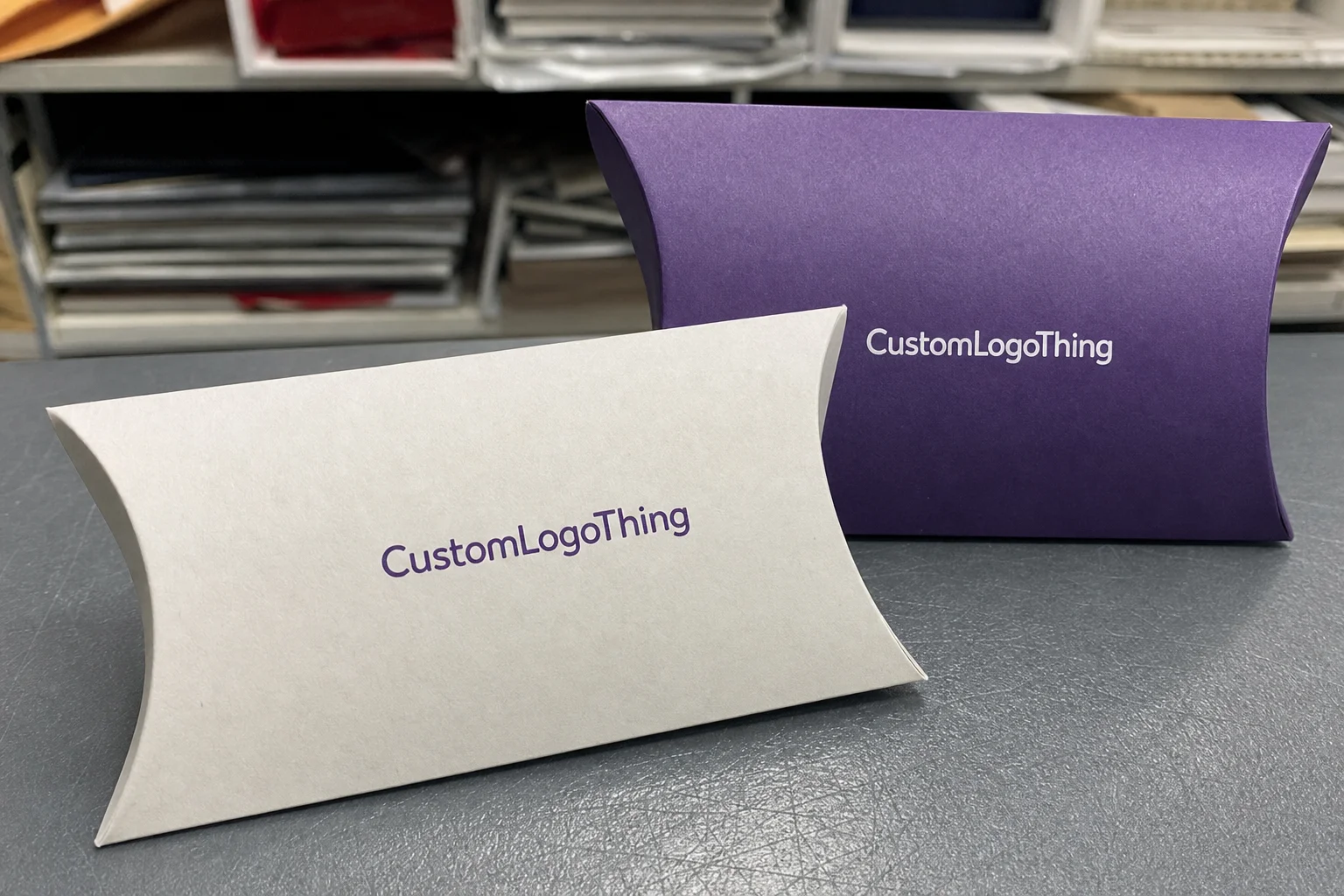
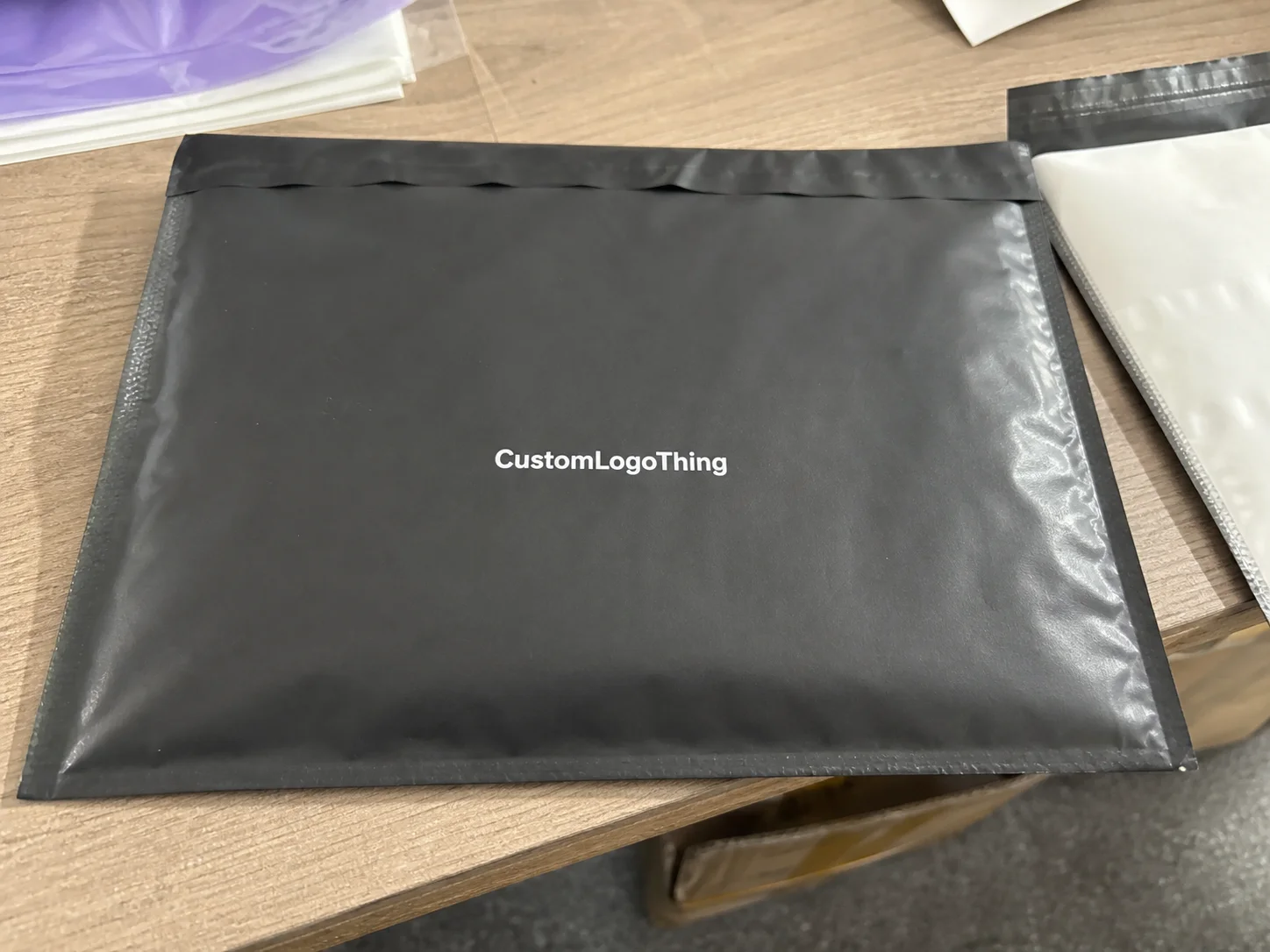
Buyer Fit Snapshot
| Best fit | Custom Seed Paper Packaging Wholesale projects where brand print, material claims, artwork control, MOQ, and repeat-order consistency need to be specified before quoting. |
|---|---|
| Quote inputs | Share finished size, material target, print colors, finish, packing count, annual reorder estimate, ship-to region, and any compliance wording. |
| Proofing check | Approve dieline scale, logo placement, barcode or warning zones, color tolerance, closure strength, and carton packing before bulk production. |
| Main risk | Vague material claims, crowded artwork, missing packing details, or unclear freight terms can make a low unit price expensive after revisions. |
Fast answer: Custom Seed Paper Packaging Wholesale: Pricing and Specs should be specified like a repeatable production item. The safest quote records material, print method, finish, artwork proof, packing count, and reorder notes in one written spec.
Production checks before approval
Compare the actual filled-product size with the drawing, then confirm tolerance on folds, seals, hang holes, label areas, and retail display edges. Reserve space for logos, QR codes, warning copy, and material claims before decorative graphics fill the panel.
Quote comparison points
Review material grade, print process, finish, sampling route, tooling charges, carton quantity, and freight assumptions side by side. A quote is only useful when the supplier can repeat the same color, closure quality, and packing count on the next order.
Custom Seed Paper Packaging wholesale is not a novelty purchase; it is a specification decision. I’ve sat across from brand teams that wanted “something sustainable,” and after ten minutes the real need was obvious: a package that looked premium, carried the brand story, and didn’t get tossed the second the product was opened. That is where custom seed paper packaging wholesale earns its place, especially when you need repeatable quality across 5,000, 10,000, or 25,000 units from production hubs in Guangdong, Zhejiang, or Ho Chi Minh City.
A lot of buyers underestimate how much packaging earns its keep after the sale. A sleeve that gets planted, a tag that becomes wildflowers, or an insert that stays on a desk for three weeks can do more for recall than a glossy carton that disappears into a bin. I’ve seen that happen in client meetings and on factory floors alike. The material is tactile, memorable, and practical when it fits the product. It is also unforgiving when the spec is wrong, so precision matters, especially on 300gsm, 350gsm, or 400gsm sheets.
Honestly, I think that last part is why seed paper gets misunderstood so often. People hear “plantable” and start daydreaming. Nice concept. Very photogenic. Then the production questions show up and everyone gets a little quieter (which, to be fair, is usually a sign the budget spreadsheet just walked into the room). A quote that starts at $0.15 per unit for 5,000 pieces and shifts to $0.09 at 20,000 pieces can change the whole conversation in less than a minute.
Why custom seed paper packaging wholesale is worth considering
The first time I handled seed paper packaging on a production table, it surprised me. The sheet looked like paper, felt like paper, and printed like a very honest paper stock, but it also carried seeds embedded inside the fiber. That means the packaging can be used, planted, and given a second life instead of becoming pure waste. For the right product, that is not just decorative. It changes what the package means, particularly when the sheet is made from 100% post-consumer recycled fiber in a 350gsm C1S artboard format or a lighter 250gsm hand-formed stock.
Custom seed paper packaging wholesale makes sense when your brand needs consistency, not a one-off experiment. A single wedding invitation suite or event kit can tolerate small variation. A retail launch with four SKUs cannot. If you are ordering at scale, you need repeatable sheet weight, predictable print behavior, and a supplier who understands how branded packaging works across a full product line, whether the run ships to Los Angeles, Dallas, or Toronto.
The practical case is straightforward: seed paper packaging can raise perceived value because it signals care, but it does not pretend to be a substitute for every material. Compared with conventional paperboard, it usually gives up some stiffness. Compared with kraft, it offers a stronger story and more tactile intrigue. Compared with plastic, it wins on after-use behavior and brand sentiment, but it does not match plastic for moisture resistance or thin-profile durability. That is the tradeoff. No hype, just the facts, and no surprise if a 280gsm sheet behaves very differently from a 400gsm one.
I once visited a packing line where a wellness brand had switched from plain kraft belly bands to seed paper sleeves for a limited product set. The operations manager told me the biggest surprise was not customer response; it was how quickly the marketing team realized the package itself was now part of the campaign. The sleeve was no longer a wrapper. It was a retention tool, a talking point, and a planted object all at once, with the sample proof approved in under 48 hours because the retailer deadline was fixed to a Thursday ship date.
That said, custom seed paper packaging wholesale is not the right answer for every job. If your product ships through humid channels, or if the packaging needs to hold heavy compression, you may need a stronger outer structure and reserve seed paper for inserts, tags, or a branded band. I’ve seen buyers fall in love with the sustainability story, then forget the box has to survive transport from Shenzhen to Chicago and sit in a warehouse for six weeks. Seed paper is fit-for-purpose. It is not magic, and a 12 mm glue flap does not rescue a weak structure that should have been a rigid carton.
For buyers comparing options, one thing stands out: wholesale volume makes the economics work. The setup cost for custom cutting, print prep, and sampling spreads across larger runs. That is why custom seed paper packaging wholesale is usually more rational than sourcing small batches over and over. If your product line needs consistency, wholesale is the cleanest path, especially when the supplier can hold a 12–15 business day production window after proof approval instead of stretching into a six-week delay.
For related packaging programs, it also helps to understand where this material sits inside a broader product mix. Our teams often place it alongside Custom Packaging Products and, when the buyer is managing multiple SKUs or retailer rollouts, within a broader Wholesale Programs plan. A buyer who needs 8,000 units for a spring launch in Portland often benefits from that broader view more than from a single item quote.
From a sourcing standpoint: seed paper performs best when the brand story, the product format, and the storage conditions all line up. If one of those three is off, the result is usually disappointing, even when the paper itself is made correctly in a factory in Dongguan or Surat.
Product details for custom seed paper packaging wholesale
Custom seed paper packaging wholesale starts with a simple definition: recycled paper embedded with viable seeds that can be planted after use. The fiber matrix holds the seed in place, so the sheet can be die-cut, folded, printed, and handled like specialty paper. The catch is that the seed content changes how the sheet behaves. You are not buying ordinary paperboard with a green label on it. You are buying a material with biological constraints, often manufactured in small-batch lines in Jiangsu, Rajasthan, or Metro Manila where humidity control is part of the process.
In practice, I see it used in several packaging formats:
- Belly bands for soaps, candles, snacks, or gift sets
- Sleeves around jars, boxes, or kits
- Inserts that explain the product or planting instructions
- Product tags for apparel, cosmetics, and gifting
- Mailer accents for DTC orders and subscription packaging
- Promotional wraps for launches, events, and PR kits
- Folded cartons for light-duty retail packaging, when the design is simple
Seed selection matters more than most buyers expect. Wildflower mixes usually give the best visual story because the seed speckle can look lively and the planting message is broad. Herb seeds can work well for food and wellness brands, especially when the product message is about use, care, or home ritual. Pollinator blends are popular with eco-focused brands because the language is easy to explain and the outcome is visible. Shelf life and germination success vary by blend, and that affects planning and inventory turnover. A 6- to 12-month storage window is common if the material stays dry and sealed, but I would not treat that as a casual assumption.
When I reviewed samples with a skincare client, the design team wanted full-color imagery on a very textured sheet. On screen it looked fine. On the table it was muddy. The fix was simple: reduce the print to two colors, increase contrast, and let the paper texture do some of the storytelling. That is one of the most common mistakes in packaging design for seed paper. People try to force coated-stock graphics onto a material that behaves like an organic substrate, even though a 2-color layout on a 350gsm stock often looks sharper than a four-color image on a thinner sheet.
Print compatibility is usually strongest with one-color or two-color layouts. Full-color printing can be done in some cases, but the result depends on the paper surface, seed density, and ink coverage. If the artwork relies on fine gradients, photographic detail, or small reversed text, ask for a proof first. I would not approve a dense visual system without seeing a real sample on the exact stock, printed on the exact press, with a dieline measured to within 1 mm.
Branding options still exist. Blind deboss, emboss, and selective foil can add texture and perceived value, but each option must be checked against plantability and cost. A simple layout often performs best: one logo, one message, one planting line, and one QR code if needed. That is usually enough to turn the piece into a branded packaging asset rather than a cluttered insert, especially when the print area is kept to a clean 70 x 120 mm or 90 x 140 mm format.
Best-fit industries are easy to identify once you look at handling and story requirements. Cosmetics, specialty food, wellness, gifting, stationery, and event kits are strong candidates. DTC brands also use seed paper well when the unboxing moment matters. It is less common in heavy-duty retail packaging because the structure requirement can outgrow the material’s strength, but even then it can still serve as a sleeve or insert for a product line shipped from Atlanta to Seattle or across the EU.
One more useful point: custom seed paper packaging wholesale is often better for message-driven packaging than purely structural packaging. If your priority is shelf presence and a tactile brand experience, it can outperform plain kraft. If your priority is crush resistance and water resistance, you may need Custom Printed Boxes as the main container and seed paper only as the finishing layer, especially for products moving through a 14-day distribution cycle.
Custom seed paper packaging wholesale specifications
Good buying starts with measurable specs. If you request custom seed paper Packaging Wholesale Without asking for paper weight, finished dimensions, print area, and fold style, you are inviting surprises. I have seen projects delayed simply because someone said “small sleeve” when the production team needed 112 x 48 mm with a 12 mm glue flap and a 2 mm score allowance. A factory in Zhejiang will not guess that detail for you, and neither should you.
Ask for these spec points every time:
- Paper weight in gsm, usually tied to stiffness and handling
- Thickness or caliper, especially for folds and die-cuts
- Seed count per sheet or seed loading by blend
- Finished dimensions in mm or inches
- Print area and safe margin around edges
- Fold style, score lines, perforations, or glue zones
- Seed type, seed origin, and planting instructions
Size affects two things at once: function and viability. A larger sheet can carry more branding, but it also changes drying behavior, die-cut waste, and handling during fold-and-pack. A smaller tag is easier to plant and ship, yet it gives you less room for instructions or QR codes. If the product needs precise fit inside a carton, the tolerance should be clear from the start. I usually recommend writing the dieline dimensions down to the millimeter and confirming the tolerance band, such as ±1.5 mm on a 100 mm panel.
Finishing options need careful review. Scoring helps folding, but too much pressure can crack the sheet or disturb the seeds. Perforation can be useful for tear-off coupons or easy removal from a bundle, but it must not weaken the piece to the point that it fails in transit. Glue zones are possible, though the adhesive choice matters. Heavy varnish is usually a bad idea because it can interfere with plantability. Light touch wins, and a water-based ink system on a 250–350gsm sheet is often the cleaner choice.
Compliance and testing are part of the conversation, even if some sales sheets gloss over them. Buyers should ask where the seeds come from, whether germination data is available, and whether the material is suitable for direct product contact. If the packaging touches food, cosmetics, or ingestible items, the specification must be checked carefully against your category requirements. I would also want to see whether the supplier can speak to standards such as FSC for fiber sourcing and relevant shipping tests from the International Safe Transit Association when the application involves distribution stress, especially for shipments routed through Singapore, Hamburg, or New Jersey.
Storage matters more than many people realize. Seed paper likes dry, stable conditions. Humidity can warp sheets, soften folds, and reduce planting performance over time. In one supplier negotiation I sat through, the buyer wanted to stock three months of inventory in a back room next to a loading dock. That was a mistake. We reduced the order size, improved carton packing, and moved the stock to a controlled shelf away from direct moisture. Problem solved before it became a reprint bill, and the inventory stayed within a 45% to 55% relative humidity range.
Use a sampling checklist before approving a full run:
- Check texture and feel in hand.
- Confirm legibility at actual print size.
- Test fold behavior and crease durability.
- Verify seed distribution and visible consistency.
- Read the planting instructions as a customer would.
- Confirm the packaging fits the product and closes properly.
For environmental claims, keep them accurate. Seed paper packaging can reduce disposal waste because it gives the customer a second use, but the material still requires sourcing, printing, and logistics. The U.S. EPA has useful guidance on waste reduction and recycling behavior at epa.gov/recycle. I like referencing that kind of source because it keeps conversations grounded in actual disposal behavior, not marketing language. A claim that sounds green but cannot survive a supplier audit in Ohio or Texas is usually a weak claim.
Custom seed paper packaging wholesale pricing and MOQ
Pricing for custom seed paper packaging wholesale is driven by a handful of variables, and none of them are mysterious once you break them out. Sheet size, seed type, print coverage, custom cutting, finishing complexity, and order volume all affect the number. The more unusual the format, the more setup work you are paying for. The more standardized the size, the better the wholesale math usually looks. A plain 90 x 140 mm sleeve with one-color print may land near $0.15 per unit for 5,000 pieces, while a more complex folded piece with multiple cuts can climb quickly.
Here is the mistake I see most often: buyers ask for a “Price Per Unit” before they define the spec. That is like asking for the cost of a jacket without stating the size, fabric, zipper quality, or lining. You can get a number, but it will not help much. For custom seed paper packaging wholesale, the quote should list the unit price, tooling, sampling, freight, lead time, and any art revision fees separately, ideally in a line-item sheet tied to a single factory location such as Dongguan or Pune.
The economics improve quickly as volume rises because setup cost gets spread out. A 1,000-piece run may feel expensive per unit, while a 10,000-piece wholesale order can bring the price down noticeably. The exact spread depends on the format. Flat tags and sleeves usually cost less than complex folded cartons, especially if the carton requires more die-cutting or gluing. If a buyer needs several SKUs, consolidating artwork or standardizing sizes can trim cost without making the package feel generic, and a 20,000-piece order may cut the unit price by 20% to 35% compared with a 1,000-piece trial run.
To help buyers frame quotes, I often lay out the options like this:
| Option | Typical MOQ Behavior | Price Range Drivers | Best Use |
|---|---|---|---|
| Simple seed paper tags | Lower MOQ possible | Size, one-color print, basic hole punch | Apparel, gifts, cosmetics |
| Seed paper sleeves or bands | Moderate MOQ | Die-cut, fold style, print coverage | Soap, candles, jars, kits |
| Seed paper inserts | Often flexible | Paper weight, instructions, print simplicity | DTC packaging, subscription boxes |
| Custom folded seed paper packaging | Higher MOQ common | Tooling, scoring, glue zones, tolerances | Light retail packaging, promo kits |
MOQ is not one fixed number. It changes by format, print method, and seed mix. Flat items often have a lower floor than folded pieces because they are easier to produce and pack. Some suppliers may quote 500 units for a tag and 3,000 or 5,000 for a more complex fold. That variance is normal. The right question is not “What is the MOQ?” but “What is the MOQ for this exact spec?” and “What is the re-order price at 10,000 pieces?”
When you request a quote, ask these five things in writing:
- Unit price by quantity tier
- Tooling or die-cut charge
- Sampling or prototype cost
- Lead time from proof approval
- Freight estimate and packaging method
If you want to save money, simplify first. Use one seed type instead of a custom blend. Choose a standard size where possible. Reduce ink coverage. Keep one side printed if the other side does not need branding. That last point saves more than people think. The package does not need to shout on every square centimeter, especially if a two-color layout on 350gsm stock already communicates the brand clearly.
I also tell buyers to budget the packaging from the outside in. What do customers see first? Usually the sleeve, tag, or wrap. Put the money there. Then trim the parts nobody notices. That is the same approach I use with retail packaging and custom printed boxes: spend where the eye lands, not where the carton hides. A $0.12 ink upgrade on the visible face can matter more than a hidden fold improvement.
For wholesale buyers, consistency matters more than a bargain quote that causes rework. A low piece price loses value fast if one out of five batches arrives with print drift, poor folding, or weak seed distribution. In my experience, the cheapest run is the one you do not have to remake, especially when freight from Shenzhen to Seattle already adds a fixed cost of its own.
Custom seed paper packaging wholesale process and timeline
The process from inquiry to delivery is straightforward, but only if the details are locked early. A clean custom seed paper packaging wholesale order usually moves through quote request, spec confirmation, artwork review, proofing, sample approval, production, quality check, and shipping. Skip one of those steps and the schedule starts to wobble. For a buyer in New York or Melbourne, a one-day delay at the proof stage can become a one-week delay once freight and customs are added.
Typical delays come from predictable places. Unclear dielines are a big one. Late artwork revisions are another. Seed availability can matter too, especially for less common blends. And then there is the classic problem of approvals sitting in somebody’s inbox for five days while the production slot disappears. I’ve watched a promising project lose a full week because three departments wanted to “circle back” on the same proof. I still get annoyed thinking about it, especially when the approved sheet spec had already been set at 100 x 150 mm and nobody had changed the product size.
A practical timeline usually looks like this: 1 to 3 business days for quoting and spec review, 2 to 5 business days for artwork adjustments and proofing, 5 to 10 business days for sampling if a physical prototype is needed, and production that can range from roughly 12 to 20 business days depending on complexity and quantity. Shipping adds its own layer. If you need air freight, that is faster but more expensive; sea freight is slower but can make sense for larger wholesale runs. In many cases, production is typically 12-15 business days from proof approval when the design is standard and the seed mix is in stock.
Sampling is not an optional luxury. It reduces risk. A flat PDF cannot show fold memory, print contrast on textured fiber, or whether the piece actually plants well. I learned that the hard way when a buyer approved a seed paper insert that looked excellent digitally but curled at one corner after scoring. The sample caught it. We adjusted the fold line and avoided a full-batch issue, saving both the reprint and the extra 600 units the client had already promised to a retailer in San Diego.
Quality control should focus on five checkpoints:
- Registration for clean print alignment
- Cut accuracy on die-cut edges and holes
- Edge integrity so the piece does not fray excessively
- Batch consistency across the run
- Instruction clarity if planting steps are included
Shipping deserves a mention because seed paper is more sensitive than standard paperboard. Cartons should be packed to reduce bending, and pallets should be wrapped well enough to guard against moisture exposure in transit. If the route crosses humid climates, specify protective packaging and dry storage on arrival. For brands running product packaging programs across regions, this kind of detail saves returns and complaints later. I have seen a 3% damage rate disappear simply because cartons were switched to a double-wall outer case for the final leg from Bangkok to Sydney.
If your application is tied to a larger sustainability or brand stewardship program, this is also where it helps to reference recognized forestry and packaging standards. FSC can be relevant for fiber sourcing; testing bodies such as ISTA can matter for distribution stability. Those names are not decorations. They help buyers make better calls, and they help procurement teams in London or Munich justify the selection with something more concrete than a mood board.
Why choose us for custom seed paper packaging wholesale
Our approach is built for buyers who want answers, not sales fluff. We treat custom seed paper packaging wholesale as a specification project first and a design project second. That means clear MOQ discussion, practical pricing breakdowns, and honest feedback when a requested format is likely to fail in real use. I prefer that conversation. It saves time, and it saves money, especially when the budget is set around a $0.18 to $0.30 target per unit and every extra finish has to justify itself.
We also support the decisions that sit behind the quote. If you are unsure whether a sleeve, insert, or tag is the right fit, we help compare the structural needs against the branding goals. That matters because not every client needs full custom printed boxes. Sometimes the better answer is a seed paper belly band paired with a conventional outer carton. Sometimes the insert does all the storytelling. Sometimes less ink delivers more impact, particularly if the package is opening in under 10 seconds on a retail counter.
I remember a negotiation with a beverage-adjacent gifting client who wanted foil, full color, embossing, and a custom wildflower blend on a very small insert. The sample looked crowded and the cost was too high for the margin. We stripped the design back to a one-color logo, a clean planting message, and a standard seed mix. The result was better. The brand looked more confident, not less, and the final quote came in nearly 22% under the original concept.
That is the kind of judgment wholesale buyers need. Package branding works when the material and the message agree with each other. A supplier should help you avoid expensive overdesign. If a quote desk never tells you “no,” it is not doing its job. I would rather hear a factory in Guangzhou say the print area is too small than approve a weak layout that fails in sample stage two.
Our workflow also helps repeat buyers keep consistency from order to order. Wholesale packaging is not about one perfect shipment; it is about the fifth replenishment arriving exactly like the first. That is where material testing, artwork checks, and proof control matter. A sample-first process reduces reprints, which is why I recommend it every time a design is new or a product is going into regulated retail packaging. For many buyers, the difference between a clean reorder and a scramble comes down to a two-day proof window and a signed approval email.
For buyers managing broader procurement, our team can support surrounding needs through Custom Packaging Products and volume planning through Wholesale Programs. The point is to make the packaging system work together, not force one novelty item to carry the entire program, especially when the same brand is ordering mailers, cartons, and inserts from different facilities.
We also stay transparent about tradeoffs. Seed paper is more sensitive to humidity than kraft. Fine linework may not reproduce as cleanly as on coated stock. Heavy structural use usually calls for a stronger outer package. None of that is a flaw if the spec is chosen correctly. It is just material reality, and it is why we often recommend a 350gsm insert paired with a sturdier outer carton rather than a single all-purpose piece.
My view: the best custom seed paper packaging wholesale programs are the ones that respect the material, use the right print style, and keep the package simple enough to be planted without confusion, whether the order ships from Yiwu, Chennai, or Ho Chi Minh City.
How to order custom seed paper packaging wholesale
Ordering custom seed paper packaging wholesale is easier when you arrive with the right inputs. Before you request a quote, gather finished dimensions, target quantity, preferred seed type, print colors, and deadline. If you have a dieline, send it. If you do not, provide the product measurements and the function you need the packaging to serve. A sleeve for a 70 mm jar is a different conversation from a tag for a holiday gift set, and a 90 x 150 mm wrap is not interchangeable with a 110 x 110 mm insert.
Send artwork in editable format whenever possible. PDF is useful, but AI or EPS files give the production team more room to check line weight, text sizing, and fold alignment. Include any brand rules, a note on what the package must say, and whether the item will touch the product directly. That last detail affects material choice more than many buyers realize. If the piece is going near food or skincare, the supplier may steer you toward a different fiber mix or a lighter print load.
I also recommend asking for two price paths: one standard spec and one upgraded spec. For example, compare a one-color sleeve on a standard seed mix with a two-color version on a premium blend. That side-by-side view makes budgeting easier and keeps the decision grounded in numbers rather than adjectives. A spread of $0.15 versus $0.22 per unit may look small until you multiply it by 12,000 units and see the difference in black and white.
Before final approval, request a sample or prototype. This is especially important if the packaging folds around a product, slides into a box, or needs to survive shipping. A prototype shows whether the material buckles, whether the print reads clearly, and whether the customer instructions are simple enough to follow. If the piece will live in a subscription box, that sample is even more valuable because it needs to survive packing, transit, and unboxing without damage. I would rather catch a 3 mm trim issue in sample phase than in a warehouse 2,000 miles away.
Here is the decision path I advise most buyers to follow:
- Choose the format: tag, sleeve, insert, or wrap.
- Confirm the seed type and print style.
- Ask for MOQ and price tiers by quantity.
- Approve the proof and sample.
- Schedule production with enough margin for freight.
Do that, and the process stays controlled. Skip it, and you end up reacting to avoidable problems. If you are buying for a seasonal launch, leave extra time. If you are buying for a retailer deadline, leave even more. Packaging always takes longer than the optimistic version of the schedule, and international shipping from Shenzhen, Ningbo, or Mumbai can add another 7 to 21 days depending on the lane.
One final point: keep the customer’s use case in mind. If you expect them to plant the piece, explain how in one sentence, then support it with a simple icon or line of text. Tear, soak, plant, water. That is enough. A complicated instruction block turns a nice gesture into a chore. A clean 3-step planting line on a 60 x 25 mm tag is usually more effective than a full paragraph on a crowded sleeve.
When you are ready to buy, custom seed paper packaging wholesale is strongest when the spec is clear, the quote is transparent, and the package is designed for both shelf appeal and after-use behavior. That is the combination that makes the purchase make sense, whether the order is 2,000 units for a local launch or 25,000 units for distribution across North America.
What is the minimum order for custom seed paper packaging wholesale?
MOQ depends on format, print method, and seed blend rather than a single universal number. Flat items like tags or sleeves often have lower MOQs than more complex folded packaging. Ask for MOQ by exact spec so you can compare standard sizes against fully custom options, and request the price at 500, 1,000, 5,000, and 10,000 units before choosing a format.
Can custom seed paper packaging wholesale be printed in full color?
Yes, but print coverage and color fidelity are usually more limited than on coated stock. Simple artwork with strong contrast tends to perform better than dense photographic designs. Ask for a printed sample or proof to confirm readability and finish before approving production, especially if the sheet is a textured 300gsm or 350gsm stock.
How long does custom seed paper packaging wholesale production take?
Timeline depends on artwork approval, sampling, and production complexity. Standard runs move faster when dielines are approved quickly and specs are finalized early. Add extra time for custom cutting, special finishes, or seed sourcing. In many standard cases, production is typically 12-15 business days from proof approval, not including freight from the factory in China, India, or Vietnam.
Is custom seed paper packaging wholesale suitable for product shipping?
It works best as a wrap, insert, sleeve, or tag rather than as heavy structural packaging. Moisture and friction matter during transit, so shipping-heavy applications usually need a stronger outer package paired with the seed paper element. If the route includes humid storage or long ocean freight, request moisture-protective packing and a controlled warehouse handoff.
How should customers plant custom seed paper packaging after use?
Tear the paper into small pieces and place it under a thin layer of soil. Water gently and keep the soil consistently moist during germination. Simple planting instructions printed on the packaging improve success rates and reduce confusion, and a short note such as “soak 12 hours, plant 3 mm deep, water daily for 7 days” can make the process much easier for the customer.