Buyer Fit Snapshot
| Best fit | Custom Shopping Bags for Boutiques projects where brand print, material claims, artwork control, MOQ, and repeat-order consistency need to be specified before quoting. |
|---|---|
| Quote inputs | Share finished size, material target, print colors, finish, packing count, annual reorder estimate, ship-to region, and any compliance wording. |
| Proofing check | Approve dieline scale, logo placement, barcode or warning zones, color tolerance, closure strength, and carton packing before bulk production. |
| Main risk | Vague material claims, crowded artwork, missing packing details, or unclear freight terms can make a low unit price expensive after revisions. |
Fast answer: Custom Shopping Bags for Boutiques: Design, Cost, Fit should be specified like a repeatable production item. The safest quote records material, print method, finish, artwork proof, packing count, and reorder notes in one written spec.
Production checks before approval
Compare the actual filled-product size with the drawing, then confirm tolerance on folds, seals, hang holes, label areas, and retail display edges. Reserve space for logos, QR codes, warning copy, and material claims before decorative graphics fill the panel.
Quote comparison points
Review material grade, print process, finish, sampling route, tooling charges, carton quantity, and freight assumptions side by side. A quote is only useful when the supplier can repeat the same color, closure quality, and packing count on the next order.
Custom Shopping Bags for Boutiques: Design, Cost, Fit
For Custom Shopping Bags for boutiques, the bag is never just a carrier. It is the last thing a customer touches at the counter, the first branded object they carry into the street, and often the part of the purchase that gets seen by a dozen other people before it disappears into a car, a closet, or a gift closet at home. That single object carries more visual weight than a lot of owners expect, because it extends the store’s identity beyond the sale itself.
I have watched a modest purchase feel noticeably more special simply because the bag had a sturdy base, a clean print, and a handle that did not dig into the hand. I have also seen the opposite: a good product tucked into a thin, floppy bag that made the whole experience feel rushed. Those details sound small, but in retail they are the kind of small that customers remember. Custom shopping bags for boutiques sit right at that intersection of presentation, practicality, and brand memory.
The practical side matters just as much as the visual side. Thin paper, weak handles, loose glue joints, or printing that scuffs too easily will pull the whole experience down. Sized properly, printed cleanly, and built from the right paper or board, custom shopping bags for boutiques can do a surprising amount of selling without ever sounding promotional.
Why custom shopping bags for boutiques change the post-sale moment
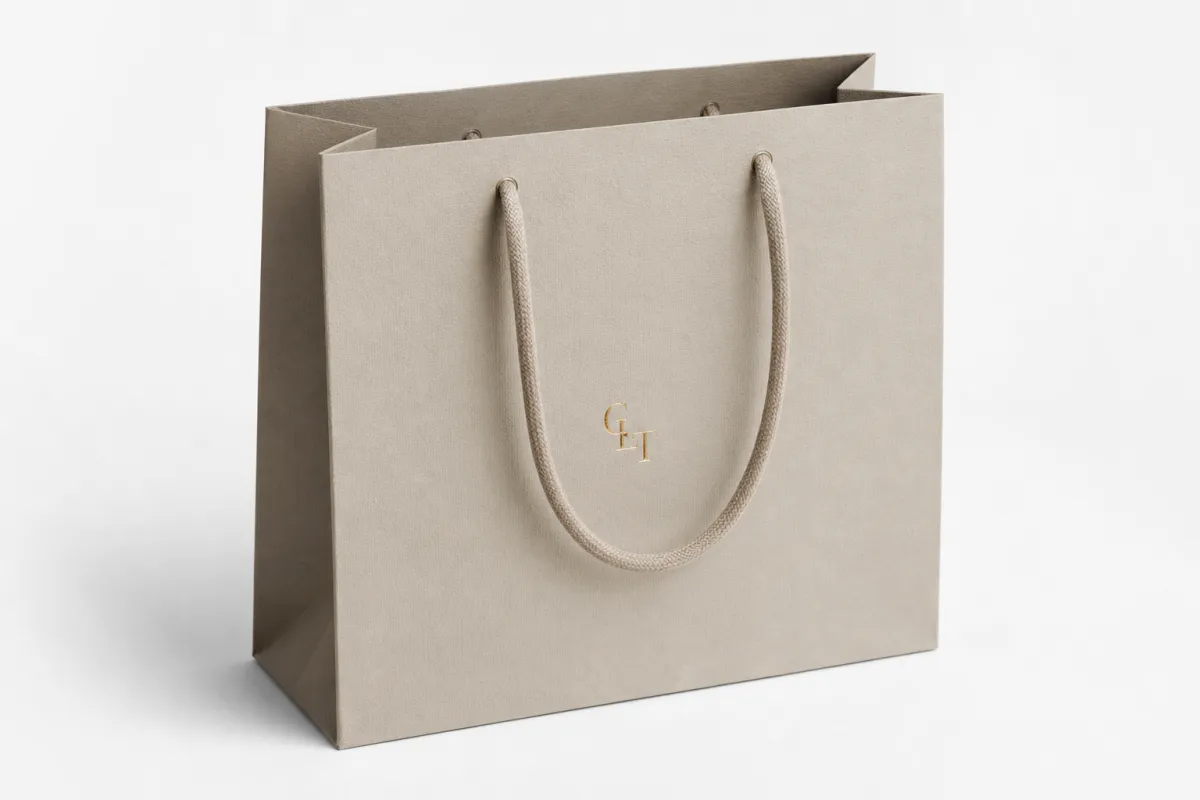
Walk into an apparel shop, gift store, candle boutique, fragrance counter, or small accessories store and the pattern shows up fast: the handoff matters. The moment an item leaves the counter and moves into a bag, the purchase stops being private. For custom shopping bags for boutiques, that shift turns a transaction into a small brand experience that travels with the customer into the street.
This is not marketing fluff. People notice the weight of the bag, the stiffness of the paper, the comfort of the handle, the sharpness of the print, and whether the whole thing feels like it belongs to the store. A bag with good structure can make a relatively small purchase feel more considered. A weak one can make the same item seem less valuable than it actually is.
Boutiques also need bags that solve real problems. The merchandise is often odd-shaped or mixed: folded apparel, boxed perfume, framed prints, candles, ceramics, belts, small gift sets, and items wrapped in tissue that need to stay upright on the ride home. A well-sized bag with the right gusset depth and a reinforced base helps keep that assortment tidy, especially when it sits beside tissue, inserts, or Custom Packaging Products such as cards, tags, and coordinated carry pieces.
The bag keeps advertising after the sale. If the logo reads clearly from a few feet away and the design matches the boutique’s aesthetic, the bag keeps working on the sidewalk, in a parking lot, in a cafe, or on transit. That everyday visibility is one reason custom shopping bags for boutiques often do more brand work than plain stock bags.
The strongest boutique bags usually do three jobs at once:
- Protect the purchase from handling, scuffs, and accidental crushing.
- Reinforce store identity with clear, consistent package branding.
- Make the customer feel the item was packaged with intention, not routine.
The best boutique bag is not the loudest one on the counter; it is the one that feels right in the hand, holds its shape, and looks deliberate from checkout to sidewalk.
If the boutique already uses custom printed boxes for certain products, the bag should speak the same visual language. Crisp minimalism, natural textures, or a more luxurious finish can all work, but only if they feel connected to the rest of the packaging system. That consistency is what makes custom shopping bags for boutiques feel like part of a brand rather than a one-off purchase.
Plenty of owners underinvest here because the bag gets treated like a disposable afterthought instead of a branded surface. That mindset misses the point. A bag that is easy to carry and pleasant to look at pays off quietly, especially in boutiques where repeat visits and word-of-mouth still carry real weight. Custom shopping bags for boutiques deserve the same attention as label design or shelf presentation.
The process: how custom shopping bags for boutiques move from brief to delivery
The cleanest orders start with a brief that is plain and specific. For custom shopping bags for boutiques, the supplier needs dimensions, product weight, handle style, color goals, logo files, and the feeling the boutique wants the customer to carry away. A bag for a jewelry counter is built differently than one for a bohemian apparel shop or a fragrance boutique, so the brief has to reflect actual store use, not a guess.
Once the brief is ready, the next step is usually a proof or mockup. Artwork placement, logo scale, finish selection, handle position, and spacing all get checked before production begins. A proof should show the front, back, and side panels if the design wraps around the structure, because some custom shopping bags for boutiques look balanced on a flat screen and awkward once folds and gussets appear in real life.
Production usually moves through material selection, printing, cutting, folding, gluing, handle attachment, and final quality checks. A paper bag may also need board scoring, gusset shaping, top-fold reinforcement, or a base insert. Laminated bags can add a coating pass or another finishing step before assembly. Each stage changes the look, feel, and schedule in a way that matters once the bags are on the sales floor.
Timelines depend on more than the artwork. Foil stamping, embossing, spot UV, soft-touch lamination, and more complex handle builds all add setup time and inspection time. Material availability matters too, especially when the order needs a particular board stock, a custom kraft tone, or a handle color that is not already in inventory. For custom shopping bags for boutiques, the safest assumption is that approvals happen faster than production, and production happens faster than shipping only when every detail is locked early.
Simple Printed Paper Bags often land in the 10- to 15-business-day range after proof approval, while more elaborate bags can take 15 to 25 business days or longer depending on quantity and finish complexity. Freight is separate, and that matters more than people think. A boutique may feel it has a three-week turnaround and still lose several days to transit if the bags ship from another region.
The most useful habit is to build an approval buffer before the bags are needed. Seasonal launches, trunk shows, and holiday events compress schedules fast. A little extra time for one round of revisions keeps custom shopping bags for boutiques from arriving after the merchandise is already on display. That kind of timing mistake is easy to avoid if the calendar is treated as part of the spec.
For sourcing language and paper responsibility, the FSC standard is a sensible reference point when paper sourcing matters, and the ISTA framework helps if you want to think more like a packer or shipper about how the bag and its contents behave in handling. Those references do not replace a supplier’s advice, but they do help a boutique ask sharper questions.
The path from brief to delivery runs best when the order is specific, the proof gets reviewed carefully, and the timeline accounts for real-world delays instead of wishful ones. That is usually the difference between a smooth bag program and one that turns into a scramble.
Key factors that shape size, paper, handles, and finish
Size is where a lot of orders go off track, usually because people estimate instead of measure. For custom shopping bags for boutiques, the dimensions should be based on the actual products that move through the store most often: apparel folds, candle boxes, Rigid Gift Boxes, accessory pouches, or mixed purchases that need a little breathing room. A bag that is too small crushes the presentation. A bag that is too large wastes material and makes the purchase look lost inside the package.
Good sizing means thinking in three dimensions, not just width. A bag for folded knits may need a modest width with more height. A bag for boxy gift sets may need a wider gusset. A bag for fragile items may need a stiffer board and a deeper base. For custom shopping bags for boutiques, common paper carry sizes might range from about 5 x 3 x 8 inches for small accessories to 10 x 4 x 12 inches for apparel and 16 x 6 x 12 inches for larger bundles, though the right fit always depends on the boutique’s actual assortment.
Paper weight matters more than many buyers expect. Lightweight paper works for very small items, but once candles, boxed gifts, shoes, or multiple purchases enter the picture, the paper or board stock needs enough caliper and fiber strength to keep the bag upright. Typical ranges might be 150 to 200 gsm for kraft styles and 180 to 250 gsm or higher for coated paperboard, though the real answer depends on construction, reinforcement, and intended load. For custom shopping bags for boutiques, a slightly heavier board usually creates a stronger impression than a flimsy oversized bag that saves only a few cents.
Handle choice changes both function and mood. Twisted paper handles tend to feel practical, tidy, and cost-conscious. Rope handles read more premium and usually feel better in the hand, especially on heavier bags. Ribbon handles fit gift-oriented boutiques or seasonal collections, while die-cut handles create a cleaner silhouette for lightweight retail packaging. If customers are likely to carry the bag for a long walk, handle comfort is not a small detail. It is part of the experience of custom shopping bags for boutiques.
Finish is often the first thing people judge, even when they cannot name it. Matte lamination softens the look and cuts glare. Gloss lamination can make color pop, though it may show scuffs more easily. Soft-touch coating gives the bag a tactile, elevated feel, but it can raise cost and behave differently under heavy handling. Foil stamping, embossing, and spot UV all add depth, yet they work best when used with restraint so the bag still feels like a boutique bag rather than a sample board of effects.
If the boutique already uses custom printed boxes, the finish language should stay aligned. A glossy box paired with a raw kraft bag can look accidental unless the contrast is deliberate. A natural brand can feel uneasy if the bag is highly reflective and heavily foiled. For custom shopping bags for boutiques, the strongest finish is the one that supports the store’s broader packaging design instead of competing with it.
Helpful ways to think about the tradeoff:
- Durability: thicker paper, reinforced handles, and a board base improve carry performance.
- Presentation: finish, print clarity, and proportion determine how premium the bag feels.
- Practical use: weight, folding behavior, and storage footprint matter to staff as much as to customers.
- Brand fit: the bag should match the store’s product packaging, not just its logo colors.
For boutique buyers, the smartest move is rarely the most decorative one. It is the choice that makes custom shopping bags for boutiques durable enough to protect the product, attractive enough to carry the brand, and simple enough to reorder without headaches.
Custom shopping bags for boutiques: cost, pricing, and MOQ basics
Cost comes down to a handful of specific levers: size, material, print coverage, number of colors, special finishes, handle type, and order quantity. Two bags that look nearly identical in a photo can still land at very different price points. For custom shopping bags for boutiques, the quote is really a summary of how many setup steps the factory has to absorb before the first usable bag appears.
MOQ, or minimum order quantity, exists because tooling, plates, color matching, die cutting, and assembly changeovers all carry fixed costs. The smaller the order, the more those fixed costs get spread across each bag. That is why a boutique ordering 500 pieces may see a noticeably higher unit price than a store ordering 5,000 pieces, even when the artwork is simple. For custom shopping bags for boutiques, MOQ is not a sales trick. It is the math of production.
Here is a realistic comparison of common options. The numbers vary by supplier, region, and freight lane, but the ranges are useful for planning and for spotting quotes that are either too vague or too good to be true.
| Bag style | Typical features | Approx. unit price at 1,000 pcs | Approx. unit price at 5,000 pcs | Best use |
|---|---|---|---|---|
| Kraft paper bag | 1-color print, twisted paper handle, simple base | $0.45-$0.85 | $0.18-$0.35 | Natural brands, light apparel, small gifts |
| Coated paper bag | 2-color print, reinforced top fold, paperboard feel | $0.70-$1.25 | $0.30-$0.60 | Boutique apparel, accessories, polished retail packaging |
| Laminated premium bag | Full-color print, rope handle, matte or gloss laminate | $1.20-$2.40 | $0.55-$1.10 | Luxury presentation, events, gift-heavy sales |
| Special finish bag | Foil, embossing, spot UV, custom details | $1.80-$3.50 | $0.85-$1.60 | High-margin items, signature brand launches |
Those ranges only become useful if the quote separates the real components. A good quote for custom shopping bags for boutiques should show unit cost, setup or tooling charges, proof charges if any, freight, and any extra cost for premium handle or finish options. If those items are buried inside one number, it becomes hard to compare suppliers fairly.
There is also a difference between cheap and smart. The cheapest bag can create hidden cost if it tears, looks generic, or forces the store to repack purchases into a second bag. That means more labor, more brand damage, and sometimes replacement expense. For custom shopping bags for boutiques, a better choice is usually a properly sized, reinforced bag rather than a bargain option that saves pennies and creates complaints at the counter.
One practical way to manage budget is to split the bag program into tiers. The everyday carry bag can stay economical, while a premium event bag can use foil, thicker board, or a better handle. That lets a boutique protect margin without flattening the brand experience. It also keeps custom shopping bags for boutiques from turning into a one-size-fits-all expense.
If you are comparing packaging across categories, remember that a bag and a box do different jobs. A rigid box carries structure and unboxing drama, while a bag carries convenience and public visibility. That is why Custom Packaging Products often work best as a family rather than as isolated items. The bag should support the brand, the box should protect the product, and both should fit the price point of the merchandise.
Step-by-step guide to ordering bags that match the boutique brand
Step 1: Audit what actually moves through the store. Start with real sales patterns instead of seasonal wish lists. If the boutique sells mostly folded apparel, the bag needs a different shape than a store that moves candles, ceramics, and boxed gifts. For custom shopping bags for boutiques, the best size is the one that fits the most common transaction without forcing staff to improvise.
Step 2: Define the brand look in concrete terms. Color is only one part of that decision. Decide whether the bag should feel understated, elegant, earthy, playful, or gift-ready. Then choose logo placement, type size, print contrast, and sheen level. A boutique that wants quiet luxury may choose an off-white matte bag with restrained branding, while a lively concept shop may want stronger color and a bolder mark. Either direction can work, but custom shopping bags for boutiques need a clear visual path before production starts.
Step 3: Match construction to the load. Think about the heaviest realistic purchase, not the average sale. If a customer might leave with two candles, a scarf, and a boxed accessory, the handle and base need to hold up under that load. Reinforced top folds, double-thick bottoms, and stronger handle patches all help here. For custom shopping bags for boutiques, construction detail is often the line between a bag that looks nice and a bag that works.
Step 4: Review the proof like a production buyer. Check safe zones around the edges, bleed if artwork runs off the panel, handle clearance, and how much of the design disappears when the bag folds. The logo should still read clearly from a few feet away, because that is the distance at which customers and passersby usually see it. If the proof shows cramped spacing, too much copy, or weak contrast, fix it before the run starts. That discipline matters a great deal with custom shopping bags for boutiques.
Step 5: Place the order with storage in mind. Bags take space. Even flat-packed, a few hundred premium bags can occupy more room than buyers expect. Plan where they will be stored, how staff will access them, and whether the design should cover one season or several. That planning reduces waste and helps custom shopping bags for boutiques arrive in time to be used instead of sitting in cartons while stock changes.
For many boutiques, a two-size strategy works well. One core bag size covers most purchases, and a smaller or larger size handles outliers, gifts, or events. That keeps inventory simpler while still giving the store flexibility. If the boutique also uses Custom Packaging Products for wraps, labels, or inserts, the same print and color logic should carry through the whole package branding system so the presentation feels deliberate from shelf to handoff.
That is the real job of custom shopping bags for boutiques: not just carrying the item, but making the whole purchase look as considered as the merchandise inside it.
Common mistakes that weaken premium presentation
The first mistake is choosing a bag by appearance alone. A sample may look lovely on a table and still fail in the hand if the base is too weak or the handles are underbuilt. For custom shopping bags for boutiques, the product inside and the way it is carried matter just as much as the print on the panel. A pretty bag that sags under a normal purchase is a packaging problem, not a design win.
The second mistake is overloading the front panel. Some boutiques try to squeeze the logo, website, tagline, social handle, and a decorative border into one small space. That usually makes the bag less readable from a distance and less premium up close. Clear branding beats crowded branding almost every time. If the goal is strong package branding, give the logo room and let the material do some of the work. That is especially true for custom shopping bags for boutiques.
The third mistake is picking a finish that behaves badly in daily use. Soft-touch can be beautiful, but it may show dark marks if handled roughly. Gloss can make color feel rich, but it can also reveal scuffs and fingerprints. Foil can look fantastic on launch day and less fantastic if it sits where hands rub constantly. For custom shopping bags for boutiques, finish should support retail reality, not just photo-ready samples.
The fourth mistake is ignoring timing. A boutique can approve artwork late, make several rounds of changes, and then realize the bags miss the sale event they were meant to support. That is a costly miss because packaging is tied to calendar moments more often than buyers admit. Holiday drops, trunk shows, bridal events, and seasonal resets all put pressure on lead time. If custom shopping bags for boutiques are part of a launch, the proof needs to move early enough to absorb one or two corrections.
The fifth mistake is comparing suppliers by unit price only. A lower number may hide thin paper, weak handles, expensive freight, or no meaningful proof process. It may also ignore the cost of rejected cartons or rushed reorders. If the bag tears, the store has to replace it. If the bag looks off-brand, the store has to live with that impression. For custom shopping bags for boutiques, the right quote is the one that balances appearance, durability, and total landed cost.
Another issue shows up in storage and handling. Premium bags can be bulky, and if cartons are stacked badly or stored in damp conditions, corners curl and finishes mark before the first sale. A boutique that invests in strong retail packaging should protect that investment with dry storage, basic handling discipline, and staff training. Custom shopping bags for boutiques can only perform well if they arrive clean and stay that way until they are used.
A bag is part of the product, even if it sits outside the product itself. If the merchandise feels elevated but the carrier feels cheap, customers notice the mismatch. That is why custom shopping bags for boutiques deserve the same quality-control mindset used for labels, inserts, or custom printed boxes.
Expert tips and next steps for a smarter bag program
If the boutique wants a bag program that stays manageable, start with one primary size and one backup size. That keeps ordering simple and reduces the chance of cartons filled with odd sizes that only get used for rare transactions. For custom shopping bags for boutiques, simple inventory planning is often more valuable than chasing a new format for every product category.
Ask for a sample, a swatch, or at minimum a digital proof with real measurements. Seeing logo scale in context is worth more than guessing from a spreadsheet. A mark that looks balanced on screen can look tiny in the hand, and a bold graphic can overwhelm a delicate boutique aesthetic. For custom shopping bags for boutiques, context is everything.
Think like the customer holding the bag outside the store. Will it need to make it across a parking lot? Will it sit in a car seat with a candle box or a folded jacket? Will the handle stay comfortable if the customer carries it for twenty minutes? That kind of practical thinking is where packaging design becomes useful rather than decorative. It also keeps custom shopping bags for boutiques aligned with real retail use instead of showroom assumptions.
If the store runs promotions or seasonal collections, use the bag program to support the calendar without rebuilding it every time. A core bag can stay consistent while a limited-color version, alternate imprint, or event sleeve handles special moments. That gives the boutique flexibility without turning the packaging line into chaos. It also helps custom shopping bags for boutiques stay recognizable over time, which matters for returning customers.
One more practical step pays off quickly: keep the file package organized before requesting a quote. Have the logo in vector format, know the preferred size range, list the product weights you expect the bag to carry, and decide whether you want matte, gloss, soft-touch, foil, or no special finish at all. The more complete the brief, the easier it is for a supplier to price custom shopping bags for boutiques accurately and flag issues before production.
For boutiques building a tighter packaging system, it helps to think in layers: the product itself, the inner wrap, the outer box or bag, and the after-sale carry experience. That layered approach is where branded packaging becomes memorable. A store that gets those layers right does not need to shout. It feels organized, credible, and worth returning to.
The practical takeaway is simple: choose custom shopping bags for boutiques the same way you would choose any other piece of retail equipment. Measure the load, match the material to the use, keep the artwork clear, and plan the order against the calendar. If the bag fits the product and the brand in equal measure, it stops being an expense line and starts doing quiet, steady work for the store.
What materials work best for custom shopping bags for boutiques?
Coated paper or paperboard works well when the boutique wants a crisp, polished look and sharp print clarity. Kraft paper is a strong choice for a natural, understated brand style, especially for handmade or earthy product lines. If the bag needs extra durability or a more upscale feel, ask about thicker board stock, lamination, or reinforced handles. For custom shopping bags for boutiques, the best material is the one that matches the product weight and the store’s visual identity.
How many custom shopping bags for boutiques should I order first?
Base the first order on average weekly sales, gift wrap volume, and seasonal spikes rather than on a rough guess. Many small boutiques start with a 60- to 90-day supply so the design can be tested before committing to a larger run. Add extra units for damaged bags, staff use, and promotions so you are not forced into a rushed reorder. That approach keeps custom shopping bags for boutiques practical instead of oversized.
How long does it take to produce custom shopping bags for boutiques?
Simple printed bags can move faster than bags with foil, embossing, special handles, or multiple finish steps. Proof approval often becomes the biggest schedule checkpoint, so late changes can affect the final delivery date. Ask the supplier to separate production time from transit time so you can plan inventory with less risk. For custom shopping bags for boutiques, a realistic timeline is safer than a hopeful one.
Are custom shopping bags for boutiques worth the extra cost?
They are usually worth it when the bag supports a higher-margin product, repeat visits, or strong visual branding in public. A better bag can increase perceived value and make the purchase feel more giftable, which matters in boutique retail. The real test is whether the bag improves presentation, durability, and brand recall enough to justify the unit cost. In most stores, custom shopping bags for boutiques do more than a plain carrier can do.
What should be printed on custom shopping bags for boutiques?
At minimum, print the store name or logo clearly enough to read from a few feet away. If space allows, add a website or social handle, but keep the design simple so the bag still feels premium. Leave enough breathing room around the logo and handles so the artwork does not feel crowded or hard to print cleanly. For custom shopping bags for boutiques, simple usually travels farther than crowded.

