If you are planning a custom embroidered baseball Caps Bulk Order, the most reliable approach is the least glamorous one: define the cap, define the decoration, confirm the quantity, and make the proof do its job before anyone starts stitching. That sounds simple, but it is usually where bulk hat orders go sideways. A cap is small, curved, and unforgiving. If the logo is too detailed, the crown is the wrong shape, or the cap color clashes with the thread, the problem shows up immediately.
Embroidered caps work well for crews, events, retail programs, and brand launches because they handle wear better than most printed decoration. They also give the item a more permanent look. That matters when the cap has to move through shipping, display, job-site use, or repeated handling without looking tired after the first week.
The buyers who get the cleanest results usually bring the same discipline they would bring to packaging or print production: clear specs, one approved artwork file, and a realistic view of what thread can and cannot do. The best cap runs are rarely improvised. They are controlled.
Why Bulk Embroidered Caps Outlast Printed Alternatives
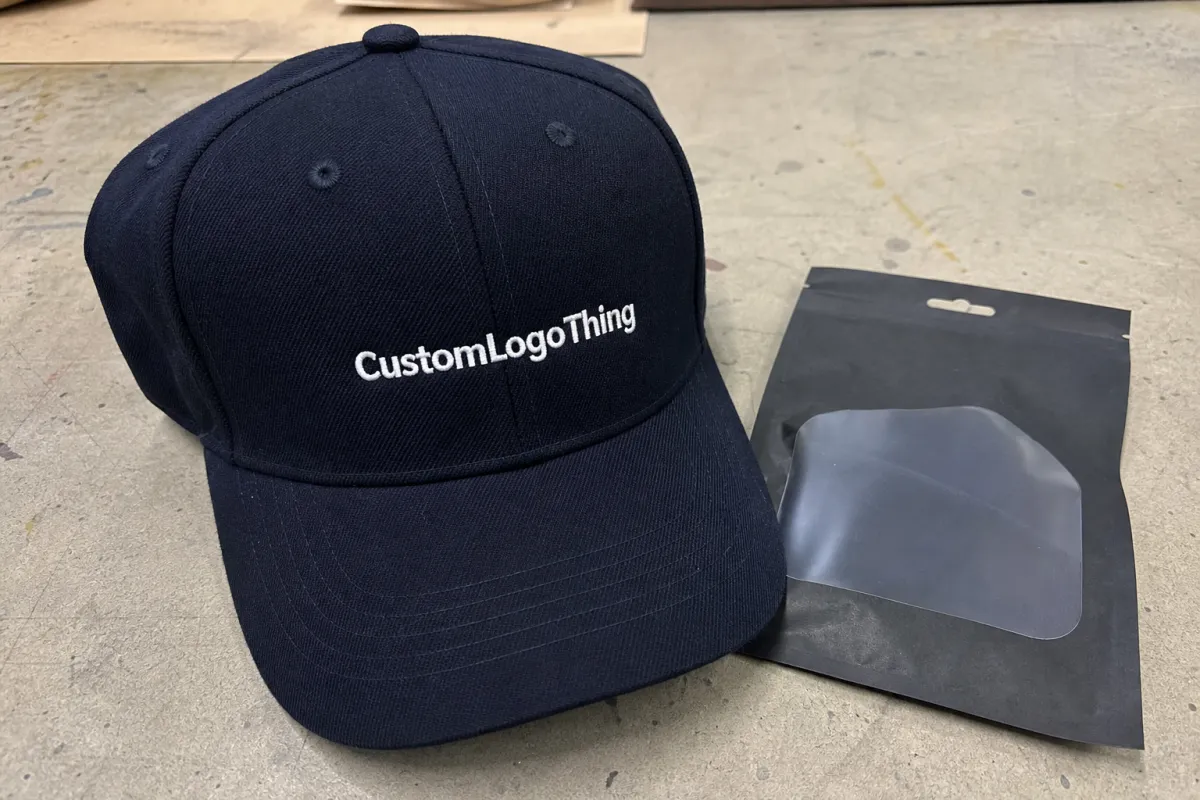
Embroidery holds up because the logo is stitched into the cap rather than sitting on top of it. That sounds like a minor distinction until the hat starts seeing sun, sweat, folding, cleaning, and daily handling. Printed decoration can work on soft goods, but a cap is a harsher environment than a flat shirt panel. The front crown flexes. The brim gets grabbed. The hat is often worn outdoors for hours at a time. Thread generally survives that better than a surface print.
For a custom Embroidered Baseball Caps bulk order, durability is only part of the appeal. Consistency matters too. Once the artwork is digitized correctly, the machine repeats the stitch path across the run. That gives you cap number 25 and cap number 2,500 with the same basic look, assuming the blank caps are consistent and the production line is doing its part. In bulk programs, consistency is often the hidden value. A low unit price is not much help if half the lot looks off-center or the thread color shifts from carton to carton.
Embroidery also reads as more finished on structured caps. The stitched texture creates dimension that printed graphics do not always have. That can help with retail presentation, employee uniforms, and promotional caps that need to feel a little more substantial than a throwaway giveaway. The effect is subtle, but buyers notice it. So do end users.
“A cap order is won or lost before the first stitch. The cap shape, stitch count, and artwork size decide how much room the design really has.”
There is a practical buyer lesson here. Thread is good at clean shapes, bold lettering, and logos with enough open space. It is not good at tiny details pretending to be large details. When the design asks too much of the crown, the final result can feel crowded even if the color matching is perfect. That is why many experienced buyers simplify before production rather than after the first sample comes back.
The same logic applies across branded merchandise: the decoration method should fit the surface, and the surface should fit the design. On caps, embroidery is usually the safer fit.
Cap Styles, Fabrics, and Placement Options
The cap itself matters as much as the logo. A structured six-panel baseball cap behaves differently from an unstructured five-panel cap. A mid-profile crown gives more usable space in the front panel, while a low-profile crown can look cleaner but leaves less room for a wide mark. If the artwork is broad, structured caps usually give the embroidery a better stage. If the brand wants something more casual or broken-in, unstructured styles can make more sense.
Fabric choice changes both appearance and stitch behavior. Cotton twill is a common starting point because it stitches cleanly and has a classic matte finish. Brushed twill feels softer and can look a little more retail-ready. Polyester blends are often chosen for shape retention and easier care. Performance fabrics are useful for field teams, sports, and outdoor promotion, but they can feel slicker under the needle and sometimes need more careful setup to keep the stitching from puckering.
Mesh-backed trucker caps behave differently again. They are lighter and more breathable, but the front panel is usually the only realistic embroidery zone. That is not a limitation so much as a design constraint. Good buyers work with the surface they have, not the one they wish they had.
Placement decisions should be made with the final use in mind. Center-front embroidery is still the default because it gives the fastest brand read. Side-panel marks are better when the logo is secondary, or when the front is already busy with another element. Back arch embroidery can be useful for staff caps or event crews. Offset placement gives a cap a more style-driven feel, but it is less forgiving if the design is large or text-heavy.
Small text deserves special caution. Thin lines, tiny taglines, and highly detailed icons can disappear into the stitches if the design is scaled down too far. On curved surfaces, embroidery wants breathing room. Buyers often underestimate how quickly type becomes unreadable once it is reduced to cap size.
Closure style affects both cost and fit flexibility. Snapback and strapback styles are easier to distribute in bulk because one size covers more people. Fitted caps can look sharper, but they require better size control and usually complicate inventory. Hook-and-loop closures are practical for some workwear programs. Each choice changes the final price and how the cap feels after a full day of wear.
- Structured vs. unstructured: structured caps hold the front panel firmly; unstructured caps look softer and more casual.
- Six-panel vs. five-panel: six-panel is the safer choice for classic logos; five-panel can suit wider designs.
- Closure style: snapback and strapback are easier for bulk distribution; fitted caps need tighter size planning.
- Fabric choice: cotton twill, polyester blends, mesh, and performance fabrics each affect stitch behavior and comfort.
For buyers comparing caps to broader brand presentation projects, the rule is the same: pick the build that supports the message. The most expensive cap is not always the most effective one. The best one is the cap that fits the logo, the use case, and the delivery schedule.
Specs to Confirm Before You Request a Quote
A clean quote starts with clean information. At minimum, the supplier needs the logo file, cap style, cap color, embroidery location, approximate decoration size, thread color references, total quantity, and the delivery deadline. If the order is split by colorway or style, that split needs to be stated up front. A 300-piece run made of three cap colors is not the same as 300 identical hats, and pricing should reflect that difference.
Artwork format is usually where the first delay appears. Vector files such as AI, EPS, or PDF are the easiest to work with because they keep edges clean and scale without distortion. High-resolution PNG or SVG can work in some cases, but if the design has thin lettering or delicate lines, the digitizer may still need to simplify it before it can be stitched cleanly. The logo does not need to be complicated to be effective. In embroidery, clarity usually wins.
The most common mistake is assuming that every printed logo will also work as embroidery without edits. That is rarely true. Thread is not paint. Gradients, tiny copy, and photoreal effects do not translate well to a stitched surface. If the design includes a small tagline or a narrow icon, it may need to be enlarged, removed, or moved to another part of the cap.
Buyers who want a faster, more accurate quote usually send a compact spec packet with the following:
- Logo artwork in vector format if available.
- Preferred cap style and fabric.
- Cap color or color list.
- Embroidery placement and approximate size.
- Thread colors or brand color references.
- Total quantity and any split by style or color.
- Delivery date and ship-to location.
Two details are worth extra attention: stitch complexity and proof expectations. If the logo has multiple colors, dense fills, or a lot of fine line work, the sewout may need adjustment before production starts. That is normal. It is better to correct the file early than to discover too late that the front panel cannot hold the detail cleanly.
For larger buyers, this stage should feel almost mechanical. The clearer the order sheet, the easier it is to compare quotes and catch a supplier who is underestimating the work. That matters because some quotes hide assumptions. Others make those assumptions visible. The second kind is usually the safer one.
Custom Embroidered Baseball Caps Bulk Order: Pricing, MOQ, and Unit Cost
Pricing becomes much easier to read once it is broken into pieces. For a custom Embroidered Baseball Caps bulk order, the main cost drivers are the blank cap, digitizing, embroidery labor, stitch count, thread usage, packing, and freight. Special labels, mixed styles, or custom packaging add cost as well. The unit price can swing widely depending on how much work the decoration requires and how efficiently the run is set up.
A useful way to think about the market is to separate blank cap cost from decoration cost. Simple stock caps can be relatively inexpensive, while premium blanks with better fabric, stronger structure, or performance material can cost noticeably more before the embroidery even starts. As a broad buying range, stock caps may land around $2.50 to $7.00 per blank, while premium or performance styles can run from about $6.00 to $12.00 or higher depending on fabric and construction. The decoration itself is often a separate line item.
Digitizing usually adds another cost layer. Many suppliers charge a one-time fee to convert the art into a stitch file, often somewhere in the $25 to $75 range for a straightforward logo, with more complexity costing more. Embroidery per cap is commonly priced by stitch area and logo complexity. A simple front logo may add roughly $1.50 to $4.50 per cap, while multi-location or high-detail work can push higher. These are working ranges, not guarantees, but they reflect how most bulk buyers should think about the math.
Minimum order quantity, or MOQ, depends on the supplier, the cap style, and whether the blank is in stock. Stock caps with a simple front logo often allow lower MOQs than custom-made caps or special color requests. The smaller the order, the more the setup cost matters. That is the basic reason 50 caps usually carry a much higher unit cost than 500 caps.
Here is the price ladder in practical terms:
| Order Size | Typical Cost Pattern | What Usually Drives It | Best Fit |
|---|---|---|---|
| 50-100 caps | Highest unit cost | Digitizing, setup, and small-run labor | Samples, small teams, limited event counts |
| 100-300 caps | Moderate unit cost | Setup spread across more pieces | Staff rollout, dealer programs, local promotions |
| 500-1,000 caps | Better volume efficiency | Steadier machine time and lower labor per piece | Regional launches, retail drops, repeat brand use |
| 1,000+ caps | Lowest unit cost potential | Run efficiency, material planning, freight consolidation | National programs, chain accounts, inventory builds |
Small-run buyers often focus on the unit price and miss the total landed cost. That is a mistake. A quote that looks cheap can become expensive if it excludes freight, sample approval, a second proof, or special packing. Comparing quotes only works if the decoration size, blank cap quality, turnaround time, and shipping terms are all the same.
There is also a quality trap in low pricing. A bargain quote may mean a weaker cap body, fewer stitch fills, poor thread choices, or a proof that is not detailed enough to catch problems before production. In bulk work, the cheapest run is not always the best value. The better question is whether the order will still look right after shipping, handling, and actual use.
Suppliers who can explain where the price comes from are usually easier to work with. If they can break out the blank, setup, decoration, and freight, the buyer has a real basis for comparison. If they cannot, the number is less useful than it looks.
Production Steps, Proofing, and Lead Time Expectations
The production flow is usually simple on paper and less simple in practice. It starts with artwork review and cap selection, moves to digitizing, then proofing, then embroidery, then finishing, packing, and shipment. Some suppliers add a physical sample or stitched sewout before the full run. Others rely on a digital mockup unless the design is unusually difficult. Either way, the order should not move forward until the buyer has seen enough to approve placement and scale.
Lead time is best discussed in pieces rather than as one vague number. Quote time may be same day or take a few business days if the art needs cleanup. Proofing often takes one to three business days, depending on revisions. Production for a stock cap run can take around 7 to 20 business days after approval, but detailed logos, large quantities, or special material requests can stretch that window. Freight is separate again. If a hard date matters, each phase should be measured on its own.
Rush orders are possible, but they usually cost more and leave less room for correction. That is especially true when the artwork is borderline. If the logo is too small or too dense, the pressure to move quickly can produce a bad result that would have been avoidable with one more proof cycle. The time savings are not real if the first batch has to be remade.
Proofing is not a formality. It is the buyer’s chance to check stitch direction, embroidery size, thread colors, crown fit, and logo placement before the whole order is committed. A good proof should answer practical questions, not just show a mockup that looks attractive on screen. Does the logo fit the panel? Is the text readable? Are the colors close enough to the brand standard? Does the cap style match what was quoted?
QC should happen at several points, not only at the end. Buyers who order regularly usually care about a short list: logo centering, stitch density, thread trim quality, cap consistency, closure alignment, and carton count. If the supplier has no visible quality check on those items, the buyer ends up doing the inspection after receipt, which is far more expensive.
Packaging details matter more than many people expect. If caps are being shipped to multiple locations, carton labels, piece counts, and ship-to instructions need to be written clearly. A neat carton plan reduces confusion during receiving and makes reorders easier later. If the order is part of a wider packaging or fulfillment workflow, the cap run should follow the same discipline as any other controlled production item.
For transport and carton performance standards, resources from ISTA are useful because they treat shipping as a testable process rather than an afterthought. For cartons, inserts, or paper-based components, FSC remains a practical reference point when responsible sourcing is part of the brief.
What to Compare Before You Pick a Supplier
Price gets attention first, but it should not be the only thing on the page. A supplier’s ability to explain the process is often a better indicator of the final result than a low quote. If they can describe digitizing, thread choices, proofing, and packing without hand-waving, that usually means they have handled enough orders to know where problems appear.
Communication speed matters more than buyers like to admit. In bulk orders, one unanswered question about placement or color can stall a production slot. The right supplier keeps the approval path short and clear. One proof. One point of contact. One version of the art. That kind of order control is what keeps a deadline from turning into a guessing game.
It helps to compare a few specific things rather than relying on general impressions:
- Can the supplier show how the logo will be digitized and placed?
- Does the quote separate the blank cap, setup, decoration, and freight?
- Are cap style, fabric, and closure options explained clearly?
- Will you receive a proof before production starts?
- Can they handle mixed colorways or partial splits without confusion?
- Do they specify carton counts and ship-to details for fulfillment?
Quality control should be visible, not implied. Look for clear answers about stitch density, thread matching, seam alignment, and whether the supplier checks the first run before continuing. Small issues on caps are easy to miss until the cartons are already packed. A thoughtful supplier catches them while there is still time to fix them.
There is also a difference between a vendor who sells hats and a vendor who understands production. The first one may still be useful for very simple orders. The second one is the better fit when artwork, timing, and brand presentation all need to land together. That distinction becomes obvious quickly once the questions start.
Next Steps to Place a Clean, Accurate Order
Before requesting pricing, gather the logo file, cap style, cap color, quantity split, decoration size, and delivery date. If those details are ready in one message, the quote will be cleaner and the proof cycle will move faster. That is the easiest way to turn a custom Embroidered Baseball Caps bulk order into a controlled job instead of a series of corrections.
The most efficient sequence is usually straightforward: choose the cap build first, confirm the artwork second, and send the full spec with the deadline third. If the logo is small or text-heavy, ask for a proof before approval so there is time to adjust spacing, stitch density, or placement. One extra review at the start is cheaper than a rework after production.
Keep the decision tree short. If the cap is for staff, choose a style that can survive regular wear. If it is for retail, make sure the blank and embroidery both feel intentional in hand. If it is for an event, quantity and turnaround matter more than a long list of options. The same practical rule applies across branded merchandise and packaging: good results come from clear constraints, not from piling on features.
For teams that reorder often, save the approved art file and the final spec sheet together. That makes it easier to repeat the run later without re-deciding cap style, thread color, or placement. It also reduces drift between orders, which is a common source of subtle quality problems. Reorders should look like reorders, not like a new version of the same job.
If the plan is already clear, send everything in one clean request and keep the approval cycle tight. That is usually the difference between a smooth production run and one that loses time to avoidable questions.
What is the usual minimum for a custom embroidered baseball caps bulk order?
MOQ varies by supplier, cap style, and inventory availability. Stock caps with simple embroidery often start lower than fully custom builds, but smaller orders usually carry a higher unit cost because setup and digitizing are spread across fewer pieces. Ask whether the minimum applies per color, per style, or per logo so the quote matches the actual run.
How many embroidery colors can I use without increasing the price too much?
Most quotes allow several thread colors, but each added color can increase digitizing complexity and sew time. Simple logos with strong contrast usually cost less than designs that depend on many color changes. A clean one- to three-color logo often gives the best balance of cost, clarity, and production speed.
What artwork file should I send for the fastest quote?
A vector file such as AI, EPS, or PDF is usually the fastest and most accurate starting point. High-resolution PNG or SVG can also help, but tiny text or thin lines may still need cleanup before digitizing. Include the desired cap color and decoration size so the quote reflects the actual production setup.
How long does production usually take after approval?
Timing depends on stock, logo complexity, and order size, but proofing and digitizing come before embroidery starts. Many stock cap runs can move in roughly 7 to 20 business days after approval, while larger or more detailed orders may take longer. Always separate proof time from production time so the delivery date is realistic.
Can I mix cap colors or styles in one bulk order?
Often yes, but mixed orders can require separate inventory checks, different setup files, or style-specific minimums. If you want multiple colors, confirm whether the MOQ is the total order quantity or quantity per colorway. A split run is easiest when the decoration stays the same and only the cap color changes.
What should I inspect on the first sample or sewout?
Check logo placement, stitch density, text readability, thread color, panel alignment, and whether the cap shape matches the quote. If the sample looks too crowded, the artwork is probably too small for the crown. A good sample should answer that before the full order starts.

