Custom Private Label Caps Bulk order planning only works well when the buyer already knows the channel, the decoration, and the delivery window. That sounds basic, but it is usually where the margin lives: in clean specifications, repeatable production, and packaging that fits retail receiving instead of creating extra handwork at the warehouse.
The landed cost of a cap is rarely just the cap. Freight, duties, labeling, carton setup, polybags, hang tags, and inspection time all add weight to the final number. A short quote can look attractive and still miss the real cost by a wide margin if the packing method or import route is left vague.
Why a custom private label cap bulk order can lower landed cost
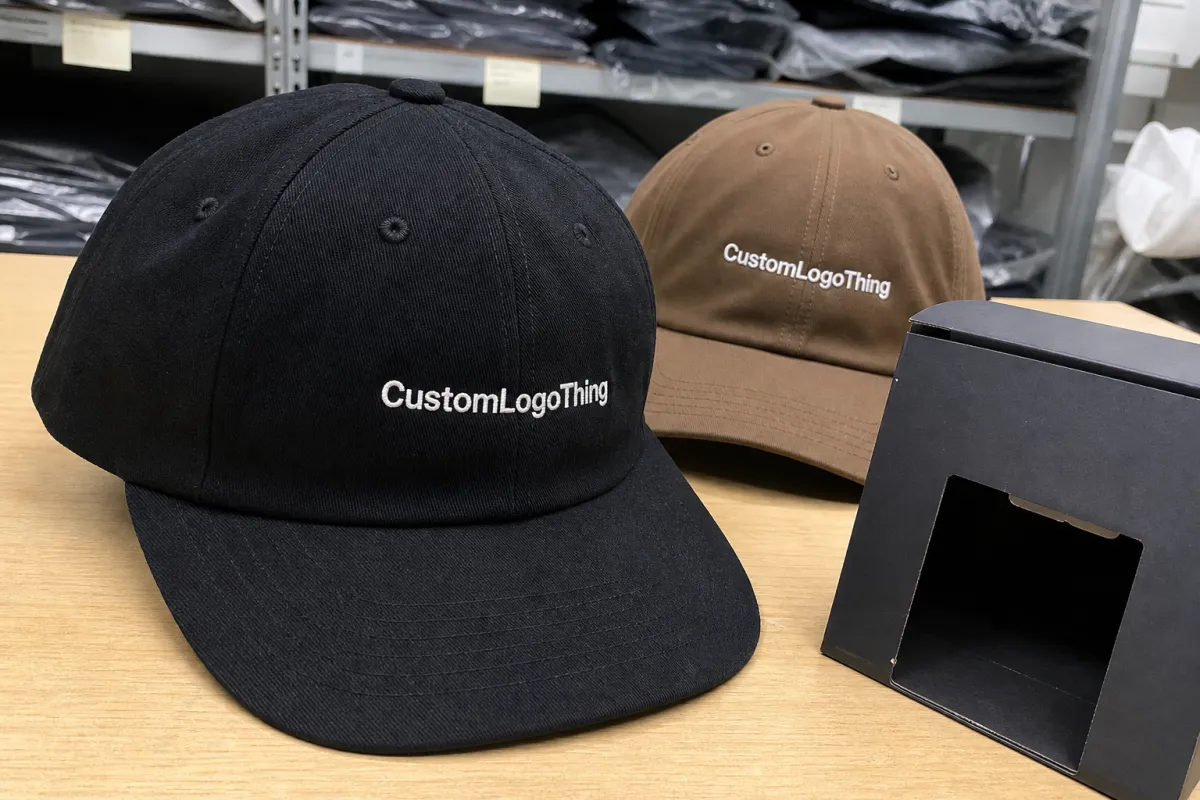
For a brand buying Hats for Retail shelves, event tables, or bundled promotions, scale helps most when the spec stays fixed. A bulk private-label run spreads setup work across more units, so digitizing, artwork cleanup, sampling, and production coordination stop weighing so heavily on each cap. Small orders can still make sense, but the unit price rarely tells the full story once freight, labels, and packing labor are added.
One mistake buyers make is trying to save money by changing too many variables at once. A different panel count, a different closure, and a different decoration method all raise the chance of delays and cost creep. The better move is usually to lock one style, one or two colorways, and one decoration method that can be repeated across seasons. That approach protects both margin and brand consistency.
Fixed costs behave differently at 150 units than they do at 1,500. Digitizing a logo, preparing a proof, and setting up carton labels can look expensive on a small run, then become almost invisible once those same steps are spread across a larger order. The same is true for sampling. Once the artwork, crown shape, and closure are approved, replenishment orders can stay close to the original spec without forcing the factory to rebuild the process.
A private-label cap program usually wins on discipline, not drama. Stable specs, clear artwork, and a repeatable decoration method will do more for margin than chasing the lowest headline unit price. That is especially true if the hats must arrive retail-ready instead of as loose inventory waiting for a second round of handling.
Choosing the right cap style for retail, events, or uniforms
The best silhouette depends on where the cap will be sold and who will wear it. Structured six-panel caps are a strong retail choice because the front panel holds shape well, which helps embroidery read cleanly. Five-panel styles offer a broader front face and usually suit patches or larger graphics. Dad hats feel softer and more relaxed, so they fit lifestyle brands and casual apparel better. Snapbacks stay popular because the adjustable closure works across a wider audience, while trucker caps add breathability and often perform well in warm-weather promotions.
| Cap style | Best fit | Branding surface | Typical notes for buyers |
|---|---|---|---|
| Structured six-panel | Retail, uniforms, team wear | Clean front panel for embroidery | Holds shape well and looks polished on shelf |
| Five-panel | Merch, streetwear, event caps | Wide front panel for patches or prints | Good for bold graphics and simple branding |
| Dad hat | Lifestyle labels, casual retail | Soft front panel with low profile | Relaxed fit, easy to wear, less formal appearance |
| Snapback | Mixed-size audiences, promotions | Strong front crown and adjustable back | Classic look with broad fit range |
| Trucker cap | Outdoor events, warm-weather promos | Foam or cotton front with mesh back | Breathable and often cost-efficient for volume |
If the cap is going into a fashion collection, a lower profile and softer hand usually feel more current. If it is supporting a uniform program, a structured crown and a cleaner front panel can help the logo read from farther away. That visual distance matters more than many buyers expect, especially for event staff or store teams seen across a floor or parking lot.
Front-panel height also matters. A logo that fits a tall crown can look cramped on a shallow profile, and dense embroidery can start to pull at seam lines if the panel shape is too narrow. For a custom private label Caps Bulk Order, the smartest choice is the one that protects the brand image and still leaves enough room for the decoration method you actually want.
Need the order to support replenishment across multiple channels? A repeatable silhouette matters more than the first shipment. Buyers who plan ahead often pair the cap order with Wholesale Programs so the same style can be reordered without rebuilding the spec every time.
Materials, closures, and decoration options that affect quality
Materials set the first impression. Cotton twill still shows up often because it has a familiar retail hand and takes embroidery well. Brushed cotton can feel a little softer and more elevated. Polyester blends are useful when the buyer wants better shape retention, faster drying, or a lighter feel. Foam-front caps are common in promotional programs, and mesh-backed truckers work well when breathability matters more than a fully solid crown. The right fabric depends on the balance between appearance, durability, and price.
Closures matter just as much. Snapback, hook-and-loop, buckle, and fitted sizing all change cost, comfort, and positioning. A buyer who needs broad adjustability usually ends up with a snapback or hook-and-loop closure, while a premium retail line may prefer a cleaner buckle or fitted build. Fewer closure variations generally mean less complexity in production and fewer surprises in the bulk order.
Decoration should be matched to the cap structure, not chosen by habit. Flat embroidery is dependable, durable, and clean for most logos. 3D puff embroidery adds height and a more dimensional retail look, but it needs enough front-panel space to avoid pinching around the edges. Woven patches work well for fine detail and smaller type. Leather or faux-leather patches create a warmer, more premium finish. Screen print or heat transfer can suit simpler artwork and tighter budgets, though they usually feel less permanent than stitched options.
- Flat embroidery is the safest all-round choice for durability and clean edges.
- 3D puff embroidery reads best on tall, structured crowns with simple lettering.
- Woven patches help when the logo has small detail that embroidery would blur.
- Leather or faux-leather patches add texture and a more upscale retail look.
- Screen print or heat transfer can work for simple graphics and short timelines.
Inside details are part of the product, not an afterthought. In a custom Private Label Caps bulk order, a woven label, printed taping, or sweatband branding can make the cap feel like a real private-label item rather than a generic blank with a logo. If your line needs sewn-in identifiers, pair the order with Custom Labels & Tags so the interior finish matches the outside presentation.
Thread count, stitch density, and backing material all affect how embroidery sits on the crown. Too much density can make a front panel stiff and heavy, while too little leaves the logo weak and uneven. The right balance depends on fabric weight and the final use case, which is why a sample always tells more truth than a spec sheet alone.
Pricing, MOQ, and unit cost drivers to review before quoting
A custom Private Label Caps bulk order should be priced as a landed program, not just a factory unit price. The decoration method, the packaging format, the shipping mode, and the destination all affect the final margin. A buyer who focuses only on the cap shell may get a quote that looks attractive until freight, cartons, labeling, and import costs appear.
Typical cost drivers are easy to identify once you know where to look:
- Quantity breaks lower the unit cost as setup is spread across more pieces.
- Stitch count and digitizing complexity affect embroidery cost.
- Patch size and material type influence both production time and price.
- Thread colors add handling and can slow approval if the logo is not simple.
- Labeling and pack-out change labor, carton count, and warehouse readiness.
- Colorways matter because each additional option can raise MOQ or slow the run.
For planning, a simple embroidered cap in a larger run might sit in the rough range of $3.50-$6.50 per unit before freight and duties, while more detailed patch programs or multi-location decoration can add $0.60-$2.00 per cap. Smaller runs usually carry a higher per-unit share of setup work, so the same style can look very different at 250 pieces versus 2,500 pieces. Those are planning numbers, not promises, but they help a buyer keep the budget realistic.
MOQ often shifts with the decoration method. Standard embroidery usually supports lower minimums than specialty patch programs, woven interior branding, or mixed-color assortments. If the buyer simplifies the spec, the order is easier to quote and easier to move through production. That is especially true for private-label cap programs that need a quick retail launch and do not have time for multiple revision rounds.
Other hidden drivers show up in the paperwork. Pantone matching, individual bagging, size stickers, barcode application, carton marks, and origin labeling all add time somewhere in the process. If those details are not settled early, the quote can change after proof approval, which is where budget overruns tend to start.
If you are comparing private-label options across broader product lines, the same discipline applies to Custom Packaging Products and other branded packaging items. A clean request package reduces back-and-forth and makes the quoted price far more useful.
Process and lead time from spec sheet to shipment
The cleanest production flow starts with a complete spec sheet. For a custom private label caps bulk order, the usual sequence is inquiry, spec confirmation, artwork review, digital proof, sample or pre-production approval, bulk production, quality check, packing, and shipment booking. Each step is straightforward on paper, but delays usually come from incomplete logo files, shifting colors, or late approvals.
Vector artwork helps a lot. So does a clear note on thread color, patch finish, panel count, closure type, and label placement. If the buyer changes the bill shape after proof approval, the clock resets. If the logo file is low resolution, the proofing round takes longer. If the order includes several colorways, those choices must be frozen before production starts or the timeline stretches.
There is a real difference between a proof, a sample, and a pre-production sample. A digital proof checks placement and proportions. A sample checks the actual feel, fabric, and build. A pre-production sample confirms the final materials before the bulk run begins. Skipping those steps can save time on paper and cost more later if the cap fits badly or the logo sits too close to a seam.
For a straightforward embroidered run, lead time after proof approval often falls around 12-15 business days before transit. More detailed patch programs, multiple decoration locations, or custom labeling can push that to 15-25 business days or more, depending on order size and capacity. Shipping time is a separate question, and it should be discussed alongside the production schedule rather than left for the end.
Air freight can rescue a launch date, but it can also distort the economics of the order. Ocean freight usually protects margin better on larger shipments, yet it adds transit time and requires a firmer schedule. The right option depends on the delivery date, not just the headline cost.
From a buyer’s point of view, the best way to avoid delay is to approve the proof quickly and send complete information up front. That matters even more if the caps must arrive before a launch, a trade show, or a store reset. A custom private label cap order is much easier to manage when the buyer treats artwork approval like a production milestone, not a casual email thread.
Quality control, packaging, and retail-ready labeling
On the production floor, the details that matter most are the ones shoppers actually see and feel: stitch consistency, logo placement, color match, seam finish, panel symmetry, and closure function. If the cap is retail-bound, the front panel should sit straight, the patch should not drift, and the sweatband should feel finished rather than rough. Small inconsistencies become very visible once a hundred caps are hanging side by side.
Good QC starts early. The first sample should confirm construction, and the first production pieces should be checked before the full run continues. Buyers often ask for a simple inspection against an approved sample, or for an AQL-style check on random cartons. Either way, the goal is the same: catch drift before it becomes a warehouse problem.
Packaging changes how the order moves through a warehouse. Bulk-packed caps are efficient, but individually polybagged units with size stickers, hang tags, or barcode labels may be better for retail receiving. If the order is part of a gift set or influencer kit, custom printed boxes may be the right move instead of a plain shipper. That is where packaging design and product packaging start to matter as much as the cap decoration itself.
Receivers care about carton counts, inner pack counts, label position, and barcode placement. If any of those details are missing, the shipment can sit while the warehouse sorts it out. For paper hang tags or carton inserts, ask for FSC-certified stock through FSC when that fits the brand standard. If the caps need to travel through distribution centers, packaging guidance aligned with ISTA methods can help reduce crush, vibration, and handling issues.
Retail packaging does not have to be elaborate. It does have to be consistent. A cap that arrives with the correct label, the correct case pack, and the correct barcode is easier to sell and easier to replenish. That is the real value of disciplined branded packaging on a bulk private-label order.
What a reliable private-label supplier should confirm before production
A reliable supplier should verify the cap style, fabric, closure, decoration placement, label position, packaging format, and ship-to details before anything enters production. In a custom private label caps bulk order, small specification gaps are what create expensive surprises, so the proofing step has to be precise enough to catch them early.
A good proof is not a pretty mockup. It is a working document that shows panel count, logo scale, thread color, patch placement, and the way the cap will actually be built.
Here is what strong proofing should cover:
- The exact cap silhouette and panel count.
- The decoration method and where it sits on the crown.
- The thread colors or print colors tied to the artwork file.
- The closure type, including size range if it matters.
- The label, hang tag, and sweatband details for private-label branding.
- The packaging format, carton count, and shipping instructions.
A good supplier also flags problems instead of pretending every request is simple. If the logo is too wide for the front panel, that should be said early. If the chosen patch material adds too much thickness to the seam line, that should be visible in the proof. If the closure hardware pushes the order out of the target budget, a realistic alternative should be offered before production starts.
Clear communication matters just as much as technical accuracy. Good suppliers answer MOQ questions directly, give a realistic lead time, and explain where the extra cost comes from. They do not leave the buyer guessing. That difference is often what separates a useful manufacturing partner from a quote that looks fine until it is put into production.
Next steps to quote, sample, and place your order
If you want a fast, accurate quote, gather the basics first: cap style, target quantity, color choices, logo files, decoration method, label needs, packaging requirements, and required delivery date. If you already know your target unit cost, include that too. That one number helps the quote match the real margin math instead of a generic factory assumption.
A clean approval path usually works best:
- Request the quote with complete specs.
- Review the digital proof carefully.
- Approve a sample or pre-production sample if the program needs one.
- Lock the final specification, including labeling and pack-out.
- Place the order with shipping instructions and receiving details.
If the caps are part of a launch or replenishment cycle, build the schedule backward from the delivery date and keep a little room for proof changes. Buyers who plan that way avoid the most common rush-order mistakes. A firm spec sheet also makes reorders easier, because the next run can start from an approved record instead of a fresh interpretation.
For brands that want the cap, the label, and the shipping carton to feel like one coordinated offer, the order should be handled as a full branded packaging program rather than a loose apparel purchase. That approach keeps the product presentation sharper, the warehouse work lighter, and the buyer's margin easier to defend.
What is the minimum order for a private-label cap run?
MOQ usually depends on the cap style, the decoration method, and whether the order uses one colorway or several. Standard embroidered caps often support lower minimums than patch-heavy or multi-location branding programs. A complete spec sheet helps the supplier give a real MOQ instead of a vague estimate.
Which cap style works best for private-label production?
The best style depends on the channel. Relaxed dad hats suit lifestyle brands, while structured six-panel caps usually fit retail and uniform use better. Trucker caps work well for warm-weather promotions, and snapbacks stay useful when the audience needs an adjustable fit.
How long does a bulk cap order usually take?
Lead time depends on artwork approval, sample needs, decoration complexity, production capacity, and shipping method. A straightforward embroidered run often moves faster than orders that need specialty patches, custom labeling, or detailed packaging. Fast approvals keep the schedule moving.
Can I add inside labels or woven branding to caps?
Yes, many cap programs can include inside labels, woven tabs, sweatband branding, or other private-label details if the construction allows it. These additions improve retail presentation, but they can affect cost, MOQ, and production time. The supplier should confirm placement and artwork requirements before production starts.
What should I send to get an accurate quote?
Send the cap style, quantity, color choices, logo files, decoration method, packaging requirements, and delivery destination. If you have a target budget or target unit cost, include that as well so the quote can be matched to your margin goals. A complete request reduces revisions and speeds up the order process.

