Custom Stickers Print: Cheap Branding Gets Expensive Fast
A Custom Stickers Print order looks harmless until it lands on every pouch, jar, mailer, box, and giveaway your brand sends out. Save three cents on the wrong material, then watch labels curl at the edges, smear during handling, or make finished packaging look like it was assembled during a power outage.
Custom sticker printing means producing adhesive labels or decals from your artwork, size, shape, material, finish, adhesive, and quantity requirements. Simple sentence. Not always a simple job. The sticker has to print cleanly, cut accurately, stick to the real surface, survive the actual environment, and still look like your brand after packing, shipping, shelving, and customer handling.
People argue about stickers, labels, decals, and seals like the terminology has mystical power. It does not. A product label usually carries information and branding. A sticker may be decorative or promotional. A decal often means a more durable film piece for laptops, windows, vehicles, or equipment. A seal closes a box, tissue wrap, mailer, or retail bag. Buyers care whether it sticks, looks sharp, survives handling, and fits the container. Shocking, I know.
The smarter buying decision is not “paper or vinyl?” It is a chain of choices: material, adhesive, print method, finish, artwork quality, order quantity, and application format. A candle label near oils and heat has different needs than a thank-you sticker on tissue paper. A QR code label needs contrast and scan reliability. A shipping box seal needs tack on dusty corrugated board. Product packaging punishes lazy assumptions quickly.
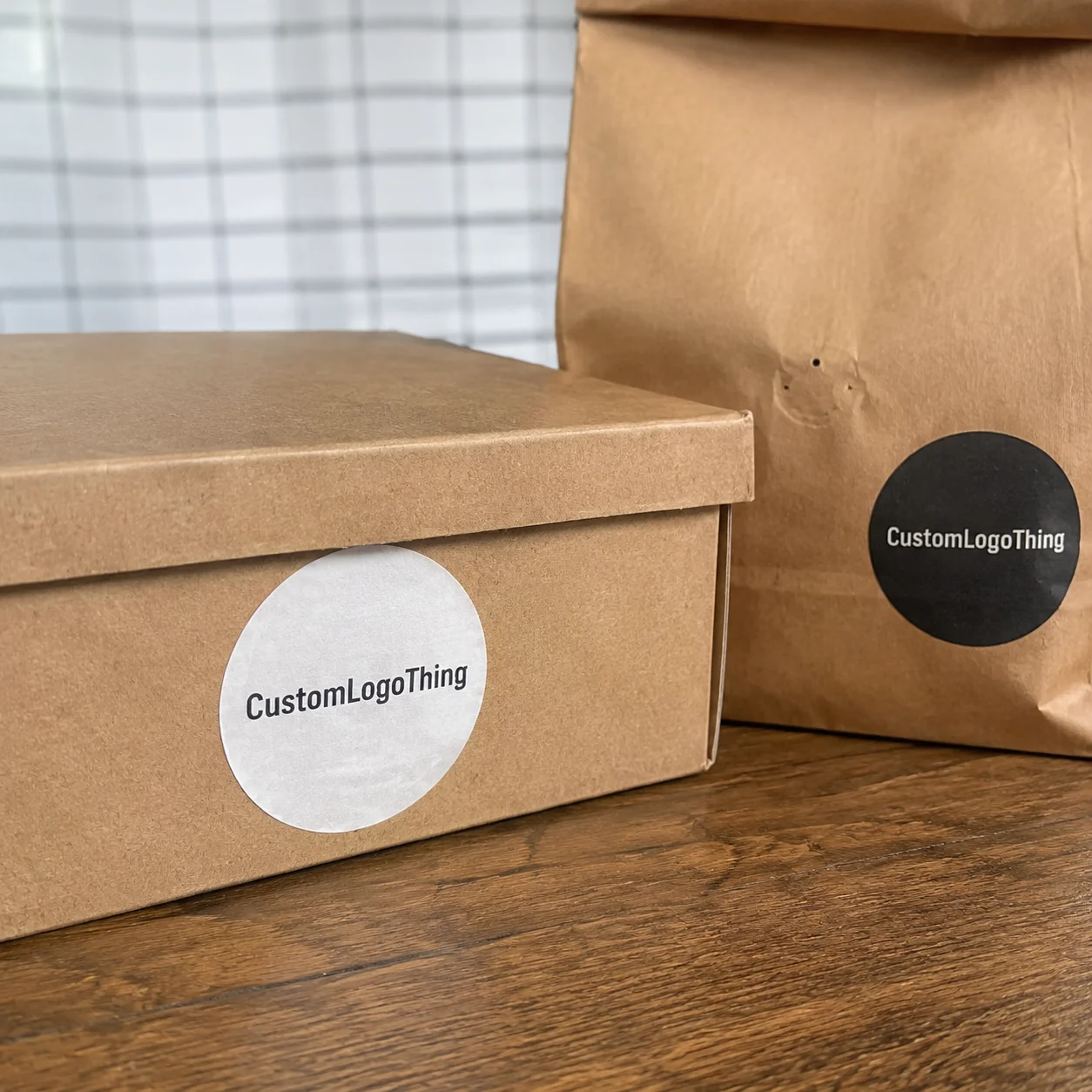
Common uses include food packaging labels, candle labels, QR code stickers, retail promo stickers, event handouts, shipping box seals, insert stickers, and branded packaging accents. For broader programs, stickers also pair with Custom Labels & Tags, belly bands, hang tags, and Custom Printed Boxes. Good package branding is built from small decisions that line up.
Practical rule: choose the sticker spec around the surface, environment, shelf life, design detail, and application method. Not around the cheapest line item on a quote sheet.
How Sticker Printing Works From Artwork to Finished Roll or Sheet
The workflow is predictable. You submit artwork, confirm the finished size and shape, choose material and adhesive, select the finish, review a proof, approve production, then the printer prints, cuts, inspects, packs, and ships the order. The part buyers underestimate is proofing. That PDF proof is not decoration. It is the last cheap moment to catch bad sizing, missing bleed, spelling mistakes, poor contrast, or a cut line that bites into the logo.
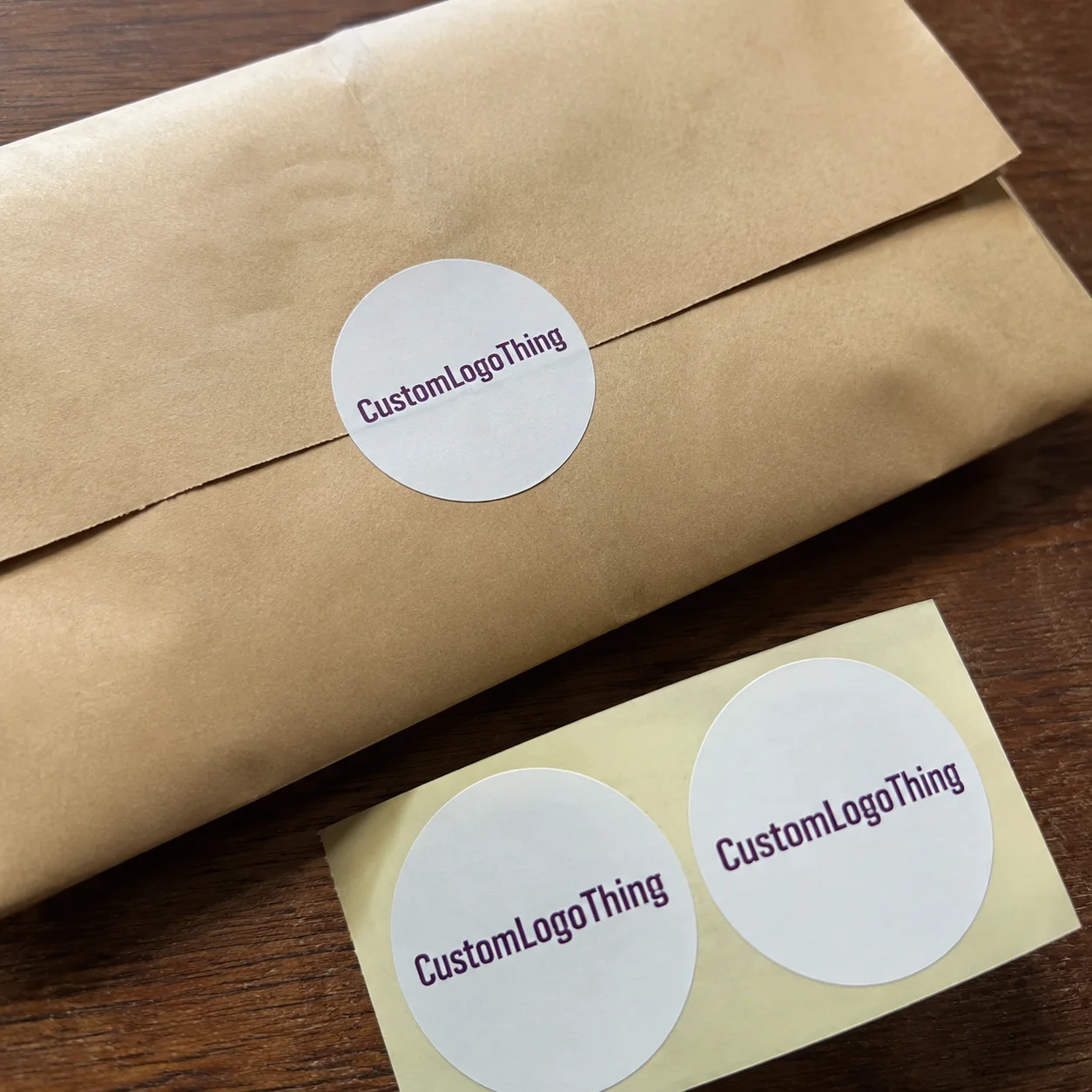
Sticker format matters. Roll stickers are best for fast hand application, label dispensers, or machine application. They are common for product labels because rolls can be wound in a specific direction and applied efficiently. Sheet stickers work well for small batches, mixed designs, samples, or office use. Individually cut stickers cost more to handle but are useful for giveaways, inserts, retail packs, events, and customer freebies.
Most short-run sticker jobs use digital printing because setup is fast, variable designs are easier, and small quantities do not require expensive plates. Larger repeat jobs may move to flexographic printing because the setup cost spreads across thousands or tens of thousands of labels. Offset printing can appear in broader packaging programs, especially where sticker production is part of a larger paper-based retail system, but flexo and digital dominate adhesive label work.
Cutting has its own language. A die cut sticker follows the outer shape, so the backing and sticker are cut to the same silhouette. A kiss cut sticker cuts only through the face material while leaving the backing intact. Kiss cuts are easier to peel, which matters more than people think when staff apply 500 labels by hand before a shipment cutoff. Tired hands are not a quality control system.
Digital proofs usually confirm finished size, layout, cut line, bleed, safe zone, colors, spelling, and roll direction. Physical proofs or production samples are worth considering for high-volume orders, specialty finishes, unusual adhesives, clear labels with white ink, or labels that must pass retailer review. Professional printers catch obvious production problems, but they are not your legal department, barcode verifier, nutrition panel consultant, or copy editor. Approve carefully.
Materials, Adhesives, and Finishes That Change the Result
Material choice drives performance. Paper stickers are budget-friendly and work well for indoor dry goods, thank-you seals, retail bags, inserts, and short-life promotional use. White BOPP, also called polypropylene film, gives better moisture resistance and is common for food jars, cosmetic containers, refrigerated products, and bath products. Clear film creates a no-label look on glass or plastic, but the artwork setup has to be right. Vinyl is better for durable decals, outdoor use, laptops, windows, and equipment. Kraft paper supports earthy, handmade, or natural product packaging, but it does not love moisture.
Adhesive choice is just as important as face stock. Permanent adhesive works for most product labels and seals. Removable adhesive is useful for temporary promos, price labels, and short-term retail campaigns. Freezer-grade adhesive is designed for cold storage, condensation, and low-temperature application. High-tack adhesive helps with textured paper, rough corrugated board, flexible pouches, and difficult plastics. Some plastics have low surface energy, which is a technical way of saying normal adhesive may act useless on them.
Connect the spec to reality. Refrigeration creates condensation. Oils from candles and cosmetics can stain paper. Shipping abrasion can scuff gloss coatings. Sunlight can fade weak inks. Curved containers create edge lift if the label is too rigid or too large. Cardboard dust weakens adhesive. Squeezable packaging flexes and can wrinkle stiff labels. Glass jars, plastic bottles, metal tins, kraft mailers, and frosted containers all behave differently.
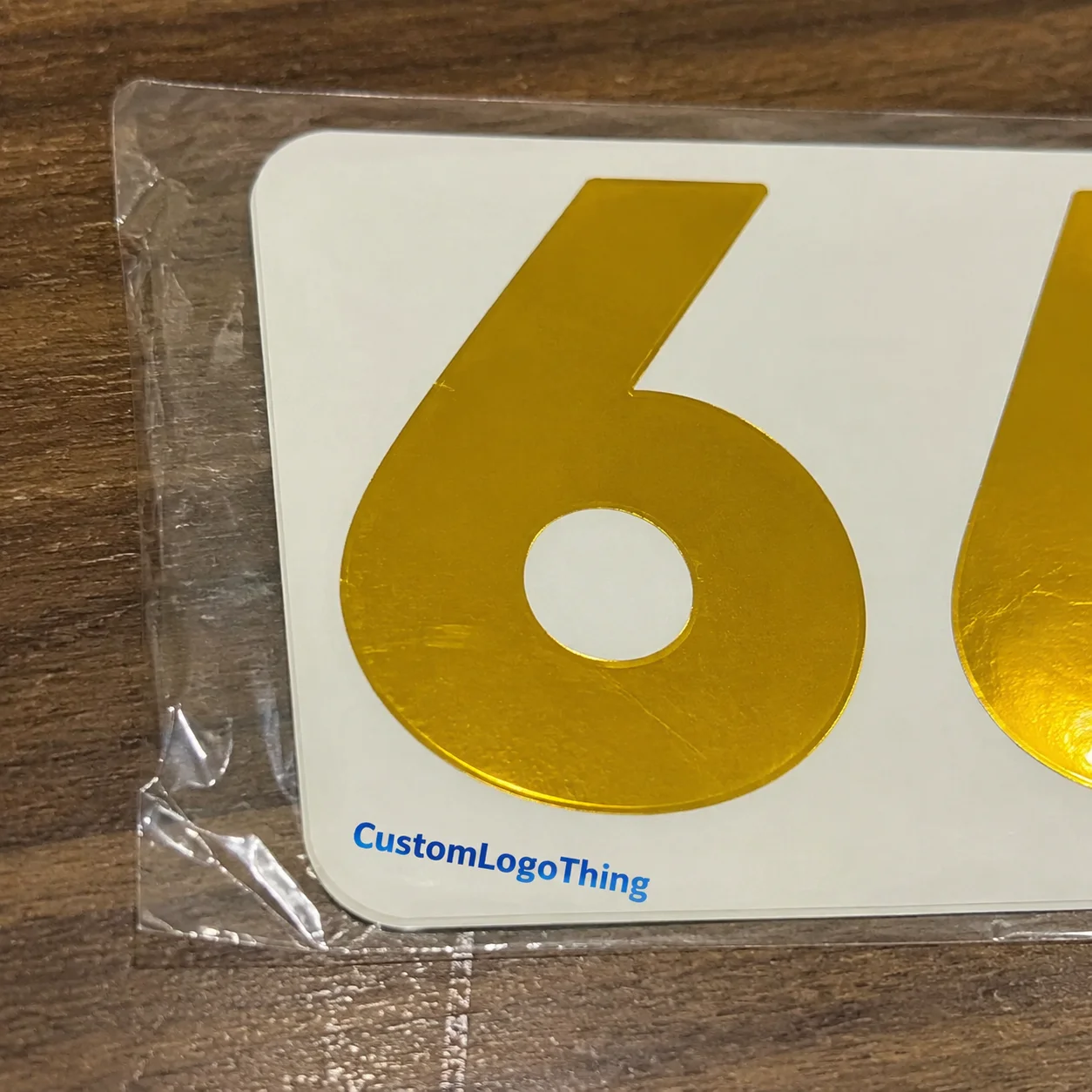
Finishes change both appearance and durability. Matte finish gives a softer, premium feel and reduces glare. Gloss makes colors pop and is useful for bright retail packaging. Soft-touch lamination feels upscale but can show fingerprints on darker colors. UV coating can improve scuff resistance. Foil, spot gloss, emboss-like effects, and metallic inks can make a label feel more expensive, but each adds cost and proofing risk. Use specialty finishes where they earn their keep.
Clear stickers deserve a warning. If you print color ink on clear film without white ink behind it, the colors may look transparent, weak, or completely different on dark packaging. White ink can be used as a flood layer, selective underbase, or standalone design element. It costs more because it adds setup and print complexity, but skipping it can make a premium label look faint and sad.
Waterproof, weatherproof, and water-resistant claims are not interchangeable. A sticker that survives a splash on a bathroom counter is not automatically ready for an ice bucket, dishwasher, outdoor window, or delivery truck in August heat. For technical packaging validation, many brands also pay attention to transit and handling standards from groups such as ISTA. Sticker testing is not the same as full package testing, but the same mindset applies: test the real use case, not the fantasy version.
Cost, Pricing, MOQ, and Unit Cost Tradeoffs
Sticker pricing depends on size, material, finish, print method, color coverage, shape complexity, quantity, roll or sheet format, proofing needs, and shipping location. A 1-inch paper circle on sheets is not priced like a 4-inch clear film product label with white ink, matte lamination, and a custom die. Anyone giving a universal price without specs is guessing. Fun for them. Expensive for you.
Small simple paper sticker runs may land around $0.12 to $0.45 per sticker depending on size and quantity. Short-run film labels can sit closer to $0.25 to $0.85 each. Larger roll orders, especially 5,000 to 25,000 pieces of a stable design, can drop unit cost sharply because setup, proofing, and cutting are spread across more labels. Specialty foil, soft-touch lamination, white ink, custom shapes, and rush freight can push costs up fast.
MOQ, or minimum order quantity, deserves a grown-up conversation. Low MOQs are useful for testing a new SKU, seasonal campaign, or limited event run. The tradeoff is higher unit cost. Higher MOQs make sense when the design is stable, reorder demand is predictable, and storage conditions will not damage the rolls. Do not order 30,000 labels for a product name you might change next month. That is not confidence. That is inventory with commitment issues.
| Sticker Option | Best Use | Typical Unit Range | Main Tradeoff |
|---|---|---|---|
| Paper sheet stickers | Thank-you seals, dry retail bags, inserts | $0.08-$0.35 | Low cost, weaker moisture resistance |
| White BOPP roll labels | Food jars, cosmetics, bath products | $0.12-$0.55 | Better durability, higher setup needs |
| Clear film with white ink | No-label look on glass or plastic | $0.25-$0.95 | Premium look, artwork must be precise |
| Vinyl die cut stickers | Giveaways, laptops, windows, outdoor decals | $0.30-$1.20 | Durable, higher piece and cutting cost |
| Foil or spot effect labels | Premium retail packaging and gift products | $0.35-$1.50+ | Strong shelf impact, slower proofing |
The cheapest quote can become expensive if the adhesive fails, colors print muddy, cutting is off by 1 millimeter on a tight border, rolls are wound the wrong direction for an applicator, or reprints miss the launch date. Better ways to control cost: standardize sizes across SKUs, limit specialty finishes to hero products, gang similar designs where possible, order larger quantities of proven items, and avoid panic rush shipping.
For an accurate quote, send the finished size, quantity, artwork, material preference, indoor or outdoor use, surface type, finish, roll direction if needed, and delivery deadline. If stickers are part of a larger branded packaging system, include the related box, pouch, jar, or mailer specs too. Printers quote better when buyers stop making them interrogate basic details.
Process and Timeline: What Happens Before Stickers Ship
A typical timeline starts with quote review, artwork check, proof creation, proof approval, production, quality control, packing, and transit. The clock usually starts after proof approval, not after the first email asking for pricing. That detail matters. If you spend four days debating whether the logo should be 2 millimeters larger, production has not magically been happening in the background.
Simple digital sticker orders can often produce in 3 to 7 business days after proof approval, especially for standard materials and straightforward shapes. More involved custom stickers print jobs may need 8 to 15 business days. Add time for custom materials, physical proofs, foil, specialty lamination, new dies, large quantities, color matching, or complex roll requirements. Freight then adds 1 to 7 business days depending on destination and shipping method.
The biggest delay is slow proof approval. Second place goes to messy artwork. Missing bleed, low-resolution images, RGB color files, unclear cut lines, hairline borders, tiny text, unoutlined fonts, and weak barcode placement all slow orders down. A clean print-ready PDF with vector logos and a clearly labeled cut line can save days. A screenshot pasted into a document cannot. Please stop doing that to printers.
Barcode and QR code labels need extra care. Small codes can fail after scaling, lamination, ink spread, or low contrast. Leave enough quiet zone around the code, test scan from the expected distance, and avoid placing codes over curves or seams. For regulated products, confirm required copy size, nutrition panels, warning language, and country-specific rules before proof approval. The printer can produce your file; they cannot make your compliance problems disappear.
Shipping and application planning are part of the timeline. Order early enough to test adhesion on the actual packaging before a launch, retail drop, trade show, or fulfillment push. Apply a few labels, let them sit for 24 to 72 hours, chill or warm them if that matches the use case, then inspect edge lift, wrinkling, ink rub, and scuffing. If the label fails during a simple bench test, it will not improve after being thrown into a carton with 200 other units.
Repeat products need a reorder rhythm. Track weekly or monthly usage, keep approved specs on file, and reorder before inventory hits panic mode. Panic mode is not a purchasing strategy. It is just expedited shipping wearing a fake mustache.
Step-by-Step Ordering Guide for Better Sticker Specs
Good sticker orders start with the job, not the artwork. Decide whether the sticker is for product labeling, sealing, promotion, instruction, compliance, QR access, decoration, or giveaway use. A compliance label and a cute insert sticker can both be 2 inches wide, but they do not carry the same risk. One can disappoint your customer. The other can create a recall headache.
- Define the job. Write down the purpose, expected shelf life, handling conditions, and whether the sticker needs to support package branding, product information, or both.
- Measure the application area. Use the actual jar, pouch, box, bottle, mailer, or insert. Guessing from a mockup is how labels end up looking like postage stamps or wrapping halfway around a corner.
- Choose the format. Use rolls for speed and repeat application, sheets for flexible small batches, and individual cuts for giveaways, retail packs, or box inserts.
- Match material and adhesive. Cardboard, glass, plastic, metal, kraft paper, coated cartons, and textured packaging all need different levels of tack, flexibility, and moisture resistance.
- Prepare artwork correctly. Include 0.0625 to 0.125 inch bleed where requested, safe margins, vector logos, outlined fonts, 300 dpi images, CMYK setup where needed, and a clear cut line.
- Review the proof like you pay for the reprint. Check size, spelling, color expectations, cut line, barcode readability, QR function, roll direction, material, finish, and quantity.
- Test before scaling. Order samples or a small batch when the sticker must survive moisture, cold, oils, abrasion, machine application, or long retail shelf life.
If your sticker sits on a box, pouch, or carton, review it beside your other Custom Packaging Products. Packaging design works best when labels, cartons, mailers, inserts, and Custom Printed Boxes share a consistent visual system. A gorgeous sticker slapped onto a badly matched box still looks off. The customer may not know why, but they will feel it.
Color expectations need a reality check. Screens glow; labels reflect light. Uncoated kraft paper absorbs ink differently than white film. Matte lamination softens contrast. Gloss can deepen color. If brand color accuracy matters, ask about Pantone matching, drawdowns, press proofs, or tolerance ranges. ASTM has testing standards used across packaging and materials evaluation, and while not every sticker order needs lab testing, the principle is useful: define the test before judging the result. For sustainability claims or paper sourcing, references such as FSC can help buyers understand chain-of-custody language.
Common Mistakes Before You Place an Order
Most sticker failures are boring and avoidable. That is the annoying part. Buyers choose paper for wet products, ignore adhesive strength, order the wrong size, use tiny text, skip bleed, approve proofs too fast, forget roll direction, or never test how staff will peel and apply each piece. Then everyone acts surprised when production day becomes a label circus.
- Wrong material: paper on refrigerated, oily, wet, or outdoor products usually ends badly.
- Weak adhesive match: dusty corrugated board, textured kraft, curved jars, and flexible pouches may need stronger or more flexible adhesive.
- Bad size judgment: a label that looks balanced on a screen can be too large on a tapered bottle or too small on a retail carton.
- Over-designed artwork: tiny gradients, micro text, hairline borders, and low-contrast QR codes often print worse than they preview.
- Careless proof approval: spelling, barcode, cut line, roll direction, and quantity errors become real costs after production starts.
Surface testing matters because adhesion is chemical and physical, not emotional. A sticker that looks perfect on a laptop may fail on a dusty corrugated box, oily candle tin, curved jar, frosted bottle, or matte-coated pouch. Apply samples to the real packaging, press with consistent pressure, wait at least a day, then inspect corners and edges. For cold products, test in the cold. For shipping seals, test on packed boxes. Groundbreaking concept: test the thing the way it will be used.
Do not over-design for the print size. Fine detail is tempting because it looks elegant on a 27-inch monitor. On a 1.5-inch label, tiny serif text and delicate borders can turn into noise. QR codes need strong contrast. Legal copy needs readable size. Hairline borders make tiny die-cut movement look like a production defect. Screens lie. Frequently.
Before requesting a quote, gather package samples, measure the label panel, photograph the application surface, decide indoor versus outdoor use, choose roll or sheet format, and write down the deadline. Then send complete specs: size, quantity, material, finish, shape, artwork, usage conditions, shipping location, and any applicator requirements. “How much for stickers?” is not a quote request. It is a guessing contest.
Treat custom stickers print like packaging, not decoration. Test the surface, approve the proof carefully, choose material for the real environment, and order with enough lead time to fix problems before launch. Cheap branding only stays cheap when it works the first time.
FAQ
What file type works best for custom sticker printing?
Vector files such as AI, EPS, or print-ready PDF work best for logos, text, and cut lines because they stay sharp at any size. High-resolution PNG or TIFF files can work for image-based designs, but low-resolution screenshots usually print soft or pixelated. Include bleed, safe margins, outlined fonts, and a clearly marked cut line for custom shapes.
How much does a custom stickers print order usually cost?
Cost depends on size, quantity, material, finish, shape, roll or sheet format, and specialty effects such as foil, white ink, or soft-touch lamination. Small test batches usually have a higher unit cost, while larger repeat orders often lower the cost per sticker. For an accurate quote, send the finished size, quantity, artwork, material preference, use case, and delivery deadline.
Are vinyl stickers better than paper stickers?
Vinyl or film stickers are better for moisture, outdoor use, handling, and longer durability. Paper stickers are usually more cost-effective for indoor packaging, thank-you seals, retail bags, and dry product labels. The better choice depends on the surface, environment, shelf life, and budget, not just the material name.
How long does custom sticker production take?
Simple digital sticker orders can often move faster than specialty or high-volume jobs, but timelines vary by specs and production capacity. Production time usually starts after proof approval, so slow feedback can delay the whole order. Custom dies, specialty finishes, physical samples, large quantities, or rush shipping can all affect turnaround.
What should I check before approving a custom sticker proof?
Check size, spelling, logo placement, color expectations, cut line, bleed, safe margins, barcode readability, and QR code function. Confirm roll direction if stickers will be applied by machine or in a specific hand-application workflow. Review the proof against the actual packaging dimensions whenever possible instead of judging it only on a screen.