Buyer Fit Snapshot
| Best fit | Custom Tamper Evident Labels projects where brand print, material claims, artwork control, MOQ, and repeat-order consistency need to be specified before quoting. |
|---|---|
| Quote inputs | Share finished size, material target, print colors, finish, packing count, annual reorder estimate, ship-to region, and any compliance wording. |
| Proofing check | Approve dieline scale, logo placement, barcode or warning zones, color tolerance, closure strength, and carton packing before bulk production. |
| Main risk | Vague material claims, crowded artwork, missing packing details, or unclear freight terms can make a low unit price expensive after revisions. |
Fast answer: Custom Tamper Evident Labels: How They Work and Cost should be specified like a repeatable production item. The safest quote records material, print method, finish, artwork proof, packing count, and reorder notes in one written spec.
Production checks before approval
Compare the actual filled-product size with the drawing, then confirm tolerance on folds, seals, hang holes, label areas, and retail display edges. Reserve space for logos, QR codes, warning copy, and material claims before decorative graphics fill the panel.
Quote comparison points
Review material grade, print process, finish, sampling route, tooling charges, carton quantity, and freight assumptions side by side. A quote is only useful when the supplier can repeat the same color, closure quality, and packing count on the next order.
Custom Logo Things
Custom Tamper Evident Labels: How They Work and Cost
A carton can leave the plant looking immaculate and still carry a problem that will not show itself until a buyer opens a tote, a warehouse worker breaks down a shipper, or a customer notices a seal that does not sit quite right. That gap between appearance and proof is where Custom Tamper Evident labels earn their keep. They turn a hidden event into a visible one. For brands shipping supplements, cosmetics, electronics, pharmacy packs, and sealed cartons, that visible evidence is often the difference between trust and a returned box.
There is a reason packaging teams keep circling back to this topic. A label that only looks secure is not secure. I have seen good-looking packaging fail on the receiving dock because someone could lift the seal, press it back down, and leave almost no trace. That kind of failure is not dramatic. It is worse. It is quiet. Custom tamper evident labels are designed to make that quiet failure obvious.
They are not just labels with a strong adhesive. They are built so that removal, lifting, or reapplication leaves a signal that does not disappear on the next touch. The signal may be a torn face stock, a VOID pattern, residue transfer, or a surface scar that remains after the label has been disturbed. That is a very different job from decoration or routine closure labeling. A label can look elegant and still fail at the one thing it was supposed to prove. Security packaging does not get credit for good intentions.
Cost matters too, and the price story is rarely simple. A seal on corrugated board may be straightforward. The same idea on HDPE, PET, glass, or a flexible pouch can become a much more demanding build because the surface, the temperature, the curvature, and the handling path all change. A buyer who starts with the most dramatic looking option can end up overpaying for a feature that does not match the package. The better move is to fit the tamper signal to the container, then price the result according to quantity, setup, and risk.
A label that lifts away cleanly does not prove anything except that the adhesive was polite.
What Custom Tamper Evident Labels Are and Why They Matter
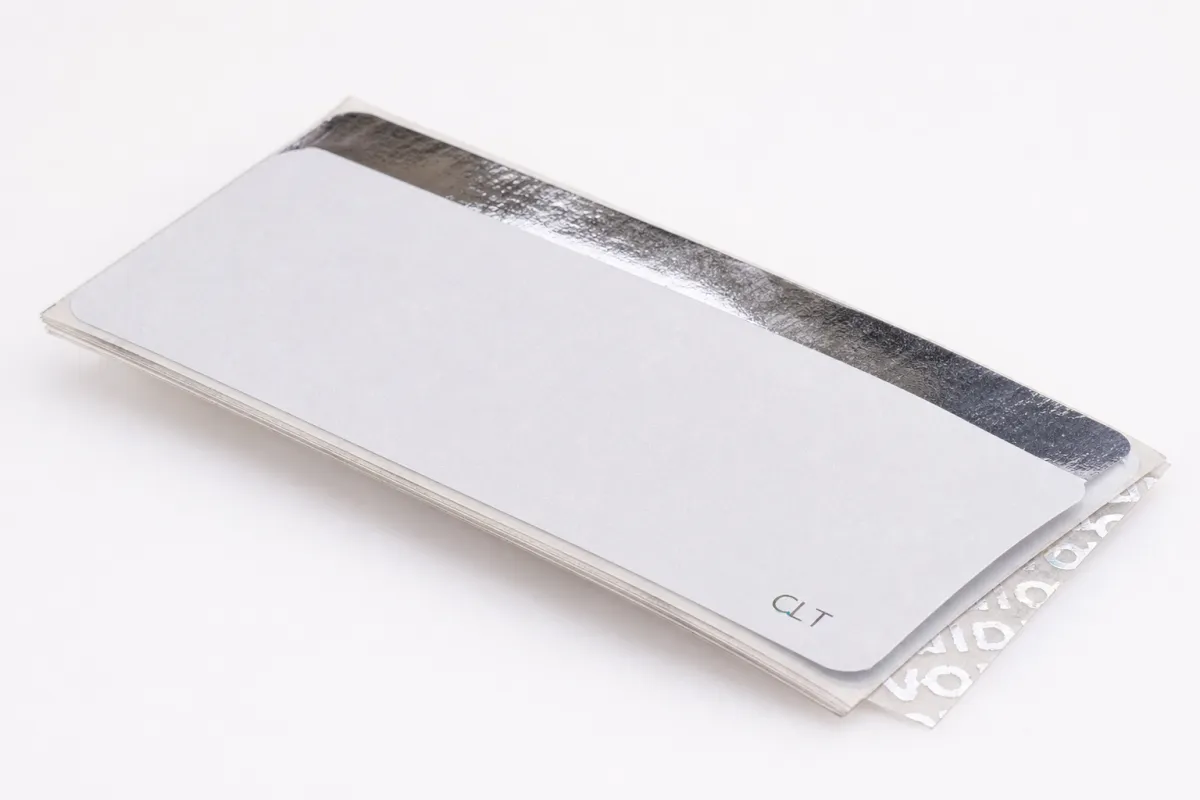
Custom tamper evident labels are pressure-sensitive labels engineered to show visible evidence after a package has been opened or disturbed. Some tear apart when a corner is lifted. Some leave a message such as VOID, OPENED, or CHECK SEAL behind on the package surface. Others transfer residue or break into fragments so the opening attempt cannot be hidden. The point is not to keep the label pretty after a tampering attempt. The point is to make the disturbance obvious to the next person in the chain.
That distinction gets blurred often because buyers hear "security" and assume a firm adhesive is enough. It is not. A strong general-purpose label can still peel off in one piece if the face stock and adhesive were not designed for tamper evidence. Real custom tamper evident labels are built around an irreversible visual change. Once the package has been opened, the proof stays visible even if the container keeps moving through a warehouse or reaches the customer in otherwise perfect condition.
Shipping cartons are the obvious use case, especially when the seal doubles as a chain-of-custody marker. The list expands quickly after that: closure seals on retail packaging, pharmacy cartons, supplement lids, cosmetic jars, sample packs, electronics boxes, access panels, warranty seals, and any package where a buyer needs to know whether the contents were touched. They also fit neatly into branded packaging programs because the security cue can sit beside the logo, the color palette, and the print system instead of fighting them for space.
The best way to think about custom tamper evident labels is as part of the packaging system, not as an add-on. A carton can have crisp graphics, smart folds, and excellent print quality, but if the seal can be lifted without leaving proof, there is still a weak point. Experienced buyers usually review the label, the substrate, the closure, and the handling environment together. That habit saves money later.
Trust sits underneath all of this. Customers do not inspect every seal under bright light, yet they notice a disturbed package fast. A broken-looking closure can trigger a complaint, a return, or a lost repeat order. Regulated categories feel that pressure more sharply. Pharmacy and supplement packaging cannot rely on appearance alone; the closure needs a clear indicator that is hard to miss. That is the practical value of custom tamper evident labels: they make the package's history visible.
Teams that manage broader packaging programs should coordinate the security label with the rest of the assortment. A shipper, a carton line, and a retail pack should not all tell different stories unless the product demands it. If you are comparing options across Custom Labels & Tags and the rest of your Custom Packaging Products, the security cue should fit the same visual language customers already recognize.
How Custom Tamper Evident Labels Work on Real Packaging
Three basic mechanisms show up again and again in custom tamper evident labels. One uses a face stock that tears or shreds when someone tries to remove it, turning the label itself into the sacrificed layer. Another uses adhesive chemistry that leaves a void message or pattern behind on the package surface, so the opening attempt remains visible even if the label moves. A third makes the label impossible to remove and reapply in the same clean way a normal label can. The mechanism changes, yet the aim stays the same: make tampering obvious without requiring a special tool or a trained eye.
Real packaging, of course, rarely behaves like a test panel. A seal that performs well on coated paperboard can act differently on low-surface-energy HDPE, dusty corrugated stock, a smooth glass jar, or a film pouch that flexes in transit. Surface energy, curvature, oil, moisture, and temperature all affect bond behavior. Condensation from a cold room, residue from a filling line, or dust from a packing table can alter performance in ways that never show up on a clean sample sheet. That is why custom tamper evident labels need to be tested on the actual container, not just admired on paper.
Corrugated cartons bring fiber structure into the conversation. Adhesive may sink in differently on a rough flap, which can help initial grab but make residue transfer less predictable. PET and glass can bond well, but only when the adhesive chemistry is matched and the line environment is clean. HDPE and polypropylene are harder surfaces for many standard adhesives because low surface energy resists normal tack. Flexible film adds movement to the problem, since the package can stretch, wrinkle, or compress during handling.
A proper sample test should ask better questions than "does it stick?" Can a corner be lifted after a few hours? Does abrasion blur the void message? What happens after freeze-thaw exposure? Does the seal still show a tampering attempt after stacking, shipping, and multiple handoffs? Distribution standards such as the ISTA standards are useful because they keep the conversation grounded in transit, not in a quiet lab on a clean table. Packages live in trucks, racks, totes, and receiving areas, not in a vacuum.
Tamper evidence is not the same as peel resistance. That confusion causes a lot of expensive mistakes. A very aggressive adhesive can make removal difficult, yet if the label comes off cleanly, the package still fails the security test. The signal must remain visible after the attempt. That is why custom tamper evident labels often depend on a designed failure mode rather than a stronger glue alone.
Application method matters as much as the material. Hand-applied labels, semi-automatic equipment, and high-speed automation do not treat the same stock the same way. A seal that works on a bench can wrinkle on a curved bottle at line speed. A bottle closure that looks perfect in a sample test can shift on the line because pressure, speed, or placement was not tuned correctly. Those details are not cosmetic. They decide whether the label functions as a security feature or merely looks like one.
In practical terms, this is where a lot of programs go sideways: the art team loves the proof, the procurement team likes the quote, and the line operator is left trying to place a narrow seal on a curved surface at speed. That is where the real-world stuff happens. The label is gonna behave the way the package and the machine tell it to behave, not the way the mockup suggests.
Key Factors That Affect Performance and Selection
Substrate compatibility sits first in the selection order for custom tamper evident labels. If the label does not anchor to the package surface, the rest of the conversation is wasted. Adhesive type, environmental exposure, print requirements, and shelf life follow close behind. A cosmetic jar in climate-controlled retail storage does not ask the same thing from a seal as a supplement bottle that rides through hot trucks, a humid dock, and a warehouse floor before it reaches the shelf. Packaging design and label design should be reviewed together.
Print method can shift the entire build. Thermal transfer, serial numbers, lot codes, QR codes, and traceability text all change the material choice and sometimes the press setup. A plain one-color tamper seal is one thing. Add variable data, white ink on clear film, or a dense security pattern and the production plan becomes more involved. Custom tamper evident labels can handle those features, but the job has to be specified that way from the start.
Brand and compliance needs sit above the adhesive layer. Anti-counterfeit messaging, chain-of-custody marks, and consumer instructions all need to be readable. A label that is technically secure but hard to interpret can still create problems because the customer may not know what the signal means. In some categories the instruction is blunt: if the seal is broken, do not use the product. In others, the tamper cue has to work alongside a barcode, a lot code, or a scan path that supports internal control. The label has to fit into the visual hierarchy of the pack without swallowing the graphics.
Shape and size matter more than procurement teams often expect. A narrow strip across a carton flap behaves differently from a round seal on a bottle cap. A die-cut shape with corners may lift differently from a smooth oval. Perforations can help with opening cues or application, yet they can also create weak points if they are placed carelessly. Placement zones deserve the same attention. A label positioned where a flap makes it easy to lift weakens the tamper signal. A label hidden behind graphics can make evidence harder to see. For custom tamper evident labels, visibility is part of the security function.
For buyers comparing structures, it helps to know the common families of tamper evidence. The table below is a practical starting point for a conversation with a packaging supplier about custom tamper evident labels. The numbers are planning ranges, not a universal price sheet, because press setup, region, and specs can move them around.
| Option | Typical Use | Typical Unit Cost | Setup Impact | Notes |
|---|---|---|---|---|
| Destructible face stock | Closure seals, cartons, warranty marks | $0.10-$0.22 at 5,000 pieces | Moderate | Designed to tear or fragment on removal; good visible evidence |
| Void-reveal construction | Retail packaging, electronics, cosmetics | $0.12-$0.28 at 5,000 pieces | Moderate to higher | Leaves a void pattern or message on the package surface |
| Residue-transfer seal | Shipping cartons, chain-of-custody seals | $0.15-$0.35 at 5,000 pieces | Moderate | Evidence remains even if the label lifts partially |
| Serialized security label | Traceability, compliance, anti-counterfeit programs | $0.18-$0.45 at 5,000 pieces | Higher | Variable data and QA checks can add time and cost |
That table points to a simple truth: the same security idea can be built in several ways, and the best version depends on the package, the budget, and the risk. A shipping closure may not need serialization. A high-value consumer item might. A carton moving through a cold chain may need a different adhesive response than a shelf-stable retail pack. Good custom tamper evident labels are chosen on evidence, not on appearance.
For broader packaging planning, the Packaging & Processing Technologies resources at Packaging.org are useful when teams need context around material behavior, converting, and packaging systems. That matters because a label never acts alone. It sits inside a larger packaging ecosystem that includes the carton, the closure, the shipping route, and the customer's first touch.
Production Process and Lead Time for Custom Tamper Evident Labels
The production path for custom tamper evident labels usually starts with discovery, not artwork. The first questions should cover the package substrate, the closure style, the storage conditions, the application method, and the security expectation. Material selection comes next, where the supplier narrows the face stock, adhesive, liner, and any special feature such as void transfer, destructibility, or serialization. Artwork should enter the process only after those basics are clear. Starting with the design before the material often creates a loop of revisions nobody wanted.
Once the spec is set, the work moves through proof review, sample approval, print production, die cutting, inspection, and shipping. Anyone who has ordered Custom Printed Boxes or other branded packaging components will recognize the flow, though tamper evidence usually adds another layer of caution. Decorative labels can tolerate some variation. A security label cannot afford much of it. If the face stock tears too early, the adhesive transfers inconsistently, or the void message reads too faintly, the whole point weakens. That is why custom tamper evident labels often demand a stricter approval step than standard labels.
Lead time can be short on a straightforward job, yet it stretches fast when a custom die, specialty film, white ink, tight variable data control, or extra quality checks enter the build. A simple run might move in roughly 12 to 15 business days after proof approval. A more involved job can take longer if sample testing or revisions are needed. Rushing is possible, though the risk usually concentrates at the front of the schedule. If the substrate or adhesive is wrong, every carton or bottle you ship carries the same weakness. With custom tamper evident labels, a cautious schedule often costs less than a rushed correction.
Clear input helps the timeline more than almost anything else. Ask for a schedule that separates artwork review, material confirmation, sampling, approval, production, and shipping. That way everyone can see which step is actually holding the clock. Buyers often watch the print date and miss the sample round or the approval bottleneck. If a product launch depends on the label, those issues belong on the surface early, not under a pallet later.
Inspection planning deserves attention too. Operators who know what tearing, voiding, or residue transfer should look like catch problems before they become complaints. That is one reason custom tamper evident labels should be specified alongside receiving and packing procedures. Packaging operations run better when the label design, the line setup, and the QA checks are all pointing in the same direction.
Custom Tamper Evident Labels Cost, MOQ, and Quote Factors
Price for custom tamper evident labels depends on a handful of core variables: material choice, adhesive performance, finish, print coverage, label size, shape complexity, variable data, and quantity. In real quote work, the unit price rarely shifts because of one huge item. It moves because several smaller decisions stack together. White underlay adds cost. A tighter die shape adds cost. Serialization adds cost. A more demanding adhesive adds cost. None of that is surprising, but every item affects the final number.
MOQ shapes the economics in the same way. Setup, press calibration, and die cutting carry a fixed component, so a short run can look expensive per label even when the design is simple. A buyer asking for 500 labels, 2,500 labels, and 25,000 labels will usually see very different pricing. For many custom tamper evident labels, the price settles into a better zone once the run is large enough to spread setup costs across more units. That does not make a short run impossible. It only means the math behaves differently from a stock reorder.
Here is a practical way to think about quote drivers:
- Material: destructible paper, brittle film, polyester, or void-reveal stock will not price the same.
- Adhesive: standard permanent adhesive differs from one tuned for cold, curved, or low-energy surfaces.
- Print: one-color black text costs less than full-coverage graphics, white ink, or variable data.
- Shape: a simple rectangle is easier to convert than a custom contour with multiple corners.
- Testing: sample builds and extra approval rounds add time, and time has a cost.
For budget planning, tiered pricing usually tells a better story than a single number. A quote that shows 1,000, 5,000, and 10,000 units reveals where the fixed setup cost starts to flatten. It also helps to ask what reprints cost, especially if the art may change or a serial number range must be updated later. Custom tamper evident labels are easier to buy well when the quote spells out the assumptions.
Below is a quote checklist that saves time on both sides of the conversation:
- Exact dimensions and preferred shape.
- Package substrate and closure photos.
- Application method: hand, semi-auto, or automated.
- Storage and shipping conditions, including cold chain or humidity exposure.
- Print needs such as serial numbers, barcodes, lot codes, or compliance text.
- Annual volume and expected reorder pattern.
- Whether one label must work across more than one package type.
That last item matters more than it first appears. One label that needs to work on a carton, a bottle, and a pouch is really three jobs folded into one spec. It may still be possible, though the testing load goes up quickly. Cost changes along with the risk. A label that performs on the easiest surface is not automatically a label that performs everywhere else in the line.
Brands building a larger product packaging program should review the label budget alongside the full packaging stack instead of in isolation. A strong security seal on a weak carton still leaves a weak package. A thoughtful carton design without a clear tamper signal can create its own problem. The smartest buying decisions usually balance custom tamper evident labels against the full retail packaging or shipping budget rather than treating them as a line item to trim blindly.
Common Mistakes That Weaken Tamper Evidence
The first mistake is choosing a label that looks secure in a mockup but releases too cleanly on the real package. That happens more often than people admit. The sample may bond well to the wrong substrate or a spotless test panel, then fail once it meets texture, dust, cold, or curvature. Custom tamper evident labels need to be proven on the actual container, not just on a convenient sample card.
The second mistake is ignoring the environment. Moisture, condensation, heat, cold storage, oils, and repeated handling all change adhesive behavior. A seal that holds on a dry bench may behave very differently after a chilled shipment or a warehouse cycle. If the product sits in a cooler, crosses a humid dock, or ships through summer heat, those conditions belong in the test plan. Plastic bottles and other smooth packages are especially sensitive because small surface changes can alter performance fast.
The third mistake is placing the seal where it can be lifted too easily. A label tucked under a flap, hidden by a fold, or sitting where the edge is exposed to casual fingernails gives the wrong kind of help to anyone trying to tamper with it. Good placement makes the opening attempt awkward and visible. Bad placement makes it neat and easy. For custom tamper evident labels, neat is the enemy.
The fourth mistake is skipping pilot tests on real containers and shipping conditions. A pilot run does not have to be large, but it should be real enough to expose weak points. A few dozen units run with the exact application method and then exposed to normal handling will tell you much more than a polished spec sheet. If the package will be stacked, chilled, or shipped long distance, the pilot should reflect that reality. In packaging terms, this is one of the cheapest ways to protect the whole program.
The fifth mistake is treating the label as a standalone fix. A tamper-evident seal works better when it sits inside a broader control process. Receiving staff should know what a disturbed seal looks like. Packing operators should know where the label belongs. Customer service should know how to respond when a customer reports a broken seal. That small training layer makes the label more effective. Without it, even strong custom tamper evident labels can be overlooked or misread.
There is a quieter mistake that shows up in operations often: not defining what counts as failure. If a label wrinkles but still signals tampering, is that acceptable? If a void message appears faintly, is it still readable? If the adhesive bonds strongly but leaves a partial pattern, is that enough? Those answers need to exist before production begins. Clear acceptance criteria save time, money, and arguments later.
Packaging programs with sustainability goals can still handle this well. If paper-based components matter, material sourcing claims can be discussed during the spec stage. For reference on forest certification and sourcing language, FSC.org is a useful authority. Sustainability, though, should not weaken security. The label still has to do its tamper-evident job first.
Expert Tips and Next Steps for a Better Label Spec
Start with the package itself, not the artwork. That sounds plain, but it saves a lot of pain. Gather substrate samples, closure photos, and environment details first, then build the label recommendation around those facts. If the package is a bottle, note whether it is HDPE, PET, glass, or coated paper. If it is a carton, note whether the surface is kraft, clay-coated, or glossy printed board. Custom tamper evident labels perform better when the package facts are already on the table.
Ask for a prototype set and test it with the exact application method used on the line. Hand application and machine application can behave very differently, especially with narrow seals or curved packages. A hand-applied label may land slightly off center and still look fine, while the same build on a fast line may need a different liner or adhesive tack. If the production team will use one method and the sample team uses another, the comparison is not honest.
Build a simple spec sheet that records materials, adhesive type, placement, print variables, acceptable failure modes, and pass/fail criteria for inspection. A good spec does not need to be complicated. It needs to be complete. It should say what the label is supposed to do, what the package looks like, what environments it must survive, and what visual evidence counts as tampering. That is the level of clarity that turns custom tamper evident labels from a procurement item into a dependable part of the packaging system.
Connect the label to standard operating procedures too. Receiving teams should know how to flag a disturbed pack. Packing teams should know where the seal sits and what to check before shipping. Customer service should know what images or questions to request when a complaint comes in. A small amount of training prevents a lot of confusion, especially in product packaging lines that move quickly.
One final habit helps more than most people expect: compare the label recommendation against the rest of the pack design. If the seal fights the visual hierarchy, customers may not notice it. If the label blocks important branding, the marketing team may push back. If it fits the overall package branding, approval tends to move faster. Experienced teams often review custom tamper evident labels alongside custom printed boxes, retail packaging, and the rest of the branded packaging system rather than treating the seal as an afterthought.
The practical takeaway is simple: pick the label after you know the package, the handling path, and the failure you need to prevent. Then test it on the real container, not on a friendly sample card. That order of operations is boring, maybe, but it is the difference between a seal that signals tampering and one that only looks serious from a distance.
For brands that want a balanced result, the next step is usually simple: gather package samples, define application and storage conditions, decide what tamper evidence must look like, and request a quote that separates material, setup, and quantity effects. That approach gives a clearer read on performance, cost, and lead time. It also makes the final buy easier to defend internally, which matters when security, product presentation, and budget all sit at the same table. Custom tamper evident labels work best when they are specified with care, tested on the real package, and priced with the whole production picture in view.
How do custom tamper evident labels show if a package has been opened?
They are built to leave a visible sign such as tearing, residue, or a void message when someone tries to lift them. The exact signal depends on the face stock, adhesive, and the package surface, so testing on the actual container is the best way to confirm the tamper-evident result.
What material works best for custom tamper evident labels on plastic bottles?
The adhesive has to match the plastic surface, especially on low-surface-energy materials like HDPE or polypropylene. A construction that conforms to curves and resists moisture or condensation usually performs better, and chilled storage should be part of the sample test if that is part of your distribution path.
Are custom tamper evident labels removable without damage?
True tamper-evident constructions should show a clear change when removal is attempted. Some may lift or transfer in part, but the evidence of tampering should remain visible. If you need clean removability, a different label construction is usually a better fit.
What affects custom tamper evident labels pricing the most?
Quantity, material choice, print complexity, and the tamper-evident construction are the biggest cost drivers. Special features like serial numbers, white ink, or custom die shapes can increase setup and production time, and surface type or lead time can also influence the final quote.
How long does it take to order custom tamper evident labels?
Simple jobs can move quickly once artwork is approved and the material is confirmed. Custom dies, proof rounds, and sample testing usually add time to the schedule, so a clear timeline should separate approval, production, and shipping to avoid surprises.

