Custom Trucker Caps Bulk Order: Quote to Delivery Plan
A Custom Trucker Caps bulk order looks easy until the details start charging rent. Cap shape, mesh color, decoration method, logo size, packaging, carton labels, freight, and approval timing all affect the final cost. Ignore those details and the order may still arrive. It just may not be the order anyone wants to wear.
Trucker caps work because they are practical. Mesh breathes. The front panel carries a logo without needing a billboard-sized design. A snapback fits a broad group. That is why they show up at jobsites, breweries, gyms, farm supply counters, campus events, auto shops, retail displays, and trade show tables.
The real question is not whether a cap can carry a logo. Obviously it can. The better question is whether the cap will still look clean after a week of wear, a month of sun, and a few bad decisions involving sweat, dust, or the back seat of a truck.
The Bulk Cap Math Buyers Often Miss
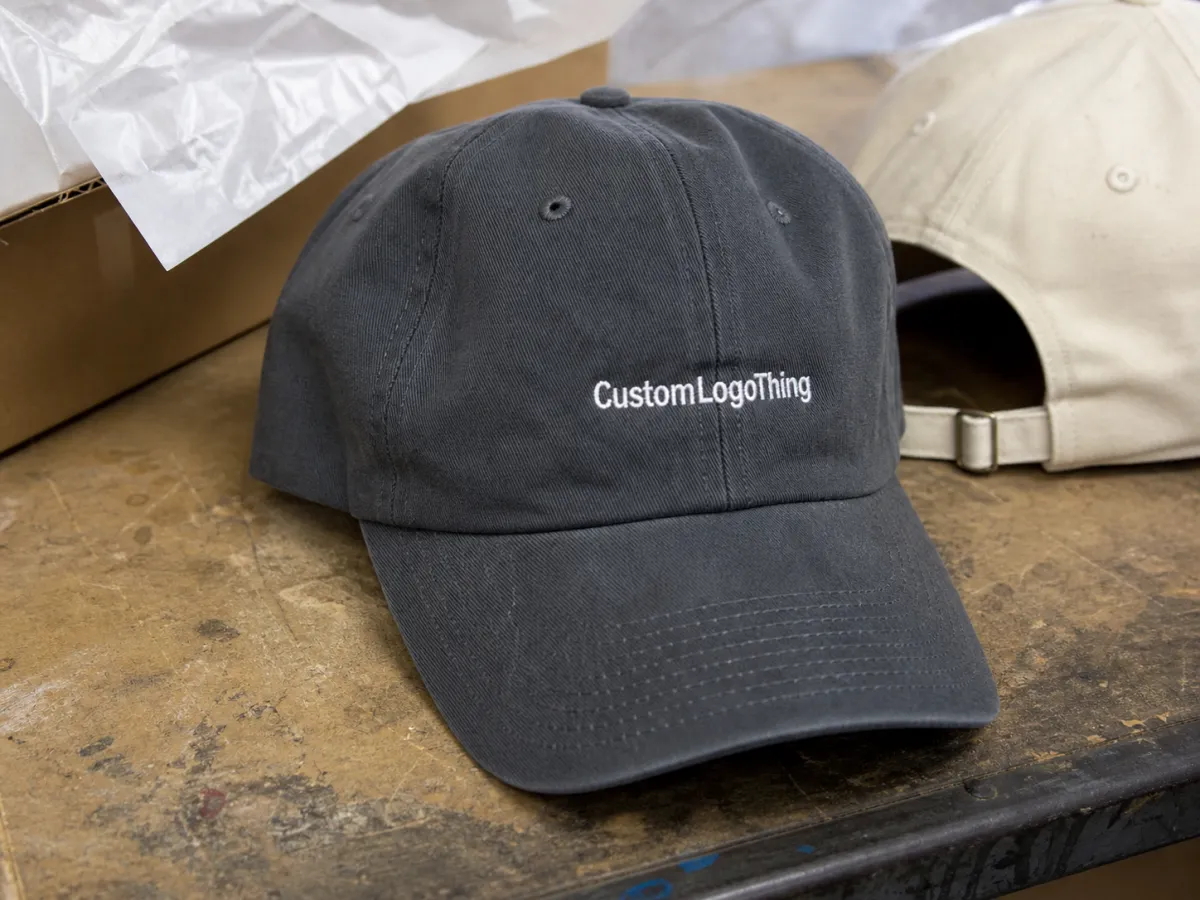
Most buyers start with unit price. Fair enough. Budgets are real. But unit price alone is a blunt instrument, especially for a wearable item that can either disappear into a closet or stay visible for months.
A cheap cap that nobody wears is not cheap. It is storage with a logo on it.
The value of a bulk cap program depends on three things: who wears the cap, where it gets seen, and how long it stays presentable. A warehouse or field team needs comfort, durability, and a sweatband that does not feel like sandpaper by noon. A retail merch program needs cleaner finishing, stronger color discipline, and a cap that can sit on a shelf without looking crushed. An event giveaway needs broad fit, quick distribution, and enough inventory to avoid the sad little rationing game at the booth.
The hidden cost of weak caps usually appears after approval, not during quoting. Crowns collapse. Mesh pulls loose from the front panel. Visor stitching waves. Logo thread gets bulky or fuzzy. Patch edges lift. Colors drift from the mockup. The cap looked fine in a PDF. Then it met gravity.
Better buying starts with a sharper question: which cap keeps the brand visible without creating complaints? That means matching the blank, decoration, packaging, and timeline before production starts. For larger orders, those decisions matter more than the tiny difference between two nearly identical unit prices.
If the caps are part of a broader campaign, the same discipline should apply to package branding, inserts, mailers, and Custom Packaging Products. The cap should feel connected to the rest of the rollout, not like a last-minute add-on ordered because someone found room in the budget.
“The best bulk cap is not the flashiest sample. It is the one people keep wearing because it fits, reads clearly, and survives the real work week.”
Product Details That Separate Giveaway Caps from Wearable Merch
The classic trucker build has stuck around for good reasons. Mesh back panels improve airflow. A structured front panel gives the logo a clean surface. A curved visor feels familiar to most wearers. A flat visor can work for retail or streetwear-leaning programs, but it is not a universal choice. Put it on the wrong audience and it tries too hard. People notice.
Crown height matters too. Low-profile caps sit closer to the head and usually feel more casual. Mid-profile caps are the safest general-purpose option for staff, events, and broad promotional use. High-profile crowns give patches and bold wordmarks more room, but they are not for every wearer or every brand.
Then there is structure. A structured cap holds its shape better in cartons, bins, photos, and on display. An unstructured cap feels softer and more broken-in, but it can look less polished if the decoration needs a firm surface. Neither is automatically better. The use case decides.
Decoration changes the whole personality of the cap. Embroidery is durable and familiar, especially for simple marks with strong shapes. Woven patches handle smaller detail better than dense embroidery. Leather or faux-leather patches push the cap toward outdoor, workwear, or lifestyle merchandising. Screen print and heat transfer can work for bold, simple graphics, but they need realistic expectations around surface, stretch, and long-term wear.
Small details influence whether the cap feels cheap or finished: sweatband material, inside taping, visor stitching, mesh tension, closure type, and label placement. A snapback is still the most flexible choice for bulk distribution. Hook-and-loop can work for crews where easy adjustment matters more than appearance. Buckle closures feel more premium but slow down fit adjustments. Fitted sizing adds complexity fast and is usually a poor fit for broad giveaways unless the audience is tightly controlled.
Buyer type should drive the spec. Construction crews usually care more about fit, sweat control, and durability than fancy packaging. Beverage brands and tourism programs often need stronger shelf appeal. Automotive shops, farm stores, and outdoor brands tend to favor rugged looks that can take repeated wear. Event staff need quick identification and a uniform look. Different jobs. Different caps.
Presentation matters, but not every order needs boutique treatment. Loose bulk caps in cartons may be fine for internal distribution. Retail programs may need individual polybags, hangtags, inserts, or color sorting. VIP kits may need caps packed with apparel or other branded goods. If the order will sit beside custom printed boxes, mailers, or other branded pieces, ask early about packing format. Fixing packaging after production is possible in theory. In practice, it is expensive and annoying.
Cap Specifications to Lock Before You Request a Quote
The fastest quotes come from complete specs. Not perfect specs. Complete enough to price the job without guessing.
A useful quote request should include quantity, cap style, panel construction, front fabric, mesh color, visor shape, closure, decoration method, logo size, file format, number of colors, delivery location, packaging needs, and deadline. If that sounds like a lot, good. Caps have parts. Parts affect price.
Each choice changes something. A structured front usually supports embroidery and patches better. An unstructured front may feel softer but can distort fine detail. A stock color keeps sourcing simpler. A custom fabric or unusual mesh color can raise minimums and extend the schedule. One front logo is straightforward. Add side embroidery, back embroidery, private labels, and custom taping, and the order is no longer the same animal.
Color control needs more respect than it usually gets. Fabric, thread, patch material, and printed artwork do not always match perfectly. A red thread, red fabric, and red printed insert can all be “red” and still look like three different committees made the decision. If color matters, provide Pantone references or approved brand standards. A bright mockup on a monitor is not color proof. It is a suggestion with confidence issues.
Artwork quality is another common slowdown. Vector files such as AI, EPS, or editable PDF are preferred because they can be scaled and reviewed properly for embroidery, patch production, and print. A screenshot or low-resolution JPEG may be enough for a rough idea, but it often creates extra work: rebuilding edges, cleaning type, simplifying gradients, or removing detail that cannot survive at cap size.
Decoration has physical limits. Fine text can disappear in thread. Thin outlines can break up over a curved crown. Long taglines become unreadable once the cap is worn. Very wide logos can bend awkwardly across the front panel. Stacked logos, simplified marks, or patch formats often solve those problems better than forcing the original artwork onto a surface that does not want it.
Before production approval, check practical quality points: stitch density, patch edge finishing, visor alignment, mesh tension, sweatband feel, closure function, placement tolerance, and carton labeling. If the order ships to multiple locations, labeling is not a clerical detail. It is the difference between clean receiving and someone spending half a day opening boxes with a box cutter and a bad attitude.
- Prepare upfront: quantity, cap model, colors, logo files, use case, and deadline.
- Confirm early: Pantone references, logo placement, decoration method, and packaging format.
- Review closely: proof dimensions, logo scale, closure type, carton labels, and shipping instructions.
Custom Trucker Caps Bulk Order Pricing, MOQ, and Unit Cost
Pricing for a custom trucker Caps Bulk Order can shift quickly once quantity, cap construction, and decoration enter the conversation. The main cost drivers are the cap blank or custom build, stitch or patch complexity, number of decoration locations, packaging, freight, proofing, sampling, and deadline pressure.
Two quotes can look similar and still be based on very different assumptions. One may include setup, proofing, and individual bagging. Another may assume loose bulk packing and a simple front logo. One may price a stable stock cap. Another may depend on availability that disappears by the time the order is approved. Read the assumptions. That is where the bodies are buried.
MOQ depends on the program. Lower quantities are usually easier with stock caps and one decoration location. Fully custom fabrics, private labels, specialty colors, custom patches, or uncommon construction details usually require higher minimums because setup and sourcing costs must be spread across more units. Small runs can still work, but the per-unit math is less forgiving.
| Option | Typical Unit Range | Best For | Notes |
|---|---|---|---|
| Stock trucker cap + embroidery | $3.20-$5.50 | Staff use, events, broad giveaways | Often the simplest path for starter runs and repeat programs. |
| Stock trucker cap + woven or specialty patch | $4.50-$7.80 | Retail merch, detailed logos, stronger presentation | Useful when embroidery would lose small type or fine detail. |
| Premium custom cap with private label details | $6.50-$11.00+ | Retail launches, premium gifting, brand-controlled programs | Higher setup cost, but better control over materials and finish. |
Those ranges are working estimates, not promises. A one-color embroidery run of 1,000 caps is a different job from 5,000 caps with leather patches, custom labeling, individual bagging, and sorted cartons for ten locations. Freight can also swing the final number, especially when the timeline gets tight or the cartons are bulky.
The lowest quote is not always the lowest-risk quote. Late delivery, rework, inconsistent placement, and poor wearer acceptance can erase small savings fast. A slightly higher price with better proofing, cleaner packaging, or more reliable cap availability may be the smarter buy if the caps are going to customers, staff, distributors, or retail shelves.
Ask for tiered pricing at three levels: a test run, the likely campaign quantity, and a reorder-friendly volume. That shows where the unit cost actually drops. It also shows which part of the price is driven by decoration, which part is driven by cap construction, and which part is driven by packaging or freight.
If the cap is part of a broader retail packaging plan, look beyond the cap cost alone. A cap in a plain carton, a cap in a merch display, and a cap inside a launch kit carry different expectations. Coordinating caps with Wholesale Programs, branded inserts, or shelf-ready packaging can simplify the order structure and reduce last-minute sorting.
Production Process and Timeline from Artwork to Delivery
A controlled order follows a predictable path: spec review, artwork check, quote, digital proof, sample or pre-production approval if needed, bulk production, quality control, packing, and shipping. Skip steps and the risk does not disappear. It just waits until fixing it costs more.
Lead time is driven by cap availability, decoration method, order size, proof approval speed, sampling needs, and shipping destination. A simple embroidery job on stock caps can move faster than a complex patch order with custom labels and multi-location sorting. Seasonal demand also matters. Caps are not produced in a vacuum, no matter how urgently a calendar invite says the event is coming.
The proof stage deserves real attention. A one-day delay in approval can push decoration scheduling, especially when production capacity is already booked. Buyers often think they are waiting on the vendor, while the project is actually parked in an internal approval chain. If legal, marketing, sales, and the owner all need to comment, assign one final approver before the clock starts.
Physical samples are not always necessary. They are useful for premium retail launches, complex patches, new brand colors, unusual fabrics, or executive-facing gifting programs. A sample adds time, but it can prevent a much larger mistake when the full run has to match a specific feel or finish.
Quality control should check more than whether the logo exists. Look at placement consistency, thread cleanup, patch adhesion or stitching, visor shape, mesh attachment, closure function, sweatband finish, and packing accuracy. For multi-location orders, carton labels should identify quantities, colors, and destinations clearly. That sounds boring because it is. Boring is excellent when receiving teams are trying to avoid chaos.
Rush orders are sometimes possible, but speed narrows choices. Stock colors become safer. Simple decoration wins. Freight costs can rise. Sampling may not fit the schedule. If speed matters, clean artwork and fast proof feedback are the best tools. If the shipment needs to survive multiple handoffs, standards from ISTA are a useful reference for thinking about transport stress, especially for packed kits or retail-ready cartons.
Work backward from the in-hands date, not the event date. Leave room for receiving, internal distribution, photography, store setup, or staff sorting. A cap that arrives one day before the show may already be late if the team needed it checked and staged two days earlier.
Common Buying Mistakes That Inflate Cost or Delay Delivery
The first mistake is choosing the cap before defining the wearer. A high-profile foam-front style may be perfect for a bold merch drop and wrong for a conservative field team. The print quality can be flawless and the program can still fail because the cap does not match the audience.
The second mistake is overloading the logo. Tiny type, thin outlines, gradients, and long taglines usually look better on a screen than on a curved front panel. Test the design at actual cap size. If nobody can read it from a few feet away, embroidery will not perform a miracle.
Color mistakes are just as common. Thread color, patch substrate, and fabric dye can shift the brand tone. If accuracy matters, ask for Pantone references in the proof and confirm where exact matching is realistic. Some materials get close. Some do not. Better to know that before 2,000 caps are in cartons.
Quantity planning can hurt too. Ordering too few may make reorder pricing inefficient and leave teams short. Ordering too many of an untested style can create dead inventory. Giveaway, uniform, resale, and gifting programs have different demand patterns. Treating them as the same purchase is how storage shelves become museums of regret.
Packaging mistakes usually appear late. Loose caps may work for a warehouse handout. Retail or VIP distribution may need polybags, hangtags, branded inserts, size or color sorting, or kitting with apparel. If the receiving team needs specific cartons by location or department, say that during quoting. Not after the truck is already moving.
A practical prevention list:
- Approve cap specs and decoration details in writing.
- Provide vector art, Pantone references, and any brand rules.
- Confirm the in-hands date, ship-to address, and receiving constraints.
- Request tiered pricing before committing to the quantity.
- Review proof dimensions, placement, and logo scale at actual size.
- Clarify packaging, carton labeling, and multi-location sorting needs.
How Custom Logo Things Supports Bulk Cap Programs
Custom Logo Things supports bulk cap programs through spec guidance, decoration matching, packaging coordination, proofing support, production management, and shipping preparation. That is the useful part. Not fluff. Not “we care about quality” printed in invisible ink. Actual decisions that affect the order.
The cap business and the packaging business overlap more than buyers expect. Both depend on repeatable specs, approval discipline, material limits, color control, and presentation. If a brand cares about branded packaging, the same thinking should apply to hats, labels, inserts, and cartons. A strong campaign usually works as one consistent system, not a pile of disconnected promotional items.
Decoration guidance is often where buyers save time. Embroidery, woven patches, leather patches, print, and heat transfer all have different strengths. A recommendation should be based on logo detail, wearer expectations, budget, reorder plans, and the way the cap will be distributed. The flashiest mockup is not always the best production choice. Shocking, I know.
Reorders also get easier when specs are documented properly. Cap model, fabric colors, thread colors, patch dimensions, placement notes, packaging instructions, and carton labels should be recorded. For franchises, distributor programs, retail merch, recurring uniforms, or seasonal events, that consistency has value. It reduces approval time and keeps the brand from drifting across runs.
Support can also include assortment planning when caps are part of a larger mix: trade show giveaways, outdoor promotions, staff apparel, campus programs, corporate gifting, and retail launches. If the order touches packaging, shipping, or multiple product types, starting with FAQ guidance and a clear product mix can prevent avoidable revisions.
My view is simple: the best supplier helps the buyer make a sharper decision before production starts. A bulk cap order should be built around cost, wearability, brand control, and timing. Not around whichever catalog item happens to be sitting at the top of a spreadsheet.
Next Steps to Get an Accurate Bulk Cap Quote
If you want a quote that is actually useful, send the details that change the build. Quantity. Cap style. Colors. Decoration method. Logo file. Number of decoration locations. Deadline. Ship-to address. Packaging needs. Use case. Budget range if there is one. A vague request gets vague pricing, and then everyone acts surprised. Please do not be that meeting.
If color accuracy matters, attach brand guidelines or Pantone references. That affects embroidered thread, patch backgrounds, printed artwork, and any supporting packaging around the order. If the cap is part of a broader launch kit, say so early. That tells the production team whether the project needs retail packaging logic, simple bulk packing, or sorted cartons by destination.
Ask for three options: budget, best value, and premium. That comparison shows what you gain or lose by changing cap construction, decoration, packaging, or timeline. It also gives the buyer something better than a single number floating in space.
Before approving, confirm who owns proof sign-off. One final approver is ideal. If several people need input, gather it before the proof deadline, not after production is waiting. Internal delay is still delay, even if it comes with a polite subject line.
For a Custom Trucker Caps bulk order, the cleanest path is simple: clear specs, usable artwork, confirmed deadline, realistic budget, and documented packaging instructions. Send that information, request tiered pricing, review the proof at actual size, and confirm the production timeline before payment goes in. That is how the order stays controlled from first quote to final delivery.
What is the typical MOQ for bulk custom trucker hats?
MOQ depends on whether the order uses stock caps with decoration or fully custom construction. Lower minimums are usually easier with standard cap colors and one decoration location. Custom fabrics, private labels, special patches, and uncommon color combinations generally raise the minimum. Ask for tiered pricing so you can compare the minimum quantity against larger price breaks.
How much does a custom trucker cap bulk order cost per unit?
Unit cost is affected by quantity, cap quality, decoration method, logo complexity, packaging, freight, and deadline. Stock caps with embroidery may fall in the $3.20-$5.50 range, while patch decoration and premium custom details often cost more. The most useful quote lists the assumptions behind the price so you know what is included and what will change the number.
How long does production take for custom mesh-back caps?
Lead time depends on cap availability, artwork readiness, decoration type, sample needs, order size, and shipping distance. Digital proof approval is usually the first major timing checkpoint. Physical samples or fully custom materials add time but reduce risk for retail or premium programs. Work backward from the required in-hands date, not just the event date.
Which decoration method is best for custom trucker caps in bulk?
Embroidery is durable and familiar, especially for simple logos with strong shapes. Woven patches work well for smaller details and a retail merchandise look. Leather or faux-leather patches create a premium outdoor or lifestyle feel. Print and heat transfer can suit bold, simple graphics or budget-sensitive campaigns. The best method depends on logo detail, cap material, brand positioning, and unit-cost target.
What artwork files are needed for a bulk trucker cap quote?
Vector files such as AI, EPS, or editable PDF are preferred for accurate production review. High-resolution PNG files may help as references, but screenshots and low-resolution JPEGs often cause delays. Include Pantone colors or brand guidelines if color matching matters. Provide the intended logo size and placement if those decisions are already approved.


