Custom UPC Labels for Clothing: Order the Right Fit
Custom UPC labels do a dull job that matters a lot. They let a finished garment move through receiving, inventory, and checkout without extra handling. If the code is wrong, the print is weak, or the label surface does not scan cleanly, a sellable shirt can sit in a backroom while someone manually sorts out what should have been automatic.
That is why apparel buyers treat labels as part of retail packaging, not as a throwaway line item. The label has to support the full workflow around it: folded tees in poly bags, hangtags on premium pieces, carton labels for receiving, and size stickers for quick sorting. In that setup, custom UPC labels are one small piece of broader product packaging and package branding, but they carry more operational weight than most decorative elements.
Why Apparel Brands Rely on UPC Labels for Retail Readiness
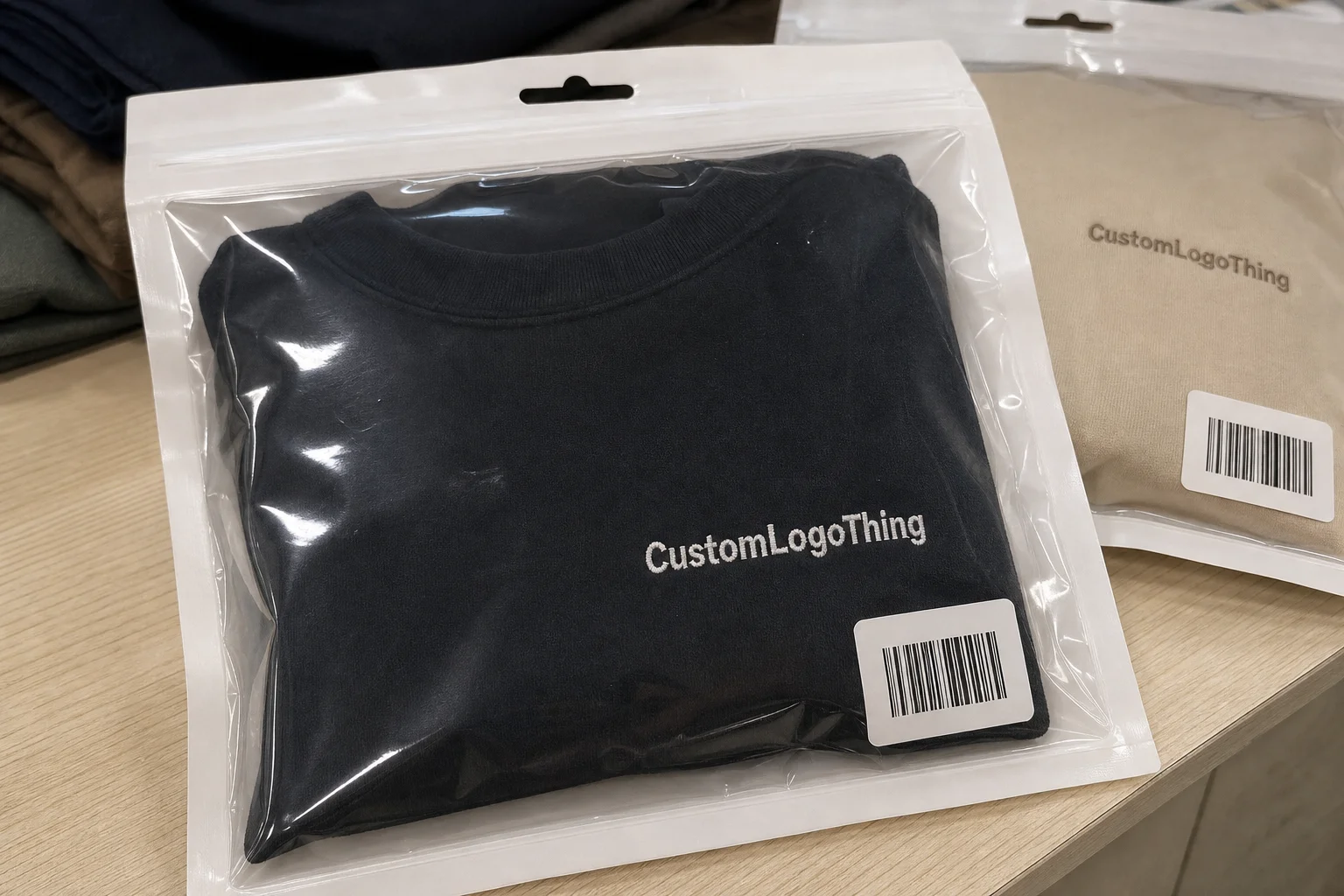
A garment can be fully sewn, folded, and packed, and still be unsellable if the barcode label is missing or incorrect. Retail teams do not care that the item looked good on the packing table. They care that the UPC scans at receiving, matches the SKU in the POS system, and identifies the right size, color, and style on the first pass.
That is the real job of custom UPC labels. They connect SKU data, inventory control, and shelf-ready handling. A boutique might use them on folded tees and denim packs. A private-label apparel brand may use them on poly bags and carton labels. A larger retailer may need the same code to track the item from warehouse to floor, then through checkout without a manual correction.
The terminology matters. A UPC is the product code itself. A barcode label is the printed carrier that holds that code. A hangtag barcode is the same data printed on a swing tag instead of a pressure-sensitive label. Those are related, but they are not interchangeable. A buyer who asks for the wrong format often ends up paying for rework.
- UPC label: pressure-sensitive label applied to packaging, hangtag, or carton.
- Barcode label: any label that prints a machine-readable symbol, including UPC, EAN, or Code 128.
- Hangtag barcode: barcode printed on a swing tag for apparel presentation.
- Size sticker: small label used to identify size on folded goods or bagged units.
One mislabeled size run can trigger a chain reaction. Receiving staff key the wrong SKU. Stock counts drift. Replenishment pulls the wrong size. Checkout slows down because the scanner returns a product that does not match the shelf ticket. That is a packaging issue, yes, but it is also an inventory issue, a merchandising issue, and a customer-service issue all at once.
That is why labels sit close to Custom Labels & Tags and broader Custom Packaging Products in the buying process. Apparel brands rarely order them in isolation. They usually sit alongside branded packaging, insert cards, or Custom Printed Boxes that all need to tell the same story while staying operationally clean.
How Custom UPC Labels Work on Clothing
The process starts with data, not artwork. Every SKU variant needs a valid code mapping, usually by style, color, size, and sometimes bundle count. If a tee comes in four sizes and three colors, that is already twelve distinct product variants. Each one needs its own code if the retail setup treats them as separate sellable items.
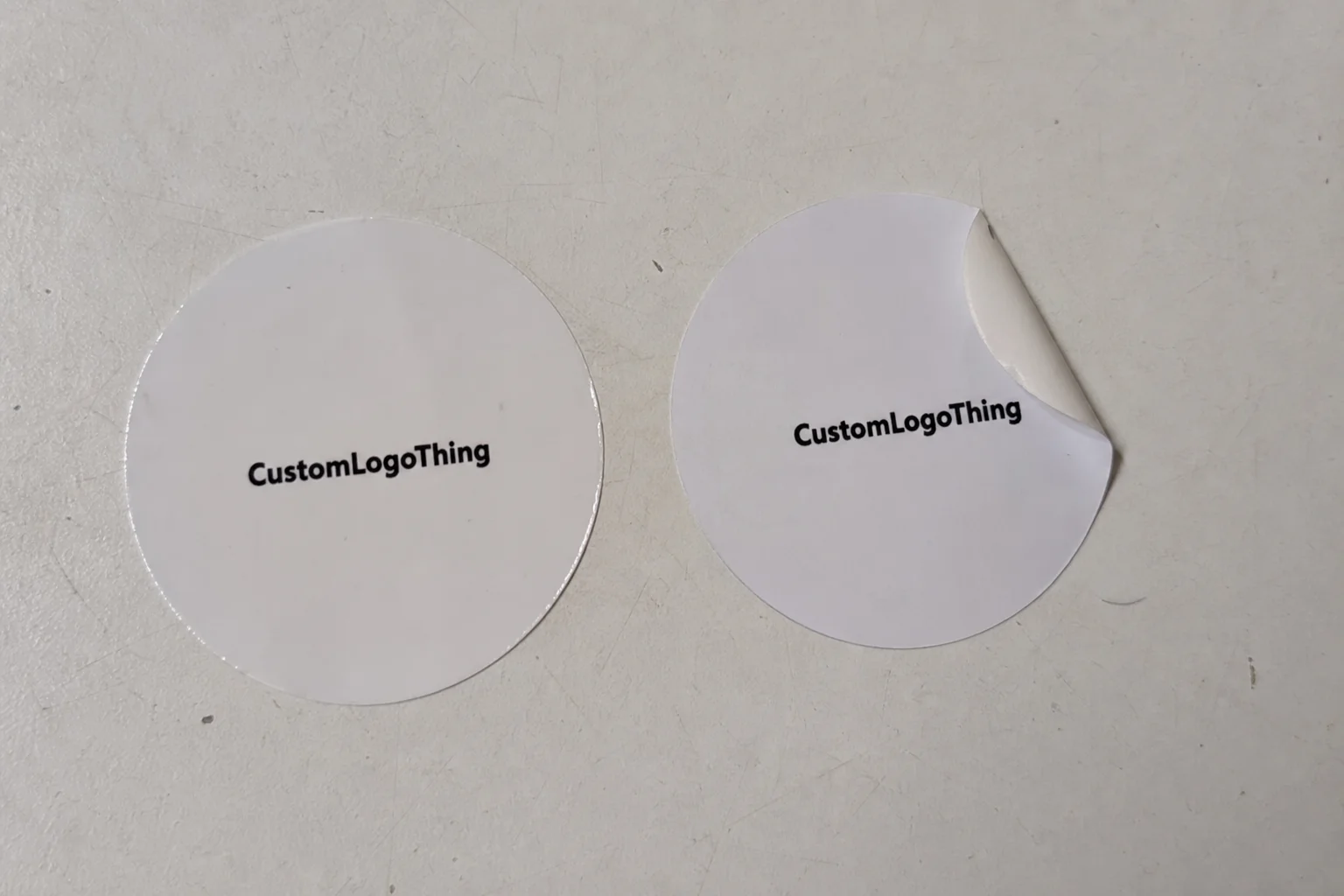
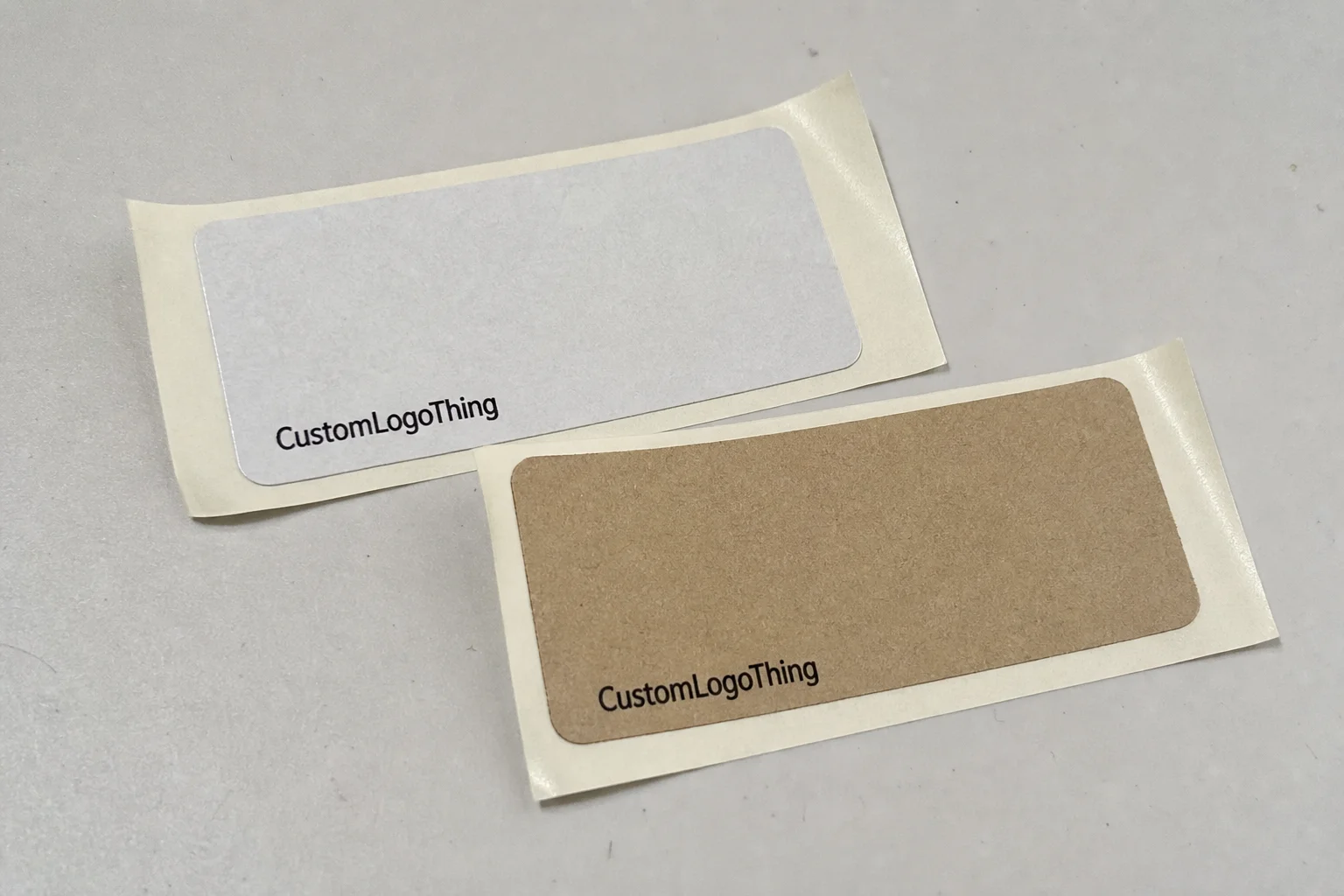
From there, the barcode is generated, placed into the artwork, and printed on a label stock that fits the application. Material choice matters. Paper is common for low-cost retail use. Film stocks hold up better if the label gets handled a lot or sees moisture during transit. Thermal labels work well for fast internal labeling, while pre-printed custom UPC labels give more control over branding and finish.
Scan reliability depends on physical details that are easy to miss. The code needs contrast. It needs enough quiet zone around the bars. It needs a size that matches the scanner’s expected reading distance. And it needs to sit on a surface that will not warp the symbol into a distorted shape. A barcode on a curved poly bag is not the same as a barcode on a flat carton face.
That is where packaging design overlaps with label engineering. A label can carry brand color, copy, and compliance text, but the scan area has to stay clean. Think of it as a hierarchy: the scanner gets first priority, then the legal and retail text, then the visual branding. If those layers compete, the label may look polished and still fail at the register.
For brands shipping cartons through distribution centers, it helps to review distribution and transit guidance from groups such as ISTA. If paper sourcing is part of your buying criteria, FSC certification is another practical checkpoint. Neither one replaces a proper barcode proof, but both help align the label choice with the broader supply chain.
Important distinction: a well-designed apparel label can support package branding, but it should never sacrifice machine readability for decoration. A label that looks premium and scans poorly is still a loss.
Custom UPC Labels Cost, MOQ, and Unit Pricing
Price usually moves with four things: quantity, material, print complexity, and setup. A small order of custom UPC labels with variable data and a branded face can cost much more per unit than a larger run of simple black-and-white labels on stock material. That is not mystery pricing. It is setup math.
For apparel buyers, a realistic MOQ is often 500 to 1,000 pieces for a fully custom printed label, though some suppliers will go lower if the specs are simple. Short runs make sense for seasonal drops, test launches, or small boutiques that do not want dead inventory. Larger runs usually win on unit price, but only if the SKU list is locked and the design will not change midstream.
| Label Type | Typical Use | Estimated Unit Cost | Best Fit |
|---|---|---|---|
| Stock thermal barcode label | Internal labeling, quick reorders | $0.03-$0.08 | Simple runs with minimal branding |
| Printed paper UPC label | Retail packaging, bag labels, folded apparel | $0.08-$0.18 | Budget-conscious branded packaging |
| Synthetic or laminated label | Higher handling, moisture exposure, shipping stress | $0.15-$0.35 | More durable retail packaging workflows |
| Premium custom label with specialty finish | Branded presentation, detailed package branding | $0.20-$0.45 | Higher-end apparel and giftable product packaging |
The table is only a starting point. Setup fees, proofing, die-cutting, serialized numbering, and shipping can shift the real landed cost. A quote that looks cheap on paper may become expensive once the buyer adds reproofs or rush freight. Ask for the unit price, setup charge, proof cost if any, and shipping line item before comparing vendors.
Buyers also need to separate label cost from total packaging cost. A label that costs three cents more may still save money if it reduces scan errors or eliminates manual relabeling at the warehouse. That is especially true for apparel brands managing Custom Printed Boxes, hangtags, tissue, and inserts in the same shipment. The cheapest component is not always the cheapest system.
The least expensive label is not the least expensive choice if it fails in receiving, slows checkout, or forces a second print run.
If you are comparing options, ask for quotes on the same spec only. Match material, adhesive, size, quantity, and print method. Otherwise you are comparing different products and calling it price checking. That is how bad purchasing decisions happen.
Production Steps and Lead Time: From Artwork to Delivery
Production works best when the data arrives clean. The usual sequence is straightforward: collect the final SKU list, confirm the UPC assignments, place those codes into the artwork, proof the layout, verify scan quality, print, finish, and ship. If one of those steps is rushed, the risk usually shows up later as a reprint.
Lead time depends on how much is already decided. A simple reorder of established custom UPC labels can move faster than a new project with custom shapes, multiple label sizes, or a fresh barcode mapping. If raw material inventory is on hand and the proof is approved quickly, turnaround can tighten. If the job needs custom die-cutting or a specialized adhesive, the schedule usually stretches.
A practical timeline looks like this:
- Stock reorder: often 3-7 business days after approval if materials are available.
- Standard custom run: often 10-15 business days from proof approval.
- Complex custom run: often 15-20 business days or more if die-cuts, special finishes, or serialized data are involved.
Those ranges are not promises. They depend on the supplier’s queue, proof speed, and material stock. The fastest path is usually the simplest one: a clean file, a locked SKU list, and no late-stage changes. If the buyer waits until the production slot is already open to change sizes, the schedule slips immediately.
What should you send up front? A size chart, color count, SKU list, final barcode assignments, label placement notes, and any retailer-specific requirements. That last point matters more than many teams expect. Some chains are strict about barcode size, quiet zones, or the placement of compliance text. If you ignore that requirement, the job may print perfectly and still fail the retailer’s intake rules.
From a packaging buyer’s point of view, production is less about ink and more about control. The cleaner the inputs, the smaller the chance of delay. That principle is just as true for custom packaging products as it is for labels.
Key Specs That Decide Whether the Labels Work in Stores
The specs that matter most are simple to list and easy to get wrong: barcode grade, label dimensions, adhesive type, material choice, and print contrast. A label can look fine at arm’s length and still fail on a handheld scanner if the bars are too small or the quiet zone is crowded.
Size is the first tradeoff. Small labels save space on a folded tee or inside neck area, but they reduce the margin for error. Larger labels scan more reliably, especially in dim backrooms or under uneven store lighting. There is no universal best size. The right choice depends on where the label sits and how the retailer scans it.
Adhesive choice matters just as much. A removable adhesive is often preferred for apparel because it reduces residue on garments or packaging. A permanent adhesive makes more sense on cartons, shipping cases, or packaging that should stay closed. If the wrong adhesive is chosen, the label can curl, peel, or wrinkle before the item reaches the shelf.
Material is the third lever. Paper is still the lowest-cost option for many retail applications. Synthetic stocks add durability if labels are exposed to moisture, handling, or transfer between facilities. A coated or laminated finish can improve durability too, but it should not flood the barcode area with glare. Under bright retail lighting, glare is enough to create a failed scan.
There is also a standards angle. Some buyers pair label specs with ISTA testing for distribution stress, especially if cartons move through multiple nodes. For abrasion or rub resistance, ASTM test methods are often part of the internal spec review. None of that replaces retail scanning tests, but it helps build a label system that survives real handling instead of only looking good in a proof.
Placement should match the workflow. Inside neck, side seam, poly bag, hangtag, and carton label are all valid, but they solve different problems. Inside neck is common for sewn-in branding plus a removable barcode label elsewhere. Side seam works when a discreet application is needed. Poly bags and cartons are more about logistics than presentation. Good retail packaging uses the right location for the right job.
If you are balancing aesthetics with utility, keep the visual system coherent. Typography, color, and finish should support the brand without contaminating the barcode area. That is the same discipline you would use in packaging design for a display box: strong branding on the outside, functional clarity where the operations team needs it.
Common Ordering Mistakes That Create Reprint Costs
The most expensive mistakes are usually preventable. The first is using the wrong UPC number for a style-size-color variant. Apparel SKUs are easy to confuse because a single garment line can generate a lot of permutations. If the code is wrong, the label is wrong, even if the design looks correct.
Another common error is crowding the barcode with artwork. Designers want the label to feel branded. Fair enough. But the scan area has to stay open, high-contrast, and clean. If the bars are too close to the edge or the quiet zone is too tight, the scanner may reject it. A label that needs several tries in a warehouse is a bad label.
Guessing at material or adhesive is another trap. A buyer may assume a paper label will stay put on a poly bag, then discover curling or peeling during transit. Or they may choose a strong adhesive and find that it leaves residue on the garment packaging. Those mistakes are not dramatic. They are just costly.
Approval mistakes also add up. Skipping a physical proof saves a day and can cost a week later. Retailers often scan in a specific environment, with a specific scanner or a specific setup, and a label that reads well on a desktop proof may behave differently on actual goods. If the run is large, test a sample on the real surface before giving the final sign-off.
Late SKU changes create their own bill. If the style number changes after proof approval, the supplier may need to rework the file, reprint the run, or hold the order for a new check. That adds both time and money. For custom UPC labels, the cleanest way to protect margin is to freeze the SKU list before quoting and keep the file path stable through production.
There is a broader lesson here. Labels are not isolated items. They sit inside a system that includes inventory, retail packaging, package branding, and the rest of the product packaging stack. If one component changes, the others may need to move with it. That is why disciplined ordering beats hurried ordering almost every time.
Next Steps for Ordering the Right Apparel Labels
Start with the SKU audit. Confirm the style, color, and size matrix before requesting a quote. Then map each variant to its barcode assignment and note where the label will live: inside neck, side seam, poly bag, hangtag, or carton. That one decision drives material, adhesive, and size.
Next, ask for a proof or sample pack. A flat art proof is useful, but it does not tell you how the label will behave on the actual garment or package. Test it on the real surface, under real store lighting, with the scanner or workflow you expect downstream. That is the difference between a pretty proof and usable custom UPC labels.
Then compare quotes on identical specs only. Match the material, adhesive, dimensions, quantity, print method, and lead time. If one supplier includes proofing and another does not, normalize the comparison before calling one cheaper. A low quote with hidden setup charges is not a good deal.
Finally, lock the production window once the file is approved. That protects the schedule and reduces the odds of a second print run. For apparel brands, the right labels help keep receiving clean, speed checkout, and reduce inventory errors. They also support the larger brand system around them, whether that means custom printed boxes, branded packaging inserts, or broader package branding across the line.
If you are preparing your next order of custom UPC labels, finish the SKU list, verify the barcodes, set the quantity target, and choose the placement before you ask for pricing. That sequence is simple, but it saves a lot of expensive detours later.
What information do I need to order custom UPC labels for clothing?
Prepare the final SKU list with size, color, and style variants. Provide the UPC numbers or ask for help mapping them to each product. Confirm label size, placement, quantity, and preferred adhesive before production.
What is the best material for custom UPC labels on apparel?
Paper is usually the lowest-cost option for basic retail use. Synthetic materials hold up better to handling, moisture, and shipping stress. Removable adhesive is often preferred when labels must come off cleanly from garments or packaging.
How long does it take to produce apparel UPC labels?
Simple reorders can move faster because the artwork and specs are already approved. Custom sizes, die-cuts, or barcode setup add proofing and production time. Lead time usually depends most on proof approval speed and material availability.
Why do barcode labels fail to scan on clothing?
The barcode may be too small, low contrast, or crowded by artwork. Poor placement on curved, wrinkled, or textured surfaces can reduce scan accuracy. Using the wrong UPC number or a damaged print file can also cause failures.
How can I keep custom UPC label costs under control?
Order the same spec in higher volume when possible to reduce unit cost. Avoid unnecessary finishes, special shapes, or multiple material types in the same run. Lock the SKU list before quoting so you do not pay for reprints or rush corrections.