Buyer Fit Snapshot
| Best fit | Custom Void Fill for Fragile Boxes projects where brand print, material claims, artwork control, MOQ, and repeat-order consistency need to be specified before quoting. |
|---|---|
| Quote inputs | Share finished size, material target, print colors, finish, packing count, annual reorder estimate, ship-to region, and any compliance wording. |
| Proofing check | Approve dieline scale, logo placement, barcode or warning zones, color tolerance, closure strength, and carton packing before bulk production. |
| Main risk | Vague material claims, crowded artwork, missing packing details, or unclear freight terms can make a low unit price expensive after revisions. |
Fast answer: Custom Void Fill for Fragile Boxes: Board, Finish, Dieline, and Unit Cost should be specified like a repeatable production item. The safest quote records material, print method, finish, artwork proof, packing count, and reorder notes in one written spec.
Production checks before approval
Compare the actual filled-product size with the drawing, then confirm tolerance on folds, seals, hang holes, label areas, and retail display edges. Reserve space for logos, QR codes, warning copy, and material claims before decorative graphics fill the panel.
Quote comparison points
Review material grade, print process, finish, sampling route, tooling charges, carton quantity, and freight assumptions side by side. A quote is only useful when the supplier can repeat the same color, closure quality, and packing count on the next order.
Custom Void Fill for Fragile Boxes: A Practical Guide
Custom Void Fill for fragile boxes sounds like a small detail until a shipment breaks, a buyer opens the claim file, and the numbers start piling up. Glass, ceramics, labware, cosmetics, and compact electronics all hate empty space for different reasons. A carton can look fine on a shelf and still fail in transit because the product had room to move. That is the whole problem, really: the damage is usually hiding inside the gap.
I have seen teams chase thicker corrugated board, stronger tape, and fancier prints while the real failure point was a loose fit. A product that slides, tips, or rebounds after impact becomes its own wrecking ball. Custom Void Fill for fragile boxes solves that by holding the item in place, cushioning the surfaces that need help, and reducing the chain reaction of small hits that happen during parcel handling. One hit is rarely the full story. The damage usually comes from a series of little ones.
The business case is practical, not dramatic. Less breakage means fewer refunds, fewer repacks, fewer customer service calls, and less time spent explaining why a shipment arrived in pieces. Better fit also improves the unboxing moment. A customer opening a carton that feels planned instead of improvised notices it right away, even if they never use packaging jargon.
There is another reason Custom Void Fill for fragile boxes matters: consistency on the line. If packers are making judgment calls carton by carton, the result will drift. A shaped insert or sized fill narrows that variation. The same item sits in the same position, gets the same support, and exits the line with less guesswork. That sounds boring, kind of, but boring is good when the goal is fewer broken products.
"If the product can move, the product can fail." That simple rule explains why custom void fill for fragile boxes often does more for damage reduction than a thicker outer carton ever can.
Picking the right system still takes judgment. Weight, shape, finish, carton size, shipping mode, storage conditions, and brand presentation all change the answer. Custom void fill for fragile boxes is not one material or one method. It is a fit problem, a handling problem, and a cost problem all at once.
Custom Void Fill for Fragile Boxes: Why Empty Space Breaks Products
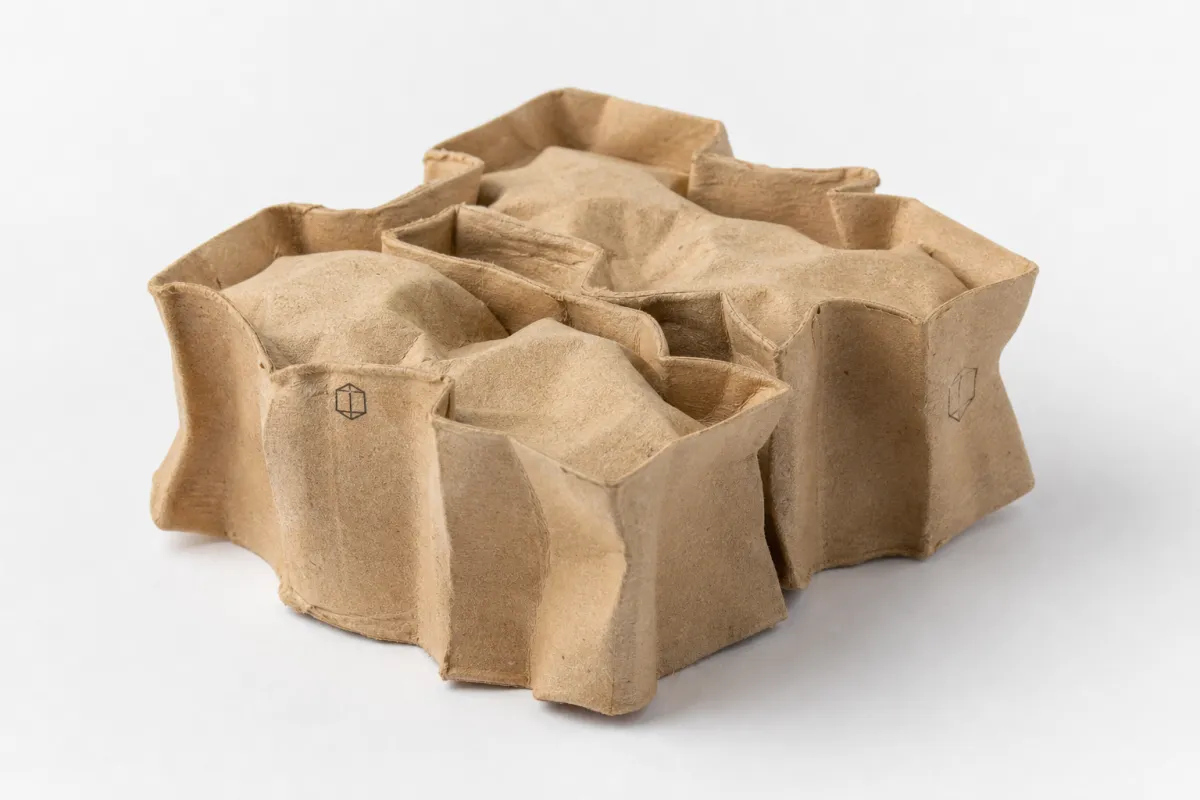
Most fragile shipments do not fail because the corrugated board is weak. They fail because the product keeps moving after the first impact. Once the item starts to shift, the carton turns into a set of collision points. A bottle taps a wall. A ceramic rim hits a corner. A glossy component rubs against an insert. The second impact is often worse than the first because the item has already built speed.
Custom void fill for fragile boxes is designed to interrupt that sequence. It fills the empty space around the product in a way that creates restraint instead of loose padding. Generic dunnage can occupy volume, but volume alone does not stop movement. A paper nest that is too loose, a pile of peanuts that settles, or an oversized bubble wrap bundle can still leave enough play for damage to happen during transit.
The distinction matters most with irregular products. A square carton around a round candle jar creates different risks than a molded ceramic item with a thin lip or a compact electronic device with protruding ports. One item needs side-wall support. Another needs base support. Another needs top control so it does not float within the box. Custom void fill for fragile boxes can be shaped around those realities instead of forcing every product into the same generic cushion profile.
Teams usually feel the difference in three places. Returns drop. Packing becomes more consistent. Presentation improves. Those are not abstract wins. They show up in customer service tickets, replacement costs, and the speed with which new packers can learn the process. A cleaner internal fit also helps brands that care about retail packaging or package branding, because the inside of the carton no longer feels like a rushed afterthought.
Breaking that down mechanically helps. A good solution does three things at once: it keeps the product from moving, it absorbs energy before the impact reaches the surface, and it spreads the force so a thin rim or edge does not take the full hit. That is the core logic behind custom void fill for fragile boxes. The goal is not merely to occupy space. The goal is to change how force travels through the package.
Sample testing often reveals the difference faster than any sales pitch. A box that sounds fine when shaken by hand can behave very differently after a drop or a vibration cycle. The product might not bounce visibly, yet a corner scuff or a hairline crack can still appear. Custom void fill for fragile boxes is built to stop those hidden failures before they become a claims problem.
How Custom Void Fill for Fragile Boxes Works on the Packing Line
A good pack-out starts with consistency. The item goes into the carton the same way every time. The cavity is defined. The support points are defined. Then custom void fill for fragile boxes closes the remaining gaps so the product cannot rattle, drift, or tilt once the carton is sealed. The box should feel controlled, not merely full.
Three performance targets matter most on the line: immobilization, energy absorption, and load distribution. Immobilization keeps the item from building momentum inside the carton. Energy absorption spreads shock over a longer period instead of sending it directly into the product. Load distribution prevents a hard point, like a glass lip or a sharp ceramic edge, from taking the full force of impact. Those three effects are what make custom void fill for fragile boxes valuable in real shipping conditions.
Material choice depends on the product and the pace of the operation. Kraft paper systems are a strong fit when a team wants recyclable, adjustable fill that can be deployed quickly. Molded pulp inserts suit products with repeatable geometry and a preference for fiber-based materials. Foam inserts can protect polished or painted surfaces very well, especially on premium electronics or cosmetic items. Air-based systems help some high-speed stations, though they are not always the right answer for dense or awkward items. Hybrid builds often solve the problem when one material alone cannot manage the full load path.
- Kraft paper dunnage fits mixed SKU lines and moderate fragility with faster pack speeds.
- Molded pulp works well for stable product shapes and fiber-based sourcing goals.
- Foam inserts protect glossy, painted, or highly delicate surfaces.
- Air-assisted fill helps light-duty stations where carton sizes stay consistent.
- Hybrid designs solve cases where one material cannot hold the product securely on its own.
What separates custom void fill for fragile boxes from generic filler is the fit logic. A 12-ounce glass bottle, a ceramic vessel, and a small lab component all count as fragile, yet they fail in different ways. One needs more side restraint. Another needs top compression control. Another needs a more rigid cradle around a narrow base. The right insert follows the failure mode instead of assuming every fragile item only needs more cushion.
That difference shows up in training too. Once the pack-out is designed correctly, workers no longer need to improvise. They know where the item sits, how much fill to use, and what the finished carton should look like. The result is less variation across shifts and fewer line-side questions. Custom void fill for fragile boxes can raise throughput precisely because it removes hesitation.
Key Factors That Shape the Right Void Fill Choice
Weight is usually the first sorting factor. A lightweight blown-glass item and a dense ceramic part behave differently even if they fit inside the same carton. Weight changes the force the fill has to manage, while center of gravity changes how quickly the item wants to tip or rotate during a drop. Surface finish matters too. A matte surface tolerates more contact than a polished glaze, a printed cosmetic jar, or a coated electronic housing. Custom void fill for fragile boxes has to reflect those differences rather than treating all breakables as one category.
Carton dimensions matter just as much. Teams often measure the product and stop there. The carton sets the real movement envelope. A single-wall shipper behaves differently from a double-wall box. A larger internal cavity gives the product more room to gain momentum before the walls help. If the box is too large, custom void fill for fragile boxes has to create structure, not just cushioning. If the box is too small, the fill can crush the item or make the pack hard to close correctly.
Shipping route changes the answer as well. Parcel networks are rough on corners and edges. Palletized freight adds compression, vibration, and longer dwell time. Warm and cold storage can change the behavior of some foams and adhesives. Moisture can alter paper performance. None of that is theoretical. It shows up in routine distribution, and it is why custom void fill for fragile boxes should be chosen for the actual route rather than for a perfect lab sample.
Sustainability now sits beside protection, not behind it. Many teams want to cut plastic, reduce waste, and avoid loose-fill residue. Fiber-based materials can help, especially when they come from responsible supply chains. If a program is trying to support forest stewardship goals, paper-based custom void fill for fragile boxes can be paired with FSC-certified fiber and a cleaner unboxing experience. Teams tracking recyclability or waste reduction should also review EPA recycling resources for current guidance.
Material behavior under load
One detail buyers often miss is what happens after repeated compression. A foam insert may look excellent when it is new, yet a soft structure can lose support after repeated loading on a high-volume line. Paper systems can work beautifully if the density and fold pattern hold the product where it belongs. Molded pulp can provide a precise fit, but the wall thickness and geometry still need to match the part. Custom void fill for fragile boxes works best when the material is judged by how it behaves in actual handling, not by how it looks in a sample photo.
I once reviewed a pilot where the insert passed visual inspection every time and still failed after a week of real packing. The issue was simple: the material compressed more than the team expected, so the product began to drift by the end of a shift. That kind of problem is why sample runs matter. You cannot always see the failure with the naked eye.
Compliance and testing pressure
Testing matters even more when the product moves through retail channels, exports, or regulated sectors. Packaging teams often compare samples against ISTA performance test methods or ASTM distribution checks so the pack does more than look secure on a bench. A project does not always need a full certification program. It does need validation against the shipping reality that the carton will face. Custom void fill for fragile boxes should earn release, not merely survive a glance in the warehouse.
Brand presentation belongs in the same conversation. A neat insert can support custom printed boxes and other retail packaging details without shouting for attention. It can also work alongside Custom Packaging Products to make the outer shipper and the internal structure feel like one system. That connection matters because the customer never separates protection from presentation. The box arrives as a single experience.
Cost, Pricing, and Unit Cost: What Custom Void Fill Really Changes
Pricing starts with material, but material cost is only the first layer. Custom void fill for fragile boxes can require tooling, setup, sample runs, die preparation, or a forming process that changes the economics at small and large volumes. A basic kraft paper approach may stay relatively low in unit cost. Molded pulp or foam can need upfront development that pays off later when volume rises. More complex geometry usually means more design time, and design time is not free.
The most common buying mistake is comparing custom void fill for fragile boxes against a cheap loose-fill price and stopping there. That comparison leaves out breakage, repack labor, customer service time, reshipment charges, and the slow damage done to repeat business when the package looks sloppy or the product arrives marked up. A packaging line that saves two cents but adds two minutes of handling is not actually saving money.
Unit cost should be judged in context. A slightly more expensive solution can lower total packaging cost if it cuts damage, reduces pack mistakes, and shortens station time. That matters most for fragile SKUs with a high replacement cost or a strong brand value attached to the item. Custom void fill for fragile boxes often pays back first through fewer damages and then through smoother line behavior.
Here is a practical view of how options often compare at mid-volume levels. These ranges are directional, not promises, because geometry, thickness, print coverage, and tooling can move the price significantly.
| Void Fill Option | Typical Unit Cost | Best Fit | Operational Notes |
|---|---|---|---|
| Kraft paper dunnage | $0.08-$0.18 | General fragile goods, mixed SKU lines | Fast to deploy, recyclable, good for moderate movement control |
| Molded pulp insert | $0.20-$0.45 | Repeatable shapes, glass, ceramics, retail packaging | Cleaner presentation, tighter fit, often better for stable product geometry |
| Foam insert | $0.18-$0.40 | Glossy surfaces, electronics, premium product packaging | Strong contact protection, though sustainability and disposal need review |
| Air-assisted system | $0.12-$0.30 | Lightweight items, high-speed stations | Reduces storage volume, but equipment and film supply affect total cost |
| Hybrid custom insert | $0.24-$0.50 | Odd shapes, premium kit builds, higher-risk shipments | Often the best balance when one material cannot handle the full load profile |
The quote gets more accurate when the buyer shares more than a product photo. Product dimensions, carton dimensions, desired quantity, photos of the current pack-out, and a sample carton if available all help. That information makes custom void fill for fragile boxes much easier to price correctly. When the line is expected to run thousands of units, MOQ expectations and stock-after-launch options matter too. Smaller programs may benefit from a pilot or limited run rather than a full production commitment.
The same thinking applies when a company is coordinating the internal pack with branded packaging solutions or custom printed boxes. The carton, insert, and ship method should be priced as one system. That is the only way to tell whether custom void fill for fragile boxes is truly a cost increase or quietly lowering total expense through fewer claims and less handling.
Production Process, Timeline, and Lead Time for Custom Void Fill
A good project usually moves through discovery, measurement, concepting, sample approval, production planning, and release. Custom void fill for fragile boxes rarely works well as a guess made on a conference call. The first task is understanding the product and carton together. The second task is deciding whether the insert must block movement, cushion a surface, separate components, or do all three. Only then can the geometry be set with real tolerances.
Discovery and sampling
Most of the schedule gets spent where teams expect it to be spent: design review, sample creation, fit checks, and revision. Unusual geometry usually needs more than one pass. That is normal. A rigid solution like molded pulp or foam often requires the cavity and wall thickness to be tuned to the part. Paper-based custom void fill for fragile boxes may need fold geometry, density, or fill quantity adjusted before the carton behaves correctly. Better input data shortens this stage more than almost anything else.
Teams also move faster when they can send the ugly details, not just the pretty ones. Photos of damaged corners, notes about current breakage, and even a short video of the old pack-out can reveal the root problem before the sample arrives. That saves time, and in packaging, time always seems to disappear in the same place: the second revision.
Testing and release
Testing should not be treated like paperwork. A carton that feels safe on the bench can behave differently once it goes through drops, vibration, compression, and repeated handling. Many packaging teams test against the shipping mode they actually use, whether that is parcel drops, mixed freight conditions, or in-house checks that mirror the rough spots in the route. Custom void fill for fragile boxes should pass the test plan before it is released to production.
A short cycle is possible for simple projects. If dimensions are clear and the geometry is straightforward, custom void fill for fragile boxes can move through sample approval quickly. More complex projects take longer because each change in wall thickness or cavity depth affects the fit. That extra time is not a delay for its own sake. It is risk removal before scale-up. A few additional days at the sample stage can prevent weeks of damage claims later.
For planning purposes, many teams use rough windows like these: simple inserts may move from concept to approved sample in about 7-14 business days, while more involved projects often need 3-5 weeks when revisions, sourcing, and production scheduling are part of the path. Those timelines vary by material and plant load, but they are useful enough to keep expectations realistic. If the project also includes printed outer packaging, coordinate it with the same release calendar so the insert and the shipper arrive together.
That coordination helps teams that want the full package to support the brand story. Custom void fill for fragile boxes can be paired with inserts, sleeves, or outer packs that reinforce the product without making the unboxing feel crowded. It is one of the cleaner ways to join protection and presentation in product packaging.
Common Mistakes When Specifying Void Fill for Fragile Boxes
The first mistake is buying on price alone. A low-cost filler looks attractive until damage starts showing up in returns data. Then the hidden costs appear: replacement product, labor, customer emails, reshipments, and the time needed to figure out why the shipment failed. Custom void fill for fragile boxes should be measured against total cost, not just the unit line item.
The second mistake is measuring the product and ignoring the carton. The outer package matters because the internal gap determines movement. If the gap is too wide, the item builds speed before it hits anything. If the gap is too narrow, the cushioning may compress too hard or make the pack inconsistent. Custom void fill for fragile boxes needs both measurements, not one.
The third mistake is assuming loose fill behaves in transit the way it appears in a static photo. Loose fill settles. It shifts. It can leave headspace after the carton is closed, especially on longer routes or after repeated sorting. Custom-fit paper, pulp, foam, or hybrid solutions usually outperform generic loose dunnage for delicate items that cannot tolerate motion.
- Overpacking can crush a product, distort the carton, and make closure inconsistent.
- Underpacking leaves the item free to move, which often leads to edge damage or impact breaks.
- Skipping validation can hide problems until the first large order ships.
- Ignoring presentation can make the package feel cheap even when the product survives.
- Forgetting line workers can produce a solution that is protective but awkward at scale.
Overpacking deserves special attention because it is easy to miss. If the insert presses too hard against a glass wall or a painted surface, the package may arrive with no visible motion damage but with compression marks, scuffs, or distorted edges. That still counts as a failure. Custom void fill for fragile boxes should hold the item, not reshape it.
Another blind spot is testing against the wrong route. A sample can survive a short internal drop test and still fail after parcel sorting, truck vibration, or stacking. Custom void fill for fragile boxes should be validated under conditions that resemble the shipping lane, not just the warehouse floor. Premium retail packaging has one more requirement too: the carton has to look good when the customer opens it, because first impressions are part of the product.
Expert Tips and Next Steps for a Stronger Fragile-Pack Pilot
The cleanest way to start is with one high-risk SKU, one carton size, and one success metric. That metric can be breakage rate, pack time, complaint reduction, or damage claims per thousand units. Trying to solve every fragile item in the catalog at once usually muddies the results. Custom void fill for fragile boxes works better when the team narrows the problem and proves the value before scaling.
Photograph the current failure points before changing anything. A few images of product shift, crushed corners, or abrasion marks make it easier to see whether the issue is movement, crush, or surface contact. Then compare those photos to the new pack-out after the pilot. That gives the team a concrete way to judge whether custom void fill for fragile boxes is fixing the right problem or just making the carton look fuller.
Test with real shipping conditions whenever possible. Internal hand tests are useful, but they do not always reveal the same stresses that a parcel network creates. A carton may need to survive corner drops, vibration, stacking, or longer dwell times before it is ready for release. If the pilot uses a sample kit, include the current outer shipper and any branded packaging components so the full package can be evaluated together.
Keep the pilot window short but structured. Document the sample version, the change made, the test result, and the line feedback. Then refine thickness, insert shape, or fill density before expanding the program. That habit is what turns custom void fill for fragile boxes from a one-off project into a repeatable packaging standard.
Good packaging is not a guess. It is a measured fit, a tested route, and a pack line that can repeat the same result without drift.
From a buyer's point of view, the best outcome is not the fanciest insert. It is the one that protects the product, fits the packing line, and keeps the final cost under control. That is the real strength of custom void fill for fragile boxes: it gives fragile items a stable internal structure without forcing the team to overpack, slow down, or settle for a generic filler that only works some of the time. For teams balancing product packaging, retail packaging, and package branding, the right void fill is often the quiet part that makes the whole system perform.
The most useful takeaway is simple. Start with the failure mode, not the material. If the product is moving, the insert needs restraint. If the product is scuffing, the insert needs surface control. If the carton is crushing, the structure needs a different load path. Custom void fill for fragile boxes works best when it is built from those facts, then verified with the actual shipping route before volume scales up.
Frequently Asked Questions
What is custom void fill for fragile boxes used for?
It fills empty space around a product so the item cannot shift, rattle, or strike the carton wall during transit. It is especially useful for breakable, oddly shaped, or premium products that need both protection and a neat presentation.
How do I choose the right custom void fill for fragile shipping boxes?
Start with product weight, shape, and finish, then match the fill to the amount of movement you need to stop. Use carton measurements, shipping method, and testing feedback to decide whether paper, pulp, foam, or a hybrid insert is the better fit.
Is custom void fill better than loose fill for fragile boxes?
Usually yes, when the product needs a stable, repeatable fit, because loose fill can settle during shipping and leave gaps. Custom solutions also tend to look cleaner and are easier for packing teams to apply consistently.
How much does custom void fill for fragile boxes cost?
Pricing depends on material, complexity, volume, and whether tooling or setup is required. The real comparison should include damage reduction, labor savings, and fewer returns, not just the per-unit material price.
What is the typical lead time for custom void fill packaging?
Simple solutions can move quickly if dimensions are clear and only a small sample iteration is needed. More complex projects take longer because of sampling, testing, revisions, and production scheduling, which is why custom void fill for fragile boxes is best treated as a measured pilot, not a guess.

