Buyer Fit Snapshot
| Best fit | custom window mailers with logo branding for packaging buyers comparing material specs, print proof, MOQ, unit cost, freight, and repeat-order risk where brand print, material, artwork control, and repeat-order consistency matter. |
|---|---|
| Quote inputs | Share finished size, material target, print colors, finish, packing count, annual reorder estimate, and delivery region. |
| Proofing check | Approve dieline scale, logo placement, barcode or warning zones, color tolerance, and any recyclable or compostable wording before bulk production. |
| Main risk | Vague material claims, crowded artwork, or missing packing details can create delays even when the unit price looks attractive. |
Fast answer: Custom Window Mailers with Logo Branding: Film, Closure, Print, and Fulfillment should be specified like a repeatable production item. The safest quote includes material, print method, finish, artwork proof, carton packing, and reorder notes in one written spec.
What to confirm before approving the packaging proof
Check the product dimensions against the actual filled item, not only the sales mockup. Ask for tolerance on folds, seals, hang holes, label areas, and retail display edges. If the package carries a logo, QR code, warning copy, or legal claim, reserve that space before decorative graphics fill the panel.
How to compare quotes without losing quality
Compare board or film grade, print process, finish, sampling route, tooling charges, carton quantity, and freight assumptions side by side. A lower quote is only useful if the supplier can repeat the same color, closure quality, and packing count on the next order.
Custom window mailers with logo do something plain shipping cartons cannot: they show the product before the box is fully opened. That small reveal changes the tone of the package. The customer sees a glimpse of what is inside, catches the logo, and gets an immediate read on the brand. It works for ecommerce, retail packaging, subscription kits, and direct mail because the package becomes part of the sales presentation instead of just a container.
The appeal is not decoration for decoration's sake. A well-built window mailer can simplify the design, help buyers identify the product faster, and make the brand feel more considered. For teams that treat packaging as part of the offer, that matters. A lot more than another glossy finish trying to do all the talking.
What Custom Window Mailers With Logo Actually Do
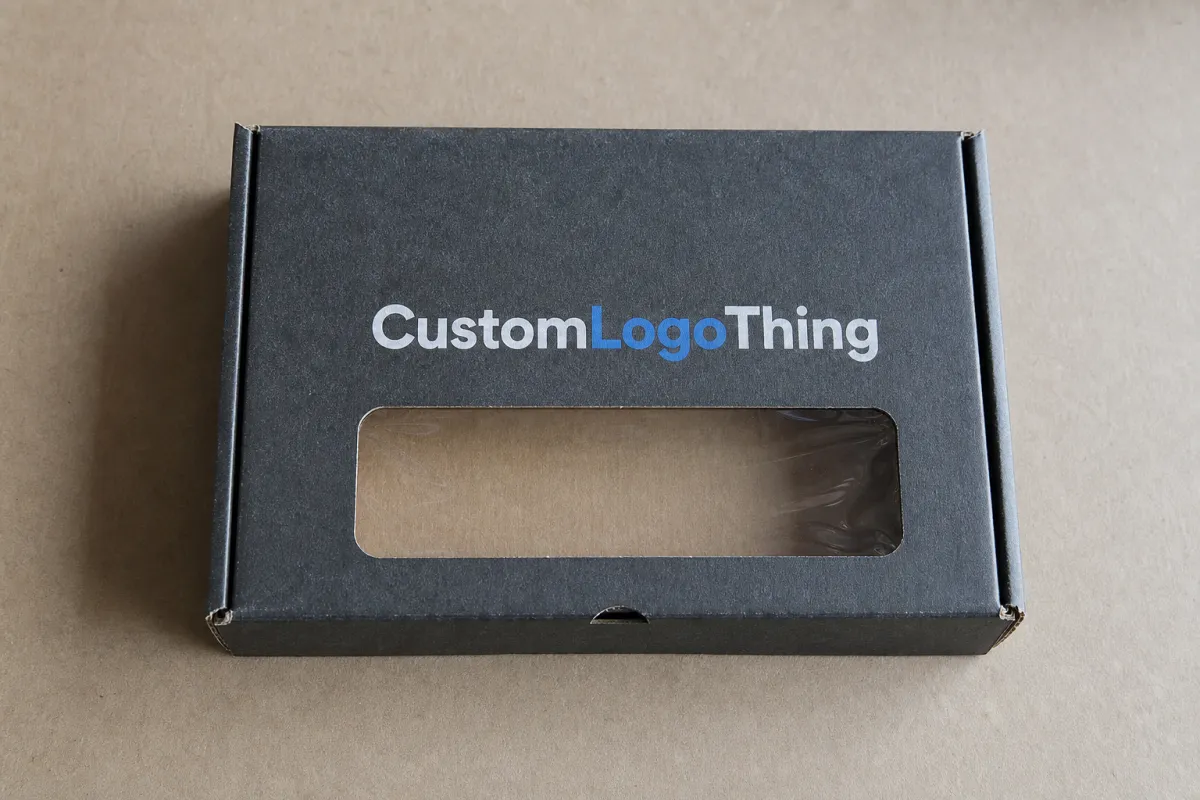
A window mailer is not just a carton with a cutout. It is a small display system. The format can be a folding mailer box, a mailer envelope, or a specialty carton with a die-cut opening, a clear film panel, or an open-frame reveal that shows part of the contents while still protecting the shipment. The idea is simple: show enough to create interest, keep enough covered to do the packaging job.
That is where custom window mailers with logo start earning their keep. The logo frames the visible product and turns the reveal into a deliberate focal point instead of a random hole in cardboard. Instead of covering every square inch with graphics, claims, badges, and decorative noise, the package can let the product carry some of the visual weight. That usually looks cleaner. It also looks more confident, which is the whole point.
This format works especially well for products that benefit from a partial reveal. Folded apparel. Gift sets with some spacing. Bakery items in protective secondary packs. Stationery. Cosmetic kits. Sample packs. Small accessories. Anything with color, texture, or shape contrast can look more expensive when the window is used with restraint instead of a sledgehammer.
Retail logic matters here too. A window acts like a storefront display, even when the parcel is heading straight to a house or office. It signals that the brand is not hiding the contents. It is presenting them. For buyers comparing suppliers, that can read as better attention to detail than a generic printed mailer or a plain carton that arrives with no visual story.
Not every product deserves a window. Private-use items, sensitive contents, and products that need full concealment are poor candidates. Items that shift easily or need heavy cushioning can also be a bad fit. For the right category, though, the reveal reduces the need for heavy graphics and lets the product do some of the branding work without help from a dozen competing design elements.
The package is usually the first sales presentation. If it looks intentional before the seal is broken, the product starts with an advantage.
A plain shipper says, "Your order is inside." A smart window mailer says, "Your order is part of the experience." Those are not the same message. In crowded markets, that difference is not decoration. It is a brand signal.
How Custom Window Mailers With Logo Work
The structure makes sense once you look at it in layers. Outside, there is the board or corrugated material, printed with the logo and the brand graphics needed to support the product. In the middle, there is a cutout window or a clear film panel. Inside, there may be an insert, tray, divider, or a carefully folded product sitting where it should sit. Then comes the item itself. The eye moves from logo to window to product, which is exactly the sequence the package should create.
That sequence is what separates good packaging design from decorative noise. The logo should not fight the window. It should work with it. A brand mark placed close to the reveal can make the product feel curated. Negative space matters too. A cramped layout can make the opening feel accidental. A clean layout makes the cutout feel deliberate. Deliberate usually reads as premium. Accidental rarely does.
Think about the customer journey. The mailer arrives. The logo is visible. The partial reveal catches the eye. The flap or lid opens. The full presentation appears. That progression creates anticipation without turning the package into theater for theater's sake. It simply gives the experience rhythm, which helps the unboxing feel organized and worth the effort.
There is a practical side as well. A window can help with product identification before opening. Fulfillment teams, warehouse checks, and retail-style presentation all benefit from that. If a brand ships multiple SKUs in similar packaging, the visible product can cut down on confusion. Subscription operations, promotional kits, and sample packs especially benefit from that kind of quick visual verification.
Tradeoffs come with the territory. More visibility can mean less privacy. A window can reveal product color, shape, or finish to anyone handling the parcel. Shared mailrooms, retail backrooms, and consumer-facing delivery channels can make that a real concern. The design has to strike a balance: enough reveal to drive interest, enough protection to keep the shipment practical.
For brands building broader packaging programs, window mailers usually sit beside other formats rather than replacing them. Some products need a fully enclosed shipper. Some need a display-style carton. Some need a hybrid approach. It is smart to review the wider set of Custom Packaging Products before locking in the final structure, especially when one brand uses multiple packaging sizes or sells through more than one channel.
One detail gets overlooked all the time: the logo still needs to read clearly when the window is active. If the item inside is visually busy, the mark needs contrast. If the panel is large, the logo may need more breathing room. If the opening is smaller, the mark can sit closer and carry more weight. Those choices are not abstract design theory. They decide whether the package communicates clearly or turns into a messy visual argument.
Cost, Pricing, MOQ, and Unit Cost Factors
Price is where the conversation gets real. A window mailer is not just a carton. It is board, print, die-cutting, assembly, and often an insert or film layer. Cost usually rises with board grade, window size, print coverage, coating choice, foil or specialty finishes, and whether the insert is stock or custom. Each one affects labor, tooling, or material use. Packaging math is rarely glamorous, but it does keep everyone honest.
A simple one-color mailer with a modest window costs less than a thick, fully printed version with Custom Die Cuts and a soft-touch laminate. That part is obvious. What catches buyers off guard is how quickly small choices stack up. A larger window may need stronger material around the cutout. A fuller print design can increase ink use and setup time. A specialty coating adds tactile value, sure, but it also adds a production step that changes lead time and cost.
Minimum order quantities matter because setup costs have to land somewhere. Lower MOQs usually mean higher unit cost. Higher quantities usually improve unit economics because tooling, press setup, and die preparation get spread across more packages. That is standard packaging economics, not some magic trick. A buyer who only looks at the unit price without quantity context may read the quote wrong and blame the supplier for doing basic arithmetic.
Here is a practical comparison for common window mailer builds. These figures are directional, not universal, and they depend on size, print coverage, finish, and location. Still, they are useful for planning:
| Format | Typical Use | Approx. Unit Cost at 5,000 Units | Strengths | Tradeoff |
|---|---|---|---|---|
| Lightweight paperboard window mailer | Gifts, stationery, samples, light apparel | $0.65-$1.10 | Lower material cost, clean presentation, good print quality | Less crush resistance and less protection for heavier items |
| Corrugated window mailer | Ecommerce, subscription kits, shipping-focused packs | $0.95-$1.75 | Better shipping strength, better edge protection, good for transit | Slightly bulkier look and higher freight volume |
| Premium laminated window mailer | Luxury gifts, cosmetics, high-margin product launches | $1.30-$2.40 | High-end appearance, strong shelf impact, better tactile feel | Higher cost and more production steps |
| Custom insert + window system | Sets, kits, sampled assortments, fragile products | $1.50-$3.50+ | Better presentation control and better product positioning | More setup complexity and more assembly time |
Those numbers help with planning. They are not a promise, and anyone pretending otherwise is selling you a fantasy with a spreadsheet attached. A buyer should always ask what is included: full-color printing, coating, film, tooling, shipping cartons, and packaging assembly can all move the quote. The same structure can also change in price depending on whether the order is a seasonal promotion or a long-run replenishment item.
Hidden variables show up fast. Packaging size affects freight. Freight affects landed cost. Warehousing affects how much inventory you can afford to hold. Fulfillment needs decide whether the mailer works with existing equipment or forces an extra hand-assembly step. A unit price that looks good on paper can become expensive fast if it slows down the packing line.
From a purchasing angle, the real question is not "Is this package cheap?" It is "Does this package earn back its cost?" That can happen through higher perceived value, better conversion, more repeat orders, or fewer damages during transit. In many cases, branded packaging is less about decorative spend and more about presentation discipline. A package that helps the product feel worth more can support margin in a way plain packaging never will.
If the brand ships across more than one format, it helps to compare the cost model with Custom Poly Mailers. Poly may be cheaper in some shipping scenarios, while a window mailer can deliver a stronger retail-style reveal. The right answer depends on product weight, perception goals, and how much visual structure the brand needs to carry.
For buyers comparing sourcing standards, groups like PMMI are useful for equipment and line integration guidance, while certification bodies like the Forest Stewardship Council are more relevant for paper sourcing claims. If the packaging needs to survive rough handling, it is also worth checking shipment performance guidance from ISTA.
Process, Timeline, and Production Steps
Good packaging does not begin with artwork. It begins with a brief. The smoothest projects usually start with product dimensions, target quantity, shipping method, finish preferences, and a clear idea of how much of the contents should be visible. Once those basics are locked, the structure can be planned without wasting days on revisions that should have been caught earlier.
The standard production path looks like this: brief, structural planning, artwork setup, proofing, sampling, production, finishing, and shipping. On paper, that seems simple. In practice, the slowdowns usually show up in dieline approval, artwork changes, substrate availability, and die-cut tooling. Those are the steps that can add days, sometimes more, when the file or spec is not ready.
Timeline also depends on complexity. A simple printed-and-cut mailer can move fairly quickly. A custom insert, specialty coating, foil accent, or multi-part assembly moves more slowly. First-time orders often need extra lead time because prototypes reveal fit issues that were not obvious on screen. A product that fits mathematically can still slide around, catch on the window edge, or sit too low in the composition. Packaging loves embarrassing math.
A realistic planning window for a straightforward custom run is often in the 12-15 business day range after proof approval, though that depends on supplier, season, and order size. More complex projects stretch longer, especially if special materials or multiple sample rounds are involved. That is why experienced packaging teams do not treat the proof stage like a checkbox. It is the point where an expensive mistake can still be stopped.
Production schedules run better when three things are clean: complete information, clean files, and fast approval. A spec sheet that includes dimensions, substrate, print coverage, coating, closure style, and shipping expectations saves time. Final artwork files that already account for the dieline and window location save more. A signed proof matters too. Manufacturing should not start until the buyer is comfortable with what will be produced.
It also helps to understand how Custom Printed Boxes and window mailers fit inside a broader product packaging program. One format may be used for retail display, another for ecommerce shipment, and another for promotional mail. The production team should know which package is doing which job. Otherwise the whole process gets muddy and the wrong structure ends up carrying the wrong load.
One practical move is to request a preproduction sample or a fit check before running volume, especially if the launch matters. A sample costs time up front. It costs less than discovering after 10,000 units that the insert is too tight or the window sits half an inch off center. That kind of mistake has a special talent for becoming everyone's problem at once.
Step-by-Step Guide to Choosing the Right Window Mailer
The smartest selection process starts with the product, not the package. Measure the item. Weigh it. Note whether it can shift inside the carton. Decide how much should be visible. Then work backward into the packaging structure. That order matters because the package should support the product, not force the product to adapt to a pretty idea that falls apart in a warehouse.
1. Measure the product and map the reveal
Determine exact dimensions, including any protective layer or insert. If the item has a rigid edge, glossy surface, or fragile corner, account for that in the final fit. The visible area should show enough of the product to create interest, but not so much that the packaging loses control of the presentation. A good reveal feels framed. A bad one feels like an accident somebody forgot to fix.
2. Match the material to the shipment
Light paperboard can work well for gifting, promotions, and light retail packaging. Corrugated stock is usually safer for ecommerce and distribution. Coated board can be useful if the goal is a premium appearance with sharper print reproduction. For some launches, material choice matters more than print finish. A strong base stock can do more for perceived quality than one more decorative effect slapped on top.
3. Size the window with restraint
The window should serve the product, not own the front panel. Too large, and the structure may weaken. Too small, and the reveal loses value. Placement matters too. A centered opening may feel balanced. An offset reveal can feel more editorial or more energetic. The right choice depends on the product silhouette and the logo position, not a random preference pulled out of thin air.
4. Place the logo where it can anchor the composition
The logo should remain legible even if the item inside has strong color or texture. It should not get trapped in a corner or hidden behind a folded edge. Good package branding uses the logo as the visual anchor, then lets the window tell the rest of the story. If the brand mark and the product are fighting each other, the design is probably trying to do too much.
5. Build the unboxing sequence
Consider what the customer sees first, second, and third. A clean opening sequence can turn a simple mailer into a meaningful reveal. Sometimes that means a printed inside flap. Sometimes it means a neat insert. Sometimes it means nothing more than a careful product position and a decent sense of restraint. Whatever the solution, the final experience should feel planned, not improvised five minutes before proof approval.
For brands still comparing structural options, it helps to review the broader catalog of Custom Packaging Products and see where a window mailer fits among launch kits, subscription programs, and retail presentation packs. The goal is not to jam every item into the same format. The goal is to pick the structure that makes the product easier to sell and easier to ship.
One more filter matters: ask how the mailer behaves in the real world. Will it be stacked in a warehouse? Handed across a counter? Dropped into a mailbox? Shipped in a poly bag? Those details decide whether a visible panel is an asset or a liability. Packaging is never just a design exercise. It is a handling exercise too, and handling is where weak ideas get exposed fast.
Common Mistakes Brands Make With Window Mailers
Most window mailer problems are not dramatic. They are subtle, which is why they cost more than people expect. The package arrives, the product is protected, and the presentation still feels off. The issue is rarely one huge mistake. It is a stack of small choices that never really worked together.
Over-designing the outside is one of the most common errors. Too many colors, claims, badges, and graphic elements compete with the window. Instead of creating focus, the package becomes visually noisy. That problem gets worse when the window already reveals a product with strong color or texture. The exterior needs breathing room. A package with a window rarely benefits from extra decoration just because somebody had more space to fill.
Fit problems come next. If the item moves inside the mailer, the whole composition looks sloppy. A shifted garment hem, a tilted label, or a crooked sample pack makes the brand feel careless. In a mailer designed around visibility, alignment becomes part of quality. The product has to sit where the design expects it to sit. That is not optional.
Poor window placement causes a different kind of mess. The reveal can cut through important product details or block the logo. A cutout that looked elegant on the dieline may look awkward once the real item is inserted. Mockups matter because they show the relationship between content, opening, and branding before production turns a guess into inventory.
Weak materials are worse because they fail after the order has already been approved. A beautiful mailer that crushes in transit hurts the brand more than plain packaging ever could. That matters most in ecommerce, where the customer's first physical interaction is often a delivery box that has already been handled several times. If the package cannot survive real shipping, the visual value does not rescue it.
Skipping transit testing is another avoidable mistake. A pack may look strong on a desk and fail in a shipping environment. That is where durability checks matter. Standards and guidance from organizations such as ISTA exist for a reason: shipping has its own failure modes. A window panel can be part of a great design, but it still needs to survive vibration, compression, and movement.
Here is a simple mistake checklist that packaging teams can use before placing an order:
- Does the product stay centered during handling and transit?
- Does the logo remain visible from the main viewing angle?
- Does the window reveal enough to feel useful but not too much to feel exposed?
- Does the material choice match the shipping method?
- Has the sample been tested for assembly speed and crush resistance?
None of those checks are glamorous. All of them matter. The best branded packaging often looks simple because the hard thinking happened earlier, not because the team got lucky.
Expert Tips and Actionable Next Steps
Designing a window mailer is a lot like staging a product photo. The frame matters, the subject matters, and the space around the subject matters just as much. If the window is the frame, the visible product is the image, and the logo is the title card. That is a useful mental model because it pushes the brand to think about composition instead of decoration.
One practical tip is to keep contrast high around the logo. A mark that disappears into the background or blends into a busy product inside the mailer loses brand value fast. Dark on light, light on dark, or a strategically placed solid field can solve that problem. The logo should read immediately, even from a passing glance. If it needs a second look, it is already doing too little.
Another smart move is to test two versions before scaling. One design may favor shelf appeal, with a stronger exterior and a more dramatic reveal. Another may favor mail-order unboxing, with stronger transit performance and a cleaner opening sequence. Comparing both can show which version actually helps sales, not just which one looks good in a mockup deck.
A simple launch checklist can save weeks:
- Confirm final product dimensions and weight.
- Gather logo files, brand colors, and any required copy.
- Request a dieline and place the artwork on it carefully.
- Approve a sample or proof before production.
- Check packing speed with the fulfillment team.
- Review shipping rates and carton density before ordering volume.
That checklist sounds basic because it is. Basic is where most delays happen. One missing dimension. One unclear window position. One label that clashes with the reveal. Packaging problems are rarely mysterious. They are usually the result of incomplete information and one too many people assuming somebody else already checked the details.
From a buying standpoint, the next move is straightforward: collect product measurements, confirm the target quantity, and decide how much of the item should be visible. Then Request a Quote for custom window mailers with logo and compare it against the other packaging options. If the package needs to support a wider product mix, it can also help to compare the result with custom printed boxes or a different mailer structure before committing.
There is a reason this format keeps showing up in packaging design. It handles two jobs at once. It protects the product, and it sells the idea of the product before the package is opened. That combination is rare, which is exactly why custom window mailers with logo can be such a strong tool for branded packaging, retail packaging, and direct-to-consumer presentation.
For brands that want packaging to do more than survive transit, the answer usually is not more graphics. It is a smarter structure, a clearer reveal, and a logo that knows where to stand. Start with the product dimensions, decide how much should be visible, and check whether the material can survive the trip. If those three pieces are clear, the next quote for custom window mailers with logo will be a lot easier to judge.
What are custom window mailers with logo used for?
They are used to package products while showing part of the contents through a cutout or film window. That partial reveal works well for branded shipping, retail display, gifting, subscription boxes, and promotional kits. The logo makes the package feel intentional rather than purely functional.
How do I choose the right size for custom window mailers with logo?
Measure the product first, then leave room for inserts, protective padding, and a clean visual reveal. The visible area should show enough of the item to create interest without exposing the shipment to shifting or damage. Mockups or samples are the fastest way to confirm fit before ordering at scale.
Are custom window mailers with logo expensive?
They can cost more than basic mailers because the window, printing, and structural setup add production steps. Pricing depends on material, print coverage, finish, quantity, and whether the design uses custom tooling. Higher order volumes usually reduce unit cost by spreading setup expenses across more packages.
How long does production usually take for custom window mailers with logo?
Lead time depends on artwork readiness, proof approval, sample requirements, and whether the structure needs a custom die. Simple orders move faster than builds with specialty finishes or custom inserts. The best way to avoid delays is to approve a complete spec sheet before production begins.
What mistakes should I avoid with custom window mailers with logo?
Avoid making the window too large if it weakens the structure or exposes too much of the product. Do not place the logo where it gets blocked by the item inside or lost in a crowded layout. Always test shipping durability, since a beautiful mailer that arrives damaged hurts the brand.

