Buyer Fit Snapshot
| Best fit | Custom Window Rigid Boxes projects where brand print, material claims, artwork control, MOQ, and repeat-order consistency need to be specified before quoting. |
|---|---|
| Quote inputs | Share finished size, material target, print colors, finish, packing count, annual reorder estimate, ship-to region, and any compliance wording. |
| Proofing check | Approve dieline scale, logo placement, barcode or warning zones, color tolerance, closure strength, and carton packing before bulk production. |
| Main risk | Vague material claims, crowded artwork, missing packing details, or unclear freight terms can make a low unit price expensive after revisions. |
Fast answer: Custom Window Rigid Boxes: Board, Finish, Dieline, and Unit Cost should be specified like a repeatable production item. The safest quote records material, print method, finish, artwork proof, packing count, and reorder notes in one written spec.
Production checks before approval
Compare the actual filled-product size with the drawing, then confirm tolerance on folds, seals, hang holes, label areas, and retail display edges. Reserve space for logos, QR codes, warning copy, and material claims before decorative graphics fill the panel.
Quote comparison points
Review material grade, print process, finish, sampling route, tooling charges, carton quantity, and freight assumptions side by side. A quote is only useful when the supplier can repeat the same color, closure quality, and packing count on the next order.
Custom window rigid boxes can change the way a product is read before anyone ever touches it. A clear opening gives shoppers a direct view of the item, while the rigid structure adds the heft and order that make the package feel considered rather than disposable. That combination has made custom window rigid boxes a steady choice for cosmetics, candles, specialty foods, collectibles, and giftable accessories, especially when the package itself has to help sell the product. For teams comparing formats and reviewing Custom Packaging Products, this structure deserves a close look because presentation, protection, and brand expression all have to work together without stepping on one another.
The appeal is easy to understand once you see it in person. People trust what they can see, yet they still read the outer box as premium when the board, wrap, and window are executed with care. That makes custom window rigid boxes especially useful for product packaging where the item is part of the story. A candle in a textured glass vessel, a skincare set with layered components, or a specialty food assortment with color accents all benefit from packaging that reveals a portion of the contents without giving away the full experience. Board thickness, insert design, window placement, and finishing choices all shape how custom window rigid boxes perform on the shelf and in transit. I have seen brands lose momentum because the pack hid the product too well, and I have seen others win the sale almost immediately because the box let the item speak first.
Why Custom Window Rigid Boxes Grab Attention Fast
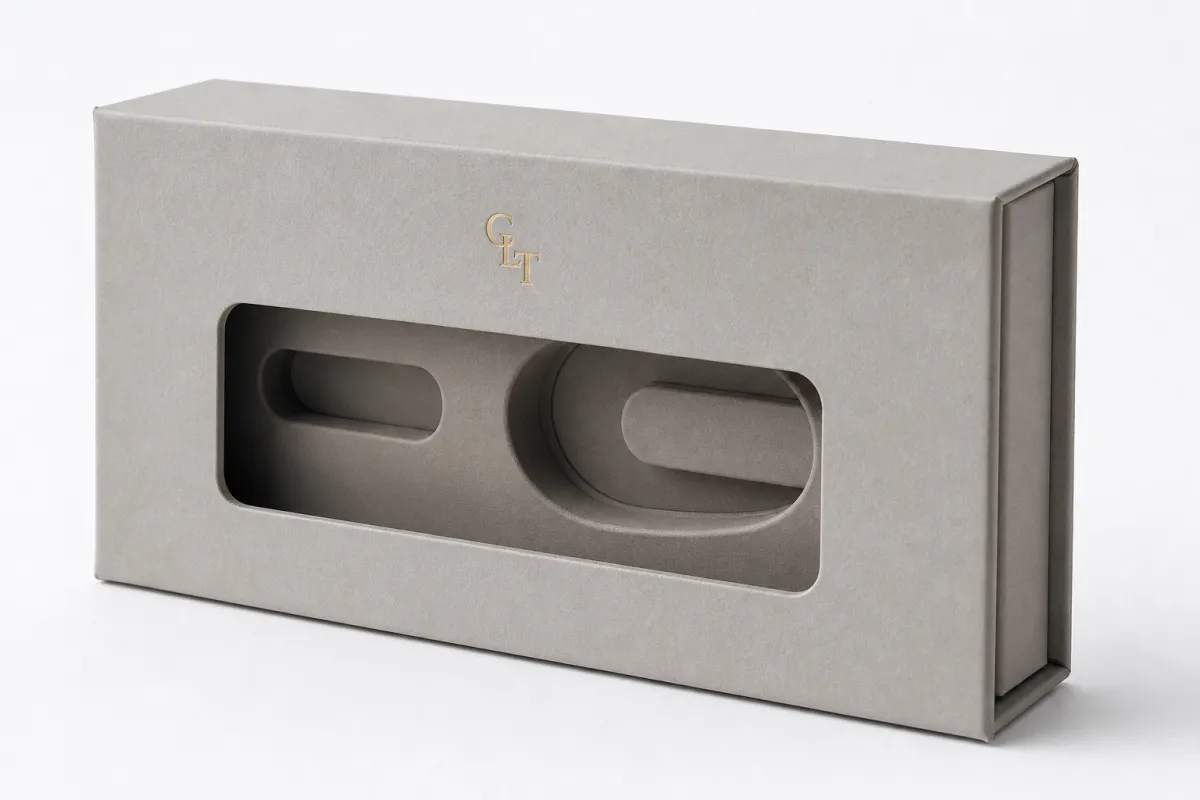
Most shoppers decide whether a product feels worth its price within a few seconds, and custom window rigid boxes are built for that short window of judgment. The visible item acts like proof, while the rigid shell signals care and value in a way folding cartons often cannot match. For branded packaging, that is a strong pairing because the box does not need to explain everything. It only needs to reveal enough of the product to earn a second look. When the item inside already has visual appeal, custom window rigid boxes let the product do part of the selling.
The construction is simple to describe, even if the result feels refined. A rigid box usually uses chipboard in the 1.5 mm to 3 mm range, then wraps that board with printed paper, specialty stock, or laminated art paper. A die-cut or inset window is added so the shopper can see the product, and some versions include clear PET or rPET film for dust protection and a cleaner retail appearance. That detail is one reason custom window rigid boxes often feel more polished than ordinary Custom Printed Boxes, even before foil stamping, embossing, or soft-touch coating enter the picture.
These boxes are most effective when the product has something worth showing. Cosmetics and fragrance items often need a premium presentation with controlled visibility. Candles benefit because the vessel color, label, and wax finish can all communicate quality. Specialty foods, tea assortments, and confectionery gift sets use the window to make freshness and variety feel tangible. Collectibles and apparel accessories gain a lot from direct visibility too, since buyers usually want to confirm the exact piece they are getting. When the product itself carries part of the value, custom window rigid boxes frame that value rather than hiding it.
There is a practical side that often gets overlooked. A rigid box with a window can protect fragile corners better than some open-display formats, especially when the insert is built correctly. It also gives the buyer a clearer sense of size, color, and finish, which can reduce returns in retail and e-commerce workflows. From a packaging design standpoint, that balance matters. You get enough visibility to build trust, enough structure to maintain a premium feel, and enough space to reinforce the brand without crowding the product. That is kinda the sweet spot buyers are usually after, even if they do not say it that way.
One common misstep is treating the window as decoration. It is not. The opening should serve the product story, not compete with it. A well-placed window can make custom window rigid boxes feel honest and elevated at the same time, which is why they remain such a strong option for premium product packaging.
How Custom Window Rigid Boxes Work
At the structural level, custom window rigid boxes begin with a rigid base, usually chipboard or paperboard, wrapped in printed paper or specialty cover stock. The wrap carries the branding: color, logo placement, texture, and finish all live there. The window is then cut into the wrap and board, either as an open aperture or as a framed opening with transparent film. That small detail changes the whole character of the box, because the window can feel airy and minimal or bold and highly defined depending on how it is built.
The inside matters just as much as the outside. A product seen through a window needs to sit still, centered, and protected. That usually means a fitted tray, paperboard cradle, molded pulp insert, or EVA foam insert depending on the item. For custom window rigid boxes, the insert is part of the presentation, not just a holding device. If the item shifts during transit, the window will show misalignment and scuffing right away, and an otherwise expensive package can start to look careless. A snug insert keeps the visual line clean and helps the product look intentional behind the opening.
Window film is optional, though it is often useful. Clear film helps keep out dust, reduces incidental touch marks, and gives the package a more retail-ready appearance. Open cutouts can work when the item is sturdy and the display environment is controlled, but they are less forgiving in distribution. If the box will travel through fulfillment centers or sit in a display for a while, film is often worth the added material and assembly step. That is especially true for custom window rigid boxes used in gift packaging, where the box may be handled several times before the buyer opens it.
Finish strategy changes how the structure reads too. Matte lamination gives a quiet, refined look. Soft-touch lamination adds a velvety feel that many buyers associate with luxury. Foil stamping can highlight a logo or border without crowding the window. Spot UV adds contrast, and embossing gives the surface a tactile cue that people notice quickly in person. I usually advise buyers to let the window remain the focal point and use the other finishes as supporting elements. With custom window rigid boxes, too many competing effects can make the product harder to read instead of easier.
From a production standpoint, one of the biggest strengths of custom window rigid boxes is control. The opening can be sized to reveal a specific part of the item, the insert can hold the product at a precise height, and the wrap can be printed to guide the eye toward the brand name or product feature. That level of control is a strong fit for branded packaging programs where consistency matters across a line of products.
Key Factors That Shape Custom Window Rigid Boxes
The first question is always about the product. Weight, fragility, shape, and surface finish all affect how custom window rigid boxes should be built. A heavy candle vessel needs stronger board and a tighter insert than a lightweight accessory. A glossy cosmetic jar can scuff if the insert is too tight or too rough. A food gift set may need a wider opening so the assortment can be seen clearly. The box should fit the item, not the other way around, and that is usually where packaging decisions begin.
Window size and placement come next. A larger cutout reveals more of the product and creates a stronger proof effect, but it also reduces the surface area available for branding and may expose parts of the product that are less attractive. A smaller window can feel more curated, especially when it is shaped to frame a label, silhouette, or color accent. That is one reason custom window rigid boxes can feel highly tailored even when the underlying production method is standard. The window acts like a visual editor, deciding what the shopper sees first.
Material choice changes both durability and price. Many rigid boxes use chipboard in the 1.5 mm to 2.5 mm range, with heavier builds reserved for larger or more fragile products. The wrap stock can be a 128 gsm coated paper, a specialty textured stock, or a printed art paper that is laminated for protection. If sustainability matters, there are paper-based wraps and paperboard Inserts That Reduce plastic content without making the box feel flimsy. For buyers focused on responsible sourcing, ask whether the paper can support FSC claims and whether the structure still performs properly as a retail packaging solution. You can read more about certification standards at FSC.
Branding choices matter as well. Strong package branding is not only about the logo; it is about how the eye moves across the box. Dark backgrounds can make a window pop. Metallic accents can suggest premium quality. A restrained color palette can make the product itself feel more elevated. If the window already shows a colorful item, the outer print may need to step back and support the visual story instead of fighting it. That subtle balance matters a great deal in custom printed boxes, where the outer surface can become busy very quickly.
Insertion and retention deserve more attention than they usually get. The way the item sits inside custom window rigid boxes affects the height of the product in the window, the amount of movement during shipping, and the rhythm of the unboxing moment. A well-designed insert can make a simple product feel curated. A poor insert can make an expensive box look cheap the moment the tray shifts. In production, this is often where the difference between “looks good on the proof” and “works on the shelf” becomes obvious.
If the item will ship rather than sit in a protected display case, it is smart to think about distribution testing early. Aligning the structure with recognized methods such as ISTA test methods and, where appropriate, ASTM-style vibration, drop, or compression checks helps prevent surprises. Not every package needs a full lab program, but custom window rigid boxes should be designed with transit realities in mind instead of shelf appeal alone. A box that looks great in a sample room but falls apart in a carton test is not really doing its job.
Here is a simple way to think about the tradeoffs:
- Bigger window = stronger product visibility, less outer print area, more need for careful insert alignment.
- Thicker board = better structure and premium feel, higher material cost, slightly more weight.
- More finish work = richer brand presentation, more setup steps, higher unit price.
- Better insert design = better transit performance, cleaner display, fewer returns and scuffed products.
Custom Window Rigid Boxes Process and Timeline
The production path for custom window rigid boxes usually starts with specifications, not artwork. That sounds plain, but it prevents a lot of unnecessary back-and-forth. The finished product dimensions, target quantity, box style, window shape, insert preference, and finish direction all need to be clear before the dieline can be finalized. With those details in place, the process moves faster and the sample comes back closer to what the team actually wants. When the details are vague, each round takes longer because the box has to be reworked after the fact.
After that comes structural development. The dieline is built to match the product and the chosen board thickness, and the window placement is mapped so it lands in the right visual spot. For custom window rigid boxes, this step carries more weight than it does for many folding carton projects because the opening has to align with the product inside, the insert depth, and the shelf-facing angle. A window that is off by even a small amount can make the whole package feel unbalanced.
Sampling or prototyping is where good teams avoid expensive surprises. A prototype lets you test product fit, window visibility, insert height, and print alignment before full production begins. This is the stage where practical questions matter: does the logo sit too high above the window, does the item look too small inside the opening, does the tray hold the item firmly enough to survive transit? Those are not cosmetic questions. They determine whether custom window rigid boxes will actually work in the real world.
Timing depends on complexity. A simpler rigid box with a standard window and basic print may move through sampling and production in roughly 12 to 15 business days after proof approval, while a more detailed build with custom inserts, foil, embossing, or specialty wrap paper can stretch to 18 to 25 business days or more. Shipping time is separate, and that distinction matters. Launch plans often slip because teams assume production time includes freight. It usually does not.
Communication helps more than many teams expect. When a supplier knows the final carton dimensions, the desired finish, the target launch date, and the acceptable sample turnaround, there is less risk of delay. That is especially true for custom window rigid boxes that need multiple approvals because of regulatory copy, ingredient panels, or promotional timing. If artwork still needs editorial work, it is better to pause and resolve it before the print run starts.
One practical step goes a long way: if you need the packaging to coordinate with other Custom Packaging Products, plan the schedule so the box style, insert style, and outer shipping carton all match the same launch window. That keeps the brand rollout cleaner and avoids mismatches between the premium box and the rest of the package system.
For many programs, the cleanest workflow looks like this:
- Lock the product dimensions and target quantity.
- Choose board thickness, wrap paper, window style, and insert material.
- Review a prototype under real lighting conditions.
- Confirm print placement, window alignment, and fit tolerance.
- Approve production and allow time for assembly, curing, and freight.
Custom Window Rigid Boxes Pricing: What Drives Cost
Pricing for custom window rigid boxes starts with the structure. A thicker chipboard shell costs more than a lighter one, and a custom insert adds both material and labor. The more specialized the shape, the more time the production team spends on cutting, wrapping, fitting, and assembly. That is why a simple rectangular box with a modest window can be surprisingly efficient, while a highly finished presentation box with multiple compartments can rise quickly in cost. The box may look similar from a distance, but the build can be very different underneath.
Window design is another major cost driver. A basic rectangular opening is easier to cut and wrap than a shaped cutout that follows a curve, logo mark, or custom silhouette. Adding clear film increases material and assembly steps, though it can also improve durability and shelf performance. If you are comparing custom window rigid boxes against other premium formats, the window itself is often the point where pricing starts to separate. Small changes in the opening can mean meaningful changes in labor.
Printing and finishing matter too. A one-color wrap with a simple logo is easier than a full-coverage printed surface with foil, spot UV, and embossing. Soft-touch lamination adds tactile appeal, but it also adds a process step. In practical numbers, a basic custom window rigid boxes program at 1,000 units might land around $1.80 to $2.80 per box, while a more finished version with film, custom insert, and specialty wrap can move into the $2.40 to $3.60 range or higher depending on complexity. At 5,000 units, those ranges often improve, sometimes dropping closer to $0.95 to $1.55 for simpler builds and $1.20 to $2.10 or more for more elaborate ones. Exact pricing depends on dimensions, finishes, and whether the order includes hand assembly.
Minimum order quantity affects the economics as well. Higher quantities usually lower the per-unit price because setup is spread across more boxes, but they also increase storage needs and forecasting risk. A buyer should not stop at “What is the cheapest quote?” A better question is, “What is the best total cost once samples, freight, and storage are included?” That question usually gives a more honest view of custom window rigid boxes.
To make the comparison easier, here is a practical pricing frame:
| Build Type | Typical Features | Best Use | Approx. Unit Cost at 1,000 pcs | Approx. Unit Cost at 5,000 pcs |
|---|---|---|---|---|
| Basic window rigid box | Standard chipboard, simple die-cut window, printed wrap, basic insert | Simple retail packaging, small gift items | $1.80-$2.80 | $0.95-$1.55 |
| Mid-tier premium box | Clear film, custom insert, matte or soft-touch finish, stronger board | Cosmetics, candles, specialty foods | $2.40-$3.60 | $1.20-$2.10 |
| High-finish presentation box | Foil, embossing, specialty paper, complex insert, more hand assembly | Luxury gifting, launch kits, collector items | $3.50-$6.00 | $1.75-$3.50 |
That table is not a quote sheet, and it should not be treated like one. It is a practical frame for planning. Real budget planning needs to include sampling, freight, possible tooling for unusual windows, and any storage or distribution costs that follow once the goods arrive. In some projects, the box is only part of the equation, especially if the custom window rigid boxes are paired with other branded packaging components or bundled into multi-SKU retail packaging programs.
The strongest budgeting conversations are the ones that start with the job the packaging has to perform. If the goal is to protect a delicate item, show the product clearly, and keep the presentation premium, then custom window rigid boxes may cost more upfront but save money through fewer damaged units, better shelf impact, and stronger conversion. That is the kind of tradeoff buyers see every day once the package is in circulation.
Common Mistakes With Custom Window Rigid Boxes
The biggest mistake is window sizing based on instinct instead of product reality. A window that looks perfect in a mockup can expose too little of the item once the insert is in place, or too much, leaving the box looking awkward and underdesigned. With custom window rigid boxes, the exact position of the product matters as much as the opening itself. If the item sits a few millimeters too low or too high, the whole front view changes. That is why prototype checks are so valuable.
Measurement errors create another set of problems. Even a small misread on product height or width can produce movement inside the box, crushed corners, or a window that no longer frames the main feature correctly. The issue shows up quickly in production because rigid boxes do not hide bad fit the way a looser carton sometimes can. Once the box is assembled, custom window rigid boxes tend to reveal every tolerance problem immediately. That can mean rework, delays, and more waste than anyone planned for.
Overdesign is just as risky. Some teams add too many graphics, too many colors, or too many finishes because they want the box to feel luxurious. The result can be the opposite: the product gets buried visually, and the window stops doing its job. A clean logo, one strong brand color, and one or two controlled finishes are usually enough. In product packaging, restraint often reads as more confident than decoration overload.
A window should prove the product, not compete with it. That simple rule avoids a lot of design arguments before they start.
Durability issues show up more often than people expect. Weak board, poor glue coverage, or an insert that does not hold the item securely can make custom window rigid boxes look beautiful and still perform badly. If the opening flexes, or if the product shifts and rubs the window, the package loses its premium feel very quickly. In transit, that can turn into scuffed surfaces, dented corners, or a display that no longer looks aligned when the customer opens the box. For a premium launch, that is a rough way to discover a weak structure.
Then there is the budget trap. Teams sometimes compare only the box quote and forget the sample fee, freight, warehousing, and any extra handling needed for assembly. That makes custom window rigid boxes look cheaper than they really are. A better comparison is total landed cost against the value of stronger shelf appeal and fewer damaged units. Once those factors are included, the right packaging decision usually becomes clearer.
One more mistake is overlooking the actual retail environment. Bright store lighting, dust, touch handling, and mixed product heights all affect how the package looks. If the opening sits too high on the shelf, the shopper may never see the item clearly. If the film reflects too much, the view can look distorted. Those are small details, but they matter a lot in custom window rigid boxes because the format depends on visibility.
Expert Tips and Next Steps for Custom Window Rigid Boxes
Start with the product, not the decoration. That is the cleanest way to get good results with custom window rigid boxes. Decide what needs to be visible, what must stay protected, and what the shopper should notice first. If the item has a premium finish, a color accent, or a distinctive silhouette, build the window around that feature instead of relying on a generic opening. Strong packaging design usually begins with the product story, then builds the box to support it.
Test more than one window option if you can. A narrow horizontal opening can feel elegant, while a larger center window can feel more generous and more retail-facing. A shaped window can highlight a logo or contour, but it may also reduce protection or add cost. Because custom window rigid boxes are so sensitive to proportion, a small change in the cutout can shift the whole balance of the box. A prototype comparison is usually worth the time, especially for launch items or higher-volume retail packaging programs.
Stay disciplined about manufacturing details. Confirm the board caliper, wrap paper, insert tolerances, and finish compatibility before you approve the final build. If a wrap is too thick, the window edge may not fold cleanly. If the insert is too tight, the product can scuff. If the finish is too glossy, the window may lose contrast under store lights. These are the production realities that separate a good concept from a reliable box. Custom window rigid boxes deserve the same technical review you would give any other critical packaging component.
If sustainability is part of the brief, ask for recyclable paperboard, paper-based wraps, and inserts that avoid unnecessary plastic. A smaller or more carefully shaped window can also reduce material use without hurting presentation. You can ask whether the carton and insert can be sourced with certified fiber, then confirm that glue and coating choices do not conflict with your environmental claims. In many cases, the most practical eco-friendly choice is not the lightest box on paper; it is the one that balances material use, protection, and product presentation well.
For teams building a broader packaging program, it helps to think beyond a single SKU. Custom window rigid boxes can be part of a family of Custom Packaging Products that carry the same brand language across gift sets, seasonal items, and retail bundles. That makes the line feel more deliberate and can simplify package branding over time.
Before you commit to production, use a quick review checklist:
- Confirm the product fits without shifting inside the insert.
- Check the window view under bright retail lighting.
- Inspect the corners, glue lines, and wrap edges for finish quality.
- Verify that the outer print supports the visible product instead of crowding it.
- Make sure the unboxing still feels premium after transit handling.
From a buyer’s point of view, that checklist protects both the budget and the brand. It also keeps the conversation grounded in how custom window rigid boxes behave in the hand, on the shelf, and in shipping.
Frequently Asked Questions
What products work best in custom window rigid boxes?
Products that benefit from visibility and protection work especially well, including cosmetics, candles, gift sets, specialty foods, and collectible items. Items with strong color, shape, or surface detail are often the best fit because the window can show enough to build confidence without exposing the whole package. For fragile items, an insert should be part of the plan so the product stays centered and protected behind the opening. In practice, that is where custom window rigid boxes usually earn their keep.
Do custom window rigid boxes need a plastic window film?
Not always. Some designs use a clear film for dust protection and a cleaner retail presentation, while others use an open cutout depending on the product and display environment. Film can help protect delicate surfaces and improve shelf durability, but it adds material and assembly considerations. If the product will travel through distribution or be handled often, a film window is usually worth reviewing during sampling for custom window rigid boxes.
How much do custom window rigid boxes cost?
Cost depends on board thickness, box size, window shape, print complexity, inserts, and finishing choices like foil or embossing. Order quantity has a major effect on unit cost, with larger runs typically bringing the per-box price down. Sampling, tooling, freight, and storage should also be included when evaluating the full budget, because those costs can change the real picture of custom window rigid boxes more than the quote sheet alone suggests.
What is a normal turnaround for custom window rigid boxes?
Turnaround varies based on sample approval, artwork readiness, and manufacturing complexity, especially when the design includes inserts or specialty finishes. Simple builds move faster than highly detailed projects that require multiple proofing rounds. Having final dimensions, finish preferences, and branding assets ready early is the best way to keep custom window rigid boxes on schedule and avoid avoidable delays.
Can custom window rigid boxes be made more sustainable?
Yes, they can often be designed with recyclable paperboard, paper-based wraps, and inserts made from molded pulp or paperboard instead of plastic-heavy components. Reducing unnecessary coatings or oversized windows can also help lower material use. The best sustainable option balances environmental goals with protection and presentation, which is usually the smartest way to approach custom window rigid Boxes for Brands that want the box to perform well and still feel responsible.
Practical takeaway: start with the product in hand, size the window around one clear feature, and prototype the insert before you approve print. If the box looks premium but the product shifts, the package has failed; if the product sits steady and the window tells the story cleanly, custom window rigid boxes do exactly what they are supposed to do.

