Custom wine Paper Bags Sample Approval Checklist sounds administrative until a bag fails the first real bottle test. Then it feels less like paperwork and more like damage control. A nice render is not a finished package. A wine bag has to carry weight, keep its shape, survive handling, and still look like it belongs on the shelf or in a gift set.
The mistakes are usually boring. That is the annoying part. A handle sits a little too high. A gusset collapses under load. A logo is centered on the flat dieline but looks off once the bag is folded. Paper that looked premium in a sample photo can feel flimsy in hand. None of that is dramatic on its own. Together, it is enough to make a brand look sloppy.
That is why a Sample Approval Checklist matters before production starts. It keeps fit, print quality, structural strength, freight behavior, and packaging consistency tied to the same approval point. If the bag is for a 750 ml bottle, a gift duo, or a premium tasting promo, the review needs to be stricter than a standard retail carrier check. Wine is heavier. Load points are concentrated. Customers notice wobble immediately.
For teams comparing wine bags, cartons, and other branded packaging, the same rule applies: confirm the spec on a physical sample, document the measurements, and lock the approved version in writing. That is how the packaging stays consistent across reorders, seasonal runs, and multi-SKU programs. No mystery. No memory games.
Custom Wine Paper Bags Sample Approval Checklist: What It Catches
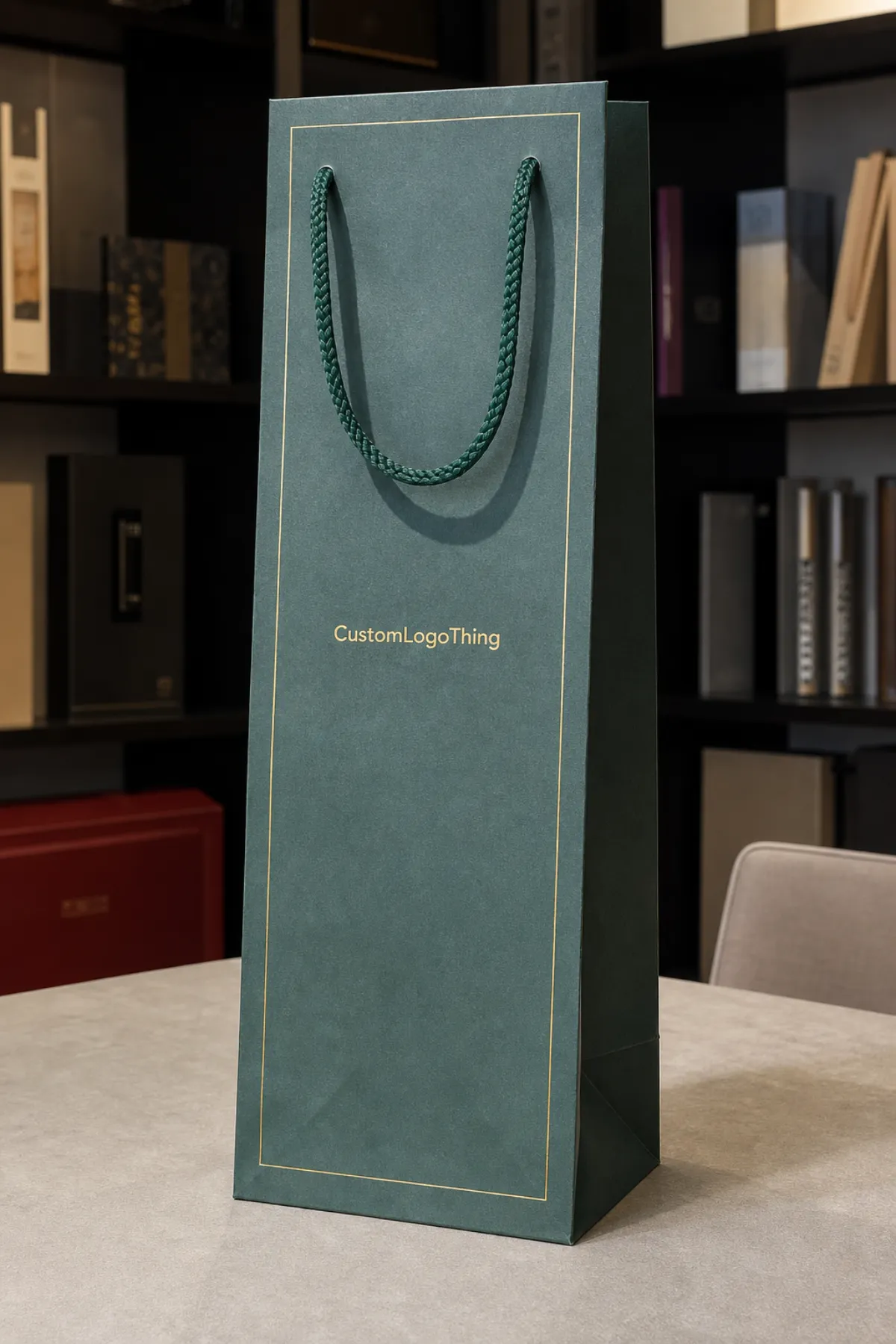
The checklist catches the problems a mockup cannot show. A flat proof may look perfect and still fail once a bottle is inside. It cannot tell you whether the base board flexes, whether the handle knots loosen under tension, or whether a foil mark cracks where the bag folds. Once production starts, those details are expensive to fix.
Think of the checklist as a practical filter, not a formality. It tests the bag as a finished object, not as artwork. Three questions matter most: does it fit, does it hold, and does it still look like the brand after it has been lifted, stacked, and shipped. If any one of those fails, the sample is not really approved.
Paper wine bags are less forgiving than many buyers expect. One weak crease can make a side panel bow. One weak adhesive line can make the bag lean. One paper stock that is too light can make a premium bottle gift feel cheap before the customer even opens it. That is not a design opinion. That is packaging behaving exactly as physics says it will.
Use the checklist to verify four things:
- Fit: The bottle should enter and exit without forcing the opening or rubbing the finish.
- Strength: Handles, seams, fold lines, and the bottom insert should survive normal carrying.
- Appearance: Print color, finish, and proportions should match the approved artwork.
- Transit readiness: Packed samples should stack cleanly and hold their shape in cartons.
That last point gets skipped too often. A bag can look good on a table and fall apart as soon as it is bundled, packed, and handled in bulk. If the order will move through a warehouse or parcel network, the sample should be judged in that condition, not just under bright light with no load.
Material claims deserve a check as well. If the paper is presented as FSC-certified or responsibly sourced, verify the documentation rather than trusting the label on the quote. The FSC framework is a useful reference point for buyers who need a cleaner sourcing trail.
A wine bag is judged under load. The empty version is just the dress rehearsal.
How the process and timeline usually run
A Sample Approval Checklist starts before the sample exists. First comes the spec intake: size, bottle type, board weight, handle style, finish, print method, quantity, and use case. Then comes the digital proof. That proof should show artwork placement, dieline lines, and any notes for embossing, foil, spot coating, reinforcement, or lamination.
The proof stage is usually quick, often 1 to 2 business days when the artwork is clean and the brief is specific. Physical samples take longer because they have to be built, checked, packed, and shipped. For a standard paper wine bag, 5 to 8 business days for fabrication is a common range. Transit adds a few more days if the sample is moving across regions or crossing customs.
Structural changes extend the timeline. So do specialty finishes. A different handle construction, a thicker board, or a revised gusset turns the sample into a construction test, not just a print test. That usually means another round. Buyers who act surprised by that are usually the same buyers who asked for changes after the first sample arrived.
Review should not sit with one person. Brand catches visual issues. Procurement catches cost drift. Operations sees packing and palletizing issues. Packaging design understands the dieline and print boundaries. Those groups notice different things, which is exactly why they should not be merged into a single vague comment thread.
A useful way to separate proof types:
- Digital proof: Best for copy, artwork placement, barcodes, and legal text.
- Physical sample: Best for structure, handle strength, feel, and finish.
- Approved reference sample: Best for reorders and quality comparisons later.
If the bags will ship in parcel networks or mixed freight, ask how similar packaging performs under distribution conditions that resemble ISTA or ASTM-style handling. No one needs a laboratory report for every order, but the construction should be judged against real handling, not fantasy handling where nothing ever gets dropped, compressed, or stacked.
Clear decisions shorten the process. A fixed bottle reference, one handle style, and one approved print method can cut out a revision round. The more the supplier has to guess, the more the timeline drifts.
Spec checks that decide fit, feel, and shelf appeal
This is where the checklist gets real. Fit, feel, and shelf appeal either line up here or they do not. Dimensions should be checked against the actual bottle or gift set, not only the spec sheet. A 750 ml bottle with a broad shoulder behaves differently from a slim bottle, and the difference shows up the moment someone lifts the bag.
Start with the dimensions that matter most:
- Width: Enough room for the bottle body without distorting the side walls.
- Gusset: Wide enough for stability, but not so wide that the bag looks oversized.
- Height: Tall enough for neck coverage and balanced presentation.
- Handle drop: Comfortable for the hand, usually about 90 to 140 mm depending on the build.
- Bottom board or insert: Sized to support the base without curling or bowing.
Material choice changes everything. Art paper in the 157 gsm to 250 gsm range is common for a cleaner print surface and a more polished finish. Kraft-based builds often feel sturdier and give a more natural look, though the print result is different and sometimes less crisp. For premium wine packaging, that tradeoff matters. A bag can look elegant and still feel weak if the paper weight is too light for the load.
Handle construction deserves the same attention. Cotton rope, paper rope, ribbon, twisted paper handles, and die-cut grips each behave differently under weight. Rope handles feel premium and usually carry better. Die-cut handles keep the silhouette clean but need stronger board design around the cut. The right answer depends on the brand position and the bottle weight, not on whichever option happens to be cheapest that week.
Print quality is another place where “close enough” is not good enough. Wine packaging tends to use deep blacks, saturated reds, metallics, and clean solids. Foil needs alignment. Embossing should raise the design without crushing the paper. Lamination should not flatten the texture so much that the bag feels plastic. If the color is off, ask for the Pantone target and the measured delta, not a soft verbal shrug.
Useful sample checks at this stage:
- Confirm the bottle enters without scraping the shoulder or neck.
- Lift the loaded bag by the handles for 10 to 15 seconds.
- Inspect the base for bowing, cracking, or a loose insert.
- Check logo placement from arm’s length and shelf distance.
- Stack a few loaded bags to see whether handles tangle or print rubs.
Wine bags sit in the same family as other premium product packaging decisions. They are part of the brand experience, not an afterthought. If the rest of the packaging looks considered and the bag does not, the whole set feels uneven.
Cost, pricing, MOQ, and quote drivers to compare
The checklist should help buyers read a quote correctly. Sample cost and production cost are not the same thing. A low-cost sample can still lead to a higher production price once finishes, handles, or packing details are finalized. Cheap quote first. Expensive surprise later. That pattern is older than most procurement systems.
Typical drivers include quantity, paper thickness, handle type, finish, inserts, print coverage, and packaging format. A physical sample might run from about $35 to $150 per design depending on complexity and shipping. Production pricing is broader. A simple printed wine bag can land around $0.18 to $0.28 per unit at 5,000 pieces, while heavier stock, custom rope handles, foil, or embossing can push the cost higher. Exact pricing depends on artwork coverage, labor, local setup, and whether freight is included.
| Item | Typical range | What moves the price |
|---|---|---|
| Digital proof | Often included or very low cost | Artwork cleanup, dieline changes, number of revisions |
| Physical sample | $35-$150+ | Material, structure, finishes, shipping method |
| Printed production bag | $0.18-$0.50 per unit | Quantity, board weight, handle type, print coverage |
| Premium finish add-on | Varies by spec | Foil, embossing, lamination, spot coating, custom inserts |
MOQ changes the math. A 2,000-piece order usually carries a higher unit price than a 10,000-piece order because setup is spread across fewer bags. The larger run creates inventory risk, though, so the cheapest unit price is not automatically the smartest purchase. The right answer depends on sell-through speed, seasonality, and reorder frequency.
Read quotes line by line instead of staring at the headline number.
- Tooling: Are dies, plates, or setup charges included?
- Freight: Is shipping included or added later?
- Revisions: How many proof rounds are covered?
- Packaging: Are the bags bulk packed, carton packed, or retail bundled?
- Compliance: Are material claims and quality checks documented?
If you are comparing structures across more than one packaging line, the broader Custom Packaging Products page is useful for checking related formats. Wine bags do not live in isolation. They usually support tasting kits, seasonal sets, gift bundles, or other retail packaging that has to feel like part of the same system.
A lower quote is not always a better quote. If it hides revision charges, slower lead times, or poor print consistency, the real cost shows up later in rework and rejected stock. That part never makes the sales pitch, oddly enough.
Step-by-step approval workflow for artwork and construction
A good workflow prevents the checklist from turning into a pile of contradictory comments. Sequence matters. Review the spec sheet and dieline first. Approve the artwork proof next. Then inspect the physical sample. Final sign-off should happen only after the bag passes the structural and visual checks together.
That order saves money. If artwork is approved on the wrong structure, corrections get expensive fast. Move the handle holes and the logo may need to shift. Change the gusset and the side panels may need to be rebalanced. Print the bag before those decisions are settled and every “small change” becomes a scheduled delay.
A practical approval flow looks like this:
- Match the spec sheet to the intended bottle or set.
- Approve copy, barcode, and legal text on the digital proof.
- Review the physical sample for fit, finish, and strength.
- Photograph the sample from front, side, top, and loaded views.
- Write down every issue before sending revisions back.
- Request a revised sample or written confirmation of the final spec.
- Sign off only after the critical checks pass.
Measure the sample with the product inside it. That sounds obvious until someone approves an empty bag because it looked fine on the table. Check bottle clearance, seam integrity, handle comfort, fold accuracy, and whether the bag stays upright after being lifted and set down several times. Visual judgment alone is not enough.
A simple pass/fail grid helps keep the review objective:
- Logo clarity: pass if edges are clean and text is readable at normal distance.
- Color tolerance: pass if the shade stays within the agreed target.
- Copy accuracy: pass if every word matches the approved file.
- Barcode legibility: pass if it scans cleanly on a test device.
- Regulatory text: pass if all required wording is present and complete.
Documentation matters more than people want to admit. Marked-up PDFs, annotated photos, and a short decision log make future reorders easier. They also give everyone the same reference if the final batch drifts from the approved sample. That is not bureaucracy. That is how repeatable packaging programs stay repeatable.
Keep one approved sample and one written spec on file. If the brand uses other printed carriers, cartons, or gift packaging, that reference becomes the baseline for matching the rest of the line. Consistency is less glamorous than design, but it is what keeps the program from slowly unraveling.
Common sample mistakes that delay wine bag orders
Most delays come from very ordinary mistakes. The biggest one is approving from a mockup mindset. A render can make a bag look taller, cleaner, and more premium than the actual build. Once a bottle goes in, the truth appears immediately. There is no hiding place in paper and glue.
Another common issue is vague feedback. Comments like “make it pop” or “fix the size” are useless to production. Better feedback sounds like this: widen the gusset by 8 mm, lower the logo by 12 mm, increase handle reinforcement, or darken the ink to match the approved Pantone reference. Measured feedback shortens the cycle. Vague feedback stretches it.
Late artwork changes are another predictable problem. Missing logo files, undecided handle choices, and unapproved copy can push a project back by a full revision round. If the sample has already been cut, the cost of indecision goes up. Fast decisions are useful. Fast and careless is just expensive.
Operations review gets skipped more often than it should. A bag may look good and still fail in the warehouse because it does not pack efficiently, stack cleanly, or fit the carton count. That is a packaging problem, not just a design problem. If the bag causes inefficiency later, the sample review was incomplete.
The delays I see most often:
- Testing only the empty bag instead of loading the bottle.
- Changing artwork after approval and expecting no timeline impact.
- Leaving the handle choice undecided until the end.
- Ignoring freight and packing format during quote review.
- Approving by feel instead of by measurement and photo record.
One detail gets overlooked repeatedly: people obsess over print color and then barely test handle strength. That is backwards. The customer touches the handle first. If the bag feels weak in hand, the rest of the print work has a harder job to do.
Expert tips for a faster final sign-off
If the goal is a faster approval, pick one final decision maker. Input should come from brand, procurement, and operations, but one person should own the yes or no. Otherwise, comments multiply, opinions start to drift, and the sample sits in limbo while everyone waits for someone else to blink first.
Ask the supplier for a pre-production checklist that repeats the exact approved spec. It should list dimensions, paper stock, handle type, print method, finish, carton count, and any special instructions. That document reduces ambiguity and gives both sides the same reference if something changes later.
Keep a physical approved sample on file. Label it clearly. Store it with the artwork reference and the signed spec sheet. That sample becomes the benchmark for reorder checks, vendor comparisons, and quality disputes. It is cheap insurance, which is rare and refreshing in packaging.
Set a reorder trigger before the first production run ships. If sell-through reaches a certain threshold, if the brand changes bottle shape, or if the bag moves into a new season, run the checklist again. Reorders are where standards drift, especially when someone assumes the old spec is still current.
Fast sign-off habits that actually help:
- Use one reviewer for the final decision and collect comments before the meeting.
- Require annotated photos for every requested change.
- Lock the bottle or SKU reference before the first sample is made.
- Write the acceptable color tolerance and print placement window into the record.
- Keep freight, packing format, and lead time in the same approval note.
Speed is not haste. A tight process is fast because it removes guesswork early. The best-run projects are often the least exciting ones, which is exactly what buyers should want. No surprises. No hidden rework. No emergency redraw because the handle failed after the first lift.
Once the sample passes, sign the checklist in writing, note the reorder trigger, confirm the lead time, and keep the approved reference close. That is the cleanest route from sample to production without losing control of the spec.
FAQ
How many rounds are normal in a custom wine paper bags sample approval checklist?
One initial sample plus one revision round is common if artwork, size, or reinforcement needs adjustment. Structural changes usually take longer than print-only edits because they affect the dieline, the material use, and sometimes the packing method.
What measurements should I verify on a wine paper bag sample?
Check width, gusset, height, handle drop, bottom board fit, and the actual bottle clearance inside the bag. Measure the sample with the product you will ship, not with an empty bag, because loaded behavior is what matters most.
How do I compare a sample approval quote for custom wine paper bags?
Compare board weight, handle type, print colors, finish options, freight, and tooling, not just unit price. A quote that looks cheaper can become more expensive once revision fees, packing, or shipping are added.
What is a realistic timeline for sample approval and production?
Digital proofing is usually the fastest step, while physical samples and revision cycles take longer because they require fabrication and shipping. Complex finishes, structural changes, or multiple stakeholder reviews can extend the timeline quickly.
What should I do if the sample is close but not perfect?
Record the issues in writing, attach photos, and separate cosmetic concerns from functional defects. Do not approve until the critical measurements, print accuracy, and handling performance meet your standards; otherwise, revise it before signing off the checklist.

