Premium Cuffed Beanies Factory Quote for Bulk Orders
Premium Cuffed Beanies Factory Quote: What Buyers Get
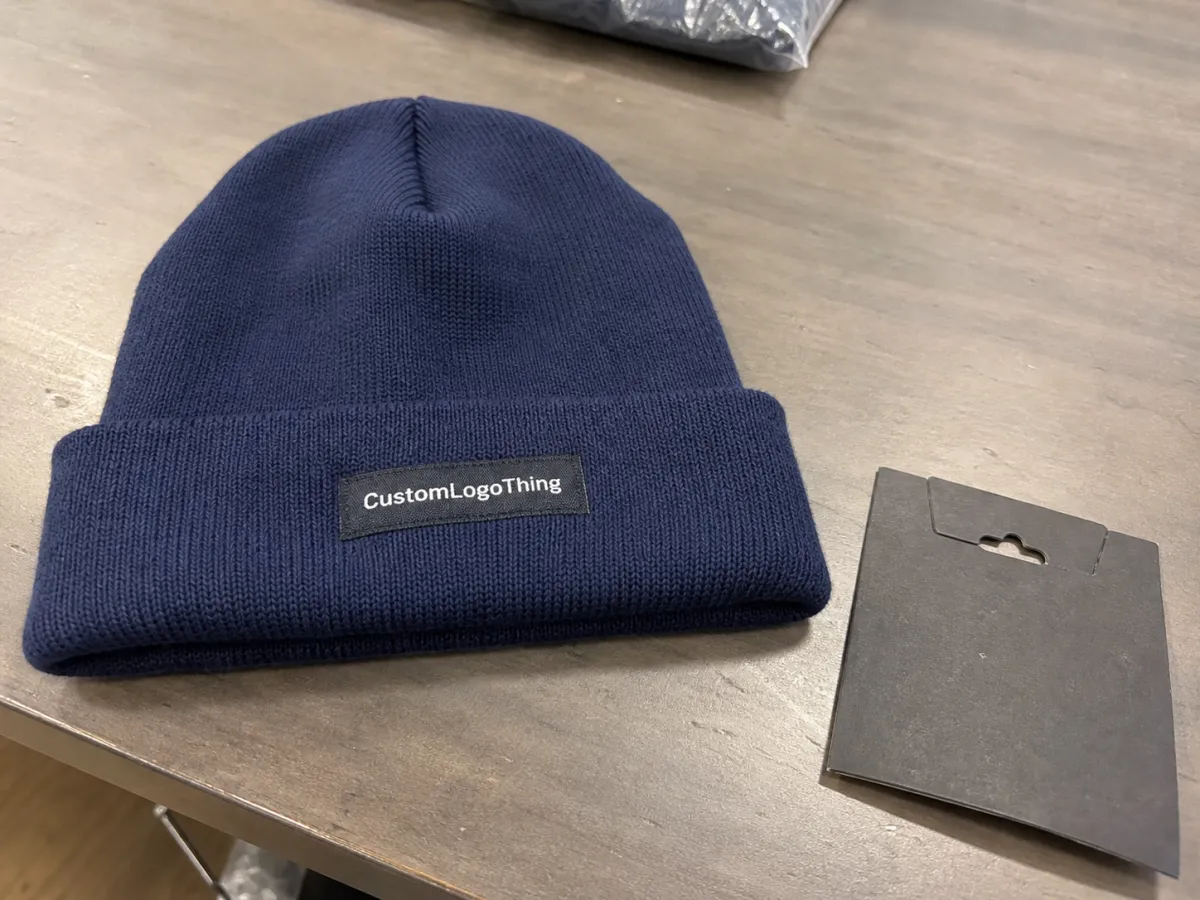
A beanie can cost less than a coffee. Then one weak cuff, crooked patch, or loose crown seam makes the whole branded apparel program look cheap. Buyers requesting a premium cuffed Beanies Factory Quote need more than a neat unit price. They need the build behind the number: yarn, knit weight, cuff height, decoration method, packing, freight basis, and delivery assumptions.
That is the difference between buying a commodity cap and running a controlled bulk beanie order. Procurement needs full landed cost. Marketing needs confidence that the finished hat will look retail-ready in an employee kit, campus store, winter event bag, or customer gift box.
Cuffed beanies work because they keep the order simple. One-size fit reduces SKU chaos. The cuff gives a stable logo zone, usually about 2.5 to 3.5 inches high. Cold-weather use also gives the brand more life than a one-day giveaway. A pen disappears into a drawer. A warm knit hat gets worn, photographed, packed for trips, and borrowed.
Factory-direct quoting changes the pace, too. Instead of waiting for a reseller to relay basic questions, buyers can get clearer answers on yarn availability, color matching, logo limits, carton counts, and production capacity. Fewer layers can mean fewer markups. Not always. Often enough to matter on 1,000, 5,000, or 20,000 units.
A useful quote does not just say “$3.40 each.” It says what the price includes, what it excludes, what can change it, and which assumptions the factory used.
Custom Logo Things helps turn a marketing idea into factory-ready specifications. That is how a quote becomes a buying tool instead of a guess wearing a spreadsheet costume.
Product Details That Separate Premium Cuffed Beanies From Budget Stock
“Premium” should mean something. In factory terms, it usually points to denser knit construction, balanced stretch recovery, clean seam finishing, a cuff that holds its fold, and decoration that survives folding, packing, shipping, and repeat wear.
Acrylic remains the workhorse for custom knit beanies. It is warm, color-friendly, durable enough for promotional use, and cost-efficient at volume. Recycled polyester can support sustainability goals, especially when buyers want lower virgin plastic content. Wool blends add warmth and a better hand feel, but they raise cost and may require more careful labeling. Cotton blends breathe well, though they often do not snap back as firmly as acrylic rib knit. Performance fibers can help with moisture management, but the premium only makes sense if the use case actually demands it.
Cuff construction is not a cosmetic footnote. A single cuff can feel lighter and cleaner. A double cuff gives more structure and warmth. Standard cuff heights often sit around 2.5 to 3.5 inches, but logo size should drive the final decision. Put a 2.75-inch patch on a 2.5-inch cuff and the hat looks crowded before the first carton leaves the factory.
Fit profile matters as much as yarn. A classic snug fit suits corporate gifts and uniforms. A slouch fit feels more casual. A fisherman-style beanie sits shorter above the ears and has a sharper retail look. Oversized streetwear silhouettes need more material and tighter control over crown shape. Youth sizing should be specified separately, especially if the product may fall under child product requirements.
Decoration sets the visual tone. Embroidery is familiar and works well for corporate programs. Woven patches create a retail merchandise feel. Leatherette patches suit outdoor, lodge, coffee, brewery, and craft brands. PVC patches handle bold shapes and rugged positioning. Woven labels are quieter and can be economical at higher quantities.
Packaging affects presentation and receiving accuracy. Ask about individual polybags, hang tags, barcode stickers, size stickers, carton marks, inner pack counts of 25 or 50 units, and retail display readiness. If the beanies are going into employee kits, subscription boxes, campus stores, or event packs, packing is part of the product. Pretending otherwise is how teams end up repacking hats on a warehouse floor.
Digital mockups help, but knit texture changes logo appearance in real life. Buyers should request physical samples, stitch-outs, patch proofs, or photos of comparable production before approving a high-visibility order.
Specifications to Confirm Before the Factory Prices the Order
Vague requests create unstable pricing. “Premium black beanie with logo” can describe dozens of cost structures. Is it 100% acrylic or a wool blend? Is the logo a 6,000-stitch embroidery or a debossed leatherette patch? Is each unit individually bagged with a hang tag? Are cartons going to a warehouse with exact label requirements?
Before asking for a factory quote, confirm the core inputs:
- Target quantity and acceptable overage or underage tolerance
- Yarn type, knit gauge, beanie weight, and fit profile
- Beanie color, including stock color or custom-dyed yarn preference
- Cuff height, crown shape, and finished measurements
- Logo size, artwork format, decoration method, and color references
- Packaging requirements, carton marks, destination country, and delivery deadline
For a premium cuffed beanie, a mid-to-heavy rib knit usually performs better than a thin promotional blank. Many buyers choose a stable 1x1 or 2x2 rib structure, a cuff tall enough for a visible front logo, and vector artwork supplied as AI, EPS, or PDF. Raster files can slow the quote because they may need cleanup before digitizing, weaving, molding, or patch production.
Color decisions need discipline. Stock yarn colors lower cost and shorten lead time. Custom-dyed yarn gives stronger brand control, but it can require a higher MOQ, lab dip approval, and extra production time. Pantone references help, although yarn, thread, PVC, and leatherette rarely match a coated paper chip perfectly. Material surface, dye lot, and light source all change the read.
Compliance is another quiet cost area. Fiber content labels, country-of-origin labels, care labels, and import documentation may be required. If the beanie is intended for children, raise that early because testing and labeling expectations can change. For packaging and transport discipline, buyers can review standards from ISTA, especially if cartons will move through parcel networks or long distribution chains.
A quote checklist keeps purchasing, marketing, and operations aligned. It also prevents the classic late-stage problem: the sample is approved, then someone asks for retail hang tags, a different cuff height, or a larger logo. That is how re-quotes happen. Nobody enjoys them.
Pricing, MOQ, and Unit Cost Variables Buyers Should Expect
Premium cuffed beanie pricing is not one number. It is a stack: yarn, knitting labor, decoration, setup, packaging, inspection, freight, duty, payment terms, and order complexity. A serious Premium Cuffed Beanies factory quote should expose those assumptions clearly enough that two suppliers can be compared on the same basis.
MOQ depends on the build. Stock yarn colors and common embroidery usually allow more flexibility. Custom-dyed yarn, specialty patches, private labels, or retail packaging often push minimums higher. For rough planning, stock-style programs may start in the hundreds. Fully custom knit or custom color programs often become more efficient at 1,000 pieces and above. Exact thresholds depend on yarn availability, decoration setup, and machine scheduling.
| Quote Variable | Typical Cost Effect | Buyer Checkpoint |
|---|---|---|
| 100% acrylic stock yarn | Usually lowest cost and shorter lead time | Confirm color availability before sampling |
| Recycled polyester or wool blend | Higher material cost, stronger positioning | Ask for fiber content documentation and care label copy |
| Embroidery | Cost rises with stitch count, size, and thread colors | Request a stitch count estimate before artwork approval |
| Woven or leatherette patch | May include setup, backing, or minimum patch run costs | Confirm patch size, edge finish, and attachment method |
| Individual polybag plus hang tag | Adds labor and material cost per unit | Specify barcode, sticker, and carton pack requirements |
Decoration behaves differently by method. Embroidery can be efficient on small and repeat runs, but a dense 12,000-stitch logo costs more than a simple 4,000-stitch mark. Patches can look more premium, although molds, woven label setup, backing materials, and edge finishing may affect the first order more than repeat orders. Woven labels often become attractive at higher volumes because batching improves efficiency.
Larger quantities reduce unit cost by spreading machine setup, digitizing, artwork review, packing setup, and inspection time across more units. Carton consolidation can reduce freight per piece as well. The difference can be real. A buyer comparing 500, 1,000, and 3,000 pieces may find that the middle tier is the better budget fit, even if the original request was smaller.
Ask direct questions about hidden costs: sample fees, artwork digitizing, rush charges, carton labeling, third-party inspection, freight, tariff exposure, and payment transaction fees. A quote that ignores these items may look cheaper for ten minutes. Then procurement rebuilds the number and the “savings” vanish.
Tiered pricing helps. A useful quote might show 500, 1,000, 2,500, and 5,000 units on the same specification. Now the buyer can model the order instead of staring at one floating unit cost.
Process and Timeline From Artwork to Finished Beanies
The production path is predictable when decisions are controlled early: quote request, specification confirmation, artwork review, digital mockup, sample or pre-production proof, buyer approval, bulk knitting, decoration, finishing, inspection, packing, and shipment.
Timelines vary by build. Stock blank programs can move faster because the beanie body already exists or can be produced from available yarn. Custom yarn, custom dye, specialty patches, and multi-location decoration add time. As a planning range, sampling may take several business days to a few weeks depending on method and workload. Bulk production needs its own window after approval. Freight adds another layer: express courier for urgent smaller runs, air freight for higher-value deadlines, and sea freight for large orders where landed cost matters more than speed.
Most delays are not mysterious. They come from incomplete artwork, undecided yarn colors, late label requirements, changes after sample approval, vague delivery addresses, or missing compliance instructions. A factory cannot schedule production accurately while the buyer is still debating embroidery versus leatherette patch.
The sample stage should be treated like an inspection, not a polite formality. Check fit, cuff height, logo position, color, stretch recovery, crown seam, odor, label placement, and packaging. Fold and unfold it. Stretch the cuff gently. Use a head form if one is available. A logo that looks centered on a flat table may shift visually when worn.
Inline and final inspection checkpoints should include yarn consistency, finished measurements, cuff alignment, logo placement tolerance, loose threads, decoration pull resistance, packaging count, carton labeling, and random checks across colors or sizes. If the program uses retail packaging, confirm that hang tags and stickers match the receiving plan.
Build a decision calendar, not just a delivery date. Factory lead time usually starts after artwork, sample, color, packaging, payment terms, and shipping instructions are approved. That one rule prevents a surprising number of schedule fights.
Quality Control Risks That Make Cheap Beanie Quotes Expensive
The cheapest quote can become the most expensive if 5% of units arrive with tilted logos, weak cuffs, inconsistent sizing, or cartons that a warehouse cannot identify. On a 5,000-piece order, that is 250 problem units before anyone counts replacement labor, repacking, freight claims, or missed event deadlines.
Common cuffed beanie defects include uneven ribbing, loose crown seams, shade variation between dye lots, puckered embroidery, misaligned patches, weak adhesive backing, loose threads, and stretched cuffs caused by over-compressed packing. Small problems become visible because the logo sits on the cuff, exactly where people look first.
Ribbed knit fabric is harder to decorate than flat woven fabric. Stretch changes alignment. Texture changes edge clarity. A millimeter-level placement tolerance that sounds simple on paper may need a practical allowance on a soft knit surface. Logo size, cuff tension, patch stiffness, and inspection method all affect the result.
Factories reduce risk through approved production samples, material checks, decoration test runs, inline inspection, final AQL-style review, carton count verification, and photo documentation before shipment. Buyers should ask what acceptance criteria will be used. Measurements, logo position, acceptable shade variation, packing method, and remake policy should be stated before bulk production starts.
Packaging failures can be just as costly as sewing defects. Over-compressed cartons can flatten cuffs. Mixed colors in one carton can create fulfillment errors. Missing carton marks can slow receiving at a distribution center. For paper-based tags or cartons, buyers with sustainability goals may want to review FSC information at FSC and request certified materials where appropriate.
Brand economics are blunt. A beanie may have a low unit cost, but a failed employee kit, influencer drop, outdoor event, or retail launch carries a much higher reputational cost. Quality control is not decoration polish. It is risk management.
Factory Capabilities to Verify Before You Place the Order
A capable supplier answers capability questions directly. Vague claims about “best quality” and “fast service” do not help a buyer approve a purchase order. Specifics do.
Verify knitting capacity, yarn sourcing, embroidery equipment, patch production partners, custom label handling, packing lines, export documentation, and experience with similar bulk beanie programs. Ask whether the factory has handled the same decoration style at the target quantity. A 300-piece local run and a 10,000-piece multi-carton shipment are different operating problems.
Evidence can include material swatches, stitch-out samples, patch proofs, comparable production photos, short production videos, packing photos, inspection reports, and written assumptions in the quote sheet. References may help, but product control matters more than broad promotional product claims. A factory that understands cuff tension, yarn recovery, and logo distortion is more useful than one that casually sells every branded item under the sun.
Communication standards matter. A clean quote should show revision dates, named assumptions, sample timing, bulk lead time, payment terms, packing details, and freight basis. If artwork or quantity changes, the revised premium cuffed Beanies Factory Quote should make the cost movement visible.
Custom Logo Things supports buyers by turning campaign goals into factory instructions. Employee gifting may prioritize comfort and consistent fit. Retail merchandise may need cleaner hang tags, better patch quality, and tighter carton presentation. Outdoor events may put warmth, cuff stability, and delivery certainty at the top of the list.
Watch the warning signs: refusal to state material details, no sample process, unclear MOQ logic, missing packaging information, or freight estimates that look unrealistically low. Cheap freight that later doubles is not savings. It is delayed disclosure.
How to Request a Precise Bulk Beanie Quote
The fastest way to get accurate pricing is to send a complete request the first time. Gather the information a factory actually needs to cost the order:
- Target quantity, plus any tier quantities you want compared
- Delivery location, deadline, and preferred shipping method if known
- Beanie color, yarn preference, fit profile, and cuff height
- Logo artwork in vector format, with Pantone or thread color references
- Preferred decoration method: embroidery, woven patch, leatherette patch, PVC patch, or label
- Packaging needs, including polybags, hang tags, stickers, carton marks, and inner pack counts
- Compliance requirements, sample needs, and any warehouse routing instructions
Use case helps. Employee gifts, retail merchandise, outdoor events, campus stores, winter promotions, and subscription boxes do not have identical priorities. A beanie going into a retail display may need cleaner hang tags and barcode stickers. A beanie for a field crew may need stronger warmth, darker colors, and decoration that handles abrasion.
Reference photos are useful, but they are not specifications. A photo cannot confirm yarn composition, knit gauge, cuff height, patch backing, carton count, or country-of-origin labeling. Dimensions and material details still need to be written down.
Compare quotes fairly by normalizing the same yarn, weight, cuff height, decoration size, packaging, and shipping basis. If one supplier includes individual polybags and air freight while another quotes bulk packing and ex-works terms, the cheaper unit price may not be cheaper at all.
For a structured estimate, send your artwork, quantity, delivery location, and preferred style through Contact Us. If you are undecided between embroidery and patches, ask Custom Logo Things to price both options side by side. That single comparison often clarifies the right path faster than another internal meeting.
To receive a reliable premium cuffed beanies factory quote, submit complete specifications and ask for transparent pricing assumptions before approving samples. Facts first. Then the order moves faster.
FAQ
What information do I need for a premium cuffed beanie factory quote?
Send quantity, beanie color, yarn preference, cuff height, logo artwork, decoration method, packaging needs, destination, deadline, and whether you need a physical sample. If materials or decoration are undecided, request options side by side so the quote shows cost and lead time differences.
What is the typical MOQ for custom premium cuffed beanies?
MOQ depends on stock yarn availability, custom-dyed yarn, embroidery, patches, labels, and retail packaging. Stock-color programs usually allow more flexibility. Custom yarn, specialty patches, and private-label packaging often require higher minimums.
How does decoration choice affect premium cuffed beanie pricing?
Embroidery cost is influenced by stitch count, size, and thread colors. Patches depend on material, size, backing, edge finish, and setup requirements. A woven or leatherette patch may look more retail-ready, while embroidery can be efficient for corporate logos and repeat programs.
How long does bulk cuffed beanie production take after quote approval?
Timeline depends on sample approval, yarn availability, decoration complexity, order size, inspection requirements, and shipping method. Production starts fastest when artwork, color references, packaging instructions, and payment terms are approved without revision.
Can I get a sample before approving a factory order?
Yes. A sample or pre-production proof is recommended for premium cuffed beanies because knit texture affects fit, cuff shape, and logo appearance. Use the sample to check measurements, stretch, logo placement, color, seam quality, label placement, and packaging before bulk production. To start that process, send your project details through Contact Us.


