Custom Winter Beanies Factory Quote Guide for Buyers is not glamorous reading, but it is where profit gets protected or quietly leaked out of the order. The custom winter Beanies Factory Quote checklist matters because the lowest number in an inbox often leaves out labeling, packing, sampling, or the actual production spec, and those missing pieces have a habit of turning up on a later invoice.
I have seen this happen more than once on seasonal programs. A buyer thinks they saved a few cents on the unit price, then freight, embroidery setup, carton marking, and bagging get added back in. The quote did not get cheaper; it just got incomplete. That is a big difference, and it is usually the difference between a decent margin and a thin one.
Beanies are deceptively simple. One factory quotes a blank shell. Another prices a custom knit, cuff branding, woven labels, and individual polybags. Both can sound fair until you put them on the same line sheet. Retail programs, promo runs, and branded packaging all depend on the same thing: a quote that matches the product the buyer will actually receive. That is the job of the custom winter beanies factory quote checklist.
Use this guide as a working brief, not as theory. It helps you separate yarn choice, knit gauge, logo method, packaging, and lead time from the noise created by a low headline price that turns into setup fees, freight, and revision charges after the fact. If a factory cannot quote the same spec twice, that is a warning sign. If it can, you are probably dealing with someone who knows production instead of just sales.
"A quote only helps when it shows what is included, what is excluded, and what will quietly cost more later."
Custom Winter Beanies Factory Quote Checklist: What Buyers Miss First
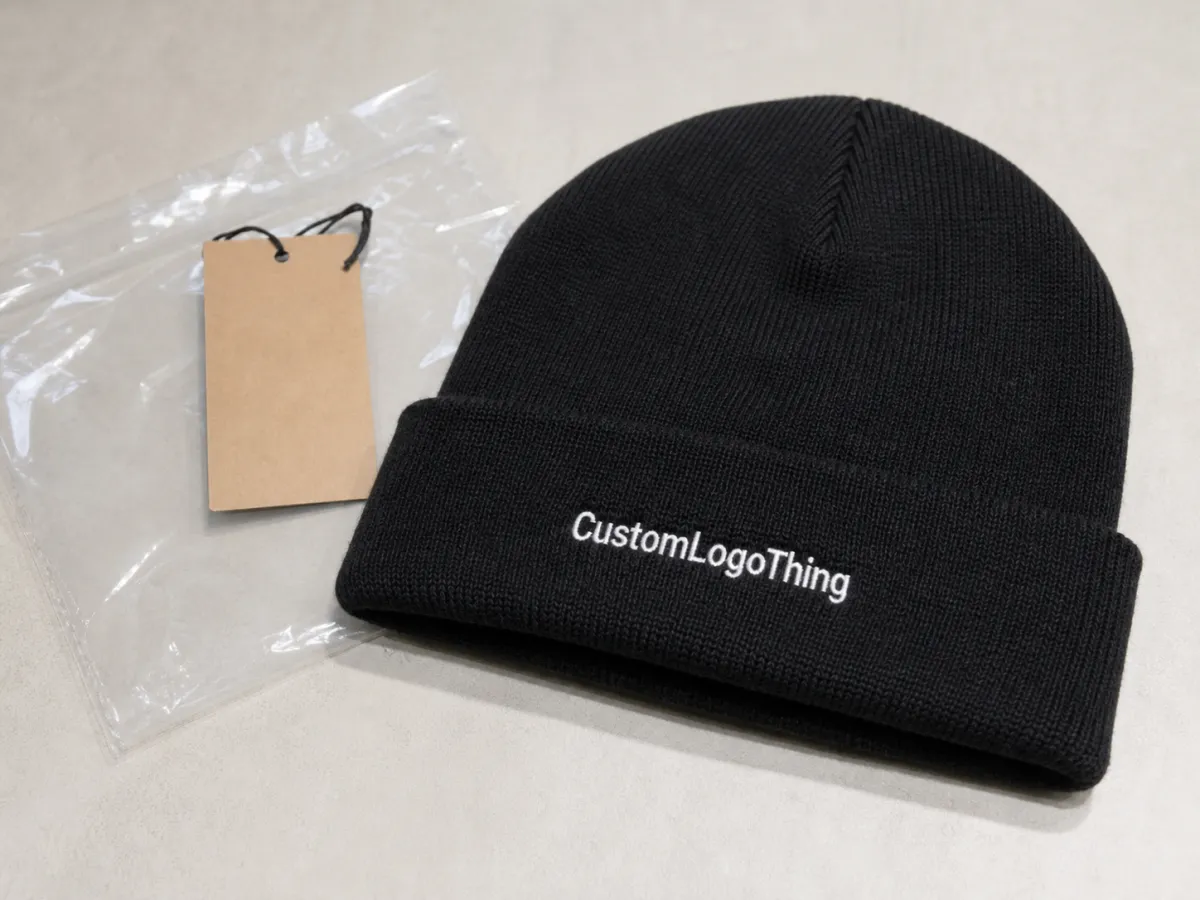
The first mistake is easy to make. Buyers compare the cheapest quote against the most complete quote and assume the gap is savings. It usually is not. A factory can make a quote look lean by leaving out embroidery setup, woven labels, carton marks, polybags, or shipping from the factory floor to the port. That is delayed math, not savings. The custom winter beanies factory quote checklist exists to catch that before the order gets locked.
Beanies create quote traps because the product appears basic. It is not. A cuffed beanie with a small logo may need a different knit program than a slouchy beanie with an all-over jacquard pattern. One supplier may be pricing a plain acrylic shell. Another may be pricing a custom knit beanie with a folded cuff, size label, branded hang tag, and individual retail bag. Those are not comparable offers, even if the line items sound close.
A factory cannot quote accurately if the spec is vague. If you do not state cuff height, logo width, yarn type, color code, or whether the beanie ships folded or open, the quote becomes guesswork. Guesswork is how a buyer ends up approving the wrong sample because the first round looked close enough. The custom winter beanies factory quote checklist is there to stop that pattern before it starts.
Picture a standard scenario. A buyer gets one quote at $2.40 and another at $3.10. The lower number looks better until the second factory includes individual polybags, woven care labels, embroidery setup, and carton packing. The first factory excluded all of it. Once the missing extras are added, the cheap option stops being cheap. It was only incomplete.
I once reviewed three winter accessory quotes for a retail launch where the buyer was ready to pick the lowest bid. The low quote looked tidy on paper, but it left out hang tags and the pre-pack count. When those were added, the "winner" jumped almost 18 percent. That kind of surprise is why the checklist exists in the first place.
Before comparing numbers, ask one blunt question: what product is this quote actually pricing? A blank shell, a custom knitted beanie, or a retail-ready item with branded packaging? That one question clears more confusion than a polished sales email ever will.
Use these checks before you move forward:
- Material clarity: acrylic, wool blend, recycled yarn, or performance knit.
- Knit detail: rib structure, gauge, double layer, jacquard, or knit-in logo.
- Branding method: embroidery, woven label, patch, or direct knit artwork.
- Packaging scope: retail polybag, size sticker, hang tag, barcode, carton pack.
- Commercial terms: sample fee, setup fee, MOQ, shipping term, and payment schedule.
The custom winter beanies factory quote checklist is not about making the process fancier. It is about stripping out noise so the real differences show up. If the factory cannot quote the same spec twice, that is a warning. If the factory can quote the same spec clearly, that is a sign you are dealing with someone who understands product packaging, not just a price sheet.
Custom Winter Beanies Factory Quote Checklist: Styles, Materials, and Construction
Start with style. Most buyers do not need ten beanie categories. They need the right one for the use case. The main options are Cuffed Knit Beanies, slouchy beanies, pom-pom beanies, and ribbed performance knits. A cuffed beanie is usually the safest choice for brand visibility because the cuff gives you a clean logo zone. Slouchy styles sell on fashion and comfort. Pom-pom beanies are more seasonal and more decorative. Performance knits suit activewear or outdoor programs where stretch recovery matters.
Material is the next major price driver. Acrylic still leads because it keeps cost under control, holds color well, and is easy to source. Wool blends add warmth and a better handfeel, but they also raise fiber cost and can extend lead times. Recycled yarns support sustainability claims, which matters if the beanie sits inside a larger brand story or an eco-focused retail launch. These materials are not interchangeable. A recycled yarn beanie with a soft hand and stable dye lot is a different order from a standard acrylic promo item.
Construction changes the quote more than many buyers expect. A 1x1 rib creates a tighter, more traditional look. A 2x2 rib usually feels thicker and can stretch differently. Double-layer construction adds warmth and weight, useful for winter retail but not always necessary for giveaway programs. Jacquard patterning lets you build graphics into the knit, though it raises setup complexity. Knit-in logos are the premium option if you want branding to feel integrated rather than applied later.
The custom winter beanies factory quote checklist should also cover branding method, because the logo choice changes both appearance and cost. Embroidery works well for small logos and can be efficient at moderate volumes. Woven labels suit clean edges and compact branding marks. Faux leather patches create a more premium look. PVC patches are durable, yet they do not fit every market. Direct knit artwork is the right fit when the graphic belongs inside the product, not pasted onto it after the fact.
Packaging matters as much as the knit. If the buyer needs retail packaging, the factory should know whether each beanie ships folded, rolled, or flat. Ask about individual polybags, fold size, hang tags, size labels, and barcode stickers. If your order sits inside a broader branded packaging program, maybe alongside Custom Printed Boxes, get that into the quote at the start. Product packaging is never just a final step. It affects labor, carton count, and freight weight.
Here is a practical way to think about the major style choices:
- Cuffed knit beanies: best for most logo programs, lowest risk, easy to brand.
- Slouchy beanies: more fashion-led, softer drape, less ideal for strict logo placement.
- Pom-pom beanies: strong seasonal appeal, slightly more assembly work.
- Ribbed performance knits: better stretch and recovery, useful for active or outdoor buyers.
From a buyer's point of view, the goal is not the fanciest construction. It is the one the factory can repeat without drift. If the first sample looks right but the bulk run shifts in cuff size, logo placement, or stretch recovery, margin and time both take a hit. The custom winter beanies factory quote checklist only works if style, material, and construction are written down with enough precision for production to follow them without improvisation.
Pricing, MOQ, and unit cost: how factory quotes are built
Beanie pricing comes from a few predictable inputs, and once those are clear the numbers stop looking mysterious. Yarn cost matters. Knit complexity matters. Logo method matters. Packaging matters. So does the number of times the order gets handled before it ships. Every extra step adds labor. The custom winter beanies factory quote checklist should force each of those costs into the open.
MOQ is where many buyers get confused. A factory may quote a sample-friendly minimum that looks attractive, while the real production price only works once the order reaches the factory's threshold. Sometimes the MOQ is per color. Sometimes it is per design. Sometimes it is per logo version. If you are ordering multiple colors or multiple graphics, you need to know whether the minimum applies to the full order or to each version separately. Otherwise, the quote only looks low.
Quantity bands shift unit price fast. A 300-piece order carries more setup cost per unit than a 1,000-piece order. A 3,000-piece order usually brings better labor efficiency, but only if the style repeats cleanly and the artwork stays stable. That is why the same beanie can swing from expensive to reasonable as volume changes. The custom winter beanies factory quote checklist gives you a way to understand that swing instead of arguing with it.
Do not mix product cost with landed cost. An FOB quote covers the product at the agreed shipping point, not the full cost in your warehouse. Freight, duties, taxes, banking fees, and destination charges can change the final picture fast. If you are quoting for retail, promotions, or any order where margin is tight, build a landed-cost view before you sign off. Otherwise, the unit price is just a vanity number.
Setup charges hide in the details too. Embroidery digitizing, woven label tooling, artwork revisions, new color matching, and rush production can all create extra cost after the first email. The cheapest quote often looks cheapest because it is the shortest one. That is not efficiency. That is missing information.
For buyers who need a practical baseline, these ranges are more realistic than the fake "starting at" numbers many suppliers toss around:
| Order band | Basic cuffed acrylic beanie | Wool blend beanie | Jacquard or knit-in logo | Typical notes |
|---|---|---|---|---|
| 300-500 pcs | $3.20-$5.10 | $4.10-$6.40 | $5.40-$8.20 | Higher setup cost per unit; packaging and embroidery may add more |
| 1,000-2,000 pcs | $2.10-$3.60 | $2.90-$4.80 | $4.10-$6.10 | Better labor efficiency; sample and approval timing matters |
| 3,000+ pcs | $1.65-$2.95 | $2.30-$4.10 | $3.50-$5.60 | Best for repeat programs; color matching and QC still need attention |
Those ranges are not magic. They move with stitch density, yarn quality, logo coverage, packaging scope, and how much the buyer asks for in one order. A beanie with a small embroidered logo and a simple polybag is one thing. A retail-ready beanie with custom packaging, hang tags, barcode labels, and coordinated branded packaging is another thing entirely.
One more point saves headaches: ask what is excluded. That list may sound boring, but it is where the real money hides. Woven labels, cartons, stitch corrections, and freight can turn a fair quote into an ugly one if they appear late. The custom winter beanies factory quote checklist helps you see those exclusions before they turn into approvals you cannot undo.
Process, timeline, and lead time from artwork to shipment
A clean beanie order follows a predictable workflow. It starts with the request, moves into spec review, then quote confirmation, sample approval, bulk production, final QC, packing, and shipment. That is the normal path. If the factory skips a step or the buyer rushes through one, quality tends to slip. The custom winter beanies factory quote checklist is useful because it makes each step visible before anyone presses send on the PO.
Sample time and bulk time are not the same thing. A sample can come back quickly because it is a single piece, often made with extra attention and no production pressure. Bulk production needs yarn availability, machine scheduling, packing labor, and final inspection. Buyers create trouble for themselves when they assume a fast sample means a fast factory schedule. It does not. It only means the sample room moved faster than the production line.
For a straightforward cuffed beanie, sample turnaround is often around 5-10 business days after artwork and spec approval. Bulk production commonly runs 12-25 business days after sample approval, depending on quantity, yarn availability, and logo method. If the order uses custom dye matching, jacquard patterning, or a special patch, add time. Those orders need more control, not more optimism.
Delays usually come from the same handful of issues: unclear artwork, slow sample feedback, color revisions, missing shipping details, and late decisions about packaging. If the buyer wants individual polybags, a barcode system, or retail-ready tags, those details should be part of the first quote, not the last comment in an email thread. The custom winter beanies factory quote checklist cuts out a lot of avoidable waiting because it forces the factory to price the real version of the product from day one.
There are steps you can compress and steps you should never skip. You can shorten sample rounds if the artwork is simple and the logo size is fixed. You can sometimes speed up packing if the carton plan is clear. You should not skip color approval on a branded order, and you should not skip a pre-production sample if the knit pattern is new. That is where many product packaging programs go sideways: the order was treated like a simple promo item when it was really a small custom production run.
Use this timeline as a working frame:
- Brief submission: 1 day to send specs, artwork, and target quantities.
- Quote review: 1-3 business days if the specs are clean.
- Sample stage: 5-10 business days for standard builds, longer for special yarns.
- Bulk production: 12-25 business days after sample approval.
- Final inspection and packing: 2-5 business days depending on order size.
- Transit: depends on shipping method and destination.
If you are buying for a retail launch, give the factory a real deadline, not a wish. A firm date helps everyone price urgency honestly. The custom winter beanies factory quote checklist should include that date, because lead time is part of the quote whether the supplier writes it down or not.
Quality checkpoints that protect your margin
Quality is where many beanie orders either protect margin or quietly destroy it. A unit that looks fine in a photo can still fail once it reaches a retailer or distributor. The checks that matter most are stitch count, seam finish, stretch recovery, color consistency, and logo placement. If those five items are right, most of the order risk drops fast. The custom winter beanies factory quote checklist should treat quality as a quote item, not a post-order hope.
Pilling is one of the most common complaints on lower-grade yarns. Loose threads and uneven cuffs are close behind. Those are not cosmetic annoyances when the product is meant for resale. They turn into returns, markdowns, or a brand that looks careless on the shelf. If the beanie feels weak in hand, it will not improve in a store environment. Buyers learn that lesson quickly.
Sample inspection should be physical, not just visual. Stretch the cuff. Measure the length. Check the logo scale. Turn the beanie inside out and look at the seam finish. Confirm that the cuff returns to shape after a few stretches. If you are using a patch, check the edges and the attachment points. If the order uses a woven label, make sure it sits flat and does not curl or twist after handling. The custom winter beanies factory quote checklist is the right place to define those expectations, because once bulk starts, the factory will build to the approved sample, not to an unspoken preference.
Packaging QC matters too. Confirm size labels, barcode placement, carton counts, and whether the beanies are packed for retail or packed for redistribution. If the buyer needs branded packaging, the packaging design should be written into the order, not improvised after the sample is approved. A good beanie stuffed into a bad pack-out can still look sloppy on arrival. Package branding is part of the product experience, whether the sales team likes that or not.
For buyers who care about shipping damage, carton quality should not be guessed. Shipping tests are a smart request for larger programs, especially if the cartons move through multiple touchpoints. Industry groups like ISTA publish test logic for distribution packaging, and that matters if your cartons need to survive long transit or rough handling. If the beanies are packed with paper tags, inserts, or printed cartons, asking for FSC-certified paper materials can support a cleaner retail story without turning the order into a sustainability brochure nobody reads.
Here is a short quality checklist that is worth using every time:
- Stitch count: consistent across the sample and bulk pieces.
- Seam finish: flat, secure, and not scratchy inside.
- Stretch recovery: cuff returns after repeated pulls.
- Color consistency: no visible shade drift between pieces.
- Logo placement: centered, level, and scaled as approved.
- Pack-out: correct labels, tags, barcode stickers, and carton counts.
If you ask for pre-production photos and final inspection photos, you buy yourself a lot of control. That does not replace a real sample, but it catches obvious problems before the shipment leaves the factory. For a buyer protecting margin, that is time well spent. The custom winter beanies factory quote checklist works best when it is tied to actual inspection points instead of generic "good quality" language that means nothing in production.
Why choose us for custom winter beanies
The value of working with Custom Logo Things is not mystery or hype. It is cleaner communication, better quote discipline, and fewer handoffs between the buyer and the people actually controlling the order. That matters because the fastest way to ruin a beanie order is to let sales, artwork, packaging, and production each interpret the spec a little differently. The custom winter beanies factory quote checklist keeps those interpretations aligned.
What buyers usually want is straightforward: stable yarn sourcing, repeatable knit quality, and a sample that matches the bulk order closely enough that the job does not need to be renegotiated halfway through. That sounds obvious, yet it is exactly where many suppliers stumble. A good source partner should translate the logo file, confirm the cuff size, flag weak artwork, and tell you whether a packaging idea will raise cost or delay the shipment. That is practical support, not a sales trick.
In-house or tightly managed production also helps with color control and embroidery alignment. If a brand color has to sit within a narrow tolerance, the factory should say so early. If the logo is too small for clean stitching, the artwork should get adjusted before the sample stage wastes time. Good sourcing is not about saying yes to everything. It is about protecting the approved result. That is the part most buyers actually pay for, even if nobody says it out loud.
We also help with packaging recommendations that fit the target market. A promotion order may only need a simple polybag and size sticker. A retail order may need a hang tag, barcode label, and pack-out that fits the shelf. If the order is part of a wider brand rollout, we can talk through branded packaging, retail packaging, and how the beanies should sit next to other product packaging items without making the program look pieced together.
We cannot promise to be the lowest quote on every order, and that is probably a good thing to say plainly. The lowest price is sometimes the wrong place to save money. What we do aim for is a quote that matches the spec, a sample that matches the quote, and a production run that matches the sample. That is the standard worth measuring against.
There is no magic here. The job is to ship the same beanie the buyer approved. Not a "close" version. Not a revised version that sounded better in a factory email. The approved version. That is the standard that protects trust and protects margin, and it is why the custom winter beanies factory quote checklist matters so much in the first place.
If you want a quote built from a real spec instead of a vague request, you can Contact Us and send the order details. If you are building a broader merchandising program with labels, mailers, or retail-ready add-ons, take a look at our Custom Packaging Products to keep the look consistent across the line.
How to compare factory quotes before you commit
The cleanest way to compare suppliers is to send one RFQ to everyone, with the exact same details. Same material. Same logo method. Same size. Same packaging requirement. Same delivery goal. If the inputs differ, the quotes are not comparable. Buyers skip this step constantly and then wonder why one price looks too low and another looks too high. The custom winter beanies factory quote checklist exists to remove that noise.
Ask each factory to confirm the same list of details back to you: yarn type, knit method, logo method, size, packaging, sample fee, bulk price breaks, and shipping terms. If they do not answer a point directly, ask again. A vague answer is usually a weak answer. You are not trying to create friction. You are trying to make sure the quote is usable before you spend time on samples.
A simple side-by-side sheet will save hours. Put unit price, MOQ, sample fee, setup fee, lead time, exclusions, and freight estimate on one page. Then calculate landed cost instead of falling for the lowest unit price. That one habit does more for buying discipline than twenty sales calls ever will. If one quote is missing labels, cartons, or packing labor, mark it as incomplete. Do not reward incomplete quotes with your order.
Ask factories to spell out what is excluded. That is where the hidden costs usually hide. A quote can leave out woven labels, carton marks, freight, color matching, or rush fees and still look respectable at first glance. If the order includes package branding, ask whether the factory is quoting that as part of the product or as a separate line item. If the product packaging is going to change the retail story, it needs to be in the quote, not in the afterthought stage.
Here is a practical comparison framework you can use:
- Match the spec: same beanie style, same yarn, same logo size, same color reference.
- Match the terms: sample cost, bulk cost, payment terms, and shipping term.
- Check the exclusions: labels, packaging, freight, and setup fees.
- Check the timeline: sample, bulk, packing, and transit.
- Check the proof: photos, pre-production sample, and final QC process.
Then ask one more question: can the factory repeat this order next season without reinventing the wheel? That matters more than it sounds. A supplier who understands repeatability is usually easier to scale with than one who only understands the first order. The custom winter beanies factory quote checklist is not just a pricing tool. It is a supplier filter.
Use it to narrow the list, approve the best sample, and commit only when the numbers, spec, and timeline all line up. That is how a buyer avoids paying twice for the same mistake.
Next steps for a cleaner custom winter beanies quote
Start with the basics and write them down in one place. Target quantity. Preferred material. Logo artwork. Color reference. Packaging style. Delivery deadline. If you can send those six items clearly, you are already ahead of most buyers. The custom winter beanies factory quote checklist works because it turns a loose request into a quote the factory can actually build from.
When you ask for pricing, request three numbers on every quote: sample cost, bulk unit price at your target MOQ, and freight estimate to your destination. Those three numbers tell you almost everything you need to know about the order shape. If a quote only gives you one unit price, ask for the rest. If a factory cannot separate those figures cleanly, the order is probably not structured cleanly either.
Ask for one revision if anything is vague. Vague specs create vague pricing, and vague pricing wastes time. A better revision now is cheaper than a correction after approval. That is not dramatic language. It is what happens when logo size, cuff height, or packaging details get left for later. The custom winter beanies factory quote checklist is supposed to save you from that cleanup.
Before you pay, confirm the approval path. Artwork sign-off, sample sign-off, and production sign-off should each be documented. If you need a paper trail, get it. If you need to lock the pack-out, lock it. If the order includes branded packaging or retail packaging elements, document them as part of the approval set, not as side notes. That keeps the order honest and gives everyone the same reference point.
One final point: do not let the process drift because the product looks simple. Beanies are simple only when the spec is simple. The second you add custom knit, custom labels, coordinated package branding, or a retail-ready presentation, you are in real production territory. That is fine. It just means the quote deserves proper scrutiny.
Send the full brief, compare responses line by line, and use the custom winter beanies factory quote checklist before you move to PO. The actionable takeaway is simple: if a quote does not list the exact beanie style, yarn, branding method, packaging scope, MOQ, sample fee, and freight separately, it is not ready for approval.
FAQ
What details should I send for a custom winter beanies factory quote?
Send quantity, style, material, logo method, color codes, size, and packaging requirements. Include artwork files and a target delivery date so the factory can price the schedule correctly. If you want a quote that is actually usable, the custom winter beanies factory quote checklist should also ask for sample, bulk, and freight pricing as separate numbers.
What MOQ is typical for custom winter beanies from a factory?
MOQ varies by knit method and branding, but simple cuffed beanies usually have the lowest entry point. Jacquard patterns, special yarns, and complex labels often push MOQ higher. Always ask whether the minimum applies per color, per design, or per logo version, and use the custom winter beanies factory quote checklist to compare those terms side by side.
Why do two custom winter beanies quotes look so different?
One quote may exclude packaging, freight, or setup fees while the other includes them. Different yarn grades, stitch density, and logo methods can also change unit cost fast. The cheapest quote is often just the shortest one, so run both through the custom winter beanies factory quote checklist before deciding which supplier is actually cheaper.
How long does production usually take after approval?
Sample turnaround is usually faster than bulk production, so do not mix the two timelines. Bulk lead time depends on yarn availability, color matching, and production queue. Rush orders may be possible, but they usually cost more and leave less room for revisions. If timing matters, include it in the custom winter beanies factory quote checklist from the start.
Can I mix colors or logos in one custom winter beanies order?
Yes, but color changes and multiple logo versions can increase MOQ pressure and setup cost. Ask the factory whether the minimum applies to the full order or to each colorway. If you want flexibility, confirm the price break before you approve the artwork, and keep the custom winter beanies factory quote checklist in front of you while the quote is being revised.

