A skincare launch kit has to do more than fill empty space. The embroidered Beanies Factory Quote checklist for skincare launch orders starts with fit, finish, and presentation value, not with the lowest blank-hat price. A beanie has to photograph well beside jars and cartons, travel without losing shape, and still feel intentional after it has sat in a fulfillment carton for a week. That combination is more demanding than it looks on a quote sheet.
The best buyers treat the beanie as a packaging component, not a throw-in. That change in mindset matters because the decoration method, fold method, and packing method can move the landed cost more than the base knit itself. A flat, cuffed beanie with simple embroidery is a very different purchase from a slouch style with a dense logo, individual bagging, and a custom insert card. The factory quote should reflect those differences clearly.
Why skincare launch kits often need embroidered beanies
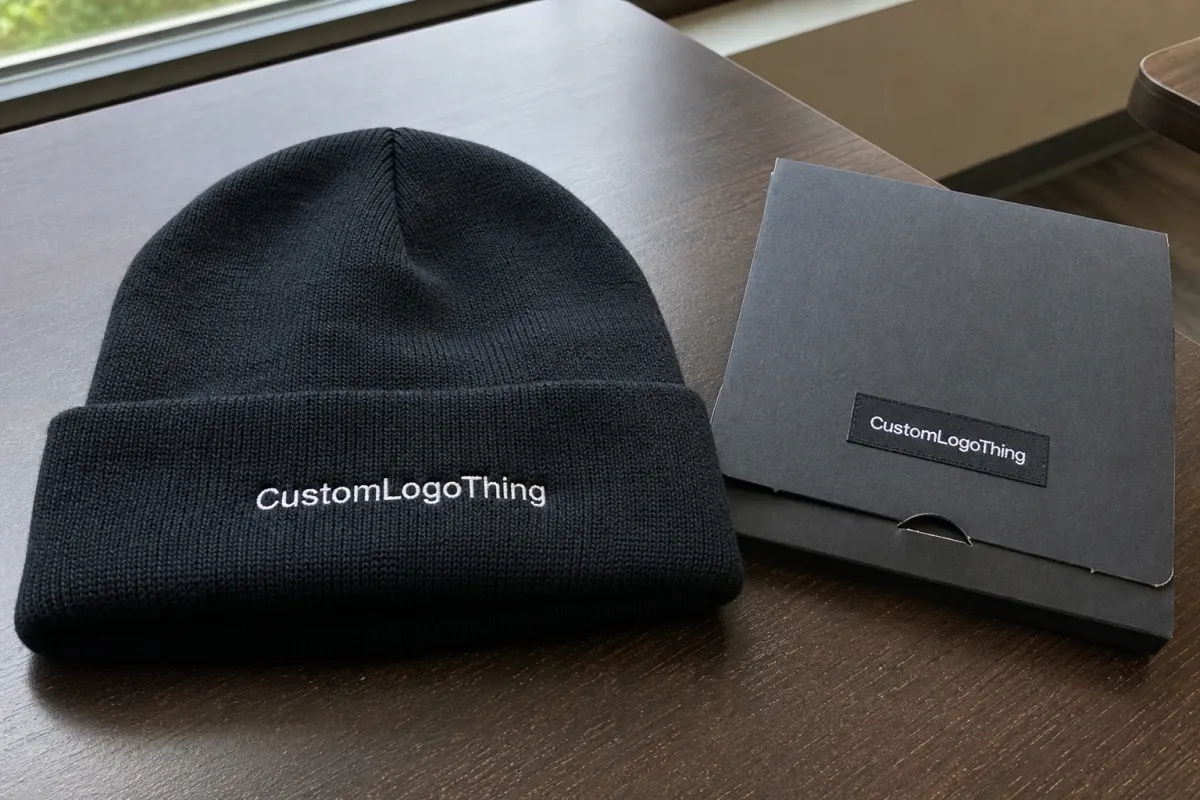
Most skincare launch boxes are trying to communicate care, not volume. A beanie fits that brief because it feels useful, not decorative in a disposable way. It works for winter campaigns, influencer mailers, staff kits, retail bundles, and limited launch drops. It also avoids the sizing risk that comes with shirts or jackets, which makes it a cleaner fit for mixed-audience programs.
There is another reason brands reach for beanies: the item photographs well without requiring the recipient to wear it. Folded next to a serum bottle or placed on top of shredded paper, a cuffed beanie reads as soft, premium, and practical. That matters for unboxing content, where shape and texture often carry more weight than the logo itself.
The catch is that the order can fail in subtle ways. A logo that is too large for the cuff can distort the fold line. A loose knit can make the embroidery sink. A poor color match can make an otherwise solid box look off-brand. Those issues are easy to miss when the buyer only compares blank-product pricing. The real comparison is between a beanie that supports the launch story and a beanie that merely occupies space.
For that reason, the first quote question should be simple: what does the beanie need to do in the kit? If the answer is "look clean on camera, ship well, and hold a small logo without puckering," then the quote has to be built around those requirements, not around a generic accessory assumption. That is the practical core of the embroidered Beanies Factory Quote checklist for skincare launch orders.
Materials, knit styles, and finish options buyers should compare
Start with the yarn, because the yarn changes both appearance and embroidery behavior. Acrylic is the common workhorse. It is warm enough for most launch kits, easy to source, and usually the most cost-efficient option. Cotton or cotton-blend beanies feel a little softer in hand, but they can sit differently after folding and may not hold the same structure in a cuff. Recycled polyester and recycled acrylic options are now widely available, although the shade range and stock consistency vary by supplier.
Gauge matters almost as much as fiber content. A tighter knit gives embroidery a cleaner base, especially for small logos or text. A looser knit can feel relaxed and casual, but fine details may disappear into the texture or show slight distortion after stitching. If a factory does not specify the knit style, gauge, and layer construction clearly, ask again. Single-layer beanies, double-layer beanies, and lined beanies behave differently under embroidery and in final packing.
Style changes both the look and the risk profile. Cuffed beanies usually give the safest decoration zone because the fold creates a predictable canvas. Slouch styles can work well for lifestyle brands, but the logo placement shifts once the hat is worn or folded, and that can make kit photography less consistent. Fisherman styles sit shorter on the head and usually need smaller marks to stay balanced. Pom beanies are less common in launch boxes because the top shape adds bulk and complicates packing.
Finish details deserve the same level of scrutiny. Ask whether the beanie ships flat, lightly shaped, or pre-folded for retail presentation. Confirm the label type: woven side label, printed label, tear-away label, or no label at all. A clean fold and a tidy label can make a simple item look deliberate. A sloppy fold can make a good item look rushed, even if the fabric quality is solid.
Thread choice also matters. Most factories work from standard thread libraries, and the closest match to a brand color is not always exact. Bright whites, deep greens, and muted skin-tone palettes can shift slightly under different thread systems. If color fidelity is important, ask for a daylight photo of the thread card against the packaging art before production begins. That small step catches more problems than a polished mockup ever will.
Artwork, stitch count, sizing, and placement specs to confirm before quoting
If the artwork is not clean, the quote will not be clean either. Send a vector file whenever possible, along with exact color references and the intended embroidery size in millimeters. A factory can guess from a screenshot, but a guess usually becomes a revision, and revisions cost time during launch season.
Stitch count is the main cost driver after the base beanie. Dense satin fills use more thread and machine time. Small type needs more attention than buyers expect, especially when the font is thin or condensed. A logo that looks sharp on a laptop screen can turn crowded once it is scaled to a cuff that is only a few inches wide. Sometimes the right answer is to simplify the mark rather than force every line into embroidery.
Placement affects both price and risk. A centered cuff logo is straightforward. A side mark, a back-neck hit, or a second decoration point adds setup and alignment work. Confirm the exact center point, cuff depth, and whether the logo sits above or below the fold. A difference of a few millimeters can change how the hat reads in photographs, especially when the logo is small or asymmetrical.
For small launches, a digital mockup may be enough if the logo is bold and the knit is stable. For thin lines, multiple thread colors, or a less common yarn, a sewn sample is the safer path. Sample approval is not just a formality. It shows how the thread lays on the knit, whether the cuff pulls, and whether the logo still reads clearly when the beanie is folded into the box. That is cheaper to fix on one sample than on 500 finished pieces.
Flat embroidery is usually the safest choice for skincare launch kits. Patch applications can work, but they add a layer, a border, and another adhesion or sewing step. Three-dimensional puff embroidery has a stronger visual punch, yet it is less forgiving for fine text and tight placement. If the launch design depends on small lettering, flat embroidery usually wins on readability.
How cost, MOQ, and unit pricing are built in a factory quote
A useful quote separates the pieces a buyer can actually compare. The blank beanie is only one line. Digitizing, embroidery setup, thread changes, label attachment, folding, polybagging, carton packing, and freight all shape the final cost. Once those pieces are bundled into a single headline number, the real delivered price becomes harder to judge.
MOQ behavior is simple even when suppliers explain it in different language. Lower quantities spread setup costs across fewer units, so the per-piece price rises. Larger quantities reduce that pressure. For a launch team, this matters because a 200-piece run and a 1,000-piece run can have very different margin implications, even if the product photo looks identical.
Working ranges help buyers compare quotes that are built on different assumptions:
| Order Tier | Typical Blank Beanie Range | Embroidery Setup | Packaging Add-On | Indicative Unit Total |
|---|---|---|---|---|
| 100-250 pcs | $1.40-$2.60 | $25-$60 digitizing / setup | $0.20-$0.55 for fold + polybag | $3.10-$5.90 |
| 500 pcs | $1.10-$2.10 | $20-$45 setup | $0.15-$0.40 for fold + polybag | $2.35-$4.40 |
| 1,000+ pcs | $0.90-$1.80 | $15-$35 setup | $0.10-$0.35 for fold + polybag | $1.95-$3.65 |
Those figures are working ranges, not promises. Heavier yarn, a more complex weave, custom labels, and shipping mode all move the final number. A wool blend can cost more than acrylic and sometimes feels better, but it can also make embroidery less forgiving and raise the risk of scratchy hand feel. Recycled yarn options may add a modest premium, especially if the supplier is pulling from a limited stock program rather than a standard catalog color.
Ask whether the quote includes sampling, packaging materials, export cartons, and delivery to your warehouse or fulfillment center. A low unit price can become expensive quickly if freight sits outside the quote or if the factory charges separately for packing labor. Thread changes also matter. If the logo uses three or four colors, the machine will pause to swap threads, and that time should appear somewhere in the pricing.
A clean quote usually separates product cost from decoration cost. That is not just transparency for its own sake. It lets the buyer see whether the supplier is charging a fair rate for the blank knit or hiding labor in a single blended figure. Buyers comparing several factories should ask each one to quote on the same basis. Otherwise the cheapest number may simply be the least complete number.
Practical callout: if a quote looks unusually low, check what is missing before comparing it to a fuller offer. The missing piece is often setup, packing, or freight, and that is where launch budgets get damaged.
Quote-to-ship process and lead times
The production flow should be readable from one email thread. Request, artwork review, quote, mockup, approval, sample or proof, bulk production, inspection, packing, and shipment. If a supplier cannot explain that sequence without drifting into vague language, the order is likely to get fuzzy later. Clear checkpoints are one of the few reliable protections a buyer has.
Embroidery approval is usually the slowest step. Logo size, thread color, and placement often need one round of correction before the sample feels right. That is normal. What is not normal is discovering those issues after bulk production has started. A disciplined factory asks for signoff before the run, not after half the order is stitched.
Lead time depends on the queue and the complexity of the design, but many embroidered beanie orders move through production in about 12-20 business days after final approval. Smaller runs can sometimes move faster, while more complex work, heavier seasonality, or a crowded production schedule can stretch that window. Add packing time and transit time on top of that. If the launch date is fixed, build a cushion for sample revisions and shipping delays.
For shipped PR kits, transit testing matters more than many buyers expect. A beanie is soft, but the box is not. A crushed carton changes the unboxing experience immediately. If the kit travels long distance or through multiple handoffs, ask the supplier how it packs the beanie to resist compression. That can mean a specific fold style, a slightly larger carton, or an inner pack arrangement that keeps the hat from collapsing the box lid.
International freight adds another layer. Ocean shipping is slower and usually cheaper per unit, but it requires more forward planning. Air freight is faster and can rescue a launch date, but the cost jump can be dramatic on soft goods that are otherwise inexpensive to make. A buyer should compare the delivered cost, not just the production cost, because launch timing has real budget consequences.
Quality-control checks before approval
Good quotes are not only about price. They should also reveal how the factory controls quality. On beanies, the critical checks are usually simple but easy to overlook: measurement, embroidery integrity, thread color consistency, fold accuracy, packing count, and carton labeling. If those items are not discussed before production, they often reappear later as avoidable problems.
Here is the minimum inspection list that should be clear before a purchase order is released:
- Beanie measurements, including relaxed circumference, cuff height, and body length.
- Embroidery location tolerance, especially for centered cuff logos.
- Thread color confirmation against approved artwork or thread card.
- Needle pull, puckering, and backing quality around dense stitch areas.
- Fold standard, polybag standard, and carton count by case.
- Photo confirmation or pre-ship image review for finished goods.
Many apparel buyers use an AQL-style inspection approach, even for modest runs, because it keeps expectations measurable. That does not have to mean a formal lab report. It can be as simple as agreeing in advance that obvious embroidery defects, loose threads, uneven folding, or count mismatches will trigger rework before shipment. The point is to define what "acceptable" means while the order is still on paper.
Color consistency deserves special attention. A thread that looks close in a studio light can drift under daylight or flash photography. The same is true for black and charcoal beanies, where slight shade shifts are easier to see after folding and stacking. If the launch box depends on a specific visual mood, ask for a pre-production sample image taken in neutral light. It is a small request that often catches a problem before it becomes inventory.
Packaging count is another common failure point. The beanie itself may be correct, but the outer carton can still be wrong if pack instructions are unclear. Confirm whether the factory ships flat-packed or folded in a specific orientation, whether individual polybags need barcode labels, and whether the carton count should match a fulfillment unit or a factory unit. Those details sound minor until a launch team is faced with relabeling hundreds of items by hand.
What a dependable supplier should prove before you place the order
A dependable supplier does not stop at "good quality." It can explain the fabric spec, the embroidery tolerance, and what happens if thread tension drifts during production. It should also be able to say how it handles rework, replacement, and inspection photos without forcing the buyer to decode the process one message at a time. That level of clarity usually predicts fewer surprises later.
Quote structure is a strong signal. The better offers separate blank goods, decoration, packaging, and freight. That makes comparison possible. It also shows whether the supplier understands that a skincare launch is a timing-sensitive order, not a generic bulk apparel job. A factory that can explain cost lines without making the buyer chase details is usually easier to manage under deadline.
Production honesty matters too. If the logo is too detailed for the beanie size, the supplier should say so. If a thick cuff makes the placement zone smaller than expected, that should be in the notes. If the chosen yarn is likely to show embroidery pull, that belongs in the conversation before sampling, not after approval. Those are not red flags by themselves. They are signs the supplier knows where the risk lives.
Communication speed is also part of quality. Skincare launch calendars do not drift politely. One late approval can change the entire fulfillment plan. A good supplier answers with images, measurements, and a clear next step instead of broad reassurance. The difference sounds small on paper. In production, it usually determines whether the order stays controlled or becomes a back-and-forth of corrections.
Final pre-order checklist for a clean embroidered beanies quote
Before asking for pricing, gather the pieces the factory actually needs: logo file, target quantity, preferred beanie style, color, embroidery size, packaging request, delivery date, and destination. If the project has a fixed launch date, include that too. A complete brief produces a more usable quote than a short message asking for "best price," especially for the Embroidered Beanies Factory Quote checklist for skincare launch orders.
Use a decision order that matches production reality. Choose the blank beanie first, then confirm the decoration zone, then lock the quantity, and only after that request the final quote. That sequence prevents a lot of avoidable revision work. It also keeps the supplier from pricing a sample-friendly idea that cannot actually survive bulk production.
A good checklist should also help you compare vendors on the same terms. Ask every supplier the same questions and ask for the same cost split. Compare yarn, knit gauge, stitch count, fold method, packaging, and shipping basis rather than just the final number. The cheapest quote is not always the best value. The strongest one is usually the clearest on cost, timing, and finish quality.
- Confirm the exact beanie style and material blend.
- Provide vector artwork and the intended embroidery size.
- State whether the logo sits on the cuff, side, or back.
- Ask for setup, sample, packaging, and freight as separate lines.
- Request a mockup or sample before bulk production if the logo is small or multicolor.
- Verify packing method, carton count, and delivery destination before approval.
That is the difference between a clean launch accessory and a last-minute production headache. Beanies are simple at a glance, but they reward disciplined specs. The buyer who treats them like a controlled component, not a casual add-on, usually gets a better result.
What should I include in an embroidered beanies factory quote checklist for skincare launch orders?
Include the logo file, beanie style, target quantity, embroidery size, thread color notes, packaging request, and delivery date. Add destination details and ask for the quote to separate unit cost, setup, sample charges, and freight so the comparison is based on the same assumptions.
How does embroidery pricing change on custom beanies for launch kits?
Pricing rises with larger stitch counts, more colors, tighter placement, and smaller production runs. A dense mark takes longer to sew and may require more setup work, while a simpler one-color cuff logo usually keeps the order easier to price and less risky to approve.
What MOQ should I expect for embroidered beanies on a skincare launch order?
MOQ depends on the beanie style, yarn availability, and embroidery complexity. Standard factory runs often become more efficient at several hundred pieces, while smaller launch quantities usually carry a higher per-unit cost because setup is spread across fewer hats.
How long does production usually take after I approve the mockup?
Many orders move through production in about 12-20 business days after final approval, but the timeline changes with sample revisions, decoration complexity, and the factory queue. Packing and shipping can add additional time, so the delivery date should include a cushion if the launch is fixed.
Can the beanie color be matched to my skincare packaging or PR box?
Yes, but exact matching depends on the yarn stock and dye options available for the chosen style. For the most accurate result, send Pantone references or a physical sample and ask the factory to confirm the closest production match before the quote is finalized.


