Premium Cuffed Beanies Minimum Order Quantity for Brands
A beanie order can look simple on a spreadsheet and behave very differently on the production floor. The Premium Cuffed Beanies minimum order quantity is often the point where a brand learns whether its concept is practical, price-sensitive, and visually strong enough to repeat. A small run can reveal more than a large commitment, especially for merch drops, staff gifts, and retail testing.
Buyers usually focus on the sticker price first. That is understandable, but not enough. The real question is how many sellable units arrive in the right color, with the right feel, on time, and without hidden costs attached to decoration or packaging. A low Minimum Order Quantity only helps if the rest of the spec holds together.
Cuffed beanies are a good case study because they sell quickly on tactile details. The knit density, cuff height, crown shape, and front decoration all affect whether the product feels premium in hand. If the beanie collapses, pills early, or makes the logo look distorted, the order may have been cheap for the wrong reasons.
"The number that matters is not just the unit price. It is the landed cost per beanie that is actually ready to sell."
Why small cuffed beanie runs can outperform big buys
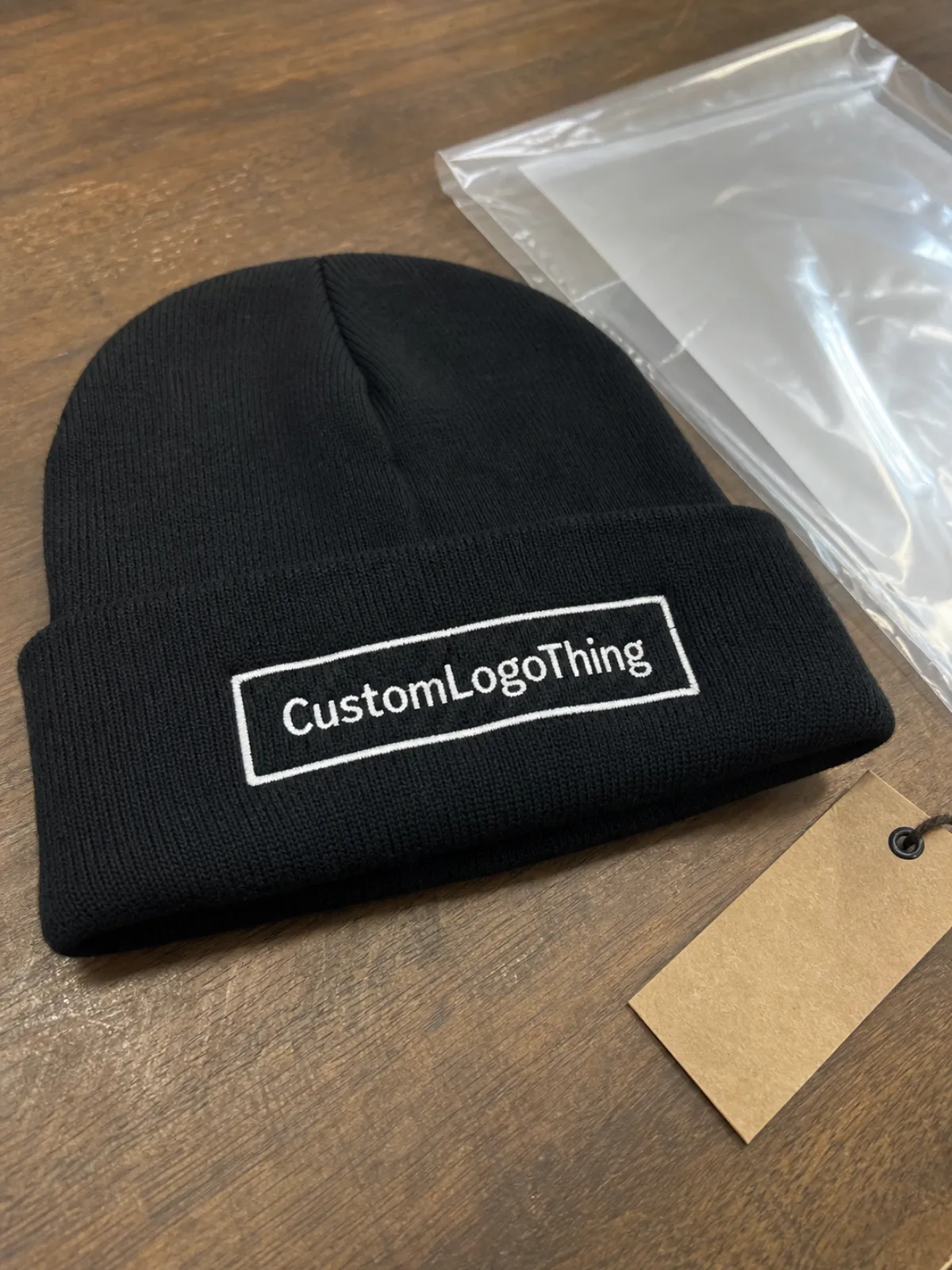
Small runs are not a compromise by default. They are often the smarter choice because demand for cuffed beanies tends to cluster around seasons, launches, events, and short retail windows. A brand may need 100 to 250 units to test interest, not 2,000. That is a very different buying problem.
Inventory risk is the first reason. A single weak color or logo placement can be painful in a large buy and manageable in a small one. If the product is being tested in charcoal, oat, and navy, a limited split may show a clear winner without tying up cash in the wrong shade.
There is also a cash-flow angle that is easy to underestimate. The setup work for knitting, decoration, labeling, and packing often stays similar whether the order is small or large. When the run is tiny, that setup cost sits on fewer units. When the run grows, the same cost is spread more efficiently. That is why buyers should compare tiers instead of asking for a single price and treating it as fixed.
Small-batch buying is especially useful for branded merchandise because the audience is usually more defined than the general retail market. Employee kits, event giveaways, and niche ecommerce drops do not always need broad-size coverage or deep inventory. They need enough volume to test response and enough consistency to judge quality. A 100-piece order can be a real signal, not a token one.
There is a practical production benefit as well. Fewer units make it easier to catch problems before they become expensive. If a patch is slightly off-center or the cuff length is not quite right, a small run gives the buyer a chance to correct the next order instead of absorbing the mistake across a warehouse full of stock.
That said, low minimums do not erase complexity. If the order includes multiple colors, private labeling, folded retail packout, or a decoration method with a high stitch count, the labor still has to happen. A small order can outperform a larger one, but only if the spec is realistic.
Product details that separate a standard beanie from a premium one
The word “premium” in knitwear is earned through construction, not adjectives. A premium cuffed beanie usually starts with a clean silhouette: a fold-over cuff, a tidy crown, and enough structure to keep its shape after repeated wear. It should look organized on a table and still sit properly on a head.
Material choice changes the story immediately. 100% acrylic is common because it holds color well, stays cost-effective, and gives buyers predictable production. Acrylic-wool blends generally feel warmer and less synthetic. They can also look more refined, although they may require a little more care in both approval and handling. Recycled fiber blends are increasingly requested, but buyers should ask how the yarn behaves in knitting, washing, and decoration. Sustainability claims mean little if the fabric surface is too soft or too uneven to decorate cleanly.
Knit density matters just as much. A tighter gauge usually produces a cleaner retail appearance, with less visible space between stitches. Looser knits feel softer and bulkier, but they can make front decoration sit less neatly. That becomes obvious with embroidery, where a soft front panel can pucker, or with a woven patch, where the edge can curl if the knit is too relaxed.
The cuff itself carries more visual weight than many buyers expect. A straight, symmetrical cuff makes the beanie look deliberate. A drifting cuff or uneven fold line makes even a good logo look careless. Small details like this are rarely obvious in a render and very obvious in daylight.
- Hand-feel: does the yarn feel refined or scratchy against bare skin?
- Recovery: does the beanie spring back after stretching?
- Seam finish: are the internal joins clean at the crown?
- Decoration balance: does the logo fit the shape instead of overpowering it?
Buyers comparing custom knit beanies, embroidered cuff beanies, and private label beanies should judge samples in natural light whenever possible. Knit texture shifts under warehouse lighting, and a mockup can hide flaws in density, cuff proportion, or logo scale. A sample that looks controlled in hand usually tells the truth faster than a screen render does.
Specifications buyers should confirm before requesting quotes
Quotes get cleaner when the spec sheet is specific. The missing detail is usually the reason a buyer gets a price that looks fine until the sample arrives. For premium cuffed beanies Minimum Order Quantity planning, the critical variables are body construction, decoration method, and packaging requirements. Those three items shape the total cost more than most people expect.
- Body depth: usually about 8 to 10 inches, depending on the fit and slouch level.
- Cuff height: often 2.5 to 3.5 inches; taller cuffs can improve decoration visibility.
- Stretch range: one-size styles commonly cover about 21 to 24.5 inches in head circumference.
- Gauge and yarn weight: tighter gauges create a cleaner finish, while looser knits feel warmer and thicker.
- Decoration zone: confirm the usable front area for embroidery, woven patches, labels, or tonal branding.
- Color method: solid yarn, heather, marl, and multi-tone blends all behave differently in production.
Color deserves extra attention. Solid yarns are usually easier to match, although exact color control still depends on the fiber and dye system. Heather and marl yarns introduce visible variation by design, which means a Pantone number will only ever be an approximation. Buyers who want a close brand match should ask for the nearest achievable yarn reference before production begins.
Decoration should be defined before anyone starts knitting. A 2.5-inch woven patch and a 4-inch embroidery treatment create different labor paths and different visual results. One can read refined and understated; the other can dominate the front panel. Neither is automatically better. The right choice depends on whether the beanie is meant to feel understated, retail-ready, or promotional.
Packaging should be specified with the same care. Bulk carton packing, folded retail presentation, individual polybags, hang tags, and barcode stickers each affect labor and final carton count. A buyer who waits until after sampling to decide on packaging often ends up with a more expensive order and a longer timeline.
If the beanies are headed to retail shelves or direct-to-consumer fulfillment, ask whether the packout needs to withstand repeated handling. That kind of detail matters more than it gets credit for. A beanie that ships well in a master carton can still look poor if the folding and labeling are inconsistent at the unit level.
Premium cuffed beanies minimum order quantity and unit cost
The Premium Cuffed Beanies minimum order quantity is shaped by setup work, not just the knit itself. A straightforward cuffed beanie with one decoration position can usually start lower than a fully custom jacquard body, a multi-label package, or a retail-ready presentation that needs individual folding and barcoding. The first units absorb the most setup effort, so unit cost is highest at the bottom end and improves as the order grows.
Sample costs are a separate issue. A real sample should reflect production as closely as possible, and that is rarely cheap. Buyers often see sample pricing in the $65 to $180 range depending on whether the piece is knitted from scratch, decorated with a patch, or finished with final packaging. A suspiciously inexpensive sample is often incomplete or not representative enough to approve production with confidence.
| Run Size | Typical Unit Cost | Cost Pressure | Best Use |
|---|---|---|---|
| 100 units | $8.50-$12.50 | Setup cost is heavy; decoration choices matter a lot | Test drops, internal kits, pilot retail programs |
| 250 units | $5.75-$8.75 | Better balance between setup and per-piece cost | Small launches, event stores, regional retail tests |
| 500 units | $4.50-$6.80 | More efficient production and lower unit cost | Seasonal merch, repeated gifting, core assortment |
| 1,000 units+ | $3.80-$5.80 | Best spread on setup, but higher cash commitment | Broader retail distribution and replenishment |
Those figures are directional, not universal. A 100% acrylic body, a wool blend, an embroidered logo, a woven patch, a single-color body, or a split-color design can all shift the price. Packaging shifts it too. If each beanie needs a folded insert, a barcode label, and individual bagging, the landed cost climbs even when the garment itself stays unchanged.
Split colorways usually raise the minimum because the line has to stop, change yarn, and restart. Multiple logo versions can do the same thing. Buyers sometimes assume that a small adjustment will barely affect cost; in knitwear, small adjustments are rarely small on the production side.
A useful comparison is to ask for three numbers: base production, decorated production, and packed production. That breaks the quote into stages and makes the hidden labor visible. It also prevents a false comparison between a bare product price and a fully finished one.
"Low MOQ does not mean low complexity. If the order adds colorways or retail packing, the labor still exists."
Production steps and turnaround from proof to shipment
Production quality starts before knitting begins. The most common cause of delay is not the machine; it is unclear approval. Artwork, placement, yarn choice, and packout details need to be settled early. Small runs are less forgiving because there is less volume to absorb rework.
- Artwork review: confirm file type, stitch count or patch dimensions, and any packing notes.
- Digital proof: approve logo placement, cuff height, color references, and label details.
- Sample or pre-production check: verify hand-feel, fit, and decoration before the full run starts.
- Knitting and trimming: the body is produced, then loose ends and seams are cleaned up.
- Decoration and finishing: embroidery, patches, labels, folding, and polybagging happen here.
- Quality control and packing: units are checked, counted, and prepared for shipment.
For standard decorated beanies, turnaround is often around 12 to 18 business days after proof approval. Custom knit constructions, mixed colorways, and retail-grade packing can move the timeline to 18 to 28 business days. Freight sits on top of that, and the shipping method matters. Air freight is faster and more expensive. Ocean freight lowers transportation cost but adds planning time and usually demands more discipline around forecasting.
Lead time tends to stretch for three reasons: decoration complexity, order size, and ship method. A dense stitch file takes longer than a simple patch. A 1,000-piece order naturally takes longer than a 100-piece pilot. And retail packing can become the hidden bottleneck if the product has to be folded, bagged, stickered, and carton-counted one unit at a time.
Parallel approvals can save days. If the logo placement is settled while packaging is still being refined, the production path moves faster. That matters when the launch date is tied to weather, a seasonal event, or a merch drop that cannot slide by a week without losing momentum.
Decoration and packaging choices that improve sell-through
On cuffed knitwear, decoration should support the beanie, not compete with it. The product already has texture, weight, and shape. Too much visual noise on the front panel can make it feel less premium, not more. A restrained logo often performs better than oversized art because the knit itself is part of the appeal.
Embroidery is the most familiar option for simple logos and short wordmarks. It wears well and photographs clearly, but it can feel heavy if the artwork is too detailed. Woven patches hold fine detail more cleanly and tend to read as retail-friendly. Leather patches add texture and a more rugged premium cue, though they are not ideal for every brand or every care expectation. Woven labels work best when the brand wants subtle placement and a softer visual footprint.
For many buyers, the best result is a single clean decoration on a dense cuff. That keeps cost controlled and usually gives stronger ecommerce images. It also leaves the knit texture visible, which is often the reason a brand chose a premium beanie in the first place.
Packaging can raise perceived value without dramatically increasing weight. A neat fold, a barcode or size card, and a clean polybag help the beanie feel intentional on arrival. If the order includes paper inserts or hang tags, FSC-certified stock is worth asking about; the certification framework is outlined by the FSC. That does not improve the garment itself, but it does matter for brands that need clearer documentation around paper sourcing.
The packout should follow the channel. Event giveaways can move in bulk cartons. Store shelves usually need a cleaner folded presentation. Direct-to-consumer shipments often need individual bagging and barcode labeling. A single packout style across every channel is usually too blunt.
One common mistake is overdecorating a beanie because the mockup looks empty. On real fabric, a small emblem can feel more premium than a crowded front panel. The same is true for packaging. A minimal, tidy presentation often outperforms a busy one because it feels deliberate.
What makes a small-batch beanie program easier to buy
A good small-batch program reduces friction before production starts. Spec review, artwork checks, and packing notes should be handled in one process rather than spread across multiple disconnected conversations. That keeps the order from drifting as it moves from quote to proof to final packing.
Repeat orders are even more sensitive to detail. If cuff height, crown depth, logo placement, and packaging style have already been approved, those settings should be carried forward carefully. Beanies are seasonal by nature, so buyers often return with a follow-up order months later. A slight yarn shift or a patch size change can make the repeat look different enough to matter.
Clear trade-off guidance is part of a healthy buying process. Buyers often want the smallest possible minimum, the sharpest decoration, and retail-ready presentation all at once. Sometimes that is realistic. Sometimes it is not. A useful quote shows what changes the price, what changes the timeline, and what stays fixed if the buyer repeats the order later.
If a brand is already comparing apparel programs, having a visible overview of wholesale terms and common production questions can save time. The point is not to create a sales pitch. It is to make the hidden variables visible before the order is locked in.
From a practical standpoint, the best small-batch systems are the ones that expose constraints early. If a beanie looks premium only when the cuff is tall, or only when the logo is simplified, that should be obvious before approval. A disciplined process beats a clever mockup every time.
Next steps to request a quote and lock your order
An accurate quote starts with complete information. Quantity, color count, logo file, decoration method, target ship date, and destination are the minimum basics. If the order is for retail, staff kits, events, or resale, include that too. The intended use affects the packing method and can change the price more than people expect.
- Confirm quantity: share the target run and ask for tiered pricing if you are near a break.
- Set the color plan: a single body color is usually simpler than split colorways.
- Choose the decoration: embroidery, woven patch, leather patch, or label.
- Define packaging: bulk, folded retail, polybagged, or barcode-packed.
- Share timing: give the ship date and note whether it is fixed or flexible.
It is also sensible to ask for two quote paths: one at the target premium cuffed beanies minimum order quantity and one lower-risk test run if budget pressure is real. The first shows the best unit economics. The second shows what is possible if the order needs to prove demand before it scales.
In the final review, the decision should be straightforward. Does the beanie feel premium? Does the logo read clearly from a normal distance? Does the packout suit the channel? If those answers are yes, the order is probably set up well. If one of them is weak, the spec should be adjusted before approval. That is the cleanest way to protect margin and avoid inventory regret.
What is the minimum order for premium cuffed beanies?
The MOQ depends on yarn choice, decoration method, and packaging. A simple one-color beanie with one logo placement can usually start lower than a custom knit style with several finishing steps. For planning, compare pricing at 100, 250, and 500 units so you can see where the unit cost starts to make sense.
Can I mix colors within a cuffed beanie MOQ?
Yes, but each colorway can add setup time and raise the price. Mixed colors work best when the same decoration and label plan stays consistent across the run. If the color plan gets too fragmented, the production cost can climb faster than expected.
What affects pricing most on premium cuffed beanies?
Quantity, yarn type, decoration method, and packaging requirements are the biggest drivers. Extra logo locations, special labels, and retail packing usually increase labor. Split colorways also push the quote upward because they interrupt the knitting line.
How long is the turnaround after proof approval?
Standard decorated beanies often take about 12 to 18 business days after proof approval. Custom knit builds or retail-packed orders can take 18 to 28 business days. Freight time is separate and depends on the shipping method you choose.
What do I need for an accurate cuffed beanie quote?
Send quantity, color preference, logo file, decoration size, packing style, and ship-to location. Include whether the order is for retail, events, employee gifts, or resale. A target delivery date helps align the premium cuffed beanies minimum order quantity with the right production path.

