Embroidered Baseball Caps Factory Quote Request Tips
Send an embroidered baseball Caps Factory Quote request with vague details, and the answer usually reflects guesswork more than pricing. Give the factory the cap construction, embroidery placement, artwork format, closure type, quantity, and shipping destination, and the whole exchange changes. Fewer clarifying emails. Fewer assumptions. A quote that can actually be compared against another supplier on equal terms.
The same cap can swing in price by 20% to 40% once you change the structure, stitch count, or packing method. A 6-panel structured snapback with front embroidery is not the same order as an unstructured strapback with a small side logo and retail hangtag. From a buyer's point of view, that gap is not noise. It is the difference between a number that looks attractive and a landed cost that survives sampling, packing, and freight.
This topic matters because embroidered caps are deceptively simple. They look standardized on the shelf. They are not. Crown shape, fabric weight, closure hardware, stitch density, and finishing choices all move cost. The factory quote only makes sense if those variables are pinned down before the first email goes out.
That is the real goal here: a cleaner request, a sharper quote, and fewer surprises after approval. Not marketing language. Just the mechanics of buying custom headwear without paying for ambiguity.
The fastest quote is rarely the cheapest one. It is the quote that leaves the fewest unanswered questions.
How an embroidered baseball caps factory quote request gets faster answers
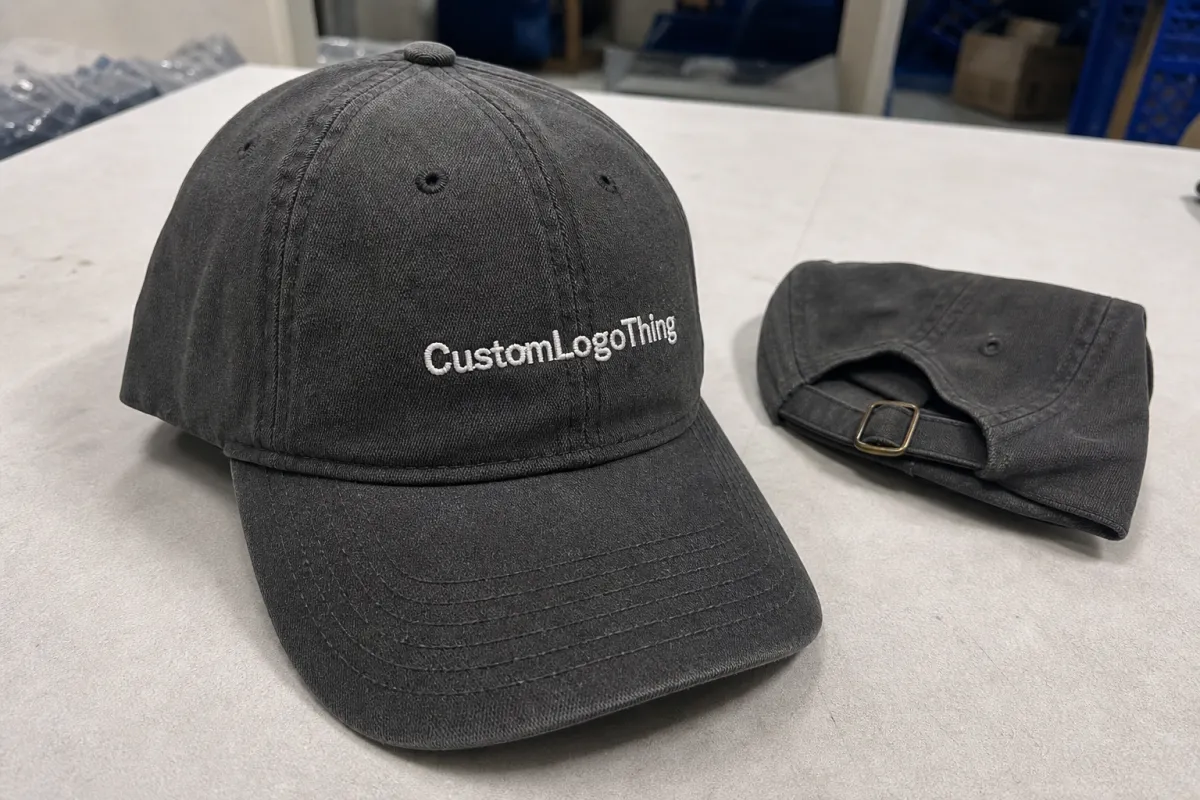
Most quote delays come from missing details, not from price resistance. A factory can estimate a simple cap quickly, but the estimate gets shaky when the buyer leaves out crown shape, logo size, or delivery terms. A complete Embroidered Baseball Caps factory quote request usually gets a cleaner response than a rushed message because the supplier can price the job as a build, not as a guessing exercise.
Two requests may both say "embroidered cap," yet one means a structured 6-panel snapback with flat embroidery across the front panel, and the other means a washed cotton unstructured cap with a small side logo, woven label, and custom tissue wrap. Those are not close enough to price the same way. The difference shows up in stitch time, material waste, trimming, packing labor, and the amount of setup the factory must absorb.
Buyers also underestimate how much the delivery destination changes the number. Shipping 500 caps to a domestic warehouse is one calculation. Shipping the same order to a distribution center with pallet requirements, carton marks, and export paperwork is another. A serious supplier asks those questions early because they affect the final quote and the production path.
There is another reason complete requests move faster: they reduce the hidden translation layer between buyer intent and factory interpretation. If you write "premium cap," one supplier may picture brushed cotton, another may think of structured twill, and a third may assume a thicker sweatband and curved visor. None of those interpretations is wrong. They are just different enough to create three different prices.
For the buyer, the practical move is to quote the product as a set of measurable choices. Style. Construction. Decoration method. Artwork size. Packaging. Incoterm. Once that list is fixed, the supplier can separate real cost drivers from vague preference language.
Product details that change the quote on embroidered baseball caps
Cap construction drives price as much as decoration does. A structured crown uses internal support to hold its shape. That usually reads as more retail-ready, but it also adds materials and assembly steps. An unstructured cap feels softer and lighter. A 5-panel cap creates a different front profile than a 6-panel build, which changes the way the logo sits and how the front panel is sewn.
Fabric choice matters in a similar way. Cotton twill is common because it is familiar, durable, and easy to source in broad color ranges. Washed cotton can look more relaxed or premium depending on the brand story. Polyester often holds shape well and can behave better in damp or outdoor use. Mesh back caps are useful for summer promotions, but they introduce different sewing steps and panel mixes. Typical fabric weights often land around 220-280 gsm for cotton styles and lighter for polyester or mesh combinations, although the exact spec depends on the hand-feel the buyer wants.
Closures affect both fit and perceived value. Snapbacks are fast to specify and easy to size for a broad audience. Strapbacks can look more polished, especially with leather, fabric, or self-material straps. Fitted caps can fit beautifully, but they complicate size runs and inventory planning. If the order is for events, merch tables, or retail shelves, the closure choice changes how much risk you are taking on.
Then there is the decoration itself. Flat embroidery is usually the simplest route. 3D puff embroidery adds height and visual impact, but it also increases labor and can limit fine detail. Patch application, whether woven, PVC, felt, or twill, adds another production layer because now the factory is making the patch and attaching it. Mixed techniques, such as front embroidery with a side woven label and rear wording, push the order into a higher labor category.
Logo complexity is easy to underestimate. A simple wordmark with three thread colors is easier to run than a dense emblem with tiny interior details or thin lettering. Many front logos land somewhere in the 5,000-12,000 stitch range, while puff embroidery or large front pieces can go higher. More stitches mean more machine time. They also raise the chance that the logo needs adjustment to keep edges clean and readable.
Placement matters too. Front panel embroidery is the most common because it is efficient and visible. Side embroidery, back arch text, and underbrim branding each add setup time and inspection time. If you ask for three locations, expect the quote to reflect three operations, not one larger logo. The same logic applies to special finishing such as sandwich brims, contrast under-visors, or custom eyelet colors.
Comfort details can move the quote even when they are not obvious from the front of the cap. A better sweatband, a cleaner inner seam finish, or a slightly heavier crown fabric may not change the look in a product photo, but they do change the cost structure. Buyers who sell to retail usually feel those choices later, not earlier. The customer does not see the BOM, but they do feel the difference on the head.
For packaging buyers, the point is simple: if the product spec is not locked, the quote is only a placeholder.
Specs to lock before you ask for a factory quote
Before you send files, confirm the exact build. The factory should not have to guess the cap profile, panel count, brim style, or closure type. A short spec sheet saves time and usually produces a better number on the first pass.
At minimum, list these details:
- Cap style: structured or unstructured, 5-panel or 6-panel, curved brim or flat brim.
- Closure: snapback, strapback, fitted, hook-and-loop, or metal buckle.
- Fit range: adult, youth, one-size, or size run.
- Embroidery placement: front, side, back, underbrim, or multiple locations.
- Artwork format: AI, EPS, PDF vector, or clean high-resolution artwork.
- Color references: Pantone values, fabric swatches, or past approved samples.
- Packing request: bulk pack, individual polybag, hangtag, barcode sticker, or retail box.
- Delivery term: EXW, FOB, or delivered pricing if you want an apples-to-apples comparison.
Artwork quality has a direct effect on the quote. A clean vector logo makes digitizing faster and more accurate. A low-resolution JPEG forces the supplier to interpret edges, letter spacing, and small details, which can add delay and sometimes an extra fee. If the logo includes fine text, ask whether it can be embroidered legibly at the selected size. Thread has limits. A line that looks crisp on screen can collapse once it is translated into stitches.
Thread-color count matters as well. A logo with two or three colors is usually simpler than one with six or seven. The same is true for stitch density. Dense embroidery takes longer to run and may need a wider embroidery field to keep the shape clean. If you already know the approximate size, give the factory the measurement in millimeters or inches rather than saying "medium" or "large." That one habit removes a surprising amount of ambiguity.
Packaging deserves more attention than it usually gets. Custom inner printing, woven labels, swing tags, branded tissue, and individual boxes all change the order value. If the caps are destined for retail, the packaging budget may matter almost as much as the embroidery itself. If the caps are for a promotion, bulk carton packing may be the smarter choice. The same product can be priced correctly only when the packing method is clear.
Color matching is another area where specificity pays off. If the logo must match a Pantone-coded garment, say so. If the cap fabric must be a particular navy, khaki, or forest green, include that reference too. The more precise the brief, the less likely the supplier will quote a product that misses the visual target.
There is also a quiet technical issue that can save a lot of back-and-forth: acceptable tolerances. If exact panel symmetry, logo centering, or shade consistency is critical, say so before sampling. A factory can work to tighter tolerances, but that sometimes affects the unit cost or the rejection rate during inspection. Buyers who define "acceptable" too loosely often spend the rest of the order clarifying what was never written down.
Pricing, MOQ, and unit cost drivers
Headlines can be misleading. A low unit price is not always a good price if the quote excludes digitizing, sampling, packaging, or export handling. The cleanest way to read a factory quote is to break it into the few things that actually move cost.
These are the main levers:
- Quantity: higher volume usually lowers unit cost because fixed setup is spread across more pieces.
- Stitch count: denser logos and more locations increase labor time.
- Cap complexity: structured crowns, premium fabrics, and special closures raise the build cost.
- Decoration method: flat embroidery, puff embroidery, and patches do not price the same way.
- Branding extras: labels, hangtags, custom taping, and retail packaging add cost.
- Shipping terms: EXW, FOB, or delivered pricing can shift the total dramatically.
- Compliance and testing: if the buyer needs special carton standards, fiber content labeling, or audit paperwork, those items belong in the quote too.
| Order tier | Typical unit cost behavior | What to clarify before comparing quotes |
|---|---|---|
| 100-299 pcs | Higher unit cost because setup and digitizing are spread over fewer caps | Digitizing fee, sample fee, and whether the MOQ is style-specific |
| 300-999 pcs | Usually a better balance between setup cost and production efficiency | Stitch count, packing method, and whether revisions are included |
| 1,000+ pcs | Lower per-unit cost if the spec stays consistent across the run | Lead time, carton count, export documents, and inspection standard |
As a practical range, simple embroidered caps can land around $2.10-$3.80 per unit at higher volumes, while smaller runs with more complex decoration can move into the $4.50-$7.50 range or more, depending on material and packing. Digitizing may add $25-$60 per logo. A pre-production sample often sits in the $35-$90 range, although some factories credit that cost back against a bulk order. These are not universal numbers, but they are close enough to help buyers spot quotes that are incomplete or unrealistically low.
MOQ is another term that gets misunderstood. It does not just mean "minimum order." It usually means the smallest quantity that makes the production line efficient for a specific style and decoration combination. A simple snapback with one logo may have a lower MOQ than a fitted cap with multiple placements and custom labels. If a supplier quotes a low MOQ, ask whether it applies to that exact construction or only to a simplified version.
Freight and duties deserve their own line in the conversation. A quote that looks strong at the factory gate can change fast once ocean freight, air freight, customs clearance, or local delivery is added. That is especially true when the buyer compares EXW and FOB numbers without normalizing the rest of the landing cost. A supplier does not have to control every part of the logistics chain, but they should be clear about which part they are pricing.
There is also a difference between "included" and "covered by sample order." Some factories cover the first sample fee if the buyer confirms production. Others do not. Some quote embroidery and cap construction together. Others separate digitizing, sampling, and production into different line items. None of these methods is wrong. The risk comes from comparing quote A and quote B as if they used the same math.
The cheapest number on the email is not the landed cost. It is just the start of the calculation.
Compare quotes on the same assumptions. Otherwise you are not comparing suppliers; you are comparing different orders.
Production steps, proof approval, and lead time
Good factories usually follow a predictable path: enquiry review, artwork check, digitizing, proof or sample approval, bulk production, inspection, and shipment. The order of those steps matters because it tells you where the clock is likely to slow down.
Artwork review is the first checkpoint. If the logo arrives in vector format, the process moves faster. If the file is blurry or incomplete, the supplier must redraw it or ask for corrections. Digitizing comes next, and this is where the embroidery path is mapped stitch by stitch. Once the thread map is approved, the factory can produce a sample or digital mockup for sign-off.
Delays usually show up in three places. First, the buyer sends artwork late or keeps changing it. Second, color approval drifts because nobody confirms the reference quickly. Third, sample approval creates a new round of changes after the factory has already begun planning the bulk run. Each change is reasonable in isolation, but together they slow the job down and can increase cost.
For timing, a useful planning range is 5-10 business days for a sample or mockup stage and 12-25 business days for bulk production after approval, depending on volume and factory load. Larger or more complex orders can take longer. Rush orders can sometimes be compressed, but only if the factory has machine capacity, materials in stock, and a stable spec. If any of those three are missing, the rush premium usually rises quickly.
Quality control should be part of the timeline, not an afterthought. Ask how the factory checks stitch alignment, color consistency, logo position, loose threads, and closure strength. Many buyers also ask whether the supplier works to an AQL inspection level for final checks. The answer is less important than the method: you want to know who checks what, at which stage, and what happens if a cap misses the standard.
A good inspection checklist usually includes the shape of the crown, the symmetry of the front panel, the visibility of backing material behind the embroidery, the consistency of the thread tension, and the accuracy of the pantone match where that match matters. On a bulk order, even a small shift in logo placement can create a visible mismatch across cartons. That is why photo approval is useful but never enough on its own.
For packaging and transit performance, especially if caps are packed for retail distribution, ask how cartons are tested or stacked. Standards from ISTA are useful when shipment damage matters, and FSC certification matters when carton sourcing is part of your buyer requirements. Those standards do not change the embroidery, but they do affect how the order moves through the supply chain.
One more point buyers often miss: proof approval should lock the reference version. If the factory sends a sample, confirm in writing which sample, artwork file, thread chart, and color standard become the production baseline. That simple step protects both sides if a dispute comes up later. Without that anchor, every small variation becomes a debate about what was "approved."
Next steps for a cleaner cap quote request
If you want a stronger reply from a factory, send a package of information, not a loose email. Start with the cap style, quantity, logo file, embroidery placement, closure type, packing method, and delivery deadline. Then add reference images and any packaging requirements that affect the order value.
A short spec sheet is better than a long paragraph. Buyers often write "need embroidered caps, best price," and expect a useful answer. A better version is: 500 pcs, 6-panel structured snapback, flat front embroidery, side woven label, black cap with white thread, polybag pack, shipping to a domestic warehouse by a fixed date. That request gives the supplier enough information to price the work correctly the first time.
Compare two or three quotes with the same assumptions. If one supplier is materially cheaper, check whether the quote excludes sampling, ignores custom labeling, or assumes a lower stitch count. Sometimes the gap is real. Sometimes it is just a different interpretation of the brief. A disciplined buyer does not chase the lowest number. The buyer chases the clearest number.
Before you approve anything, read the quote as if you had to defend it later. Does it name the cap style? Does it state the embroidery method? Does it include digitizing, sample approval, and packing? Does it say whether freight is included? If those details are missing, the quote is not finished, even if the total looks neat in the email.
That is the point of a disciplined Embroidered Baseball Caps factory quote request: fewer assumptions, more accuracy, and a production plan that survives contact with the factory floor.
What should I include in an embroidered baseball caps factory quote request?
Include the cap style, quantity, logo file, embroidery placement, preferred closure type, packing method, and delivery destination. Add any Pantone references or retail packaging details so the factory can quote the order on the same assumptions you will use later.
How does MOQ affect an embroidered baseball cap quote?
Lower quantities usually raise the unit cost because setup and digitizing are spread over fewer caps. Ask whether the MOQ changes by style, fabric, decoration method, or packaging before you compare suppliers. A low MOQ on a simple cap does not always carry over to a more complex build.
Can I get a sample before full production starts?
Yes, many factories can produce a pre-production sample or a detailed mockup before bulk sewing begins. Confirm whether the sample fee is refundable, how many revisions are included, and whether the approved sample becomes the production reference.
What drives the unit cost on embroidered baseball caps?
The biggest factors are order quantity, stitch count, decoration locations, cap fabric, closure type, and packaging requirements. Rush scheduling, custom labels, and complex embroidery styles like 3D puff can also increase the quote. Freight terms matter too if you are comparing landed cost rather than factory price.
How long does production take after artwork approval?
Sampling usually finishes faster than bulk production, which depends on order size and factory capacity. A useful planning range is 5-10 business days for sample approval and 12-25 business days for bulk production, although complex orders or peak seasons can extend both. Ask for separate sample and bulk timelines so you can plan inventory more accurately.


