Dad Hats Material and Sizing Guide for Bulk Buyers
Two hats can carry the same label and still fit like different products. That is the practical problem a good dad hats Material and Sizing guide has to solve. Crown depth, panel softness, brim curve, and closure style often influence comfort more than the number printed on a spec sheet. For bulk buyers, that difference shows up later as uneven embroidery placement, returns, and reorders that never quite match the first run.
Dad hats are low-profile caps with a relaxed shape. They are usually unstructured or lightly structured, so the front panels follow the head instead of standing rigidly on their own. That softness is part of the appeal. It also means fabric choice, stitch quality, and closure hardware matter more than they do in firmer cap styles.
For merchandising teams, retail buyers, and corporate programs, this is not just a style conversation. A cap that feels slightly loose in washed cotton may feel snug in dense twill. A deeper crown can look roomy even when the tape measurement is unchanged. A different closure can change how the same cap sits at the back of the head. Small details, big effect.
The logo matters, but it is not the whole product. The hat body, sweatband, brim curve, and packout method all shape the final impression. A strong graphic can rescue a decent cap. It cannot fix a crown that collapses, scratches, or twists after the first wear.
How Fit and Construction Actually Work
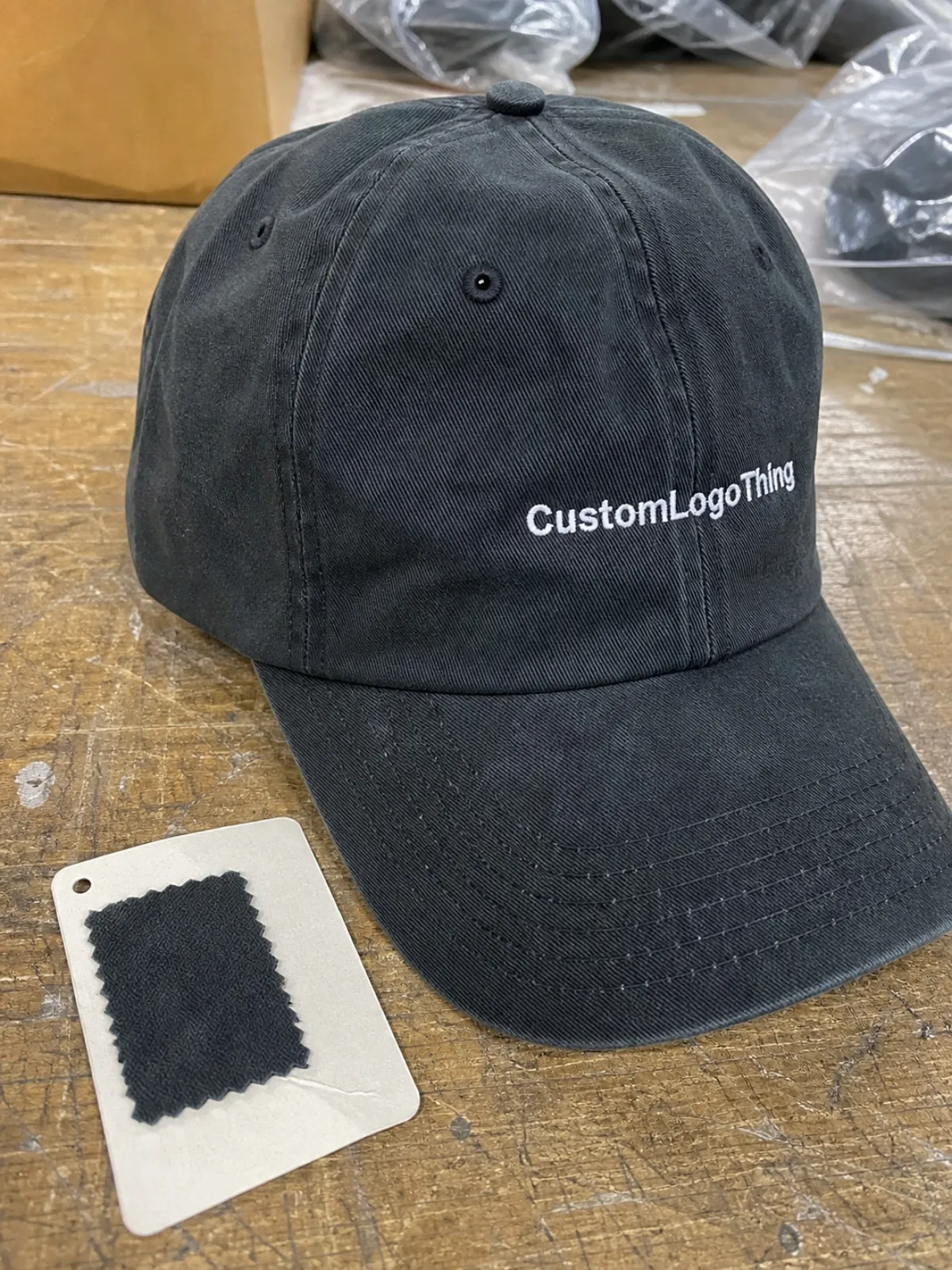
Fit starts with the crown. Low-profile crowns sit closer to the head and usually read more casual. Deeper crowns add room through the front and can feel more forgiving for larger head sizes. On a buyer spec sheet, a small difference in crown depth may look trivial. On the head, it changes the whole silhouette.
Panel count matters too. Six panels are common, but the cut and stitch pattern change how the hat wraps around the forehead and temples. A 6-panel cap with soft twill can drape differently from a 7-panel version with a deeper front. Brim shape plays into that perception as well. A stronger precurve can make the cap feel tighter and more finished. A flatter brim often reads more relaxed straight out of the carton.
Measurements help, but they do not tell the whole story. For reference, many dad hats sit around an 11-12 cm crown depth, a 7-7.5 cm brim, and an adjustable head circumference range roughly in the 56-62 cm span. Those numbers vary by factory and style, which is exactly why buyers should request a measured sample instead of assuming all one-size caps behave the same.
The sweatband is easy to overlook and hard to ignore once it is wrong. A softer sweatband reduces pressure points. A firmer one helps the cap keep its shape but can make a “one size fits most” style feel less forgiving. Closures shift the feel again.
Strapbacks are flexible. Metal buckles usually look more polished. Tuck-in closures sit flatter at the back. Slide closures can be efficient for mass programs, though the hardware quality needs checking or the strap loosens over time. Each option solves a different problem, and each one creates a different hand feel.
“The same cap can feel relaxed on one wearer and tight on another, even before the buyer notices the closure was set two holes too far in.”
Unstructured construction adds another layer. It keeps the cap soft, but it also makes the fabric do more of the work. A brushed chino front will collapse differently from a denser twill. If the front panel is too soft for dense embroidery, the logo can pucker the fabric and distort the fit. That is why the material and the decoration method should be reviewed together, not separately.
- Crown depth: Shallower crowns look vintage; deeper crowns fit more head shapes.
- Closure style: Strapbacks are flexible, buckles feel cleaner, and tuck-ins sit flatter.
- Brim curve: A precurved brim usually looks softer and wears better right away.
- Front panel support: More support helps embroidery hold shape, but too much can feel stiff.
Key Fabric Choices, Stitching Details, and Wear Tests
Fabric is where a lot of first impressions are won or lost. Cotton twill remains the workhorse because it balances structure, breathability, and price. Washed cotton and brushed twill feel softer at first touch and usually break in faster, which is why they work well for fashion-led programs. Chino has a cleaner surface and tends to look a bit more polished. Canvas brings durability and weight, though it can run warmer. Denim gives a distinct texture. Polyester blends improve consistency and wrinkle resistance. Recycled fabrics are becoming more common for buyers who want a lower-impact story without sacrificing durability.
The best fabric depends on the channel. For warm-weather retail, a lighter cotton body and breathable eyelets usually make more sense than a dense workwear weave. For trades, events, and premium merch, a heavier hand can feel more substantial. For sustainability-led assortments, recycled content matters only if the cap still wears well and holds its shape. A good story does not help if the front panel sags after two uses.
Stitch quality is a quiet indicator of how the cap will hold up. Higher stitch density usually gives cleaner embroidery edges and stronger seams. Reinforced front panels help the logo sit neatly. Clean eyelets improve airflow and reduce stress around the crown. A well-constructed sweatband keeps the inside from feeling scratchy, which sounds minor until a buyer wears the hat all day.
A practical wear test is better than guesswork. Before approving a bulk order, check how the cap behaves after a full day of wear, a light clean, and several brim bends. If the front panel puckers around the logo, the fabric is too soft for that decoration. If the crown feels hot after 20 minutes indoors, the material may be too heavy for the intended use case. If the closure slips, the problem is usually hardware quality or a weak strap finish, not the size range itself.
- Forehead pressure: Have at least two testers wear the cap for 30 minutes.
- Brim stability: Bend and reshape it several times to see how it rebounds.
- Colorfastness: Check whether sweat or light friction leaves visible marks.
- Shrink behavior: Confirm how cotton-heavy caps look after a gentle clean.
- Balance after wear: Make sure the hat still sits straight instead of twisting to one side.
Decoration can change the material behavior more than buyers expect. Flat embroidery is the safest option for most basics. 3D puff adds volume but asks more from the front panel. Woven patches hold detail well, while leather patches introduce natural variation and a more premium texture. If the logo area is dense, the front panel needs enough support to stay flat. If not, the cap can start looking tired before it has even left the warehouse.
| Fabric | Typical Feel | Best Use | Buyer Watch-Out |
|---|---|---|---|
| Cotton twill | Balanced and dependable | General-purpose bulk orders | Can feel plain if the finish is too standard |
| Washed cotton | Soft and broken-in | DTC, lifestyle, and fashion drops | More variation between dye lots and lots of handling |
| Canvas | Heavy and rugged | Workwear, premium merch, durability-first programs | Can run hot in warmer climates |
| Polyester blend | Smoother and more consistent | Large programs with repeat color targets | Can feel less natural if the hand is too slick |
| Recycled fabric | Depends on fiber mix | Sustainability-focused assortments | Needs testing for drape, shrink, and embroidery response |
Packaging deserves the same scrutiny. If a program uses FSC certified kraft paper, corrugated cardboard, or recycled materials in the mailer build, the cap still needs protection during transit. A brim that arrives flattened or a crown that is crushed under stack pressure creates a poor first impression. For transit performance, ISTA guidance is a useful reference. For paper sourcing, the FSC system at fsc.org is a reliable verification path.
What Drives Cost, Pricing, and MOQ on Custom Dad Hats
Pricing is usually the result of many small choices rather than one big one. Fabric grade, embroidery size, thread count, closure hardware, inner taping, labels, and packaging all move the number. A simple embroidered cap in volume can be efficient. Add premium trim, custom labeling, or presentation packaging, and the unit cost can climb quickly. The difference is often measured in dollars, not cents.
MOQ matters because fixed costs need somewhere to go. Sampling, digitizing, pattern setup, trim sourcing, and quality checks are easier to absorb across 5,000 units than across 200. That is why a short run usually carries a higher per-hat cost, even if the design looks straightforward. A buyer asking for a custom logo, woven label, and specialty packaging on a small order should expect a different quote from someone ordering blank caps with a single flat embroidery placement.
| Decoration Method | Typical Add-On per Hat | Best Use | Buyer Watch-Out |
|---|---|---|---|
| Flat embroidery | +$0.00-$0.35 | Clean logos, high-volume basics | Dense stitching can stiffen the front panel |
| 3D puff embroidery | +$0.20-$0.60 | Streetwear and bolder branding | Small text can lose clarity |
| Woven patch | +$0.30-$0.70 | Fine detail and crisp edges | Patch shape and edge finish need approval |
| Leather patch | +$0.40-$0.90 | Premium merch and rugged aesthetics | Natural variation can affect color match |
| Printed accent | +$0.10-$0.25 | Promotional runs and seasonal drops | Lower-end prints can crack or fade sooner |
To compare quotes properly, ask for the blank cap cost, decoration cost, setup fees, sample fees, freight, and any carton or polybag charges. That last part is easy to miss. Packaging may look minor, but it affects both landed cost and perceived value. A cap shipped in a plain bag and a cap packed in a branded insert with corrugated cardboard protection do not cost the same, and they do not arrive with the same presentation.
One practical benchmark: moving from a plain closure and simple embroidery to a more premium trim package can raise the unit cost by 15% to 30%, depending on volume and sourcing conditions. That is not a reason to avoid upgrades. It is a reason to choose them intentionally. If the collection is meant to feel higher-end, the price should reflect that. If the cap is for a large promotional drop, a simpler build may protect margin better than a decorative one.
Production Process and Timeline: From Spec to Shipment
The cleanest production runs begin with a detailed spec sheet. First comes the brief: fabric, crown depth, closure type, brim curve, logo size, placement, label style, packaging, and carton count. Then the factory develops a sample. After that, the buyer reviews fit, color, embroidery density, and hand feel. If changes are needed, the revision cycle begins. Bulk production should start only after sample approval.
Timing depends on complexity, but realistic planning prevents surprises. A first sample often takes 5 to 12 business days, depending on material sourcing and decoration. Revisions can add another 3 to 7 days. Bulk production for a straightforward run often lands around 12 to 25 business days after approval. More complex artwork, specialty washes, or crowded seasonal schedules can stretch that window.
Reorders usually move faster because the spec is already locked. Still, a reorder is not risk-free. If the first run used a substituted fabric or a different trim supplier, the second run may not match without a careful review. That is where a dad Hats Material and Sizing guide earns its keep: it gives everyone a stable reference point before the repeat order starts.
The approval workflow should be tedious in the best possible way. Confirm measurements. Check colors under the same light you use for final signoff. Review logo placement against the actual crown shape, not just the digital artwork. Freeze the sample before bulk begins. If the packaging brief includes insert cards, kraft sleeves, or biodegradable packaging elements, approve those too. Small packaging changes can affect carton count, packing speed, and the way the hat looks when it is opened.
- Spec gathering: Lock fabric, closure, logo placement, and packaging before sample work begins.
- Sample review: Test fit on more than one head size and compare it against the target buyer.
- Bulk approval: Sign off only after color, embroidery, and trim look right together.
- Production and QC: Check random units for stitch quality, measurement drift, and closure function.
- Final packing: Verify carton labeling, fold direction, and protection for transit.
For shipping-sensitive programs, carton standards should reflect transit reality rather than shelf presentation alone. If the caps are headed into retail, DTC, or a promo warehouse, the packout should protect the brim and keep the stack clean. A thoughtful mix of corrugated cardboard, recycled materials, and paper-based void fill often performs better than flashy but fragile packaging.
Common Sizing Mistakes Buyers Make
The most common mistake is treating the label as a measurement. It is not. On an adjustable cap, “one size fits most” is really a range shaped by closure type, crown depth, and how much the fabric relaxes after wear. A cap that feels right at the tightest notch may feel too loose after the band settles. A cap that seems snug on one tester may fit well once the brim is curved a bit more.
Another trap is approving a single sample and assuming the whole order will match exactly. Mixed materials, mixed dye lots, or mixed factories can create visible variation. A brushed twill sample and a heavier twill production run can sit in the same color family and still wear differently. The difference may only be a few millimeters in structure, but that can change the fit.
Artwork placement can also create sizing complaints. A logo embroidered too close to a seam can pull the front panel inward. A large patch can stiffen the cap more than expected. Dense thread on an unstructured front can cause the crown to buckle. If the decoration changes the shape too much, the cap stops feeling like the relaxed style the buyer thought was approved.
“A fit issue is rarely one thing. It is usually fabric, closure, and decoration pulling in different directions at the same time.”
A better approval routine stays simple and repeatable:
- Compare at least two samples if the order uses different fabrics or closures.
- Test the cap on multiple head sizes, not only the person who wears hats most often.
- Wear it for a full day, then check pressure points and brim position.
- Review the hat next to the final packaging so the unpacked look matches the brief.
That last point matters more than many teams expect. A hat can feel different once it comes out of a tightly packed carton or folded mailer. If you are using branded insert cards, kraft sleeves, or other protective packaging, make sure the final presentation does not flatten the front panel in a way that changes the perceived fit.
Expert Tips and Next Steps for Better Orders
The most useful buying tool is a one-page spec sheet. Keep it specific: fabric type, closure style, crown depth, brim curve, logo dimensions, thread colors, sweatband details, packaging format, and carton count. If two suppliers quote the same cap, that page is what keeps the comparison honest. Without it, buyers end up comparing samples that are not actually the same product.
Sample review works better when it is standardized. Give merchandising, marketing, and operations the same checklist. Ask each team to score fit, visual balance, comfort, logo clarity, and packaging presentation. That sounds formal, but it prevents the common split decision where one department likes the hat because the logo pops and another rejects it because the crown sits wrong.
Material should match the channel. Softer washed finishes make sense for DTC because customers tend to respond to a relaxed, lived-in look. Cleaner twills often do better in corporate programs where the buyer wants a neater silhouette and a sharper logo read. Tougher blends or heavier canvas can work well for promos and field distribution, where durability matters more than a fashion feel. That is the practical side of a dad hats material and sizing guide: it helps you match the cap to the audience instead of chasing a generic best option.
If the next order is still being shaped, start small and controlled. Compare two fabric options. Request a fit sample in the target closure. Verify the size range with real wearers. Then move to a pilot run before scaling. That sequence reduces waste, prevents returns, and protects margin. It also keeps packaging decisions aligned, whether the build uses FSC certified kraft paper, recycled materials, or a corrugated cardboard shipper with biodegradable packaging elements.
Bottom line: the strongest bulk orders treat fit, fabric, and packaging as one system. The right dad hats material and sizing guide does more than explain the product. It cuts rework, trims surprise costs, and improves the odds that the caps stay in circulation instead of getting stuffed in a drawer after one wear.
What materials are best for dad hat sizing choices if I want a softer fit?
Washed cotton and brushed twill usually feel softer and break in faster than stiff canvas or heavier blends. If comfort is the goal, look for a lighter crown build, a smooth sweatband, and less front-panel reinforcement.
How do I measure dad hat sizing for adults when the hat is one size fits most?
Measure around the largest part of the head, then compare that number to the closure range instead of relying on the printed label. Test the hat at several adjustment points because strapback and buckle closures can change the effective fit quite a bit.
Which closure is best for custom dad hats in a bulk order?
Strapback closures are usually the safest choice for mixed audience orders because they offer the widest fit flexibility. Metal buckle and tuck-in closures can look more premium, but they may feel less forgiving across a broad range of wearers.
What affects the unit cost of dad hats the most?
Fabric quality, embroidery complexity, and order quantity are usually the biggest drivers. Add-ons like woven labels, patches, custom sweatbands, and specialty packaging can raise the unit cost quickly, especially on smaller runs.
How long does production usually take for custom dad hats?
Simple orders can move faster, but first-time runs usually need extra time for sampling, revisions, and approval. Decoration complexity, fabric sourcing, and factory workload all affect turnaround, so confirm timing before final signoff.


