Woven Label Beanies Material and Sizing Guide for Buyers starts with the part that most buyers underestimate: the label changes perceived value quickly, but the body material and fit decide whether the hat gets worn. A clean woven label can make a basic beanie look intentional. A sloppy one can make a good knit feel cheap.
The practical buying question is not just how the logo looks. It is whether the beanie feels soft, stretches correctly, keeps its shape, and arrives with a label that sits flat. Those choices affect specs, price, lead time, and returns more than a polished mockup does.
A woven label is not just decoration. It tells the buyer whether the beanie was planned carefully or assembled as an afterthought.
Woven Label Beanies: What They Are and Why They Sell
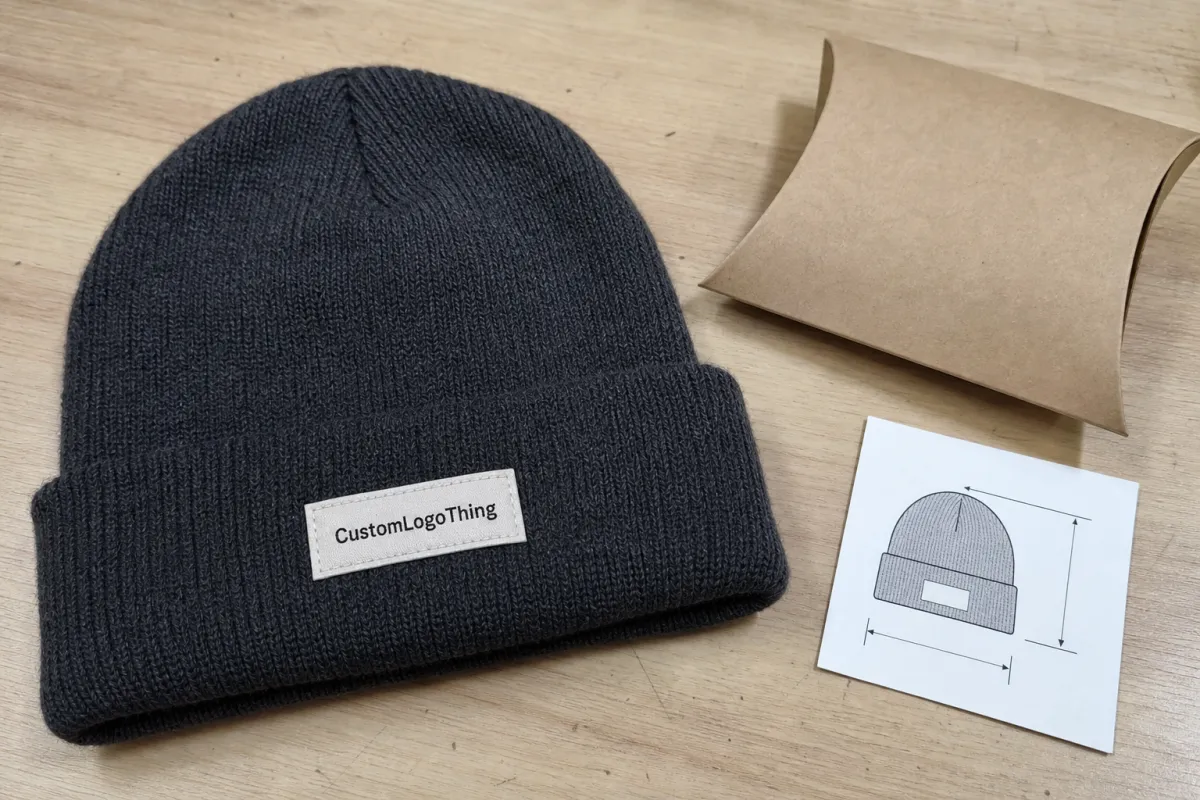
A woven label is a small branded panel made from thread and stitched onto the beanie, usually on the cuff, side seam, or edge. It reads more premium than a print because it adds texture and permanence, and it gives the hat a finished retail look.
That matters because the label does not work alone. It sits on top of the knit, the fold, the crown shape, and the fit around the forehead. A budget acrylic beanie can still sell well if the label is clean and well placed. A premium wool blend can still disappoint if the label is crooked, oversized, or fighting the stretch path.
Buyers usually compare four branding options:
- Woven label - thread-based branding stitched on; sharp, durable, and flexible for placement.
- Print - flatter and often cheaper, but less tactile on knit surfaces.
- Embroidery - bold and textured, but heavier and sometimes less comfortable on soft winter knits.
- Knit-in logo - integrated into the fabric; clean, but harder to revise once the spec is set.
If your goal is to make the hat feel like a finished product instead of a giveaway, the woven label is usually the best balance of cost and presentation. If you also need the rest of the branding to match, the Custom Labels & Tags page is the natural place to align the artwork and construction before production starts.
The label also influences how the hat photographs and how people judge quality at a glance. A small, well-made label on a dense cuff signals control. A noisy label with thin text and poor contrast suggests the order was rushed.
How Woven Labels Change Hand Feel and Wear
A beanie should feel soft, stretch without resistance, and recover after wear. The label can help or hurt that experience. A woven label with stiff backing, dense stitching, or rough edges can create a scratch point where the forehead or ear rubs.
Cuffed beanies are more forgiving because the label sits on a folded band with more fabric underneath. On uncuffed or lightweight slouch styles, the same label can feel more noticeable because there is less material between the skin and the branding. That is why label size should never be judged separately from hat style.
Three details decide comfort fast:
- Label width - too wide and it starts pulling across the stretch path.
- Thread thickness - thicker threads add texture and bulk on softer knits.
- Edge finish - folded, merrowed, or clean-cut finishes behave differently against skin.
A good woven label does one quiet job: it makes the beanie look designed on purpose. That matters for retail, gifting, and brand merch. A blank beanie with a neat stitched label looks finished. A blank beanie with a poor label looks like a missed detail.
Woven Label Beanies Material and Sizing Guide: Material Choices That Change Warmth, Stretch, and Price
The body material drives most of the wear experience. The key tradeoffs are warmth versus breathability, softness versus durability, and retail polish versus price. There is no single best fiber; the right choice depends on how the hat will be used.
Acrylic is usually the safest budget option. It is warm, light, color-friendly, and easy to mass-produce. It also keeps cost predictable, which is useful for promo runs and entry-level retail.
Polyester blends often hold color well and can feel smoother than basic acrylic. They are a good fit for bright branding or repeat-wear products. Wool and wool blends feel more premium and usually regulate temperature better, but they raise cost and can increase itch and shrink risk if the spec is not controlled.
Liners are useful when comfort matters more than price. Fleece or jersey lining improves warmth and reduces scratchiness, but it adds cost and can reduce stretch. For outdoor winter use, that tradeoff often makes sense. For a merch drop, it may not.
| Material | Feel and Warmth | Stretch and Durability | Typical FOB Impact at 5,000 pcs | Best Use |
|---|---|---|---|---|
| Acrylic | Warm, light, easy care | Good shape retention, moderate pilling risk | $1.10-$1.90 | Budget retail, promo, broad audience |
| Polyester blend | Smooth, color-stable, slightly less breathable | Strong recovery, good wash stability | $1.20-$2.00 | Bright branding, repeat wear, sports-adjacent use |
| Wool blend | Warmer, richer hand feel, more premium | Good drape, some itch and shrink risk | $2.40-$4.50 | Retail gifting, elevated merch, cold-weather use |
| 100% wool | Natural, warmest, soft if well finished | High warmth, requires better care control | $3.50-$6.50 | Premium launches, higher-ticket collections |
Gauge matters too. A 7-gauge knit feels chunkier and hides stitching better, while a finer 12-gauge knit looks cleaner but can show small flaws more easily. If the logo is tiny or needs strong readability, the gauge affects how successful the final piece looks.
Packaging can also affect the buyer experience. Beanies shipped in corrugated cardboard cartons with kraft paper inserts and FSC certified hang tags feel more deliberate than beanies tossed into a loose polybag. If you are using recycled materials, ask for the post-consumer waste content in writing. If you want biodegradable packaging, verify the claim before printing it anywhere. For transit protection, ISTA transit testing guidance is useful when the shipment has to survive real handling. For paper components, FSC certified paper standards are the reference point.
How to Size Beanies Without Guessing
Sizing is where many orders go wrong. Start with head circumference. A standard adult range is often 56-60 cm, youth often lands near 50-54 cm, and oversized or slouch fits may run 58-63 cm depending on knit tension. Those are starting points, not absolutes.
The better approach is to use three checks: head circumference, desired stretch reserve, and crown or cuff proportions. The cuff can hide a lot on a regular beanie, but on a shallow cuff the label can suddenly dominate the front panel. On a tall cuff, the same label may look balanced.
The key point: fit is driven more by knit tension than by the label. A tighter rib knit will hug the head and recover well. A looser slouch knit feels softer but can lose shape faster. The label sits on top of that behavior; it does not fix it.
A simple fit check reduces surprises:
- Test the sample on at least three head sizes.
- Wear it for 20-30 minutes, not just for a quick check.
- See whether the cuff rides up, pinches, or twists.
- Measure stretch recovery after the sample rests overnight.
If your order covers mixed audiences, use fit buckets instead of one vague size promise. Youth, standard adult, and oversized styles are easier to sell and easier to approve than a one-size-fits-all claim.
Production Steps, Samples, and Lead Time
A clean order usually follows a predictable sequence: tech pack or spec sheet, artwork proof, sample build, revision, bulk production, finishing, and packing. If a supplier cannot explain those steps clearly, expect avoidable problems later.
Typical timing is straightforward: 7-10 business days for a sample, then about 12-20 business days for bulk production after approval. Add time if the artwork needs changes, yarn colors need matching, or the factory is in peak season. Rush orders are possible, but the cost is usually higher pricing, higher risk, or both.
Buyers save time by locking three decisions early:
- Label size and placement - changing them after proofing slows everything down.
- Fabric and gauge - changes here affect the entire feel of the hat.
- Packaging spec - even small changes to folding, bagging, or carton counts can add days.
A sample should be judged on feel as much as on appearance. Check the inside seam, label edges, stretch recovery, and how the cuff behaves after being worn and refolded. If you are matching the hat with sewn-in identifiers or hang tags, keep the same branding logic across the order so the presentation stays consistent. The Custom Labels & Tags spec is useful when those pieces need to line up.
Packaging should get a separate approval step. Ask how the beanies will be folded, whether they go in individual polybags, and whether the master cartons are corrugated cardboard sized for stacked freight. It is not exciting work, but it is where shape damage, packing confusion, and inconsistent presentation usually start.
Cost, MOQ, and Unit Cost: What Moves the Quote
Beanie pricing comes from a stack of small decisions, not one single number. Yarn type, label complexity, stitch count, number of colors, and packing format all move the quote.
MOQ is often the biggest driver at low quantity. Many suppliers want 100-300 pieces per color or style to start. At 500-1,000 pieces, the unit cost often drops enough to justify the larger run if the spec stays fixed. In practical terms, a controlled order can save 12-25% per piece between a small run and a stronger production tier.
Watch for the extras that show up late:
- Sample fees, often around $30-$100 depending on complexity.
- Custom hang tags or printed inserts.
- Bagging changes, carton labeling, and inner packs.
- Freight, duty, and retail-ready folding or folding boards.
If the budget is tight, reduce complexity before you reduce fit quality. A simpler woven label is usually better than a beanie that pinches or collapses. Buyers sometimes chase a richer thread count because it sounds premium, but a clean one- or two-color label on a stable knit often performs better and reads more clearly.
Ask for tiered pricing, not just one number. Pricing at 100, 300, and 1,000 pieces shows the break points clearly and makes it easier to decide whether a modest volume increase pays for better material, better packaging, or both.
Common Mistakes That Make Beanies Come Back
The worst returns usually come from avoidable mistakes. One-size-fits-all sounds efficient until the fit complaints start. If the knit does not stretch enough, the beanie gets labeled uncomfortable. If it stretches too much, it looks loose and cheap after a few wears.
Label size is another common miss. Buyers approve a logo in a mockup, then place it on a cuff that is too shallow. The label suddenly feels oversized. The opposite also happens: the label is so small that the brand name becomes unreadable at normal viewing distance. That is wasted stitching and wasted money.
Color contrast creates trouble too. Thin text on a dark knit may look elegant on screen and muddy in person. Premium does not mean invisible. It means readable, balanced, and well placed.
Common return triggers:
- The cuff is too shallow for the label placement.
- The knit shrinks or twists after washing.
- The inside label edge scratches the forehead.
- The logo thread count makes the design unreadable.
Comfort complaints usually come from fit errors, not branding errors. People forgive a simple logo faster than a hat that squeezes the temples. The best prevention is to test on real heads, wash one sample, and check whether the label still lies flat after recovery.
A beanie that fits well and feels soft gets worn. A beanie that only looks good in the mockup gets left in the package.
Expert Checks Before You Place the Order
Before you approve bulk production, run a final check like a buyer who has paid for mistakes before. First, confirm the target wearer. Adult retail and youth promo are not the same product, even if the artwork is identical. Then compare sample measurements against the spec sheet rather than memory.
Use a simple approval checklist:
- Label placement matches the cuff or seam plan.
- The label edge feels smooth against skin.
- Stretch recovery returns the hat to shape after wear.
- The knit does not distort the logo after folding.
- The packing method protects the shape in corrugated cardboard master cartons.
- Any paper inserts or hang tags are documented if you are using recycled materials, FSC certified stocks, or post-consumer waste content.
Ask for tiered pricing before you sign off. A quote with one quantity tells you very little. A quote with 100, 300, and 1,000-piece tiers shows where the savings live and whether the factory can keep label art, yarn color, and packing spec locked across all tiers.
For brands that need a cleaner retail presentation, use the same branding logic across the hat, insert card, and sewn-in identifiers. If those pieces need to line up, the Custom Labels & Tags option is worth reviewing before the spec is final.
Woven Label Beanies Material and Sizing Guide for Buyers is really a checklist: Pick the Right fiber, size the fit from real measurements, place the label where it belongs, and confirm packing before bulk starts. Do that and the beanies feel intentional. Skip it and the small details become expensive.
What material is best for woven label beanies?
Acrylic is usually the safest budget option because it is warm, light, and easy to mass-produce. Wool or wool blends feel more premium, but they can raise cost and itch risk. The right choice depends on whether the beanie is for retail gifting, winter utility, or a promotional campaign.
How do I choose the right beanie size for adults and youth?
Start with head circumference, then match it to the knit's stretch range instead of guessing from a generic chart. Use youth, standard adult, and oversized fit buckets if your audience is mixed. Always test on real people before approving the bulk run.
Do woven labels make beanies less stretchy?
A small woven label usually has minimal effect if it is placed on a cuff or another low-stretch zone. Larger or heavily stitched labels can reduce give if they sit across the stretch path. Placement matters more than the label itself.
What is a realistic lead time for custom woven label beanies?
Sample and approval stages often take longer than buyers expect. Production can move quickly once artwork, sizing, and fabric are finalized early, but revisions and peak-season queueing usually add days. A realistic plan should include both sampling and bulk timing, not just the factory's best-case promise.
How much do woven label beanies usually cost per unit?
Unit cost depends mainly on material, label complexity, and quantity. Higher MOQ often lowers the per-piece price, but only if the spec is locked. Ask for tiered quotes so you can see the real price break at each volume.


