A dad hats Sample Approval Checklist sounds like paperwork until a tiny crown shift makes the hat sit wrong, the front panel looks too tall in photos, and the whole run suddenly feels cheaper than the proof. That is the problem with headwear: the expensive mistake is often the small one nobody flags before bulk production starts.
Dad hats are especially unforgiving because they are supposed to look easy. Relaxed. Low-profile. Slightly broken-in. If the sample misses that balance, the flaw is obvious the second someone puts it on. The wrong brim curve, a stiff front panel, or a closure that lands off-center by a few millimeters can change how the product reads even when the logo is clean.
The checklist is not there to make the process fussy. It is there to separate a real approval from a polite guess. That difference saves money, reduces revisions, and keeps a factory from building 5,000 units around the wrong assumption.
What a dad hats sample approval checklist catches
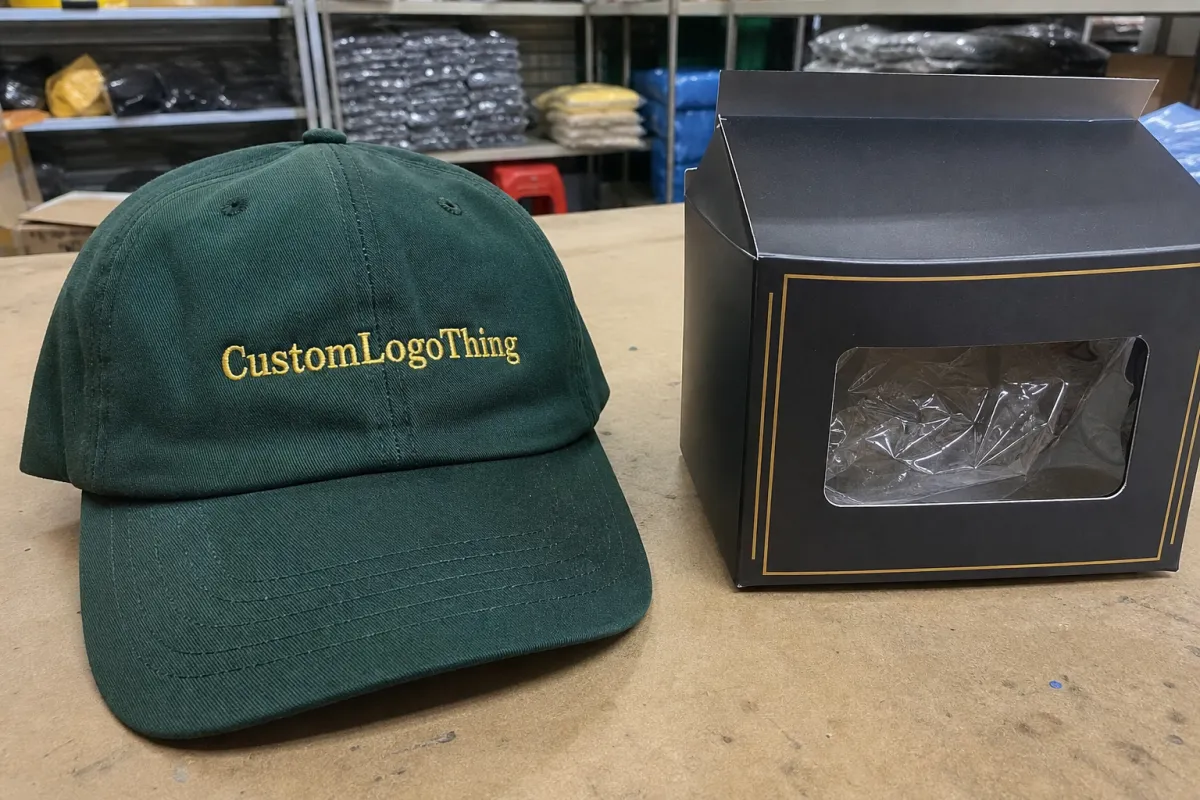
Most sample failures are not dramatic logo disasters. They are fit, proportion, and finish problems that only show up once the hat is worn, stacked, photographed, or compared with a previous run. A front panel can be a little too tall. The brim can curve more than expected. The closure can sit a bit off-center and still pass a quick desk review.
That is why a dad Hats Sample Approval Checklist should catch both hard measurements and visual judgment. Measure crown height, panel symmetry, brim length, and opening size. Then check whether the hat actually matches the approved look. A good sample is not just "nice." It is repeatable.
From a buyer's point of view, the low-stakes errors are often the most expensive. Thread color can be close enough. A slightly warmer wash tone can be acceptable. But if the silhouette is wrong, the product will never feel right, no matter how good the embroidery is. People notice shape faster than they notice subtle color shifts.
That is especially true for soft, unstructured caps. They do not hide mistakes well. If the sample is too tall, the front panel stands up like a billboard. If the fabric is too crisp, the hat loses the casual feel that makes dad hats work in the first place.
The best checklists blend subjective calls with measurable points:
- overall silhouette and depth
- crown height and front-panel stance
- brim length and curve
- logo placement and size
- closure function and strap overlap
- stitch quality, seam alignment, and inside finish
If a vendor cannot repeat the sample within a reasonable tolerance, the approval is shaky. One lucky sample is not the same thing as a stable production standard.
How sample approval works before bulk production
The flow is simple on paper. A tech pack or brief goes to the factory. The factory builds a sample. The buyer reviews it. Notes get marked up. A revision is made if needed. Written approval only happens once the physical piece matches the spec and the intended look.
The friction usually shows up in the handoff language. Three phrases matter and they do not mean the same thing:
- Approved as is means the sample is cleared for bulk production.
- Approved with notes means the factory can proceed, but the notes are part of the final instruction set.
- Revise and resubmit means nothing should move forward yet.
That distinction sounds obvious, then gets ignored as soon as people start trying to be diplomatic. The factory needs a clear decision. Soft wording turns into version drift fast, and version drift is how a clean order gets messy before cutting begins.
For that reason, keep the approval trail tight. Ask for the physical sample, a measurement sheet, detailed photos, and any decoration callouts that show placement or size. Record the date and version. If there is a reorder later, those files become the only reliable proof of what was actually approved.
Approval should read like a production instruction, not a compliment.
There is also a practical reason to separate comments by category. Fit notes, artwork changes, packaging changes, and material changes should not all live in one vague email thread. The more mixed the feedback, the more likely the factory applies the right fix to the wrong version.
Fit, fabric, and decoration details that change the final hat
Fit is where many first-time buyers get tricked. A dad hat can look relaxed on a hook and still wear badly if the crown is too tall, the front panel is too stiff, or the brim curve lands outside the brand's visual language. On a cap this simple, tiny changes are easy to see.
The main variables are crown height, head opening, brim length, closure type, and how much structure the front panel holds. For unstructured caps, a small measurement shift changes the whole feel. A quarter inch can matter. So can the angle of the brim. So can where the back strap settles once the hat is on a head instead of a flat table.
Fabric choice changes the final tone as much as construction does. Washed cotton looks broken-in and casual. Twill usually feels cleaner and more retail-ready. Canvas reads sturdy but can feel heavy if the build is too dense. Garment washing softens the hand and usually shifts color a bit. That is fine if the reference sample already showed the wash. It is a problem if the approved sample was crisp and the bulk order is suddenly faded.
Decoration deserves the same level of scrutiny. Embroidery density changes how raised the logo feels. Stitch cleanup affects whether the edge looks sharp or fuzzy. Patch construction changes the whole mood of the hat. Woven patches, felt appliques, and direct embroidery all land differently on a low-profile cap, even when the artwork is identical.
Interior details matter more than most buyers expect. Woven labels, sweatband printing, hardware finish, hangtags, and retail packaging all affect how the product is perceived. If the order includes paper inserts or hangtags, confirm whether the stock and sourcing details are locked before approval. If a brand needs FSC documentation later, it is much easier to have that conversation before bulk than after cartons are already in motion. See FSC for chain-of-custody information.
It also helps to split tolerances into "tight" and "flexible" categories. Logo placement can usually move a little without ruining the product. Closure function, head opening, and center-front alignment should be much tighter. A practical dad hats Sample Approval Checklist should reflect that difference instead of treating every imperfection as equally bad.
| Detail | Usually tighter | Usually more flexible |
|---|---|---|
| Closure placement | Yes | No |
| Head opening | Yes | No |
| Logo placement | Sometimes | Sometimes |
| Thread shade variance | No | Yes, within reason |
| Brim curve | Yes | No |
Cost, pricing, and MOQ decisions that shape the order
Pricing gets messy fast because sample fees, setup charges, and revision costs tend to hide inside a quote. Embroidery thread count, patch construction, garment wash, and custom closures all add cost before the first bulk unit is even sewn. If the sample uses one method and the bulk order uses another, the quote is not really comparable.
For a straightforward custom dad hat order, sample fees often land around $35-$150, depending on complexity. A simple embroidered sample usually sits at the lower end. Woven patches, applique, specialty fabric, or garment wash push the price higher. In bulk, a plain cotton dad hat with a single-color logo might land around $2.50-$4.00 FOB at a few thousand units. Specialty materials, metal buckle hardware, or denser decoration can push the number toward $4.50-$6.00 or more. Those are working ranges, not promises.
| Sample option | Typical sample fee | Bulk cost pressure | Best fit |
|---|---|---|---|
| Basic embroidery sample | $35-$60 | Low to moderate | Simple logos, quick proofing, first orders |
| Woven patch or applique sample | $60-$120 | Moderate | Bolder art, texture, retail presentation |
| Washed or specialty finish sample | $80-$150 | Higher | Lifestyle brands, vintage look, softer handfeel |
MOQ matters just as much. A lower minimum order quantity reduces risk if the design is new, but it usually raises the unit price because setup costs are spread across fewer pieces. In practice, a 100- or 200-piece order can cost 20% to 40% more per unit than a 1,000-piece run with the same fabric and decoration. Sometimes that premium is worth it. Sometimes it is just expensive caution.
Compare quotes only after the spec is locked. If one supplier priced washed cotton and another priced standard twill, the numbers are not comparable. The same problem shows up with closure type, packaging, and freight terms. Shipping, customs, rush fees, and a second sample round can turn a decent quote into a bad one if they are not surfaced early.
One more thing: do not let "sample approved" blur into "price approved." They are separate decisions. A hat can be technically right and still too expensive for the program. That is not a production problem. It is a sourcing problem, and it needs to be handled before the order is signed.
Process and lead time: what happens after the OK
Once the sample is approved, production usually moves through the same chain: final sign-off, material reservation, pre-production checks, bulk sewing or embroidery, inspection, packing, and dispatch. The sequence sounds linear. The delays do not. Lead time usually slips in the gaps between steps, not during the actual sewing.
A useful planning range is often 7-14 business days for the first sample, another 5-10 business days for a revision round, and 12-25 business days for bulk production on a standard custom cap order once materials are in hand. Shipping adds its own timeline. Air freight moves in days. Ocean freight moves in weeks. Neither one should be treated like a surprise, but both are easy to underestimate when the order is moving fast.
One way to shorten the schedule is to pre-approve materials before the sample round starts. Another is to keep one decision-maker on the buyer side. If three people send contradictory notes, the calendar starts slipping immediately. The factory cannot build from consensus soup.
If the hats ship in retail cartons or compressed packing, ask how the pack-out is tested. ISTA publishes transport test families that help teams talk about handling risk in a much more useful way than "it should probably be fine." That matters for e-commerce orders, long-distance freight, and premium presentation boxes.
Put the milestones in writing. Approval closes on one date. Production starts on another. Inspection follows after that. Shipping should only happen once the approved sample, the written sign-off, and the factory record all point to the same version.
Step-by-step review: building the checklist with your vendor
The cleanest approvals start with a pre-check against the spec sheet, not a style opinion. Confirm the dimensions, color references, logo placement, closure type, and packaging intent before anyone starts saying whether the hat "feels right." A good-looking sample can still be wrong if it misses a stated measurement or ships with the wrong label.
- Confirm silhouette, size, and closure against the tech pack.
- Inspect at least two or three hats from the same sample set if possible.
- Check the hat on a head, on a flat surface, and in photos.
- Compare decoration placement to the artwork file and mockup.
- Review stitch finish, seam alignment, sweatband, and inside labeling.
- Log every issue with photos, arrows, and measurements.
- Mark each item as approved, revise, or reject, then record the version and date.
That sequence catches repeatability issues that a single hero sample can hide. One perfect piece can mask a small production drift that will show up later across dozens or hundreds of units. That risk is bigger on soft dad hats because unstructured panels vary more than buyers expect.
Documenting the sample matters as much as judging it. Save close-up photos, measurement notes, and any swatches that belong to the approved version. If the order gets reordered six months later, that file becomes the reference everyone trusts. Without it, people start arguing from memory, which is a bad system and a worse meeting.
A simple rule helps: review the hat in the same order every time. Silhouette first. Fabric handfeel second. Decoration third. Inside details fourth. Presentation last. That habit makes the dad hats Sample Approval Checklist faster to use and easier to repeat across teams.
Common mistakes that create reorders and delays
The most expensive approval is the one that feels polite. Buyers often approve the "hero sample" without asking whether the factory can repeat it. That is a problem because one hand-finished sample does not prove a full production line can match it across a larger order.
Another common miss is focusing only on the front logo. The embroidery can be perfect, but if the seam alignment is off, the closure feels cheap, or the sweatband is uncomfortable, the final product still disappoints. A sample approval checklist for dad hats needs to cover the whole wearable item, not just the visible art.
Vague feedback creates delays too. "Make it pop more" is not an instruction. Neither is "closer to premium." The factory needs a dimension, a placement change, a comparison photo, or a reference sample. If the note cannot be acted on, it will probably trigger another round.
Photos alone can be risky on a first order. A crown shape can look flatter in person than it does on a phone screen, and stitch density changes how the logo reflects light. If photos are the only option, ask for measurement shots, close-ups, and a version record before giving final approval.
If the revision note cannot be measured, photographed, or compared, it is probably too vague to fix correctly.
Version drift is the final trap. One round of notes gets applied to the wrong file. Someone approves a sample that no longer matches the latest artwork. The team ends up discussing an order nobody can cleanly trace. That is how reorders and delays start.
Expert tips and next steps for a cleaner approval
Lock a tolerance table before sampling. Decide what can move and what cannot. Crown height, brim curve, logo size, and closure placement should all have a written range, even if the range is tight. That gives the factory a target and gives the buyer a fair way to judge the sample.
Ask for a side-by-side record of the approved sample. Keep the photos, the measurement sheet, and the material swatches together. If the hat includes a branded box, tissue, insert, or hangtag, archive those parts too. Reorders go faster when the factory can open one file and see the entire approved package.
A two-round revision cap is healthy if the design is reasonably clear. Endless sample cycles usually point to a spec problem, not a production problem. At that stage, the buyer should revisit the artwork, the materials, or the fit brief instead of asking for another vague revision.
Before sending the order, gather the tech pack, reference hat, artwork files, color standards, and timeline in one folder. That small habit saves hours of back-and-forth, especially if the order moves across merchandising, sourcing, and production teams.
Use a dad hats sample approval checklist as a control system, not a one-time form. It protects margin, shortens revision loops, and keeps the approved sample aligned with the bulk run. For headwear, that is usually the difference between a clean reorder and a costly scramble.
What should a dad hats sample approval checklist include?
It should cover fit measurements, crown shape, brim curve, logo placement, stitch quality, label accuracy, closure function, and packaging details. Add photo documentation and a dated approval note so the production team can match the exact version later. Include approve, revise, or reject decisions for each item to keep feedback fast and specific.
How many samples should I review before approving dad hats?
For a first order, review at least one physical sample and any revised sample created after changes. If the order is large, compare multiple units from the same sample set or a small pre-production batch to check repeatability. Do not approve until the sample reflects the final materials, decoration, and packaging.
What if the sample is good but the quote changes?
Ask the vendor to explain exactly what changed: material, decoration method, freight, packaging, or labor. Requote only after the spec is locked so you are comparing like-for-like pricing. If the new price reflects a higher MOQ or a faster timeline, document that trade-off before approving.
How long does dad hats sample approval usually take?
Timing depends on sample build time, shipping, internal review, and whether a revision round is needed. A clear feedback window can shorten the process more than almost anything else because delays often come from waiting on decisions. Plan for extra time if materials are custom, embroidery is complex, or the order lands during a busy production period.
Can I approve dad hats from photos only?
Photos can work for repeat orders, but they are risky for a first production run. Physical samples are better for checking crown shape, handfeel, stitch density, and how the hat wears on a head. If photos are the only option, request measurement shots, close-ups, and a clear version record before giving final approval.
A good dad hats sample approval checklist is less about paperwork and more about preventing avoidable disappointment. If the sample, the notes, and the signed approval all match, the bulk order usually moves with far fewer surprises.


