Embroidered Baseball Caps Sample Approval Checklist Basics
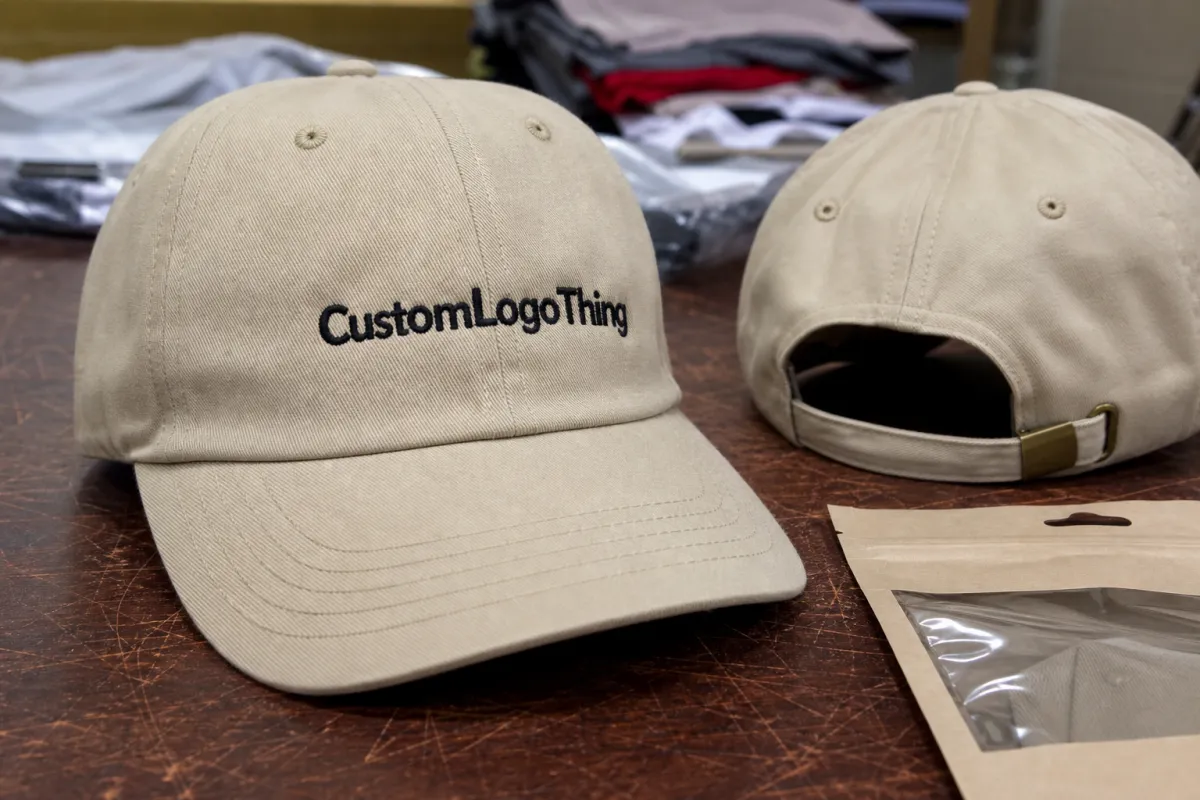
A cap sample can look perfect in a photo and still cause problems once production starts. An embroidered baseball caps Sample Approval Checklist gives buyers one last practical control point before hundreds or thousands of caps are stitched the same way. That matters because a baseball cap is a curved, structured product. Seam placement, crown shape, buckram, thread tension, backing, and fabric stretch all affect the final embroidery.
Sample approval is the review stage where the physical cap gets checked against the approved mockup, artwork file, tech pack, purchase order, quote, and brand standards. Not a quick glance. Not “looks good” from someone’s phone screen. A real review.
Baseball caps are not flat tote bags. The logo sits on a rounded crown, often near a center seam, above a sweatband, and across panels that may not stretch evenly. Dense stitching can pull the fabric inward. Small lettering can close up. Thread color can shift under different lighting. The sample is where those issues stop being theoretical.
The most common buyer mistake is treating the sample as a logo check only. The embroidery matters, obviously. But the sample also confirms cap construction, fabric hand feel, crown depth, bill shape, closure type, label position, packaging, carton marks, and the overall presentation. A cap with clean embroidery is still a failed sample if it sits too shallow, feels scratchy, uses the wrong label, or arrives packed in a way that crushes the bill.
The goal is not to turn every buyer into a factory inspector. The goal is to approve with details production can repeat: measurements, color references, acceptable tolerances, and clear revision notes. If you would be annoyed seeing the same issue on 1,000 caps, do not approve it on the sample. Brutal rule. Useful rule.
Production rule of thumb: a sample approval is not a compliment. It is permission to reproduce the cap at scale.
How Sample Approval Works Before Bulk Cap Production
The usual production path starts with artwork submission, then digitizing, stitch file setup, cap selection, pre-production sample creation, internal factory review, buyer inspection, revisions if needed, and final written approval. Each step removes uncertainty. Skip one, and the uncertainty does not disappear. It moves into the bulk order.
Digitizing is the translation of your logo into stitch paths. A digitizer sets stitch density, underlay, pull compensation, stitch direction, trims, thread sequence, and sometimes special handling for small text or outlines. Pull compensation matters more on caps than many buyers expect. Thread pulls fabric inward as it stitches, and a logo that looks balanced on screen may narrow, warp, or crowd after it is sewn into cotton twill, nylon, or performance polyester.
A digital mockup shows intent. A physical embroidered sample shows behavior. It reveals thread sheen, stitch buildup, puckering, edge definition, backing feel, and how the design sits above the bill seam. For a simple reorder using the same cap, same logo, and same thread colors, photo approval may be enough. For a first order, retail program, new cap body, or brand-sensitive color, a physical sample is usually the safer choice.
Different cap styles behave differently under the needle. Structured caps usually hold a cleaner front face because the front panels have support, often buckram or a similar stiffening material. Unstructured Dad Hats collapse softer and feel more casual, but the moving panel can make small lettering less sharp. Trucker caps add another variable because the front panel and mesh back age and handle differently. Performance caps may include stretch, coatings, or slick surfaces that affect thread grip.
Sample approval should not happen in a vacuum. Procurement, marketing, design, merchandising, and anyone responsible for brand color or packaging should review before approval is sent. What does not help: five people sending five separate emails with vague opinions. Production needs one consolidated response.
Factories generally treat approval as permission to reproduce the sample. If a note is unclear, fix it before the line is scheduled. Written approval should identify the sample version, cap style, logo file, thread colors, placement, packaging instructions, and order quantity. “Approved” without those details is how arguments start later. Nobody enjoys those.
Logo, Stitching, and Placement Details to Check Closely
Start with logo size and placement. Even excellent embroidery looks wrong if the mark sits too high, too low, off-center, or too close to a seam. For a front logo, measure the width, height, distance from the bill seam, distance from the center seam if there is one, and side-to-side balance across the front panels.
Use a ruler. Guessing is expensive. A common front embroidery width may fall around 2.25 to 4.5 inches depending on the logo shape, cap profile, and brand style, but the approved spec should control the decision. If the quote says 3.25 inches wide and the sample is 3.6 inches, record that number. “Feels big” is not a production instruction.
Review stitch quality at normal viewing distance first, then up close. Look for smooth edges, clean fills, no loose loops, no excessive thread breaks, no gaps in filled areas, no visible bobbin thread on the face, and no puckering around dense sections. Dense fill embroidery can stiffen the panel, especially on lightweight cotton or unstructured caps.
Thread color needs a serious check. Polyester embroidery thread has sheen, so it can look different under office lighting, daylight, retail lighting, and warehouse lighting. Compare the sample with Pantone references, thread cards, or a previous approved brand sample if one exists. Screen color alone is risky. Monitors lie with confidence.
Small lettering is where many samples fall apart. Fine text, thin outlines, gradients, tiny registration marks, and tight letter spacing may need simplification. On brushed cotton, twill, canvas, or textured performance fabric, thread can spread slightly. Letters that look clean in a vector file may close up after stitching. A simplified mark that reads from six feet away is usually better than a technically complete logo that turns into fuzz on the crown.
Also inspect the inside of the cap. Buyers do not need to specify every backing material, but they should check whether the embroidery feels rough, bulky, scratchy, or poorly trimmed. A wearer will notice harsh backing against the forehead long before they admire the stitch file.
- Measure placement: logo width, logo height, bill seam distance, center alignment, and side-to-side balance.
- Review stitch clarity: edges, fills, trims, thread breaks, bobbin show-through, and puckering.
- Check color: compare thread under daylight, office light, and against Pantone or thread references.
- Inspect comfort: backing, interior trims, seam tape, and forehead contact points.
Keep the approved PDF, Pantone references, quote, and any prior brand sample on the table during review. The Embroidered Baseball Caps sample approval checklist only works if the cap is compared with actual production references, not someone’s memory from a meeting three weeks ago.
Cap Construction, Fit, Fabric, and Trim Factors
Move beyond decoration and inspect the cap itself. Crown height, panel count, bill curve, profile, fabric weight, sweatband quality, eyelet spacing, stitch lines, and closure hardware all affect how the cap feels and sells. A cap can pass the logo test and still fail the wearer test.
Structured and unstructured crowns create different impressions. Structured caps hold a more upright shape because the front panels have support. They are useful for crisp front embroidery and a more uniform, promotional, or teamwear look. Unstructured caps collapse softer and feel more relaxed, which works well for dad hats and lifestyle merchandise. The tradeoff is movement. Softer panels can shift under embroidery pressure and on the wearer’s head.
Check symmetry from the front, side, and top. Uneven panels, crooked bills, wavy seams, off-angle closures, or irregular top buttons become painfully obvious once caps are boxed together. One slightly crooked sample might be a handling issue. A crooked pattern can repeat through bulk production.
Material changes the feel and the stitch result. Cotton twill is common and dependable for embroidery. Brushed cotton feels softer, but tiny details may lose crispness. Polyester and nylon often support performance use, though slick surfaces need careful tension control. Canvas gives a sturdier, more textured look. Mesh on trucker caps adds contrast between the decorated front panel and breathable back panels. Stretch or moisture-management finishes should be checked after the cap is flexed, not only while it sits untouched on a table.
Closure type needs a hand check. Snapbacks should click cleanly and line up evenly. Metal buckles should move smoothly without sharp edges. Hook-and-loop closures should grip firmly without feeling flimsy or scratchy. Fitted caps need size accuracy. Elastic stretch caps should recover after being pulled. The closure can match the quote and still feel cheap. That is why samples exist.
Comfort details stay quiet until they are wrong. Feel the sweatband, seam tape, tag placement, embroidery backing, and any pressure points. Put the sample on a head form or an actual wearer. Flat-table inspection misses crown depth, profile, bill angle, and whether the cap sits too shallow or too deep.
| Cap Type | Typical Use | Embroidery Watch Point | Sample Review Priority |
|---|---|---|---|
| Structured cotton twill | Uniforms, promo programs, team gear | Dense logos usually hold well, but placement must clear seams | Logo height, front profile, bill curve |
| Unstructured dad hat | Retail, lifestyle, casual brand merch | Soft crown can shift under embroidery pressure | Fit, puckering, small text clarity |
| Trucker cap | Outdoor, events, casual promo | Foam or twill front may contrast with mesh back | Panel symmetry, closure, front logo centering |
| Performance polyester | Sports, staff apparel, outdoor use | Stretch or slick fabric can affect stitch tension | Thread pull, wearer comfort, color under light |
Process Timeline and Lead Time for Sample Revisions
A realistic timeline starts with artwork review and digitizing, then sample embroidery, internal quality check, shipping or photo review, buyer feedback, revision if needed, and final approval before bulk production. For stock cap embroidery, a sample can often be prepared within several business days after artwork and cap selection are confirmed. Fully custom construction takes longer. Custom fabric, custom dyeing, private labels, specialty trims, and unique packaging can push the sample stage out by weeks, depending on supplier setup and material availability.
Photo approval is faster. Physical sample approval gives better confidence. A clear photo set should include front, side, back, inside, top, and close-up embroidery images. That can work for repeat programs or simple logos. Photos still cannot fully show fit, hand feel, thread sheen, closure comfort, or interior backing. If the order is tied to retail shelves, employee uniforms, school programs, or a brand launch, waiting for the physical sample is usually the lower-risk move.
Revision timing depends on the change. A thread color swap may move quickly if the stitch file stays the same. Changing logo size, stitch type, cap style, fabric, or panel construction may require a new sample or partial remake. A logo approved on structured cotton twill may not behave the same way on nylon, mesh, or an unstructured crown.
Late feedback after approval can disrupt production scheduling. Thread, blank caps, labels, cartons, trims, and machine time may already be allocated. If you approve the sample on Monday and ask for a crown profile change on Thursday, expect a pause, a revised quote, or a restart of part of the approval process. Annoying? Yes. Also normal.
Build sample approval into the project calendar before event deadlines, retail launches, employee onboarding, school seasons, or promotional campaigns. A practical rhythm works well: inspect the sample the day it arrives, gather stakeholder comments within one business cycle, consolidate feedback into one marked-up file, and keep side conversations out of the approval trail.
The checklist should travel with the calendar. Each review step answers one question: are we ready for production to repeat this exact cap at scale?
Cost, Pricing, MOQ, and What Changes the Unit Cost
Sample cost and bulk unit cost are connected, but they are not the same thing. A sample may include setup work, digitizing, machine time, handling, and express shipping. Bulk pricing spreads setup costs across more units, but the decoration and construction choices still drive the final price.
The main cost drivers are cap style, fabric, embroidery stitch count, number of thread colors, logo size, placement count, backing requirements, trims, labels, packaging, freight, and order quantity. Stitch count is easy to understand once you think of it as machine time. More filled area, larger logos, heavy outlines, and dense lettering take more thread and more minutes on the machine.
MOQ depends heavily on product type. Stock cap embroidery can often support lower quantities because blanks already exist. Fully custom caps, custom dyed fabric, custom closures, woven labels, special sweatbands, and retail packaging usually require higher minimums because material setup and production handling are larger commitments. There is no universal minimum that applies to every cap style. Ask directly.
Pricing ranges vary widely by supplier, region, cap type, and order volume. A basic stock embroidered cap order may price very differently from a fully custom retail cap with private labels, hangtags, special packaging, and multiple decoration placements. Sample fees may be credited back on some orders and charged separately on others. Get that in writing before assuming anything.
Revisions affect cost too. Changing artwork before production is normal. Repeated sampling, new digitizing, changed fabric, or added logo locations can add both cost and time. The cheapest sample path is not always the lowest-risk path. A more complete pre-production sample can prevent bulk issues with logo placement, color, fit, and packaging.
| Cost Item | Typical Pricing Impact | Buyer Question to Ask |
|---|---|---|
| Digitizing | May be included or charged as a setup fee, often higher for complex logos | Is digitizing included, and do I receive a stitch proof? |
| Embroidery stitch count | Larger and denser logos usually raise machine time and unit cost | What stitch count is quoted for the approved logo size? |
| Sample freight | Express shipping can cost more than the sample itself on small orders | Is physical sample shipping included or separate? |
| Custom labels and packaging | Woven labels, polybags, hangtags, and carton marks add handling steps | Are labels, polybagging, and carton marks included in the quote? |
| Revision sample | Minor color changes may be simple; new cap styles or logo files can add setup | How many revision rounds are included before extra charges apply? |
Packaging deserves more attention than it usually gets. Ask whether cartons are selected for ordinary distribution handling and whether caps are packed to protect bill shape and crown profile. Organizations such as ISTA publish transport testing standards. If paper-based labels, hangtags, or cartons carry sustainability claims, compare those claims with credible sources such as the Forest Stewardship Council.
Confirm whether digitizing, sample freight, revision samples, labeling, polybagging, carton marks, and quality inspection are included or listed separately. A clean quote makes the embroidered baseball Caps Sample Approval Checklist easier to use because the buyer knows which details are locked and which ones are optional add-ons.
Common Approval Mistakes That Cause Bulk Order Problems
The biggest mistake is approving from one front logo photo. A cap has a front, side, back, interior, closure, bill, sweatband, labels, and packaging. If you only review the front embroidery, you may miss a crooked closure, rough backing, shallow fit, wrong label, crushed bill, or carton instruction that later becomes a receiving problem.
Another common problem is relying on screen color for thread approval. Monitors vary. Thread has sheen. Polyester thread under warehouse lighting may look different from the same thread under window light. Pantone references, thread charts, or physical comparisons are safer than screen approval. Screens are helpful. They are not witnesses.
Vague feedback creates avoidable risk. Comments like “make it pop” or “looks off” need translation into production language. Say “increase logo width from 3.0 inches to 3.25 inches,” “move logo down 0.25 inch toward the bill seam,” or “change red thread to the approved brand reference.” Measurable notes reduce interpretation.
Stakeholder drift causes delays too. Marketing approves the logo, then operations questions packaging. Design approves color, then merchandising dislikes fit. The order loses time because the approval path was not aligned. Decide who signs off before the sample arrives, not after everyone has opinions.
Over-dense embroidery causes many technical complaints. Too many stitches in a small area can create puckering, stiffness, thread breaks, needle marks, or distorted lettering. Sometimes the fix is not more stitches. It is cleaner digitizing, simplified artwork, a larger logo, or a different cap fabric.
Changing cap style after sample approval can invalidate the approval. A logo approved on structured cotton twill may not stitch the same on mesh, nylon, brushed cotton, or an unstructured dad hat. If the cap body changes, treat the approval as open again.
Keep one approved sample sealed or clearly labeled as the production reference. If multiple versions are floating around a desk, nobody should have to guess which one production is matching. The approved sample should match the written approval, artwork file, purchase order, and quote.
Next Steps Before You Approve the Final Cap Sample
Before sending final approval, place the physical sample, approved artwork, quote, spec sheet, purchase order, and brand color references on the same table. That setup pulls the review back to facts. It also helps catch mismatches between what was quoted and what was actually sampled.
Use a pass-fail routine. Check logo size, logo placement, thread colors, stitch quality, cap profile, fabric, bill shape, closure, interior finishing, labels, packaging, and carton requirements. If one item needs revision, describe it with a measurement, reference color, file name, or photo markup.
- Photograph the sample from the front, side, back, inside, and top.
- Mark any final notes directly on the images or in one consolidated PDF.
- List the approved sample version, cap style, logo file, quantity, and thread colors.
- Confirm packaging instructions, labels, polybags, carton marks, and accepted tolerances.
- Send one written approval email and keep a copy with the purchase order.
Hold back approval if fit, color, or stitch clarity still feels uncertain. One targeted revision is usually cheaper than explaining why the same flaw appears on every cap in the bulk shipment. Deadlines matter, yes. But approving a weak sample rarely saves time once finished goods arrive.
Use the embroidered baseball Caps Sample Approval Checklist as a working production tool, not a formality. The sample is the bridge between a clean idea on screen and a cap people will actually wear. Final approval should be clear, measured, and easy for production to repeat.
FAQ
What should be included in an embroidered cap sample approval checklist?
Include logo size, placement, thread colors, stitch quality, cap style, crown shape, fabric, bill curve, closure type, labels, packaging, and comparison against the approved artwork and quote. Add measurable details wherever possible, such as logo width, distance from the bill seam, Pantone or thread color references, and approved tolerances.
Should I approve embroidered baseball caps from photos or request a physical sample?
Photo approval can work for repeat orders, simple logos, or tight timelines. A physical sample is safer for first-time orders, new cap styles, retail programs, and brand-critical color matching. It lets you check fit, fabric hand feel, thread sheen, embroidery backing, closure comfort, and cap structure in a way photos cannot fully show.
How many revisions are normal before approving an embroidered baseball cap sample?
One focused revision is common when adjusting logo size, thread color, placement, or stitch density. Multiple revisions may signal that the artwork, cap style, or brand specs were not clear enough at the start. To keep the project moving, consolidate feedback into one marked-up file instead of sending separate comments from different stakeholders.
Does embroidery stitch count affect baseball cap pricing?
Yes. Stitch count can affect pricing because larger and denser embroidery uses more machine time, thread, backing, and operator attention. Pricing is also shaped by cap style, order quantity, number of logo locations, thread colors, custom labels, packaging, freight, and whether the cap is stock or fully custom.
What happens after I approve the embroidered baseball caps sample?
After written approval, the manufacturer uses the approved sample, artwork, digitized file, and order specs as the production reference for the bulk run. Changes after approval may require a new sample, revised quote, or production delay, so final approval should only be sent once all logo, cap, trim, and packaging details are confirmed.