Most beanie problems are already sitting in the sample. Buyers check the color, decide it is close enough, and miss the stretch, recovery, logo tension, seam comfort, cuff pressure, label feel, and packing details. That is exactly what a Ribbed Winter Hats sample approval checklist is supposed to catch before production starts.
Ribbed Winter Hats look simple. They are not simple to approve. The vertical ribs affect how the hat grips the head, how embroidery pulls across the knit, how a woven patch sits at the edges, and how the cuff behaves after folding. A flat knit beanie can be judged fairly well on a table. A rib knit hat needs to be handled, stretched, folded, worn, and packed before anyone calls it production-ready.
Ribbed Winter Hats Sample Approval Checklist: What It Catches Before Production
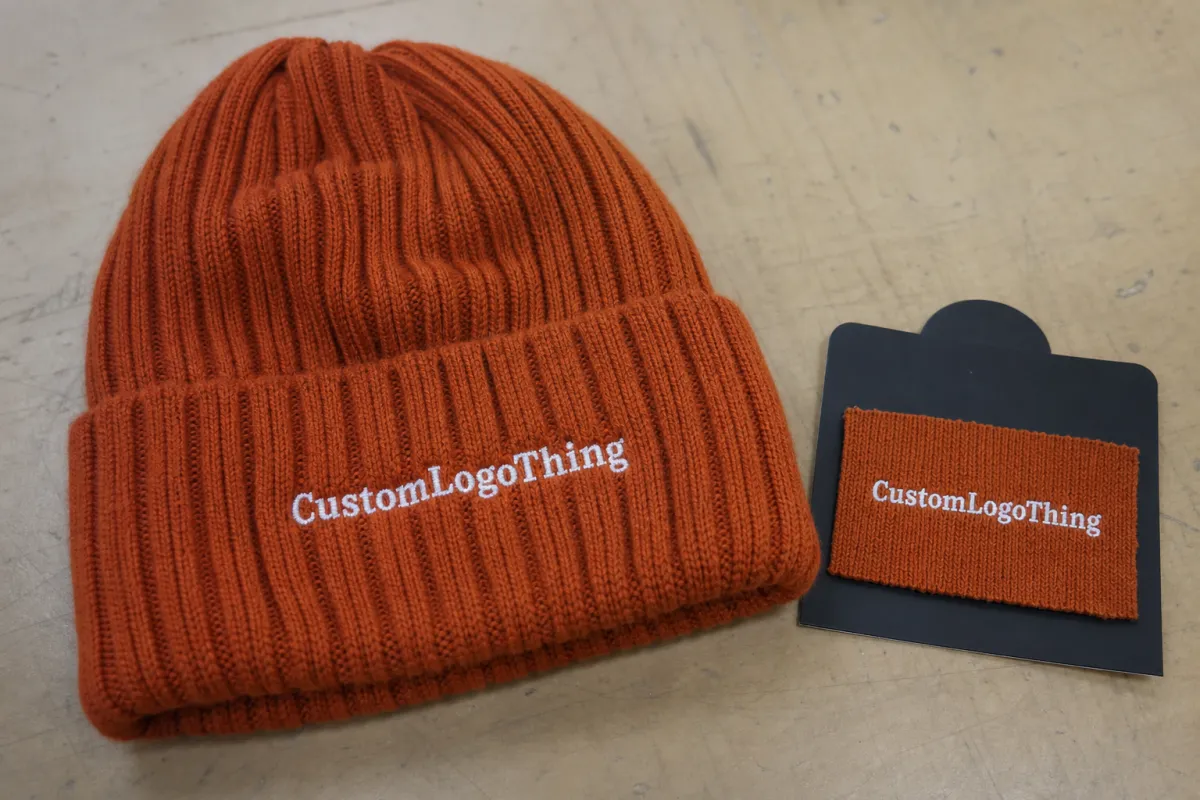
A ribbed winter hats Sample Approval Checklist is the written approval record used before bulk knitting, decoration, labeling, and final packing are released. It captures the approved standard: yarn content, rib pattern, finished size, stretch range, logo placement, label copy, packing method, carton marks, and any cost or timing conditions tied to those choices.
That sounds formal because it is. Good. Casual approvals are how small issues become expensive ones. A checklist is not a photo approval, a quick “looks good” email, or a color sign-off under office lighting. It is the reference used by the buyer, supplier, production team, and inspector to judge whether the bulk hats match what was approved.
Here is the trap: ribbed hats can look fine while lying flat and still feel wrong on the head. A 2x2 rib can open around a logo, making embroidery look narrow or distorted after stretching. A cuff that measures 7.5 cm flat may feel too tight if the yarn has poor recovery. A woven patch that looks square on the sample table may flare at the corners once the rib structure expands.
Practical rule: approve the hat the way it will be used, not only the way it looks in a sample photo. Fold it, stretch it, wear it briefly, and pack it before releasing bulk production.
For custom beanies used in retail, uniforms, resorts, winter promotions, events, and employee kits, the checklist keeps vague comments out of the production file. Instead of saying “make the logo better,” you can say “reduce embroidery density in the lower stitch area and keep the left edge 45 mm from the side seam after cuff folding.” That is an instruction a production team can act on.
How Sample Approval Works for Rib Knit Beanies
The normal approval sequence starts with a specification sheet, artwork file, yarn or material selection, and decoration method. The supplier makes a first sample, sends it for buyer review, adjusts it if needed, and produces a final approved sample. Only after that should bulk knitting, logo application, trim attachment, and packing be released.
Before sending a sample, a careful supplier should check stitch count, cuff height, finished dimensions, crown depth, logo method, trim placement, label accuracy, and packing consistency. If the order needs retail-ready packaging, the supplier should also check barcode position, polybag size, hang tag placement, and carton count.
The buyer’s job is just as practical. Compare the physical sample against the purchase order, artwork proof, size chart, Pantone or yarn color reference, packaging instructions, and any retailer compliance notes. If the PO says 100% acrylic but the hang tag says acrylic blend, flag it. If the artwork proof shows a 65 mm wide patch and the sample arrives at 58 mm, write down the difference before anyone forgets.
Photos help, especially when a team is split across offices. They do not replace handling the hat. Ribbed construction changes under tension. A hat that measures 20 cm wide relaxed may stretch to 28 cm and recover cleanly, or it may stretch once and stay loose. Put it on a head form if one is available. If not, have someone wear it briefly and check pressure, slouch, crown shape, and cuff roll.
A strong approval checklist turns that physical review into a production decision. It stops the sample from being “approved by memory,” which is one of the easiest ways for mismatches to travel into the full order.
Key Specs to Check: Yarn, Rib Structure, Fit, and Logo Placement
Start with the yarn. Common winter beanie materials include 100% acrylic for warmth and value, acrylic-polyester blends for durability and color range, wool blends for a softer premium hand, recycled yarns for sustainability programs, and acrylic-elastane blends when stronger recovery matters. Acrylic ribbed beanies are common because they hold color well, are often washable depending on construction, and usually price better than wool-rich options.
Yarn weight and knit density affect warmth, hand feel, decoration quality, and cost. A heavier yarn or tighter knit feels fuller, but it can raise the unit price and make embroidery harder if the surface becomes bulky. A lighter knit may save money, yet the hat can feel thin once stretched over the head. Ask for yarn content and construction in writing. “Warm winter knit” is not a specification. It is a mood.
Measure the hat relaxed and gently stretched. For a typical adult cuffed beanie, buyers usually review relaxed width, stretched width, total height, cuff height, crown depth, and recovery after stretching. Ribbed hats can pass a flat measurement and still fail comfort, so do both checks. A 1x1 rib does not behave the same as a 2x2 rib. A wide rib can also make logo placement look uneven if the decoration crosses raised and recessed columns.
Decoration needs its own inspection. Embroidery should not pucker the ribs or create a hard plate across the forehead. Woven patches should sit flat at the edges, with corners secured and no curling after the cuff is folded. Faux leather or leather patches need clean debossing, controlled heat pressure, and edges that do not lift. A small woven label should not scratch the forehead, especially if it is sewn through the inside of the cuff.
- Embroidery: check thread density, backing feel, rib distortion, and edge clarity after stretching.
- Woven patch: check patch size, border color, stitch-down quality, corner lift, and alignment on the cuff.
- Leather or faux leather patch: check deboss depth, burn mark control, surface cracking, and sew line spacing.
- Brand label: check fold, placement, comfort, care symbols, fiber content, and copy accuracy.
Packaging belongs in the same review. Confirm hang tag hole placement, hang tag string length, polybag size, suffocation warning if required, barcode label position, inner pack quantities, and carton count. If the cuff must stay crisp for retail presentation, pack one sample the same way bulk hats will be packed. A too-tight polybag can crush the cuff and make a clean product look cheap. Annoying, but true.
For sustainability claims or paper-based trims, ask for documentation instead of relying on a hang tag claim. If FSC-certified paperboard is part of the package specification, the supplier should be able to support that through the proper chain-of-custody route. The Forest Stewardship Council explains how FSC certification is handled for forest-based materials.
Process and Timeline: From First Sample to Bulk Approval
A realistic sample path has several moving parts: artwork confirmation, yarn sourcing or color matching, knitting, decoration, finishing, sample dispatch, buyer review, revision if required, and final production release. None of those steps are empty calendar space. They involve machines, trims, labor, shipping, and queue time.
For a straightforward stock-yarn acrylic beanie with one embroidered front logo, a first sample may move faster than a custom-dyed yarn hat with a woven patch, private label, hang tag, barcode sticker, and retail carton requirements. Exact timing depends on supplier workload, file readiness, trim availability, shipping lane, and approval speed. Custom-dyed yarn, imported trims, complex embroidery digitizing, multiple logo positions, and retailer compliance details can all add days.
Buyer-side review time is often underestimated. If the sample arrives Friday afternoon and three departments need to approve fit, brand color, and packaging, production should not be expected to keep moving over the weekend. Build review time into the calendar. Even a clean sample benefits from a 24- to 48-hour internal review window when several stakeholders are involved.
Approve one complete standard sample whenever possible. Production teams need a single reference for dimensions, materials, decoration, trims, and packing. Scattered approvals create risk: the logo approved in one email, the size approved in another, and the packaging approved in a chat message. That is how an old instruction quietly finds its way back into the order.
If a revision is needed, be direct. Identify the issue, state the requested change, confirm whether a new physical sample is required, and avoid reopening unrelated specifications unless there is a real reason. For example: “Cuff height approved at 8 cm. Please move embroidered logo 10 mm higher on folded cuff and resubmit photo plus physical sample.” Much better than “logo feels low.” Feelings are not production specs.
Sample approval also intersects with packaging performance. If the hats ship in retail cartons or e-commerce packs, compression, carton strength, and labeling should be considered early. For broader packaging test methods, the International Safe Transit Association publishes packaged-product testing resources that many buyers recognize.
Cost, Pricing, and MOQ Details That Belong in the Sample Review
Sample approval is also cost control. Late changes to yarn weight, logo size, patch material, label sets, or packaging can change the unit price and sometimes the minimum order quantity. A buyer may think the product is approved, while the supplier sees the latest change as a new specification with new pricing. Put the cost-impacting details on the checklist.
Pricing for custom ribbed winter hats is shaped by yarn content, knit density, number of colors, cuff construction, decoration method, private-label trims, packing method, and order quantity. As a practical broad range, simple acrylic ribbed beanies with one standard decoration often sit in a lower promotional price band. Heavier knits, wool blends, specialty patches, custom labels, and retail packaging push cost upward. Freight, duties, and rush handling can move the landed cost again.
| Approval Item | Typical Cost Impact | Buyer Checkpoint |
|---|---|---|
| Embroidery setup or digitizing | Often a one-time setup charge, depending on stitch count and logo complexity | Confirm approved stitch file, logo size, thread colors, and backing comfort |
| Woven or faux leather patch | May require tooling, mold, or minimum patch quantity | Confirm patch dimensions, edge finish, sew line, and placement on folded cuff |
| Custom care label or brand label | Adds trim cost and sewing time per unit | Check fiber content, care symbols, country of origin, and skin comfort |
| Hang tag and barcode sticker | Usually a small per-unit cost, higher with special paper or variable barcodes | Check hole position, UPC or SKU accuracy, and retail placement rules |
| Individual polybagging | Adds material and packing labor | Confirm bag size, warning text, cuff presentation, and carton quantity |
A lower unit price may come from a thinner knit, smaller logo, simplified packaging, or higher MOQ. None of those are automatically bad. They just need to match the buyer’s expectations. Compare the approved sample against the quoted specification, not against memory. Memory rounds off the details, and the details are usually what drive cost.
The checklist should include sample fee, decoration setup, digitizing, mold or patch tooling, custom label cost, hang tag cost, individual polybagging, carton labeling, freight method, and duties if applicable. Once those items are written down, the final invoice, production sample, and purchase order have a better chance of lining up.
Step-by-Step Buyer Guide for Reviewing the Hat Sample
Prepare before opening the sample. Gather the purchase order, artwork proof, color references, size chart, packaging instructions, label copy, carton marking details, and any retailer compliance notes. If the order has a Pantone target, yarn swatch, or approved trim sample, keep that on the table too. Good review starts with good comparison material.
- Check overall appearance. Look at color, rib consistency, crown shape, cuff fold, loose yarns, stains, odor, and symmetry.
- Measure relaxed dimensions. Record width, total height, cuff height, crown depth, and logo position from fixed reference points.
- Test stretched fit. Stretch the hat gently over a head form or wearer and check pressure, slouch, recovery, and comfort.
- Review decoration. Inspect embroidery puckering, patch edge lift, deboss clarity, thread color, and logo alignment after the cuff is folded.
- Check trims and labels. Confirm care label copy, brand label placement, hang tag details, and whether anything irritates the forehead.
- Pack one unit. Place the hat in the approved polybag or retail pack and see whether the cuff stays neat.
Do the handling test even if the hat looks good. Fold and unfold the cuff several times. Stretch the hat five to ten times with moderate hand pressure. Watch whether the embroidery pulls the ribs into a tight rectangle or whether the hat returns close to its original shape. If the logo looks fine flat but distorted when worn, document it before production.
Then check packaging. Confirm polybag warning text where needed, barcode sticker position, carton marks, inner pack quantity, master carton count, and any size or color labels. A common packaging mistake is approving the product but forgetting the carton label. That can create receiving delays, especially for retail, warehouse, or event distribution orders.
Finish with a clear decision: approved as is, approved with listed changes, revise and resubmit, or rejected. Vague feedback slows production. “Make it better” gives the supplier no measurable target. “Increase cuff height from 7 cm to 8 cm and keep patch centered 35 mm above bottom fold” gives them something useful.
This is where a ribbed winter hats Sample Approval Checklist earns its keep. It turns personal preference into measurable approval language without making the process heavier than it needs to be.
Common Sample Approval Mistakes That Create Bulk Production Problems
The most common mistake is approving a photo instead of the actual sample. Photos can hide stretch behavior, hand feel, recovery, warmth, rib tension, backing stiffness, and patch edge lift. If the order involves embroidery, patches, folded cuffs, private labels, or retail packaging, ask for the physical sample whenever timing allows.
Another mistake is ignoring small measurement differences. On a ribbed beanie, a few centimeters can change the whole wearing experience. A hat may become snug, slouchy, shallow, or oversized once the cuff is folded. If the approved adult sample is 21 cm wide relaxed and the bulk arrives closer to 18.5 cm, people will notice. Immediately.
Decoration approval also needs the final knit structure. Do not approve embroidery only from a flat proof sheet and assume it will behave the same on ribbed material. Ribs rise and fall. Threads bridge across those ridges. Dense embroidery can lock the fabric and reduce stretch in the forehead area. Patches can look clean on the bench but curl when the cuff is flexed.
Packaging oversights are easy to miss because buyers tend to focus on the hat itself. Missing suffocation warnings, wrong barcode placement, unclear carton labels, or polybags that crush the cuff can create problems after the product is technically “finished.” If the hats are for retail or event kits, packaging is part of the product experience.
Scattered approvals are another quiet risk. One person approves the logo in email, another approves the label copy through a marked-up image, and a third approves carton count in a chat thread. Later, nobody knows which instruction controls production. Keep one consolidated checklist and attach the final approved photos to it.
Final Approval Next Steps Before You Release the Order
Before releasing the order, photograph the approved sample from the front, back, side, inside label area, logo close-up, folded cuff, and packed presentation. Save the written checklist with the purchase order. Confirm the final quote, lock the artwork, confirm the production schedule, and state who has authority to approve any later changes.
Keep the approved sample available during production and incoming inspection. A real physical standard is better than an email attachment, especially for ribbed products where touch and stretch matter. When bulk hats arrive, compare them against the approved sample for yarn color, rib density, cuff height, logo placement, label comfort, and packing presentation.
Ask the supplier what can still change after approval. Timing and cost depend heavily on whether yarn has been ordered, knitting has started, decoration is underway, or packing materials have been printed. A logo placement adjustment before decoration may be manageable. A care label copy change after labels are sewn in can be expensive and slow.
Before releasing a purchase Order for Custom beanies, use the approval checklist to confirm the product, decoration, labels, packaging, pricing, and timeline in one place. Mark pass or revise on every major item, attach clear photos, sign off on the final sample date, and keep the checklist with the PO for reference.
- Mark every major item as approved, revise, or not applicable.
- Attach photos of the approved hat, logo, labels, and packed unit.
- Confirm final quote, MOQ, freight method, and production schedule.
- Lock artwork files, trim copy, barcode data, and carton markings.
- Keep the approved physical sample for bulk inspection.
FAQ
What should be included in a ribbed beanie sample approval checklist?
Include yarn content, rib pattern, color reference, relaxed and stretched measurements, cuff height, logo method, logo placement, trim details, label copy, packaging, carton markings, quote details, and approval status. For ribbed hats, check stretch recovery and decoration distortion because ribs can change how embroidery, patches, and labels sit once the hat is worn.
Do I need a physical sample before approving custom ribbed winter hats?
A physical sample is strongly recommended when fit, cuff shape, embroidery, patches, private labels, or retail packaging matter. Photos can help with quick communication, but they cannot fully show hand feel, tension, recovery, warmth, or how the logo behaves when the hat stretches.
How long does sample approval usually take for custom winter beanies?
The approval window depends on artwork readiness, yarn availability, decoration complexity, shipping time, and buyer review speed. Custom-dyed yarn, specialty patches, multiple logo placements, and private-label packaging can add review steps, so sample time should be built into the project schedule.
Can sample changes affect the unit cost or MOQ for ribbed winter hats?
Yes. Changes to yarn weight, decoration size, patch material, label sets, packaging, carton requirements, or order quantity can change pricing and minimum order quantities. Before approving the final sample, confirm that the latest specification still matches the quote.
What is the biggest mistake buyers make when approving ribbed winter hat samples?
The biggest mistake is approving the look without testing fit and stretch, especially on cuffed ribbed hats where the material changes shape on the head. A good review includes wearing or stretching the hat, checking logo behavior, confirming label comfort, and documenting every required change in one clear approval checklist.


