Hotel purchasing teams do not usually need one bag for one use. They need one format that can move across welcome kits, spa retail, conference registration, and amenity handoffs without turning procurement into a small disaster. That is why Die Cut Handle Bags for hotel groups moq planning works best as a spec-led decision, not a guess wrapped in a logo file.
Choose the bag structure early and a lot of downstream problems shrink. Storage gets easier. Reorders get simpler. Guest presentation stays consistent across properties that may not agree on much else. The bag is not just carrying an item; it is carrying brand impression, operational speed, and, yes, a bit of discipline.
The strongest programs are built around usage, not decoration. Size, gauge, print clarity, and load performance matter more than a pretty mockup. If the bag fails in the back office or looks inconsistent from one property to another, the branding has already lost.
Why hotel groups order handle bags in coordinated runs
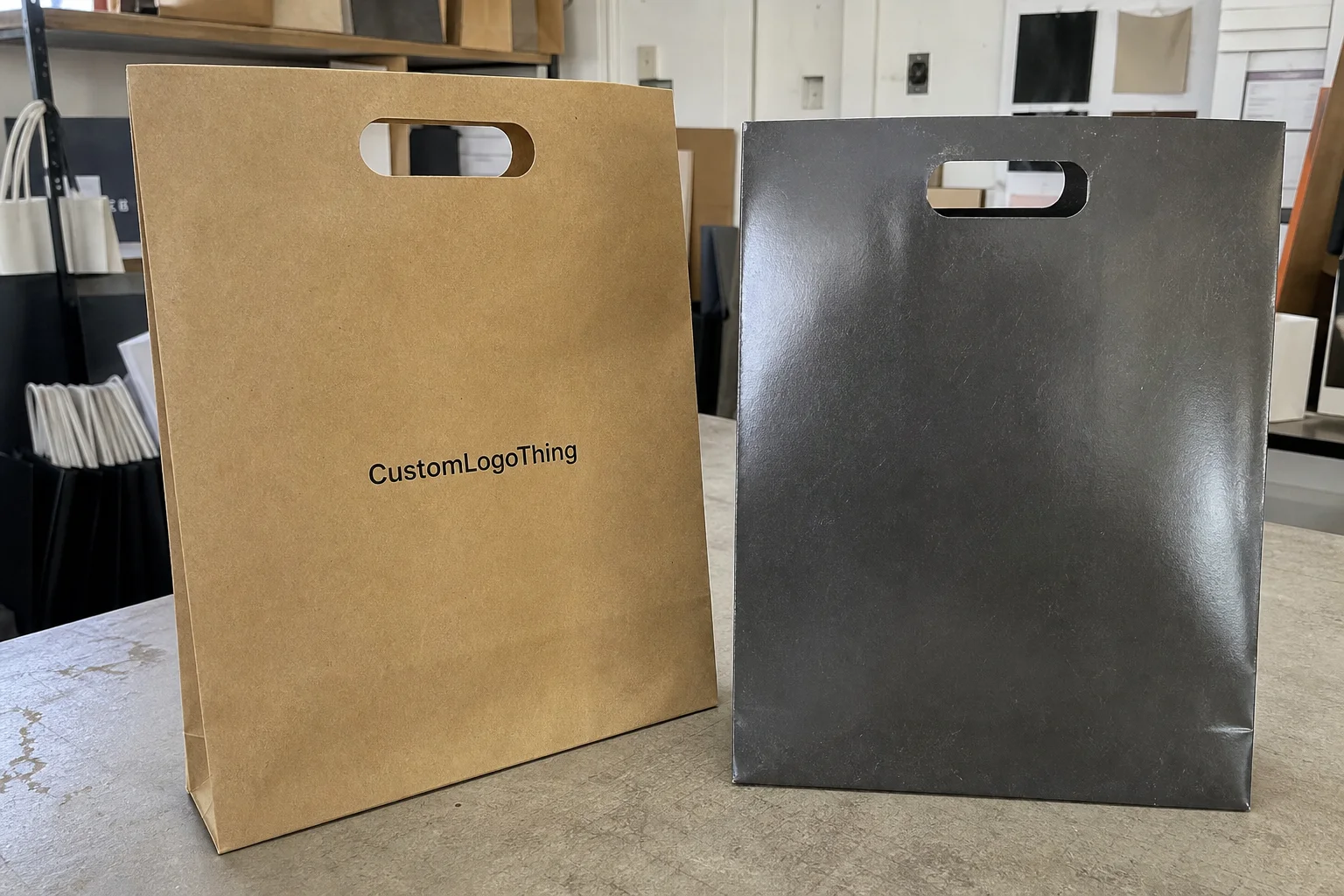
Hotel groups usually get better results when they buy in coordinated runs instead of property by property. The use cases overlap more than procurement teams sometimes admit. A front desk welcome packet, a spa purchase, a retail item, a conference handout bag, a room-service add-on. Same basic need: a clean, dependable carry solution that looks on brand.
Die Cut Handle Bags fit that model well. They stack flat, store efficiently, and present a tidy look the second a guest picks one up. The integrated handle keeps the structure simple and removes a separate attachment point, which is useful when storage space is tight and turnaround time matters.
Centralized purchasing also reduces inconsistency. One resort may want slightly different copy or logo placement than a city property, but the base spec can stay the same. That means fewer near-duplicate SKUs, fewer partial cartons sitting in different storerooms, and fewer awkward emails asking why a “same” bag looks different from last quarter.
The practical way to plan the order is by usage pattern, not vague annual estimates. Seasonal occupancy, events, weddings, trade shows, and amenity replenishment all affect demand. When buyers model quantity against those patterns, Die Cut Handle Bags for hotel groups moq planning becomes much easier to control, and the order is less likely to sit for months because someone overestimated “just in case” demand.
“The cleanest hotel packaging programs usually start with operations, not decoration.”
That is the right sequence. Start with the load, the handoff, the storage area, and the reorder plan. Once those are defined, the bag can be specified with confidence instead of optimism.
Product details that matter in die cut handle construction
A die cut handle bag is usually made from low-density polyethylene or high-density polyethylene. LDPE feels softer and more flexible. HDPE has a crisper hand and often feels lighter at the same basic build. Either can work for hotel use, but the right choice depends on the load and the look you want guests to associate with the property.
The handle is punched directly into the film. For heavier loads, the top edge may need reinforcement so it resists tearing when staff or guests pull the bag by the handle. That matters more than people expect when the bag carries bottles, boxed amenities, folded apparel, or multiple items bundled together. Light brochure packs can usually run on a simpler build.
Before quoting, buyers should confirm a few details: opaque or semi-transparent film, matte or glossy finish, side gussets if extra volume is needed, and the style of bottom seal. Straight bottom seals are common, but the seal strength matters more than the phrase on the spec sheet. A weak seal can pass a desktop review and still fail the minute housekeeping loads it hard.
Print method matters too. Flexographic printing is common for repeat artwork and consistent logo reproduction. The goal is not decoration for its own sake. It is legibility, placement accuracy, and color consistency from run to run. Hotel groups usually care more about that than about special effects that look clever for five minutes and odd for five years.
Storage and distribution should be part of the conversation from the start. These bags should stack cleanly in back-of-house areas, fit into closets without curling, and dispense without sticking together in a way that slows staff down. Anyone who has watched a receptionist wrestle a bad pack of bags during check-in already knows why that matters.
For teams building a common packaging baseline, the guidance from industry organizations such as the Packaging Machinery Manufacturers Institute and material stewardship resources from EPA recycling guidance can help frame material discussions, even when the final order is a custom private-label program.
Sizing, gauge, and print specs for multi-property consistency
If one part of the order creates trouble later, it is usually the spec sheet that was “close enough” during approvals. For a multi-property hotel program, the core measurements should be locked before pricing is finalized: bag width, gusset depth, overall height, film thickness, handle opening size, and number of print colors. Those details shape both appearance and cost.
Gauge affects performance in a straightforward way. A bag carrying brochures or a towel set can often use a lighter film. Once the contents include glass bottles, boxed toiletries, or heavier amenity bundles, thicker film and stronger seals are the safer choice. Overbuilding every bag wastes money. Underbuilding it creates breakage risk, and nobody needs that kind of “savings.”
Artwork deserves the same attention as the physical build. The logo should sit clear of the handle area, text should respect safe margins, and any fine print should stay readable after the bags are stacked or compressed in storage. Hotel groups sometimes assume a small print issue will disappear once the bag is filled. Usually it becomes more obvious.
That is one reason many groups do better with a standard spec across multiple properties. It simplifies reorder logic, reduces inventory fragmentation, and makes purchasing conversations easier when new hotels join the portfolio. Instead of each site requesting a new size, procurement can support a controlled family of specs: one base bag, one approved print layout, and modest variation in quantity by property.
A simple approval packet helps prevent mistakes. Include the dimensions, target quantity by property, logo files in vector format, print color targets, and the heaviest item the bag must carry. Once those items are documented, the brand team, operations team, and procurement team are far more likely to approve the same technical plan instead of three slightly different versions of it.
- Width, gusset, and height determine what fits comfortably.
- Film gauge determines how the bag behaves under load.
- Handle opening affects comfort and presentation.
- Print coverage affects both cost and brand visibility.
- Safe margins protect the artwork from distortion.
If the hotel group uses the same base packaging spec across several properties, Die Cut Handle Bags for hotel groups moq planning gets much easier because reorders stop being a design exercise and become a replenishment decision.
Pricing, unit cost, and MOQ planning for hotel buyers
Price on these bags is shaped by a handful of variables, and most of them are predictable. The main cost drivers are film thickness, bag size, number of print colors, total order quantity, packaging format, and whether the bag needs reinforcement. If the program includes heavy customization or unusually large artwork coverage, that can also move the cost per piece upward.
MOQ works the way buyers expect in custom production: the lower the quantity, the higher the unit cost tends to be, because setup work is spread across fewer pieces. That setup work may include plate preparation, press adjustment, proofing, and sometimes tooling fees. A lot of hotel buyers focus on the base price alone, but the real question is how the order behaves at different quantities.
| Order approach | Typical unit cost trend | Best use case | Watch-outs |
|---|---|---|---|
| Small property-by-property runs | Higher | Very limited usage or pilot programs | More setup charges, higher freight per unit, more reorder friction |
| Consolidated group order | Lower | Stable specs across multiple hotels | Needs stronger forecasting and allocation planning |
| Tiered bulk pricing | Improves as quantity rises | Programs with seasonal peaks or annual demand visibility | Must confirm storage space and reorder cadence |
That table is why die cut handle bags for hotel groups moq planning should never rely on gut feel. If one property orders 8,000 pieces and three others need 3,000 each, there may be real savings in combining those into a single production run instead of paying multiple setup charges and separate freight moves.
Buyers should also think in landed-use terms instead of sticker price alone. A bag that costs a little more per unit may still be the better value if it supports more guest interactions, looks more polished at check-in, and reduces emergency purchasing. Hotel packaging is one of those categories where consistency has operational value, even if it does not show up immediately on the invoice.
It helps to request pricing at several quantities, such as 5,000, 10,000, and 25,000 pieces, so the team can see how unit cost changes as volume rises. That makes the bulk pricing conversation clearer and gives procurement a practical basis for deciding whether to combine property demand into one run.
Process and timeline from quote approval to delivery
The production path is usually straightforward once the paperwork is complete. It starts with artwork review, then spec confirmation, then pricing approval. After that comes the prepress proof, production, quality checks, packing, and shipment. The more complete the initial brief, the less likely the order is to stall between steps.
The most common delays are easy to predict. Missing dimensions, low-resolution artwork, vague color references, and late changes to quantity or delivery destinations all add time. Hotel groups sometimes discover halfway through the process that one property wants a different allocation than the others, and that creates avoidable repacking work if it was not addressed before production started.
Standard custom runs usually move faster when specs are finalized early and the supplier has available production capacity. A realistic lead time often falls in the range of 12 to 15 business days from proof approval for straightforward orders, though that depends on print complexity, quantity, and the current schedule. Bigger runs or more complex artwork can extend that timeline.
For multi-property delivery, the allocation plan should be set before the press runs. If one hotel needs 6,000 pieces and another only 2,000, it is much cleaner to pack and label that way from the start rather than split pallets later. That kind of planning reduces receiving errors and makes it easier for each location to put the bags into service quickly.
Rush options may exist, but they should be treated as a contingency, not a strategy. They often come with higher cost, more pressure on proof approvals, and less flexibility on packaging detail. Honest planning around MOQ usually delivers better pricing and fewer surprises than trying to compress the schedule after the fact.
For heavier-use programs, ask whether the supplier has internal load testing or follows a method aligned with common packaging performance checks. For shipping-sensitive programs, references to ISTA testing guidance can be useful when the bag ships as part of a broader kit or amenity program.
Most importantly, lock the destinations early. A program can look approved on paper and still run late if the delivery list is not confirmed before production begins. That is where die cut handle bags for hotel groups moq planning either saves time or creates a pile of avoidable work.
How to compare suppliers on specs, consistency, and support
The strongest supplier is not always the cheapest one. In hotel packaging, the better partner is the one that can translate purchasing needs into stable production specs, repeatable print quality, and documentation your operations team can actually use. If the supplier stays vague, the order tends to get vague too, which is usually how budgets start drifting.
Ask whether the supplier can support reorders without reworking artwork every time. Ask whether they can split shipments to different properties. Ask how they manage print matching across repeat runs. Those answers matter because hotel groups often reorder the same bag many times, and brand consistency gets harder if each run is treated like a brand-new puzzle.
Sample availability is another useful signal. A supplier who can provide a reference sample or a previously produced standard reduces uncertainty around film feel, handle shape, and print clarity. That matters when comparing opaque film versus semi-transparent film, or when trying to judge whether a thinner gauge still feels appropriate for guest-facing use.
Clear communication about what is included in the quote matters just as much. Some quotes include plates and basic prepress; others separate those out. Some list freight separately, some do not. If setup charges or tooling fees are part of the order, they should be visible before approval so the hotel team can compare total program value fairly instead of comparing incomplete numbers.
“If a supplier asks for dimensions, contents, delivery split, and reorder expectations in the first conversation, that is usually a good sign.”
That kind of questioning is not busywork. It usually means fewer surprises in the run and fewer disputes later when the bags are in use. Hotels need dependable packaging more than they need fancy language.
Next steps for locking specs and placing the order
Start with three inputs: bag dimensions, target quantity by property, and the heaviest item the bag must carry. That is enough to narrow the structure, select the right film gauge, and begin pricing with real numbers instead of assumptions. If the team cannot define those three items yet, the order probably is not ready for production.
Then build a simple approval packet. Include the logo file, print color target, shipping destinations, expected reorder cadence, and any special handling requirement such as boxed amenities or bottle-heavy kits. The cleaner the packet, the fewer rounds of clarification are needed, which matters when several departments are reviewing the same purchase.
It also helps to ask for pricing at multiple quantities. A tiered quote shows how unit cost changes, which makes it easier to judge whether consolidating hotel group demand is worth it. That is especially useful for properties with uneven demand, because a combined run often improves bulk pricing while keeping enough inventory on hand for seasonal peaks.
Before approving production, confirm that the MOQ matches actual usage rather than instinct. A conservative order may feel safer, but if it forces another short-run reorder in a few months, the total cost can rise quickly. A well-planned program usually gives procurement a better balance between inventory carrying cost and production efficiency.
If the order is moving forward, submit the specs early and keep the approval path tight so the bags can move from estimate to proofing to production without avoidable delays. That is the cleanest way to handle die cut handle bags for hotel groups moq planning across multiple properties while keeping the brand consistent and the purchasing cycle under control.
FAQ can help answer common follow-up questions buyers usually raise after the first quote, especially around reorder timing and size selection.
What is the typical MOQ for die cut handle bags for hotel groups?
MOQ depends on size, print colors, and film specification, but custom runs are usually priced so larger quantities improve unit cost. Hotel groups should ask for tiered pricing so they can compare one-property orders versus a consolidated multi-property run.
How do I choose the right bag size for hotel amenity kits?
Base the size on the widest item, the tallest item, and whether the bag needs a gusset for volume. If the bag holds bottles, boxed items, or folded apparel, confirm both the dimensions and the weight load before approval.
Can one printed bag spec work across several hotel properties?
Yes, many groups standardize one bag size and one print layout to simplify procurement and reordering. If properties have different amenity sets, keep the same base bag structure and adjust only quantity or insert contents.
What affects the price of custom die cut handle bags the most?
The biggest drivers are quantity, film thickness, size, and print complexity. Special features like heavier gauge material, larger artwork coverage, or custom packaging can also raise cost per piece.
How long does production usually take after artwork approval?
Production timing depends on final specs, proof approval, and current factory schedule, but finalized orders move faster than orders with open details. Submitting clean artwork and confirmed quantities early helps prevent delays in proofing and allocation.


